10 Chicken Breeds Chart With Names for Easy Identification
Identifying different chicken breeds can feel overwhelming, especially if you’re new to raising poultry. You’re not alone—many people struggle to tell breeds apart because of their similar features. But knowing how to spot each breed is key to choosing the right chickens for your needs, whether for eggs, pets, or show.
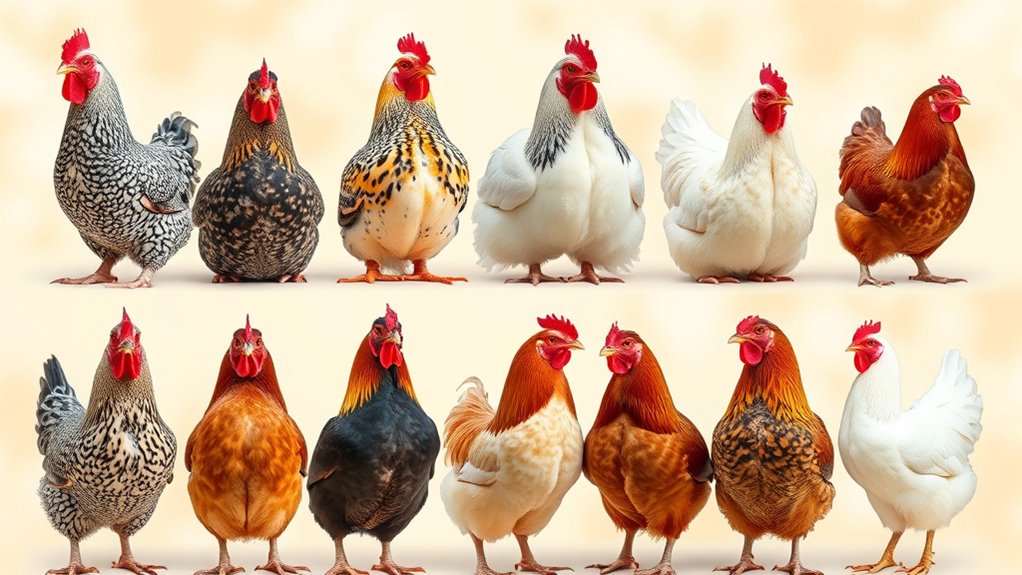
You can quickly identify 10 popular chicken breeds using a chart that highlights their unique colors, feather patterns, comb types, and body shapes. From the hardy Rhode Island Red to the fluffy Silkie, each breed has distinct traits that help you spot them easily.
Whether you want a reliable egg layer like the Leghorn or a gentle pet breed like the Orpington, understanding these features makes selection simple. Exploring these will reveal even more helpful breed details.
Key Takeaways
- A chicken breeds chart provides clear images and names to help quickly identify common breeds visually.
- Key traits like feather color, comb type, and body shape aid in distinguishing breeds on identification charts.
- Breed charts often include information on egg color, size, and typical temperament for easier recognition.
- Including breed-specific care tips and nutritional needs enhances understanding beyond visual identification.
- Charts featuring popular breeds like Rhode Island Red, Leghorn, Sussex, Orpington, and Silkie cover diverse traits.
Key Traits to Identify Chicken Breeds
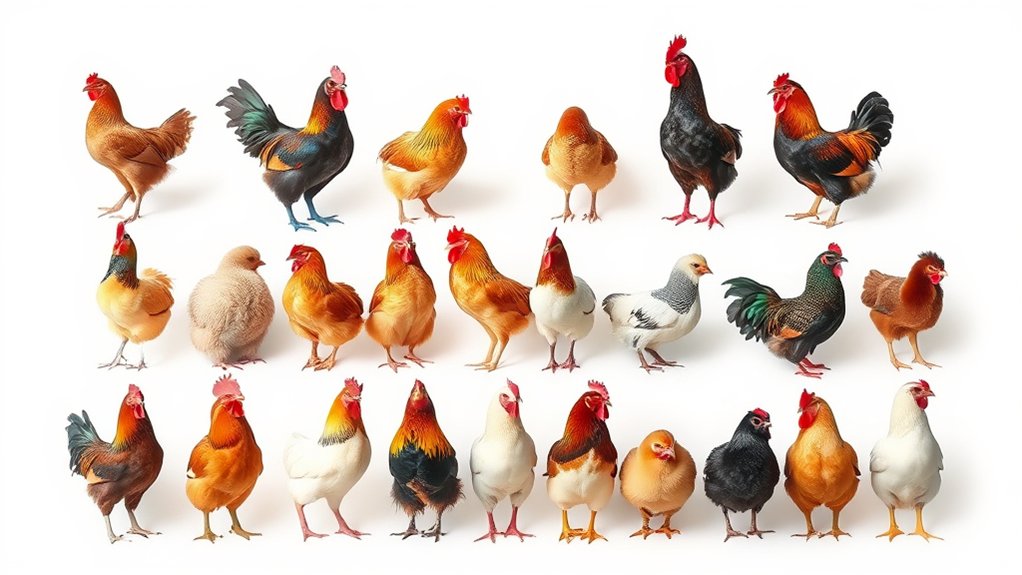
Although many chicken breeds share similar features, you can quickly spot differences by focusing on key traits like feather color, comb type, and body shape. When you visit farmers markets, you’ll notice how these traits help sellers identify their chickens easily.
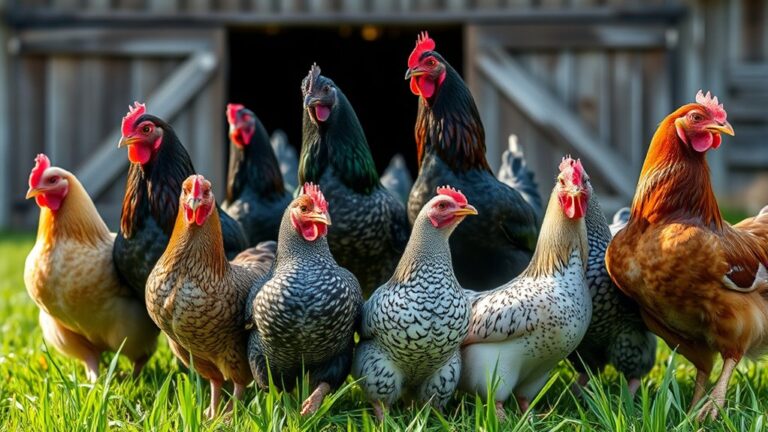
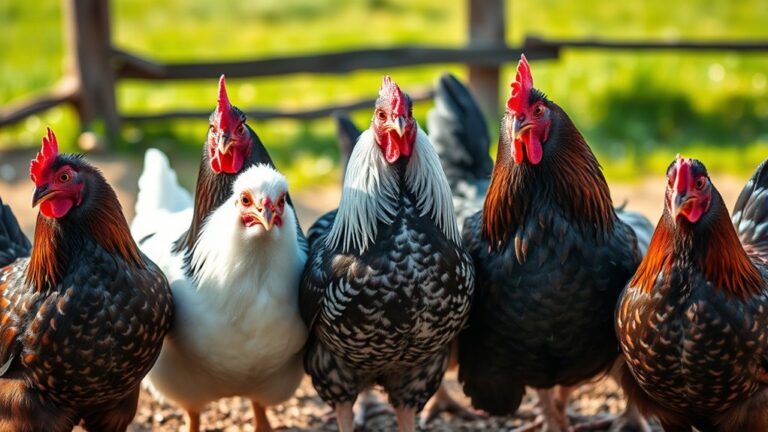
Feather color varies widely, from the glossy black of Australorps to the speckled patterns of Speckled Sussex, which gives you a visual clue right away. Comb type, whether it’s single, rose, or pea, also sets breeds apart and affects how chickens regulate their body temperature. Body shape reveals whether the breed is more suited for egg-laying or meat production.
Understanding these traits isn’t just for identification; it also connects to chicken nutrition. Different breeds have varying nutritional needs based on their size and activity level, so recognizing the breed helps you provide the right feed. By paying attention to these key traits, you’ll better appreciate the diversity you see at farmers markets and support healthier chickens.
Using a Chicken Breeds Chart for Identification
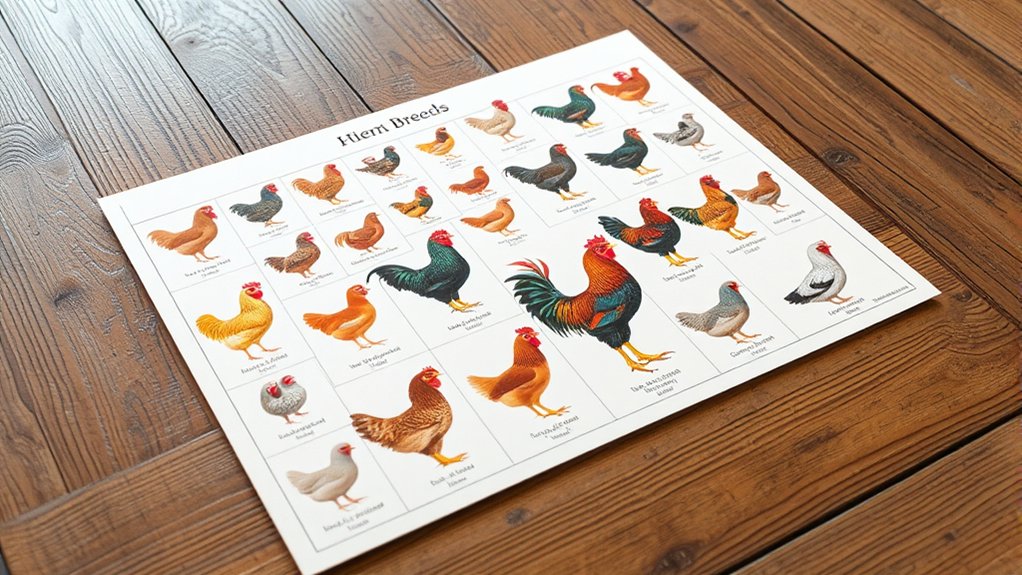
When you want to identify chicken breeds quickly and accurately, using a chicken breeds chart can be a real game-changer. The chart provides clear visuals and names, helping you match physical traits like feather patterns and comb types to specific breeds.
Beyond appearance, it often includes details about each breed’s historical origins, giving you insight into where they come from and why they developed certain characteristics. This background can help you understand their behavior and needs better.
Additionally, the chart can guide you on the nutritional requirements of different breeds. Some breeds need higher protein diets to support rapid growth or egg production, while others thrive on more basic feed.
Rhode Island Red Chicken: Popular Egg Layer
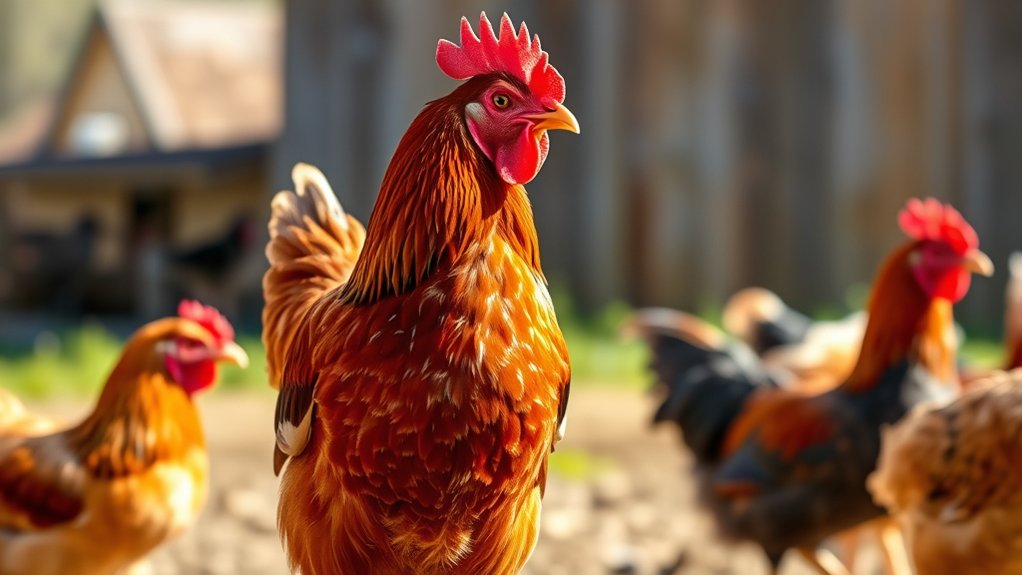
You’ll really appreciate the Rhode Island Red chicken because of its impressive egg production and those striking deep red feathers. Plus, this breed has a hardy temperament, which means it’s pretty easy to care for—even if you’re new to raising chickens. So, let’s take a closer look at what makes this popular layer such a favorite in backyard flocks.
Egg Production Traits
How can you tell if a chicken breed is a reliable egg layer? You focus on key egg production traits that impact your flock’s productivity. For Rhode Island Reds, these traits are especially significant:
- Egg Production Rate: They lay about 250-300 eggs annually, making them dependable layers.
- Broodiness Tendencies: Rhode Island Reds have low broodiness, so they keep producing eggs without long breaks.
- Egg Color Variations: Expect large brown eggs, consistent in size and color, which many prefer for their rich appearance.
- Laying Frequency: They maintain steady laying even in less-than-ideal conditions, like colder climates or shorter daylight.
Appearance and Color
Rhode Island Reds don’t just impress with their egg-laying ability; they also stand out with their striking appearance. When you look at them, you’ll notice rich, deep red feather patterns that give each bird a bold, uniform look.
These chickens typically show a consistent rust-red color, but subtle color variations can occur, ranging from darker mahogany shades to lighter, almost orange hues. Their feathers lay smoothly against their bodies, enhancing their sleek, strong silhouette.
This distinctive coloration not only makes identification easy but also adds aesthetic appeal to your flock. If you want a breed that’s both productive and visually attractive, Rhode Island Reds offer an excellent balance through their characteristic feather patterns and appealing color variations.
Temperament and Care
Although known for their hardiness, Rhode Island Reds require consistent care to stay healthy and productive. Their historical origins as a robust American breed mean they adapt well but still need proper attention. You’ll appreciate their calm yet active temperament, making them easy to handle.
To care for Rhode Island Reds effectively, follow these steps:
- Provide balanced feed rich in protein to support their egg-laying capabilities.
- Maintain a clean coop with ample space to reduce stress and disease.
- Offer fresh water daily and access to outdoor foraging to encourage natural behavior.
- Monitor for signs of illness promptly to preserve their health and longevity.
Their eggs are prized in culinary uses, known for flavor and color, so keeping them well cared for benefits your kitchen too.
Leghorn Chicken: Classic White Egg Producer
When you want a reliable chicken that lays large quantities of white eggs, the Leghorn stands out as a top choice. Known for its prolific egg-laying ability, this breed is a favorite among backyard keepers and commercial producers alike.
Unlike broiler breeds, which are raised primarily for meat, the Leghorn focuses on egg production, making it ideal if you want a steady supply of white eggs. Although it’s a heritage variety with deep roots tracing back to Italy, the Leghorn has adapted well to various climates and systems.
You’ll find these chickens are hardy, active, and efficient foragers, which helps reduce feed costs. Their lean bodies and large wings set them apart visually from heavier broiler breeds.
If you’re aiming for a classic white egg producer that’s low maintenance and productive, adding Leghorns to your flock is a smart move.
Plymouth Rock Chicken: Friendly & Hardy
You’ll find Plymouth Rock chickens are friendly and calm, which makes them great for families or beginners. Plus, they handle different climates really well, so you don’t have to worry about extreme weather. Let’s take a closer look at how their temperament and hardiness make them a solid choice for your flock.
Temperament and Behavior
How do Plymouth Rock chickens earn their reputation as both friendly and hardy? You’ll find their temperament makes them a joy to keep. They’re calm, social, and easy to handle, which is great if you’re new to raising chickens. Here’s what you can expect:
- Mating behaviors are gentle and rarely aggressive, promoting harmony in your flock.
- They use vocal communication effectively to alert others without causing panic.
- Plymouth Rocks are curious and engage positively with humans and other chickens.
- Their steady demeanor makes them less prone to stress, helping them thrive in various environments.
Climate Adaptability
Why do Plymouth Rock chickens thrive in so many different climates? It’s their impressive breed resilience that helps them adapt to varying climate factors, from cold winters to hot summers.
You’ll find these hardy birds managing well whether you face chilly drafts or humid heat. Their dense feathering provides insulation during cold snaps, while their calm demeanor helps reduce stress in warmer weather.
When you consider climate adaptability, this breed stands out because it requires minimal extra care despite the weather swings. So, if you’re looking for a chicken breed that handles diverse environments without fuss, Plymouth Rocks are an excellent choice.
Their ability to adjust means you won’t have to worry much about seasonal changes affecting their health or productivity.
Sussex Chicken: Unique Feather Patterns
What makes Sussex chickens stand out in a flock? Their unique feather patterns instantly catch your eye. Sussex chickens boast a variety of feather pattern variations that set them apart from other breeds. You’ll notice their distinctive markings, which combine beauty with functionality.
Sussex chickens captivate with their unique feather patterns, blending striking beauty and practical distinction.
Here’s what you should know about Sussex’s unique breed markings:
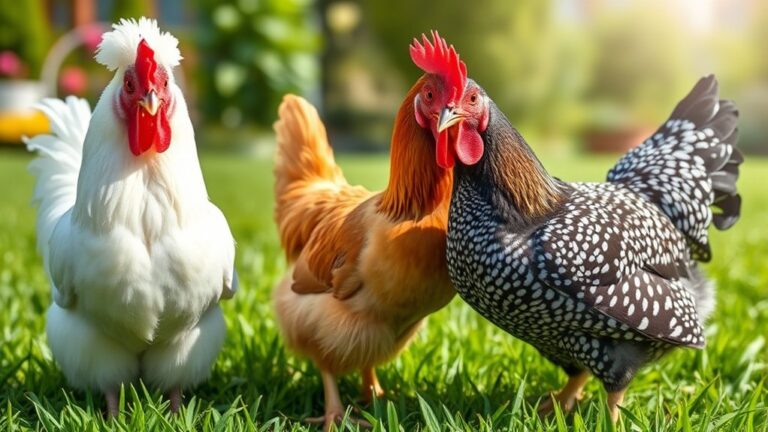
- Speckled Sussex displays a charming mix of white and black speckles, creating a mottled look.
- Light Sussex features a clean white body with striking black neck and tail feathers.
- Buff Sussex shows warm, golden-buff plumage that’s smooth and consistent.
- Red Sussex carries rich reddish-brown feathers with subtle barring.
These feather pattern variations not only add aesthetic appeal but also help you identify Sussex chickens quickly in any flock. Once you spot their unique breed markings, you won’t mistake them for any other breed.
Orpington Chicken: Fluffy and Calm
Ever wondered which chicken breed combines soft fluffiness with a calm temperament? The Orpington chicken stands out for its remarkable feather fluffiness, giving it a plush, almost cuddly appearance.
When you see an Orpington, you’ll notice its dense feathers create a rounded, soft silhouette that’s hard to resist. This breed isn’t just about looks; its chicken calmness is one of its most celebrated traits.
Orpingtons are known for being gentle and easygoing, making them perfect if you want a friendly backyard companion. Their laid-back nature means they handle handling and human interaction well, reducing stress for both you and the bird.
Plus, their calm demeanor often helps them coexist peacefully with other chickens. If you prioritize a chicken that’s both visually appealing due to feather fluffiness and easy to manage thanks to chicken calmness, the Orpington is an excellent choice to add to your flock.
Wyandotte Chicken: Striking Colors & Layers
Boasting a dazzling array of colors and intricate feather layers, the Wyandotte chicken instantly catches your eye. Known for its rich Wyandotte heritage, this breed offers stunning color variations that make identification easy and enjoyable. When you look closer, you’ll notice how these layers add depth and texture to their appearance, setting them apart from other breeds.
Here’s what you should know about the Wyandotte chicken:
- Color Variations: They come in striking patterns like silver-laced, gold-laced, and blue, each showcasing unique feather edges.
- Heritage: Originating in America, Wyandottes carry a legacy of hardiness and dual-purpose utility.
- Feather Layers: Their rounded, dense feathers create a full, almost armor-like look.
- Temperament: They’re friendly and calm, perfect for both beginners and seasoned keepers.
With their vibrant look and dependable nature, Wyandottes are a standout choice for your flock.
Silkie Chicken: Fluffy Pet Breed
You’ll notice Silkie chickens stand out because of their unique, fluffy feathers that feel more like fur. They’re super friendly, which makes them great pets to handle and hang out with. To keep them happy, you’ll want to give them a safe, clean space that matches their gentle nature and delicate feathers.
Unique Feather Texture
Although it might surprise you, the Silkie chicken stands out with its unique feather texture that feels more like fur than typical feathers. This distinct characteristic places Silkies apart from other breeds in the feather texture varieties category. You’ll notice their feathers lack barbicels, which gives them that soft, fluffy appearance and unique feather patterns unlike any other chicken.
Here’s what makes Silkie feathers special:
- Fluffy, fur-like feathers provide extra insulation.
- Feathers are more downy, lacking the firm structure of typical feathers.
- Unique feather patterns create a puffy, cloud-like look.
- Their texture reduces water resistance but boosts charm as an ornamental pet.
Understanding these traits helps you identify Silkies easily among other breeds.
Friendly Temperament Traits
Because Silkies have such gentle and calm dispositions, they make excellent pets for families and first-time chicken keepers alike. You’ll find they enjoy being handled and rarely display aggression, making daily care a breeze.
Their friendly nature means you can easily observe their unique behaviors, which adds to the enjoyment of raising them. When managing your Silkies, keep in mind that proper chicken coop ventilation is essential to keep them comfortable and healthy, especially since their fluffy feathers can trap heat.
If you plan to hatch chicks, Silkies are excellent brooders, so understanding basic egg incubation techniques will help you support their natural instincts. Overall, their sweet temperament and ease of care make Silkies a top choice if you want a friendly, fluffy pet chicken.
Ideal Living Conditions
When providing ideal living conditions for Silkies, focus on creating a safe, clean, and well-ventilated environment that suits their unique feathering. Their fluffy plumage isn’t water-resistant, so shelter from rain and dampness is vital. You should also consider their feeding habits, offering a balanced diet with easy access to fresh water.
Keep these points in mind:
- Provide a dry, draft-free coop with soft bedding to protect their delicate feathers.
- Guarantee ample space both indoors and outdoors to prevent overcrowding.
- Implement strong predator protection measures, such as secure fencing and locked doors.
- Maintain cleanliness, regularly removing waste to reduce disease risk.
Popular Bantam Chicken Breeds to Know
If you’re new to raising bantam chickens, you’ll find plenty of charming breeds that pack personality into their small size. Bantams are miniature versions of larger chickens or true bantams with no large counterparts. Understanding their historical origins can help you appreciate their unique traits.
For example, the Sebright, one of the oldest true bantams, originated in England and is prized for its laced feather pattern. Breeding standards for bantams focus on maintaining these distinct features, ensuring each breed stays true to its heritage.
Popular bantams like the Silkies stand out with their fluffy plumage and gentle nature, while the Dutch Bantam is known for its lively temperament and neat appearance. When selecting bantam breeds, consider their temperament, egg-laying capacity, and care requirements.
Frequently Asked Questions
How Do I Care for Chickens During Winter Months?
You’ll need to protect your chickens from winter wind to prevent cold stress. Make certain their coop is well-insulated and draft-free but still ventilated to avoid moisture buildup.
Provide extra bedding like straw for warmth and check water frequently to keep it from freezing. Feeding them more calories helps maintain body heat.
You’ll also want to guarantee they have a dry, cozy space to roost and stay healthy throughout the cold months.
What Is the Average Lifespan of Different Chicken Breeds?
The average lifespan of different chicken breeds varies quite a bit due to breed longevity. Most chickens live between 5 to 8 years, but some hardy breeds like Orpingtons or Plymouth Rocks can live up to 10 years or more.
On the other hand, certain high-production breeds may have shorter lifespans. You’ll want to take into account these lifespan variations when choosing a breed, especially if you’re planning for long-term care.
How Much Space Do Chickens Need in a Coop?
You’ll want to give each chicken about 2 to 3 square feet inside the coop to keep things running smoothly. Since feeding habits mean they need easy access to food without crowding, plenty of space helps prevent squabbles.
Roosting preferences also matter. Chickens like enough room on perches to spread their wings comfortably. Remember, a happy coop is the whole kit and caboodle, so don’t skimp on space!
What Are Common Health Issues in Backyard Chickens?
You’ll often see common health issues like mites, respiratory infections, and egg binding in backyard chickens. These problems can affect egg production, making it drop or stop altogether.
During molting behavior, your chickens naturally lose feathers and slow down laying eggs, which isn’t a health issue but a normal process. Keep their coop clean, provide balanced feed, and watch for signs of illness so you can act quickly and keep them healthy.
Can Different Chicken Breeds Be Housed Together Safely?
You can think of mixed breed compatibility like a puzzle. Some pieces fit perfectly, others not so much. You can house different chicken breeds together safely if you consider their temperament, size, and space needs.
Avoid crowding to prevent bullying. Sometimes, breed-specific housing is best, especially for aggressive or delicate breeds. By observing your flock’s dynamics and adjusting their environment, you’ll keep everyone clucking happily under one roof.
Conclusion
As you examine the chicken breeds chart, you’ll notice how each breed’s unique traits line up like colors in a rainbow. Bright Rhode Island Reds sit next to fluffy Silkies, and classic Leghorns stand tall beside calm Orpingtons.
It’s almost like a well-arranged garden where every flower, or feather, has its place. By knowing these breeds, you’ll easily spot your perfect chicken, whether for eggs, pets, or just enjoying their charming personalities.
With this chicken breeds chart, identifying your ideal bird becomes simple and fun.