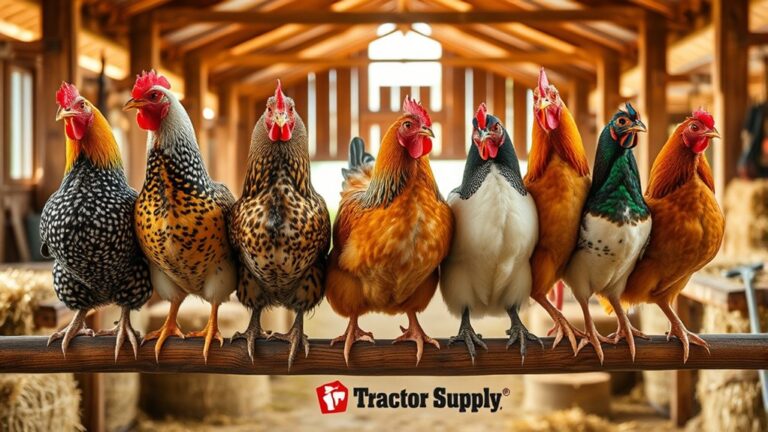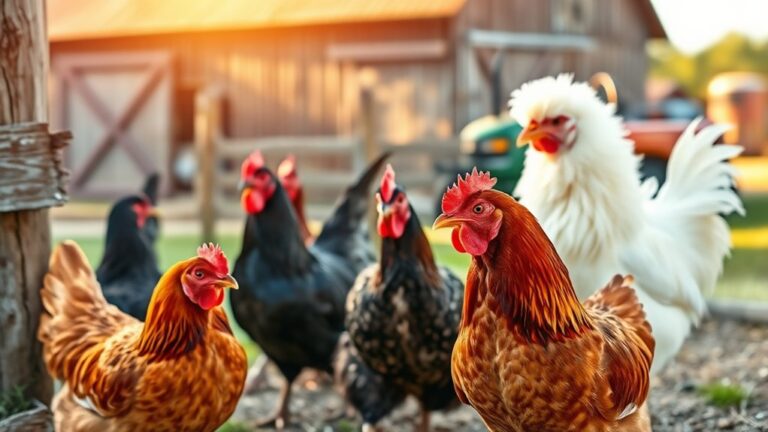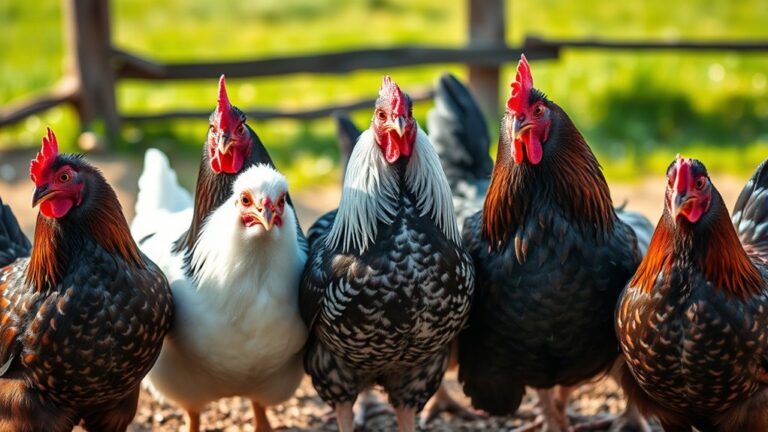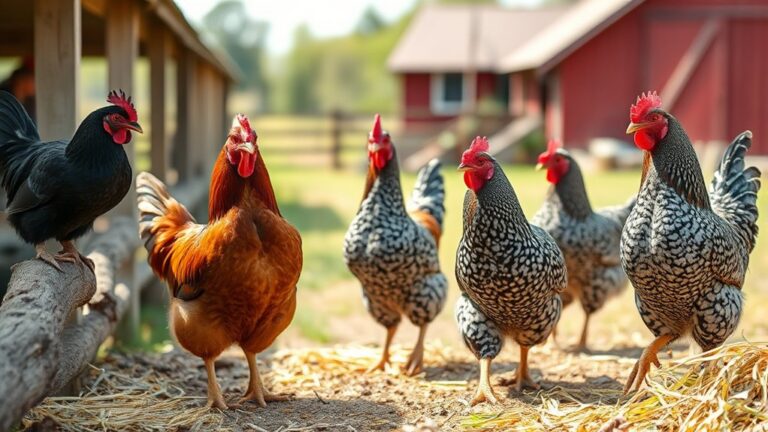
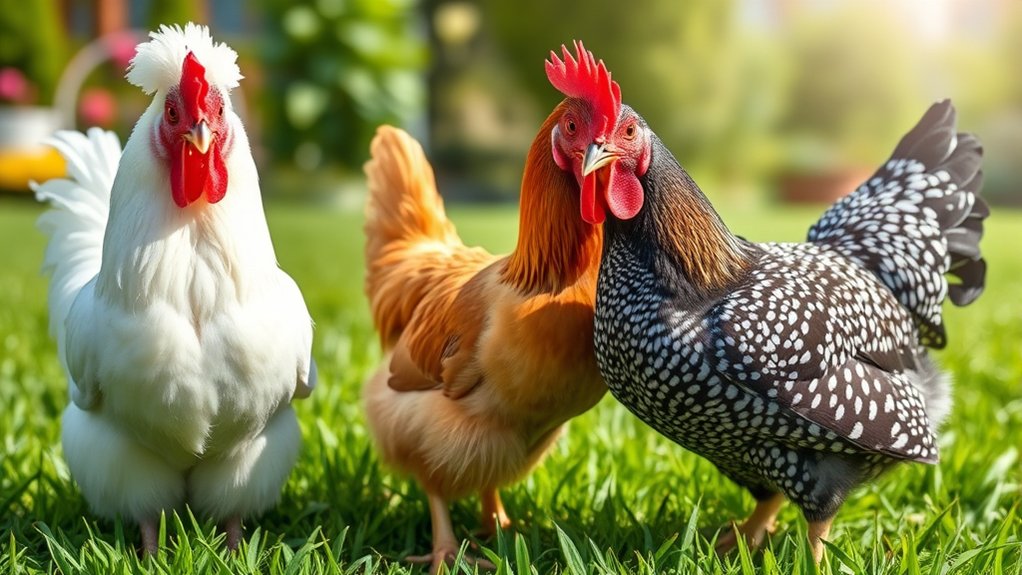
Top 3 Chicken Breeds With Pictures
Finding the perfect chicken breed can feel overwhelming, especially with so many options and different needs to consider. You’re not alone—many people struggle to pick the right chickens for eggs, meat, or companionship.
Choosing the best breed means balancing your goals with their care requirements, and that’s exactly what we’re here to help with.
If you want reliable eggs, choose Leghorns; they’re efficient and steady layers.
For meat, Cornish Cross grows fast and has a sturdy build.
If you’re after friendly, social chickens, Silkies offer sweet companionship but need safe housing because their fluffy feathers attract predators.
Each breed has unique traits, from color to temperament, that impact care and coop setup.
Keep these factors in mind, and you’ll find the perfect flock to meet your needs and learn more about managing them.
Key Takeaways
- Leghorn chickens are top egg producers, known for efficient feeding and prolific laying. They’re a great choice if you want lots of eggs with less feed.
- Cornish Cross chickens are preferred for meat due to rapid growth and sturdy build. They grow fast and provide good quality meat, making them popular for farmers.
- Silkies are popular for companionship, featuring fluffy feathers and gentle temperaments. Their unique look and calm nature make them great pets.
- Each breed has unique traits like feather color and broodiness that affect care and appearance. Knowing these helps you give the right attention to your chickens.
- Secure housing is essential, especially for vulnerable breeds like Silkies to protect from predators. Keeping them safe ensures they stay healthy and happy.
Top 3 Chicken Breeds for Eggs, Meat, and Companionship
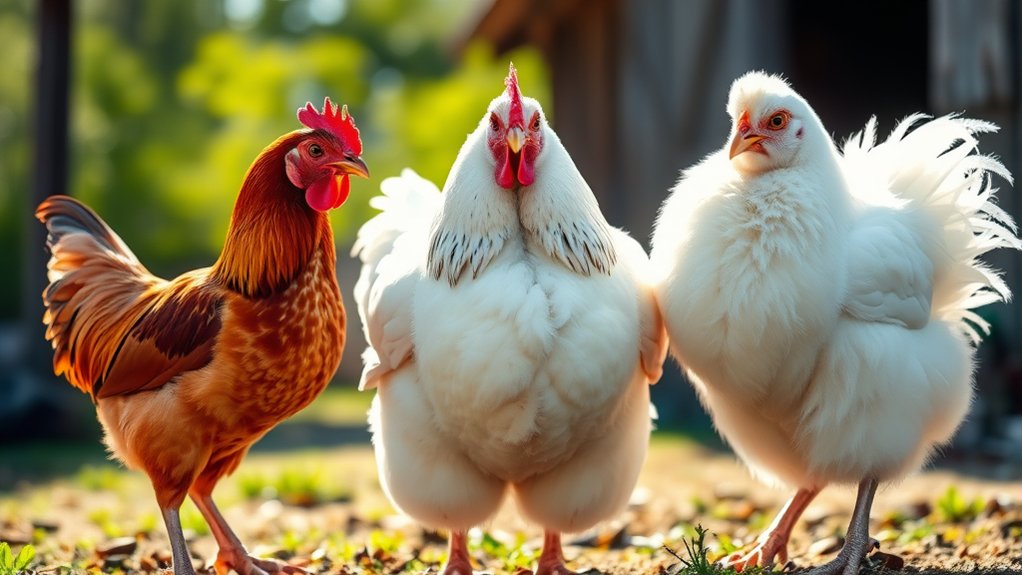
When choosing chickens, you’ll want to focus on breeds that excel at eggs, meat, or companionship. For egg production, breeds like the Leghorn are ideal because they have efficient feeding habits, converting feed into a steady supply of eggs.
If you’re after meat, the Cornish Cross stands out with rapid growth and a robust build. You’ll need to manage their feeding carefully to maintain health.
For companionship, Silkies are sweet-tempered and social. But keep in mind their fluffy feathers attract predators, so you must minimize predation risks with secure housing.
No matter the breed, understanding feeding habits helps you provide the right nutrition, boosting productivity and well-being. Also, pay attention to predation risks since chickens are vulnerable to foxes, hawks, and raccoons.
Protecting your flock with proper fencing and nighttime shelter is essential. By considering these factors, you’ll select breeds that suit your goals while keeping your flock safe and healthy.
What Makes Each Chicken Breed Special
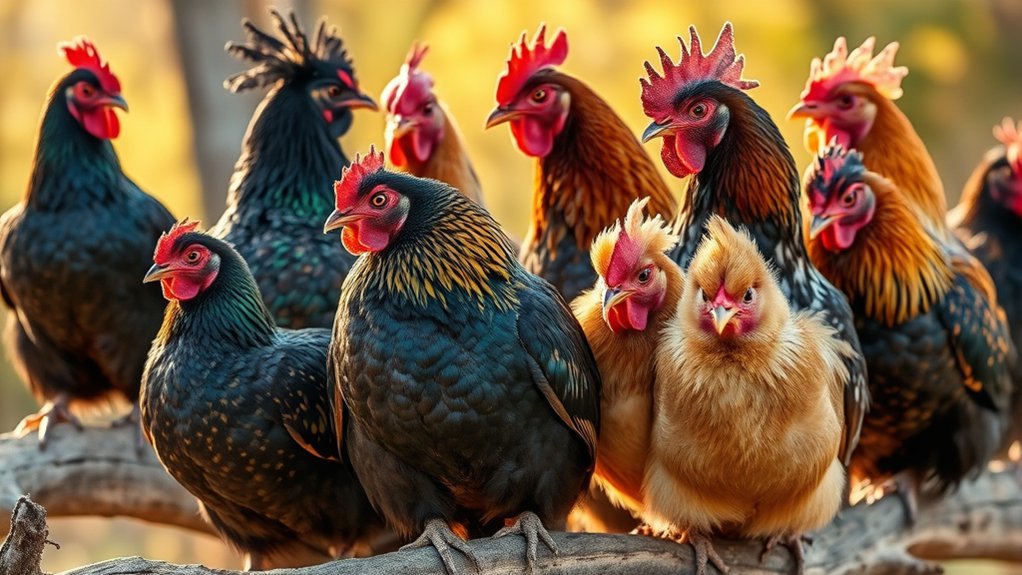
Choosing the right chicken breed goes beyond just eggs, meat, or companionship. You’ll want to understand what makes each breed unique. Feather coloration plays a big role in a breed’s charm and can influence your coop’s aesthetic.
Selecting a chicken breed means appreciating unique traits like feather color that enhance your flock and coop’s beauty.
Some breeds feature striking patterns or vibrant hues that add personality to your flock. You’ll also want to examine broodiness tendencies. Certain breeds are naturally inclined to sit on eggs and hatch chicks, which is great if you want to raise your own flock.
Others rarely go broody, focusing more on egg production. These traits affect how much care and attention your chickens might need. By paying attention to these details, you’ll better appreciate the distinct qualities each breed offers.
Whether you want a colorful flock, a hen that’ll reliably hatch chicks, or a low-maintenance layer, knowing what makes each breed special helps you enjoy your chickens more fully and create a balanced, thriving backyard coop.
How to Choose the Perfect Chicken Breed for Your Backyard Coop
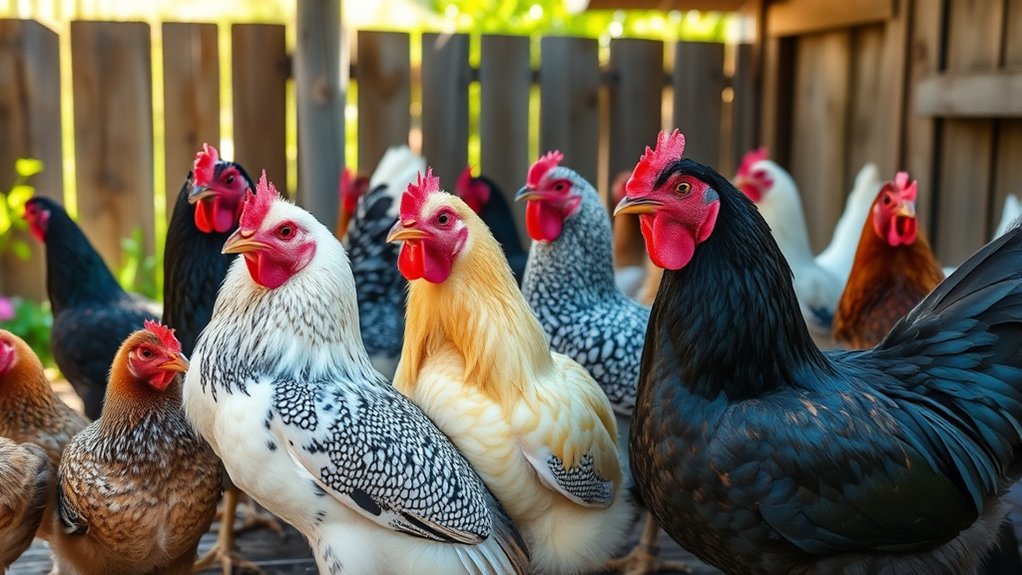
Although selecting the perfect chicken breed might seem overwhelming, focusing on your specific goals makes the process much easier. Start by considering why you want chickens, whether for eggs, meat, or companionship.
Next, think about your coop design. Some breeds need more space or prefer certain roosting styles, so match your coop’s layout to the chicken’s needs. Also, keep in mind the chicken diet; some breeds are hardier and can handle varied diets better, while others might need more specialized feed.
Evaluate your local climate too, as certain breeds tolerate heat or cold better. Finally, consider temperament. Friendly breeds suit families, while more independent ones might fit quieter setups.
Frequently Asked Questions
How Do I Care for Baby Chicks of These Breeds?
You’ll want to keep baby chicks warm and dry using soft bedding materials like pine shavings or straw. Maintain a consistent feeding routine with chick starter feed to guarantee proper growth.
Change bedding regularly to prevent dampness and odors. Provide fresh water daily and monitor their behavior for any health issues.
What Are Common Health Issues in These Chicken Breeds?
Did you know that up to 30% of hens can suffer from reproductive issues affecting egg production? Common health issues you’ll face include mites and lice, which damage feather coloration and cause discomfort.
Respiratory infections and egg-binding are frequent, especially in high-producing breeds. Keep their coop clean and watch for changes in behavior or egg output to catch problems early.
Proper nutrition and regular health checks help keep your chickens thriving.
How Do I Protect Chickens From Predators?
You protect your chickens from predators by installing predator-proof fencing around their coop and run. Make sure the fencing is buried at least a foot underground to prevent digging animals from getting in.
For nighttime security, lock your chickens inside a secure coop with sturdy doors and windows. You might also consider using motion-activated lights or alarms.
Regularly check for any weak spots or holes to keep your flock safe and sound.
What Is the Average Lifespan of These Chicken Breeds?
Think of your chickens as ticking clocks, with an average lifespan of 5 to 10 years depending on breed and care. You’ll extend their years by meeting feeding requirements, providing balanced grains, proteins, and fresh water.
Choosing proper bedding options like straw or pine shavings keeps them comfortable and healthy. When you keep their environment safe and nutrition steady, you’re not just raising chickens; you’re nurturing lifelong companions.
Can These Breeds Adapt to Different Climates?
Yes, these breeds show excellent climate adaptability, allowing you to raise them in various environments. Their breed resilience helps them withstand temperature fluctuations, humidity, and seasonal changes.
You’ll find some breeds handle cold climates better, while others thrive in warmer areas. By choosing the right breed for your region, you can guarantee your chickens stay healthy and productive despite different weather conditions, making your flock more sustainable and easier to manage.
Conclusion
Choosing the right chicken breed can transform your backyard coop experience. Did you know that a single hen can lay over 250 eggs per year? That’s impressive!
Whether you want eggs, meat, or a friendly companion, picking the perfect breed makes all the difference. Keep their unique qualities in mind, and you’ll enjoy a thriving flock that fits your lifestyle perfectly.
Your ideal chicken is just a decision away! Explore the top 3 chicken breeds with pictures to find the best fit for your needs.