5 Popular Types of Chickens With Pictures
Choosing the right chickens for your backyard flock can feel overwhelming. You want birds that are friendly, hardy, and productive, but with so many breeds to pick from, it’s hard to know where to start. You’re not alone—many people struggle to find chickens that fit their space and lifestyle perfectly.
You’ll love raising Rhode Island Reds for their friendly nature and steady brown eggs, while Plymouth Rocks offer great looks and dual-purpose value. Silkies bring fluffy charm and a pet-like personality, perfect if you want a gentle companion. Orpingtons stand out with their beautiful feathers and reliable laying.
These breeds fit well in backyard flocks, combining hardiness and friendliness. Keep exploring to see which one suits your space and style best.
Key Takeaways
- Rhode Island Reds are friendly, reliable layers with deep reddish-brown feathers. They consistently produce large brown eggs.
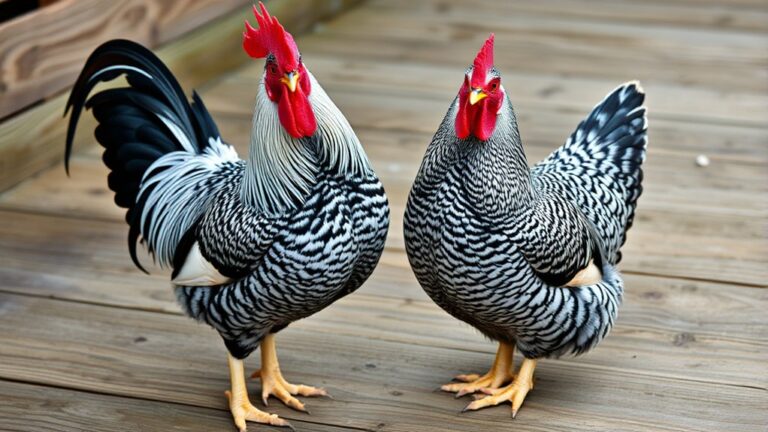
- Plymouth Rocks have barred or buff feathers and a calm temperament. They lay 200-250 large brown eggs annually.
- Silkies feature unique fluffy plumage and a calm, pet-like nature. They’re ideal for families, even though they produce fewer eggs.
- Orpingtons are hardy, fluffy-feathered dual-purpose chickens. They lay about 200 brown eggs yearly and are great for beginners.
- Backyard flocks benefit from choosing friendly, hardy breeds that adapt well to urban settings with secure coops and fencing.
Popular Chicken Breeds for Backyard Flocks
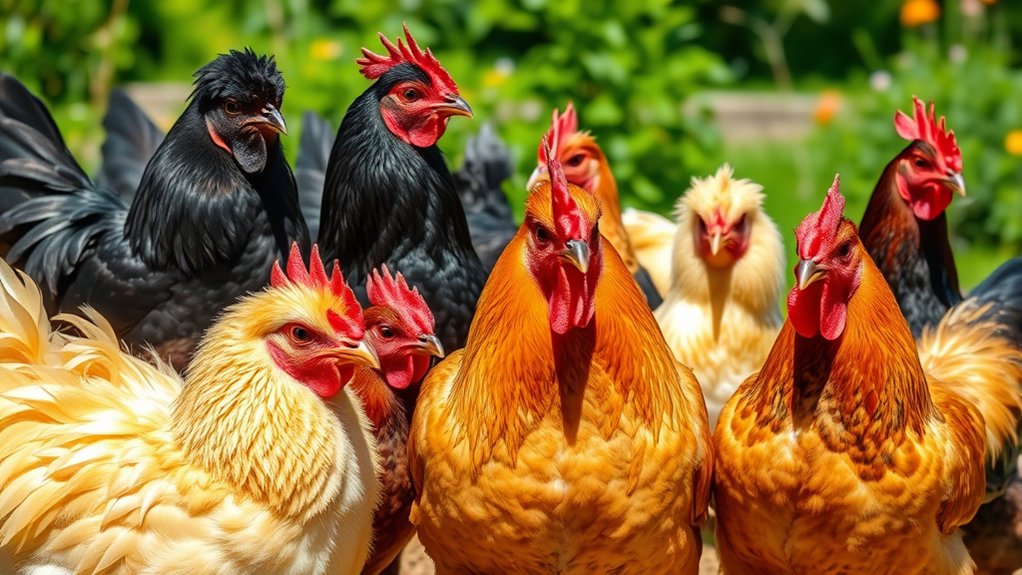
When you choose chickens for your backyard flock, you want breeds that are friendly, hardy, and good layers. Selecting the right breeds ensures your flock thrives and fits well with your lifestyle.
As you plan your urban coop design, consider breeds that adapt well to smaller spaces and are calm around humans. These chickens usually require less space and can handle the noise and activity of a busy backyard.
Backyard predator protection is essential no matter which breeds you pick. You’ll want to build a secure coop with reinforced fencing and locking mechanisms to keep raccoons, foxes, and neighborhood dogs out.
Some breeds are more alert and vocal, helping you spot threats early. By combining smart breed choices with thoughtful urban coop design and strong predator protection, you’ll create a safe, productive home for your chickens that balances well with your urban or suburban lifestyle.
Rhode Island Red Chickens: Friendly and Productive
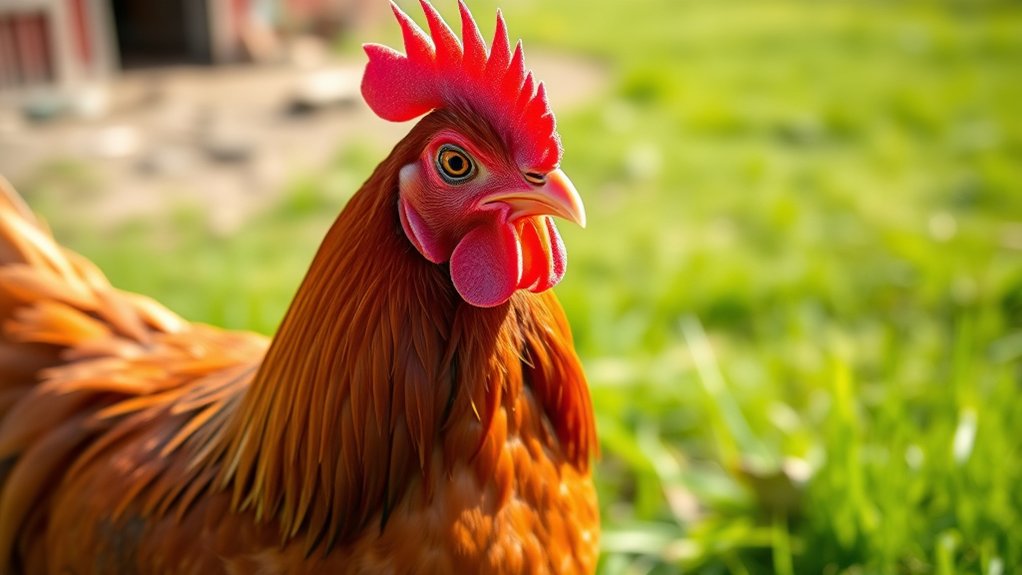
Among the many breeds suited for backyard flocks, Rhode Island Reds stand out for their friendly nature and reliable egg production. You’ll appreciate how easy they are to handle, making them great for families or beginners. Their calm demeanor means they socialize well with other chickens and even people.
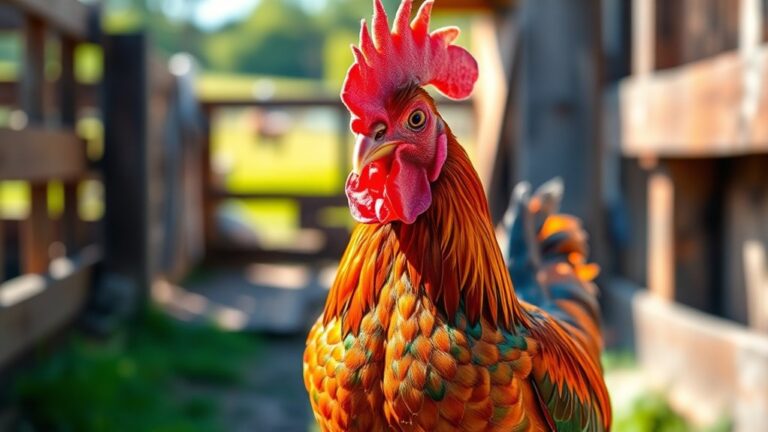
Regarding color variations, the classic deep reddish-brown is most common, though you might spot some slight differences depending on breeding lines. The official breeding standards emphasize a rich, uniform color and a strong, sturdy build, reflecting their dual-purpose heritage for eggs and meat.
You can count on Rhode Island Reds to lay consistently, often producing large brown eggs even in less-than-ideal conditions. If you want a hardy, productive bird that’s also a pleasure to keep, this breed fits the bill perfectly. Their adaptability and temperament make them a top choice for your backyard flock.
Plymouth Rock Chickens: Great for Eggs and Looks
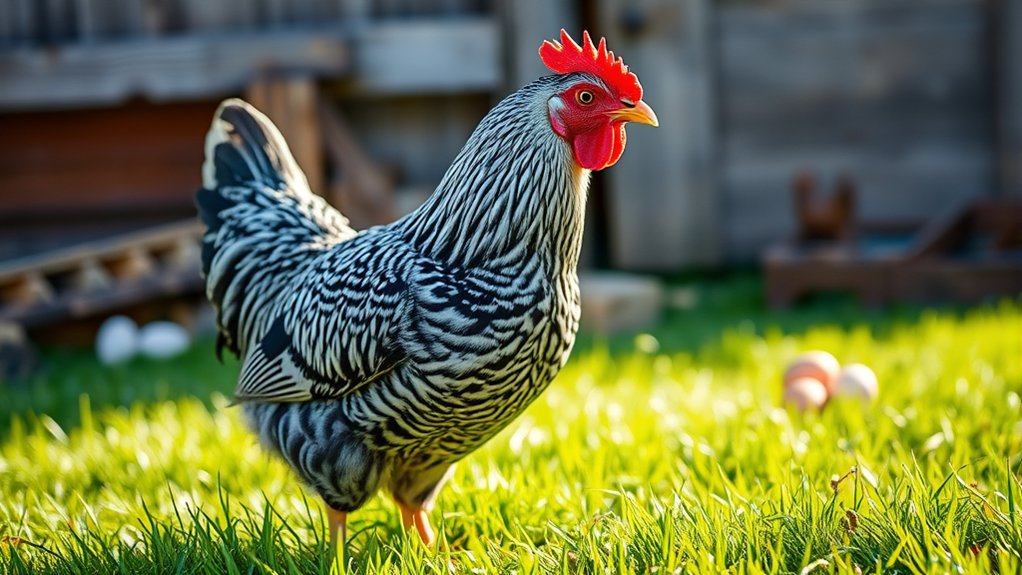
If you want a chicken breed that combines reliable egg production with striking appearance, Plymouth Rock chickens are an excellent choice. Known for their calm temperament and hardiness, they fit well in both small backyard flocks and larger farms.
Their egg laying habits are impressive, consistently producing a good number of large brown eggs throughout the year.
Here’s what makes Plymouth Rock chickens stand out:
- Egg laying habits: They lay about 200-250 eggs annually, making them reliable layers.
- Feather color variations: You’ll find them in classic barred patterns, plus white, buff, and partridge varieties, adding visual interest to your flock.
- Dual-purpose nature: Besides egg production, they’re also valued for meat, giving you versatility.
With their blend of productivity and eye-catching feathers, Plymouth Rock chickens offer both practicality and charm for any chicken enthusiast.
Silkie Chickens: Fluffy Charm and Unique Personality
Plymouth Rock chickens offer practicality and charm with their reliable egg production and attractive feathers, but if you’re looking for a breed that stands out for its fluffy appearance and gentle nature, Silkie chickens are a perfect match. You’ll immediately notice their unique, soft, cotton-like plumage that demands special fluffy feather care.
Regular grooming and gentle baths help keep their feathers clean and free from matting, ensuring they stay as charming as ever.
Silkie temperament is famously calm and friendly, making them ideal if you want a pet-like chicken that enjoys human interaction. They’re great with kids and tend to be less skittish than other breeds.
While they may not be prolific layers, their personality and distinctive look more than make up for it. If you want a chicken that’s both adorable and affectionate, Silkies provide a delightful combination you’ll appreciate every day.
Orpington Chickens: Beautiful and Reliable Layers
Though Orpington chickens are admired for their attractive, fluffy feathers, they’re just as valued for their dependable egg-laying capabilities. Originating in England in the late 1800s, their historical origins reflect careful breeding techniques aimed at creating a dual-purpose bird, both beautiful and productive.
Orpington chickens blend stunning fluffy feathers with reliable egg-laying, crafted through careful 1800s English breeding.
When you raise Orpingtons, you’ll notice their calm temperament and ability to lay around 200 brown eggs annually.
Here are three reasons why Orpington chickens stand out:
- Excellent Layers: Their consistent egg production makes them perfect for backyard flocks.
- Hardy Nature: Thanks to selective breeding techniques, they adapt well to various climates.
- Gentle Disposition: Their friendly personality makes handling easier, especially for beginners.
Understanding their history and breeding background helps you appreciate why Orpingtons remain a favorite for both appearance and reliability.
If you want a chicken that’s both beautiful and productive, Orpingtons won’t disappoint.
Frequently Asked Questions
How Do I Care for Baby Chicks From Hatch to Maturity?
You’ll want to monitor your chicks closely from hatch to maturity. Use chick incubation tips like maintaining consistent warmth and humidity. When a broody hen’s behavior kicks in, let her naturally care for the chicks if possible. It helps their development.
Provide clean water, balanced feed, and safe bedding. Gradually introduce them to outdoor conditions as they grow. Keep their environment clean and watch for health signs to guarantee they thrive.
What Are the Best Feed Types for Different Chicken Breeds?
You probably think all chickens thrive on the same junk you toss in the yard, right? Nope. You need tailored feed: layers love calcium-rich diets, broilers need high protein, and bantams prefer lighter meals.
Stick to strict feeding schedules and toss in nutritional supplements like grit and vitamins to keep them pecking happily. Remember, one size doesn’t fit all. Your chickens deserve gourmet care, not just whatever’s lying around.
How Can I Prevent Common Chicken Diseases in My Flock?
You can prevent common chicken diseases by following proper vaccination schedules tailored to your flock’s needs. Make sure to keep vaccines up to date to build strong immunity.
Also, practice parasite prevention by regularly cleaning the coop, using effective dewormers, and checking your birds for mites or lice.
Maintaining good hygiene, providing clean water, and isolating new or sick chickens will help keep your flock healthy and disease-free.
What Are Ideal Coop Sizes for Small Backyard Flocks?
You’ll want at least 3-4 square feet per chicken inside the coop to keep them cozy without feeling cramped, like sardines in a can! Make certain your coop ventilation is excellent to keep fresh air flowing and reduce moisture. This helps prevent diseases.
Also, don’t skimp on predator protection. Secure locks and sturdy wire mesh will keep unwanted visitors out. Keeping these in mind guarantees your backyard flock stays happy and safe.
How Do I Handle Aggressive Behavior in Chickens?
You handle aggressive behavior in chickens by understanding their pecking order and territorial instincts. When chickens establish dominance, they might peck or chase others. To reduce this, give them enough space and multiple feeding spots to prevent competition.
You can also separate the most aggressive birds temporarily. Providing distractions like toys or treats helps redirect their energy. Consistency and observation are key. You’ll notice patterns and can step in before aggression escalates.
Conclusion
If you’re not adding these amazing chicken breeds to your backyard flock, you’re missing out on a feathered movement! Rhode Island Reds will charm your mornings, Plymouth Rocks will brighten your days, Silkies bring fluffy magic, and Orpingtons lay eggs like they’re on a mission from the chicken gods.
Trust me, these birds aren’t just chickens; they’re your new best friends, ready to turn your coop into the happiest place on earth! Including these popular types of chickens in your flock will make all the difference.