Barred Rock Vs Plymouth Rock – 3 Key Differences
Choosing the right chicken breed for your flock can feel overwhelming. You want birds that are friendly, hardy, and productive, but with so many options, it’s hard to know which one fits your needs best.
If you’ve been stuck deciding between Barred Rock and Plymouth Rock chickens, you’re not alone—many people struggle with this choice.
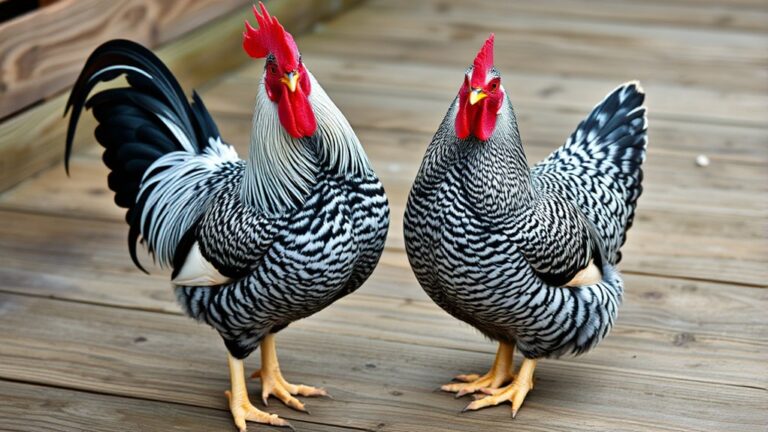
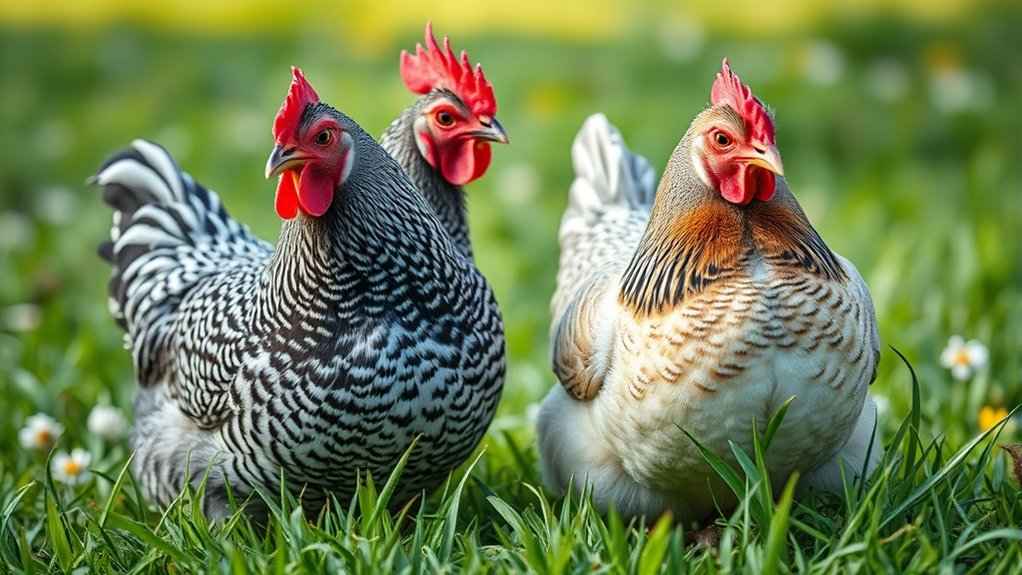
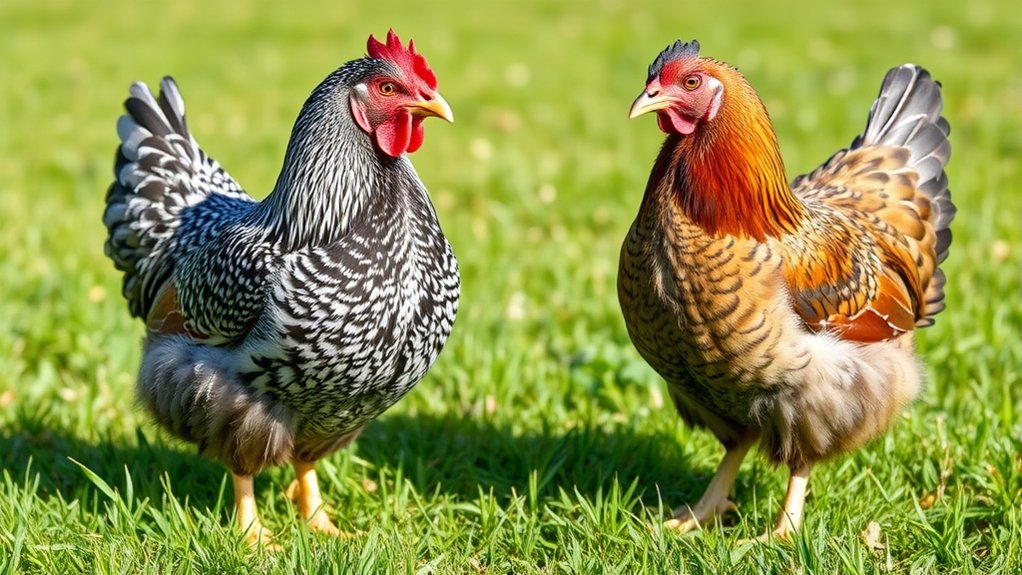
When choosing between Barred Rocks and Plymouth Rocks, you’ll notice their biggest difference lies in appearance. Barred Rocks show bold black-and-white barred stripes, while Plymouth Rocks come in diverse colors like buff and silver.
Both breeds are friendly and hardy, but Barred Rocks handle cold climates better, and Plymouth Rocks tolerate heat well.
In egg production, Plymouth Rocks mature faster, though both lay consistently.
Keep exploring to uncover more about their growth and resilience traits that might fit your goals.
Key Takeaways
- Barred Rocks have a distinctive black and white barred feather pattern, while Plymouth Rocks offer multiple color variations like buff and white.
- Barred Rocks adapt better to cold climates due to thicker feathers, whereas Plymouth Rocks tolerate heat more effectively.
- Plymouth Rocks mature faster and reach full egg-laying capacity sooner than Barred Rocks.
- Both breeds are friendly, hardy, and disease-resistant, but Barred Rocks excel in colder environments and Plymouth Rocks in warmer ones.
- Barred Rocks lay 200-280 large brown eggs annually, while both breeds support steady meat and egg production.
Appearance and Feather Patterns
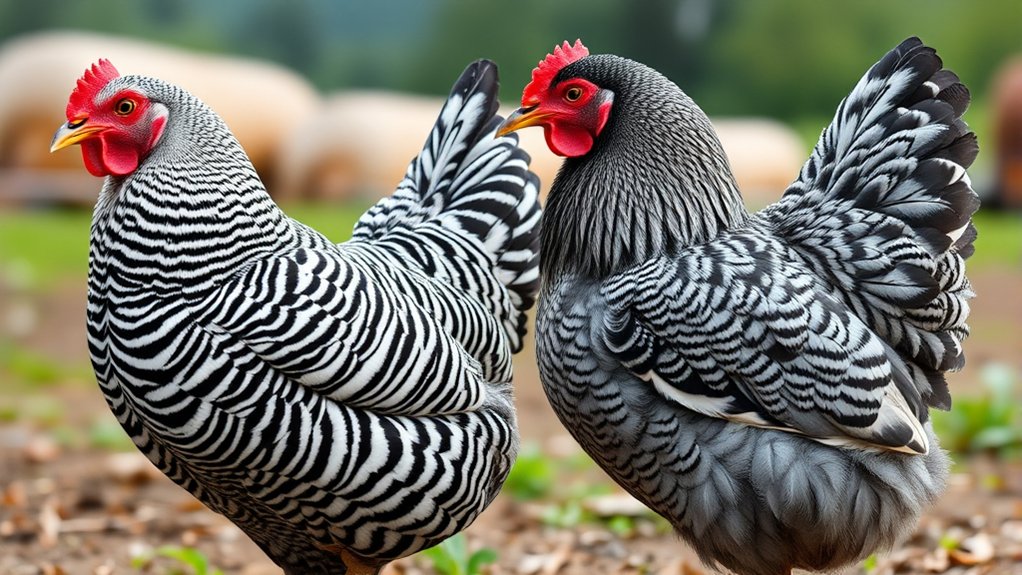
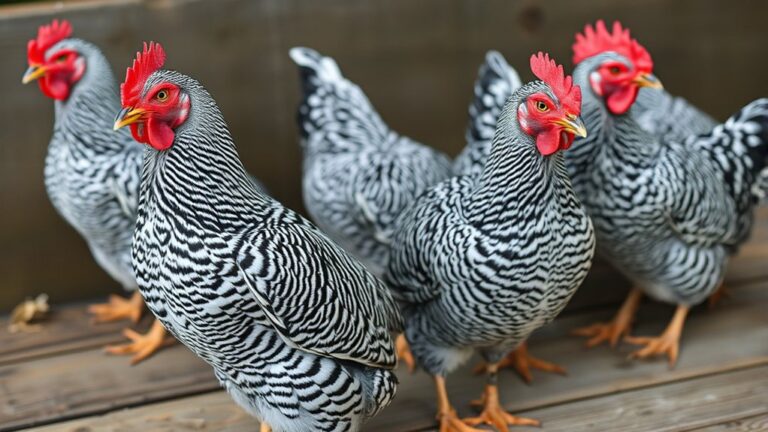
Although both breeds share a similar name and heritage, Barred Rock and Plymouth Rock chickens have distinct appearance and feather patterns that set them apart. When you look at Barred Rocks, you’ll notice their classic black and white barred feather coloration, which creates a striking striped pattern across their bodies.
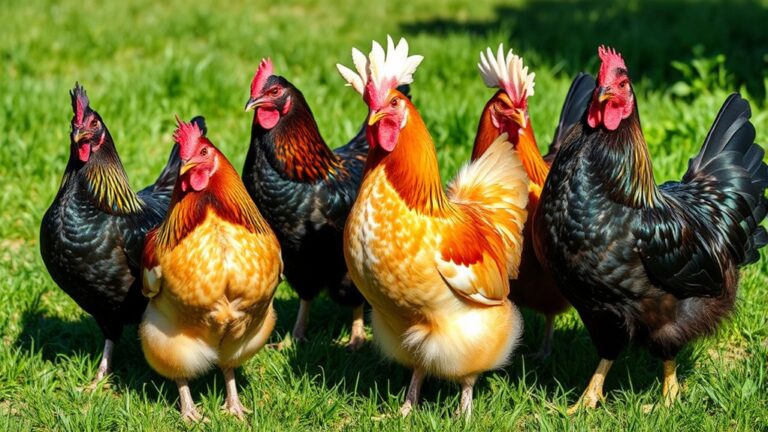
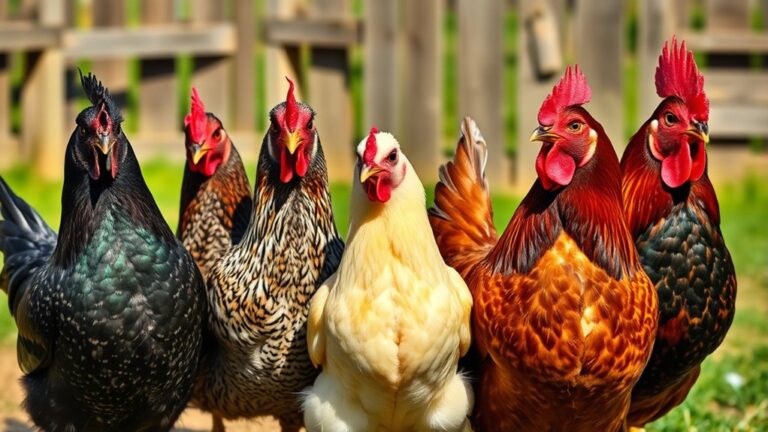
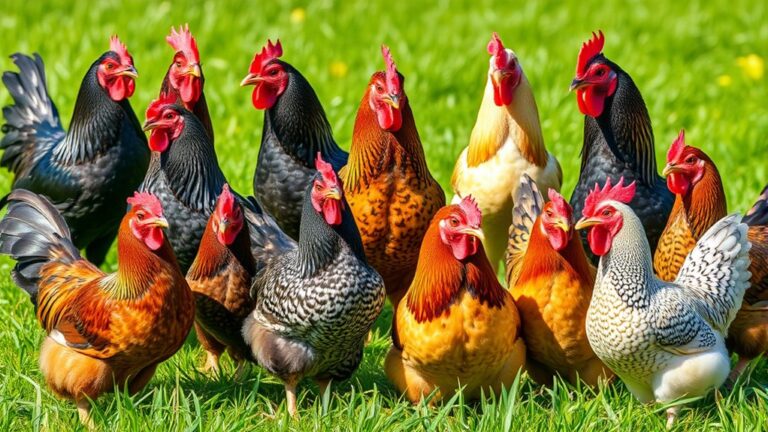
This unique feather pattern is consistent and bold, making them easy to identify. On the other hand, Plymouth Rocks come in several color variations, including buff, white, silver penciled, and partridge, giving you more options if you prefer different feather coloration.
While Barred Rocks focus on their iconic barred feathers, Plymouth Rocks offer a broader palette, which can affect how you choose based on aesthetic preference. Both breeds have a single comb and yellow legs, but their feather coloration and color variations are the main visual differences you’ll spot right away.
Understanding these traits helps you pick the right bird for your flock.
Temperament and Hardiness
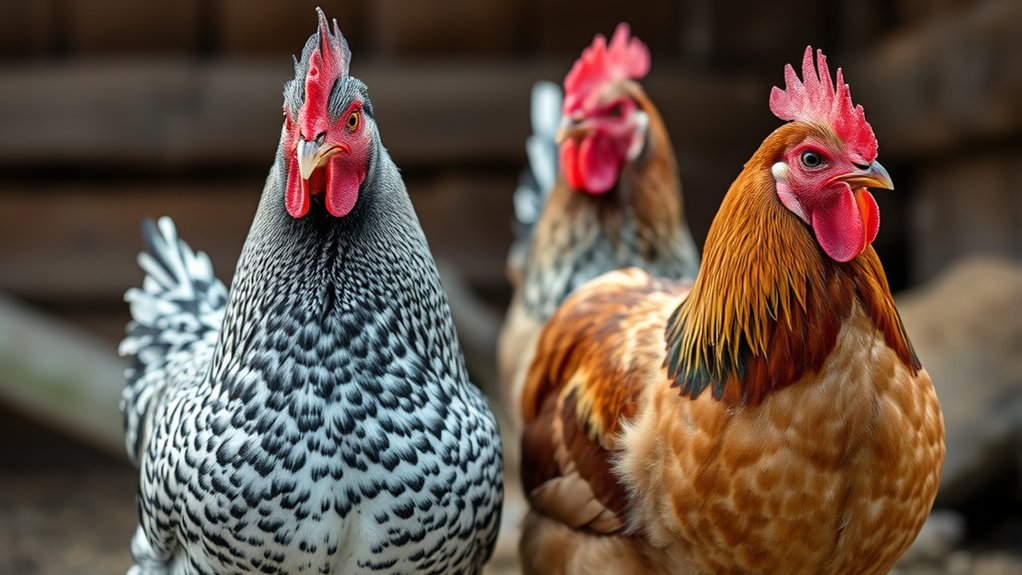
When choosing between Barred Rock and Plymouth Rock chickens, you’ll find both breeds are known for their friendly and calm temperaments. This makes them great for backyard flocks. Their behavior traits include social and docile interactions, which ease handling and integration with other birds.
However, slight differences in resilience factors affect their hardiness in various climates.
| Aspect | Barred Rock | Plymouth Rock |
|---|---|---|
| Behavior Traits | Calm, social, easy to handle | Friendly, slightly more active |
| Resilience Factors | Adapts well to cold climates | Hardy, tolerates heat well |
| Hardiness | Strong immune system | Robust against diseases |
You’ll appreciate that Barred Rocks thrive in colder environments thanks to their thicker feathers, while Plymouth Rocks handle warmer temperatures better. Both breeds offer reliable behavior traits and resilience factors, ensuring your flock stays healthy and manageable.
Egg Production and Growth Rates
Since you want a dependable source of fresh eggs, both Barred Rock and Plymouth Rock chickens deliver consistent production, but they differ slightly in output and growth. Barred Rocks typically lay around 200 to 280 large brown eggs per year, making them reliable layers for your flock. Plymouth Rocks also produce a similar number but may mature a bit faster, reaching full laying capacity sooner.
When it comes to growth rates, Plymouth Rocks tend to grow slightly quicker, which can be advantageous if you’re raising them for meat as well. Both breeds have moderate feeding requirements, but you’ll want to maintain a balanced diet to support their steady egg production and healthy growth.
Furthermore, both breeds show good disease resistance, helping you reduce veterinary costs and keep your flock thriving. By understanding these differences, you can better match your chicken choice to your specific egg production and growth goals.
Frequently Asked Questions
Which Breed Is Better for Beginners?
You’ll find Plymouth Rocks better for beginners because they’re hardy and easy to care for. They offer steady egg production, so you won’t be disappointed if you want fresh eggs regularly. Plus, their ornamental appeal adds charm to your backyard.
Barred Rocks are great too, but Plymouth Rocks tend to be a bit more forgiving if you’re just starting with chickens. You’ll enjoy both, but Plymouth Rocks make the learning curve smoother.
How Do Their Dietary Needs Compare?
Feeding your chickens is like tuning a finely crafted instrument; you have to get it just right. Both breeds share similar feeding schedules, needing balanced meals twice a day to meet their nutritional requirements.
You’ll want to provide a good mix of grains, protein, and greens. While their diets aren’t drastically different, slight tweaks can help optimize their health and egg production, so stay consistent and attentive.
Are There Differences in Brooding Behavior?
Yes, you’ll notice differences in brooding instinct between the two. Barred Rocks usually have a stronger brooding instinct, making them more likely to sit on eggs and manage egg incubation effectively.
Plymouth Rocks tend to be less inclined to brood, so if you want a hen that naturally incubates eggs and cares for chicks, Barred Rocks are a better choice. You’ll need to monitor incubation closely with Plymouth Rocks.
Which Breed Is More Resistant to Diseases?
You might be surprised to learn that Barred Rocks generally show stronger genetic resilience than Plymouth Rocks. Their immune response tends to be more robust, helping them fend off common poultry diseases more effectively.
While both breeds are hardy, Barred Rocks often bounce back quicker when illness strikes. So, if you want a flock that’s naturally tougher and less prone to health issues, Barred Rocks might just be your best bet.
How Do They Adapt to Different Climates?
You’ll find both breeds show strong climate resilience, but Barred Rocks tend to handle colder weather better thanks to their dense feathers. Plymouth Rocks also have good environmental adaptability but might need extra care in extreme cold.
If you want a breed that adjusts easily to varying climates, Barred Rocks are a solid choice. Both adapt well overall, but your local weather conditions could influence which one thrives more in your area.
Conclusion
Choosing between Barred Rock and Plymouth Rock is like picking your favorite song. They both hit the right notes but with unique rhythms. If you want striking feathers and a steady temperament, Barred Rock sings loud and clear.
Plymouth Rock, with its calm charm and reliable egg-laying, offers a soothing melody. Whichever you choose, you’re adding a vibrant beat to your flock’s harmony.
So, trust your gut and let your coop come alive with personality. Choosing Barred Rock or Plymouth Rock means bringing a special kind of energy to your flock.