Top 10 Chicken Breeds in Tractor Supply Chart Guide
Choosing the right chicken breeds for your flock can feel overwhelming, especially if you’re new to raising chickens or aiming for specific goals like egg production or climate adaptability. You’re not alone—many people struggle with finding breeds that fit their lifestyle and environment perfectly. That’s why having a reliable guide can make all the difference in building a happy, productive flock.
You’ll want to pick breeds that fit your climate, egg goals, and care style, and Tractor Supply’s chart makes that easy. Top picks include hardy layers like Rhode Island Reds and Orpingtons, high-yield Leghorns, friendly Plymouth Rocks, resilient Wyandottes, and compact, lively Bantams.
Each breed matches different needs with traits like cold hardiness or egg production. Keep exploring to find out how these breeds can best fit your flock and lifestyle.
Key Takeaways
- Tractor Supply’s chart highlights top breeds based on egg production, predator defense, and climate adaptability for informed breed selection.
- Orpingtons and Wyandottes are top cold-hardy breeds with dense feathers and resilience to harsh weather conditions.
- Leghorns rank high for prolific egg laying, producing 280-300 eggs annually. They’re ideal for organic and free-range systems.
- Bantams are valued for their small size, vibrant colors, and ease of handling. They’re perfect for backyard flocks.
- The chart helps match breeds to local resources, predator risks, and climate for optimal flock management.
Why Picking the Right Chicken Breed Makes All the Difference
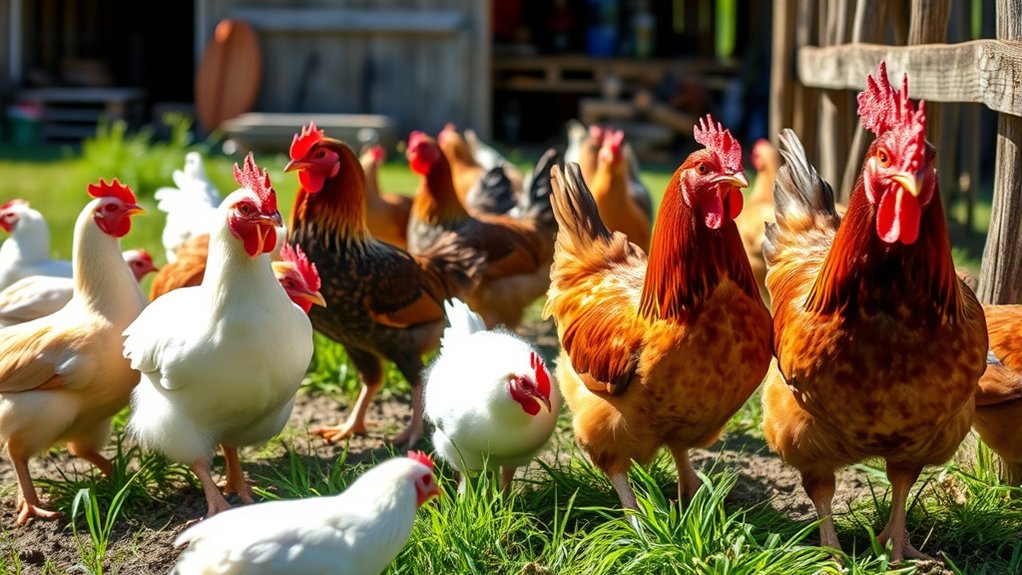
Because different chicken breeds vary in temperament, productivity, and care needs, choosing the right one can greatly impact your success. When you pick the perfect breed, you’ll find managing their chicken diet easier, as some breeds thrive on simple feed while others require more specialized nutrition.
You want a breed that matches your feeding routine and resources. Also, consider predator protection. Some breeds are hardier and more alert, helping you keep your flock safe without constant supervision. If you opt for a flighty or timid breed, you might need extra measures to prevent losses.
Your chicken’s temperament affects how they interact with each other and you, making daily care smoother or more challenging. Productivity matters too; certain breeds lay eggs more consistently or grow faster for meat.
Understanding these differences lets you tailor your setup, from coop design to feeding schedules, ensuring your flock stays healthy and productive without unnecessary hassle. Picking right saves time and effort.
How to Use Tractor Supply’s Chart to Find Your Perfect Chicken
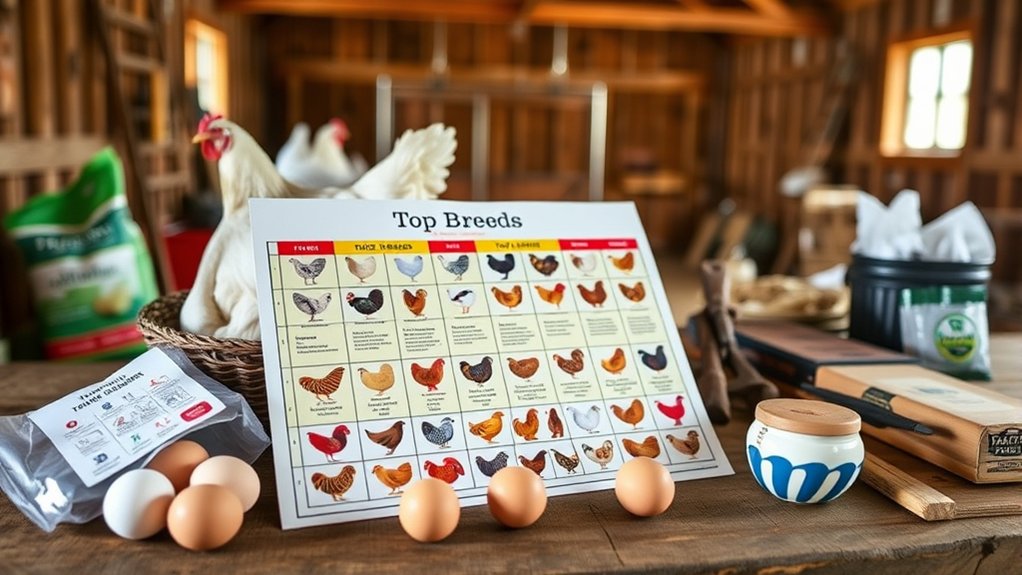
Choosing the right chicken breed means knowing exactly what to look for, and Tractor Supply’s chart makes that easier. Start by reviewing the breeds listed, paying close attention to their feeding habits to guarantee they fit your available resources and management style.
Choosing the right chicken breed starts with understanding their feeding needs to match your resources and care style.
The chart highlights whether a breed prefers a high-protein diet or if it’s more adaptable to varied feed, helping you plan accordingly.
Next, check the predator protection details. Some breeds are naturally more alert and better at defending themselves, which is essential if you don’t have secure housing.
The chart clearly marks these traits, allowing you to pick breeds that match your local predator risks.
Key Factors to Consider When Choosing Backyard Chicken Breeds
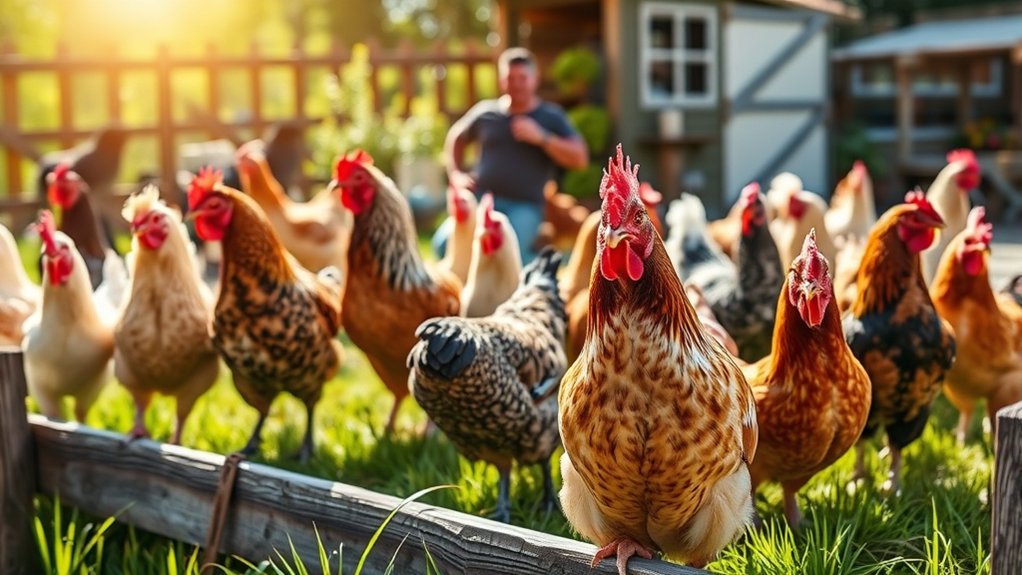
When you’re picking out backyard chicken breeds, it’s important to think about how many eggs they lay and whether they can handle your local climate. Some breeds are great egg producers but might have trouble dealing with really hot or cold weather. Finding the right balance helps make sure your flock stays healthy and keeps laying eggs all year long.
Egg Production Rates
How many eggs do you want your backyard chickens to lay each week? Egg production rates vary widely among breeds, so choosing the right one depends on your goals.
If you’re after a steady supply, breeds like the Rhode Island Red or Leghorn are known for high egg output. Keep in mind, meeting your chickens’ nutritional needs is vital to maintain consistent laying; poor diet can reduce their productivity.
Also, protecting your hens from predators is essential since stress or injury can cause them to stop laying altogether. Balancing these factors ensures you get the most eggs without compromising your flock’s health.
Climate Adaptability
Although egg production is important, you’ll also want to take into account how well a chicken breed adapts to your local climate. Choosing the right breed can improve disease prevention and feed optimization, ensuring your flock stays healthy and productive.
Here are three key points to consider:
- Temperature Tolerance: Select breeds that thrive in your area’s temperature extremes to reduce stress and illness.
- Humidity Resistance: Some breeds handle humidity better, which lowers respiratory issues and boosts overall health.
- Seasonal Adaptability: Breeds that adjust well to seasonal changes maintain consistent egg production and require less feed adjustment.
Rhode Island Red: A Hardy Layer for Reliable Eggs
You’ll really appreciate how Rhode Island Reds keep those eggs coming consistently, making them a solid choice for your flock. They’re tough birds, too, handling different climates like champs. So, you don’t have to stress about harsh weather messing with their egg production. If you’re looking for hardy layers that keep your egg basket full, these chickens are just what you need.
Egg Production Consistency
When you want a chicken breed that consistently delivers, the Rhode Island Red stands out for its dependable egg production. Their ability to lay eggs steadily depends largely on maintaining good chicken health and proper feeding routines. You’ll find they adapt well to your care, producing eggs almost year-round.
Here are three key factors to keep their egg production consistent:
- Balanced Feeding Routines: Provide a diet rich in protein and calcium to support continuous laying.
- Regular Health Checks: Monitor for parasites or illness that could disrupt egg production.
- Stress Minimization: Keep their environment calm and stable to avoid laying interruptions.
Durability and Climate Adaptability
How well can your flock handle changing weather? Rhode Island Reds stand out for their durability and climate adaptability, making them perfect for urban farming where conditions can vary.
These chickens thrive in both hot summers and chilly winters, so you won’t have to worry about drastic temperature swings impacting egg production. When you pair their hardiness with organic feeding, you support their natural resilience and overall health.
This breed’s ability to adapt guarantees they stay productive year-round, even in less-than-ideal environments. If you want a reliable layer that keeps up with your urban farm’s demands and benefits from organic feeding practices, Rhode Island Reds are a smart choice.
You’ll get consistent eggs without stressing over climate or care challenges.
Plymouth Rock: Friendly and Easygoing Birds for Families
Plymouth Rocks rank among the most popular chicken breeds for families thanks to their friendly nature and easygoing temperament. Originating in the United States during the 19th century, their historical origins make them a classic choice for backyard flocks. These birds are not only charming but also offer nutritional benefits through their consistently large brown eggs, packed with protein and essential nutrients.
Plymouth Rocks are a classic, friendly breed known for their hearty nature and nutritious, large brown eggs.
Here’s why you’ll appreciate Plymouth Rocks:
- Friendly Disposition They’re gentle and easy to handle, making them great for children and beginners.
- Hardy and Adaptable These birds thrive in various climates and adapt well to different environments.
- Reliable Layers Expect steady egg production with nutritious eggs that support a healthy diet.
If you want a breed that’s both family-friendly and productive, Plymouth Rocks are a fantastic addition to your flock.
Sussex Chickens: Calm Temperaments With Great Egg Production
If you enjoyed the friendly nature of Plymouth Rocks, Sussex chickens offer a comparably calm temperament but with even more impressive egg production. These birds are known for their consistent laying of large, light brown eggs, making them a reliable choice if egg color matters to you.
Sussex chickens adapt well to various environments and are easy to handle, so they’re great if you want a peaceful flock.
Pay attention to their feeding habits. Sussex chickens thrive on a balanced diet rich in grains, greens, and protein supplements. Providing quality feed supports their health and keeps egg production steady.
They also enjoy foraging, which helps satisfy their natural instincts and reduces feed costs.
Orpingtons: Fluffy Pets That Thrive in Cold Weather
Orpingtons stand out as one of the fluffiest and most cold-hardy chicken breeds you’ll find at Tractor Supply. Their dense feathers provide excellent insulation, making them perfect if you live in a chilly climate.
Orpingtons are among the fluffiest, most cold-hardy chickens, ideal for chilly climates with their dense, insulating feathers.
To keep your Orpingtons healthy and comfortable, focus on proper feather care and follow these cold weather tips:
- Regular Feather Checks: Inspect their feathers often to ensure they’re clean and free of mites or damage. Healthy feathers trap heat better.
- Shelter and Ventilation: Provide a draft-free coop with good ventilation to prevent moisture buildup, which can chill your birds.
- Extra Nutrition: Offer high-energy feed during colder months to help your Orpingtons maintain body heat and energy levels.
With proper care, you’ll enjoy fluffy, friendly pets that thrive in winter. Their calm nature and cold tolerance make Orpingtons a top choice for backyard flocks facing harsh weather.
Leghorns: High-Production Layers for Maximum Eggs
Leghorns deliver impressive egg production, making them a favorite for anyone focused on maximizing their flock’s output. Known as a heritage breed, Leghorns thrive in organic farming setups where their natural foraging skills shine. They’re efficient layers, producing large white eggs consistently, which makes them ideal if you want quantity without sacrificing quality.
Here’s a quick comparison to highlight why Leghorns stand out:
| Trait | Leghorns |
|---|---|
| Average Eggs/Year | 280-300 |
| Suitability | Organic farming, free-range |
| Breed Type | Heritage |
If you want a hardy, low-maintenance layer that fits well in sustainable farming systems, Leghorns are a smart pick. Their lean build and active nature mean they need space to roam, but their egg production pays off. For maximizing egg yield while supporting heritage breeds and organic practices, Leghorns won’t disappoint.
Wyandottes: Beautiful and Resilient Chickens for Tough Climates
You’ll really appreciate Wyandottes for their striking looks and tough nature. They’re perfect if you’re dealing with challenging weather. These chickens handle both cold and heat better than many other breeds, so you get reliable layers all year round. With just a bit of simple care and attention, you can keep your flock thriving no matter the climate.
Wyandotte Breed Characteristics
Although often admired for their striking appearance, Wyandottes also stand out because of their hardiness in harsh weather. Knowing a bit about Wyandotte history helps you appreciate their resilience. They originated in the late 1800s as a breed designed for both beauty and utility. You’ll find Wyandotte color varieties like Silver Laced, Gold Laced, and Columbian, each boasting unique feather patterns that add flair to your flock.
Here are key Wyandotte breed characteristics to keep in mind:
- Body Type: They have a robust, rounded body, making them excellent layers and good meat producers.
- Temperament: Friendly and calm, they’re easy to handle, even for beginners.
- Feathering: Their dense feathers help protect against cold, though we’ll discuss adaptability more later.
Wyandottes blend beauty with practicality perfectly.
Climate Adaptability Benefits
How well can your flock handle biting winds and freezing temperatures? Wyandottes excel in tough climates thanks to their dense feathering, which offers excellent insulation. Their feeding habits adapt well to colder months, allowing them to maintain energy without overfeeding.
Plus, their calm nature combined with robust size provides natural predator protection, making them a reliable choice for harsh environments.
| Climate Feature | Wyandotte Benefit |
|---|---|
| Cold Tolerance | Dense, fluffy feathers |
| Feeding Habits | Efficient in winter energy |
| Predator Protection | Larger size, alert nature |
| Wind Resistance | Compact body reduces chill |
| Weather Adaptation | Adapts well to snow and ice |
Choosing Wyandottes means your flock thrives despite tough weather challenges.
Care and Maintenance Tips
Since Wyandottes thrive in tough climates, their care requires attention to both their physical needs and environment. You’ll want to focus on proper chicken coop design to protect them from harsh weather while ensuring good ventilation. Consistent feeding schedules keep them healthy and productive throughout the year.
Here are three key tips for maintaining Wyandottes:
- Optimize Chicken Coop Design: Use insulated materials and secure bedding to keep them warm and dry during cold months.
- Stick to Feeding Schedules: Provide a balanced diet with regular meals, adjusting portions for seasonal changes.
- Regular Health Checks: Inspect for parasites and signs of illness, especially in extreme weather conditions.
Following these steps helps your Wyandottes stay beautiful, resilient, and happy no matter the climate.
Bantam Chicken Breeds: Small Size, Big Personality for Your Flock
When you add bantam chicken breeds to your flock, you’re bringing in small-sized birds that pack a big personality. These pint-sized chickens are perfect if you want lively companions without needing much space. Their vibrant feather coloring ranges from solid hues to intricate patterns, brightening up your backyard and making it easy to identify each bird at a glance.
Bantams respond well to cage training, which helps keep them safe and organized, especially if you have limited outdoor space or want to protect them from predators. Consistent, gentle handling during training makes them comfortable around you and reduces stress. Plus, their manageable size makes cage training less challenging compared to larger breeds.
Adding bantams means you get charming, hardy birds that are easy to care for and visually striking. Their playful nature and beautiful feather coloring make them a delightful addition to any flock, whether you’re a beginner or an experienced chicken keeper.
Frequently Asked Questions
How Do I Care for Baby Chicks From These Breeds?
You should provide baby chicks with a consistent feeding schedule, offering chick starter feed several times a day to support their rapid growth. Keep their brooder warm and clean, adjusting temperature as they grow.
Watch for molting patterns later, as this impacts their nutrition needs. During molting, they’ll require extra protein to regrow feathers. Make sure fresh water is always available, and handle them gently to build trust and reduce stress.
What Are the Common Health Issues for These Chicken Breeds?
Common health issues can sneak up like shadows at dusk, affecting your chickens’ egg production and feather coloring. You might notice mites dulling their feathers or respiratory problems causing sneezes and coughing.
Keep an eye out for egg-binding, which can halt egg laying abruptly. By watching for these signs and keeping their environment clean, you’ll help your flock stay vibrant and laying strong, so their feathers shine and eggs keep coming.
Can These Breeds Be Raised Indoors or Only Outdoors?
You can raise these breeds indoors if you have proper indoor coop setups that provide ventilation, space, and cleanliness. However, they thrive better outdoors where they can roam and forage.
Whether inside or outside, make sure to use predator-proof fencing to protect them from threats. Combining safe outdoor runs with secure indoor coops gives your chickens the best environment to stay healthy and happy, no matter where you keep them.
What Is the Average Lifespan of These Chicken Breeds?
Don’t worry if you think chickens won’t last long. Most of these breeds live around 6 to 8 years. You’ll enjoy steady egg production for the first few years, and their vibrant feather coloration remains striking throughout their lifespan.
While some may slow down on laying eggs over time, their lively colors keep them a charming addition to your flock. You’ll appreciate both their productivity and personality for years to come.
How Do I Handle Predators When Raising Backyard Chickens?
You handle predators by installing predator-proof fencing around your chicken area to keep animals like raccoons and foxes out. Make sure your coop has a safe design with secure locks, sturdy materials, and no gaps where predators can squeeze through.
Raising your chickens off the ground and locking them in at night also helps. Regularly check for weak spots and fix them promptly to keep your flock safe and secure.
Conclusion
Choosing the right chicken breed from Tractor Supply’s chart can make all the difference in your backyard flock’s success. Whether you want hardy layers, friendly pets, or beautiful birds, there’s a perfect match waiting for you.
Remember, you can’t judge a book by its cover. Dig a little deeper into each breed’s traits to find what suits your needs best. With the right pick, your coop will be clucking with happiness in no time!
Using the top chicken breeds from Tractor Supply ensures you get quality birds that fit your lifestyle and goals perfectly.