
What Do Pictures of Plymouth Rock Chickens Show About Their Appearance?
Finding the perfect backyard chicken breed can be tricky, especially if you want a bird that’s both beautiful and practical. You’re not alone—many people struggle to choose chickens that look great and also lay eggs reliably or provide meat. That’s why understanding what makes Plymouth Rock chickens stand out can help you decide if they’re the right fit for your flock.
When you look at pictures of Plymouth Rock chickens, you’ll notice their classic barred feathers with crisp, alternating black and white stripes that give them a striking, textured look. Their sturdy, broad bodies and deep chests show their dual-purpose build, perfect for eggs and meat.
Bright red combs and vibrant wattles signal their health, while glossy feathers reveal good care. Keep exploring and you’ll spot what makes them a favorite in backyard flocks.
Key Takeaways
- Pictures display Plymouth Rock chickens’ distinctive barred feather pattern with alternating dark and light stripes. This creates a textured, uniform appearance.
- Their robust, medium-to-heavy, well-proportioned body with a deep chest and balanced silhouette is clearly visible in photos.
- Bright red, upright single combs and matching wattles indicate good health and breed standards in images.
- Glossy feathers with a subtle sheen highlight proper nutrition and grooming, especially evident in roosters.
- Photos often show yellow legs with sturdy scales and alert eyes, reinforcing signs of vitality and breed traits.
What Plymouth Rock Chickens Look Like: An Overview

Although you might recognize Plymouth Rock chickens by their classic striped feathers, their appearance includes more than just their distinctive barred pattern. When you look closely, you’ll notice their robust build, broad bodies, and strong legs. These traits come from their historical origins as a hardy, dual-purpose breed.
The breed development focused on creating chickens that could thrive in various climates while producing both meat and eggs efficiently. You’ll also spot a single comb and bright, alert eyes, signaling their active and friendly nature. Their feathers are dense and smooth, helping them stay warm in cooler weather.
The breed’s historical origins in the United States during the mid-19th century influenced these physical traits, making them well-suited for American farms. So, when you see a Plymouth Rock chicken, you’re observing a breed carefully developed for resilience, productivity, and a distinctive, attractive appearance beyond just their famous barred feathers.
What Are the Distinctive Feather Patterns of Plymouth Rocks?

Beyond their sturdy build and bright eyes, Plymouth Rock chickens are best known for their unique feather patterns. When you look closely, you’ll notice the even, striking arrangement of their feathers, which sets them apart.
The feather sheen on these birds gives their plumage a subtle, glossy finish, reflecting light beautifully, especially in sunlight. This sheen highlights the intricate layering and texture of their feathers.
If you observe the rooster plumage, you’ll see richer and more vibrant colors compared to hens, with a slightly more pronounced feather sheen that adds to their regal appearance. Their feathers follow a consistent pattern, ensuring a balanced and symmetrical look across their body.
These distinctive feather patterns not only make Plymouth Rocks visually appealing but also serve practical purposes like insulation and protection. Understanding these details helps you appreciate why their appearance is so admired among poultry enthusiasts.
Why Their Barred Plumage Is So Eye-Catching

You’ll notice Plymouth Rock chickens really stand out because of their unique barred feather patterns. These patterns create a striking contrast and a nice balance of colors. Their feathers have alternating dark and light bands, which give their plumage a textured look that just catches your eye. It’s this visual texture that makes them instantly recognizable and pretty appealing.
Unique Feather Patterns
When you look closely at Plymouth Rock chickens, their barred plumage immediately grabs your attention with its striking contrast and uniformity. You’ll notice the feather sheen adds a subtle luster, making each stripe pop under natural light.
Their unique feather patterns aren’t just about color; the tail length and feather arrangement create a balanced silhouette. This symmetry heightens their classic look, while the feather structure contributes to their distinctive texture.
Appreciating these details helps you understand why their appearance is so mesmerizing.
| Feature | Description |
|---|---|
| Feather Sheen | Subtle luster heightens stripes |
| Tail Length | Medium, balances overall shape |
| Bar Pattern | Evenly spaced, consistent width |
| Feather Texture | Smooth, dense |
| Silhouette | Symmetrical, classic profile |
Contrast and Color Balance
Although the barred plumage of Plymouth Rock chickens might seem simple at first glance, its sharp contrast and balanced colors make it truly mesmerizing. When you look closely, you notice how the black and white bands create striking color contrast, instantly grabbing your attention.
This isn’t random; the precise hue balance between dark and light tones *amplifies* their visual appeal, making each feather stand out. You’ll see that the alternating stripes are evenly spaced, which helps maintain a consistent rhythm in their appearance.
This careful interplay of color contrast and hue balance doesn’t just make these chickens look beautiful. It also highlights their distinct identity. So next time you see a Plymouth Rock, appreciate how their plumage’s color harmony catches your eye.
Visual Texture Effects
Because their barred plumage combines sharp lines with subtle feather textures, Plymouth Rock chickens create an enchanting visual effect that draws your eye. You’ll notice how the color contrast between black and white bars isn’t just bold but also softened by the feather density, giving depth to their appearance.
This mix makes their feathers seem almost three-dimensional, with light playing differently across each layer. When you look closely, the alternating light and dark stripes form a rhythmic pattern that *fascinates* you without overwhelming.
| Visual Element | Effect on Appearance |
|---|---|
| Color contrast | *Amplifies* sharpness and clarity |
| Feather density | Adds softness and depth |
| Bar pattern | Creates rhythmic texture |
This combination makes their barred plumage irresistibly eye-catching.
What Body Shape and Size Are Typical for Plymouth Rocks?
If you’re looking at Plymouth Rocks, you’ll notice their sturdy, well-proportioned bodies that combine strength with a smooth, rounded outline. These birds typically have a broad breast and a deep, full body, which reflects their historical origins as dual-purpose chickens bred for both meat and egg production.
Their size and shape result from selective breeding practices aimed at maximizing productivity without sacrificing hardiness. You’ll see that Plymouth Rocks have a moderately long back and a slightly curved tail, giving them a balanced and compact appearance.
Their weight generally ranges from medium to heavy, with roosters being noticeably larger than hens. This body type not only supports good egg-laying capacity but also provides ample meat, making them a practical choice for many farmers.
When you examine pictures closely, you can appreciate how these traits have been preserved and refined through generations of careful breeding.
How Their Size and Build Compare to Other Breeds
When you compare Plymouth Rocks to other popular chicken breeds, you’ll notice their size and build strike a practical balance between heavy meat birds and lighter egg layers. They aren’t as bulky as breeds like the Cornish Cross, but they’re sturdier than many lightweight egg producers.
This makes them versatile for both meat and egg production. Their body shape is broad and well-rounded with a moderate feather sheen that highlights their healthy plumage without being overly glossy like some ornamental breeds.
You’ll find their strong, compact build supports consistent egg laying, often producing around 200 eggs per year, which is respectable compared to specialized egg breeds. So, if you want a breed that combines a solid frame with good egg production and a subtle feather sheen, Plymouth Rocks fit the bill perfectly.
Their balanced size means they’re easier to manage than larger meat birds while still being robust enough for small farms or backyard flocks.
Plymouth Rock Color Variations Seen in Photos
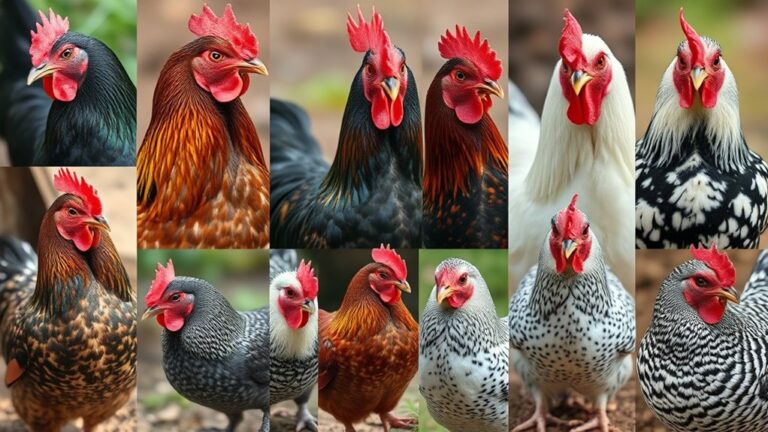
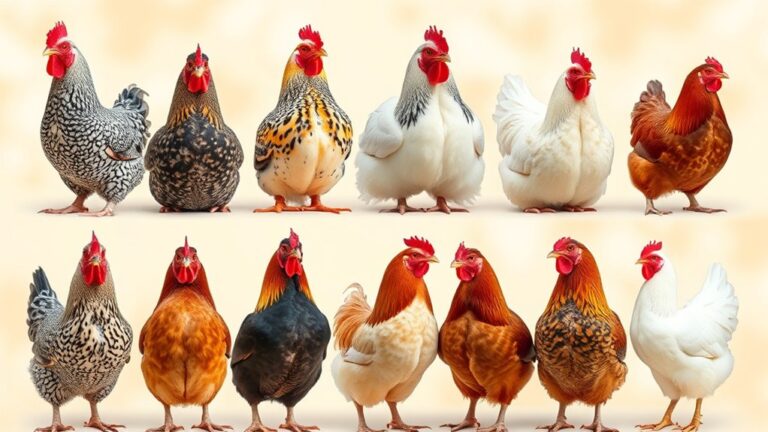
Although the classic barred pattern is the most recognized, Plymouth Rock chickens come in several striking color variations that you can easily spot in photos. You’ll notice patterns like white, buff, silver penciled, and partridge, each showing how color genetics influence their feather appearance.
These variations arise from specific gene combinations that affect pigmentation and pattern distribution, making it fun to identify different Plymouth Rocks just by their feather colors.
When you look at photos, you might also spot differences in feather shedding across these color types. Some colors seem to hold their plumage better during molting, while others shed more noticeably, revealing how feather shedding varies with color genetics.
This shedding can affect the bird’s overall look in pictures, sometimes making their colors appear less vibrant or patchy. Understanding these color variations and feather shedding patterns helps you appreciate the diversity within the Plymouth Rock breed beyond the classic barred look.
What Their Comb, Wattles, Legs, and Feet Reveal
Because the comb, wattles, legs, and feet play crucial roles in a Plymouth Rock chicken’s health and breed standards, paying close attention to these features can tell you a lot about the bird. When you look at photos, notice the comb’s bright red color and smooth texture. They indicate good circulation and overall health.
The wattles should match the comb in vibrancy and size, reflecting a well-nourished bird. The legs and feet, typically yellow with sturdy scales, reveal strength and breed purity. Any discoloration or deformities might signal health issues.
While examining these parts, don’t overlook the feather sheen, which complements the bird’s vigor and well-being. Also, take note of the beak shape. It should be slightly curved and strong, ideal for pecking and foraging.
Together, these physical traits offer a clear window into the Plymouth Rock’s condition and adherence to breed standards, helping you assess the bird accurately.
Why Plymouth Rocks Are Perfect for Backyard Flocks
If you’re looking for a reliable and friendly addition to your backyard flock, Plymouth Rocks offer a perfect balance of hardiness and temperament. These chickens adapt well to various climates, making farm management easier, especially if you’re managing multiple tasks.
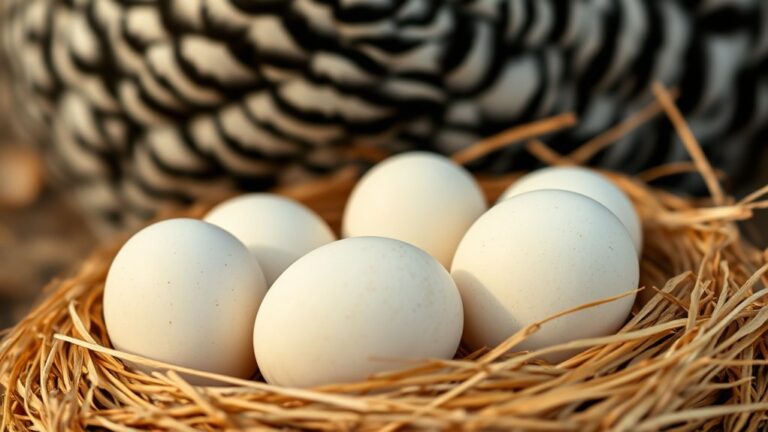
Their calm nature means you won’t have to worry about aggression, which is ideal if you have children or other animals around. Plymouth Rocks also excel in egg production, consistently laying large brown eggs throughout the year.
This steady output means you get fresh eggs regularly without extra hassle. Their robust health reduces veterinary visits, helping you save time and money on farm management. Plus, their attractive barred plumage adds charm to your backyard setup.
How Photos Help You Identify Healthy Plymouth Rock Chickens
You can tell a lot about a Plymouth Rock chicken’s health just by looking at photos. For example, check if the feathers are smooth and well-kept. Also, take a look at their eyes — bright eyes usually mean a healthy bird. Don’t forget to notice the comb too; a vibrant, colorful comb is a good sign. These little visual clues make it easy to spot healthy chickens quickly.
Feather Condition Indicators
When examining photos of Plymouth Rock chickens, you’ll notice that their feather condition reveals a lot about their health. Look for a vibrant feather sheen, which indicates good nutrition and overall well-being.
Dull, ragged feathers might suggest nutritional deficiencies or illness. Pay attention to the molt stages, too; during molting, feathers naturally look patchy or worn as old feathers shed and new ones grow in.
Recognizing these molt stages in photos helps you distinguish between a healthy chicken going through a normal process and one with possible health issues. By carefully evaluating feather quality in pictures, you can identify healthy Plymouth Rocks and spot any early signs of trouble without needing a physical inspection.
Photos offer a clear window into their feather condition and, by extension, their health.
Bright Eyes And Comb
Although feather condition provides essential health clues, bright eyes and a vibrant comb also offer clear signs of a Plymouth Rock chicken’s well-being. When you look at photos, notice how the chicken’s eyes sparkle with clarity. Dull or cloudy eyes often indicate illness.
A healthy comb should be rich red and firm, not pale or shriveled, signaling good circulation and overall vigor. Pay attention to the feather sheen, too; glossy feathers reflect proper nutrition and grooming.
The beak shape matters as well. Well-formed, smooth beaks suggest the bird can eat comfortably and maintain good health. By focusing on these visual cues in pictures, you can quickly assess whether a Plymouth Rock chicken appears healthy and thriving, even without seeing it in person.
Tips for Spotting Plymouth Rock Traits in Your Flock
Because Plymouth Rock chickens have distinct characteristics, recognizing them in your flock becomes easier once you know what to look for. These birds are known for their friendly mating behaviors and consistent egg laying patterns, which can help you identify them beyond just their appearance.
Recognizing Plymouth Rock chickens is easier when you understand their unique behaviors and egg-laying habits.
To spot Plymouth Rock traits, focus on the following:
- Feather Pattern: Look for barred black and white stripes evenly spaced across their feathers.
- Body Shape: They have a broad, deep body with a sturdy stance.
- Comb Type: Notice the single, bright red comb that stands upright.
- Behavior: Watch for calm, social mating behaviors and regular egg laying, usually producing brown eggs consistently.
Frequently Asked Questions
How Do Plymouth Rock Chickens Behave Around Humans?
You’ll find Plymouth Rock chickens are quite friendly around humans. Their feeding behavior shows they’re comfortable eating near you, often coming close during feeding time.
They enjoy social interactions not just with other chickens but also with people, making them easy to handle and train. If you spend time with them regularly, they’ll likely become curious and even approach you for treats, showing their gentle and sociable nature.
What Is the Typical Lifespan of a Plymouth Rock Chicken?
Imagine your Plymouth Rock chicken like a well-worn book, its feather coloration telling stories of seasons past. Typically, these hardy birds live 6 to 8 years, thriving if you support their brooding behavior by providing a calm environment.
Just as each feather adds character, their lifespan reflects care and conditions. So, if you nurture them well, your feathered friend can stick around long enough to become a cherished family tale.
Are Plymouth Rock Chickens Good for Egg Production?
Yes, Plymouth Rock chickens are great for egg production. You’ll appreciate their consistent egg laying habits, as they produce a good number of brown eggs throughout the year.
Plus, their attractive feather coloration, typically barred black and white, makes them stand out in your flock. If you want reliable layers with a charming look, these birds are a solid choice for your backyard or small farm.
How Do Plymouth Rock Chickens Adapt to Cold Weather?
Think of Plymouth Rock chickens as little warriors wrapped in armor. That armor is their dense feather insulation. You’ll notice their thick feathers create a natural barrier, helping them maintain body heat and showcasing impressive cold weather resilience.
When winter bites, they don’t just survive; they thrive. Their plumage acts like a cozy shield, letting you keep these hardy birds even in chilly climates without worry.
What Are Common Health Issues in Plymouth Rock Chickens?
You might notice common health issues in Plymouth Rock chickens include respiratory infections and mites, which can affect their feather coloration and overall vigor. Poor comb development often signals illness or nutritional deficiencies, so you should monitor these closely.
Keeping their environment clean and providing a balanced diet helps prevent problems. If you spot dull feathers or underdeveloped combs, it’s a good idea to consult a vet to keep your flock healthy and thriving.
Conclusion
When you look at pictures of Plymouth Rock chickens, you’ll notice their striking barred plumage, which makes up about 95% of the breed’s appearance. Their sturdy body and bright combs show they’re healthy and strong.
These photos help you spot those classic traits quickly, making it easier to identify Plymouth Rocks in your flock. Knowing what to look for guarantees you pick the best birds for your backyard, combining beauty and hardiness effortlessly when choosing Plymouth Rock chickens.