
What Does a Barred Rock Chicken Look Like in a Picture?
If you’ve ever tried to identify different chicken breeds, you’re not alone—many people struggle with spotting the unique features that set each breed apart. Whether you’re a backyard chicken keeper or just curious about poultry, knowing what a Barred Rock chicken looks like can make all the difference.
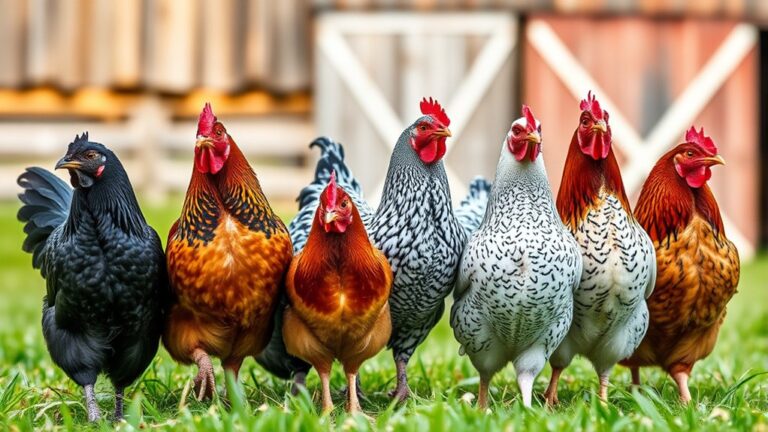
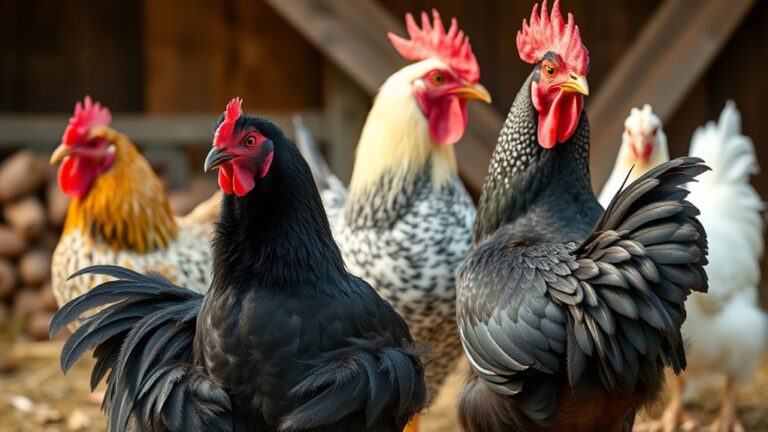
When you look at a Barred Rock chicken in a picture, you’ll notice its bold black-and-white striped feathers covering a sturdy, well-rounded body. The bright red comb and wattles stand out clearly against the feather pattern.
Roosters have larger, more upright features, while hens appear rounder. Their bright yellow legs and smooth scales add to their healthy look.
Lighting and angles highlight these details, and as you investigate further, you’ll uncover even more about their unique traits and behaviors.
Key Takeaways
- Barred Rock chickens have distinctive black-and-white striped feathers. Roosters show bolder bars, while hens have softer patterns.
- They feature bright red combs and wattles. These are larger and more prominent in roosters, creating a vivid contrast with their barred plumage.
- Their sturdy bodies show broad chests. Roosters stand upright, and hens have a more rounded shape.
- Pale yellow legs with clear scales and evenly spread toes support balanced movement. This also indicates good health.
- Natural sunlight highlights their feather sheen and vibrant facial features. It really enhances the contrast and detail in photos.
Overview of Barred Rock Chickens

Although you might not have seen one up close, Barred Rock chickens are easy to recognize by their distinctive black-and-white striped feathers. When you look closely, you’ll notice a subtle feather sheen that gives them a healthy, glossy appearance under sunlight. This sheen adds to their striking look without taking away from their classic barred pattern.
You’ll appreciate more than their looks, though. Barred Rocks are known for their excellent egg laying habits, producing a steady supply of large brown eggs throughout the year. If you’re raising chickens, this breed offers both beauty and productivity.
They’re hardy birds, adapting well to various environments, which means you don’t have to worry much about their care. Understanding these basics helps you identify and appreciate the Barred Rock chicken beyond just its appearance.
Distinctive Feather Patterns of Barred Rock Chickens

When you examine a Barred Rock chicken’s feathers closely, you’ll notice a unique pattern of alternating black and white bars that cover their entire body. This barred pattern is not just striking but also consistent, giving the bird a distinctive, almost striped look.
The feathers have a subtle sheen that catches the light, adding to the bird’s visual appeal. This feather sheen varies slightly depending on lighting and the bird’s health, often indicating good care and robustness.
The consistent barred pattern isn’t just for show. It’s a breed hallmark linked to their reliable egg production. Barred Rocks are known for laying large brown eggs consistently, and their feather pattern can help you quickly identify them among other breeds.
Recognizing Barred Rock Body Shape and Size

The barred feather pattern gives Barred Rock chickens their signature look, but their body shape and size also play a big role in identifying them. When you see a Barred Rock, you’ll notice a broad, deep chest and a sturdy, well-rounded body that signals both strength and good health.
Their feather sheen appears smooth and glossy, enhancing their robust appearance. This body type supports their reputation for consistent egg production, making them excellent layers.
You’ll find they maintain a balanced weight, not too heavy or light, usually around 6 to 7.5 pounds for hens, which helps them stay active and productive. Their compact size with strong legs and a straight back ensures they’re well-suited for both backyard flocks and larger farms.
Recognizing these physical traits alongside their distinctive barred feathers will help you confidently identify a Barred Rock chicken in any picture.
Identifying Bright Red Combs and Wattles on Barred Rocks
You’ll notice that Barred Rock chickens have bright red combs that really stand out against their black-and-white feathers. Their wattles are medium-sized and hang neatly under the beak, matching the comb’s vivid color.
Keeping an eye on these features can help you spot signs of good health or potential issues. It’s pretty handy to know what to look for when checking on your flock!
Combs Color Characteristics
Although combs and wattles might seem like minor details, their bright red color plays a crucial role in identifying healthy Barred Rock chickens. When you examine a Barred Rock, pay close attention to the comb’s vibrant hue, which contrasts beautifully with their black-and-white feather color variations.
You’ll notice the comb’s redness intensifies during active behavior, especially grooming. Here’s what to look for:
- A deep, consistent red color signals good health.
- Pale or dull combs may indicate illness or stress.
- Bright red combs often glow against the striped feathers.
- During grooming, combs maintain their vivid color, reflecting wellness.
Wattles Size And Shape
When you examine Barred Rock chickens closely, their wattles stand out as key indicators of health and breed authenticity. You’ll notice that these wattles are bright red, matching the comb’s vivid color and contrasting beautifully with the bird’s distinctive black-and-white barred feather color.
The wattles are medium-sized and hang smoothly on either side of the beak, enhancing the bird’s classic profile. Proper wattle size and shape often correlate with good egg production since healthy chickens typically display well-developed wattles.
If the wattles look pale or shrunken, it might signal issues affecting the bird’s laying capacity. So, by observing wattles alongside feather color, you get a clearer sense of your Barred Rock’s overall robustness and potential as a reliable egg producer.
Health Indications From Color
Because the color of a Barred Rock’s comb and wattles directly reflects its health, spotting a bright red hue is a strong sign of significance and good circulation. When you see this vibrant red, it indicates your chicken is thriving.
Alongside this, you should also check other signs like feather sheen and egg color to confirm overall wellness. Here’s what to look for:
- Bright red comb and wattles signal strong blood flow and robustness.
- Dull or pale colors could mean illness or stress.
- Shiny feather sheen usually indicates good nutrition and health.
- Consistent, rich egg color complements the bright comb as a health indicator.
Keep an eye on these to guarantee your Barred Rock stays in top shape.
Unique Facial Features of Barred Rock Chickens
If you’re looking closely at a Barred Rock chicken, you’ll notice its bright red comb and wattles stand out sharply against its black-and-white striped feathers. These unique facial features not only add character but also signal the bird’s health and significance. The comb is typically medium-sized and upright, which helps you assess the bird’s well-being quickly.
Alongside these, you’ll spot clear, alert eyes framed by smooth, clean skin, enhancing its distinctive look.
While feather color variations mostly concern the body’s barred pattern, the facial features remain consistent, serving as reliable identifiers. These traits also reflect the bird’s impressive egg production traits since a vibrant comb often indicates good circulation and reproductive health.
When you observe these facial markers, you get a glimpse of the Barred Rock’s robust genetic qualities, making it easier to identify a healthy, productive bird among others in your flock.
What Barred Rock Legs and Feet Look Like
You’ll notice Barred Rock chickens have pale, yellowish legs that really stand out against their dark feathers. Their feet are sturdy, with well-defined scales that give them a nice textured look.
If you pay close attention, you’ll see their toes spread out evenly, which helps them keep their balance as they move around. It’s pretty interesting how their legs and feet work together to support their active lifestyle.
Barred Rock Leg Color
When you look closely at a Barred Rock chicken’s legs and feet, you’ll notice their distinctive yellow color. This vibrant yellow contrasts beautifully with their black-and-white barred feathers, which often have a subtle feather sheen under sunlight. The leg color is not just aesthetic; it hints at the bird’s overall health and robustness. Here’s what you should know about Barred Rock leg color:
- The yellow legs are consistent across both hens and roosters.
- Bright yellow legs indicate good nutrition and strong genetics.
- Leg color complements their creamy brown egg color, creating a balanced appearance.
- Dull or pale legs can signal health issues or poor diet.
You’ll find their yellow legs add charm and character to this popular breed.
Feet Shape and Texture
Although their yellow legs catch your eye first, the shape and texture of a Barred Rock chicken’s feet reveal much about their agility and health. You’ll notice their feet are sturdy with well-defined scales, providing excellent grip as they scratch and forage.
This strong footing supports their active feeding habits, allowing them to efficiently search for insects and seeds. Healthy feet contribute directly to consistent egg production, as discomfort or deformities can hinder movement and reduce laying frequency.
When you inspect their feet, look for smooth scales without swelling or cracks—signs of good health and proper care. By paying attention to these details, you can better understand how their feet shape and texture impact their overall wellbeing and productivity.
Differences Between Roosters and Hens in Barred Rock Chickens
While Barred Rock roosters and hens share similar black-and-white striped feather patterns, you can spot clear differences if you know what to look for. These differences go beyond feather color variations and include behavior and physical traits.
Barred Rock roosters and hens look similar but have distinct traits beyond their striking feather patterns.
Here’s how you can tell them apart:
- Feather Color Variations: Roosters usually have bolder, more defined stripes, while hens’ patterns appear softer and more blended.
- Comb and Wattles: Roosters have larger, brighter red combs and wattles compared to hens.
- Body Size and Shape: Roosters are bigger with a more upright stance; hens have rounder bodies.
- Egg Production Differences: Only hens lay eggs, and their energy focuses on steady egg production rather than territorial displays.
How Lighting and Angles Affect Barred Rock Chicken Photos
Because lighting and angles can dramatically change how a Barred Rock chicken appears in photos, you need to pay close attention to these factors. Proper lighting highlights the bird’s distinctive black-and-white barred feathers, making patterns vivid and clear.
Natural sunlight often works best, enhancing feather texture and body shape, which is essential for farm management assessments. Harsh shadows or dim light can obscure important details, affecting how you evaluate the chicken’s health and condition.
Angles also play a key role. Shooting from eye level captures the bird’s full profile, helping you distinguish between hens and roosters, which matters for managing egg production.
A low angle can make the chicken look larger and more imposing, while a high angle might flatten its features. By experimenting with lighting and angles, you guarantee your photos accurately reflect the Barred Rock’s characteristic appearance, supporting better decisions in your farm management and monitoring egg production quality.
Common Backgrounds in Barred Rock Chicken Pictures
When you capture Barred Rock chickens, the background can either improve or distract from their striking black-and-white patterns. Choosing the right setting helps highlight their bold look while keeping the photo balanced. Here are four common backgrounds you’ll often find in Barred Rock chicken pictures:
1. Natural Yard or Garden
Green grass or flower beds complement their feathers and fit well with garden design themes.
2. Rustic Coop or Barn
Weathered wood adds texture and authenticity, giving a homey feel.
3. Neutral Plain Backdrops
Solid colors like beige or gray keep the focus on the chicken’s patterns without distractions.
4. Farmyard Scenes
Hay bales or farming tools can create a story, tying into cooking recipes where fresh eggs or poultry are featured.
Tips for Taking Clear Photos of Barred Rock Chickens
Choosing the right background sets the stage, but capturing a clear photo of your Barred Rock chicken brings out its unique charm. To get sharp images, use photography accessories like a tripod to steady your camera and a fast lens to handle movement. Natural light works best, so shoot outdoors or near a window to avoid harsh shadows and grainy photos.
Understanding pet behavior helps too. Barred Rocks can be curious but easily startled, so approach slowly and let them get used to your presence. Use treats or gentle sounds to encourage them to stay still. Patience is key. Wait for moments when your chicken is calm and comfortable.
Finally, focus on the eyes to create engaging photos. Combine good lighting, steady equipment, and respect for your chicken’s behavior, and you’ll capture clear, charming images that showcase your Barred Rock’s distinctive barred feathers beautifully.
Frequently Asked Questions
How Long Do Barred Rock Chickens Typically Live?
Barred Rock chickens typically live around 6 to 8 years, though some can reach 10 years with good care. You’ll notice their distinctive feather patterns and color variations, mainly black and white stripes, which help identify them easily.
To keep your Barred Rock healthy and extend its lifespan, provide proper nutrition, clean housing, and regular health checks. Their unique feather patterns aren’t just beautiful; they’re part of a hardy breed built to thrive.
What Is the Temperament of Barred Rock Chickens?
You’ll notice Barred Rock chickens’ feather coloration mirrors calm waves, with soft black and white stripes blending seamlessly. Their behavior traits match this peaceful pattern; they’re friendly, gentle, and easy to handle.
You won’t find them skittish or aggressive. Instead, they’re curious and social, making them great for families or beginners. When you interact with them, you’ll feel their steady, calm nature reflecting the balanced beauty of their feathers.
Are Barred Rock Chickens Good for Egg Production?
Yes, you’ll find Barred Rock chickens excellent for egg production. This breed’s history as a dual-purpose bird means it’s been bred for both meat and consistent egg-laying.
Their distinctive barred feather pattern doesn’t just look good; it’s part of a hardy breed that lays large brown eggs regularly. If you want reliable layers with a friendly temperament and a classic look, Barred Rocks are a smart choice for your flock.
What Do Barred Rock Chicken Eggs Look Like?
Barred Rock chicken eggs usually have a light brown egg color that’s consistent and appealing. When you see their feather pattern, which features black and white stripes, it’s easy to identify these birds.
Their eggs aren’t just pretty; they’re reliable and tasty too. So, if you spot that distinctive barred feather pattern, you can expect eggs with a lovely, warm brown hue, perfect for any kitchen.
How Much Space Do Barred Rock Chickens Need to Roam?
You should give your Barred Rock chickens at least 8 to 10 square feet per bird to roam comfortably. Their feeding habits lead them to scratch and peck, so ample space helps satisfy this natural behavior.
More room also lowers predation risks by allowing them to spot threats early and escape. If you can provide a secure, spacious area, your Barred Rocks will stay healthier, happier, and better protected from predators.
Conclusion
Now that you know how to spot a Barred Rock chicken by its striking feather patterns, bright red combs, and unique body shape, don’t you want to capture its charm perfectly in a photo? Remember, lighting and angles play a big role in showing off these features.
With a little practice, you’ll be snapping clear, beautiful pictures that highlight everything that makes Barred Rocks so special. Ready to start shooting and capture what a Barred Rock chicken looks like in a picture?