What Do Barred Rock Hens Look Like in Images?
If you’ve ever tried to identify Barred Rock hens among a flock, you’re not alone. Many people struggle with distinguishing these birds from other similar breeds, especially when they’re new to raising chickens or just curious about their unique look. Understanding what makes Barred Rock hens stand out can make all the difference in choosing the right breed for your backyard or farm.
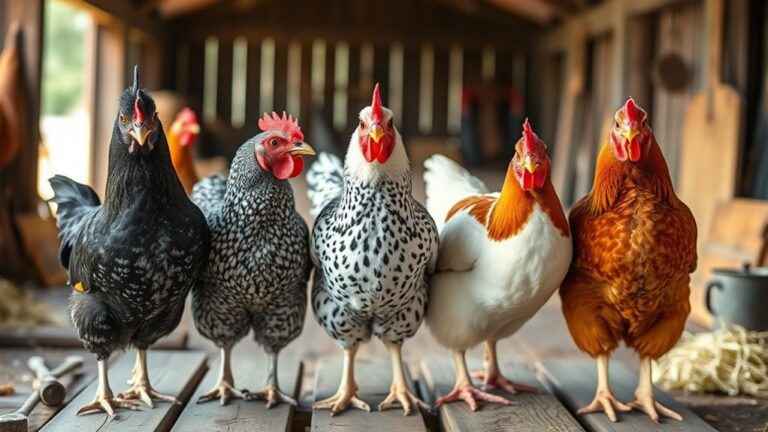
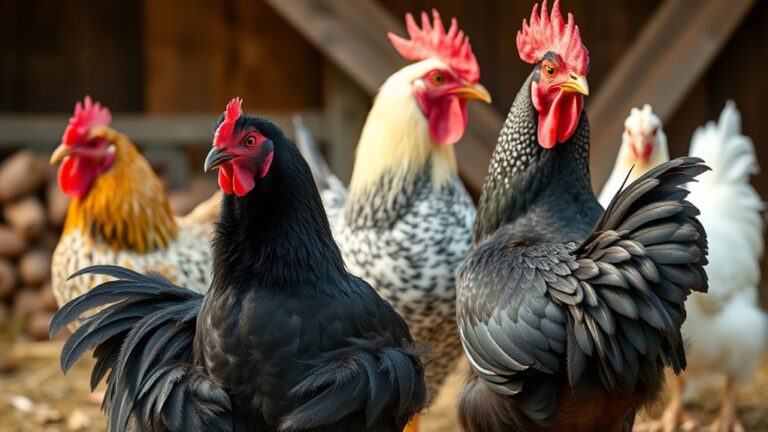
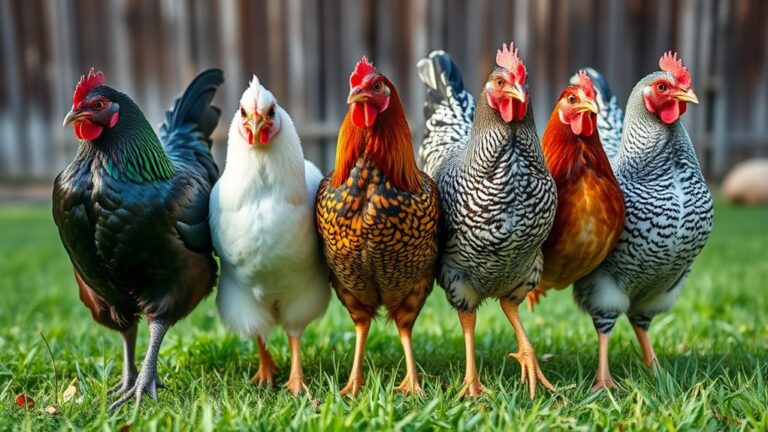
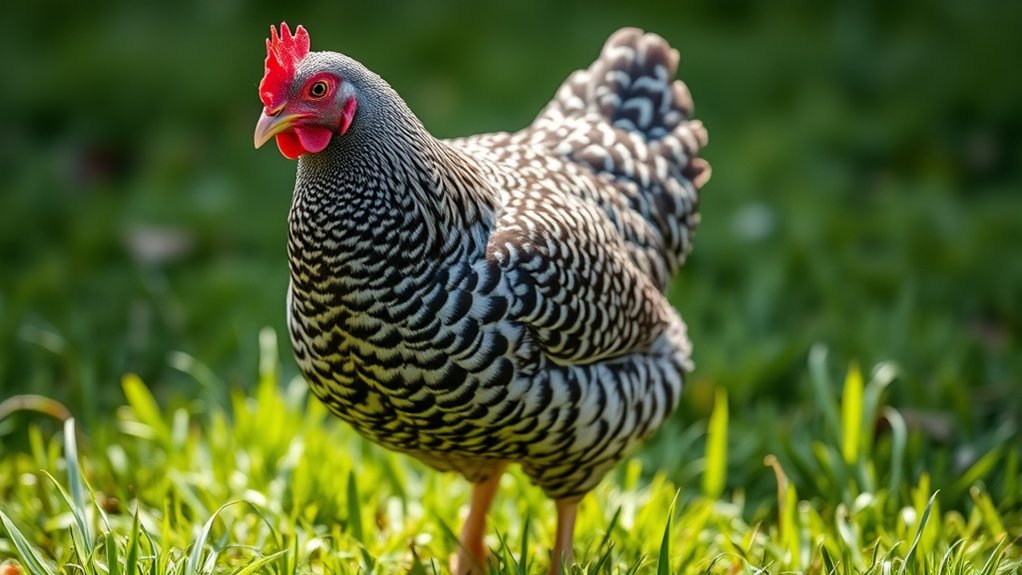
You’ll spot Barred Rock hens easily by their bold black-and-white striped feathers that create a striking barred pattern across their sturdy bodies. They have bright red combs and wattles that contrast beautifully with their plumage. Along with this, their sharp orange to red eyes show alertness.
Their medium to large size gives them a solid, confident look unlike slimmer breeds. If you want to uncover what makes their appearance and behavior truly unique, keep exploring further.
Key Takeaways
- Barred Rock hens feature distinctive black-and-white striped feathers with crisp, evenly spaced barred patterns resembling zebra stripes.
- They have bright red medium single combs and wattles that contrast vividly with their black-and-white plumage.
- Their eyes range from deep orange to bright red, often appearing alert and curious in images.
- The hens display a sturdy, broad body shape with sleek, soft feathers enhancing their robust, healthy appearance.
- Photos often show them in natural farm backgrounds with soft lighting that highlights their barred feather patterns.
Meet the Barred Rock Hen: Key Features and Appearance
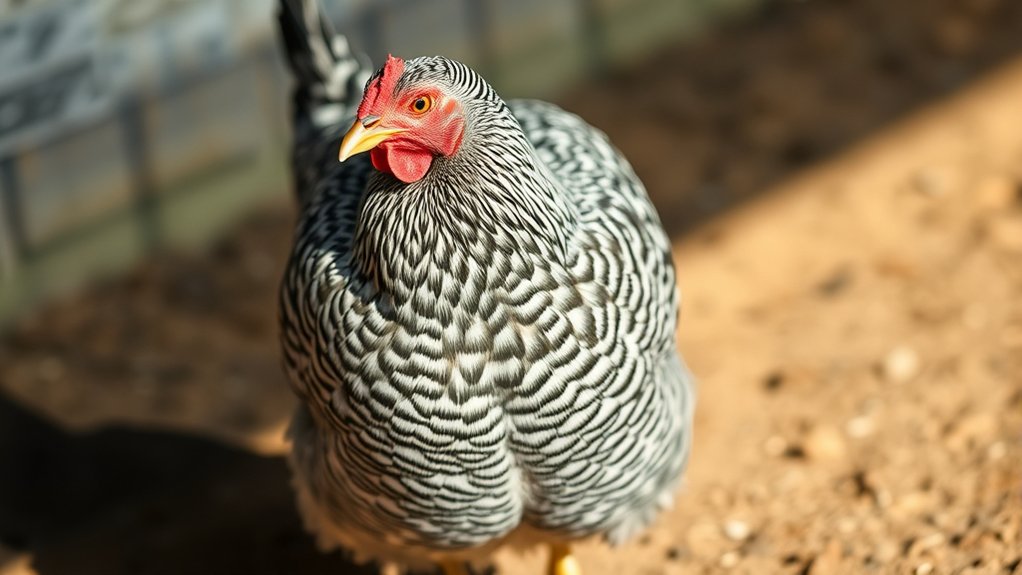
Although you might be familiar with common chicken breeds, the Barred Rock hen stands out with its distinctive black-and-white striped feathers. This unique feather coloration gives her a striking, barred appearance that’s easy to recognize.
When you look closely, you’ll notice how evenly spaced the black and white bands are, creating a beautiful pattern that’s both functional and attractive.
Besides her feathers, pay attention to the beak structure. The Barred Rock hen has a strong, slightly curved beak that’s perfect for pecking and foraging. This robust beak helps her efficiently gather food, which is essential for her active lifestyle.
Her overall appearance combines practicality with charm, making her a favorite among backyard chicken keepers. Understanding these key features will help you appreciate the Barred Rock hen’s unique look and functionality without confusing her with similar breeds.
Spotting Barred Rock Hens by Their Feather Patterns
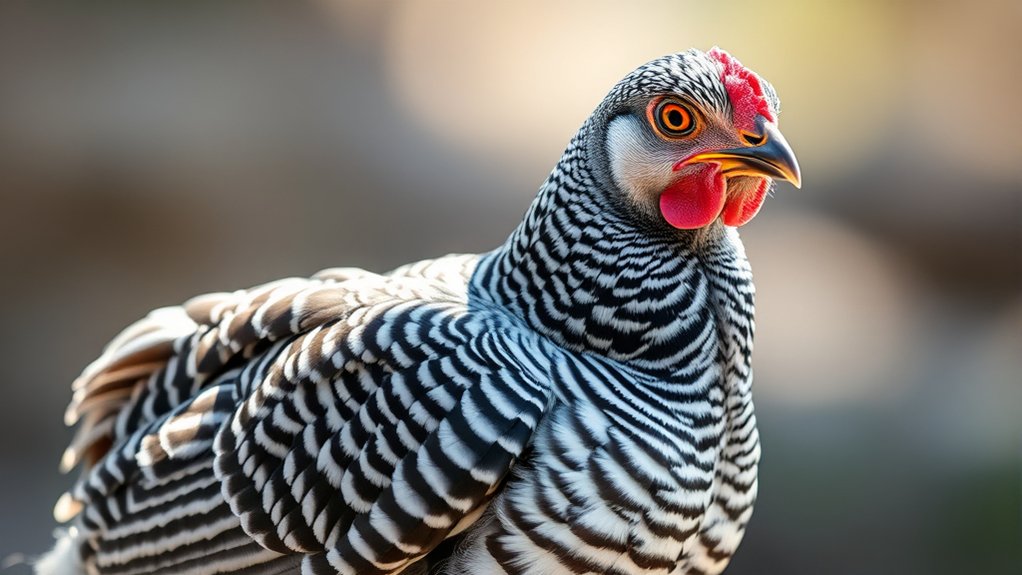
When you want to identify a Barred Rock hen, focus on her feather patterns. They’re the clearest clue. You’ll notice a distinct barred feather coloration, consisting of alternating black and white stripes across her body.
This pattern is consistent and evenly spaced, creating a striking, almost zebra-like look. Pay close attention to the feather edges; they tend to be crisp and well-defined, unlike other breeds with more blended or mottled plumage.
Besides being visually unique, these feather patterns can hint at the hen’s vitality and egg production potential. Healthy feather coloration often correlates with a hen in good condition, ready to lay eggs regularly.
Colors and Markings That Make Barred Rock Hens Unique
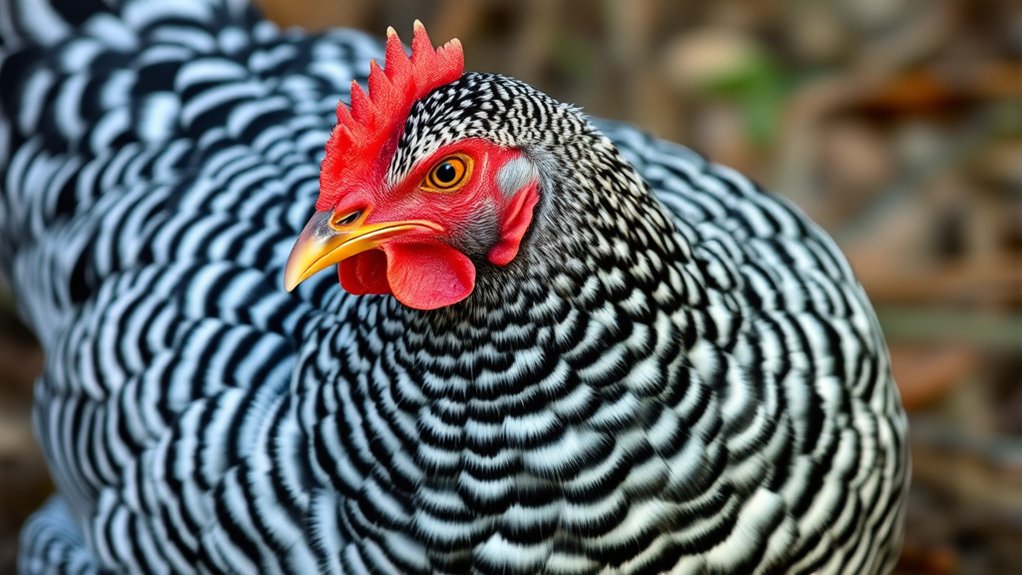
You’ll notice Barred Rock hens really stand out with their distinctive black and white feathers. Their bold barred patterns create a striking visual rhythm across their bodies. And when you add in that bright red comb, well, you’ve got a unique look that’s hard to miss.
Distinctive Black And White
Because of their striking black and white plumage, Barred Rock hens stand out in any flock. Their feathers have a smooth, sleek texture that feels soft to the touch, adding to their distinctive appearance.
The alternating black and white bars create a clean, classic look you’ll easily recognize. This unique coloration isn’t just for show; it’s linked to their hardy nature and excellent egg production.
Barred Rock hens consistently lay large brown eggs, making them a favorite among backyard keepers and farmers alike. When you care for these hens, you’ll notice how their feather texture helps protect them in various weather conditions while they maintain steady egg-laying throughout the year.
Their bold black and white colors make them truly one of a kind.
Bold Barred Feather Patterns
Although Barred Rock hens share the classic black and white coloration, their bold barred feather patterns set them apart in subtle but striking ways. You’ll notice evenly spaced black and white stripes that create a crisp, eye-catching contrast.
These patterns aren’t just for show. They contribute to feather durability, helping the hens withstand various weather conditions. When you observe these feathers, you’ll see how the consistent barring provides a protective layer that lasts through molting seasons.
Beyond their appearance, these bold patterns often indicate healthy birds with strong egg production rates. So when you spot a Barred Rock hen with well-defined bars, you’re likely looking at a productive hen with resilient feathers that support her overall robustness and consistent egg laying.
Bright Red Comb Contrast
The bold barred feather patterns naturally draw your eye, but the bright red comb on a Barred Rock hen offers a striking contrast that makes her stand out even more. This vivid comb pops against her black-and-white barred feathers, enhancing the overall feather sheen that gives her a glossy, healthy look.
When you observe her face, the sharp beak shape complements the bright comb, framing her expression perfectly. The comb’s rich red tone signals energy and health, making it a key feature in identifying Barred Rock hens.
You’ll notice how this contrast between the comb and feathers creates a balanced and vibrant appearance, highlighting the breed’s unique and unmistakable look. This bright red comb truly makes her distinctive among backyard flocks.
Barred Rock Hens’ Comb and Wattles: Distinctive Traits
When you observe Barred Rock hens up close, their comb and wattles immediately catch your eye with distinct shapes and vibrant colors. These features aren’t just for show. They play an essential role in the hen’s health and vigor. Here’s what makes their comb and wattles stand out:
Barred Rock hens’ combs and wattles are striking, vital indicators of their health and vitality.
- Shape and Size: Barred Rock hens have a medium-sized single comb with evenly spaced points. Their wattles hang neatly beneath the beak, balancing their overall profile.
- Color Vividness: A bright red hue signals good circulation and health, closely linked to their egg production capacity. Dull or pale combs often indicate stress or illness.
- Relation to Feather Sheen: A vibrant comb and wattles often accompany the glossy, healthy feather sheen you’ll notice in a well-cared-for Barred Rock hen.
What Barred Rock Hens’ Eyes and Expressions Reveal
When you take a closer look at Barred Rock hens, you’ll see their eye colors can range from deep orange to bright red. It’s pretty fascinating! Their facial expressions also tend to reveal a lot about how they’re feeling—whether they’re curious, alert, or just relaxed. If you pay attention to these little details, it really helps you get a sense of what’s going on with them in the moment.
Eye Color Variations
Although you might first notice their distinctive black-and-white feathers, Barred Rock hens’ eyes offer fascinating insights into their health and mood. Their eye color varies subtly, reflecting different conditions and ages. Here’s what you should look for:
- Bright orange or reddish eyes usually indicate a healthy hen with good feather sheen and strong beak coloration.
- Duller, hazy eyes may suggest stress, illness, or aging, signaling you to check your hen’s overall condition.
- Occasionally, you’ll spot hens with lighter, almost amber eyes, often younger birds or those experiencing molting.
Common Facial Expressions
You can learn a lot about a Barred Rock hen just by watching her eyes and facial expressions. Her alert gaze often signals curiosity, especially if you’re familiar with caring for dairy goats or practicing urban gardening, where attentiveness is key.
A relaxed, half-closed eye suggests contentment, while wide eyes with a tense beak might warn you of discomfort or stress.
| Expression | What It Means |
|---|---|
| Bright, alert eyes | Curiosity and engagement |
| Half-closed eyes | Relaxation and comfort |
| Wide eyes, tense beak | Discomfort or alertness to danger |
Observing these expressions helps you better understand your hen’s mood and needs without relying on vocal cues.
Emotional Indicators in Eyes
Since the eyes are windows to a Barred Rock hen’s emotions, paying close attention to their subtle changes can reveal how she’s feeling. You’ll notice her mood expression shifts through eye contact and pupil changes. Here’s what to look for:
- Bright, alert eyes mean she’s curious or content, engaging with her surroundings.
- Narrowed or half-closed eyes often signal relaxation or sleepiness, showing she feels safe.
- Wide, intense eye contact can indicate alertness or stress, especially if paired with quick head movements.
How Barred Rock Hens Change at Different Life Stages
As Barred Rock hens grow, their appearance and behavior evolve in distinct ways that reflect their changing needs and roles. When you start with chicks, they’re fluffy and curious, relying heavily on balanced chicken nutrition to develop strong bones and feathers. Urban farming enthusiasts know this well.
As juveniles, they gain striking black-and-white barred plumage and become more social. Adults show confident postures and full feather patterns, signaling readiness for laying eggs.
| Life Stage | Appearance | Behavior |
|---|---|---|
| Chick | Soft down feathers | Curious, dependent |
| Juvenile | Emerging barred pattern | Social, exploratory |
| Adult | Full barred plumage | Confident, egg-laying |
Watching these stages helps you appreciate how each phase suits the hen’s growth. You’ll notice how their needs shift, especially nutrition, as they move from vulnerability toward productivity in your urban farming setup.
Comparing Barred Rock Hens’ Size and Shape to Other Breeds
Observing how Barred Rock hens develop through their life stages naturally leads to understanding how their size and shape stand out compared to other breeds. When you compare them, you’ll notice distinct characteristics that affect both their appearance and functionality.
- Size and Build: Barred Rock hens are medium to large with a sturdy, broad body, giving them a robust silhouette unlike the slimmer frames of Leghorns or the compact shape of Bantams.
- Feather Sheen: Their feathers display a unique barred pattern with a subtle sheen, which differs from the solid colors or iridescence found in breeds like the Rhode Island Red or Sussex.
- Egg Production Shape Efficiency: Their body shape supports good egg production, balancing weight and mobility, so they lay consistently without bulkiness hindering their movement.
Lighting and Angles That Flatter Barred Rock Hens
When you photograph Barred Rock hens, choosing the right lighting and angles can highlight their striking barred feathers and sturdy build. Soft, natural light works best to bring out the contrast in their plumage, making the black and white stripes pop without harsh shadows.
Early morning or late afternoon light provides a warm tone that complements their rich feather patterns and showcases the results of good feather care. Avoid direct overhead sunlight, which can wash out details and create unflattering shadows.
Shooting from a slightly lower angle emphasizes their robust frame and hints at their strong egg production capabilities. Position yourself to capture their profile or three-quarter view, which reveals the layered feathers and full body shape clearly.
Keep your focus sharp on the eyes and feathers, as these details reflect their health and *indispensable* qualities. With thoughtful lighting and angles, your images will celebrate both their beauty and function.
Best Backgrounds to Photograph Barred Rock Hens
Choosing the right background can dramatically improve your photos of Barred Rock hens by making their distinctive barred feathers stand out. Since these birds carry historical significance as one of America’s oldest heritage breeds, using backgrounds that reflect their breed origins can add depth to your images.
Selecting backgrounds that highlight the Barred Rock’s heritage and feathers enriches the story behind each photo.
Here are three ideal backgrounds to contemplate:
- Rustic Farm Settings Wooden fences or aged barns highlight the breed’s rural heritage and complement their classic look.
- Natural Greenery Grass or leafy shrubs provide a soft, neutral contrast that elevates the hens’ black-and-white barred patterns without overwhelming them.
- Earth-Toned Surfaces Dirt paths or straw bedding echo the traditional environments where Barred Rocks thrived, reinforcing their historical significance.
Tips for Capturing Stunning Photos of Barred Rock Hens at Home
The backgrounds you select set the stage, but how you capture your Barred Rock hens at home truly brings the photos to life. First, confirm your hens have excellent feather care; clean, well-preened feathers reflect light beautifully and highlight their distinctive black-and-white barring. Before shooting, gently brush them to remove dust and loose feathers.
Next, consider your coop design. It should provide natural light without harsh shadows. Large windows or open doors work well to illuminate your hens evenly. Position your hens where the light enhances their texture and pattern.
Use a fast shutter speed to freeze their subtle movements, and get low to their eye level for more engaging shots. Finally, be patient and observe their behavior because candid moments often reveal their personality best. With these tips, you’ll capture stunning, crisp images that showcase your Barred Rock hens in their best light.
Frequently Asked Questions
How Do Barred Rock Hens Behave in Groups?
You’ll notice barred rock hens behave calmly and assertively in groups, using their distinct feather patterns to recognize each other. They establish a clear social hierarchy, with dominant hens leading and others following.
You’ll see them pecking order quietly, avoiding unnecessary conflicts. Their social nature means they cooperate well, often foraging together and sharing space without much fuss, making them easy to manage in a flock.
What Is the Average Lifespan of a Barred Rock Hen?
Think of a Barred Rock hen as a sturdy clock, ticking gracefully through life. You can expect her to live around 6 to 8 years if you care for her well.
Her feeding habits, rich in grains and insects, fuel her vibrant feather coloring, stripes of black and white like a timeless pattern. By keeping her diet balanced and environment safe, you help her feathers shine and her lifespan flourish.
Are Barred Rock Hens Good for Egg Production?
Yes, barred rock hens are excellent for egg production. You’ll find their feeding habits quite efficient. They convert feed into eggs well, making them cost-effective to raise.
They typically lay large, brown eggs consistently throughout the year. If you keep their diet balanced with quality grains and greens, you’ll see steady production.
How Do Barred Rock Hens Adapt to Cold Weather?
Barred Rock hens adapt to cold weather really well thanks to their dense feather insulation, which traps warmth close to their bodies. You’ll notice they’re cold weather resilient, handling chilly temperatures better than many other breeds.
Their feathers create a natural barrier against wind and snow, keeping them comfortable even in freezing conditions. So, if you’re raising them in colder climates, you can trust they’ll stay cozy and continue laying eggs consistently.
What Are Common Health Issues in Barred Rock Hens?
When it comes to common health issues in Barred Rock hens, you can’t sweep them under the rug. Watch for feather coloration changes; they might signal mites or nutritional deficiencies. Beak shape problems can also crop up, affecting feeding.
Respiratory infections and egg-laying issues are frequent, too. Keep a close eye on their overall behavior and environment, and you’ll catch problems early, helping your hens stay happy and healthy.
Conclusion
As you spot a Barred Rock hen, notice how her striking black-and-white stripes almost dance in the sunlight, just like the speckled shadows beneath a leafy tree. You might even catch her curious eyes glinting with personality, perfectly framed by her bright red comb.
It’s no coincidence that these unique patterns and colors make her stand out. Capturing her image feels like catching a little piece of nature’s art right in your backyard. This is exactly what makes Barred Rock hens so memorable in images.