What Do Silkies Look Like?
If you’ve ever tried to find the perfect chicken breed that’s both adorable and unique, you’re not alone. Many people struggle with choosing a bird that stands out without being too high-maintenance. That’s why Silkies are such a popular choice—they offer a one-of-a-kind look and personality that’s hard to resist.
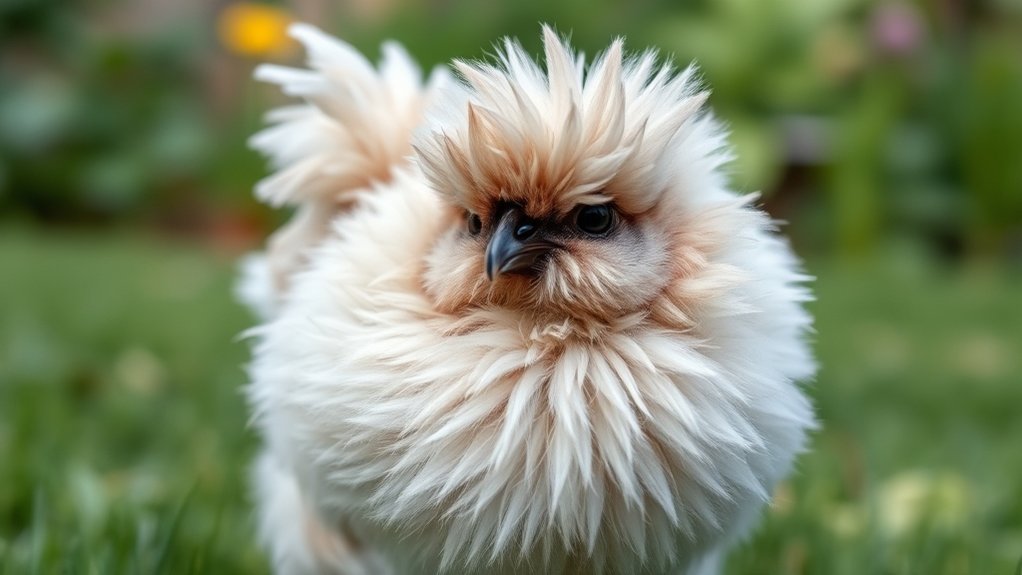
You’ll notice Silkies instantly by their fluffy, fur-like feathers that feel as soft as silk or satin, creating a rounded, cloud-like silhouette. Their compact bodies are small and sturdy, covered in dense feathers, including on their feet and legs, giving them a plush look.
Their unique features include dark blue to black eyes, black skin, and a puffy crest. If you’re curious about their colors, grooming needs, and history, keep exploring to uncover more.
Key Takeaways
- Silkies have soft, fluffy feathers that resemble fur or satin. They lack hooks, which gives them a plush, rounded silhouette.
- Their compact, sturdy bodies weigh 2 to 3 pounds and feature broad chests with a distinctive rounded shape.
- Feathered feet and legs covered in soft plumage give Silkies a unique, plush appearance. This means they need regular cleaning.
- A fluffy crest of feathers on their heads creates a charming silhouette. Sometimes, it needs grooming to keep their vision clear.
- Silkies display dark blue to black eyes and have black or slate-blue skin. They come in colors like white, black, blue, and lavender.
What Is a Silkie Chicken?

Although Silkies may look unusual, they’re a popular breed known for their soft, fluffy feathers that feel like silk or satin. When you care for a Silkie, you’ll notice that feather grooming is essential because their unique plumage can easily tangle or trap dirt. Regular brushing helps keep their feathers clean and comfortable.
Unlike many other chickens, Silkies have a calm temperament, which makes feather grooming a relaxing routine for both you and your bird.
You’ll also want to pay attention to their egg laying habits. Silkies tend to lay fewer eggs compared to other breeds, typically producing small, cream-colored eggs. They’re not prolific layers, but their gentle nature often makes them excellent mothers if you’re interested in hatching chicks.
Understanding these traits helps you appreciate how Silkies differ from other chickens, both in care needs and behavior.
What Makes Silkie Feathers So Unique?
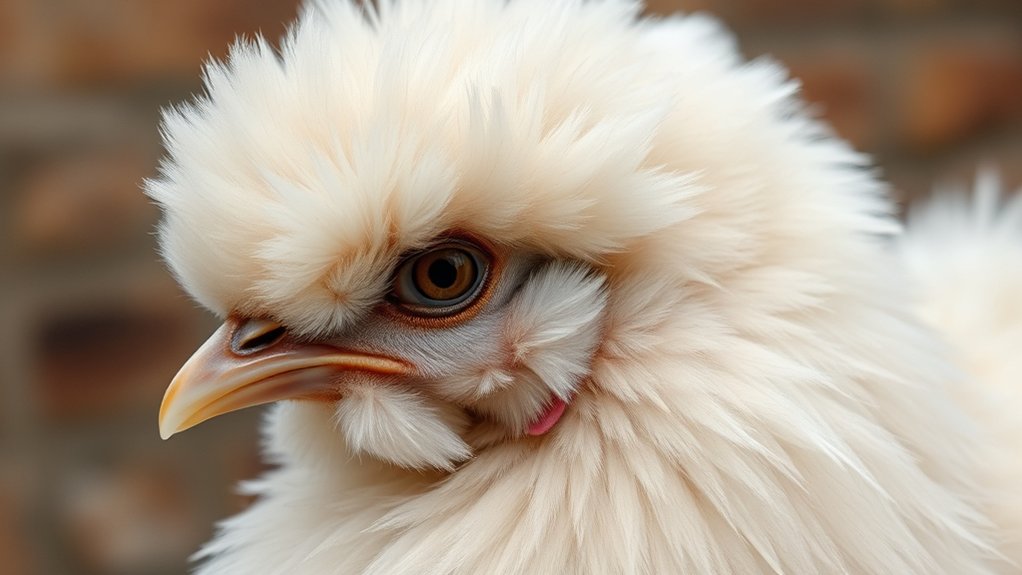
You’ll notice Silkie feathers feel incredibly soft because their structure lacks the usual hooks that hold feathers together. That’s what makes them so different from other chickens. This unique design gives them a fluffy, almost fur-like appearance. It’s pretty cool, right? Understanding these differences helps you appreciate why Silkies look so distinct and charming.
Feather Structure Differences
When you look closely at Silkie feathers, you’ll notice they lack the typical barbs that hold most chicken feathers together. This unique structure makes them appear fluffy and fur-like, setting Silkies apart visually and texturally.
Here’s what makes their feather structure different:
- Each feather’s barbs are separated, not hooked, so they don’t form smooth surfaces.
- This separation means Silkie feather maintenance requires gentle care to avoid damage.
- Their distinct appearance has inspired Silkies in art, symbolizing softness and rarity.
- Unlike typical birds, Silkies’ feathers don’t provide waterproofing, making them more vulnerable to wet conditions.
Understanding these differences helps you appreciate why Silkies look so unique and why they need special care compared to other chickens.
Softness Compared To Others
Silkies’ feather structure directly influences their signature softness, making them stand out from other chicken breeds. Unlike typical feathers with hooked barbules that lock together, Silkie feathers lack these hooks. This gives them a fluffy, fur-like texture you can’t find elsewhere.
When you touch them, you’ll notice a silky smoothness that feels almost like down rather than traditional feathers. Despite this softness, their feather durability holds up well, resisting wear and tear better than you might expect.
Plus, the variety of color pattern variations—from solid whites to mottled blacks—adds to their unique appeal without compromising the softness you love. So, if you’re seeking a chicken breed with feathers that are both soft to the touch and resilient, Silkies are a perfect choice.
Impact On Appearance
Because their feathers lack the typical hooked barbules, Silkies have a distinctive fluffy appearance that sets them apart from other chickens. This unique feather structure impacts their look in several ways:
- You’ll notice their feathers resemble soft fur, giving them a plush, cloud-like texture.
- Their color variations range widely, including white, black, blue, and buff, each with striking feather patterns.
- The feathers don’t lie flat but puff out, creating a rounded, ball-like silhouette.
- Their unusual feathering extends to their skin and bones, which can appear darker, adding to their exotic charm.
These features combine to make Silkies instantly recognizable and visually mesmerizing, no matter the color or pattern you encounter.
Why Silkie Feathers Have a Silky Texture
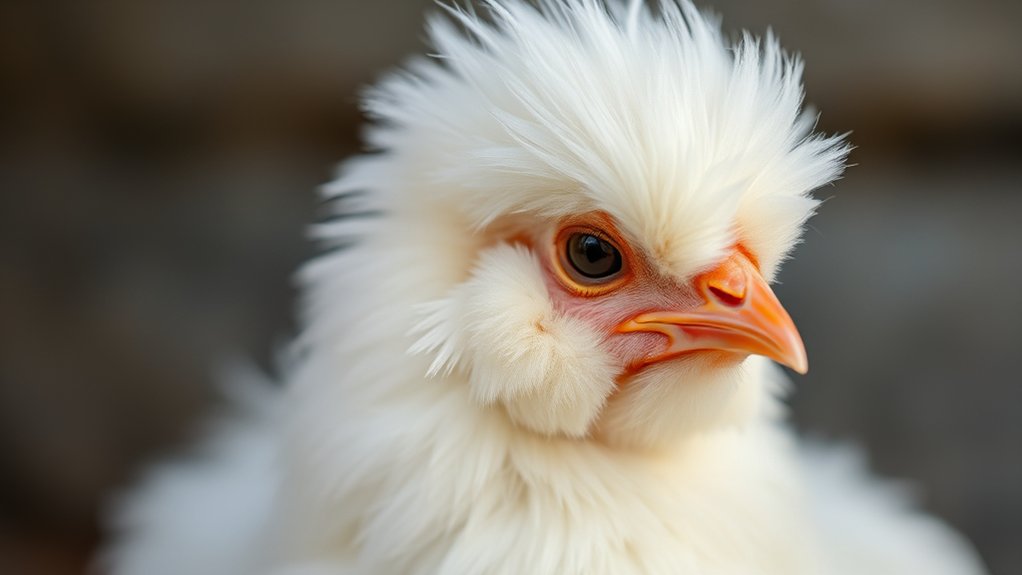
Although you might expect chicken feathers to be stiff and structured, silkie feathers break the mold by lacking the tiny hooks that hold typical feathers together. This absence allows each feather to float independently, giving silkies their signature soft, fluffy appearance.
When you touch a silkie, you’ll notice how their feathers feel incredibly smooth and silky, almost like strands of fine silk. This texture is partly due to feather moisture; silkies maintain a higher moisture level in their feathers, which helps keep them soft rather than brittle.
Interestingly, silk production in these birds isn’t literal silk like from silkworms, but their feathers mimic the softness and sheen of real silk. The unique feather structure combined with moisture retention creates that luxurious, silky feel you associate with silkies.
How Silkie Feather Colors Vary
When you look closely at silkie feathers, you’ll notice they come in a wide range of colors that can surprise even seasoned poultry enthusiasts. Silkie feather colors vary due to differences in feather pigmentation, which influence how light interacts with each feather. Here’s what you should know about these variations:
- Classic White A pure, clean look with minimal pigmentation, highlighting the silky texture.
- Black and Blue Rich, dark tones created by eumelanin pigments, giving a striking contrast.
- Buff and Partridge Warm, earthy shades from pheomelanin that add depth to their appearance.
- Splash and Lavender Unique, diluted colors that result from genetic variations in feather pigmentation.
Understanding these color variations helps you appreciate how diverse silkie feather colors can be. It makes each bird distinctly beautiful.
Understanding Silkie Feathered Feet and Their Care
If you’ve ever noticed a silkie up close, you’ll see their unique feathered feet stand out just as much as their fluffy bodies. These feathers cover their toes and legs, creating a soft, furry look that sets them apart.
Proper feather care is essential to keep these feet clean and healthy. You’ll want to check regularly for dirt or debris caught in the feathers and gently clean them to avoid irritation or infections.
When comparing rooster vs. hen silkies, you might notice that roosters tend to have coarser feathers on their feet, while hens have softer plumage. This difference means you may need to be more attentive to a rooster’s foot feather care, especially during molting or wet weather.
How the Silkie’s Crest Makes It Stand Out
Beyond their feathered feet, silkies grab your attention with another striking feature: their crest. This fluffy crown of feathers sets them apart and adds a charming flair to their appearance. When you care for a Silkie, paying attention to this crest is key for both Silkie grooming and Silkie breeding.
Silkies captivate with their fluffy feathered crest, a charming hallmark needing attentive grooming and care.
Here’s why the crest stands out:
- It creates a unique silhouette, making the Silkie instantly recognizable.
- The crest requires regular grooming to prevent matting and keep feathers clean.
- Silkie breeding often emphasizes a full, well-shaped crest as a prized trait.
- It can sometimes obscure their vision, so trimming or careful grooming might be necessary.
What Silkie Body Shape Reveals
You’ll notice the Silkie’s soft feather texture shapes its unique silhouette, unlike any other chicken breed. Its compact body structure adds to this distinct look, making it easy to recognize. So, let’s take a closer look at how these features reveal more about the Silkie’s charm and character.
Silkie Feather Texture
When you observe a Silkie’s feather texture, you’ll notice it differs considerably from typical chickens. Their feathers are soft and fur-like, lacking the usual barbicels that hold feathers together. This unique structure creates a fluffy, silky appearance that’s quite distinct. Here’s what you should know:
- Silkie feather colors range widely, from white and black to blue, buff, and more.
- Their texture feels more like fur than feathers, giving them a unique tactile quality.
- Feather maintenance requires gentle care since their soft feathers can mat or get dirty easily.
- Regular grooming helps keep their silky plumage clean and healthy, ensuring it stays soft and vibrant.
Understanding these points helps you appreciate the Silkie’s distinctive feather texture fully.
Unique Silkie Silhouette
Although Silkies share some features with other chickens, their body shape stands out in a way that immediately catches your eye. You’ll notice a rounded, almost fluffy silhouette that differs from the sleek lines of typical chickens.
This unique shape reflects the Silkie breed origins rooted in ancient China, where their distinct look was prized. Folk tales often describe Silkies as mysterious creatures, their unusual form inspiring stories about magical birds.
When you observe a Silkie, you’re not just seeing a chicken; you’re witnessing a living piece of history and folklore. Their silhouette hints at softness and warmth, making them appear almost otherworldly compared to other breeds.
This unique shape sets Silkies apart, inviting curiosity about their fascinating background and cultural significance.
Compact Body Structure
While Silkies may look fluffy and soft, their compact body structure reveals a sturdy and well-balanced build. You’ll notice that beneath their unique feather patterns lies a shape designed for both resilience and agility.
This compactness influences their behavioral traits, making them surprisingly active and curious despite their delicate appearance. Here’s what their body structure tells you:
- Short, rounded bodies help Silkies maintain warmth and protect them from harsh weather.
- Their broad chests support strong muscles, aiding in their quick, lively movements.
- Compact frames reduce vulnerability, allowing them to confidently investigate their environment.
- Dense feather patterns not only add to their charm but also shield their bodies effectively.
Understanding these traits helps you appreciate the Silkie’s blend of softness and strength.
Silkie Size and Weight Compared
Because Silkies differ considerably from standard chicken breeds, you might wonder how their size and weight compare. Silkies are particularly smaller and lighter, typically weighing between 2 to 3 pounds. Their compact size makes them easier to handle, especially if you’re new to raising chickens.
When managing their Silkie diet, remember they don’t require special food but benefit from a balanced feed rich in protein to support feather growth and overall health. Proper Silkie grooming also plays a role in maintaining their unique fluffy appearance and comfort, especially given their smaller frame which can be more sensitive to dirt and moisture.
Unlike larger breeds, their petite build means you’ll want to monitor their weight to ensure they stay healthy without becoming overweight. Overall, Silkies offer a charming, manageable size that fits well in smaller coops and backyard flocks.
Typical Silkie Eye and Skin Features
When you look closely at Silkies, you’ll notice their distinctive eye and skin features set them apart from other chickens. These traits link back to Silkies’ historical origins in Asia, highlighting their unique genetics and charming Silkie temperament. Here’s what to expect:
Silkies stand out with unique eye and skin traits reflecting their Asian heritage and gentle temperament.
- Dark Blue to Black Eyes: Their eyes are usually dark and shiny, giving them an alert, almost mysterious expression.
- Black or Slate-Blue Skin: Unlike common chickens, Silkies have black or slate-blue skin beneath their feathers, a rare trait known as fibromelanosis.
- Black Earlobes: Their earlobes also share this dark pigmentation, complementing their unusual look.
- Feathered Feet with Dark Skin: Their feet are feathered, and the skin underneath remains dark, adding to their exotic appearance.
These features make Silkies instantly recognizable and reflect the breed’s storied past and gentle, calm Silkie temperament that endears them to many.
How Silkie Appearance Changes as They Grow
As Silkies grow, you’ll notice their fluffy feathers become even more pronounced, giving them that signature soft and furry look. When young, their downy fluff is delicate, but as they mature, those feathers develop a unique texture that’s unlike any other chicken breed.
Their skin and comb darken, and their distinctive five-toed feet become more noticeable. You’ll also see their gentle Silkie temperament shine through, as they remain calm and friendly despite changes in appearance.
Watching these transformations reminds many of depictions of Silkies in art, where their plush feathers and serene demeanor have long captured the imagination. As they grow, their charm deepens, not just in looks but in personality, making them a favorite for both backyard keepers and artists alike.
Understanding these changes helps you appreciate the Silkie’s unique blend of beauty and character as they mature.
Frequently Asked Questions
How Long Do Silkies Typically Live?
Silkies typically live around 7 to 9 years, but with proper care, they can reach 10 years or more. You’ll want to focus on Silkie grooming to keep their fluffy feathers clean and healthy.
Meeting their dietary needs is essential too. Offer a balanced diet rich in protein and vitamins to boost their immune system. By staying attentive to grooming and nutrition, you’ll help your Silkie enjoy a longer, healthier life.
Are Silkies Good for Egg Production?
Silkies aren’t the best choice if you want high egg production. Their unique appearance, including those fluffy Silkie feather characteristics, makes them more of a show bird or pet.
While they do lay eggs, it’s usually fewer and smaller compared to other breeds. If you value charm and personality over quantity, Silkies are perfect, but for steady egg-laying, you might want to look elsewhere.
What Is the Temperament of Silkie Chickens?
Silkies have the temperament of a gentle cloud, soft and calm. You’ll find they’re incredibly friendly, making them perfect if you want Silkies as pets. They enjoy human interaction and rarely show aggression.
Just remember, their unique Silkie feather care needs mean you should keep them dry and groomed to maintain their fluffy charm. Their sweet nature makes them ideal companions, especially if you’re looking for a calm and cuddly flock member.
How Do Silkies Handle Cold Weather?
Silkies don’t handle cold weather very well, so you’ll need to keep them warm and dry. Regular Silkie grooming helps prevent their fluffy feathers from getting wet and matted, which can lead to chills.
You should also provide a nutrient-rich Silkies diet to boost their immune system during colder months. Adding extra protein and vitamins supports their health.
Make sure their coop is draft-free and insulated to keep them cozy through winter.
Can Silkies Fly or Roost Like Other Chickens?
You might think Silkies could take flight like birds in a fairy tale, but they can’t really fly or roost high like other chickens. Their feather color, usually soft white or black, hides unique features like fluffy, silk-like plumage that weighs them down.
Because of this, they prefer low perches or ground roosting. So, while they charm with their distinct look, don’t expect them to soar or nest up high like typical chickens.
Conclusion
Now that you know what makes Silkies so unique, from their fluffy, silky feathers to their feathered feet and charming features, you’ll see why they stand out like a vintage vinyl in a digital age. Their soft texture and distinctive look aren’t just for show; they reveal a gentle, rare beauty that’s timeless.
So, whether you’re caring for them or simply admiring, Silkies bring a touch of old-world wonder to your modern world. Their unique appearance and sweet nature make Silkies truly unforgettable.