How Do You Take Care of Chickens Step by Step
If you’re new to raising chickens, you’re not alone in feeling overwhelmed. Many people struggle with knowing where to start and how to keep their flock healthy and happy. Whether it’s figuring out the right breed or managing daily care, getting the basics down can make all the difference.
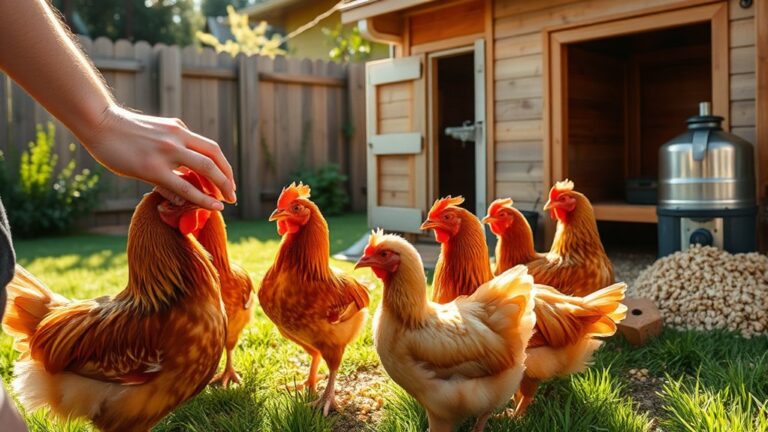
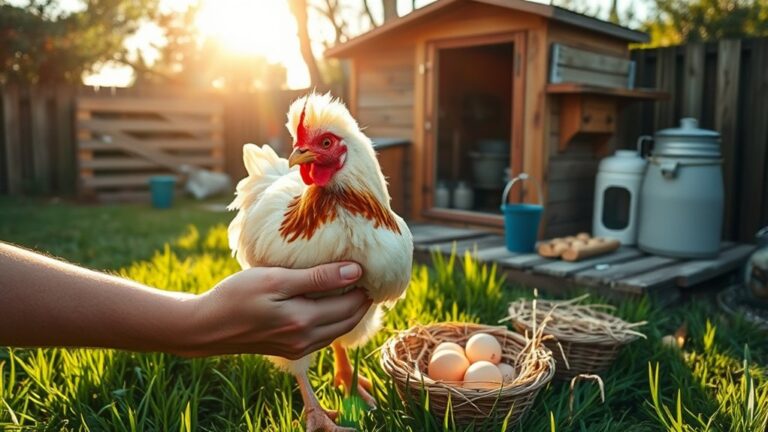
To take care of chickens step by step, start by choosing breeds suited to your space and climate. Build a secure, predator-proof coop with good ventilation and comfy bedding. Feed them a balanced diet of commercial feed plus healthy treats, and always provide clean water.
Watch their behavior and appearance daily to spot health issues early. Collect and store eggs properly to keep them fresh. Following these basics gets you off to a great start, and there’s plenty more to help your flock thrive.
Key Takeaways
- Choose chicken breeds suited to your climate and space, prioritizing calm temperaments and easy maintenance. This helps ensure your flock stays happy and healthy.
- Build a secure, predator-proof coop with proper ventilation, bedding, and nesting areas. These features provide comfort and safety for your chickens.
- Provide a balanced diet with commercial feed, fresh water, and occasional healthy treats. Keep a consistent feeding schedule to maintain their well-being.
- Perform daily health checks, and clean the coop, water containers, and dust bathing areas regularly. This prevents disease and promotes good hygiene.
- Collect and store eggs regularly, monitor for health issues, and address behavioral problems promptly. Taking these steps supports the overall well-being of your flock.
Choose the Right Chicken Breed for Your Backyard
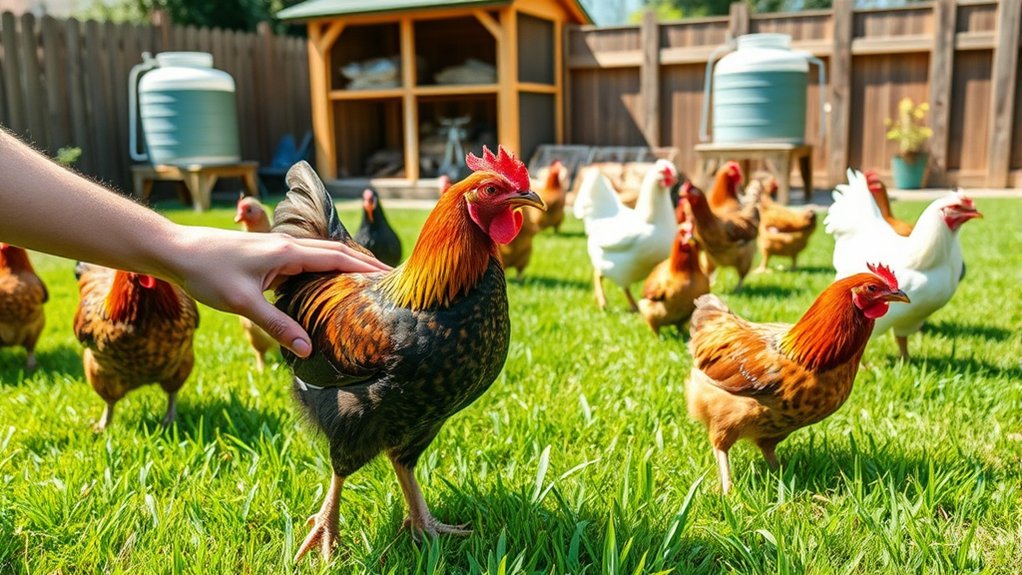
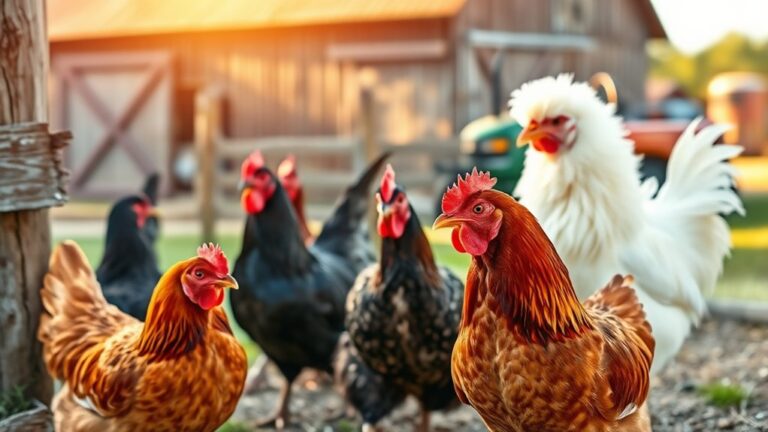
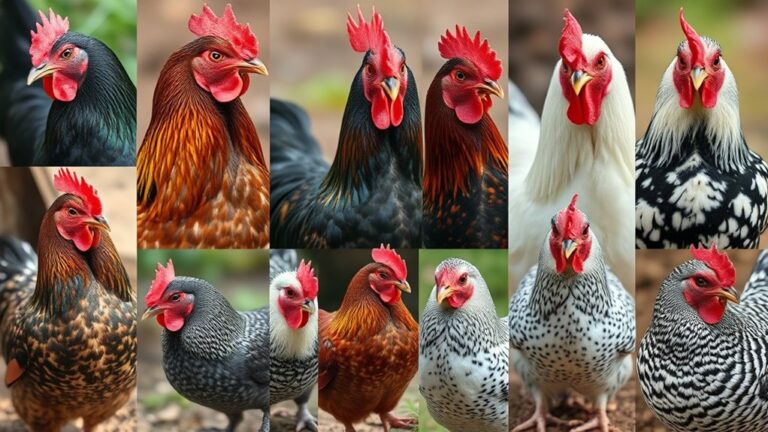
Before you bring chickens home, you’ll want to choose a breed that suits your backyard space and climate. Some breeds handle heat better, while others thrive in cooler areas. Consider how much space you have. Larger breeds need more room to roam comfortably.
If you’re new to chickens, selecting a breed known for calm rooster behavior can save you headaches. Some roosters can be aggressive or noisy. You’ll also want to pick chickens that are easy to maintain, especially regarding feather grooming.
Breeds with denser feathers might require more attention to keep them clean and healthy. Remember, well-groomed feathers help chickens stay warm and healthy. By choosing the right breed, you’ll guarantee your flock fits well in your backyard, making your chicken-keeping experience enjoyable and manageable from day one.
Build a Safe, Predator-Proof Chicken Coop
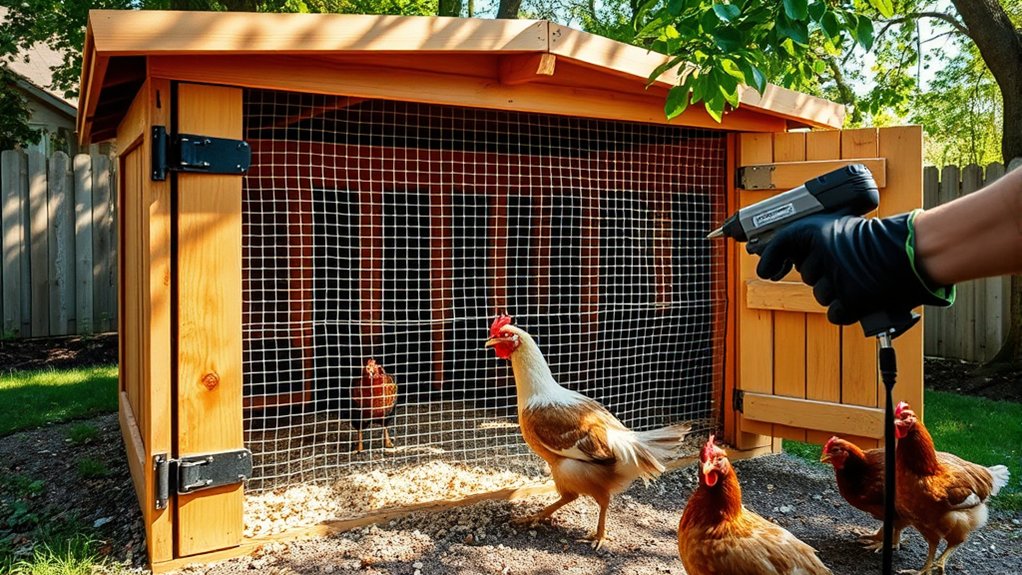
When you build your chicken coop, focus on making it secure against predators to protect your flock day and night. A well-protected coop guarantees your chickens feel safe while they rest and engage in natural behaviors like dust bathing.
Here’s how to make your coop predator-proof:
Here’s how to make your coop predator-proof and keep your flock safe and secure.
- Use sturdy materials like hardware cloth with small mesh size, instead of chicken wire, to keep out raccoons and foxes.
- Bury fencing at least 12 inches underground to prevent digging predators from entering.
- Install secure locks on doors and windows to stop clever intruders.
Additionally, trimming your chickens’ feathers around their vent area can help maintain cleanliness and reduce the risk of parasites. Remember, a safe coop promotes healthy dust bathing, which is essential for your chickens’ skin and feather health.
Set Up Bedding and Nesting Areas for Chickens
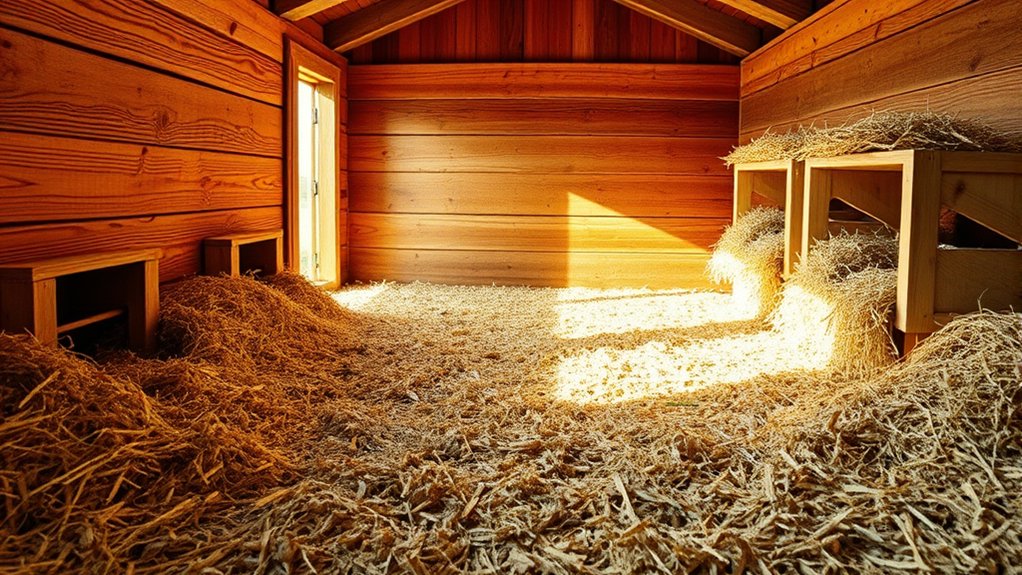
You’ll want to pick bedding materials that keep your chickens comfortable and dry. Cozy nesting boxes are great because they encourage hens to lay their eggs in the right spot. Plus, if you clean and maintain these areas regularly, it helps prevent odors and keeps your flock healthy.
Choosing Appropriate Bedding Material
Why does choosing the right bedding material matter for your chickens? Proper bedding keeps your flock healthy, comfortable, and clean. When choosing bedding, you want materials that absorb moisture, control odors, and are safe for your birds. Here’s what to take into account:
- Absorbency: Good bedding materials like straw or wood shavings soak up moisture, preventing dampness and reducing bacterial growth.
- Comfort: Soft, natural materials provide a cozy environment, encouraging healthy resting and nesting habits.
- Safety: Avoid materials that can cause respiratory issues or are toxic. Pine shavings are popular, but cedar can be harmful.
Designing Comfortable Nesting Boxes
Although chickens will roost almost anywhere, designing comfortable nesting boxes encourages them to lay eggs in a clean, secure spot. Start by choosing boxes about 12×12 inches with soft bedding like straw or wood shavings that suits their feeding habits and won’t interfere with egg cleanliness.
Place boxes in quiet, dimly lit areas to reduce stress and promote regular laying. Position nesting boxes off the ground, around 18 inches high, to keep eggs safe from dirt and predators.
Easy access to boxes helps you with quick egg collection, minimizing egg breakage and disturbance to your hens. Remember, well-designed nesting boxes support your flock’s natural behavior and improve egg production, making your daily care routine smoother and more efficient.
Maintaining Clean and Dry Areas
How often do you clean your chickens’ bedding and nesting areas? Keeping these spaces clean and dry is essential for their health and comfort. Dirty bedding can lead to poor feather grooming and make dust bathing harder, which chickens need to stay parasite-free.
Here’s how to maintain clean and dry areas:
- Replace bedding weekly or right away if it’s damp or soiled.
- Use absorbent materials like straw or pine shavings to keep moisture away.
- Regularly remove droppings from nesting boxes to stop buildup.
Protect Your Chickens From Predators and Harsh Weather
Since chickens are vulnerable to predators and extreme weather, you need to create a secure and comfortable environment for them. Start by building a sturdy coop with strong locks and secure fencing to keep out animals like raccoons and foxes. Make certain the coop has proper ventilation but no gaps where predators can slip in.
Provide a sheltered outdoor run so your chickens can enjoy dust bathing, which helps maintain feather grooming and keeps parasites away. During harsh weather, add extra bedding for warmth and cover outdoor areas to shield them from rain, snow, or intense sun.
Check your chickens regularly to ensure their feathers remain clean and intact from grooming behaviors, as healthy feathers protect them from cold and moisture. By prioritizing safety and comfort, you’ll help your flock stay healthy, stress-free, and well protected against threats and the elements.
Provide a Balanced Diet for Healthy Chickens
To keep your chickens healthy, you’ll want to provide them with a balanced diet that includes essential nutrients like proteins, vitamins, and minerals. These elements are key to supporting their overall well-being.
It’s also important to stick to a consistent feeding schedule. This helps their growth and encourages steady egg production.
And don’t forget—always make sure the food you offer is safe and free from any harmful substances. Your chickens will thank you for it!
Essential Nutrients Overview
When you provide your chickens with a balanced diet, you guarantee they get all the essential nutrients they need to stay healthy and productive. To avoid nutrient deficiencies, focus on these key components:
- Proteins and Amino Acids are vital for growth, feather health, and egg production.
- Vitamins and Minerals support immune function, bone strength, and overall vitality.
- Carbohydrates and Fats supply energy for daily activity and warmth.
If you notice signs of nutrient deficiencies, such as poor feathering or reduced egg laying, consider adding dietary supplements to fill gaps. Always choose supplements designed for poultry to maintain the right balance. By understanding and providing these essentials, you ensure your chickens thrive and remain strong throughout their life.
Feeding Schedule Tips
Although providing the right nutrients is essential, establishing a consistent feeding schedule helps your chickens digest food properly. It also maintains steady energy levels throughout the day.
Pay attention to chicken behavior; they naturally forage in the morning and late afternoon. During egg incubation, hens may eat less, so adjust feeding accordingly. Feed at regular times to support their natural rhythms and overall health.
| Time | Activity | Notes |
|---|---|---|
| 6:30 AM | Morning feeding | Stimulates natural foraging |
| 11:00 AM | Light snack | Keeps energy stable |
| 2:00 PM | Fresh water check | Hydration aids digestion |
| 4:30 PM | Afternoon feeding | Prepares for evening rest |
| 7:00 PM | Remove leftovers | Prevents spoilage |
Safe Food Choices
How do you guarantee your chickens get all the nutrients they need? It starts with providing a balanced diet that supports their health and productivity. Here’s how you can guarantee safe food choices:
- Offer a quality commercial feed formulated for their age and purpose, ensuring essential vitamins and minerals.
- Supplement with healthy treats like leafy greens, fruits, and grains, but avoid overfeeding to prevent dietary imbalances.
- Avoid scraps that attract predators or pests, as safe feeding areas act as natural predator deterrents.
Provide Clean Water and Hydration Daily
Since chickens rely heavily on water for digestion and temperature regulation, you must provide fresh, clean water every day. Dirty or stale water can lead to health issues and disrupt their natural chicken grooming habits, including feather maintenance. When chickens stay well-hydrated, they keep their feathers in top shape, ensuring good insulation and protection.
Check water containers twice daily, especially in hot weather, to prevent contamination and overheating. Use waterers designed to reduce spillage and dirt entry. Regularly clean and refill these containers to avoid bacteria buildup that could harm your flock.
Create a Daily Chicken Care and Cleaning Routine
When you establish a daily chicken care and cleaning routine, you keep your flock healthy and comfortable while preventing potential problems. Start by observing your chickens as they engage in feather grooming. This helps them maintain clean, strong feathers.
Next, make sure they have access to a dust bathing area. This natural behavior removes parasites and keeps their skin healthy.
Here’s a simple routine to follow daily:
- Check and clean water and feed containers to avoid contamination.
- Remove droppings and replace bedding in the coop to maintain hygiene.
- Inspect and refresh the dust bathing area to encourage regular use.
Consistent cleaning and care prevent disease and stress, promoting a thriving flock. By integrating feather grooming and dust bathing into your routine observations, you’ll support their natural habits, which are essential for overall wellbeing.
Stick to this routine to make chicken care manageable and effective.
Monitor Chicken Health and Spot Illness Signs
Although chickens often hide illness, you need to watch closely for subtle changes in their behavior or appearance. Look for signs like lethargy, loss of appetite, or unusual droppings. Feather molting is a natural process, but if feathers fall out excessively or unevenly, it might signal stress or parasites.
Pay attention to their dust bathing habits, as healthy chickens regularly take dust baths to keep parasites in check. If a chicken stops dust bathing or isolates itself, it could indicate illness.
Check their eyes, wattles, and combs for swelling, discoloration, or discharge. Monitor breathing for wheezing or coughing. Keep an eye on posture. Drooping wings or a hunched stance often signal discomfort.
Regularly inspect feet and legs for sores or swelling. By staying vigilant and acting quickly when you spot these signs, you can prevent minor health issues from becoming serious problems, keeping your flock strong and thriving.
Collect and Store Fresh Eggs Properly
You’ll want to collect eggs at the right times to keep them fresh and prevent damage. It’s best to gather them regularly throughout the day so they don’t sit too long. When it comes to cleaning, be gentle and use safe methods—this helps avoid removing the protective coating that keeps eggs fresh. And finally, make sure to store your eggs properly; this will help maintain their quality and extend their shelf life.
Best Egg Collection Times
How often should you collect eggs to keep them fresh and safe? To maintain peak egg freshness, you need to align your collection times with hen behavior. Hens typically lay eggs early in the morning, so collecting eggs shortly after sunrise is ideal.
Here’s how to schedule your collections:
- Morning Collection: Gather eggs within a couple of hours after hens start laying to prevent dirt buildup and egg damage.
- Midday Check: A quick midday collection helps reduce the risk of eggs overheating or becoming cracked.
- Evening Sweep: A final collection before nightfall ensures no eggs are left overnight, minimizing predator risks.
Cleaning Eggs Safely
When should you clean your eggs to keep them fresh and safe? It’s best to wait until just before you use them. Frequent egg washing can remove the natural protective coating, making eggs more vulnerable to bacteria.
If you do need to clean dirty eggs, use warm water that’s warmer than the egg’s temperature. This helps avoid drawing contaminants inside. Gentle egg washing with a mild detergent also helps remove dirt effectively.
After washing, shell sterilization is essential. You can use a food-safe sanitizer to reduce bacteria on the surface. Always dry the eggs thoroughly before storing them.
Proper Egg Storage Methods
Where should you store fresh eggs to keep them at their best? Proper egg storage is key to maintaining egg freshness and preventing spoilage. Start by using clean, breathable storage containers. Avoid airtight ones so natural moisture can exchange.
Next, keep eggs refrigerated consistently at around 40°F (4°C). This helps slow bacterial growth and keeps eggs fresh longer. Finally, store eggs with the pointed end down. Doing this preserves the yolk’s position and extends freshness.
- Use clean, breathable storage containers to maintain airflow.
- Refrigerate eggs promptly at 40°F (4°C) or below.
- Position eggs with the pointed end down to preserve quality.
Solve Common Chicken Problems and Troubleshooting
Although raising chickens is rewarding, you’ll inevitably face challenges like illness, pests, or behavioral issues. When your chickens show signs of sickness, don’t hesitate to seek veterinary care promptly to prevent complications.
Keep a close eye on chicken behavior; changes like lethargy, loss of appetite, or unusual aggression often signal problems. For pests such as mites or lice, regularly inspect your flock and treat them with safe remedies to keep infestations at bay.
If you notice feather pecking or bullying, adjust their environment by providing more space and enrichment to reduce stress. Maintaining cleanliness in the coop and proper nutrition also helps prevent many common issues.
Frequently Asked Questions
How Do You Train Chickens to Return to the Coop at Night?
You train chickens to return to the coop at night through roost training and establishing consistent nighttime routines. Start by guiding them onto the roost bars each evening, offering treats as encouragement.
Keep the coop quiet and dimly lit to signal bedtime. Repeat this every night until they instinctively head inside. Consistency is key, so maintain the same schedule, helping your chickens feel safe and comfortable returning on their own.
Can Chickens Be Raised Alongside Other Pets Safely?
Absolutely, you can raise chickens alongside other companion animals safely, just like folks in the Victorian era kept diverse creatures together. You’ll want to guarantee predator protection is solid because chickens are vulnerable.
Keep dogs and cats introduced slowly to avoid stress or chasing. Provide separate spaces for each pet to retreat.
With careful supervision and proper fencing, your chickens and other animals can coexist happily without issues.
What Are the Best Ways to Handle Aggressive Chickens?
To handle aggressive chickens, you’ll want to observe their feeding habits closely and make sure they have enough space and food to reduce competition. You should also respect their nesting behavior by giving hens quiet, private nesting spots to prevent stress.
Approach them calmly and avoid sudden movements. Consistently handling them gently will build trust over time, making them less aggressive and easier to manage.
How Do You Introduce New Chickens to an Existing Flock?
You’ll want to introduce new chickens slowly to avoid stress and fighting. Start by keeping them in a separate enclosure near the existing flock so they can see and get used to each other.
Maintain coop cleanliness to prevent disease spread, and monitor feeding habits closely. Offer food in separate areas to reduce competition.
After a week or two, let them mingle under supervision. Gradual introductions help your flock stay peaceful and healthy.
What Vaccinations Do Backyard Chickens Need?
You’ll want to vaccinate your backyard chickens against Marek’s disease, Newcastle disease, and infectious bronchitis to keep them healthy. Alongside vaccinations, focus on chicken nutrition by providing balanced feed and clean water daily.
Don’t forget to maintain coop cleaning regularly to reduce disease risks. Keeping their environment sanitary supports vaccine effectiveness and overall health, ensuring your flock stays strong and productive.
Conclusion
Taking care of chickens might seem like a big task, but with the right steps, it becomes a rewarding routine. You’ll watch your feathered friends thrive when you choose wisely, protect them, feed them well, and keep a close eye on their health.
Remember, your backyard can become a little farm of miracles where every cluck and fresh egg tells a story of your care and dedication. Ready to start? Your chickens are waiting! Taking care of chickens is easier than you think when you follow these simple steps.