What Are the Key Traits of Plymouth Rock Rooster and Hen?
If you’re thinking about adding Plymouth Rock chickens to your backyard flock, you’re not alone. Many people struggle to find a breed that’s both friendly and reliable when it comes to egg production. It can be tough to pick a breed that balances good temperament with hardiness and productivity.
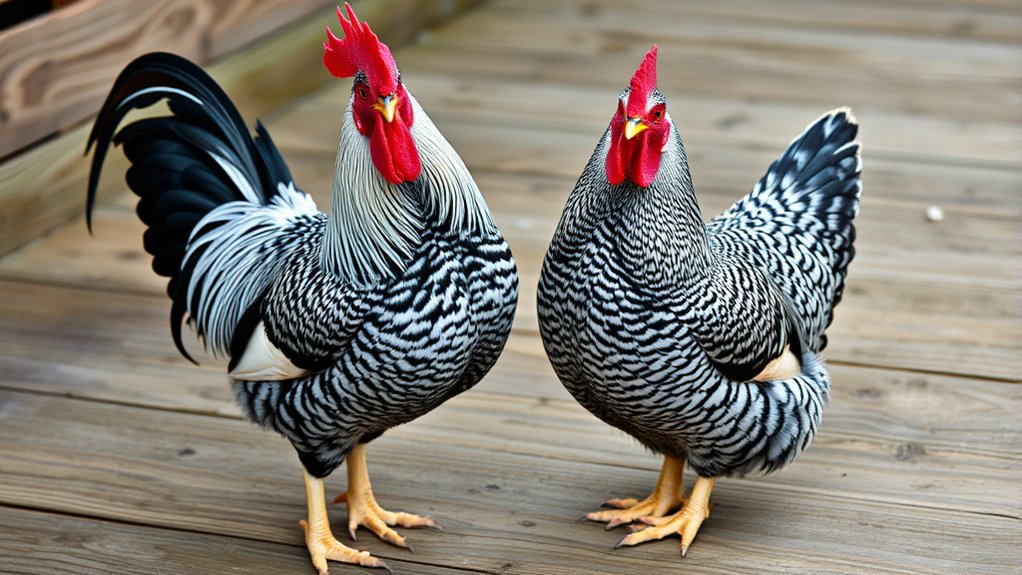
You’ll find Plymouth Rock roosters have broad, muscular builds with striking combs and glossy feathers. Meanwhile, hens are smaller with rounded bodies perfect for steady egg-laying, often producing 200-250 brown eggs yearly.
Both are calm, friendly, and adapt well to various climates, including cold winters. They get along great in mixed flocks and require balanced feeding and care.
Exploring further reveals why they’re such a popular choice for backyard flocks.
Key Takeaways
- Plymouth Rock roosters have larger combs, wattles, and longer, pointed feathers, while hens have softer, rounder plumage and a compact body.
- Roosters weigh 8.5-10 lbs with muscular builds; hens are lighter with streamlined bodies optimized for egg-laying.
- Both are friendly, calm, and sociable, making them ideal for backyard flocks and beginner keepers.
- Hens lay 200-250 brown eggs annually, and roosters’ size supports dual-purpose use for meat and breeding.
- They are hardy in cold climates, with dense feathers and good winter resilience requiring minimal special care.
Physical Features of Plymouth Rock Roosters and Hens
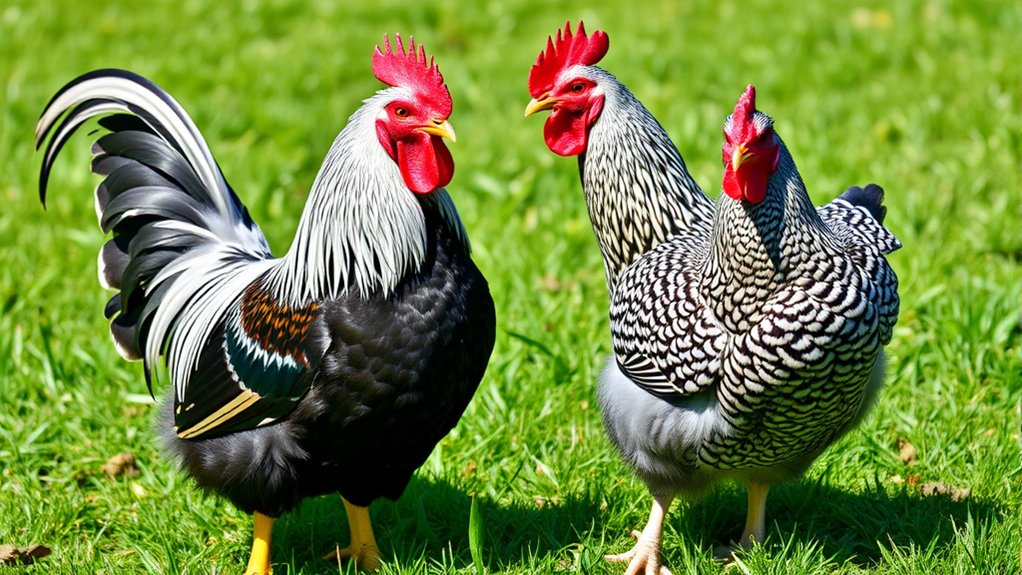
Although you might be familiar with Plymouth Rock chickens, you’ll notice that roosters and hens display distinct physical features. Understanding these differences ties back to their historical origins and breed development.
Roosters and hens of Plymouth Rock chickens exhibit distinct features shaped by their breed history.
Plymouth Rocks originated in 19th century America, bred for both utility and appearance. Over time, selective breeding emphasized traits like plumage pattern and comb shape.
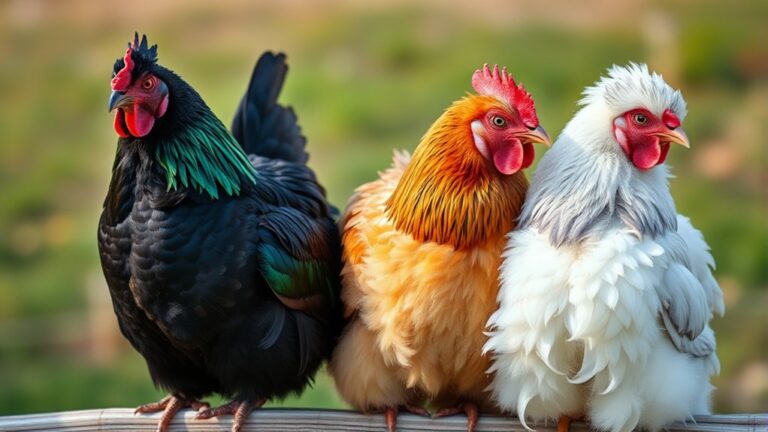
When you look closely, roosters often showcase more pronounced combs and wattles compared to hens, a result of breed development focused on sexual dimorphism. Their feathers also differ slightly; roosters typically have longer, more pointed hackle and saddle feathers, while hens display rounder, softer plumage.
These traits didn’t just appear randomly. They come from generations of breeders refining the breed to balance beauty and functionality. So, when you observe a Plymouth Rock, you’re seeing the product of careful breeding that highlights clear physical distinctions between roosters and hens rooted in their historical background.
Size and Build Differences Between Plymouth Rock Roosters and Hens
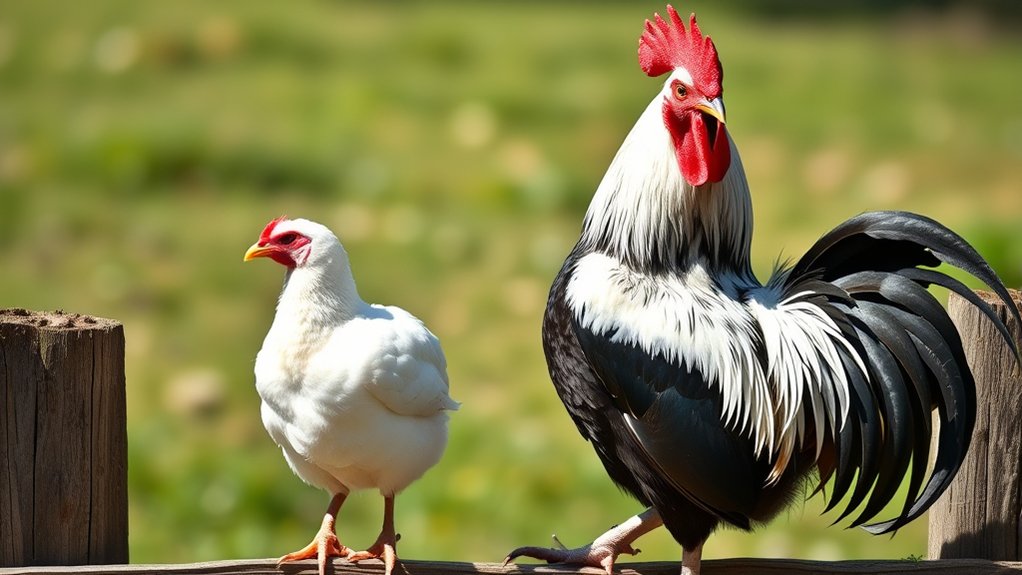
You’ll notice that Plymouth Rock roosters are generally larger and more robust than hens. This size difference gives the roosters a bold, sturdy presence. On the other hand, hens tend to have a more compact and streamlined build. Knowing these differences makes it easier to appreciate how each bird fits into the flock.
Rooster Size Characteristics
When you compare Plymouth Rock roosters to hens, you’ll notice the roosters have a noticeably larger size and more robust build. This difference reflects their historical origins as dual-purpose birds, valued for both meat and egg production. Here’s what sets roosters apart:
- Weight: Roosters typically weigh 8.5 to 10 pounds, markedly heavier than hens.
- Height: They stand taller with a more upright posture.
- Muscle Mass: Roosters boast denser muscle, making them ideal for culinary uses that require flavorful meat.
- Frame: Their broader chest and thicker legs support their greater size and strength.
Understanding these traits helps you appreciate why Plymouth Rock roosters have been prized historically for both farm utility and tasty meat.
Hen Build Comparison
While roosters boast a larger and more muscular frame, hens exhibit a more compact and streamlined build that suits their primary role in egg production. You’ll notice hens have a lighter, more rounded body that helps them conserve energy for laying eggs.
Plymouth Rock hens typically lay brown eggs, which are prized for their rich color and quality. Their build also supports their broodiness tendencies, meaning they often show a strong instinct to sit on and hatch their eggs.
This natural behavior ties closely to their smaller size and body shape, which allows them to cover and protect their clutch effectively. Understanding these differences helps you appreciate how hens are perfectly designed for their nurturing and productive roles compared to the robust roosters.
Temperament Traits of Plymouth Rock Chickens
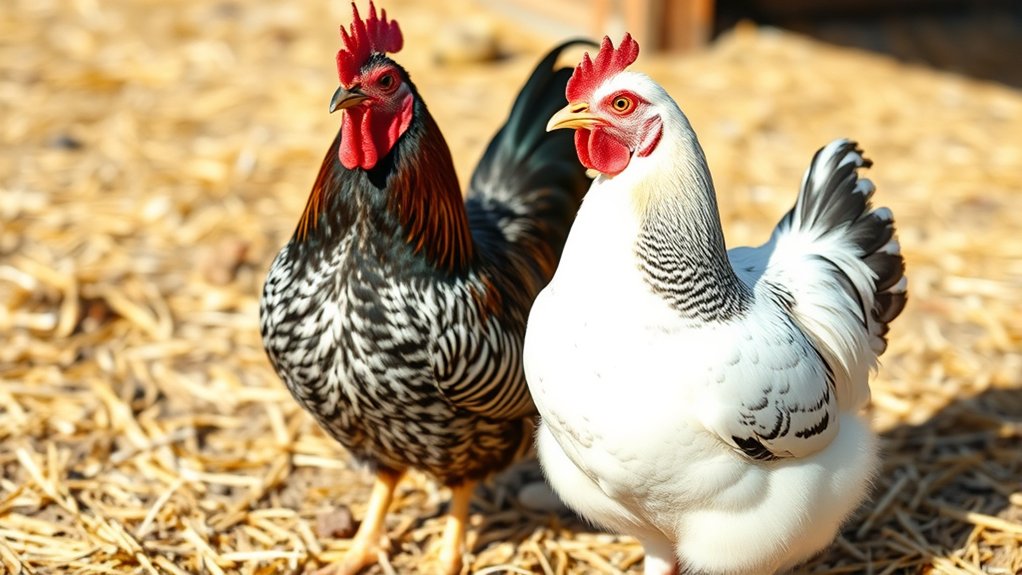
Although Plymouth Rock chickens come in various colors and sizes, their temperament remains consistently friendly and calm. Thanks to their historical origins as a dual-purpose breed, they were bred not only for culinary uses but also for ease of handling.
Plymouth Rock chickens are friendly and calm, bred for both culinary use and easy handling.
When you raise Plymouth Rocks, you’ll notice these key temperament traits:
- Docile Nature: They’re easygoing, making them great for beginners and families with children.
- Sociable Behavior: These birds enjoy human interaction and usually get along well with other chickens.
- Curiosity: You’ll find them actively exploring their surroundings without becoming overly skittish.
- Adaptability: Whether in backyard coops or small farms, they adjust well to different environments.
You can expect a calm and manageable flock, which simplifies daily care and handling. This temperament, rooted in their historic development for both meat and egg production, makes Plymouth Rock chickens a reliable and pleasant addition to your poultry group.
Egg Production Reliability of Plymouth Rock Hens
How reliable are Plymouth Rock hens regarding egg production? Thanks to their historical origins and careful breeding history, these hens are known for consistent and dependable egg-laying.
Originating in the 19th century as a dual-purpose breed, Plymouth Rocks were selectively bred to balance meat quality with steady egg output. You can expect about 200 to 250 brown eggs per year from a healthy Plymouth Rock hen, making them a solid choice if you want reliable layers.
Their breeding history emphasizes not just quantity but also egg size and shell strength, which means fewer cracked eggs in your collection. Plus, their adaptability to various climates helps maintain production without drastic drops during seasonal changes.
If you’re looking for a hen that combines heritage with performance, Plymouth Rocks offer dependable egg production rooted in a rich breeding background.
Typical Feather Patterns and Colors of Plymouth Rocks
When you look at Plymouth Rocks, their distinct feather patterns and colors immediately stand out, making them easy to recognize. These traits reflect their historical origins and thoughtful breed development. That’s why they remain a favorite among poultry enthusiasts. You’ll notice:
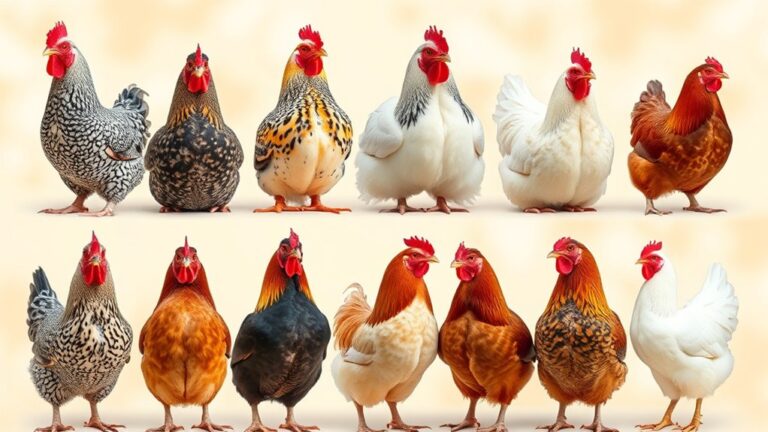
- Barred Pattern The classic black-and-white striped feathers are the hallmark of Plymouth Rocks and the most common pattern.
- Color Variations Beyond barred, they come in colors like buff, white, silver penciled, and partridge, each with unique feather markings.
- Consistent Markings Their feathers feature sharp, clean lines or defined spots, a result of selective breeding over time.
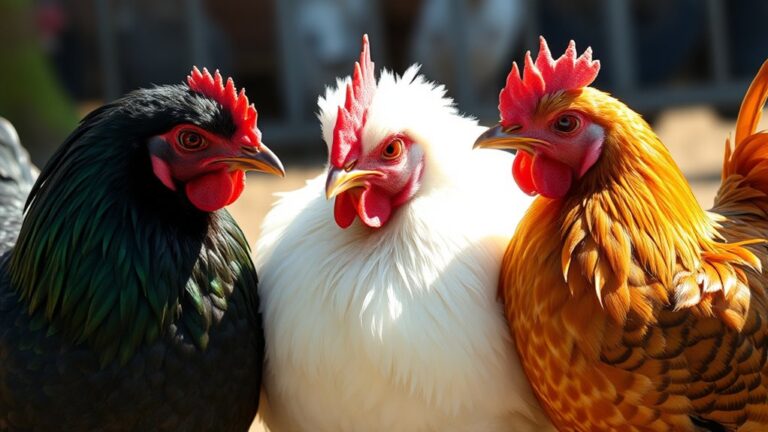
- Glossy Sheen Their plumage often has a subtle shine, enhancing their visual appeal and signaling good health.
Understanding these feather patterns and colors connects you to the breed’s rich past. It also helps you appreciate how Plymouth Rocks have evolved through deliberate breed development.
Hardiness of Plymouth Rocks in Different Climates
You’ll find that Plymouth Rocks handle a variety of climates with ease. They adapt well from cold winters to milder temperatures. Their dense feathers and sturdy build really help them survive harsh winter conditions without much trouble. So, let’s take a closer look at how these traits make them reliable in different environments.
Climate Adaptability
Although Plymouth Rocks originated in cooler climates, they’ve proven to be remarkably adaptable to a wide range of environmental conditions. Thanks to their historical origins and selective breeding variations, these birds thrive beyond their initial habitat.
When you raise Plymouth Rocks, consider these key climate adaptability traits:
- Temperature Tolerance: They handle both heat and cold better than many breeds.
- Feather Density: Their dense plumage, a result of breeding variations, helps regulate body heat.
- Humidity Resistance: They cope well in humid environments, making them suitable for diverse regions.
- Behavioral Adaptation: They modify their activity patterns to avoid extreme weather stress.
Winter Survival Traits
Because Plymouth Rocks have evolved through selective breeding in varied climates, they show impressive hardiness during winter months. You’ll find that their dense plumage, especially in popular color variations like Barred and Buff, provides excellent insulation against cold temperatures.
Thanks to their historical origins in the northeastern United States, these birds are naturally equipped to handle harsh winters. You won’t need to worry about them struggling in freezing weather, as they tolerate snow and wind better than many other breeds.
When caring for Plymouth Rocks during winter, focus on providing dry shelter and plenty of feed to maintain their energy. Their winter survival traits make them a reliable choice if you want hardy birds that thrive in cold climates without extra fuss.
Feeding and Care Needs Specific to Plymouth Rock Chickens
When caring for Plymouth Rock chickens, providing a balanced diet tailored to their needs helps keep them healthy and productive. These birds, known for their historical origins as a staple in American farms, thrive on nutrition that supports both egg-laying and meat quality. This reflects their valued culinary uses.
To meet their feeding and care needs, focus on:
- High-quality feed: Choose a commercial feed formulated for dual-purpose breeds to support growth and egg production.
- Fresh water: Always provide clean, fresh water to prevent dehydration and maintain overall health.
- Supplemental treats: Offer kitchen scraps and grains in moderation to diversify their diet without causing imbalances.
- Mineral and grit access: Guarantee they have access to grit and calcium sources to aid digestion and strengthen eggshells.
How Plymouth Rock Roosters Get Along With Other Chickens
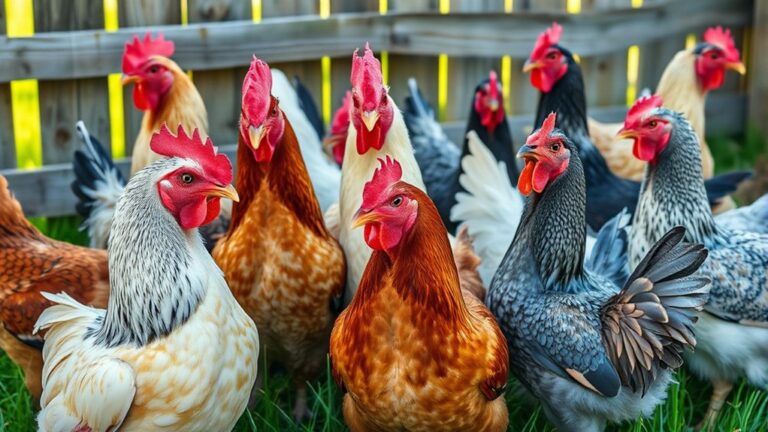
If you’ve ever wondered how Plymouth Rock roosters interact with other chickens, you’ll find they’re generally calm and sociable. Thanks to their historical origins as a dual-purpose breed developed for both meat and egg production, these roosters were bred to coexist peacefully in mixed flocks. They tend to display less aggression compared to some other rooster breeds, making it easier for you to manage multiple birds without constant conflict.
However, you should be aware that breeding challenges can arise if multiple roosters compete for dominance, especially in smaller spaces. To maintain harmony, it’s best to provide ample room and monitor their interactions closely. Introducing new birds gradually also helps minimize stress and aggression. By understanding their calm nature and managing breeding challenges wisely, you can successfully keep Plymouth Rock roosters alongside other chickens in your flock.
Why Plymouth Rock Hens Are Ideal for Backyard Flocks
You’ll really like Plymouth Rock hens because they’re super friendly and easy to handle. They’re great if you want a calm, approachable bird around. On top of that, they lay eggs consistently, so your flock stays productive without any fuss. What’s even better is that these hens adapt easily to different environments, which means they’re perfect for just about any backyard setup you have in mind.
Friendly Temperament Benefits
Because Plymouth Rock hens are known for their calm and approachable nature, they make excellent additions to backyard flocks. Their friendly temperament benefits you in many ways:
- They engage in regular feather grooming, keeping themselves clean and reducing the need for constant maintenance from you.
- Their gentle vocalization habits mean they’re not overly noisy, making your backyard environment peaceful.
- They’re social birds that easily bond with you and other flock members, helping to create a harmonious group.
- Their calm demeanor makes handling and interaction less stressful, especially if you’re new to raising chickens.
Reliable Egg Production
How can you guarantee a steady supply of fresh eggs from your backyard flock? Plymouth Rock hens are an excellent choice, thanks to their reliable egg production.
Their historical origins trace back to early American farms, where breeders focused on hardiness and consistent laying ability. Over generations, selective breeding practices emphasized hens that produced a good number of brown eggs, even under varying conditions.
This means you’ll get dependable egg output without sacrificing the bird’s health or temperament. By choosing Plymouth Rock hens, you benefit from a breed developed specifically for practical, everyday egg-laying.
Their steady production ensures your kitchen stays stocked with fresh eggs, making them ideal for anyone wanting a trustworthy and low-maintenance backyard flock.
Adaptability To Environments
Although backyard conditions can vary widely, Plymouth Rock hens adapt quickly to different environments, making them a top choice for many keepers. Whether you’re into urban farming or preparing for poultry showmanship, these hens handle it all with ease.
Here’s why they fit perfectly in your backyard flock:
- They tolerate temperature swings well, thriving in both hot summers and cold winters.
- Their calm temperament helps them coexist peacefully with other birds and pets.
- They adjust to various space sizes, from small urban yards to larger rural setups.
- Their foraging skills reduce feed costs and keep them active and healthy.
With these traits, Plymouth Rock hens ensure you get a resilient, low-maintenance flock no matter your environment.
How to Identify Healthy Plymouth Rock Roosters and Hens
When you evaluate Plymouth Rock roosters and hens, look for clear eyes, smooth feathers, and alert posture as key signs of good health. Their eyes should be bright and free of discharge, reflecting vitality tied to their historical origins as hardy, resilient birds.
Healthy feathers lie flat and shine, showing the breed’s robust genetics developed through generations. Watch for a strong, upright stance, which signals the bird’s readiness and vigor. These traits boosted their cultural significance as reliable farm companions.
You should also check their combs and wattles; these should be vibrant red, not pale or shriveled, indicating good circulation and overall wellness. Avoid birds that seem lethargic or have patchy feathers, as these might suggest illness or poor nutrition.
Frequently Asked Questions
What Is the History and Origin of Plymouth Rock Chickens?
You’ll find Plymouth Rock chickens have a rich heritage significance, originating in the United States during the mid-1800s. They were developed through careful breed development, combining several breeds to create a hardy, dual-purpose bird.
This breed quickly gained popularity for its reliable egg-laying and meat qualities. When you raise Plymouth Rocks, you’re continuing a legacy that values versatility and resilience, making them a treasured part of poultry history.
Are Plymouth Rock Chickens Good for Meat Production?
You might be surprised, but yes, Plymouth Rock chickens are excellent for meat production. As a dual purpose breed, they don’t just deliver a solid egg laying capacity; they also grow to a good size, providing you with tender, flavorful meat.
If you want a versatile bird that balances egg-laying and meat qualities, Plymouth Rocks are a smart choice that won’t disappoint you in either department.
How Long Do Plymouth Rock Chickens Typically Live?
Plymouth Rock chickens typically live around 6 to 8 years, though with great care, you might see them reach 10. Their egg-laying habits are steady, giving you a reliable supply of brown eggs.
You’ll also notice feather color variations, from barred to white, buff, and more, which don’t affect their lifespan but add charm to your flock. Keep them healthy, and they’ll be productive and lively companions for years.
What Are Common Health Issues in Plymouth Rock Chickens?
You might think Plymouth Rocks are invincible egg machines with perfect feather coloration, but nope, they get a few diva health issues too. Watch out for mites and lice that throw feather ruffles worse than a bad hair day.
They can also face respiratory infections, which mess with their egg production. Keep their coop clean and dry, or you’ll have drama queens instead of productive hens and roosters strutting their stuff.
Can Plymouth Rock Chickens Be Trained or Handled Easily?
Yes, you can train Plymouth Rock chickens with behavioral training since they’re naturally curious and intelligent. Their handling ease makes them great for beginners or families, as they tend to stay calm and tolerate gentle interaction.
Conclusion
When you raise Plymouth Rock chickens, you’re tapping into a timeless charm that’s as dependable as a classic rotary phone. Their sturdy build, calm temperament, and reliable egg-laying make them perfect for any backyard flock.
You’ll notice the striking barred feather patterns and appreciate how well the roosters get along with others. By caring for them properly, you’ll enjoy healthy, happy birds that bring both beauty and productivity to your homestead.
Overall, the key traits of Plymouth Rock roosters and hens make them a wonderful addition to your flock. Their friendly nature and consistent performance truly stand out.