
Plymouth Rock Rooster Vs Hen – 5 Key Differences
Trying to tell a Plymouth Rock rooster from a hen can be tricky if you’re new to raising these charming birds. You’re not alone—many people struggle to spot the differences at first, especially since they share similar colors and patterns. But once you know what to look for, identifying them becomes much easier and even fun!
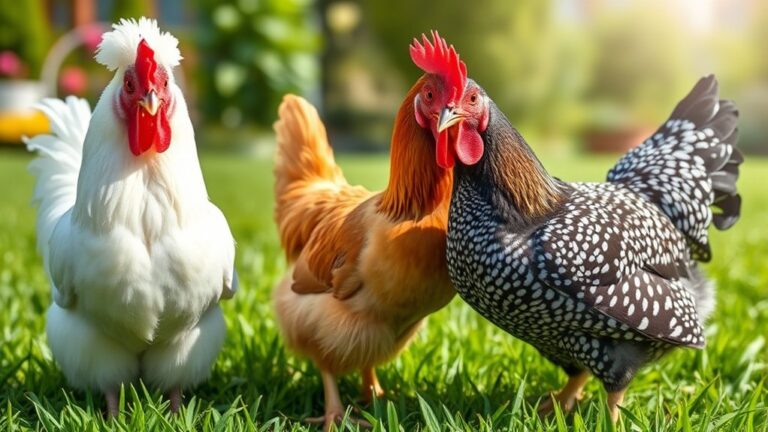
You can spot a Plymouth Rock rooster from a hen by checking five key traits. Roosters are larger with an upright stance and vivid, glossy feathers, while hens are smaller with softer tones and downward tails.
Roosters also have bigger, brighter combs and wattles. Behaviorally, roosters are more territorial and vocal, crowing loudly, whereas hens focus on nesting and cluck softly.
Keep exploring to uncover even more fascinating differences between these birds.
Key Takeaways
- Roosters are larger with an upright stance, while hens are smaller with a compact body and a downward-angled tail.
- Roosters have vibrant, glossy feather patterns with deeper blacks. Hens, on the other hand, display softer, muted tones.
- Roosters feature larger, upright combs and thicker, vivid wattles compared to hens’ smaller, less prominent ones.
- Roosters are territorial and assertive, actively patrolling. Hens tend to be more social and focused on nesting and egg production.
- Roosters crow loudly to mark territory and give warnings, while hens cluck softly to signal brooding and communicate.
Size and Shape Differences in Plymouth Rock Roosters and Hens
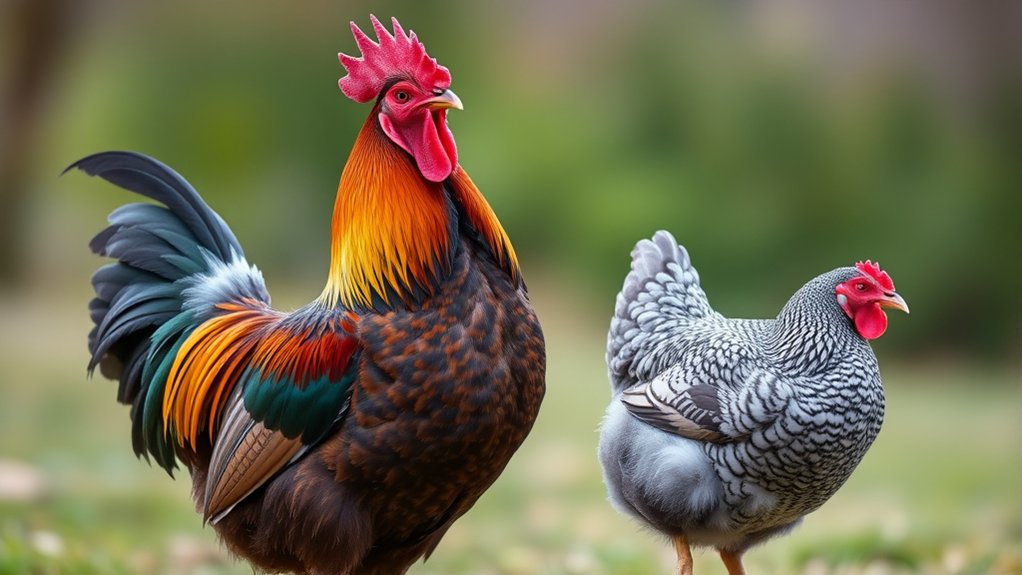
Although Plymouth Rock roosters and hens share many features, you’ll notice clear differences in their size and shape. Roosters tend to be larger and more robust, with a strong, upright stance that immediately sets them apart.
You’ll also spot a more pronounced feather sheen on roosters, giving their plumage a glossy, eye-catching look. Their tail posture is another distinctive trait; roosters hold their tails higher and more arched, creating a proud, sweeping silhouette.
Hens, on the other hand, are smaller with a more compact body and a gentler tail posture that angles downward slightly. While their feather sheen is subtler, it still contributes to their sleek appearance.
These size and posture differences help you quickly identify the sexes, especially when observing a flock. Understanding these physical distinctions gives you a better appreciation of Plymouth Rock birds, allowing you to recognize roosters and hens at a glance.
Feather Patterns and Colors: Roosters vs Hens in Plymouth Rocks
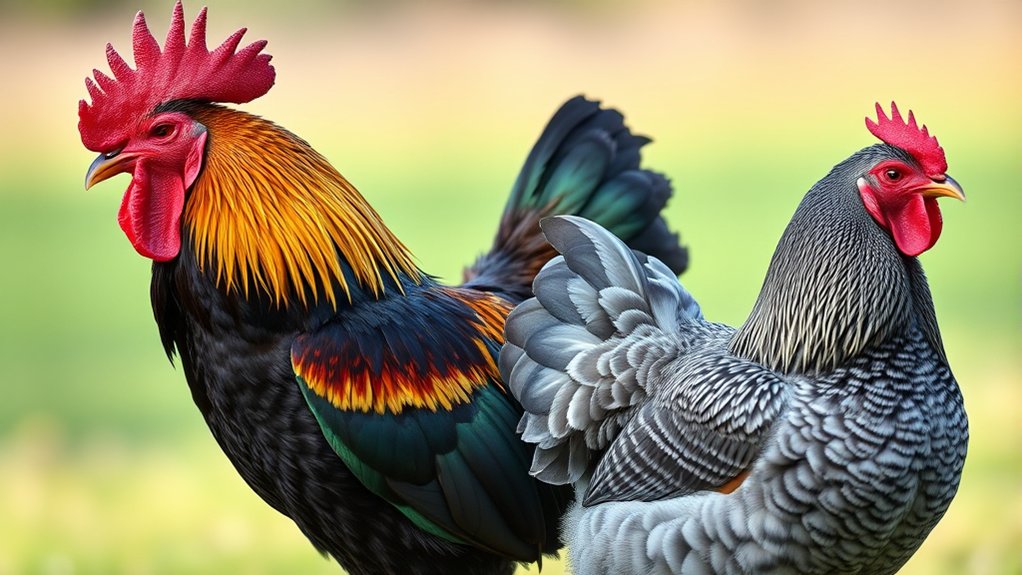
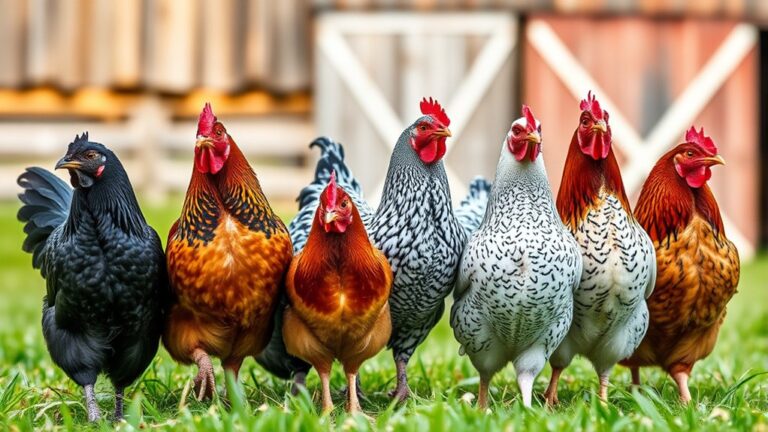
When you examine Plymouth Rock birds closely, you’ll notice that roosters display more striking feather patterns and vibrant colors compared to hens. Roosters often boast a richer feather sheen, giving their plumage a glossy, almost iridescent quality that catches the light beautifully. Their color variations tend to be more pronounced, featuring deeper blacks and contrasting whites that create a dramatic barred pattern unique to the breed.
In contrast, hens have softer, more muted feather tones. While they share the barred pattern, the color variations are subtler, and their feather sheen is less intense. This difference helps you easily distinguish between the sexes, especially during the molting season when feathers are fresh and vibrant. By paying attention to these feather details, the sheen and the range of color variations, you’ll quickly tell a Plymouth Rock rooster from a hen without confusion.
Comb and Wattle Differences in Plymouth Rock Roosters and Hens

Besides their feather patterns and colors, you can spot differences between Plymouth Rock roosters and hens by looking at their combs and wattles. These features not only add to their distinct appearance but also reflect their maturity and role within the flock. Here’s what you should look for:
- Comb Size and Shape: Roosters have larger, more pronounced combs that stand upright, enhancing their feather sheen by casting subtle shadows. Hens’ combs are smaller and less rigid.
- Wattle Development: Roosters display thicker, elongated wattles that match their combs in vividness. Hens’ wattles are smaller and less vibrant.
- Beak Shape Influence: While the beak shape is generally similar, roosters’ stronger beaks complement their robust combs and wattles, adding to their dominant look.
Behavioral Differences Between Plymouth Rock Roosters and Hens
Understanding the behavioral differences between Plymouth Rock roosters and hens can help you manage your flock more effectively. Roosters tend to display stronger territorial behavior, often defending their area from intruders. Hens are generally more social and less aggressive.
Regarding diet preferences, roosters may eat more protein-rich foods to support their energy and dominance. Hens focus on balanced nutrition for egg production.
Here’s a quick comparison:
| Behavior Aspect | Roosters |
|---|---|
| Territorial Behavior | Highly territorial, protective |
| Social Interaction | Dominant, assertive |
| Diet Preferences | Higher protein intake |
| Activity Level | More active, patrols territory |
| Behavior Aspect | Hens |
| Territorial Behavior | Less territorial, more social |
| Social Interaction | Cooperative within the flock |
| Diet Preferences | Balanced for egg-laying needs |
| Activity Level | Moderate, focused on nesting |
Knowing these differences lets you tailor care strategies for each.
Egg Laying and Vocalizations: Key Differences in Plymouth Rock Chickens
Although roosters don’t lay eggs, their vocalizations play an essential role in the flock’s dynamics. Hens focus on producing eggs and use distinct calls to communicate their needs. When you observe Plymouth Rock chickens, you’ll notice clear differences in egg laying and vocal behavior.
Here are key points to contemplate:
- Hens have strong brooding habits, often clucking softly to signal readiness to sit on eggs. Roosters use loud crowing to assert territorial behavior and protect the flock.
- Roosters’ vocalizations serve as alarms or warnings, helping you understand when danger is near or when territory is challenged.
- Hens’ calls help you track their egg-laying cycle and communicate needs like food or space.
Frequently Asked Questions
What Is the Typical Lifespan of Plymouth Rock Chickens?
You can expect Plymouth Rock chickens to live around 6 to 8 years with proper care. During their lifespan, hens maintain steady egg production, especially in the first few years.
You’ll notice their distinctive feather coloration remains vibrant, adding charm to your flock. To keep them healthy and productive, provide balanced nutrition and a clean environment. This way, your Plymouth Rocks will thrive and keep laying eggs for many seasons.
How Much Space Do Plymouth Rock Chickens Need in a Coop?
You should provide at least 4 square feet of coop space per Plymouth Rock chicken to keep them comfortable. Their feeding habits mean they need easy access to food without overcrowding, which helps maintain good health.
Adequate space also supports consistent egg production since hens stay less stressed and more active. Giving them room to move around guarantees they can feed properly and lay eggs regularly, making your flock happier and more productive.
What Are Common Health Issues in Plymouth Rock Chickens?
You’ll often see Plymouth Rock chickens face health issues like mites, respiratory infections, and egg binding, which can affect their egg production. Watch their feather coloration closely; dull or patchy feathers might signal nutritional deficiencies or parasites.
Regularly check for signs of illness and maintain a clean coop to keep them healthy. Proper care will help your birds stay vibrant and productive, ensuring they lay eggs consistently and maintain lovely feather coloration.
How Do You Care for Plymouth Rock Chicks?
You’ll care for Plymouth Rock chicks by providing a warm brooder with clean bedding and consistent heat. Feed them chick starter feed formulated for their nutritional needs, paying attention to their feeding habits to make certain they eat regularly.
Keep fresh water available at all times. As they grow, you’ll notice feather color variations developing, so monitor their plumage for any health signs. Handle them gently to help them adapt well.
Are Plymouth Rock Chickens Good for Backyard Farming?
If you’ve ever noticed how Plymouth Rock chickens’ black-and-white feather coloration naturally draws attention, you’ll appreciate their charm in your backyard. You’ll find they’re great for backyard farming because they’re hardy and excellent layers, offering consistent egg production.
Plus, their calm temperament makes them easy to handle. You’ll enjoy fresh eggs regularly while adding beauty and practicality to your small farm or garden space.
Conclusion
When you spot a Plymouth Rock rooster strutting like a feathered king, you’ll know the difference from the hen’s humble grace. Their size, colors, combs, and behavior paint a vivid picture of nature’s contrasts.
Whether it’s the rooster’s bold crow or the hen’s gentle cluck, each has its unique charm. Understanding these five key differences helps you appreciate the lively dance of Plymouth Rock chickens in your yard.
Knowing how to tell a Plymouth Rock rooster from a hen makes watching these birds even more enjoyable. Their distinct traits bring a special character to your flock.