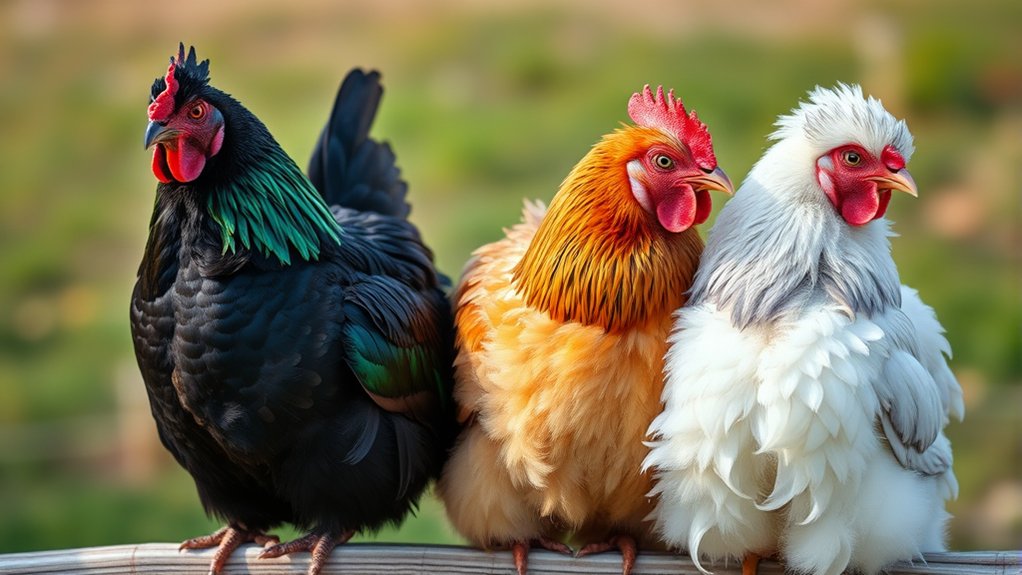
3 Different Chicken Breeds With Pictures
Choosing the right chicken breed for your backyard flock can feel overwhelming. You want hens that lay well, stay calm, and fit your space perfectly. If you’ve struggled to find the best fit, you’re not alone—many people face the same challenge when starting their flock.
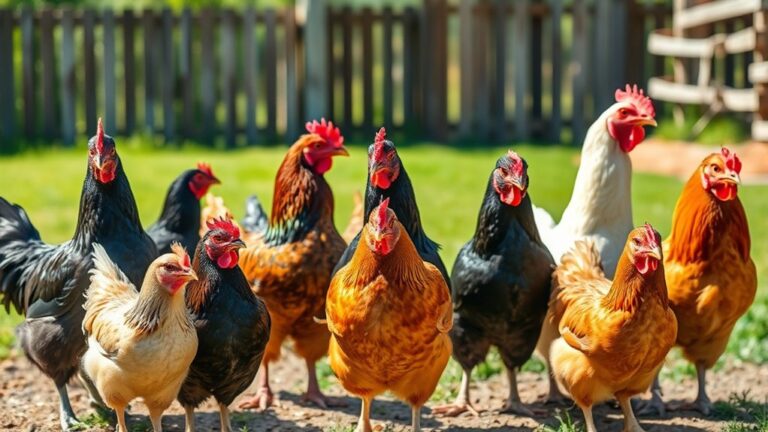
You’ll find Rhode Island Reds, Leghorns, and Plymouth Rocks popular for backyard flocks. Rhode Island Reds lay around 250 brown eggs yearly and stay calm. Leghorns, the most active layers, produce up to 280 white eggs but need more space. Plymouth Rocks lay about 200 brown eggs and are easier to manage with friendly roosters.
Each breed adapts differently to your space and care style, so exploring their traits helps you pick the perfect fit for your flock.
Key Takeaways
- Rhode Island Red chickens have rich red feathers and lay about 250 brown eggs annually.
- Leghorn chickens show varied feather colors and are the most active, producing around 280 white eggs yearly.
- Plymouth Rock chickens feature a distinctive barred feather pattern and lay approximately 200 brown eggs per year.
- Rhode Island Red and Plymouth Rock roosters are calm, while Leghorn roosters tend to be skittish and need more space.
- Breed appearance and behavior influence care needs, making Plymouth Rocks easier to manage compared to more active Leghorns.
Choosing the Best Chicken Breeds for Your Flock

When choosing the best chicken breeds for your flock, consider your goals and environment carefully. Are you looking primarily for high egg production, or do you want chickens that require less feed? Understanding these priorities helps you pick breeds that fit your lifestyle and resources.
For example, some breeds lay eggs consistently but need more feed to maintain health and productivity. Others are more efficient converters of feed to eggs, making them ideal if feed costs are a concern.
Climate also plays a role; certain breeds handle cold or heat better, impacting their overall performance. You’ll want to balance egg production with feed requirements to ensure your flock thrives without excessive expense.
Taking time to research breeds that align with your goals and environment will save you effort and boost your flock’s success. This approach sets a solid foundation before diving into specific breed traits and care.
Meet Each Breed: Traits, Eggs, and Care
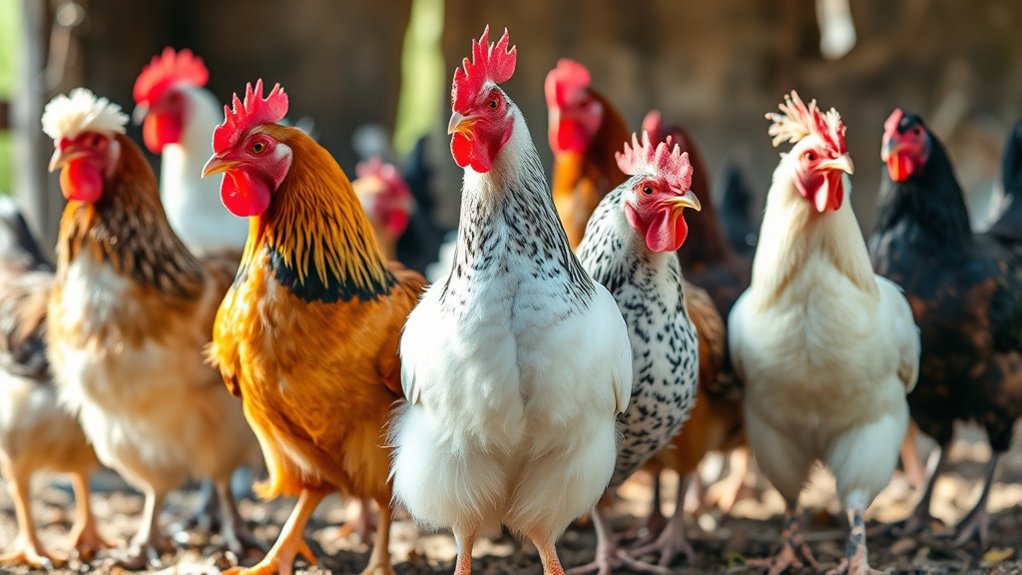
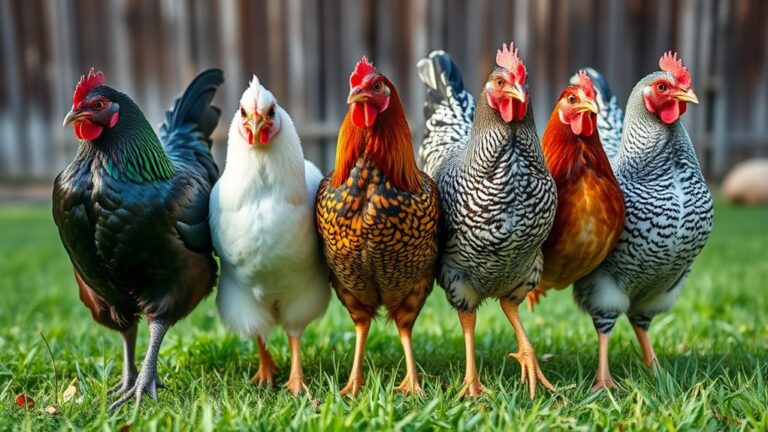
Three popular chicken breeds each offer unique traits, egg-laying abilities, and care requirements you should know before adding them to your flock. When considering breeds, pay attention to rooster behavior, as some are more aggressive or protective than others. Feather color variations also matter, influencing your flock’s look and sometimes their heat tolerance.
| Breed | Egg Production | Care & Traits |
|---|---|---|
| Rhode Island Red | 250 brown eggs/year | Hardy, calm rooster behavior, rich red feathers |
| Leghorn | 280 white eggs/year | Active, skittish roosters, various feather colors |
| Plymouth Rock | 200 brown eggs/year | Friendly roosters, barred feather pattern |
Each breed has its own needs: Leghorns require more space due to their active nature, while Plymouth Rocks are easier to manage. Understanding these differences helps you provide the best care and enjoy your flock’s unique charm.
How to Pick the Best Chicken Breed for Your Backyard

Choosing the right chicken breed for your backyard depends on more than just egg production and appearance. You’ll want to *weigh* feeding habits, as some breeds require more food or specific diets, which can affect your budget and care routine.
Selecting a chicken breed means considering more than looks—feed needs impact both costs and care.
For example, active foragers might eat less commercial feed, while others need higher-protein diets to stay healthy.
Predator protection is another key factor. Some breeds are naturally more vigilant and aggressive toward predators, while others are docile and may need extra security measures.
If you live in an area with frequent predator threats, picking a breed known for alertness can save you trouble.
Also, think about your space and climate. Certain breeds handle heat or cold better, and some need more room to roam.
Frequently Asked Questions
How Long Do Chickens Typically Live?
Chickens typically live around 5 to 10 years, depending on their care and breed. You’ll notice their egg laying habits slow down as they age, usually after the first few years.
Feather coloration patterns don’t directly affect lifespan, but healthier chickens with vibrant feathers often live longer. If you keep them in a safe environment and provide good nutrition, your chickens can thrive and enjoy a longer, happier life.
What Are Common Health Issues in Chickens?
You might think egg production issues come from just old age, but health problems often play a bigger role. Common issues include mites, respiratory infections, and egg binding. These conditions can affect your chicken’s egg production and even alter feather coloration.
If you spot dull feathers or fewer eggs, don’t ignore it. Regular checks and proper care keep your flock healthy and productive, ensuring vibrant feathers and steady egg-laying.
How Do I Introduce New Chickens to My Flock?
To introduce new chickens, quarantine them first to prevent disease spread. Gradually let your flock see the newcomers through a barrier, so they can adjust to each other’s feeding habits and roosting behavior without direct contact.
After a few days, supervise their initial face-to-face meetings. Keep an eye on aggression and make sure everyone has enough space to eat and roost comfortably. Patience helps your flock settle smoothly and stay healthy.
Can Chickens Be Trained or Tamed Easily?
Did you know chickens can recognize over 100 individual faces? Yes, you can train and tame them pretty easily!
Using consistent training techniques like hand-feeding and gentle talking helps build trust. Taming behaviors develop when you spend time calmly interacting with them daily.
Be patient and reward positive actions, and you’ll notice your chickens becoming friendlier and more responsive in no time.
What Are the Best Predator Protections for Backyard Chickens?
The best predator protections for backyard chickens include predator proof fencing and a secure coop design. You’ll want fencing buried at least 12 inches underground to stop digging predators.
Make sure the coop has locks and sturdy materials to keep out raccoons and foxes. Using hardware cloth instead of chicken wire adds extra security. Regularly checking for holes or weak spots helps you stay ahead of any predator attempts.
Conclusion
Now that you’ve met these incredible chicken breeds, choosing the perfect flock feels like a breeze. Whether you want eggs, charm, or easy care, there’s a breed that fits your backyard like a glove.
Don’t stress. Picking the right chickens will transform your space into a feathered paradise, making your neighbors jealous for years. Trust your instincts and get ready to enjoy fresh eggs and endless clucks every day with these amazing chicken breeds.