3 Key Tips for Identification of Bantam Chicken Breeds Chart
Trying to identify bantam chicken breeds can feel overwhelming, especially if you’re new to poultry keeping. You’re not alone—many people struggle to tell these small but diverse birds apart.
Luckily, with a few simple tips, you can quickly sharpen your eye and gain confidence in recognizing different bantam breeds.
You’ll want to focus on three key tips to identify bantam chicken breeds quickly. First, spot distinct comb styles like single, rose, or pea, since these vary by breed.
Next, check feather color and patterns, such as barred stripes or lacing, which help differentiate breeds easily.
Finally, compare their size and behavior; bantams are small and often have unique temperaments.
Keep these in mind, and you’ll uncover even more subtle breed differences as you investigate further.
Key Takeaways
- Identify comb types like single, rose, or pea as breed-specific physical markers in bantam chickens.
- Observe feather color and distinctive patterns such as barring, lacing, or mottling for accurate breed recognition.
- Compare feather texture, whether silky, tight, or fluffy, to distinguish ornamental from functional bantam breeds.
- Assess size and behavior traits, noting typical bantam height (6-11 inches) and temperament differences.
- Examine multiple traits together and consider lighting or molt stages for precise bantam breed identification.
Spot Key Physical Traits Like Comb and Feather Type
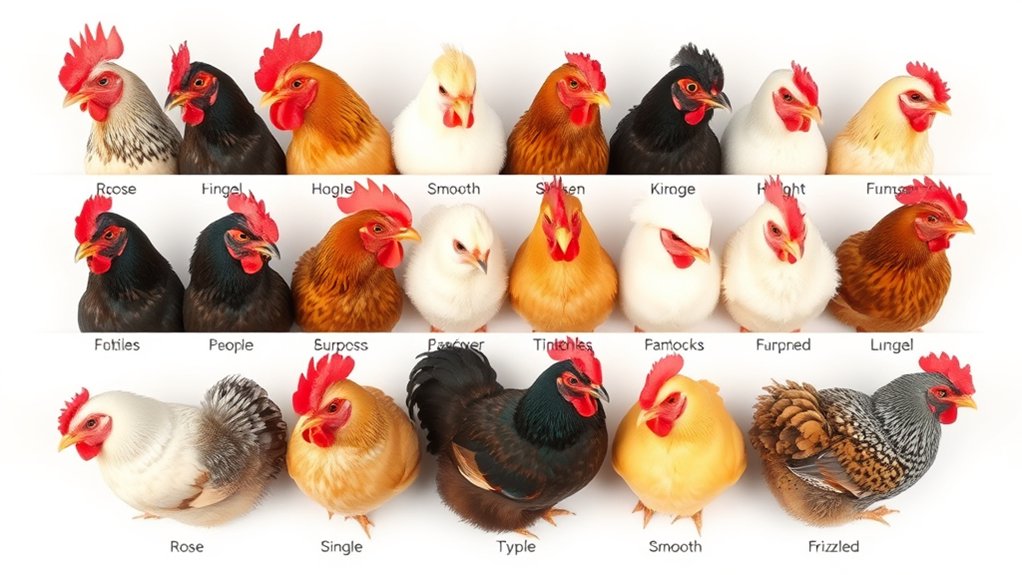
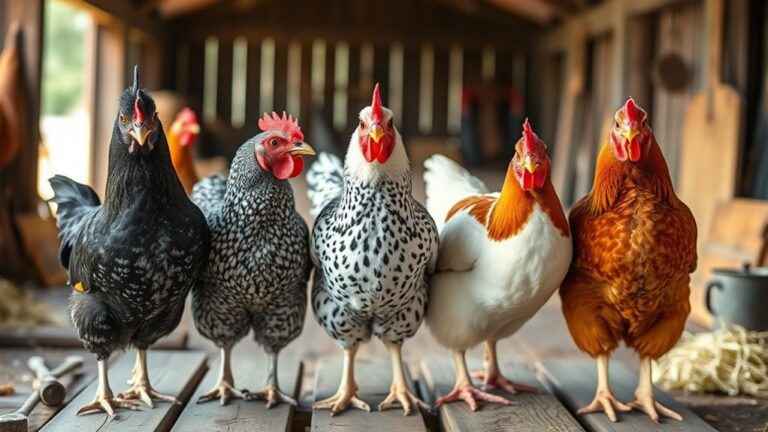
When you examine bantam chickens, pay close attention to their comb and feather types, as these traits help distinguish different breeds. Comb variations come in several forms, like single, rose, pea, and cushion combs. Each breed tends to have a specific comb style, so spotting these differences can quickly narrow down your options.
Identifying bantam breeds starts with observing their distinctive comb shapes and feather types.
For example, a rose comb is typically flatter and broader, while a single comb stands tall and pointed.
Next, focus on feather texture. Some bantams have smooth, tight feathers that lie flat, while others feature loose, fluffy, or even silky feathers. Feather texture affects not only appearance but also how the bird adapts to weather.
Breeds with silky feathers often look softer and more ornamental, whereas those with tight feathers appear sleek and aerodynamic.
Identify Bantam Breeds by Color and Pattern
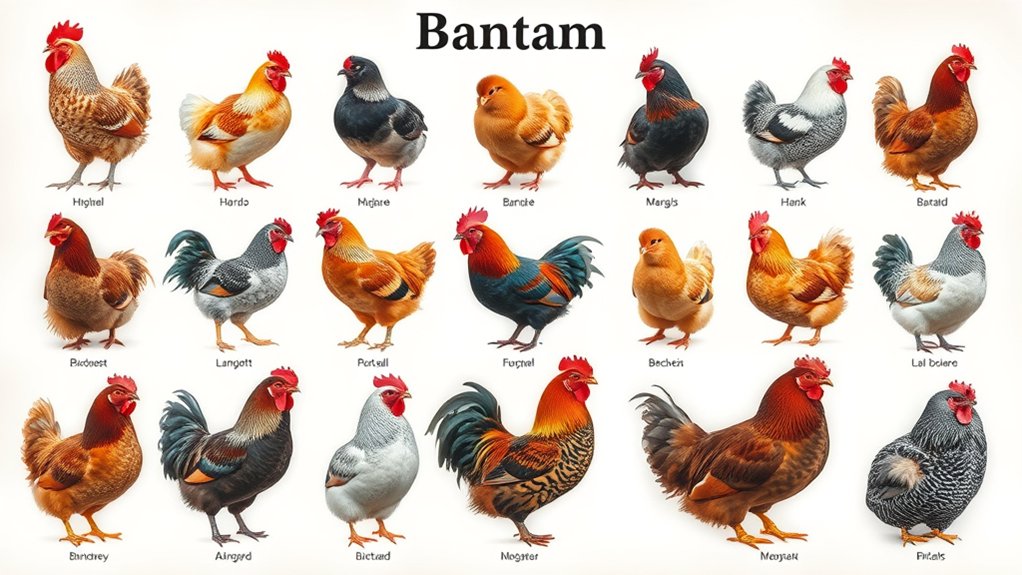
Although bantam breeds share many physical traits, their color and pattern offer some of the clearest clues for identification. When you observe their feather coloration, pay close attention to the hues and combinations unique to each breed.
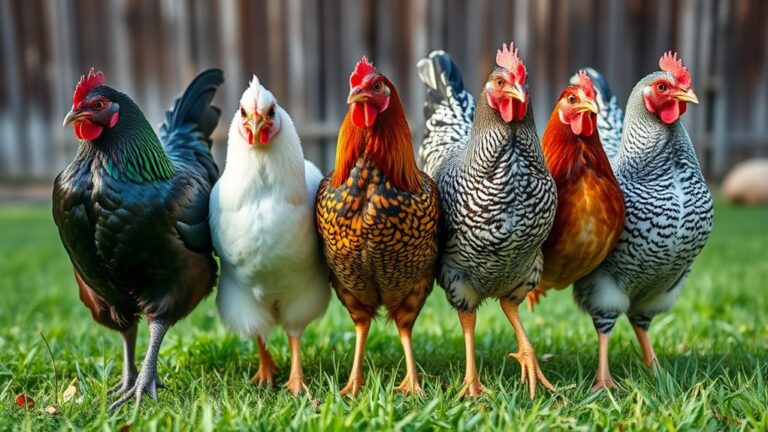
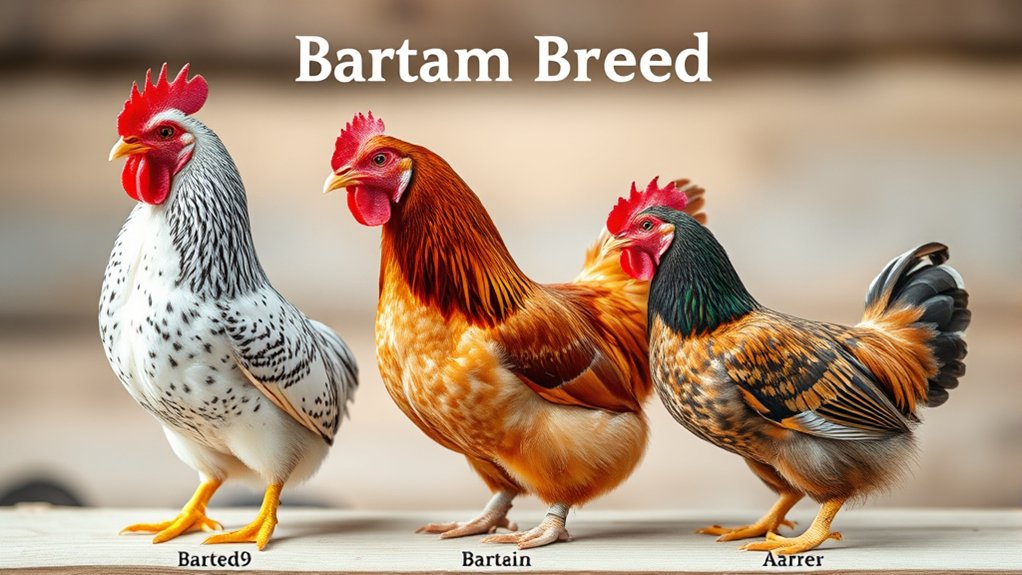
Some bantams display solid colors like black, white, or red, while others boast striking blends that highlight their distinct breed characteristics. Pattern variations also play a vital role. Look for barred stripes, lacing, mottling, or spangling, which can help you differentiate between breeds like the Barred Plymouth Rock or the Sebright.
By focusing on these feather coloration and pattern variations, you’ll quickly narrow down your options. Keep in mind that lighting and molt stages can affect appearance, so always check multiple birds and angles when identifying.
Mastering this color and pattern recognition will make spotting specific bantam breeds easier and more accurate every time you handle your flock.
Compare Size and Behavior to Identify Bantam Chickens
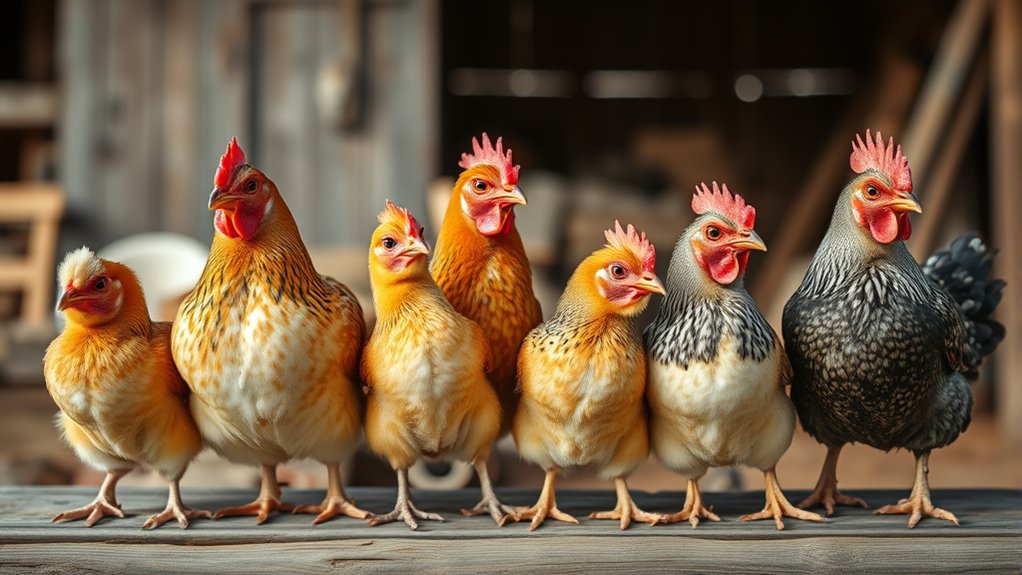
Since bantam breeds often share similar colors and patterns, comparing their size and behavior can give you additional clues for identification. Paying attention to miniature egg production and temperament comparison helps differentiate breeds more accurately.
For instance, some bantams lay smaller eggs frequently, while others are more docile or active. Observing these traits alongside size lets you pinpoint the breed.
Here’s a quick comparison table to guide you:
| Breed | Size (inches) | Temperament |
|---|---|---|
| Sebright | 8-10 | Active, alert |
| Pekin Bantam | 9-11 | Calm, friendly |
| Belgian d’Uccle | 7-9 | Curious, social |
| Japanese Bantam | 6-8 | Bold, confident |
Frequently Asked Questions
What Is the History of Bantam Chicken Breeds?
You’ll find that bantam chicken breeds have fascinating historical origins, tracing back to Asia and Europe where small chickens were naturally bred for size and appearance. Over time, breed development focused on enhancing their compact size, vibrant colors, and unique feather patterns.
You’ll appreciate how breeders selectively refined these traits, creating bantams prized for ornamental and practical purposes. This made them popular in poultry shows and small backyard flocks today.
How Do Bantam Chickens Differ in Egg Production?
You’d think bantam chickens could lay eggs non-stop, but their egg laying frequency is usually lower than standard breeds. While they’re adorable, they don’t produce as many eggs.
However, the shell quality of bantam eggs tends to be excellent, thicker and stronger than you might expect. So, if you want quantity, they might not be your best pick. But for quality eggs, bantams definitely deliver a solid punch.
What Are the Best Diets for Bantam Chickens?
You should provide bantam chickens with a balanced diet that meets their nutritional requirements, including protein, vitamins, and minerals. Feed them layer pellets or crumbles specially formulated for bantams, and offer fresh greens and occasional treats.
Establish consistent feeding schedules, giving them food twice daily to maintain health and egg production. Don’t forget to supply clean water at all times, helping your bantams stay active and productive.
How to Care for Bantam Chickens in Winter?
You know bantam chickens can lose up to 30% of their body heat in cold weather, so winter protection is essential. To keep them cozy, insulate their coop well, sealing drafts but allowing ventilation.
Add extra bedding like straw for warmth, and provide a dry, sheltered area. Make sure their water doesn’t freeze and feed them high-energy food to maintain body heat.
With these steps, your bantams will thrive all winter long.
Are Bantam Chickens Good Pets for Children?
Yes, bantam chickens can be great pets for children, but you need to prioritize child safety. They’re smaller and generally gentler than regular chickens, making them suitable for kids to handle and care for.
You should teach your child to be gentle and supervise interactions to prevent scratches or bites. With proper guidance, bantams offer excellent pet suitability, helping children learn responsibility while enjoying a friendly, entertaining companion.
Conclusion
As you study the bantam chickens, picture their tiny combs standing proud like little crowns and their feathers shimmering with unique colors and patterns. Imagine holding a bantam in your hands, feeling its delicate size and lively spirit.
By focusing on these key traits, comb shape, feather design, and behavior, you’ll confidently identify each breed. Soon, you’ll spot these charming birds with ease, turning your backyard into a vibrant gallery of bantam beauty.
With these tips, identifying bantam chicken breeds will become second nature, making your experience all the more rewarding.