
What Type of Chickens Lay Eggs Consistently?
Struggling to find chickens that lay eggs consistently? You’re not alone. Many backyard chicken keepers want reliable layers but don’t know which breeds deliver steady egg production without constant hassle. Finding the right chickens can make all the difference in keeping your egg supply steady and your flock happy.
If you want chickens that lay eggs consistently, focus on breeds like Leghorns, Rhode Island Reds, and Ameraucanas. Hybrids produce more eggs annually, around 250-300, but heritage breeds offer steady laying and longer lifespans.
To keep eggs coming, manage their diet, environment, lighting, and stress well. Pay attention to their age and molting periods, as both affect production.
Understanding these key factors helps you maintain a reliable egg supply and a healthy flock.
Key Takeaways
- Leghorns and Rhode Island Reds are top breeds known for consistent and high egg production.
- Hybrid layers produce 250-300 eggs annually, outperforming heritage breeds in egg quantity.
- Proper genetics, nutrition, and environment are essential for maintaining steady egg laying.
- Providing 14-16 hours of light daily and balanced calcium-rich diets supports consistent laying.
- Stress reduction, appropriate coop conditions, and managing molting ensure sustained egg production.
Best Chicken Breeds for Steady Egg Laying
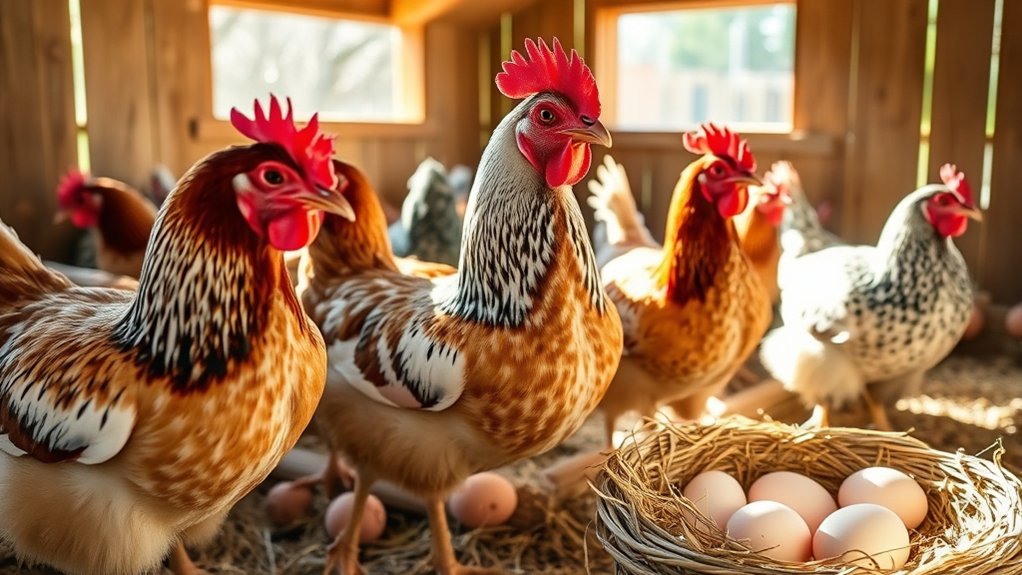
When you want chickens that lay eggs consistently, choosing the right breed is essential. You’ll find some breeds not only excel in egg production but also add charm to your farmyard aesthetics.
For example, Leghorns are known for their impressive egg-laying ability and sleek appearance, making them a favorite for those who value both function and style. Rhode Island Reds offer a friendly chicken behavior, making them easy to handle while still delivering steady egg output.
If you’re after colorful eggs, Ameraucanas provide that plus reliable laying habits. Understanding chicken behavior helps you maintain a healthy, content flock, which in turn supports consistent egg production.
Choosing breeds that match your farm’s look and your handling preferences ensures you enjoy both beauty and productivity. By focusing on these factors, you’ll get the most from your feathered friends without sacrificing the look or feel of your farmyard.
Heritage vs. Hybrid Layers: Which Lays More Eggs?

When you’re deciding between heritage and hybrid layers, it’s a good idea to look at how many eggs each type lays and how long they keep laying. You’ll also want to think about the kind of care and maintenance they need. Knowing these differences makes it easier to choose the right one for your egg-laying goals.
Egg Production Rates
How do heritage and hybrid layers compare in egg production rates? Hybrid layers generally outpace heritage breeds, laying more eggs annually due to selective breeding focused on productivity. You’ll notice hybrids can produce around 250-300 eggs per year, while heritage breeds average closer to 150-200.
However, heritage chickens often face incubation challenges since they tend to brood and hatch eggs naturally, which can temporarily reduce their laying frequency. On the other hand, hybrids rarely exhibit brooding behavior, maintaining a more consistent egg output.
Feather maintenance also plays a role. Heritage breeds may require more care to keep feathers in good condition, affecting their overall health and laying ability. If your priority is steady, high egg production, hybrids might suit your needs better.
Longevity and Productivity
Although hybrid layers start strong with high egg production, heritage breeds often outlast them in longevity, offering consistent laying over several years. If you’re into backyard farming, choosing heritage breeds means you’ll enjoy steady egg supply without constantly replacing your flock.
Hybrids may peak quickly but tend to slow down after a couple of years. Heritage chickens handle egg incubation naturally, which can be a big plus if you want to hatch your own chicks and keep your flock sustainable.
While hybrids focus on maximum output, heritage birds balance productivity with resilience. So, if long-term egg production matters most to you, heritage breeds might be the better fit. This way, you get reliable eggs year after year without sacrificing the joys of backyard farming.
Maintenance and Care Needs
Deciding between heritage and hybrid layers means thinking about their maintenance and care needs. These needs directly impact your daily routine.
Heritage breeds often require more attention because of their diverse feather colors and natural behaviors, including tolerance of rooster presence. Hybrid layers usually demand less care but might need extra protection from stressors to keep egg production steady.
| Aspect | Heritage Layers | Hybrid Layers |
|---|---|---|
| Feather Color | Varied, colorful patterns | Uniform, often white or brown |
| Rooster Presence | Usually tolerated | Sometimes causes stress |
| Care Level | Moderate to high | Low to moderate |
Understanding these differences helps you pick the breed that fits your lifestyle and egg-laying goals.
What Makes a Chicken a Consistent Layer?
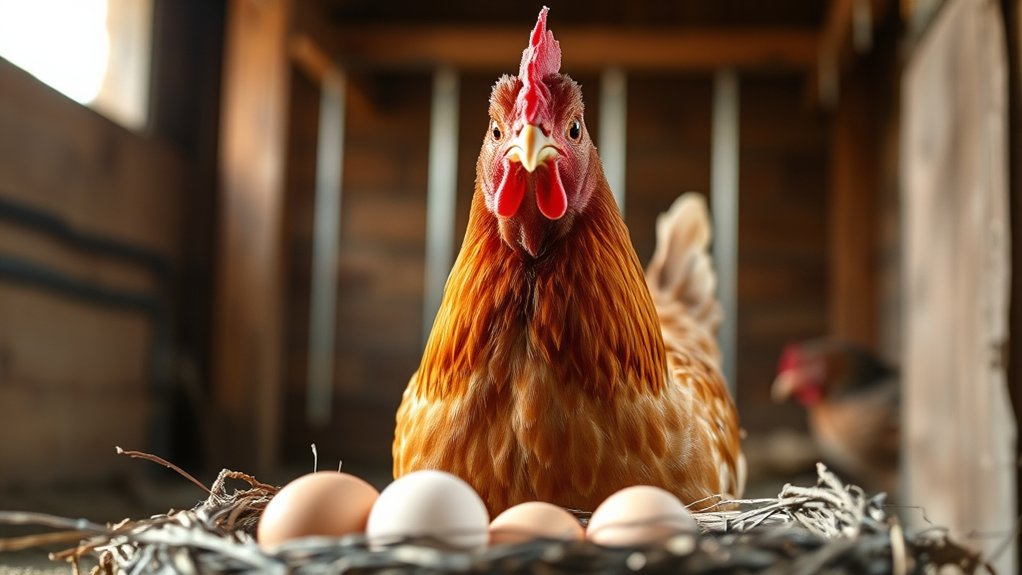
When you want chickens that lay eggs consistently, you need to understand the key factors influencing their productivity. Genetics play a huge role, as some breeds are naturally wired to produce eggs regularly.
You should also consider the hen’s environment. Stress, lighting, and diet greatly affect how often she lays. Interestingly, egg flavor can vary slightly depending on what the chicken eats, so consistent nutrition helps maintain not just quantity but quality.
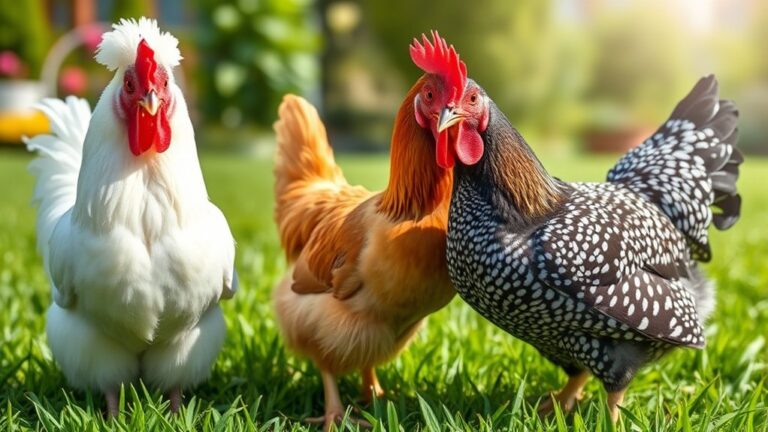
Feather color might not directly impact laying frequency, but it often signals breed type, which relates to laying habits. For example, white-feathered Leghorns are known for their high egg output, while brown-feathered Rhode Island Reds also lay reliably.
How Your Hen’s Age Affects Egg Production
You’ll notice your hen lays the most eggs during her peak years, usually between one and two years old. After that, her productivity will gradually start to decline. Knowing this pattern can really help you manage your flock more effectively.
Peak Laying Years
Although hens can lay eggs for several years, their peak laying period typically occurs within the first two years of life. During this time, you’ll notice your hens producing eggs regularly, often with vibrant egg color that reflects their breed and health.
To help your hens maintain this productivity, guarantee your coop ventilation is excellent. Proper airflow keeps them comfortable and reduces stress, which can impact laying frequency. Good ventilation also minimizes respiratory issues, supporting overall hen health during these prime laying years.
Decline In Productivity
As hens grow older, their egg production naturally slows down, and you’ll notice fewer eggs laid over time. This decline in productivity is a normal part of their lifecycle.
To support your aging hens, maintain diet diversity by providing a mix of grains, proteins, and calcium-rich foods. This helps sustain their health and egg quality.
Also, prioritize predator prevention. Stress from predators can further reduce laying frequency. Secure coops and regular checks minimize threats, keeping your hens safe and calm.
While older hens won’t lay as consistently as in their peak years, attentive care can prolong their productive phase. Understanding this decline helps you adjust expectations and care routines to keep your flock healthy and comfortable.
Handling Molting: Keeping Eggs Coming Year-Round
When chickens molt, they naturally slow or stop laying eggs to focus energy on regrowing feathers. To keep eggs coming year-round, you need effective molt management. This means providing extra protein and balanced nutrition to support feather regrowth without completely halting egg production.
You can also reduce stress by maintaining a consistent routine and avoiding sudden changes in their environment.
Broodiness prevention plays a vital role during molting. Broody hens often stop laying eggs as they focus on incubating, so discouraging this behavior helps maintain egg production.
You can prevent broodiness by regularly collecting eggs and providing distractions like dust baths or toys.
Creating the Ideal Environment for Egg-Laying Chickens
To keep your hens laying consistently, you’ll want to maintain the right coop temperature and provide a balanced diet. It’s important to make sure they get steady light exposure too, as this supports their natural laying cycles. When you combine these key factors, you create the ideal environment for healthy, productive chickens.
Optimal Coop Temperature
Although chickens can tolerate a range of temperatures, you’ll want to maintain an ideal coop temperature to keep them comfortable and laying eggs consistently. Proper temperature control prevents stress, which can reduce egg production. To create the best environment, focus on:
- Ensuring good coop ventilation to avoid moisture buildup and heat stress
- Using insulation or heat lamps during cold months without overheating
- Providing adequate predator protection while maintaining airflow
- Monitoring temperature regularly, aiming for 55-75°F as preferable for laying
Balancing warmth and fresh air helps your hens stay healthy and productive. Avoid drafts that chill them but keep airflow steady to prevent respiratory issues. When you maintain a stable, comfortable coop temperature, you encourage your chickens to lay eggs regularly, supporting your goal of a consistent egg supply.
Proper Nutrition Balance
Maintaining the right temperature keeps your hens comfortable, but feeding them properly fuels their ability to lay consistently. You need to provide a balanced diet rich in protein, calcium, and essential vitamins to support egg production and maintain eggshell quality.
Calcium is especially important; without enough, eggshells become thin and fragile. Establish steady feeding schedules to regulate their metabolism and encourage regular laying patterns. Avoid sudden diet changes, as they can stress your hens and disrupt laying.
Supplement their feed with crushed oyster shells or limestone to boost calcium intake naturally. Fresh water should always be available, as hydration directly impacts nutrient absorption and egg formation. With proper nutrition and consistent feeding schedules, you’ll create an ideal environment for your chickens to produce quality eggs regularly.
Consistent Light Exposure
Since chickens rely heavily on light cues to regulate their laying cycles, providing consistent light exposure is essential for steady egg production. You need proper lighting control to mimic natural daylight patterns. This helps hens maintain a regular laying schedule.
Inconsistent light can disrupt their rhythm, reducing egg output and potentially causing egg color variation. To create the ideal environment, focus on:
- Providing 14-16 hours of light daily to stimulate laying
- Using timers to maintain consistent lighting schedules
- Avoiding sudden changes in light intensity or duration
- Ensuring natural light supplements artificial lighting when possible
Feeding Tips to Boost Your Hens’ Egg Output
When you provide your hens with a balanced diet rich in essential nutrients, they’ll have the energy and resources needed to lay eggs consistently. Focus on feeding them high-quality layers’ pellets or crumble, which contain the right mix of protein, calcium, and vitamins to support steady egg production.
Providing hens with nutrient-rich, high-quality feed ensures consistent egg laying and overall health.
Offering crushed oyster shells boosts calcium intake, which strengthens eggshells. This is important for different egg color varieties you may be raising.
Don’t forget to supplement their diet with fresh greens or kitchen scraps in moderation, as variety helps keep hens healthy and interested in their food. Also, guarantee your hens’ overall well-being with proper chicken vaccination to prevent diseases that could reduce egg output.
Clean water is a must, too, since hydration directly affects laying consistency. By combining balanced feeding with good health practices, you’ll help your flock produce eggs reliably and maintain vibrant egg color varieties.
Spotting Signs Your Hens Are Laying Fewer Eggs
If your hens suddenly start laying fewer eggs, you’ll want to recognize the signs early to address any underlying issues. Pay close attention to changes in behavior and appearance, as they often signal problems.
Look out for these key indicators:
- Dull or patchy chicken feather color, which may indicate stress or illness
- Reluctance to enter the nesting box, possibly due to poor nesting box placement
- Increased aggression or unusual lethargy among the flock
- Fewer eggs found during your daily collection, signaling a drop in production
Setting Up a Coop That Supports Regular Egg Laying
Creating a coop that encourages regular egg laying means paying close attention to your hens’ comfort and safety. Proper coop design directly impacts chicken health, so guarantee good ventilation, sufficient space, and secure nesting boxes.
A well-structured coop reduces stress, which helps hens lay consistently. Cleanliness is crucial; regular cleaning prevents disease and supports overall health.
Here’s a quick guide to key coop features:
| Feature | Benefit |
|---|---|
| Ventilation | Prevents respiratory issues |
| Nesting Boxes | Provides privacy for laying |
| Space per Hen | Reduces stress and aggression |
| Secure Doors | Protects from predators |
When and How to Replace Your Egg-Laying Hens
As your hens age and their egg production declines, you’ll need to think about replacing them to keep a steady supply of fresh eggs. Knowing when to replace your hens helps your flock stay productive and healthy. Typically, hens lay consistently for about 2 years before their output drops noticeably.
When replacing hens, consider these steps:
- Monitor egg production regularly to spot declines early.
- Use egg incubation to hatch new chicks, ensuring a fresh batch of layers.
- Prepare chicken housing that accommodates both mature hens and growing chicks safely.
- Gradually introduce new pullets to avoid stress and pecking order issues.
Frequently Asked Questions
Can Roosters Influence How Often Hens Lay Eggs?
Rooster influence on egg laying frequency is minimal because hens don’t need a rooster to lay eggs. You’ll find hens lay eggs regularly whether a rooster is present or not.
However, if you want fertilized eggs for chicks, a rooster’s presence is necessary. So, while roosters don’t directly boost how often hens lay eggs, they play a role in reproduction, not egg production frequency.
Do Chickens Lay Eggs During the Winter Without Artificial Light?
You might be surprised that chickens can drop their egg production by up to 50% during winter months without artificial light. Since they rely on natural light to regulate laying, shorter days mean fewer eggs.
If you don’t provide extra light, your hens will slow down or stop laying altogether. So, expect a natural pause in egg production unless you supplement their daylight hours during those darker winter days.
How Do Diseases Affect Egg-Laying Consistency in Hens?
Diseases can seriously disrupt your hens’ egg-laying consistency. Nutritional deficiencies weaken their immune system, making it harder for them to produce eggs regularly.
Parasitic infections drain their energy and nutrients, causing stress that reduces laying frequency. If your hens aren’t healthy, they’ll likely stop laying or lay fewer eggs.
To keep egg production steady, you need to monitor their diet closely and control parasites effectively.
Is It Normal for Hens to Stop Laying Eggs Temporarily?
Of course, hens never stop laying eggs except when they do! It’s completely normal for hens to pause egg production temporarily. Changes in hen nutritional needs or hen aging factors often cause these breaks.
When hens don’t get the right nutrients or grow older, their bodies hit pause. So, if your hen takes a break, don’t stress. It’s just nature reminding you that even egg-laying machines need rest!
Can Stress From Predators Reduce a Hen’s Egg Production?
Yes, predator stress can definitely reduce your hen’s egg production. When hens feel threatened, their bodies prioritize survival over laying eggs, causing a noticeable egg production impact.
You might see fewer eggs or irregular laying patterns if predators are nearby or if your flock senses danger. To keep your hens laying consistently, it’s important to create a safe, calm environment where they feel secure and stress-free.
Conclusion
If you want steady eggs, choosing the right breed and caring for your hens go hand in hand, just like how the best recipes need both great ingredients and the right timing. When you pay attention to your hens’ age, diet, and environment, their consistent laying becomes a natural rhythm, not a chore.
By understanding these factors, you’ll not only enjoy fresh eggs daily but also build a rewarding connection with your flock. Knowing what type of chickens lay eggs consistently helps you keep that rhythm going strong.