Chicken Eggs: What Colour Are They and Why?
If you’ve ever stood in front of the egg aisle wondering why chicken eggs come in so many different colours, you’re not alone. Many people struggle with choosing the right eggs because the variety can be confusing.
Whether you’re curious about what affects the colour or which eggs might be best for you, understanding the basics can make shopping easier and more enjoyable.
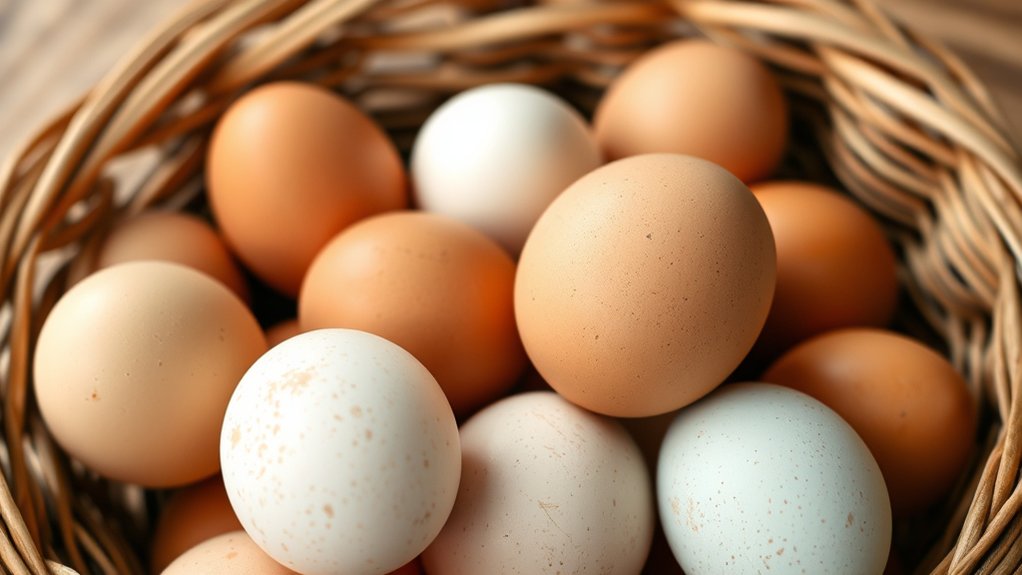
Chicken eggs come in a variety of colours, including white, brown, blue, green, and even speckled, mainly because of the hen’s genetics and breed.
Factors like diet, environment, and shell texture can also influence the shade and appearance, but these don’t affect taste or nutrition.
You might find some eggs have rough or smooth shells depending on the breed, and artificial dyeing is sometimes used for decoration.
Keep exploring, and you’ll uncover even more about these fascinating eggs.
Key Takeaways
- Chicken egg colours vary by breed genetics, producing white, brown, blue, or green shells through specific pigment deposition.
- Shell texture and pigment intensity, influenced by breed and diet, affect the egg’s colour appearance and durability.
- Pigmentation is purely cosmetic, limited to the shell, and does not affect egg taste, quality, or nutritional value.
- Environmental factors, hen health, and stress can subtly alter shell colour vibrancy and texture.
- Consumer preferences and market demand often associate egg colour with freshness or origin, but colour does not impact internal egg quality.
Why Do Chicken Eggs Have Different Colours?
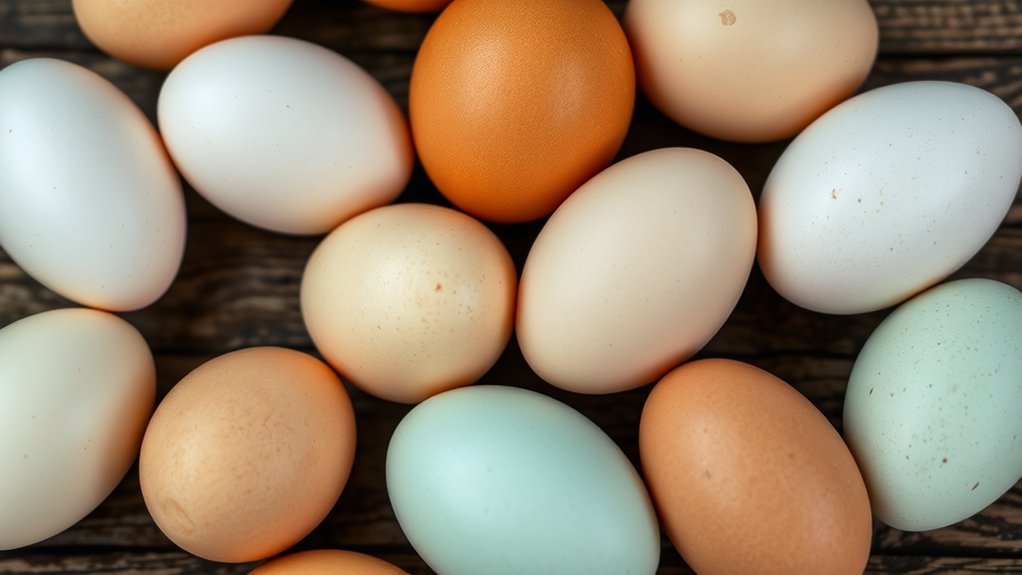
Have you ever wondered why chicken eggs come in different colors? The variation mainly comes down to genetics, but factors like egg shell texture and poultry housing also play a role.
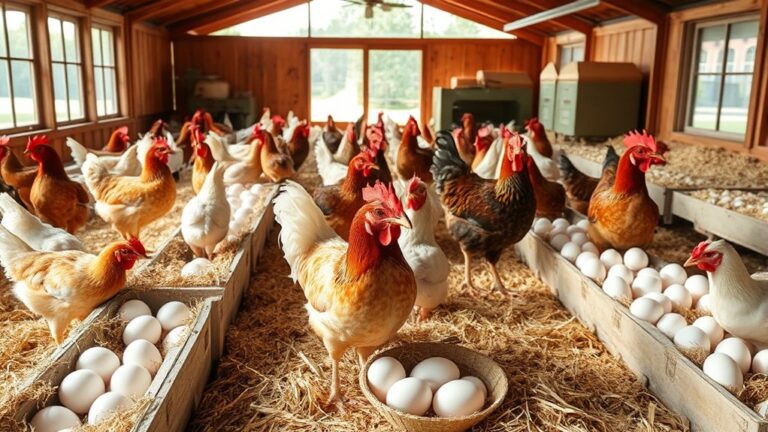
Egg shell texture can affect how light reflects off the surface, sometimes making colors appear more vibrant or dull depending on the bird’s environment. When hens are kept in varied poultry housing conditions, such as free-range versus cage systems, their diet and stress levels may influence the strength and appearance of the egg shell.
While the pigment deposited during egg formation determines the color, the texture can subtly alter how you perceive it. For example, a smoother egg shell might look shinier, whereas a rougher texture can scatter light, changing the shade you see. So, even though genetics primarily decides the egg color, you’ll find that egg shell texture and housing conditions add unique touches to each egg’s look.
Which Chicken Breeds Lay Which Egg Colours?

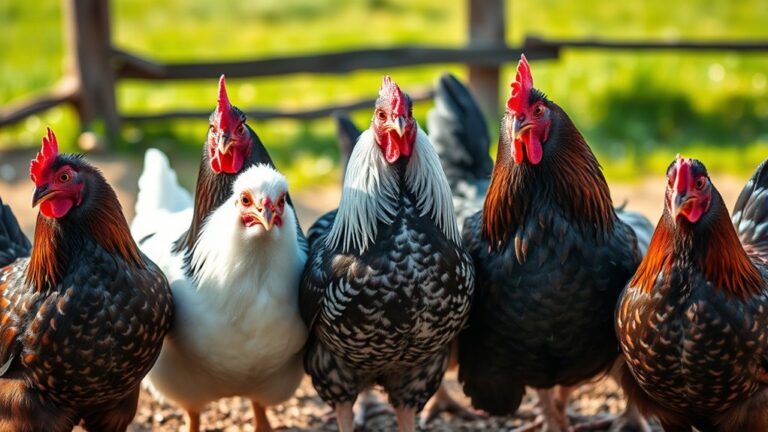
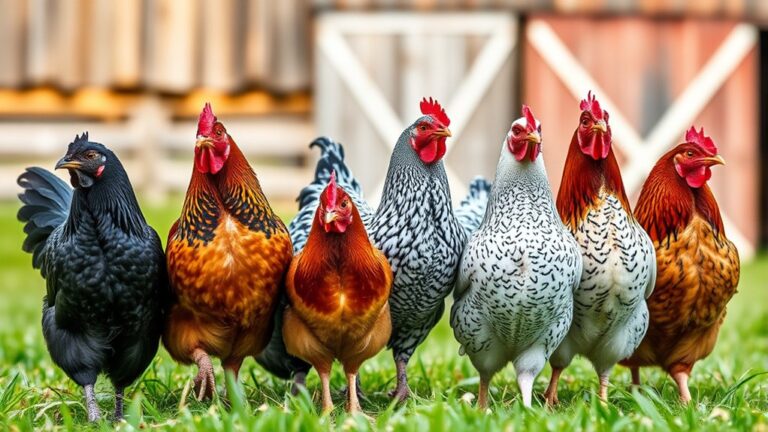
You’ll notice that different chicken breeds lay eggs in a variety of common colours, from white and brown to blue and green. It’s pretty interesting how each breed has its own specific shades, which are influenced by genetics and other factors.
Knowing which breeds lay which colours can really help when you’re choosing hens, especially if you have a particular egg colour in mind. So, it’s worth getting familiar with the breeds if you want to match your egg preferences!
Common Egg Colours
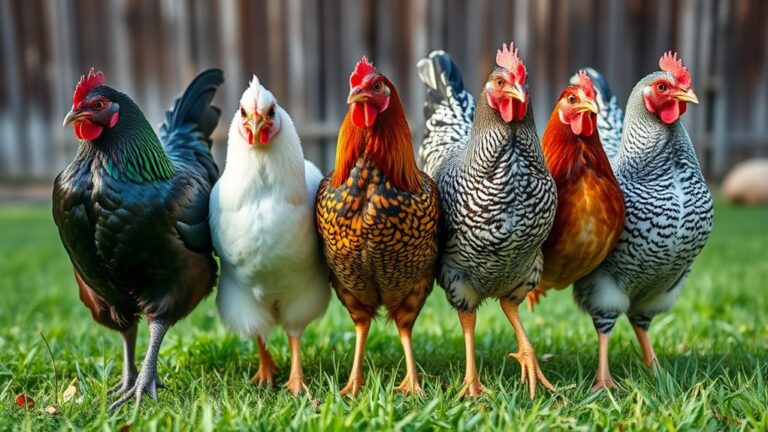
Why do chicken eggs come in so many different colors? The common egg colours you’ll see are white, brown, blue, and green. White eggs typically come from breeds like Leghorns, while brown eggs are often laid by Rhode Island Reds and Sussex chickens.
Araucanas and Ameraucanas are famous for their blue and green eggs. You might wonder if eggshell colour affects eggshell durability; generally, it doesn’t. Instead, durability depends more on factors like diet and poultry housing conditions.
Proper housing ensures hens stay healthy and lay strong eggs, regardless of shell colour. So, when choosing breeds for your flock, consider the egg colour you prefer but keep in mind that housing and care impact egg quality far more than the shell’s shade.
Breed-Specific Egg Shades
Curious about which chicken breeds lay specific egg colours? Different breeds produce distinct shades, and understanding this can help you choose the right hens for your poultry housing setup. Eggshell texture also varies slightly by breed, influencing how the eggs feel and sometimes their durability.
Here are four common breed-specific egg shades:
- Leghorns: Lay classic white eggs with a smooth eggshell texture.
- Rhode Island Reds: Produce rich brown eggs, often with a slightly rougher shell.
- Ameraucanas: Known for their unique blue eggs with a chalky texture.
- Marans: Famous for dark chocolate-brown eggs, which have a hard, glossy shell.
Knowing these traits helps you match breeds to your egg preferences and housing conditions.
Factors Influencing Egg Colour
Understanding the breed-specific egg shades gives you a foundation, but several factors influence the colour of chicken eggs beyond just genetics. For example, a hen’s diet can affect the pigment intensity, subtly altering the shell hue.
Stress and health also play roles, sometimes causing lighter or uneven colouring. Environmental conditions, like sunlight exposure, may impact shell texture and colour vibrancy. You might notice some eggs have a smooth shell texture, while others feel rougher, which can influence how pigments settle on the shell.
Furthermore, though not natural, egg dyeing is a popular practice to improve or change egg colours artificially for decoration or sale. So, while breed determines your egg’s base colour, these factors collectively shape the final appearance you see.
How Genetics Affect Egg Colour
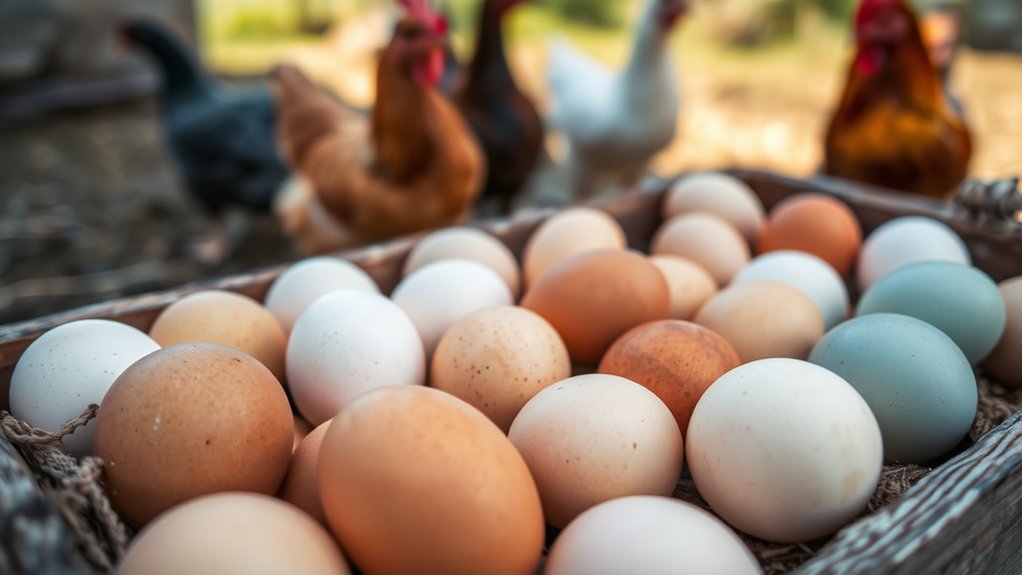
Although egg color might seem like a simple trait, genetics play an essential role in determining the shade of the eggs your chickens lay. The color results primarily from genetic variation, which influences the specific pigments deposited on the eggshell during formation. These pigments cause egg pigmentation, ranging from white to brown hues.
Your hen’s breed largely dictates this genetic influence, meaning certain breeds consistently produce particular egg colors.
Here’s how genetics affect egg color:
- Genes control the production of pigments like protoporphyrin and biliverdin.
- Dominant and recessive traits determine if eggshells are brown, white, or shades in between.
- Crossbreeding can introduce varied genetic combinations, affecting pigmentation intensity.
- Some genes influence the eggshell’s thickness and texture, indirectly affecting color perception.
Understanding these genetic factors helps you predict and appreciate the variety in egg colors from your flock.
What Makes Eggs Blue, Green, and Speckled?
Why do some chicken eggs come in shades of blue, green, or even sport speckles? It all comes down to genetics and pigments deposited as the egg forms. When you see blue eggs, it’s because of a pigment called biliverdin, which seeps through the eggshell and colors it from the inside out.
Green eggs happen when biliverdin layers over the usual brown pigment, producing that unique hue. Speckled eggs show spots where the shell’s texture changes, often due to extra pigment deposits or variations in eggshell texture. These speckles can help camouflage the eggs in natural settings.
Interestingly, the color of the eggshell doesn’t affect the hatchling color. You won’t find a blue egg producing a blue chick. Instead, the hatchling’s color depends on its genetics alone. So, the eggshell’s shade and texture provide clues about the hen’s genetics but don’t influence the chick’s appearance after hatching.
Can a Hen’s Diet Change Egg Colour?
Can what a hen eats really change the color of her eggs? While poultry breed traits primarily determine egg shell composition and base color, diet can influence subtle shade variations but won’t completely alter the shell’s natural hue. For example, a brown egg laid by a Rhode Island Red will remain brown regardless of diet, but certain feed elements can tweak brightness or tone.
Here’s what a hen’s diet can affect:
- Pigment intensity: Diets rich in carotenoids can deepen yolk color, indirectly impacting shell appearance.
- Shell strength: Calcium levels influence shell thickness, not color.
- Surface sheen: Fatty acids in feed may make shells glossier.
- Minor tint shifts: Some feed additives might slightly alter shell shade but won’t change the fundamental color set by genetics.
Does Egg Colour Affect Nutrition?
You might wonder if the colour of an egg affects its nutrition. Well, the shell’s pigmentation is what gives eggs their different hues, but it doesn’t really change their nutritional value. So, what does influence the nutrients inside your eggs? Let’s take a closer look.
Nutritional Differences Explained
Although many people believe that egg color influences nutritional value, the truth is that the color of a chicken egg’s shell doesn’t considerably affect its nutrient content. Eggshell pigmentation primarily results from genetics and doesn’t impact how your body absorbs nutrients from the egg itself.
What matters more is the hen’s diet and living conditions, which directly influence nutrient absorption and egg quality.
Here’s what you should know about nutrition and egg color:
- White and brown eggs have nearly identical protein and vitamin levels.
- Omega-3 content depends on the hen’s feed, not shell color.
- Eggs from well-fed hens provide better nutrient profiles regardless of pigmentation.
- Shell color is cosmetic, not a nutritional indicator.
Impact Of Shell Pigmentation
While shell pigmentation might catch your eye, it doesn’t affect the nutritional value of an egg. The color you see on the shell comes from pigment distribution during the egg’s formation, but these pigments are limited to the shell itself.
They don’t penetrate the egg white or yolk, so the nutrients inside remain unchanged regardless of whether the shell is white, brown, or blue. You might notice differences in pigment distribution that create varied shell patterns, but these are purely cosmetic.
When choosing eggs, focus on freshness and source instead of shell color. So, don’t let shell pigmentation influence your perception of quality or nutrition; it’s simply nature’s way of adding variety to chicken eggs without impacting what you get from eating them.
How Egg Colour Influences Taste and Cooking
Because egg color often sparks curiosity, you might wonder if it affects taste or cooking. The truth is, eggshell mineralization and poultry breeding influence shell color but don’t change the flavor or cooking properties. The shell color primarily comes from pigments deposited during mineralization, not the egg’s internal quality. Here’s what you should know:
White, brown, or even blue eggs taste the same when fresh and properly stored. Cooking techniques like boiling, frying, or scrambling aren’t affected by shell color. Nutritional content remains consistent across egg colors since it depends more on the hen’s diet.
Some people perceive differences in taste, but these are often psychological or linked to freshness rather than color.
Common Myths About Egg Colour Debunked
You might have heard that brown eggs are healthier or that blue eggs come from exotic hens, but many of these beliefs don’t hold up. Egg colour mainly depends on the hen’s genetics, not nutrition or health benefits. For example, brown eggs aren’t inherently more nutritious than white ones.
Egg color is determined by genetics, not nutrition—brown eggs aren’t healthier than white ones.
Another myth is that egg shell texture varies by colour, but it actually changes with the hen’s age. Older hens often lay eggs with rougher shells regardless of colour. You might also think that shell colour affects taste, but freshness and diet play bigger roles.
Don’t be fooled by the idea that certain colours indicate eggs laid by rare or special hens; common breeds can produce a variety of shell colours. Understanding these facts helps you make informed choices without relying on misconceptions about egg colour, shell texture, or hen age influence.
Ultimately, it’s the hen’s breed and environment that truly shape the egg you get.
How to Identify Egg Colour by Breed
You can often tell an egg’s colour by the breed of chicken that laid it. Different breeds lay eggs in shades ranging from white and brown to blue and green. It’s pretty interesting how the genetics behind these colours work, and knowing a bit about them can make it easier to identify eggs just by looking at them.
Common Breeds And Colours
How can you tell the difference between egg colours just by looking at the breed? Each breed lays eggs with distinct colours and eggshell patterns, which helps you identify them easily. Knowing these differences also hints at poultry health, since changes in shell quality or colour may signal issues.
Here are common breeds and their egg colours:
- Leghorn: White eggs with smooth shells
- Rhode Island Red: Brown eggs, often with speckled shells
- Ameraucana: Blue or green eggs with consistent shells
- Marans: Dark brown eggs featuring rich, chocolatey shells
Genetics Behind Egg Colour
Although egg colour might seem like a simple trait, it’s actually driven by specific genes inherited from each breed. When you identify egg colour by breed, you’ll notice genetics control pigments deposited on the eggshell during formation.
For example, breeds like the Araucana lay blue eggs, while Leghorns produce white ones. These genetic factors also influence eggshell durability, affecting how sturdy the eggs are.
Furthermore, hen temperament can indirectly impact egg quality; calmer breeds often lay eggs with stronger shells. Understanding these genetic links helps you predict egg colour and quality, making it easier to choose breeds suited to your needs.
Why Egg Colour Matters for Farmers and Consumers
Because egg colour influences both market preferences and production costs, it plays a crucial role for farmers and consumers alike. When you choose eggs, you might not realize how much the shell colour impacts durability and storage.
Egg colour affects market demand, production costs, and plays a key role in egg durability and storage.
For farmers, egg shell durability affects transportation and reduces breakage, which ties directly into how they design poultry housing to protect eggs and hens. Consumers often pick eggs based on colour, associating it with freshness or taste, even though nutritional value remains consistent.
Here’s why egg colour matters to you:
- Egg shell durability varies by tone, affecting shelf life and handling.
- Poultry housing setups can differ depending on the breed’s egg colour.
- Market demand shifts influence prices of brown, white, or tinted eggs.
- Consumer perception often links hue to quality or origin.
Understanding these factors helps you make informed choices at the store while farmers optimize production efficiently.
Frequently Asked Questions
How Long Does It Take for a Hen to Lay an Egg?
It takes a hen about 24 to 26 hours to lay an egg. You’ll find that the egg shell composition, mainly calcium carbonate, forms during this time, influenced by the hen’s feeding habits.
If she eats a balanced diet rich in calcium, the shell will be strong. You can help her by providing proper feed and supplements, ensuring each egg she lays is healthy and well-formed within that daily cycle.
What Is the Average Size of a Chicken Egg?
The average size of a chicken egg is about 57 grams, classified as a large egg. You’ll notice eggshell pigmentation varies depending on the breed, but size stays fairly consistent.
During the hen reproductive cycle, the egg forms over roughly 25-26 hours, influencing size and shell quality. So, while pigmentation affects color, it doesn’t impact how big the egg gets. You can expect most eggs to fall within that average range.
How Should Chicken Eggs Be Stored for Freshness?
You should store chicken eggs in their carton inside the refrigerator to maintain freshness. Keep the storage temperature consistently around 4°C (39°F) to slow bacterial growth.
Don’t worry about eggshell pigmentation; it doesn’t affect how you store eggs. Just avoid washing eggs before storing since it removes their natural protective coating.
Keeping eggs pointed end down helps preserve freshness, so handle them gently and use them within three weeks for best quality.
Can Chickens Lay Eggs Without a Rooster?
You don’t need a rooster presence for hens to lay eggs. For example, Sarah’s backyard hens lay eggs every morning without a rooster around.
However, these eggs won’t be fertilized eggs, meaning they won’t develop into chicks. The rooster’s role is to fertilize the eggs, not to trigger laying.
What Are the Signs of a Fresh Versus Old Egg?
You can tell a fresh egg by its eggshell texture and appearance. Fresh eggs usually have a slightly rough, matte shell due to natural eggshell pigmentation. Older eggs tend to have a smoother, shinier shell as moisture escapes.
Also, when you crack a fresh egg, the yolk stands tall and the white stays thick. An old egg’s yolk flattens and the white spreads out thinly. You’ll notice these signs right away.
Conclusion
So, next time you crack open an egg, remember it’s more than just breakfast. It’s a colorful story painted by genetics and nature’s brush. Whether blue, green, or speckled, each shell carries a unique tale from the hen’s breed and diet.
Don’t let myths scramble your thoughts. Instead, savor the rich variety and know why those colors matter, both on your plate and for the farmers behind the scenes who care about chicken eggs.