Do Silkie Chickens Lay Eggs?
If you’ve ever wondered whether Silkie chickens are good layers, you’re not alone. Many people struggle with finding the right breed that balances charm and egg production.
Silkie chickens are famous for their unique fluffy feathers, but when it comes to laying eggs, there’s a lot to consider.
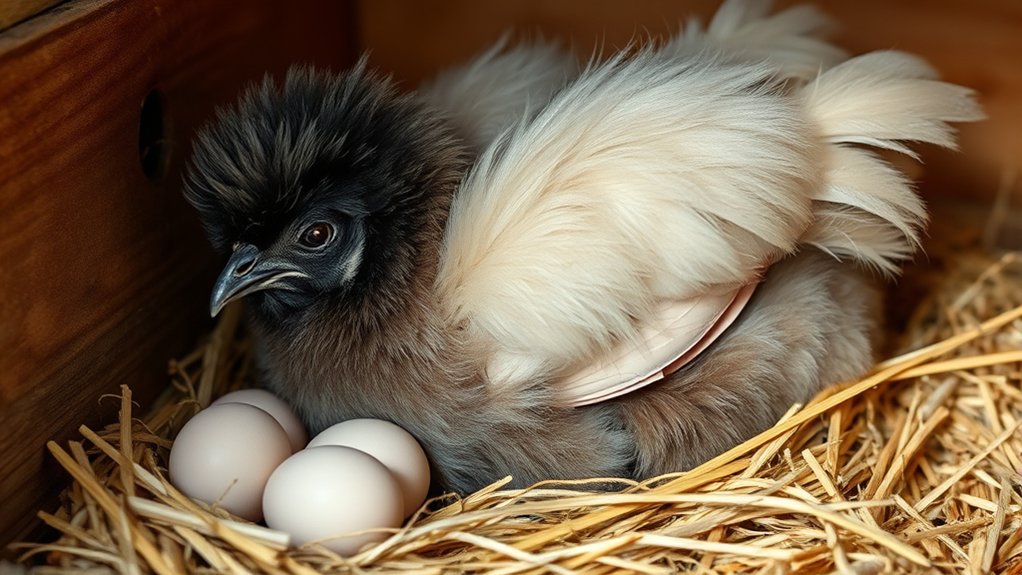
Yes, Silkie chickens do lay eggs, but don’t expect them to be as prolific as other breeds. You’ll get about 2-3 small to medium eggs per week, adding up to roughly 100-120 eggs a year.
They start laying around 5 to 7 months old, producing creamy-colored eggs with a rich flavor.
Their calm nature and brooding instincts make them unique. If you want to know how to care for them and maximize their laying, keep exploring further.
Key Takeaways
- Silkie chickens do lay eggs, typically producing 2-3 small to medium eggs per week. They start laying eggs between 5 to 7 months of age under proper care.
- Silkies lay around 100-120 eggs annually, which is fewer than high-production breeds like Leghorns. Their eggs have sturdy, smooth shells ranging from cream to light brown with occasional speckles.
- Silkies are known for strong brooding instincts, making their eggs ideal for hatching chicks.
Do Silkie Chickens Actually Lay Eggs?
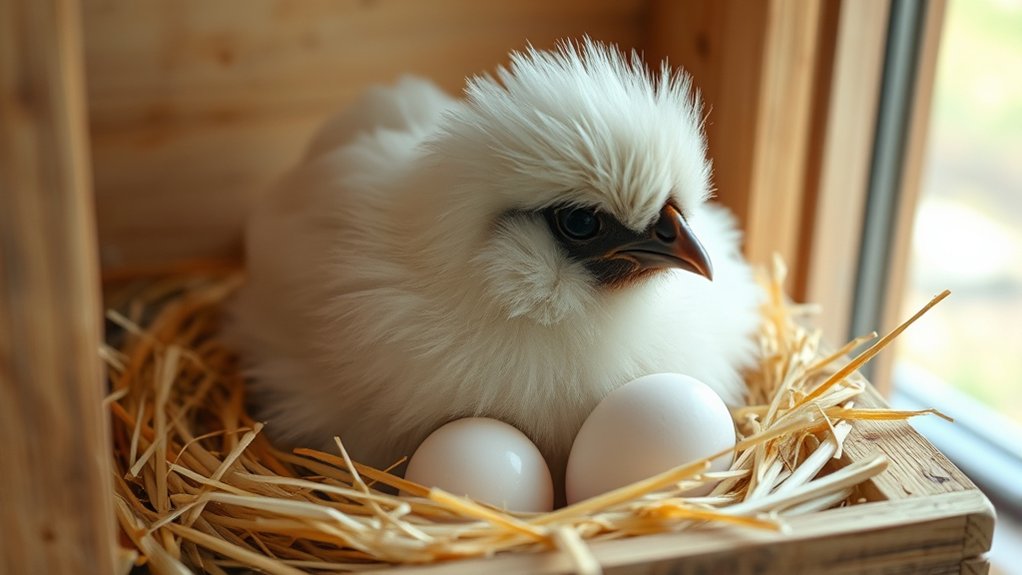
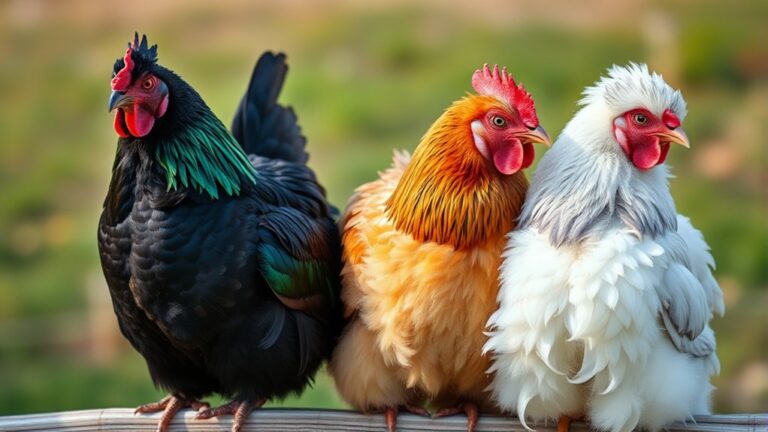
How often do Silkie chickens lay eggs? While Silkies aren’t the most prolific layers, they do lay eggs regularly enough to satisfy a small flock keeper. You’ll notice their unique feather colors, ranging from white and black to buff and gray, make them stand out in your coop.
But beyond their striking appearance, their personality traits are equally charming. They’re friendly, calm, and excellent mothers, often going broody.
Silkies typically lay small to medium-sized eggs, usually producing around two to three eggs per week. Their egg production isn’t as high as other breeds, but if you’re after a pet chicken with a gentle demeanor and the bonus of fresh eggs, Silkies fit the bill.
You’ll appreciate their soft, fluffy feathers and their willingness to interact with you, making egg collection a pleasant routine. So yes, Silkies do lay eggs, just at a more relaxed pace.
When Do Silkie Chickens Start Laying Eggs?
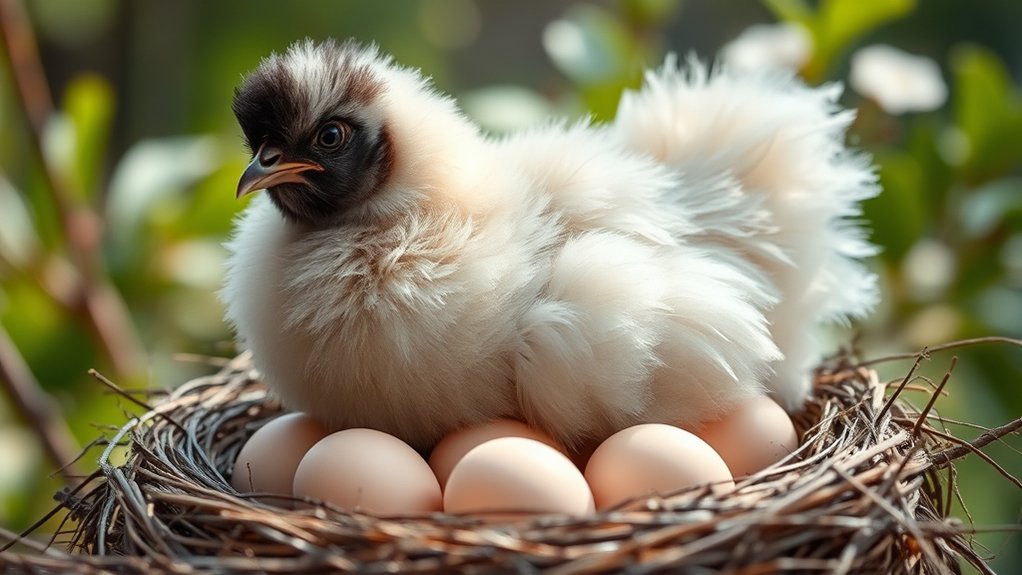
You’ll usually see Silkie chickens start laying eggs around 5 to 7 months old. However, this can vary depending on things like their diet and environment.
Keep an eye out for signs that they’re maturing, such as changes in their behavior or physical development.
Knowing these clues will make it easier for you to tell when your Silkies are ready to lay eggs.
Typical Age Range
Silkie chickens typically start laying eggs between 5 and 7 months of age. You might notice that feather coloration can sometimes hint at maturity; for example, darker-feathered Silkies often reach laying age just as quickly as lighter ones, though this isn’t a strict rule.
If you have a rooster around, his presence won’t speed up when your hens begin laying, but it can influence behavior and social dynamics within the flock.
Factors Influencing Onset
While age sets a general timeline for when your Silkies start laying eggs, several other factors can influence exactly when they begin. For instance, broodiness behavior plays a significant role. Silkies prone to broodiness might delay laying as their focus shifts to nesting rather than egg production.
Feather color variations can affect maturity rates too. Some color strains mature faster, leading to earlier egg-laying. Environmental conditions, diet quality, and overall health also impact onset. So, providing ideal care encourages timely laying.
Understanding these factors helps you manage expectations and support your Silkies’ development effectively. This way, they start laying when ready rather than strictly by age alone.
Signs of Maturity
Although the exact timing varies, your Silkies will show clear signs when they’re ready to start laying eggs. Typically, they begin laying between 5 to 7 months old.
You’ll notice changes in their breeding habits, like increased nesting behavior and vocalization. Feather color can also hint at maturity; vibrant, healthy plumage often accompanies readiness to lay.
| Sign | Description |
|---|---|
| Age | 5 to 7 months old |
| Nesting Behavior | Spending more time in nesting boxes |
| Vocal Changes | Increased clucking or crowing |
| Feather Color | Brighter, fuller plumage |
How Often Do Silkie Chickens Lay Eggs?
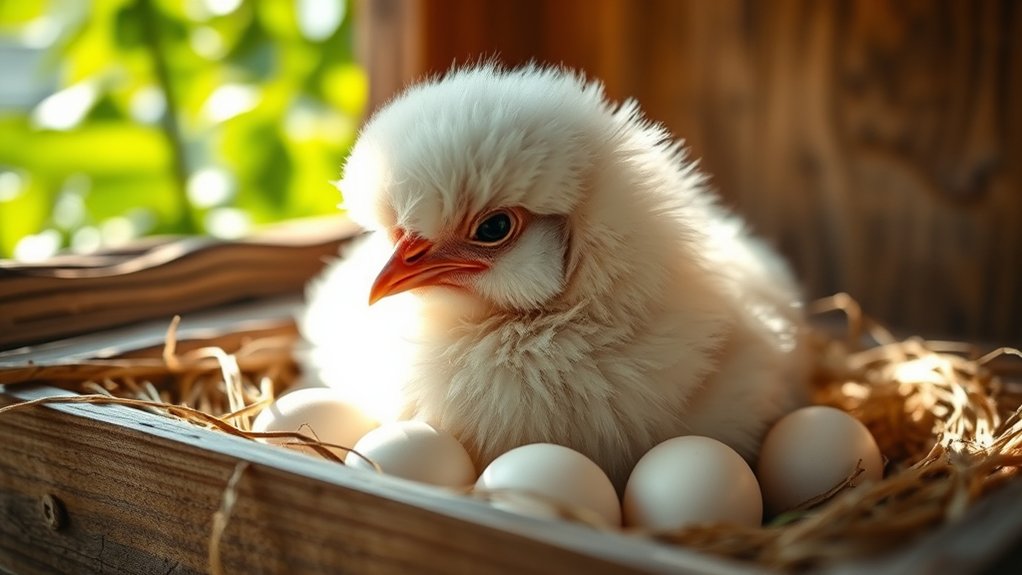
How often can you expect your Silkie chickens to lay eggs? Silkies typically lay about two to three eggs per week, which is less frequent than many other chicken breeds. Their unique Silkie temperament, known for being calm and docile, means they might not be the most prolific layers, especially if they’re broody.
The soft Silkie feathering, while adorable, requires extra care to keep them healthy and comfortable, indirectly affecting their laying frequency. You’ll notice that Silkies usually lay eggs consistently during warmer months but slow down or stop laying in colder weather or during molting.
Their gentle nature means they’re more likely to focus on nesting rather than constant egg production. If you want steady eggs, maintaining good nutrition and a stress-free environment tailored to their sensitive Silkie temperament will help maximize how often they lay. Keep in mind, Silkies are valued as much for their personality and appearance as for their eggs.
What Do Silkie Chicken Eggs Look Like?
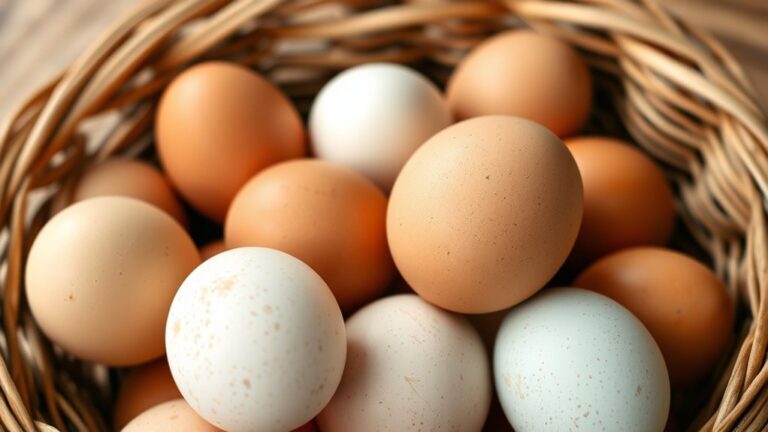
You’ll notice Silkie chicken eggs are smaller than average and often have a rounded shape. Their shell colors can vary—from cream to light brown, and sometimes they even have a slightly speckled look.
Also, pay attention to the shell’s texture. It’s usually smooth, but there can be subtle differences depending on the bird.
Egg Size And Shape
When you examine Silkie chicken eggs, you’ll notice they tend to be smaller than those of standard chicken breeds. Their compact size reflects the breed’s overall delicate nature. The eggs usually have a rounded shape, sometimes slightly oval, differing subtly depending on individual hens.
Feather colors don’t directly affect the egg size or shape, but the rooster influence can play a role in slight variations within a flock. For instance, breeding Silkies with different feather hues may produce offspring whose eggs vary modestly in size or shape, thanks to genetic diversity introduced by the rooster.
Shell Color Variations
While Silkie eggs are known for their smaller, rounder shape, their shell color also sets them apart. You’ll notice subtle variations influenced by factors like feather color and brooding behavior. Here’s what to expect:
- Creamy to light tan shades: Most Silkie eggs range from creamy white to light tan, a gentle contrast to their fluffy feather color.
- Slight speckling: Some eggs show faint speckles, often influenced by the hen’s genetics and health.
- Color stability during brooding: When Silkies exhibit strong brooding behavior, their eggs tend to maintain consistent shell color, reflecting stable calcium levels.
Understanding these shell color variations helps you appreciate the unique qualities of Silkie eggs beyond just size and shape.
Texture And Appearance
Although Silkie eggs are small and distinctively colored, their texture and surface appearance also stand out. You’ll notice that Silkie eggs often have a slightly rougher shell compared to other breeds. This unique texture complements their unusual feather coloration, which ranges from white to black and even blue hues.
The eggs typically show a matte finish rather than a glossy one, giving them a natural, earthy look. Their shells feel sturdy despite the smaller size, reflecting the breed’s resilient personality traits. Just like Silkies themselves, which are known for their gentle and friendly nature, their eggs carry an understated charm.
When you handle Silkie eggs, you get a subtle reminder of the breed’s distinctive qualities, both in appearance and character.
How Many Eggs Do Silkies Lay Per Year?
If you’re curious about how many eggs Silkie chickens lay each year, you’ll find they produce fewer eggs compared to typical laying breeds. On average, Silkies lay about 100 to 120 small, cream-colored eggs annually. Their unique feeding habits and coop design needs influence this number.
To optimize their egg production, consider these three factors:
- Feeding habits: Silkies require a nutrient-rich diet with balanced protein to support consistent laying. Offering quality layer feed and occasional treats can help maintain their productivity.
- Coop design: Make sure the coop provides adequate space, ventilation, and nesting boxes to reduce stress and encourage laying.
- Seasonal changes: Silkies tend to lay less during colder months, so adjusting their care seasonally can help maximize egg output.
How Does Silkie Chicken Egg Production Compare to Other Breeds?
Because Silkie chickens lay fewer eggs than many common breeds, you might notice a difference when comparing their egg production. While typical egg-laying breeds like Leghorns can produce 250 or more eggs annually, Silkies usually lay around 100 to 120 eggs per year. Their unique Silkie feathering, which is soft and fluffy, isn’t just for show. It reflects their breed’s distinct physiology that prioritizes appearance and temperament over prolific laying.
Silkies have a calm and friendly Silkie temperament, making them great pets, but they aren’t bred primarily for egg production. If you want a steady supply of eggs, you’ll find other breeds more productive. However, Silkies offer charm and novelty, plus their eggs are often prized for their small size and rich yolks. So, while they don’t match other breeds in quantity, Silkies hold their own when you value personality alongside egg laying.
What Affects Silkie Chickens’ Egg Laying?
Here’s a quick summary:
- Silkie feathering affects how they handle temperature changes, which impacts how often they lay eggs.
- Their docile Silkies temperament means they thrive in peaceful environments. That kind of calm supports egg production.
- Proper nutrition guarantees their bodies have the resources needed to produce eggs regularly.
How Do You Care for Silkies to Encourage Egg Laying?
To encourage your Silkies to lay eggs consistently, you need to provide a comfortable and stress-free environment. Focus on their feeding habits by offering a balanced diet rich in protein and calcium, which are essential for egg production. Keep fresh water accessible at all times.
Maintaining coop cleanliness is just as important. Regularly remove droppings and replace bedding to prevent disease and stress.
Here’s a quick guide to caring for your Silkies:
| Care Aspect | Tips |
|---|---|
| Feeding Habits | Provide layer feed + occasional treats |
| Water | Fresh, clean water daily |
| Coop Cleanliness | Clean weekly; dry bedding |
| Stress Reduction | Avoid loud noises; secure coop |
Are Silkie Eggs Good for Eating?
You might be curious about how Silkie eggs compare nutritionally to regular chicken eggs. Well, their taste and texture provide a unique experience that’s definitely worth trying. So, let’s dive in and see what sets Silkie eggs apart when they’re on your plate.
Nutritional Value Comparison
Although Silkie eggs may look different from regular chicken eggs, their nutritional profile holds up well for everyday eating. When considering egg nutrition, you’ll find Silkie eggs comparable to those from standard breeds. This is largely because their chicken diet influences nutrient content in a similar way. Here’s what you should know:
- Silkie eggs typically contain slightly higher protein levels, supporting muscle health.
- They offer a good balance of vitamins and minerals, such as vitamin D and iron, essential for energy and immune function.
- Their fat content remains moderate, with healthy fats that support brain function.
Taste and Texture Profile
While Silkie eggs may surprise you with their unique appearance, their taste and texture often delight those who try them. Despite the silky feather colors that make these chickens stand out, their eggs have a surprisingly rich and creamy flavor.
You’ll notice a slightly thicker yolk and a firmer white compared to typical eggs, which adds a satisfying texture to your dishes. Their broodiness tendencies mean Silkies often lay fewer eggs, but each one carries a depth of flavor that makes up for quantity.
If you’re curious about whether Silkie eggs are good for eating, the answer is yes. They’re perfect for baking, frying, or enjoying fresh. Their distinct taste reflects the special qualities of this charming breed.
Are Silkie Eggs Good for Hatching?
Because Silkies possess strong brooding instincts, their eggs are excellent for hatching. If you’re considering hatching Silkie eggs, you’ll appreciate how their unique qualities tie back to Silkie breed history and their famous Silkie feather fluff.
Silkies’ natural brooding instincts make their eggs ideal for successful hatching and nurturing chicks.
Here’s why Silkie eggs are great for hatching:
- Broodiness: Silkies are naturally inclined to sit on eggs, providing consistent warmth and protection, which boosts hatch rates.
- Mothering Skills: Their calm temperament and dedication make them attentive mothers, ensuring chicks stay safe and warm after hatching.
- Egg Viability: Though Silkie eggs are smaller than average, they have strong fertility when paired with a healthy Silkie rooster. This enhances successful hatching.
Frequently Asked Questions
What Is the History of Silkie Chickens?
You’ll find that Silkie breed origins trace back to ancient China, where they were prized for their unique fluffy feathers and gentle nature. Silkies hold cultural significance in many Asian traditions, symbolizing luck and prosperity.
Over time, these charming birds spread worldwide, enchanting poultry enthusiasts with their distinctive appearance and friendly temperament. When you learn about Silkies, you appreciate their rich history and the special place they hold in various cultures.
How Do Silkie Chickens Behave as Pets?
Caring for Silkie chickens is like befriending fluffy clouds with personalities. You’ll love their gentle nature and vibrant feather colors, which range from white to black and even blue.
The roosters often act more like sweet, protective guardians than aggressive leaders, making them great pets. You’ll enjoy their calm, curious behavior, perfect for families or anyone wanting a peaceful, colorful companion in the backyard.
They’re affectionate and surprisingly interactive!
What Do Silkie Chickens Eat?
Silkie chickens eat a balanced diet of grains, seeds, insects, and greens to meet their dietary needs and support egg production. You should provide them with quality layer feed rich in calcium to strengthen eggshells.
Offering occasional treats like fruits or mealworms keeps them happy and healthy. Fresh water is essential, too. By maintaining this diet, you’ll help your Silkies stay healthy and productive throughout their laying cycle.
How Long Do Silkie Chickens Live?
Like the legendary phoenix, your Silkie chickens live surprisingly long, often reaching 7 to 9 years with proper care. While their egg production is modest compared to other breeds, you’ll find they make up for it with charm.
However, breeding challenges can arise due to their unique feathers and temperament, so patience is key. If you focus on nurturing them well, you’ll enjoy their gentle presence for many seasons.
Are Silkie Chickens Good for Meat Production?
Silkie chicken breed isn’t your top choice if you’re aiming for high meat production potential. They’re small and fluffy, which makes their meat tender and unique but not abundant.
If you want quantity and efficiency, other breeds outperform Silkies. However, if you value flavor and novelty, Silkies can be a fun addition. Just don’t expect them to match traditional meat birds on weight or yield.
Conclusion
You might be surprised, but Silkie chickens do lay eggs, just not as often as other breeds. They start laying a bit later and produce smaller, cream-colored eggs that are perfect for your kitchen or hatching adventures.
With the right care, you can encourage them to lay more, even if it feels like waiting for a miracle on a cloudy day. So, get ready to enjoy your fluffy little egg-makers because Silkie chickens do lay eggs!