Plymouth Rock Vs Barred Rock – 5 Key Differences
Choosing the right chicken breed for your backyard flock can feel overwhelming. You want a bird that fits your lifestyle, climate, and egg-laying needs, but with so many options, it’s easy to get confused. You’re not alone—many people struggle to decide between popular breeds like Plymouth Rock and Barred Rock.
You’ll notice five key differences between Plymouth Rock and Barred Rock chickens. Plymouth Rocks offer more color variety and tend to be calmer, while Barred Rocks have a distinct black-and-white barred feather pattern and show a bit more spirited behavior.
Both lay reliable, medium-sized eggs, but Barred Rocks handle cold weather better. Plymouth Rocks may need extra care due to slower growth. Keep exploring to understand how these traits affect your flock choices.
Key Takeaways
- Plymouth Rocks are a broader breed group with multiple color varieties, while Barred Rocks are specifically the black-and-white barred variety.
- Barred Rocks tend to be slightly more spirited and vocal compared to the generally calmer and friendlier Plymouth Rocks.
- Barred Rocks have denser feathering, making them more cold-hardy than Plymouth Rocks.
- Both breeds lay similar numbers of medium-sized, sturdy-shelled eggs with rich flavor and reliable production.
- Plymouth Rocks may require more care and incur higher costs due to slower growth and environmental sensitivity.
Key Characteristics of Plymouth Rock and Barred Rock Chickens

Although both breeds share a similar name, Plymouth Rock and Barred Rock chickens have distinct traits you should know before choosing one. Plymouth Rock chickens trace their historical origins back to the 19th century in the United States, where they were developed as a dual-purpose breed for both meat and egg production.
Breeding standards for Plymouth Rocks emphasize a sturdy body, broad breast, and calm temperament. Barred Rock chickens, on the other hand, are a specific variety of Plymouth Rocks distinguished primarily by their barred feather pattern.
While they share the same genetic lineage and breeding standards, Barred Rocks stand out because of their unique coloration. When you’re selecting between the two, understanding these origins and standards helps you appreciate that Barred Rocks are fundamentally a subset of Plymouth Rocks, bred to meet particular visual criteria while maintaining the breed’s reliable characteristics.
This clarity in breeding standards ensures you get a bird that fits your needs.
Feather Patterns and Colors Compared

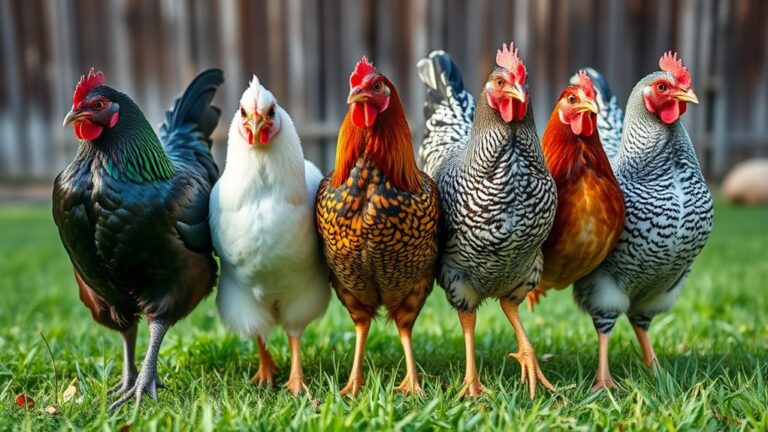
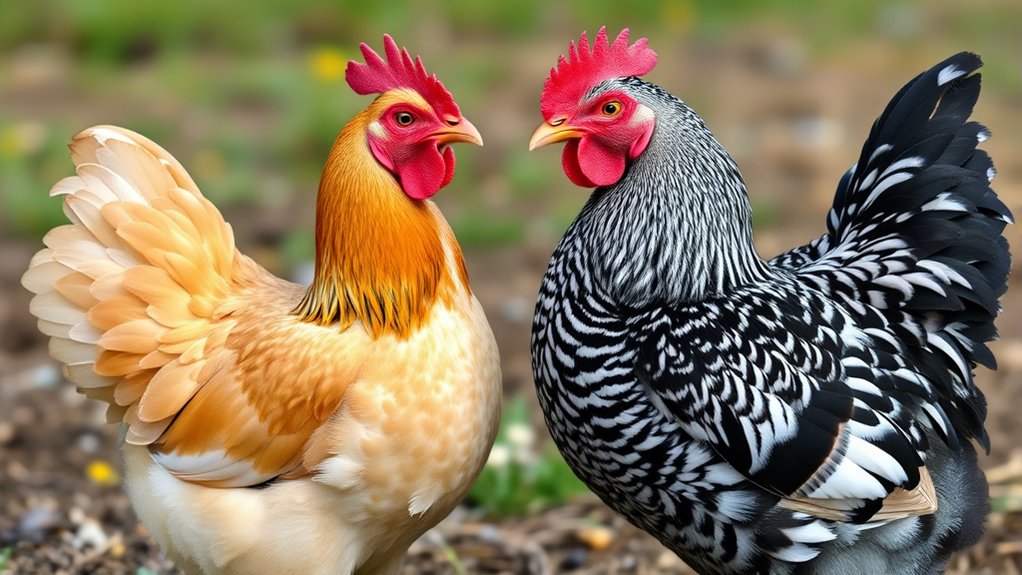
When you compare Plymouth Rock and Barred Rock chickens, their feather patterns and colors immediately stand out as the most noticeable difference. Understanding their feather pattern diversity and color variation options helps you appreciate what sets each breed apart.
- Barred Rock chickens feature a distinct barred pattern, with alternating black and white stripes running horizontally across their feathers. This gives them a bold, consistent look.
- Plymouth Rocks offer more feather pattern diversity, including barred, white, buff, and partridge varieties. This variety gives you a wider palette to choose from.
- Color options for Plymouth Rocks go beyond the classic black-and-white barring found in Barred Rocks. So, you can pick a bird that fits your aesthetic preference.
Temperament Differences Between Plymouth Rock and Barred Rock
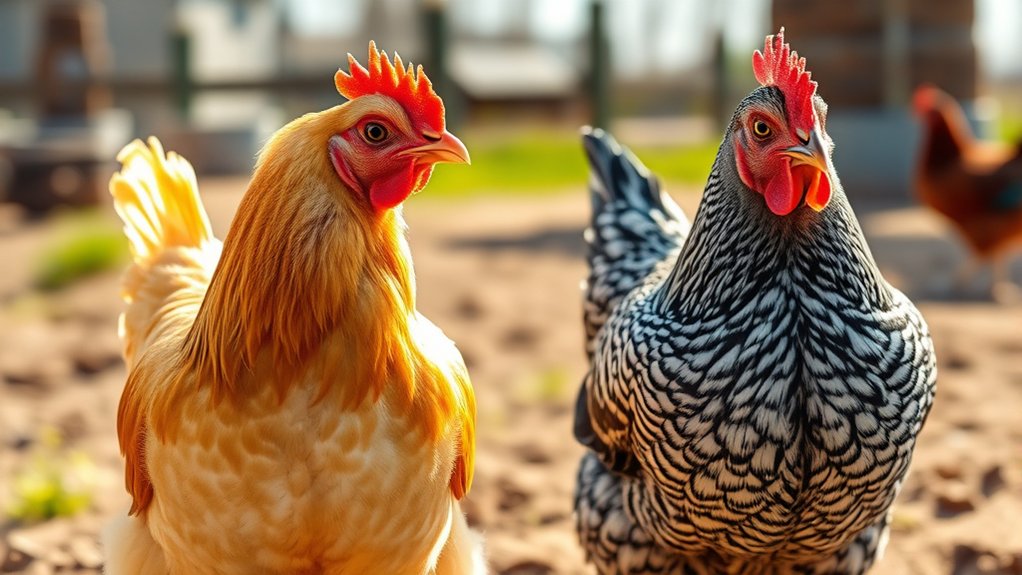
Since temperament plays a big role in choosing the right breed for your flock, it’s important to understand how Plymouth Rock and Barred Rock chickens differ in personality. Both breeds are known for their calm demeanor, but subtle differences can affect your daily care routine.
Plymouth Rocks tend to be more docile and friendly, making them great for families. Barred Rocks, while still gentle, may show a bit more spirited behavior.
Rooster crowing in both breeds is generally moderate, but Barred Rock roosters can be slightly more vocal. Feather sheen in both breeds is similar, giving them a healthy and glossy look that reflects their good nature.
| Trait | Plymouth Rock | Barred Rock |
|---|---|---|
| Temperament | Docile, friendly | Gentle, slightly spirited |
| Rooster Crowing | Moderate | Slightly more vocal |
| Feather Sheen | Glossy, healthy | Glossy, healthy |
| Interaction with Kids | Very patient | Patient |
| Social Behavior | Calm, social | Social, alert |
Plymouth Rock vs. Barred Rock: Egg Production and Quality
If you want hens that consistently lay quality eggs, both Plymouth Rock and Barred Rock can meet your needs. You’ll find that these breeds share many strengths in egg production, but subtle differences might influence your choice.
- Egg Production Rate: Both breeds lay around 200 to 280 medium-sized eggs annually, making them reliable layers for your flock.
- Shell Strength: Their eggs have sturdy shells, reducing breakage during collection and transport, which is ideal if you want eggs that last longer.
- Egg Flavor: You’ll appreciate the rich, traditional egg flavor both breeds offer, thanks to their healthy diet and active lifestyles.
Hardiness and Care Needs for Plymouth Rock and Barred Rock
Although Plymouth Rock and Barred Rock chickens share many traits, their hardiness and care needs can differ slightly, impacting how you manage your flock. Both breeds are generally hardy and adapt well to various climates. But Barred Rocks tend to handle cold weather a bit better due to their denser feathering. This means you might spend less time on supplemental heating for Barred Rocks in winter.
When it comes to care, both breeds require similar housing, nutrition, and health monitoring. However, breeding challenges can arise more with Plymouth Rocks, as they sometimes have slower growth rates and more sensitivity to environmental stress. These factors can influence cost differences, especially if you’re raising chickens for breeding or resale. Plymouth Rocks may require more attention and investment upfront, while Barred Rocks often prove more robust with lower maintenance costs. Understanding these nuances helps you optimize care and budget for your flock efficiently.
Frequently Asked Questions
Are Plymouth Rock and Barred Rock Chickens Good for Meat Production?
Yes, you’ll find Plymouth Rock and Barred Rock chickens great for meat production. They grow quickly and produce a good amount of meat.
While you’re at it, you’ll appreciate their steady egg production, making them a dual-purpose breed. Their striking feather coloration, especially the barred patterns, adds charm to your flock.
Which Breed Is Better for Beginner Backyard Chicken Keepers?
You’ll love that Barred Rocks lay about 200 eggs per year, making them a fantastic choice for beginners. Their calm temperament means they’re easy to handle, even if you’re new to chicken keeping.
While Plymouth Rocks are friendly too, Barred Rocks tend to be hardier and more adaptable, which helps if you’re still learning the ropes. So, if you want steady egg production and a gentle flock, Barred Rocks are your best bet.
How Long Do Plymouth Rock and Barred Rock Chickens Typically Live?
You can expect both Plymouth Rock and Barred Rock chickens to live around 6 to 8 years. Their egg production stays steady during these years, giving you plenty of fresh eggs.
The distinctive feather coloration of Barred Rocks, with their bold stripes, doesn’t affect lifespan, nor does the Plymouth Rock’s more muted shades. With good care, you’ll enjoy their eggs and charming looks for many seasons.
Can Plymouth Rock and Barred Rock Chickens Be Kept Together?
You can definitely keep Plymouth Rock and Barred Rock chickens together since their breed compatibility is excellent. Both breeds share similar social behavior. They’re calm, friendly, and get along well in mixed flocks.
Remarkably, chickens establish a pecking order within just a few days, so introducing them gradually helps. By managing introductions carefully, you’ll enjoy a harmonious, happy flock without much fuss.
Do These Breeds Require Special Housing or Coop Conditions?
You don’t need special housing for these breeds, but you should guarantee your coop has good indoor ventilation to keep the air fresh and reduce moisture.
Both breeds appreciate predator protection, so make sure your coop is secure with sturdy locks and fencing. Providing clean bedding and enough space helps keep them healthy and comfortable.
Conclusion
When you look closely, you’ll see Plymouth Rock and Barred Rock chickens aren’t as different as you might think. That old theory claiming they’re completely separate breeds? It doesn’t hold up.
Both share so many traits—from their friendly nature to their reliable egg-laying—that it’s easy to mix them up. Understanding these similarities can deepen your appreciation and connection with your flock.
It reminds you that sometimes, what seems different is really just a beautiful variation of the same. Knowing the difference between Plymouth Rock vs Barred Rock helps you appreciate these unique but closely related birds even more.