What Is a Black Chicken and Its Traits?
If you’ve ever wanted a chicken breed that’s both striking and practical, you’re not alone. Many backyard farmers struggle to find birds that are hardy, visually unique, and offer great meat and eggs.
Black chickens might just be the perfect solution to those challenges.
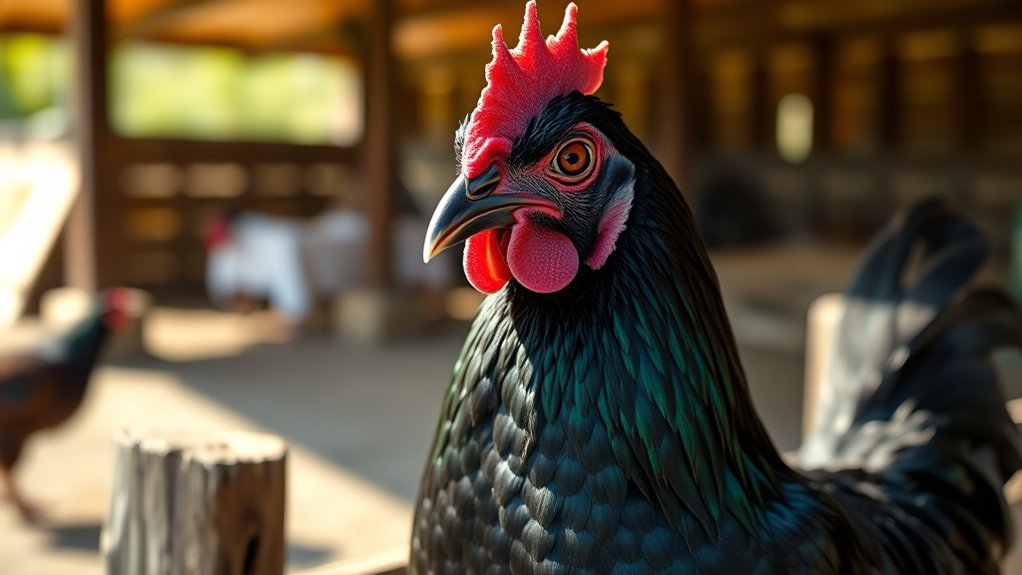
A black chicken is a breed with deep black feathers, skin, and even bones due to unique genetics controlling melanin production. You’ll notice their glossy feathers often have green or blue iridescence, and they’re hardy, calm, and adaptable for backyard flocks.
Their nutrient-rich meat and eggs add culinary and health benefits, while their dark coloring offers natural predator camouflage.
Keep exploring to understand how their traits make them special for farming and cooking.
Key Takeaways
- Black chickens have predominantly black feathers, skin, and bones due to genetic traits like the MC1R gene and fibromelanosis mutation. Their feathers are glossy black with possible iridescent hues, dense for warmth, UV protection, and heat absorption.
- They exhibit calm, social behavior and adaptability, making them suitable for backyard farming and easy flock management. Black chickens are culturally significant and valued for hardiness, predator camouflage, and environmental adaptability.
- Their meat and eggs are nutrient-rich, flavorful, and contain antioxidants, making them popular in culinary and traditional uses.
What Makes a Chicken Breed ‘Black’?
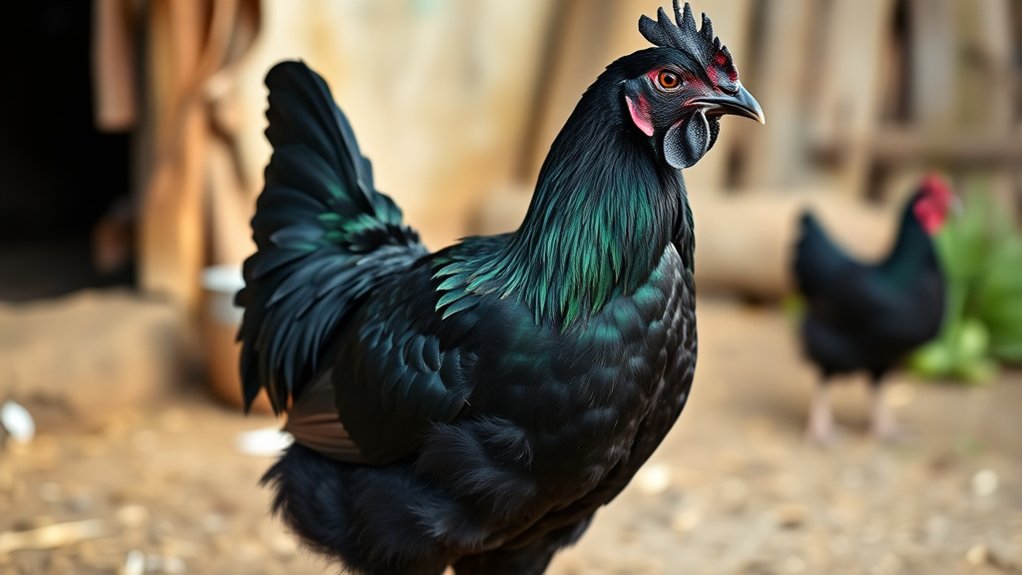
Although many chicken breeds come in various colors, a breed is considered ‘black’ when its feathers, skin, and sometimes even its bones have a mainly black pigmentation. You’ll find that this black coloration results from specific genetic traits passed down through color inheritance.
A black chicken breed displays dark feathers, skin, and sometimes bones due to inherited genetic traits.
Breeders focus on selecting birds that consistently show these dark pigments across generations. When you engage in breeding practices aimed at maintaining or enhancing this black color, you’ll need to understand how these genes interact.
Some genes are dominant and will strongly influence the bird’s overall appearance, while others may be recessive and only show up when paired correctly. By carefully choosing breeding pairs with the desired black traits, you guarantee the offspring retain the signature pigmentation.
This process isn’t random; it requires knowledge of genetics and a keen eye for traits. So, when you see a black chicken breed, you’re witnessing the result of deliberate breeding practices shaped by color inheritance.
How Black Chickens Develop Their Distinctive Color

Understanding the genetic factors behind black pigmentation helps explain how black chickens develop their distinctive color. You’ll find that color genetics play a vital role, as specific genes control the production and distribution of melanin, the pigment responsible for black feathers.
These genes influence the intensity and uniformity of the black shade, making each breed unique. Additionally, you should know that nutritional benefits impact feather quality and coloration. A diet rich in essential nutrients supports healthy melanin synthesis, ensuring the feathers appear vibrant and glossy.
Here’s what you need to contemplate about black chicken coloration:
- Melanocortin 1 receptor (MC1R) gene: Key gene affecting melanin production
- Dominant black gene: Causes full black feather coverage
- Dietary nutrients: Proteins and vitamins boost pigment expression
- Environmental factors: Stress and health can affect feather color intensity
Key Physical Traits of Black Chickens
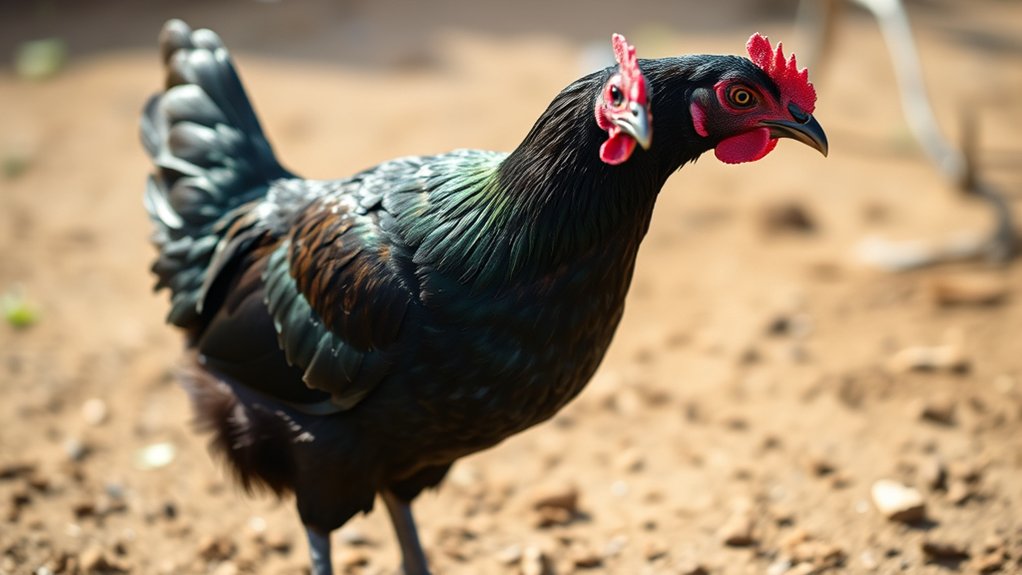
You’ll notice black chickens have striking feather color and texture that really set them apart. Plus, their body size and shape play a big part in their unique look. So, let’s take a closer look at these key physical traits to see what makes black chickens stand out.
Feather Color and Texture
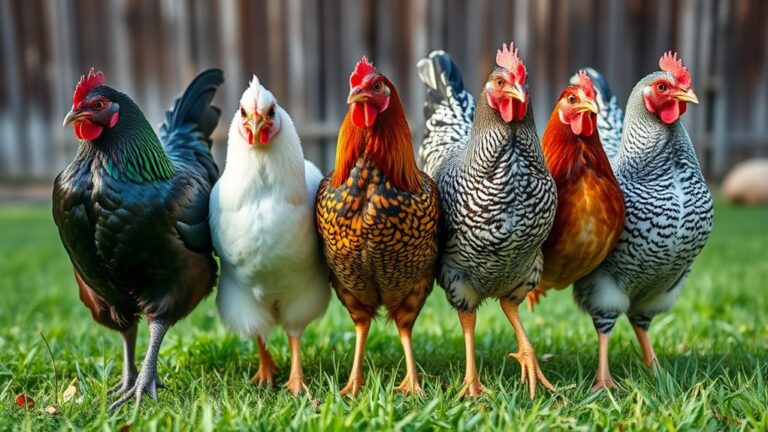
When you examine black chickens, their feather color instantly stands out with a deep, glossy black that often reflects hints of green or blue in the light. This sheen results from the unique structure of their feathers, adding an almost iridescent quality.
While black is dominant, subtle color variations can appear based on breed and genetics, showing slight differences in shade or undertones. You’ll also notice their feathers feel smooth and firm, offering good protection.
To keep their feathers in top condition, consider these tips for feather maintenance:
- Provide a balanced diet rich in proteins
- Guarantee regular dust baths to remove parasites
- Avoid overcrowding to reduce feather damage
- Keep their living area clean and dry
Body Size and Shape
Although black chickens share a common feather color, their body size and shape can vary markedly depending on the breed. You’ll notice some black chickens are compact and rounded, while others have a taller, leaner build.
These differences result from selective breeding practices aimed at enhancing traits like meat production, egg-laying capacity, or ornamental appeal. The color pattern, though mainly black, can sometimes include subtle iridescent hues that complement their physique.
When choosing black chickens, consider how their size and shape fit your needs. Smaller breeds might be easier to manage in limited spaces, while larger ones often yield more meat. Understanding these physical variations helps you select the right black chicken for your flock and purposes.
Why Do Black Chickens Have Dark Skin and Bones?
Because of a genetic mutation called fibromelanosis, black chickens develop dark skin and bones that set them apart from other breeds. This mutation causes an overproduction of melanin, the pigment responsible for coloration in skin and tissues. When you see their black skin and bones, you’re witnessing a unique biological trait with intriguing implications.
You might wonder why this matters beyond appearance. Here’s what you should know:
- Cultural symbolism: In many cultures, black chickens symbolize good luck and protection.
- Culinary uses: Their dark meat and skin are prized in traditional dishes for unique flavor and texture.
- Health benefits: Some believe black chickens have higher antioxidant levels.
- Genetic curiosity: This mutation fascinates geneticists studying pigmentation.
Understanding fibromelanosis helps you appreciate how black chickens hold a special place in both heritage and cuisine, making them more than just another poultry breed.
Popular Black Chicken Breeds
You’ll find several popular black chicken breeds that really stand out because of their unique traits. Take the Ayam Cemani, for example—it’s known for its completely black appearance, inside and out. Then there’s the Black Australorp, which is famous for being a great layer and having a calm temperament. And don’t forget the Kadaknath, prized not only for its striking black feathers but also for its flavorful meat. Let’s dive a little deeper into what makes each of these breeds so special.
Ayam Cemani Characteristics
When you encounter an Ayam Cemani, its striking all-black appearance immediately captures your attention. This Indonesian breed is unlike any other, with black feathers, skin, beak, and even internal organs.
You’ll find the Ayam Cemani prized not only for its unique look but also for its cultural significance and culinary uses.
Here’s what makes the Ayam Cemani stand out:
- Entirely black pigmentation, including bones
- Considered a mystical bird in Indonesian culture
- Used in traditional medicine and spiritual rituals
- Valued in gourmet cooking for its distinctive flavor
If you’re interested in rare black chickens, the Ayam Cemani’s combination of beauty, mystery, and culinary appeal makes it a fascinating breed to investigate.
Black Australorp Features
Although the Ayam Cemani amazes with its rare all-black appearance, the Black Australorp stands out for its impressive productivity and hardiness. When you choose a Black Australorp, you’re getting a black chicken known for excellent egg-laying, often exceeding 250 eggs annually.
Its glossy black feathers shimmer with green and purple hues, echoing the mystique found in black chicken folklore. You’ll also appreciate how this breed’s calm temperament makes it easy to handle.
In black chicken symbolism, the Black Australorp represents resilience and prosperity, qualities you’ll notice as it thrives in various conditions. This breed perfectly balances striking looks with practical benefits, making it a favorite among poultry keepers who value both beauty and function.
Kadaknath Breed Overview
While the Black Australorp impresses with its productivity and calm nature, the Kadaknath breed captures attention for its unique heritage and distinctive all-black appearance. You’ll notice its black feather patterns are strikingly uniform, covering its body from head to tail.
Beyond feathers, the Kadaknath stands out due to its remarkable bone pigmentation, which turns its bones, meat, and even organs black. This breed is native to India and is prized for both its cultural significance and nutritional value. Here’s what makes Kadaknath special:
- Uniform black feather patterns with a metallic sheen
- Distinctive black pigmentation in bones and meat
- Hardy and adaptable to various climates
- Known for flavorful, protein-rich meat
If you want a black chicken with heritage and unique traits, Kadaknath is a fascinating choice.
How Black Chickens Adapt to Different Climates
Because black chickens have dense, heat-absorbing feathers, they adjust well to colder climates by retaining warmth more effectively than lighter-feathered breeds. When you raise black chickens, you benefit from their natural insulation, which helps them stay comfortable during chilly weather.
Black chickens naturally retain warmth better, making them well-suited for colder climates and chilly weather.
Their color genetics play a vital role here; the melanin-rich feathers not only absorb heat but also offer some UV protection, making them resilient in varied sunlight exposure.
You should also consider breeding practices that improve these adaptive traits. Selective breeding can emphasize feather density and quality, boosting the birds’ ability to cope with temperature fluctuations.
In hotter climates, these chickens manage heat by panting and seeking shade since their black feathers absorb more solar radiation, but their robust physiology helps them endure stress better than some other breeds.
What Black Chickens’ Temperament Means for Your Flock
Understanding how black chickens handle different climates gives you insight into their overall behavior and needs. Their temperament plays a vital role in maintaining harmony within your flock. Thanks to selective breeding techniques, black chickens often show calm and friendly dispositions, making them easier to manage. Their striking color contrast not only adds visual appeal but also signals their unique personality traits.
Here’s what their temperament means for your flock:
- They usually adapt well to social structures, reducing aggressive behaviors.
- Their calm nature helps minimize stress during handling or changes in environment.
- Black chickens tend to be curious but not overly skittish, encouraging natural foraging.
- They often bond well with other breeds, promoting flock cohesion.
Why Black Chickens Are Great for Backyard Farming
You’ll really appreciate how black chickens add a unique look to your backyard flock. Plus, they adapt well to different climates, which is a big plus. They’re hardy birds that handle changes in weather with ease. And on top of that, their steady egg production makes them a practical choice for any small farm.
Unique Appearance Benefits
While their striking black feathers catch your eye, black chickens offer more than just visual appeal for backyard farming. Their unique appearance comes with several benefits that make them a great choice for your flock.
You’ll appreciate how their glossy black plumage symbolizes cultural significance in various traditions, adding a meaningful touch to your farm. It also boosts culinary uses, as their meat is often prized for its distinct flavor and texture.
Plus, they stand out easily among other birds, helping you quickly identify them. Their dark feathers provide natural camouflage from predators during dusk and dawn.
These traits not only make black chickens visually captivating but also enrich your backyard farming experience with practical and cultural value.
Adaptability to Environments
Because black chickens have adapted to a wide range of climates and conditions, they thrive in many backyard environments. Their resilience comes from a genetic mutation influencing their color inheritance, which also seems linked to hardiness.
This mutation helps black chickens regulate body temperature effectively, making them comfortable in both hot and cold weather. When you raise black chickens, you benefit from their ability to forage well, resist common diseases, and adjust to varying humidity levels.
Their adaptability means you won’t need to make excessive changes to your coop or routine to keep them healthy. So, if you want a low-maintenance, robust bird that handles environmental challenges gracefully, black chickens are a smart choice for your backyard farm.
Egg Production Qualities
Black chickens don’t just adapt well to their surroundings. They also excel in egg production, making them a valuable addition to your backyard flock. If you’re looking for consistent layers with unique appeal, black chickens offer several benefits.
Their eggs often have attractive, rich-colored shells that stand out in any kitchen. This ties into their charm found in black chicken folklore where they’re seen as symbols of prosperity. Plus, their eggs are prized for culinary uses due to their rich flavor and nutritional value.
Here’s why black chickens are great egg producers:
- Lay 150-200 eggs annually, providing a steady supply
- Thrive in various climates, ensuring year-round production
- Eggs have a robust flavor ideal for cooking
- Often hardy, lowering maintenance and increasing productivity
You’ll appreciate their blend of tradition and practicality.
Health Benefits of Black Chicken Meat and Eggs
If you’re seeking nutrient-rich options, you’ll find that black chicken meat and eggs offer impressive health benefits. Rich in antioxidants, black chicken meat contains higher levels of carnosine, which helps reduce inflammation and supports muscle health. The dark pigmentation, tied to black chicken symbolism in many cultures, reflects these unique nutritional qualities.
Black chicken meat and eggs are nutrient-rich, antioxidant-packed, and support muscle health through higher carnosine levels.
When you include black chicken in your diet, you’re not just enjoying a flavorful meal but also boosting your intake of essential amino acids, vitamins, and minerals like iron and zinc.
Culinary uses of black chicken highlight its versatility. You can prepare it in soups, stews, or grilled dishes that maintain its nutrient density.
The eggs, often darker and richer than regular eggs, provide a wholesome source of protein and healthy fats. By choosing black chicken meat and eggs, you’re embracing a wholesome, nutrient-dense food that supports overall wellness and honors its cultural significance.
Tips for Raising and Caring for Black Chickens
When you decide to raise these unique birds, providing a clean, secure environment is essential for their health and well-being. Black chickens have fascinating historical origins, often linked to ancient breeds prized for both their appearance and culinary uses.
To ensure your flock thrives, focus on these key care tips: Provide spacious, well-ventilated housing to prevent respiratory issues. Offer a balanced diet rich in nutrients to support their unique black meat and egg qualities. Implement regular health checks to catch parasites or illnesses early. Maintain a consistent routine to reduce stress and promote natural behaviors.
Understanding their background helps you appreciate why black chickens require specific care. Their meat and eggs, celebrated in various culinary traditions, benefit from optimal nourishment and handling. By following these practical steps, you’ll successfully raise healthy black chickens with vibrant traits and rich flavors.
Frequently Asked Questions
Are Black Chickens More Expensive Than Other Breeds?
Yes, black chickens can be more expensive than other breeds due to color genetics that make them unique and sometimes rarer. You’ll find breed variations like Ayam Cemani or Black Australorp often cost more because their distinct black pigmentation is highly sought after.
If you’re looking for a black chicken, be prepared to pay a premium compared to more common breeds, especially if you want purebred or show-quality birds.
Can Black Chickens Be Crossbred With Other Colors?
Yes, you can crossbreed black chickens with other colors to boost genetic diversity in your flock. When you do this, make sure you consider breed compatibility to avoid health issues or unwanted traits.
Crossbreeding can introduce new colors and improve hardiness, but you’ll want to track the genetics carefully to maintain the qualities you like. It’s a great way to experiment and create unique, resilient birds tailored to your needs.
Do Black Chickens Have Different Nutritional Needs?
Do black chickens really need different nutritional requirements than other chickens? Generally, they don’t. You won’t have to make special dietary adjustments just because of their color.
Like all chickens, they thrive on a balanced diet rich in protein, vitamins, and minerals. However, if you notice specific health or growth issues, you might consider tweaking their feed.
Otherwise, treat their nutrition like you would any other chicken breed for best results.
How Long Do Black Chickens Typically Live?
Black chickens typically live around 6 to 8 years, but this can vary depending on color variations and breed specifics. You’ll find that some color variations might be hardier, while others face breeding challenges that affect longevity.
If you manage their care well, including nutrition and environment, you can help them reach the upper end of that lifespan. Paying attention to these factors makes a big difference in their health and survival.
Are Black Chickens More Resistant to Predators?
They say, “Forewarned is forearmed,” and regarding black chickens, you’ll find they’re not necessarily more predator resilient than other breeds. However, their dark plumage can provide some camouflage in low light, enhancing survival instincts.
You should still take precautions since their predator resilience depends more on environment and care. Trust your instincts to protect them, and you’ll boost their chances against threats.
Conclusion
If you’re fascinated by feathered friends with a flair, black chickens bring bold beauty and benefits to your backyard. Their striking shade, sturdy stature, and sweet temperament make them a standout choice.
Plus, their nutritious nature nurtures your health. By caring carefully and consistently, you’ll cultivate a charming, cheerful flock that’s both productive and pleasing.
So, savor the special spark black chickens add to your coop and community! Embracing black chickens truly enriches your backyard experience.