What Is a Cockerel and Is It a Chicken?
If you’ve ever tried to tell the difference between a cockerel and other chickens, you’re not alone. Many people struggle with identifying these birds, especially since their appearance and behavior change as they grow. Understanding the unique traits of a cockerel can help you care for them better or simply satisfy your curiosity about these lively birds.
A cockerel is a young male chicken under one year old, known for its vibrant feathers, larger red comb, and early crowing. It’s different from hens, which are female and lay eggs, and from roosters, which are mature males with bigger combs and stronger crowing.
You’ll notice a cockerel’s assertive behavior and colorful plumage as it grows. If you want to understand more about how they mature and behave, keep exploring these key details.
Key Takeaways
- A cockerel is a young male chicken, typically less than one year old.
- It is distinguished by vibrant feathers, a larger red comb, and prominent wattles compared to hens.
- Cockerels show early signs of maturity through crowing and assertive behaviors around 5 to 6 months old.
- While cockerels are chickens, they differ from hens (females) and mature roosters (adult males).
- Cockerels do not lay eggs, and identifying them helps manage flock behavior and egg production expectations.
What Is a Cockerel? Understanding the Basics

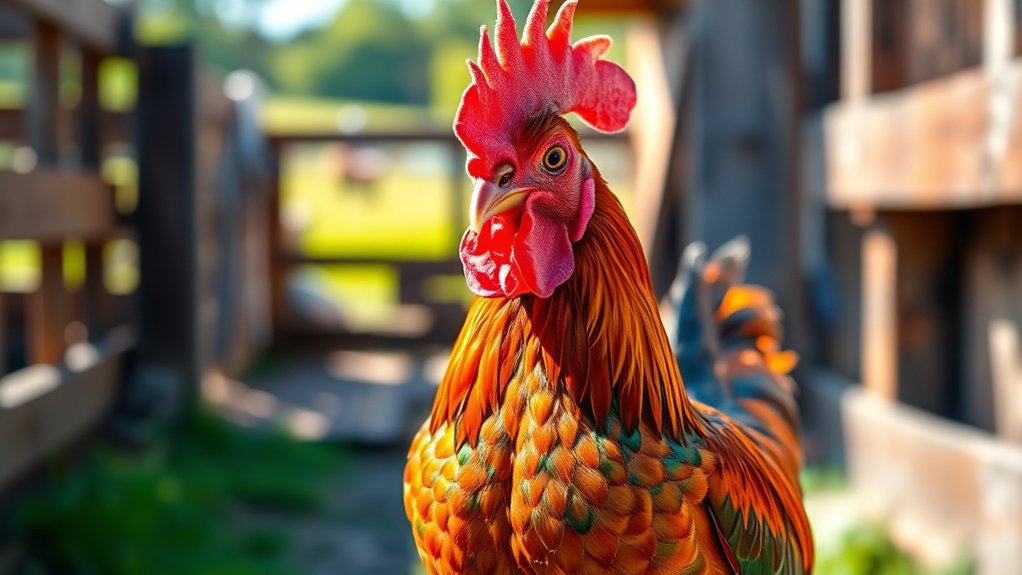
What exactly is a cockerel, and how does it differ from other chickens? A cockerel is a young male chicken, usually under one year old, distinguished by its vibrant feather coloration. You’ll notice that cockerels often have brighter, more striking plumage than hens or older roosters, especially around their neck and tail feathers.
A cockerel is a young male chicken under one year, known for its bright, vibrant feathers.
This vivid feather coloration plays a key role during breeding season, as it helps them attract hens.
When it comes to breeding habits, cockerels are quite active. They start practicing mating behaviors early, establishing dominance within their flock through specific calls and displays. You’ll see them strut and crow to assert their presence and secure mates.
Unlike hens, which focus on egg-laying, cockerels’ main role revolves around protecting the flock and ensuring successful reproduction. Understanding these basics helps you appreciate how cockerels fit into the broader chicken hierarchy and their unique characteristics within poultry.
Are All Cockerels Male? Clarifying Gender and Age
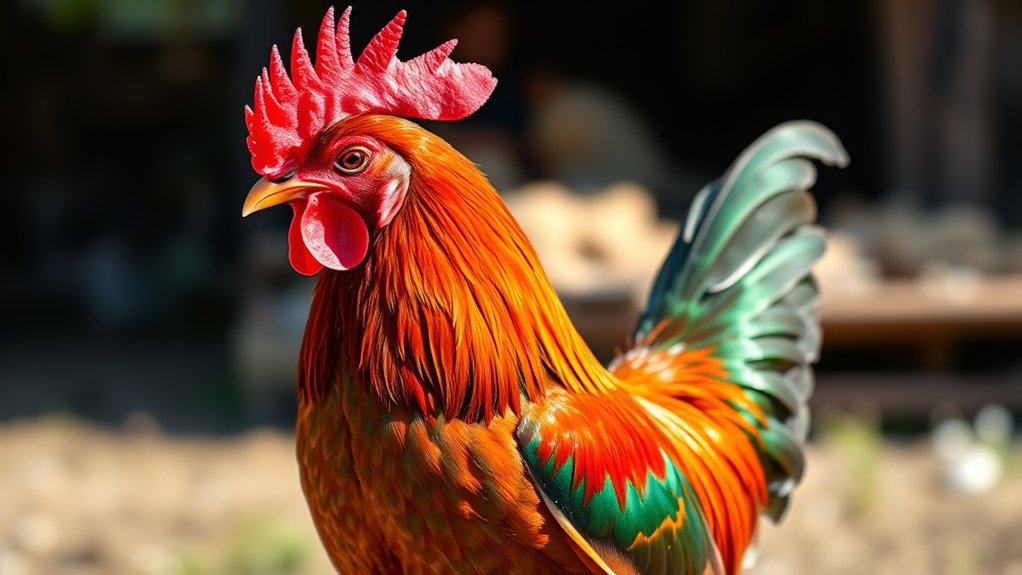
You might be wondering if all cockerels are male, and the answer is yes—they’re young male chickens. It’s pretty interesting how their age and maturity play a role in telling them apart from roosters and hens. So, let’s break down these key differences to help you spot them easily.
Defining Cockerel Gender
Although the term “cockerel” might seem confusing at first, it specifically refers to a young male chicken. You won’t find female chickens labeled as cockerels because this term strictly denotes gender.
Understanding this is important, especially when considering breeding patterns. Cockerels play an essential role in reproduction, fertilizing eggs laid by hens. This directly impacts egg production since fertilized eggs can develop into chicks, unlike unfertilized ones.
So, when you hear “cockerel,” think of a young male that’s key to maintaining a flock’s growth and genetic diversity. Knowing this distinction helps you better manage your chickens, whether you’re focused on raising layers for egg production or breeding for specific traits.
Age and Maturity Differences
Understanding that cockerels are always young males sets the stage for exploring how age affects their development and role within a flock. As they mature, you’ll notice changes in feather coloration, shifting from softer, less vivid hues to the bright, bold patterns typical of adult roosters.
This transformation signals their growing dominance and readiness to take on protective roles. Their feeding habits evolve too. Young cockerels need more protein to support rapid growth, while older ones adjust to maintenance diets.
How Does a Cockerel Differ From a Hen or Rooster?

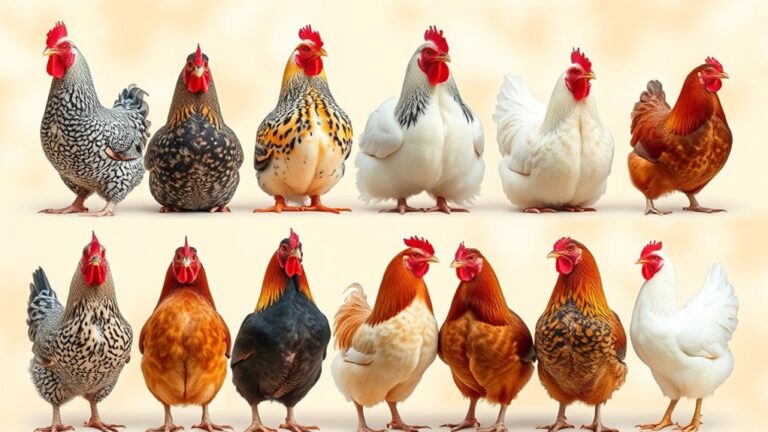
While a cockerel, hen, and rooster all belong to the same species, they differ primarily in age, sex, and physical traits. You’ll notice that a cockerel is a young male chicken, often sporting more vibrant feather color than hens, but not as fully developed as a rooster.
Hens, being females, have more subdued feather colors and are responsible for egg production, which cockerels and roosters don’t do.
Physically, cockerels have smaller combs and wattles compared to roosters, and their feather patterns and colors may be less pronounced. Roosters have a more commanding presence with larger combs, wattles, and often longer tail feathers.
While hens focus on laying eggs, cockerels are typically more active and vocal but haven’t reached the full maturity of a rooster. Understanding these differences helps you distinguish between the roles and stages within a chicken flock.
When Does a Cockerel Become a Rooster? Age and Development
You’ll notice a cockerel starts showing rooster traits as it grows — usually around 5 to 6 months old. That’s when features like a larger comb, a stronger crow, and more vibrant feathers begin to appear.
Cockerel Growth Stages
Though cockerels look like young roosters, they haven’t reached full maturity yet. You’ll notice their growth stages unfold over several months, typically between 4 to 6 months of age.
During this time, their feeding habits change; they need a balanced diet rich in protein to support muscle and feather development. Pay attention to their coop design. It should provide enough space and perches to accommodate their increasing size and activity.
Proper ventilation and safety from predators are also essential as they grow stronger. As you care for your cockerel, you’ll see gradual changes in behavior and physical traits. But full adult characteristics and dominance won’t appear until they fully mature into roosters.
Monitoring these growth stages helps you support your bird’s healthy development.
Rooster Characteristics Emergence
As your cockerel grows and begins showing signs of maturity, you’ll start noticing distinct changes that mark the emergence of rooster characteristics. Around five to six months old, his feather color will become more vibrant and defined, often displaying richer hues and a glossy sheen. His comb and wattles will also grow larger and more pronounced.
These physical changes signal he’s evolving from a cockerel to a rooster. Along with this, you’ll observe shifts in his behavior. He’ll start asserting dominance, crowing, and exhibiting breeding habits like courting hens and protecting the flock.
This developmental phase is essential as it prepares him for reproduction and leadership within the group. Understanding these markers helps you recognize when your young bird has truly become a rooster.
How to Identify a Cockerel: Key Physical Traits
When trying to spot a cockerel, focus on its distinct physical traits that set it apart from hens. One of the easiest signs is the feather color. Cockerels often have more vibrant and shiny feathers compared to hens, with some breeds showing iridescent hues, especially on their necks and tails. You’ll notice these brighter colors make cockerels stand out in a flock.
Another key trait is the comb size. Cockerels typically develop a larger, more pronounced comb on top of their heads than hens do. This comb is usually bright red and can vary in shape depending on the breed, but its size is a reliable indicator. Along with the comb, look for wattles under the chin, which are also more prominent in cockerels. By focusing on these physical features, feather color and comb size, you can confidently identify a cockerel in your flock.
What Sounds Do Cockerels Make Compared to Other Chickens?
You’ll notice that cockerels have distinct calls that really stand out compared to hens. While hens tend to cluck softly, cockerels often crow loudly to mark their territory. So, let’s take a closer look at how these sounds differ and what makes a rooster’s crow so unique.
Common Cockerel Calls
Although cockerels share many vocal traits with hens, their calls are distinct and serve specific purposes. Knowing these sounds helps you understand their behavior, especially in their natural cockerel habitat, where calls coordinate daily activities. Their cockerel diet affects their energy and vocal strength, which influences how loud or frequent they crow.
Here are four common cockerel calls you’ll hear:
- The crow, a loud, sharp call to assert territory and attract hens.
- The alarm call, a quick, sharp sound warning of predators.
- The cluck, softer, signaling comfort or communication with chicks.
- The tidbitting call, a rhythmic cluck inviting hens to food nearby.
These calls keep the flock organized and safe.
Hen Vocalizations Compared
Understanding the distinct calls of cockerels gives you a clearer picture of how their sounds differ from those of hens. Cockerels often use sharp, alert calls linked to breeding habits and territorial displays.
Hens vocalize mainly to communicate nesting status or signal alarm. Feather coloration plays a subtle role in these behaviors, influencing social dynamics rather than vocal patterns. Here’s a quick comparison:
| Vocalization Type | Purpose |
|---|---|
| Cockerel Calls | Territory, breeding, alert |
| Hen Clucking | Nesting, reassurance |
| Hen Alarm Calls | Danger warning |
Rooster Crowing Characteristics
When a rooster crows, it immediately grabs your attention with its loud, resonant call that sets it apart from other chickens. Unlike hens, whose sounds often signal egg laying habits or social interactions, roosters use crowing to assert dominance and mark territory. Their calls are sharper, more repetitive, and can vary by breed, often linked to distinct feather coloration patterns that signal maturity and health.
Here’s what makes rooster crowing unique:
- Crowing usually starts at dawn but can happen anytime.
- It’s louder and more piercing than hen clucks or squawks.
- Variations in crowing reflect individual personality and breed traits.
- Roosters’ calls help coordinate flock activities and warn of threats.
You’ll notice these vocal differences clearly when observing their behavior.
How Do Cockerels Behave Differently From Hens?
Because cockerels play a key role in protecting their flock, you’ll notice they behave more assertively and often display dominant postures. Their feather colors are usually more vibrant and striking compared to hens, helping them stand out and signal dominance. You’ll often see cockerels puffing up their chests, raising their hackle feathers, and spreading their tail feathers to assert control or ward off threats.
When it comes to feeding habits, cockerels tend to be more vigilant and may eat less frequently than hens, as they stay alert to guard the flock. Unlike hens, who focus on foraging steadily to support egg production, cockerels balance feeding with constant watchfulness. You’ll also notice cockerels sometimes engage in territorial behaviors, like crowing and chasing intruders, which hens rarely do. Overall, cockerels’ behavior centers on protection and dominance, setting them apart clearly from hens.
Can You Raise a Cockerel Like Other Chickens? Care Tips
Although cockerels require many of the same basic care routines as hens, they do have some unique needs you should consider. You can raise a cockerel like other chickens, but adjusting feeding schedules and coop design will help meet their specific requirements.
Here are four key care tips for raising cockerels:
- Feeding schedules: Cockerels may need slightly more protein to support growth and energy, so adjust their feeding times and content accordingly.
- Coop design: Confirm the coop has enough space to reduce aggression, as cockerels can be territorial.
- Social grouping: Limit the number of cockerels per flock to prevent fights and stress.
- Daily checks: Monitor behavior and health closely since cockerels can be more prone to injury when establishing dominance.
Why It’s Important to Know the Difference Between Cockerels and Other Chickens
Understanding the difference between cockerels and other chickens helps you manage your flock more effectively and prevent common issues like aggression or overcrowding. Since cockerels are young males, they can become aggressive as they mature, especially if you have several in one space. Knowing this lets you avoid fights that stress your birds and reduce overall flock harmony.
You’ll also want to distinguish cockerels because they don’t contribute to egg production. Mixing them up with hens can mislead your expectations about how many eggs you’ll get.
Moreover, proper identification is essential for breeding practices. If you plan to breed, selecting the right number of cockerels and hens impacts the health and genetics of your flock.
How to Tell a Cockerel From Other Types of Chickens
Knowing how to identify a cockerel helps you manage your flock more confidently and avoid confusion with hens or mature roosters. Cockerels are young males, so they share some traits with roosters but differ from hens, especially in feather coloration and egg laying habits.
Here’s how you can tell a cockerel from other chickens:
- Feather Coloration: Cockerels often have brighter, more vibrant feathers compared to hens, though not as developed or flashy as mature roosters.
- Comb and Wattles: These are usually larger and redder than hens’ but smaller than those of roosters.
- Behavior: Cockerels may start showing dominant or protective behaviors but aren’t as aggressive or vocal as roosters.
- Egg Laying Habits: Unlike hens, cockerels don’t lay eggs at all, so if the bird isn’t laying, it might be a cockerel or a rooster.
Frequently Asked Questions
What Do Cockerels Eat Compared to Hens?
You’ll find that cockerels eat much the same as hens, focusing on grains, seeds, insects, and greens. However, because of rooster behavior like being more active and territorial, they might need slightly more protein to support their energy.
Their cockerel diet sometimes includes extra treats like mealworms or kitchen scraps. Just make sure both get balanced nutrition to stay healthy and energetic throughout the day.
Are Cockerels Noisy at Night?
Cockerels aren’t usually noisy at night because they don’t have much nocturnal behavior. You’ll find they mostly crow at dawn and throughout the day, signaling their territory or waking the flock.
Nighttime noise from cockerels is rare since they roost quietly in the dark. If you hear a cockerel making noise at night, it might be disturbed or stressed, but generally, they keep silent until morning.
Can Cockerels Be Kept as Pets Indoors?
You can keep a cockerel indoors for companionship, but be prepared for their behavior. Cockerels are naturally noisy, especially at dawn, which might disrupt your peace.
They need space to move and express natural behaviors, so indoor living can be challenging. If you’re ready to manage their calls and provide enrichment, they can make unique indoor companions.
Just remember, their behavior requires patience and understanding from you.
Do Cockerels Fight More Than Other Chickens?
Imagine a knight guarding his castle. Cockerels act likewise, showing dominance behavior to protect their flock. Yes, they tend to fight more than hens because they engage in territorial disputes to establish hierarchy.
If you’re keeping multiple males, expect occasional squabbles as they assert control. However, with proper space and social structure, you can minimize conflicts, keeping your feathered knights from constant battles.
How Long Do Cockerels Typically Live?
Cockerels typically live around 5 to 8 years, but genetic differences and breeding practices play a big role in their lifespan. If you choose birds from strong genetic lines and follow good breeding practices, your cockerel could live longer and stay healthier.
On the other hand, poor genetics or breeding can shorten their lives. So, you’ll want to evaluate these factors carefully to give your cockerel the best chance at a long life.
Conclusion
So, now you know a cockerel isn’t just a fancy word for chicken. It’s the teenage boy version of the flock, full of attitude and awkward growth spurts. Don’t confuse him with the majestic rooster or the hen who’s too busy laying eggs to care.
Next time you spot one, you can impress everyone by confidently calling out, “Hey, that’s a cockerel!” Because nothing screams poultry expert like knowing your bird’s teenage drama. Remember, understanding what a cockerel is will make you sound like a real chicken pro.