Can Chickens Eat Cheese?
If you’re a backyard chicken keeper, you’ve probably wondered about the best treats to give your flock. It’s easy to feel unsure about what’s safe and what might upset their digestion. You’re not alone—many people struggle with figuring out which human foods are okay for chickens and which to avoid.
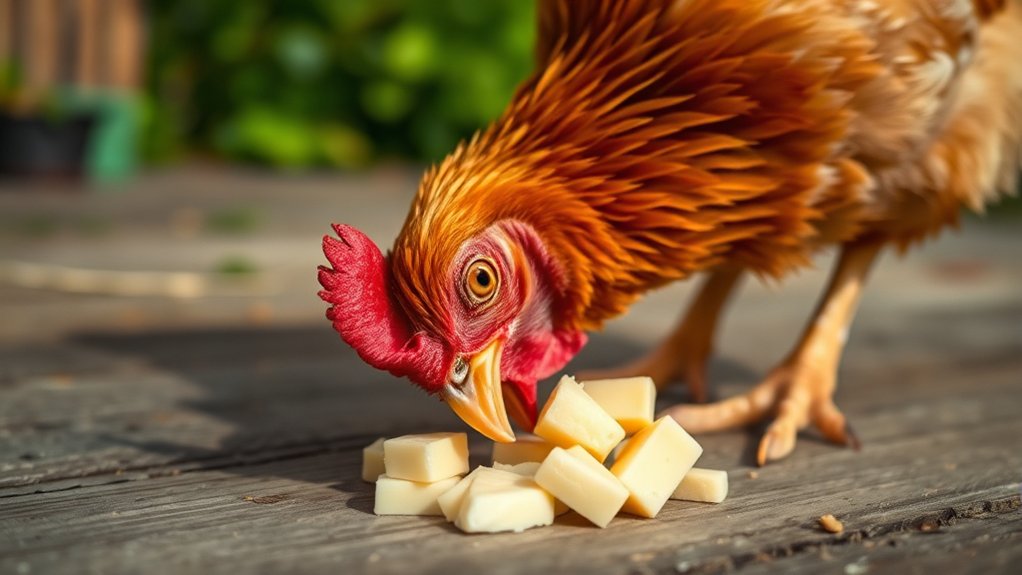
Yes, you can feed chickens cheese in small amounts as an occasional treat. Choose plain, mild cheeses like mozzarella, cottage cheese, or mild cheddar, and avoid salty, moldy, or heavily processed kinds.
Give only a tiny pinch once or twice a week, since too much can upset digestion and crowd out balanced feed. Watch for loose droppings or less interest in food, and if you keep going, you’ll learn the safest ways to offer it. Can Chickens Eat Cheese.
Key Takeaways
- Yes, chickens can eat cheese in small amounts as an occasional treat, not as a feed replacement.
- Choose mild, plain cheeses like mozzarella, cottage cheese, or mild cheddar.
- Avoid salty, mold-ripened, strongly aged, or processed cheeses with added preservatives.
- Offer only tiny portions once or twice a week to prevent digestive upset.
- Watch for loose droppings, bloating, or reduced appetite, and stop cheese if these appear.
Can Chickens Eat Cheese?
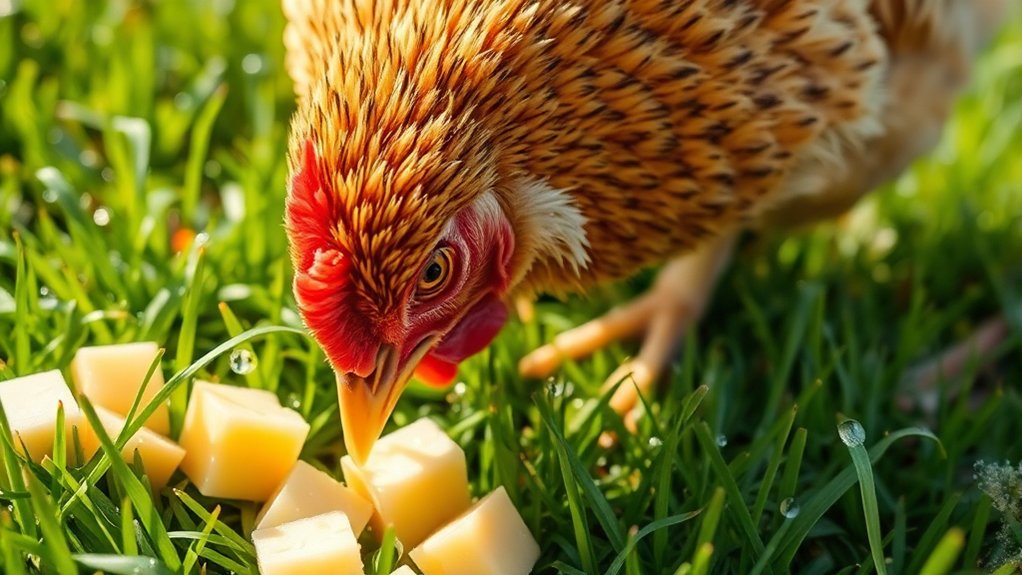
Yes, chickens can eat cheese in small amounts, but you should treat it as an occasional snack rather than a regular food. You can offer tiny bits of mild cheese if your flock seems curious, but watch their chicken preferences closely.
Some birds peck at it enthusiastically, while others ignore it completely. Because cheese is rich, you shouldn’t use it to replace balanced feed, treats, or greens. If you want variety, try dairy alternatives like chopped vegetables, cooked grains, or fruit pieces instead.
Some chickens love cheese, while others pass it up—keep it as a small, occasional treat.
You can mix a few crumbs of cheese into scratch or offer it by hand to see how your hens respond. Keep portions small so you don’t crowd out healthier snacks. When you rotate treats, you’ll help your chickens stay interested without depending on one food.
In short, cheese can fit into a varied treat routine, but moderation and variety should guide your choices every time.
Is Cheese Safe for Chickens?
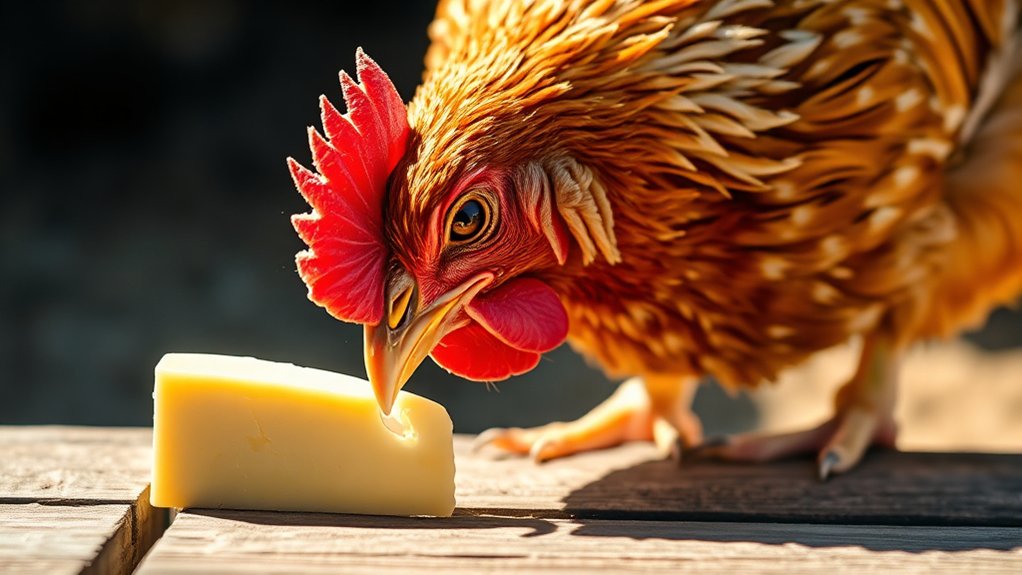
Cheese is generally safe for chickens when you serve it in small, occasional amounts, but it isn’t a food you should offer often. You can use it as a treat, not a staple, because your flock needs balanced chicken nutrition from their regular feed.
A little cheese may add protein and fat, but too much can crowd out healthier foods and upset digestion. You should also watch how your birds respond, since some chickens tolerate dairy better than others. If you notice loose droppings or reduced interest in feed, stop offering it.
Keep portions modest and use cheese only when you want to vary treats. If you’d rather skip dairy, look for dairy alternatives that support your flock without adding unnecessary richness. In general, you’ll do best by keeping cheese infrequent, simple, and secondary to a complete diet that meets your chickens’ daily needs.
What Kinds of Cheese Are Best?

Mild, plain cheeses are usually the best choice for chickens since they’re easier on digestion and less likely to contain extra salt, herbs, or spices. You’ll usually do best with simple cheese types like mozzarella, cottage cheese, and mild cheddar. These options let you match chicken preferences without overwhelming their taste buds or upsetting their stomachs.
| Cheese type | Best feature |
|---|---|
| Mozzarella | Soft, mild, easy to tear |
| Cottage cheese | Low-lactose, moist, simple |
| Mild cheddar | Familiar flavor, easy to crumble |
You can offer these cheeses plain and unsalted because additives can make them less suitable. Softer cheeses also blend more easily into treats or small pieces. If you want to keep things simple, choose cheeses with short ingredient lists and avoid anything heavily processed.
How Much Cheese Can Chickens Eat?
You can offer chickens only small cheese portions because too much can upset their digestion. Think of cheese as an occasional treat rather than a daily snack. Also, keep the servings even smaller for chicks and younger birds. Their age really matters, so you should adjust the amount to match what their bodies can handle.
Safe Cheese Portions
Because cheese is rich and salty, chickens should get it only in small amounts. A few tiny crumbs or a pea-sized shred is enough for most hens, especially if you want to offer cheese as a treat, not a meal. You should choose plain cheese and cut it into very small bits so your birds can peck it safely.
Cheese nutrition can add protein and calcium, but it also brings fat and sodium, so keep portions modest. Watch chicken preferences, because some birds love cheese while others ignore it. If your flock eats it enthusiastically, use the smallest amount that satisfies them.
You can mix a little with other feed or scatter a few pieces as a reward, but don’t let cheese replace balanced feed or fresh greens.
Frequency Guidelines
Offer cheese sparingly, not every day. You should treat it as an occasional treat, not a staple. A small pinch once or twice a week usually works for most flocks, and you can adjust the cheese frequency based on how well your birds handle it.
Keep it within a regular feeding schedule so treats don’t crowd out their balanced feed. If you offer cheese, give it after they’ve eaten their main ration, not as a meal replacement. Watch how much they peck at it, and stop if they ignore their normal feed.
Too much cheese can add extra salt and fat, so less is better. By staying consistent, you help your chickens enjoy variety without upsetting their diet or routine.
Age-Based Limits
Age matters when deciding how much cheese chickens can eat, since younger birds and older birds don’t handle rich treats in the same way. If your flock includes chicks, skip cheese unless a vet says otherwise; their digestive systems are still developing, and their dietary needs should center on starter feed and water.
For adult birds, keep cheese to a tiny occasional nibble, like a few small shreds per chicken. You should offer less to hens that are overweight, molting, or laying poorly, because extra fat and salt can throw off balance.
When chicken age increases, watch digestion more closely and reduce portions if you notice loose droppings or less activity. Treat cheese as a rare reward, not a staple, and always prioritize a complete diet first.
How to Feed Cheese to Chickens Safely
When you feed cheese to chickens, it’s best to pick mild varieties like mozzarella or cottage cheese. This way, you won’t overwhelm their digestion. Start by offering only tiny pieces at first because cheese should be a treat, not a regular part of their diet. You can also mix a little cheese into their feed to make it easier to serve and help keep the portions controlled.
Choose Mild Cheeses
Choose mild cheeses that are low in salt and easy for chickens to digest, like mozzarella, cottage cheese, or plain cheddar in small amounts. You’ll want to skip spicy, aged, or heavily processed varieties because they can upset digestion and offer little benefit.
Mild options let you test different cheese flavors without overwhelming your flock, and they usually suit common chicken preferences better than sharp cheeses. If you’re unsure, start with a bland choice and watch how your birds react.
Fresh, simple cheese works best when you want a safe treat that doesn’t compete with their regular feed. Keep the ingredient list short and avoid added herbs, garlic, or onion, since those can create problems. Choosing gently flavored cheese helps you keep treats wholesome and predictable.
Offer Tiny Portions
Start with just a tiny crumble or two per chicken so you can see how they handle cheese before offering more. Keep your portion sizes small because cheese should stay an occasional treat, not a meal.
Different cheese types vary in fat and salt, so even mild options can be rich for hens. Watch each bird as you offer a bit by hand or on a clean surface, and stop if any chicken ignores it or acts oddly.
You don’t need to rush; a few crumbs let you judge interest and tolerance without overdoing it. If your flock seems fine, you can repeat the same small amount another day. Consistent restraint helps you feed cheese safely and avoid upsetting their normal diet.
Mix With Feed
A small sprinkle of shredded cheese mixed into regular feed can make the treat easier to distribute and less likely to be snatched by one bird. You can use this method to turn cheese into one of your occasional feed supplements without upsetting the flock’s balance.
Keep the cheese plain, low in salt, and finely grated so your chickens can peck it up easily. Stir just enough into the ration to create light cheese mixtures, not a heavy coating that replaces their normal diet.
Offer it only as an occasional addition, and watch how your birds respond. If you notice loose droppings or frantic pecking, cut back. Always keep fresh water nearby, and don’t use moldy or seasoned cheese.
Cheese Types Chickens Should Avoid
While chickens can enjoy many cheeses in moderation, you should avoid any that are mold-ripened, heavily processed, or packed with added ingredients. Blue cheese, brie, camembert, and other soft-ripened varieties can raise cheese toxicity concerns because their molds and bacterial cultures may upset your birds.
Strongly aged cheeses can also create fermentation risks if they’re spoiled or stored poorly, especially when you offer them warm or wet. Skip processed cheese slices, cheese spreads, and spray cheese, since they often contain excess salt, preservatives, and artificial flavors that don’t suit chickens.
You should also avoid cheeses mixed with garlic, onion, chives, jalapeños, or sweeteners, because those additives can irritate your flock or cause harm. If a cheese smells off, feels slimy, or has visible mold beyond the normal kind, don’t feed it to your birds. Sticking to plain, mild cheese keeps you on safer ground.
How Cheese Fits Into Your Chickens’ Diet
You can give cheese to your chickens as a special treat now and then, but not every day. It’s a nice way to add a bit of protein, calcium, and fat to their diet when you offer it in small amounts. Just make sure to keep the portions small so it doesn’t replace their regular feed.
Cheese As Occasional Treat
Cheese can be a safe, occasional treat for chickens when you keep portions small and choose simple varieties. You can offer a tiny amount as a reward during training or hand-feeding, but don’t let it replace their regular feed.
Watch your flock’s chicken preferences, because some birds peck enthusiastically while others ignore it. You’ll get the best results when you serve plain, mild cheese in moderation and remove any leftovers before they spoil.
Cheese benefits mainly come from variety in treats, not from making it a daily staple. If you notice loose droppings or reduced interest in feed, cut back right away.
Treat cheese like a special snack, and your chickens can enjoy it without upsetting their routine or scratching habits.
Nutritional Value Of Cheese
Beyond being an occasional treat, cheese also brings a few nutrients to the table for your chickens. It offers protein, fat, calcium, and some vitamin B12, so you can use it as a small supplement when you want to add variety.
Those nutrients may support growth, egg production, and strong bones, but cheese shouldn’t replace a complete feed. Too much can upset your flock’s nutritional balance, especially if you choose salty or fatty kinds.
You’ll do better by serving tiny amounts and watching how each bird handles it. If you need lower-risk options, look at cheese alternatives such as plain yogurt or chopped greens. Keep treats limited, and always let their main ration do the heavy lifting every day.
Signs Your Chickens Ate Too Much Cheese
If your chickens have eaten too much cheese, the signs usually show up pretty quickly. You may notice slower cheese digestion, with droppings that look soft, greasy, or unusually smelly.
Your chickens might also seem less enthusiastic to forage, act bloated, or spend more time sitting than scratching. Watch chicken behavior closely, because overdoing cheese can make some birds restless while others become quiet and withdrawn.
Less eager to forage, bloated, or sitting more than scratching—watch for changes in your chickens’ behavior.
You might see them drink more water than usual or peck less at their normal feed. In some cases, the crop can feel overly full, and their combs may look dull if they’re off their routine.
These signs don’t always mean an emergency, but they do tell you to stop the cheese and monitor them. If symptoms linger, you should check with a poultry-savvy vet for guidance.
Healthier Treats for Chickens
When you want to treat your chickens without upsetting their digestion, choose snacks that are light, fresh, and easy to digest. You can offer vegetable snacks like chopped cucumber, lettuce, or squash, plus fruit options such as berries or melon in small amounts.
Try plain grain treats, like oats or cracked corn, and add modest protein sources, including cooked egg or mealworms. If you want extra variety, use herbal additions like parsley or mint, which can refresh their diet.
A spoonful of plain yogurt benefits some hens, but keep it minimal and unsweetened. You can also mix in seed varieties, a few safe nut choices, and carefully selected kitchen scraps from your own meals.
For a colorful boost, offer edible flowers like pansies or nasturtiums. These simple treats help you reward your flock without relying on rich foods.
Best Treat Choices for Backyard Chickens
The best treat choices for backyard chickens are simple, nutritious, and given in moderation. You can offer small amounts of leafy greens, berries, oats, and mealworms to support energy and variety. These treat alternatives give your flock enrichment without upsetting nutritional balance.
Limit rich foods, salty scraps, and anything moldy or spoiled. Fresh vegetables work well when you chop them small, and fruit should stay occasional because sugar adds up fast. Use treats to reward calm behavior or encourage foraging, but don’t let them replace layer feed.
| Treat | Why it helps |
|---|---|
| Leafy greens | Add vitamins and fiber |
| Oats | Give quick energy |
| Mealworms | Supply protein |
You should keep treats to about 10% of daily intake. Rotate options so your chickens stay interested and healthy.
Frequently Asked Questions
Can Baby Chicks Eat Cheese?
Yes, you can offer baby chicks a tiny bit of cheese, but only as an occasional treat. You should focus on chick nutrition first, since starter feed gives them the balanced nutrients they need.
Cheese benefits include extra protein and calcium, but too much can upset digestion and add too much salt or fat. If you share cheese, choose plain, mild cheese and give only a very small amount.
Can Chickens Eat Cheese Every Day?
No, you shouldn’t give chickens cheese every day. Think of it like a bright spotlight that can still blind if you stare too long.
You can offer cheese as an occasional treat, and it may provide benefits like extra protein and calcium. But daily feeding can upset digestion and add too much salt or fat.
Keep it rare, small, and balanced with their regular feed for healthier birds.
Does Cheese Attract Pests in the Coop?
Yes, cheese can attract pests in your coop if you leave it out, especially in warm weather. You should offer only small amounts and remove leftovers quickly.
Good pest control starts with clean bedding, sealed food storage, and prompt cleanup. If you spill cheese or feed scraps, rats, flies, and ants may show up fast.
Keep treats in moderation, and your chickens won’t invite unwanted visitors.
Can Chickens Eat Moldy Cheese?
No, you shouldn’t feed chickens moldy cheese. You might imagine a hen pecking at a spoiled cheddar cube, but mold risks outweigh any cheese benefits.
Mold can upset your bird’s gut, trigger illness, and invite toxins you can’t see. Give only fresh, plain cheese in tiny amounts if you want a treat.
You’ll protect your flock better by tossing the moldy piece and offering safer snacks instead.
Is String Cheese Okay for Chickens?
Yes, string cheese is okay for chickens in small amounts. You can offer a tiny piece as an occasional treat since it’s high in fat and salt. The string cheese benefits for chickens are limited, but it can add variety and encourage training.
For cheese serving suggestions, tear it into pea-sized bits and mix it with feed or veggies. Don’t let cheese replace balanced nutrition, and always provide fresh water.
Conclusion
So, can you feed your chickens cheese? Yes, but only in small, careful bites, like sprinkling sunshine on their day. When you choose plain, mild cheese and offer it sparingly, you give your flock a tasty treat without tipping their balance.
Keep cheese as a feather-light bonus, not a daily feast, and your chickens will stay clucking happily. Treat them well, watch them closely, and you’ll help their health stay bright as morning gold. Remember, feeding chickens cheese is best done in moderation to keep them healthy and happy.