Can Chickens Eat Eggs?
If you’re a backyard chicken keeper, you’ve probably wondered, can chickens eat eggs? You’re not alone—many people struggle with figuring out the best treats and snacks for their flock.
It’s important to find safe, nutritious options that won’t cause bad habits or health issues.
Yes, chickens can eat eggs, and cooked eggs are a safe, protein-rich treat when you serve them plain and in moderation. Can Chickens Eat Eggs.
Scrambled or hard-boiled eggs work well, but skip salt, butter, and seasonings. You can offer the whole egg, including the shell for calcium, or crush it first.
Raw eggs aren’t ideal because they can carry germs. If your hens start pecking eggs, you’ll want to spot the cause and stop it fast.
Key Takeaways
- Chickens can eat cooked eggs safely, but avoid feeding raw eggs because of contamination risk.
- Scrambled or hard-boiled eggs make good protein-rich treats for chickens.
- Do not add salt, butter, or seasonings when feeding eggs to chickens.
- Eggshells can be fed too, since they provide calcium for bones and stronger eggshells.
- Feed eggs only occasionally, not as a staple, and watch for egg-eating behavior in the flock.
Can Chickens Eat Eggs Safely?
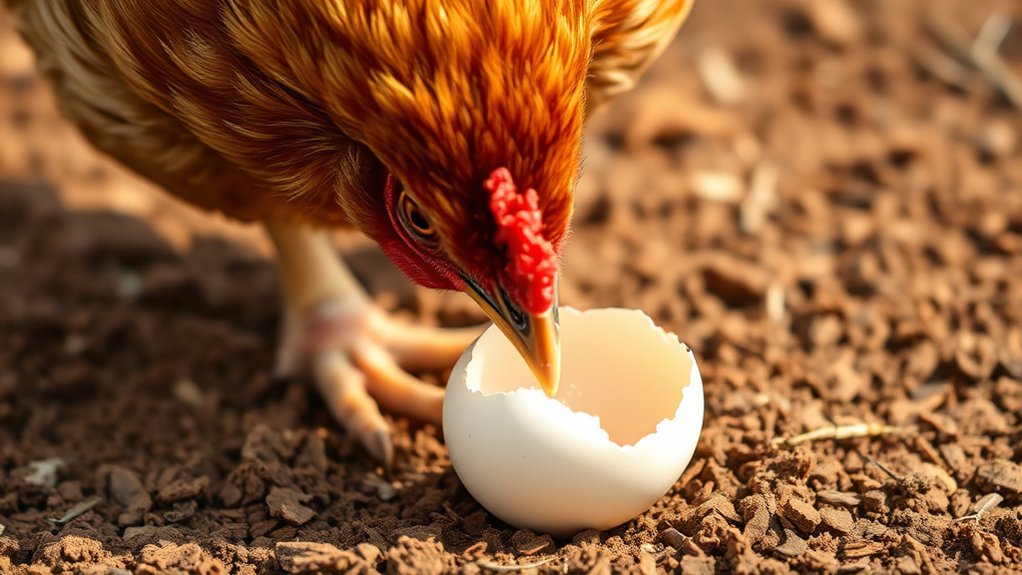
Yes, chickens can eat eggs safely when you feed them the right way. You can offer cooked eggs, including scrambled or hard-boiled, as a protein-rich treat. This supports chicken digestion because cooked eggs are easy to break down and less likely to carry harmful bacteria.
Avoid adding salt, butter, or seasonings, since you want to keep the food simple and healthy. You should also crush or chop the eggs so your flock eats them quickly and doesn’t waste them.
Egg nutrition gives your birds protein, fat, vitamins, and minerals that can help during molting, recovery, or periods of stress. If you feed eggs occasionally, you’ll add variety without disrupting their regular ration.
Keep portions modest, though, so treats don’t replace balanced feed. Fresh water should always be available, and you’ll help your chickens stay healthy by serving eggs as a small, safe supplement, not a main food source.
Why Chickens Eat Eggs

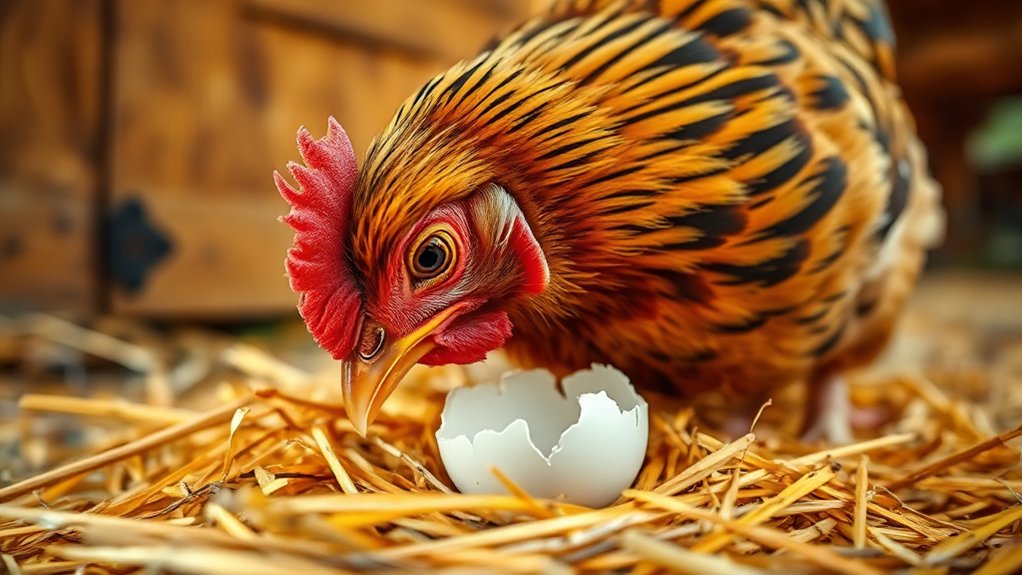
Chickens usually eat eggs because the behavior starts from instinct and opportunity: if an egg cracks open, they may peck at it and quickly learn that eggs are a tasty, protein-rich food.
Once you see this, you understand how chicken behavior works in a flock: curious birds investigate anything new, and a broken shell can trigger more pecking. If one hen tastes the contents, others may copy her and turn a single accident into regular egg consumption.
Stress, boredom, crowding, or a shortage of feed can also make the habit spread, since chickens often look for easy nutrition. You can reduce the risk by collecting eggs often, keeping nesting boxes comfortable, and removing cracked eggs right away.
When you understand why the habit starts, you can spot the pattern early and stop it before it becomes a routine.
Are Eggs Good for Chickens?
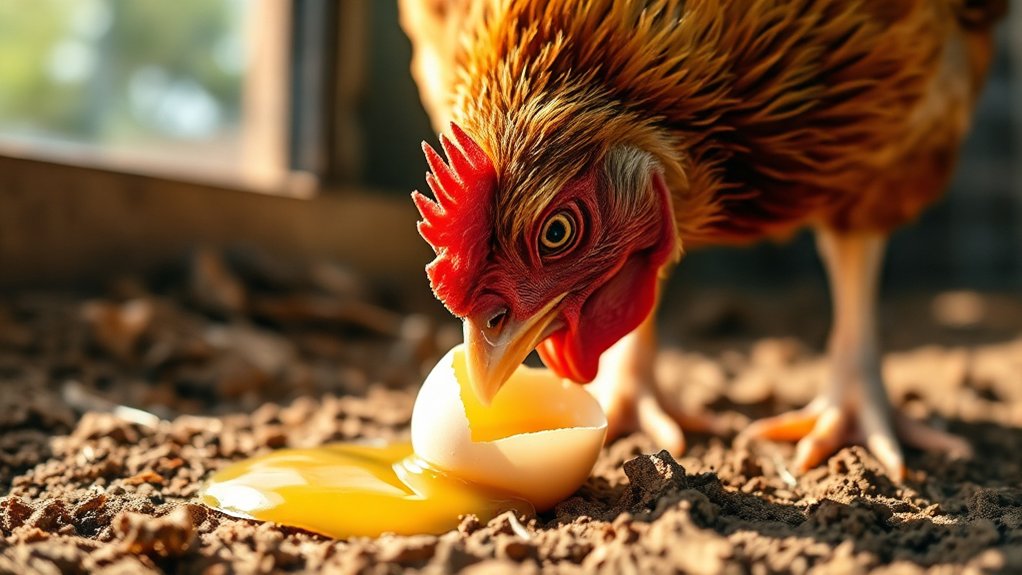
Eggs can be good for chickens in moderation, but only under the right conditions. When you use eggs as a small supplement, you give your flock extra protein, fat, and minerals that support growth, laying, and recovery. That said, you should treat egg feeding as a bonus, not a staple, because your birds still need a balanced feed for proper chicken health.
Egg nutrition can help support weak or molting birds. A small amount may encourage stronger body condition. But too much can crowd out essential nutrients from regular feed.
You should also watch your flock’s behavior. If you notice birds becoming fixated on eggs, stop offering them right away. The goal is to support health, not create bad habits. Used carefully, eggs can fit into a smart feeding plan and add value without replacing the core diet your chickens depend on.
Can Chickens Eat Raw or Cooked Eggs?
When you decide to feed eggs to your flock, the next question is whether they should be raw or cooked. You can offer either, but cooked eggs are usually the safer choice. Cooking lowers the chance of harmful bacteria and makes the egg easier for you to store and serve.
Raw egg benefits include convenience and preserving every nutrient in its natural state, yet raw eggs can also spoil faster and carry a higher contamination risk. If you use raw eggs, keep them fresh and never leave them out too long.
Cooked egg risks are mostly about preparation mistakes, like adding salt, butter, or seasonings that don’t belong in your flock’s diet. Plain scrambled, boiled, or baked eggs work well. You should always let them cool before feeding.
In most cases, a simple, unseasoned cooked egg gives you a practical, low-risk treat your chickens can enjoy safely.
Which Parts of Eggs Can Chickens Eat?
The whole egg can work as a chicken treat, including the yolk, white, and shell. You can offer every part because each one brings something different to your flock. The yolk gives rich fat and energy, while the white adds egg white nutrition with protein your birds need for growth and repair. The shell also has egg shell benefits because it supplies calcium, which supports strong bones and helps hens build sturdy eggshells.
A whole egg can delight chickens, offering yolk, white, and shell with energy, protein, and calcium.
- Yolk: dense energy and vitamins
- White: lean protein support
- Shell: calcium and mineral support
You don’t need to pick apart the egg for chickens to enjoy it, but balance still matters. Too much of any treat can crowd out their regular feed. Keep eggs as an occasional supplement, not a main meal, so your birds stay healthy, active, and productive.
How to Feed Eggs to Chickens
You should only feed chickens cooked eggs because raw eggs can encourage them to start eating their own eggs—and that’s something you definitely want to avoid. Try starting with small portions, like a few scrambled or hard-boiled bites, to see how your flock reacts. It’s best to keep egg treats occasional and in moderation, making sure their regular feed remains the main part of their diet.
Cooked Eggs Only
Cooked eggs are the safest way to feed eggs to chickens, since heat lowers the risk of spreading bacteria and makes the eggs easier to digest. You can scramble, boil, or bake them, but skip salt, butter, and seasoning. Good egg preparation keeps the treat simple and safe, while thoughtful feeding methods help your flock accept it quickly.
Cook eggs until the yolk and white are fully set. Cool them before serving so you don’t burn curious beaks. Crush or chop them lightly for easier pecking.
Offer cooked eggs as a fresh, occasional snack, and remove leftovers soon after feeding. By keeping the eggs plain and fully cooked, you support safer treats and healthier birds.
Portion Size Guidelines
A little egg goes a long way, so keep portions modest and treat eggs as an occasional supplement, not a meal. You should practice portion control by offering only a spoonful or two of chopped, cooked egg per bird, depending on size and flock needs. For chicks or bantams, cut that amount even smaller.
Feed eggs once or twice a week at most, and adjust based on how much other protein they already get. Good serving suggestions include mixing egg with feed, vegetables, or grains so you don’t overdo it. Remove leftovers quickly to avoid spoilage and pests.
If you’re using eggs to support molting or recovery, increase portions a little, but keep them limited and balanced with their regular diet.
Signs Your Chickens Are Egg Eaters
If your hens have started breaking or disappearing eggs, a few clear signs can point to egg eating. You might notice shells crushed in the nest, sticky yolk on bedding, or hens crowding the boxes right after laying.
In a tight pecking order, the boldest bird often claims the nesting spot first, and that can spark behavioral triggers that lead to pecking at fragile eggs. Watch for these clues:
- Hens hovering in the coop after laying time
- Shell fragments or wet yolk with no sign of predators
- A hen tapping, rolling, or carrying eggs in her beak
You may also see nervous flock mates rushing away when one bird enters the nesting area. If eggs vanish soon after they’re laid, that’s another strong hint.
Track which hens stay near the boxes and which ones act restless because pattern changes often reveal the culprit faster than a single broken shell.
How to Stop Egg Eating in the Coop
If you want to stop egg eating in the coop, start by improving the nest box design. Make sure the eggs stay hidden and protected so they’re less tempting for the hens to peck at.
Also, collect the eggs promptly every day. This way, the hens don’t get the chance to develop the habit of eating them.
Another helpful tip is to feed your chickens a nutrient-rich diet. Sometimes they eat eggs out of boredom or because they’re missing something in their nutrition. Keeping their diet balanced can really reduce that urge.
Nest Box Design
Nest box design can make a big difference when you’re trying to stop egg eating in the coop. Choose durable nest box materials that resist cracking and keep your setup easy to clean. Set the right nest box height so hens can enter safely, and place each nest box location in a quiet, low-traffic corner.
Good nest box comfort matters too; add soft bedding without making it too deep. Use nest box privacy panels or dividers so hens feel secure and don’t crowd one another. Strong nest box maintenance keeps surfaces smooth and discourages pecking.
You can also improve nest box aesthetics, but function matters more than looks.
- Keep it dark
- Keep it dry
- Keep it calm
Prompt Egg Collection
Prompt eggs as soon as you can, because a cracked or forgotten egg quickly teaches hens that pecking pays off. Make prompt egg collection part of your daily routine, ideally morning and late afternoon, so eggs don’t sit long enough to tempt curious beaks.
Check nest boxes often, lift eggs gently, and remove any broken ones right away. The benefits egg collection offers are simple: fewer chances for hens to sample raw eggs, cleaner nests, and less mess spreading through the coop.
If you’re away, ask someone to collect for you. Keep spare nesting material nearby so hens return to a tidy spot instead of a shredded, egg-stained box.
Consistency matters most; when you stay ahead of the eggs, you reduce the habit before it starts.
Nutrient-Rich Diet
A balanced, nutrient-rich diet can curb egg eating by reducing the hunger and nutritional gaps that make hens more likely to peck at eggs. You should feed a complete layer ration with enough protein, calcium, and vitamins so your flock gets the nutritional benefits it needs. When you keep dietary balance steady, hens feel satisfied and are less tempted to seek extra nutrients from shells or yolks.
Offer layer feed as the main meal every day. Add oyster shell and grit for stronger shells and digestion. Provide fresh water and occasional greens, not scraps that unbalance intake.
If you notice egg eating, check for weak shells, boredom, or crowding too. Better nutrition won’t fix every issue, but it gives you a strong foundation for lasting coop behavior.
Best Foods to Prevent Egg Pecking
To curb egg pecking, you need to give hens a balanced diet that supports normal behavior and reduces the urge to search for missing nutrients. Focus on layer feed as the main staple because it gives you steady protein, calcium, and key vitamins.
You can also offer oyster shell on the side so hens meet their calcium needs without turning to eggs. Fresh greens, pumpkin seeds, and cooked grains make smart best treats, but keep them limited so they don’t crowd out feed.
Clean water matters too, since dehydration can affect chicken behavior and make birds more restless. You should also provide free-ranging time, grit, and enough feeder space, because crowded or bored hens may peck at eggs more often.
When you keep their diet consistent and complete, you help hens stay satisfied, active, and less interested in testing eggs for food.
When Egg Eating Becomes a Problem
When your chickens start eating eggs, it’s important to figure out what’s causing the behavior. It could be stress, boredom, or maybe they’re not getting enough calcium. You’ll usually notice signs like cracked shells, sticky beaks, or nests that get raided shortly after the eggs are laid.
To keep this from happening again, you’ll want to act quickly. Try keeping the nests cleaner, improving their nutrition, and managing your flock better. These steps can really help stop egg eating in its tracks.
Causes of Egg Eating
Egg eating usually starts when hens accidentally find a broken shell and then learn that eggs can be a food source. You’ll often see egg consumption rise because of behavioral triggers, nutritional deficiencies, stress factors, environmental influences, and flock dynamics.
When the coop feels crowded, dull, or chaotic, hens may peck more often and repeat the habit. Poor diets can push them to search for extra protein or calcium, while sudden changes in lighting, nesting space, or group order can make them bolder.
- Broken eggs invite curiosity
- Hunger or imbalance reinforces the habit
- Stress makes copying easier
If you address the cause early, you can reduce the chance that one hen’s mistake turns into a shared routine.
Signs of Egg Theft
You can usually spot egg theft before it turns into a serious habit by watching for small clues in the nest box. You might find broken shells, sticky yolk, or feathered hens lingering near the box after laying time.
Fresh eggs may disappear quickly, leaving only fragments behind. One bird may peck at soft-shell eggs, then start checking nests more often than the others. These egg theft signs often show up alongside restless chicken behavior, such as repeated scratching, peering into boxes, or rushing in as soon as another hen leaves.
You may also notice dirty vents, cracked eggs, or hens crowding the nest. If the pattern repeats, egg eating has likely moved beyond curiosity and become a habit you can’t ignore.
Preventing Recurrence
To stop egg eating from coming back, remove the temptation fast and make the nest box less rewarding for the birds. Collect eggs often, add plenty of clean bedding, and darken the boxes so hens can’t peck shells easily.
Use preventive measures every day, not just after a problem starts. If a hen keeps tasting eggs, separate her briefly and watch the flock closely. You can also reduce stress with enough space, feed, and water.
Check for thin shells and fix nutrition gaps. Pick up broken eggs immediately. Use behavioral training by rewarding calm nesting.
Over time, these habits teach the flock that eggs aren’t food. Stay consistent, because one lapse can bring the behavior back.
Frequently Asked Questions
Can Chicks Eat Eggs Too?
Yes, you can feed chicks eggs in moderation, and they can support chick nutrition and chick development. Eggs offer protein, vitamins, and healthy fats, so they give good egg benefits.
You should cook the eggs first, then chop or mash them finely. Follow feeding guidelines and offer only small amounts alongside a balanced starter feed.
Don’t overdo it, since too much can upset their diet and digestion.
Do Chickens Need Eggs in Winter?
No, you don’t need to give chickens eggs in winter, but you do need solid winter feeding. Last January, one hen in my coop ignored the frost and still laid, like a tiny furnace with feathers.
That’s the point: egg nutrition matters only if you’re using eggs as a supplement, not a necessity. You should focus on balanced feed, fresh water, and extra calories so your flock stays warm and healthy.
Can Egg Shells Hurt a Chicken’s Crop?
No, egg shells usually won’t hurt your chicken’s crop if you feed them crushed and clean. You should still watch for crop health issues if shells are sharp, moldy, or offered in huge amounts.
Chickens digest shell pieces well, and shell digestion is normal when they’re properly prepared. If your bird seems blocked, stops eating, or acts off, you’ll want to check it and call a vet.
Should Eggs Be Fed to Laying Hens?
Yes, you can feed eggs to laying hens in moderation, and they can offer nutritional benefits like protein and healthy fats. You should follow feeding guidelines by serving cooked eggs, not raw ones, to reduce disease risk and discourage egg eating.
Mix them into treats occasionally, not as a main feed. Keep fresh layer feed available, and your hens’ll still get the balanced nutrition they need for steady production.
How Often Can Chickens Eat Eggs?
You can feed chickens eggs once or twice a week, and they’ll act like you’ve handed them a feast fit for royalty. Keep the egg consumption frequency moderate so they don’t depend on it too much.
Eggs offer nutritional benefits like protein and healthy fats, but you should still balance them with regular feed, greens, and grit. Don’t overdo it, or you may encourage picky eating and crowd out their normal diet.
Conclusion
In the end, you can let chickens eat eggs in moderation, but you’ll want to manage it carefully. Eggs can be a handy snack, yet they can also turn your coop into a slippery slope of bad habits if egg eating starts.
Keep nests clean, collect eggs often, and feed a balanced diet to help your flock stay healthy. With the right steps, you can keep your chickens pecking happily, not breaking their own eggs. Remember, when it comes to whether chickens can eat eggs, moderation and good management are key.