How to Raise Polish Chickens
Raising Polish chickens can be a bit tricky, especially if you’re new to it. Many people struggle with keeping these unique birds healthy and happy because of their delicate crests and special care needs. You’re not alone in wanting to find the best tips and products to make the process easier and more enjoyable.
To raise Polish chickens, you should choose alert, healthy birds with clean crests, bright eyes, and smooth breathing. Give them a dry, draft-free coop with low roosts, deep bedding, and good airflow.
Feed a balanced starter or layer ration with fresh water every day, and keep handling gentle so they stay calm. Protect their crests from dirt and wet weather, and introduce flockmates slowly.
With a few more tips, you’ll keep them thriving from chickhood on.
Key Takeaways
- Choose healthy Polish chickens with clear eyes, smooth breathing, clean crests, and active appetites.
- Provide a dry, draft-free coop with good airflow, low roosts, clean bedding, and winter weather protection.
- Feed a balanced layer or starter diet with fresh water, adequate protein, calcium, and limited treats.
- Handle birds gently and briefly. Raise chicks in a warm brooder with steady heat, clean bedding, and chick starter feed.
- Introduce new birds slowly. Keep them separate at first and monitor flock behavior to prevent bullying.
Choose Healthy Polish Chickens
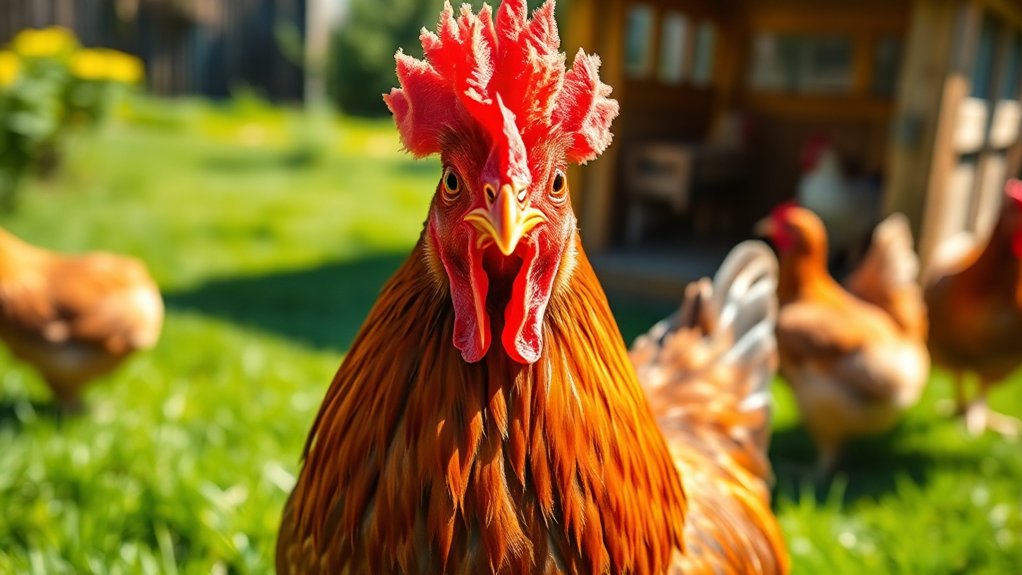
When you choose Polish chickens, start by looking for birds that are alert, active, and moving well. You want clear eyes, smooth breathing, and clean nostrils. Check the comb and wattles for healthy color, and avoid birds with scabs, swelling, or discharge.
Look for Polish chickens that are alert, active, and healthy, with clear eyes and clean nostrils.
Their feathers should look full and neat, not broken or dull. Because their crests can hide problems, gently part the feathers and inspect the skin and head. Watch how each bird eats and drinks, since a good appetite often signals strong health.
If you’re comparing color variations, make sure plumage matches the breed type and looks even. Ask the breeder about breeding tips, parent stock, and vaccination history. You’ll make better choices when you select birds with steady temperaments and no signs of weakness.
Healthy Polish chickens give you a stronger flock and a better start. Keep your standards high, and don’t rush the decision.
Set Up a Safe Coop
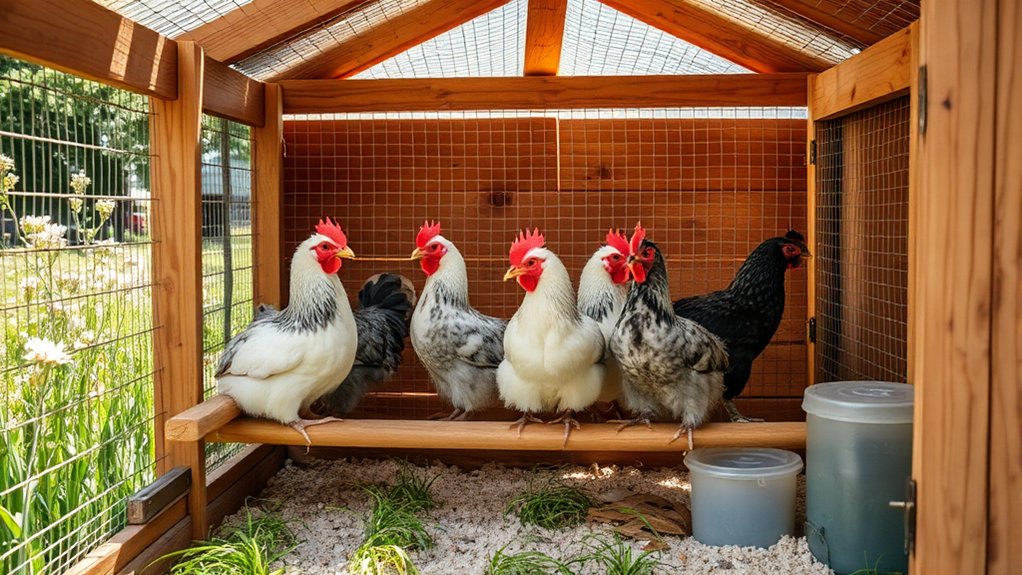
A safe coop gives your Polish chickens protection from weather, predators, and stress. You should choose a coop design that keeps them dry, calm, and easy to manage. Build solid walls, tight seams, and a lockable door for strong predator protection.
Raise the floor or add deep bedding so moisture won’t linger. Provide good airflow without drafts, since stale air can make birds uneasy. Place roosts low enough for easy access and add nest boxes in a quiet corner.
Clean spaces help you spot problems early and keep your flock confident.
- Peaceful shelter from rain and wind
- Fewer nighttime scares
- Cleaner bedding and fresher air
- Better security from raccoons and foxes
- Happier birds that settle fast
Check latches often, and inspect corners for gaps. When you keep the coop secure, your Polish chickens can rest, recover, and thrive.
Make Room for Their Crest
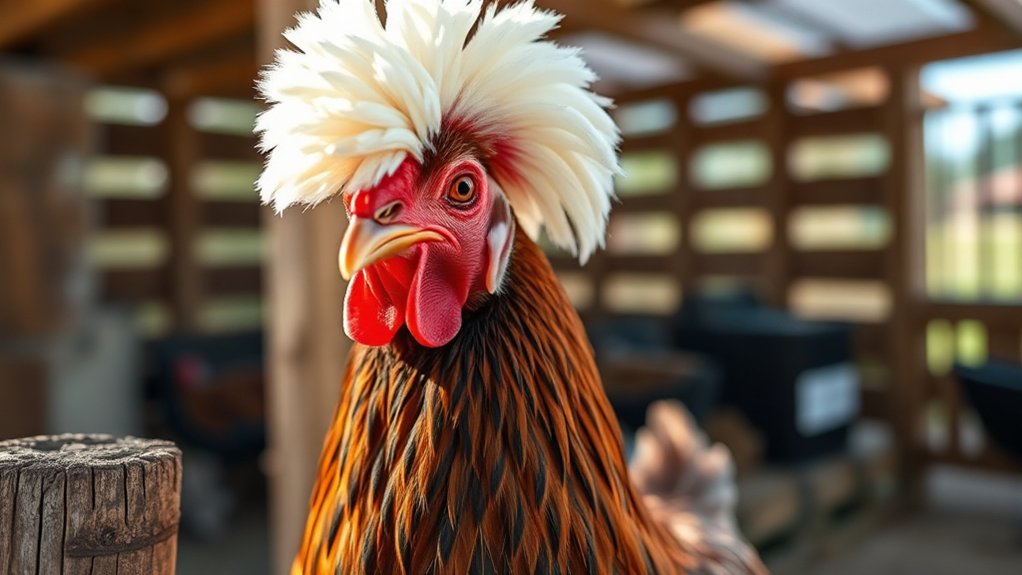
Give your Polish chickens plenty of headroom so their crests don’t get crushed or rubbed. It’s important to keep their feathers safe by trimming low branches, sharp edges, and anything else they might brush against. A little extra space in the coop and run really helps their crests stay neat and healthy.
Crest Space Requirements
Because Polish chickens wear a big crest, they need extra space in the coop and run so feathers stay clean, dry, and out of the way. You’ll help them feel calm when you give each bird enough room to move without crowding. A wider perch area and a low-traffic corner reduce stress and keep their crest looking neat.
Use these crest grooming techniques and crest maintenance tips to check the feathers often, then adjust space if birds bunch together.
- Give each chicken room to turn easily
- Keep feeders and waterers spaced apart
- Avoid tight roosts that press the crest
- Provide a roomy run for relaxed movement
- Watch for signs they’re feeling cramped
Prevent Feather Damage
To prevent feather damage, make sure your Polish chickens have enough room to move without brushing their crests against walls, feeders, or other birds. You should watch flock interactions closely, because crowding can lead to snagging, stress, and feather plucking.
Keep their living space calm and uncluttered, and give them environmental enrichment that encourages gentle movement and reduces boredom. Scatter treats, offer low roosts, and add safe objects that invite exploration without forcing them to squeeze past tight spots.
Handle them carefully when you catch or examine them, and avoid sudden movements that startle birds into collisions. When you protect their crests from repeated contact, you help preserve feather condition, reduce irritation, and keep your Polish chickens looking healthy, comfortable, and confident every day.
Trim Surrounding Obstacles
A tidy coop helps protect your Polish chickens’ crests, but the setup around them matters just as much. You need smart space management outside the coop too. Walk the run and clear anything that can snag feathers or startle them. Use careful obstacle removal to make every path smooth and safe.
- Cut back thorny branches.
- Move low wires and hooks.
- Remove sharp feeder edges.
- Keep doors opening wide.
- Eliminate clutter near perches.
When you trim surrounding obstacles, your birds move with less stress and fewer bumps. You’ll notice calmer behavior, cleaner crests, and less breakage after roosting or feeding. Give them room to turn, stretch, and investigate without brushing against hazards. A safer layout helps your Polish chickens stay confident, comfortable, and beautiful every day.
Feed Polish Chickens Daily
Feed your Polish chickens a balanced daily diet of quality layer feed, or starter feed if they’re still young, to support healthy growth, steady egg production, and strong feathers. Add fresh water every day, and check that each bird can eat without crowding.
Polish chickens’ nutritional needs include enough protein, calcium, vitamins, and minerals, so choose feed that matches their age and laying stage. Keep a consistent feeding schedule so they learn when to eat and stay healthy.
You can offer a small amount of scratch grain as a treat, but don’t let it replace their main ration. If you provide kitchen scraps, keep them limited and safe, with no salty, moldy, or spoiled food.
Watch their appetites closely; sudden changes can signal stress or illness. Clean feeders regularly to prevent waste and contamination, and store feed in a dry, sealed container to protect freshness and keep pests away.
Handle Polish Chickens Gently
Once your Polish chickens are well fed and settled, make handling them a calm, gentle routine. Approach slowly, speak softly, and let each bird see your hands before you lift it. Support the body with one hand under the chest and the other around the legs, so you don’t startle it. These handling tips help build trust and reduce stress.
Move at a steady pace. Keep sessions brief. Hold them close to your body. Release them carefully. Reward calm behavior with quiet reassurance.
When you practice grooming techniques, keep your grip light and confident. Polish chickens can feel uneasy if you squeeze or rush, so work patiently and let them relax against you. If a bird struggles, pause and reset instead of forcing the moment.
Gentle handling makes daily care easier, strengthens your bond, and helps your flock stay confident around people.
Keep Their Eyes and Feathers Clean
Polish chickens’ showy crests can trap dirt, dust, and moisture, so check their eyes and feathers often and clean them as needed. You can gently part the crest to see whether debris is blocking vision or irritating the skin. Use a soft, damp cloth or cotton pad to wipe away grime, and dry the area right after.
Good eye hygiene helps you spot discharge, swelling, or crusting before they worsen. If feathers around the face get sticky or matted, trim only the messiest tips and keep your tools clean.
Routine feather maintenance also means keeping their coop dry and dust-free, since damp litter clings to plumage and invites trouble. Never tug hard or soak the bird, because that can stress it and damage delicate feathers.
With calm, regular care, you’ll keep their crest neat, their eyes clear, and their appearance healthy.
Help Them Get Along With the Flock
When you bring new Polish chickens into the flock, it’s best to introduce them slowly. This way, everyone has time to adjust without too much stress.
Keep a close eye on any changes in the pecking order. If some birds seem shy, make sure they have plenty of space, food, and water until they feel comfortable.
With steady supervision, you’ll be able to keep the flock peaceful and help your chickens get along smoothly.
Introducing New Birds
Even well-behaved Polish chickens can act wary around newcomers, so you’ll want to introduce new birds slowly and on neutral terms. Keep them separate at first, and use socialization techniques that let them see, hear, and smell each other without contact. This lowers introducing stressors and gives everyone time to adjust.
- Watch for curious peeks, not panic
- Offer treats on both sides of the fence
- Let calmer birds lead the first meetings
- Keep sessions short and supervised
- Separate anyone who pecks hard
When you finally mix them, choose a calm morning and stay close. Your goal is steady acceptance, not instant friendship. If the flock seems tense, step back and try again tomorrow. Patience helps your Polish chickens feel safe, and safety makes integration much smoother.
Managing Flock Harmony
Once your birds are settled in, keeping the flock peaceful means watching behavior closely and stepping in before small squabbles grow. You should notice social dynamics daily because Polish chickens can be shy, bossy, or curious depending on flock personalities.
Give timid birds extra feeder and water space so they don’t get crowded out. If one hen pecks too much, separate her briefly, then reintroduce her with supervision.
Keep roosts, nesting boxes, and runs roomy enough to reduce competition. You’ll also help harmony by adding enrichment, since bored birds often start trouble. Offer multiple feeding stations, treat scatter, and dust-bathing areas so everyone has a chance to relax.
With patience and quick correction, you can keep your flock balanced, calm, and healthy.
Protect Polish Chickens From Weather
Polish chickens need extra protection from harsh weather because their crests can get wet, dirty, or chilled easily. You should give them a dry, draft-free coop and choose sturdy shelter materials that block wind and rain. Add low roosts, wide perches, and clean bedding so they stay comfortable year-round. Their weather adaptations are limited, so you need to plan ahead for heat, cold, and storms.
You’ll see calmer birds when they stay dry. You’ll prevent matted crests after rain. You’ll help them breathe easier in dusty winds. You’ll reduce stress during freezing nights. You’ll keep your flock bright, alert, and secure.
In summer, provide deep shade and fresh water. In winter, close gaps without sealing airflow completely. If snow or sleet falls, check the coop often and gently dry any damp crest. With thoughtful shelter, your Polish chickens can handle the seasons with confidence.
Watch for Common Polish Chicken Health Issues
You should check your Polish chickens’ feather crests often. Matted feathers can hide dirt, pests, or skin irritation, so it’s important to keep an eye on them. Also, pay attention to their eyes and breathing. If you notice swelling, discharge, sneezing, or wheezing, it could be a sign that something’s wrong. Doing quick checks regularly helps you catch common health issues before they get worse.
Feather Crest Care
Because a Polish chicken’s dramatic crest can block its view and trap moisture, feather care deserves regular attention. You should check the crest weekly and use gentle crest grooming techniques to separate tangled feathers with clean fingers.
Keep feather maintenance tips simple: trim only if feathers snag badly, and avoid cutting near skin. You’ll feel calmer when the crest stays fluffy. Your bird can move more confidently.
You reduce dampness that invites trouble. You spot dirt before it mats. You protect that elegant, fragile crown. Handle your Polish chicken softly, and reward it with a treat so it learns to trust you.
After wet weather, dry the crest fully and let fresh air do its work. Careful grooming keeps your bird comfortable, handsome, and easier to manage daily.
Eye And Respiratory Checks
A tidy crest helps, but it can still hide early signs of trouble. So, check your Polish chicken’s eyes and breathing along with feather care. Look for watery eyes, swelling, crust, or tilt, and keep bedding clean to protect eye health.
Listen for sneezing, rattling, or open-mouth breathing since these signs point to poor respiratory care.
| Sign | What you see | What you do |
|---|---|---|
| Eye discharge | Moist, crusty eyes | Isolate and clean gently |
| Squinting | One eye stays closed | Inspect for debris |
| Sneezing | Frequent snuffles | Improve airflow |
| Labored breathing | Tail bobbing | Call a vet fast |
You should act quickly if symptoms linger because Polish chickens can decline fast when crests trap dust and moisture.
Raise Polish Chickens From Chicks
Start Polish chicks in a warm, draft-free brooder with clean bedding, steady heat, fresh water, and a high-quality chick starter feed. You’ll give them the best start by checking them often, keeping feeders low, and protecting their delicate crests from dampness and stress.
Good chick care means watching each bird eat, drink, and rest, then adjusting heat as they grow. Move through growth stages, from fluffy hatchlings to curious juveniles, by lowering brooder temperature gradually and offering more space.
Watch their bright eyes and lively movement. Keep bedding dry so they stay comfortable. Handle them gently to build trust. Protect them from chilling drafts. Celebrate each healthy feather as it appears.
As they mature, add perches, introduce grit, and give them room to investigate. You’ll raise confident Polish chickens when you stay consistent, patient, and attentive every day.
Frequently Asked Questions
How Long Do Polish Chickens Usually Live?
Polish chickens usually live 5 to 8 years, and you can help them reach that age with good health care. Their lifespan factors include genetics, diet, predator protection, and how well you manage stress.
If you keep them clean, feed them balanced nutrition, and watch for illness, they’ll often thrive longer. You’ll also want to protect their crests from pests and injuries, since that can affect their overall well-being and longevity.
Do Polish Chickens Lay Eggs Year-Round?
Yes, you can get eggs from Polish chickens year-round, but egg production usually drops in fall and winter. You’ll see the best seasonal laying during longer, warmer days with plenty of light and good nutrition.
If you want steadier output, you should keep them comfortable, well-fed, and protected from stress. Don’t expect a high-rate layer, though; Polish hens often focus more on looks than nonstop egg production.
Are Polish Chickens Noisy Compared to Other Breeds?
Yes, you’ll usually find Polish chickens less noisy than many breeds, though their crowing hens and alert chatter can surprise you. Picture a small theater: some birds sing like trumpets, while Polish birds often whisper from the wings.
Their behavioral traits lean curious and skittish, which can make them vocal when startled. Overall, their noise levels stay moderate, especially if you keep them calm, socialized, and comfortable in their coop.
Can Polish Chickens Be Kept With Other Pets?
Yes, you can keep Polish chickens with other pets if you manage introductions carefully and watch behavior closely. You should use socialization tips like gradual meetings, supervised time together, and plenty of escape space.
Good pet compatibility depends on your other animals’ temperaments, too. Avoid pairing them with rough, prey-driven pets, and keep feeding areas separate.
When you stay attentive, you’ll help everyone live together more safely and calmly.
Do Polish Chickens Need Special Nesting Boxes?
No, you don’t need special nesting boxes for Polish chickens, but you should make them comfy and calm. You’ll want roomy, low boxes with soft nesting materials like straw or shavings.
Because their crest can affect nesting preferences, keep boxes easy to enter and away from drafts. Polish hens often like quiet, secure spots, so simple, snug spaces work best.
Clean boxes regularly, and your flock should settle happily and lay well.
Conclusion
Raising Polish chickens is all about giving them what they need to thrive: a healthy start, a safe coop, enough space for their crest, steady feed, gentle handling, a friendly flock, and protection from harsh weather.
If you watch closely, act quickly, and care consistently, you’ll help them stay happy, healthy, and productive.
When you meet their unique needs, you don’t just raise chickens. You raise confident, comfortable birds that can flourish in your care as Polish chickens.