10 Steps to Get Started Raising Chickens
Getting started raising chickens can feel overwhelming. You want fresh eggs and a happy flock, but where do you even begin? You’re not alone—many people struggle with choosing the right breeds and setting up a safe, comfortable home for their birds.
Luckily, with a few simple steps, you can create a thriving backyard flock that fits your goals and lifestyle.
To get started raising chickens, first pick breeds that suit your climate and egg goals. Find a sunny, well-drained spot near your garden and build or buy a secure coop with proper ventilation and predator-proof fencing.
Set up clean feeders and waterers off the ground, and protect your flock from weather extremes.
Keep an eye on their health, collect eggs daily, and manage waste to maintain cleanliness.
Follow these basics, and you’ll soon enjoy a thriving backyard flock with plenty more tips to investigate.
Key Takeaways
- Choose chicken breeds suited to your climate, temperament preference, and egg production goals.
- Select a dry, sunny location with good drainage and easy access for coop placement.
- Build or buy a predator-proof coop with proper ventilation, adequate space, and secure locks.
- Provide clean water and balanced feed in elevated, shaded feeders spaced to reduce stress.
- Monitor chicken health regularly, collect eggs daily, and maintain cleanliness for a healthy flock.
Why Raise Backyard Chickens? Benefits and Basics
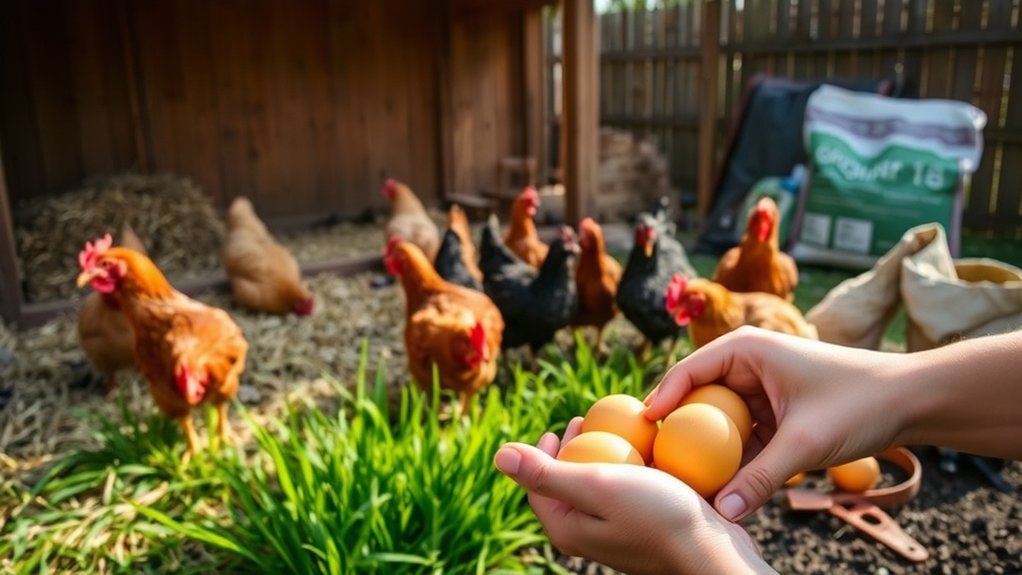
Although raising backyard chickens requires some effort, you’ll quickly enjoy fresh eggs, natural pest control, and even garden fertilizer. Understanding their feeding habits is key; chickens naturally scratch and peck for insects and weeds, helping reduce pests in your yard while supplementing their diet.
You’ll provide a balanced mix of grains, kitchen scraps, and occasional treats to keep them healthy and productive.
Egg collection becomes a rewarding daily routine as you gather fresh eggs right from your coop, ensuring they’re clean and ready to use. This hands-on care strengthens your connection with your flock and guarantees a steady egg supply.
Plus, chicken manure is a fantastic fertilizer that enriches your garden soil.
Choose Chicken Breeds Best for Eggs, Climate, and Temperament
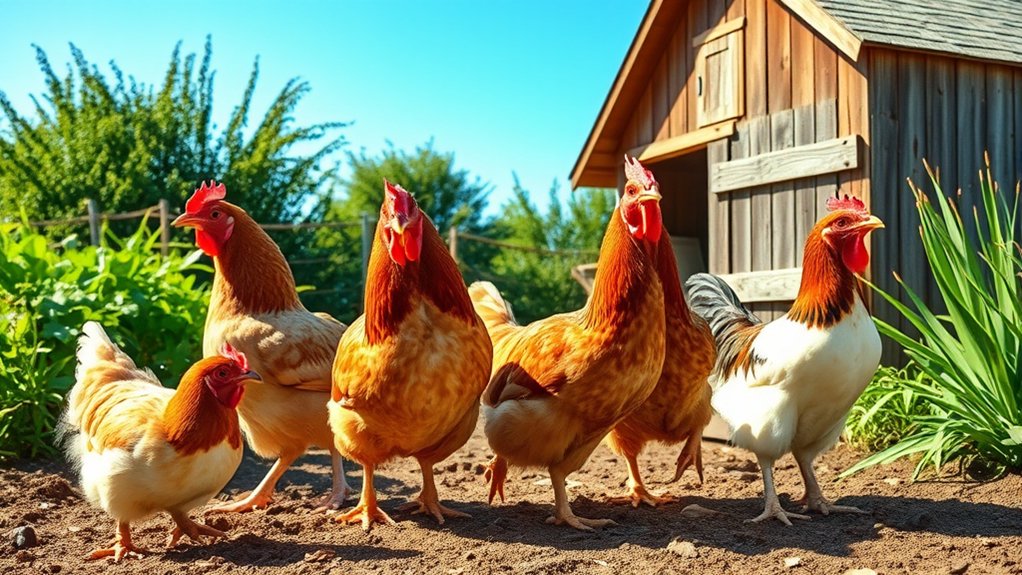
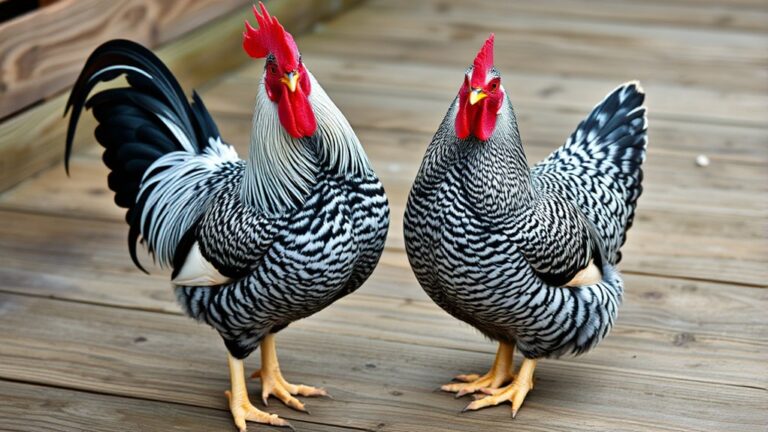
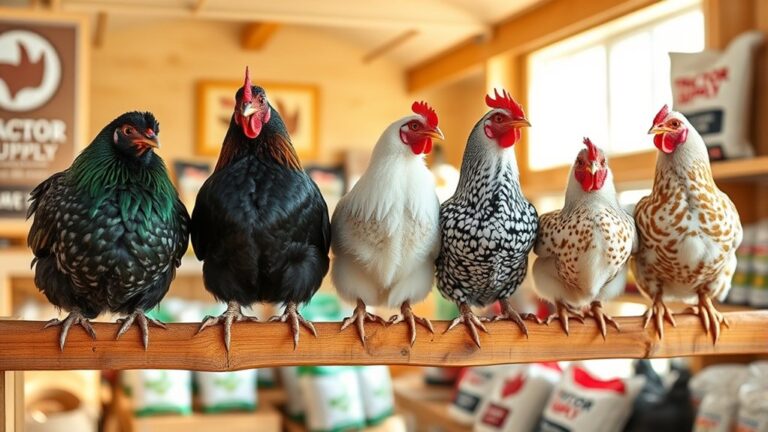
Selecting the right chicken breeds can make all the difference in your backyard flock’s success. You want egg-laying breeds that thrive in your climate and fit your lifestyle. Start by considering how many eggs you want, the weather where you live, and how friendly or calm you want your birds to be.
Choosing chicken breeds that match your climate, egg needs, and temperament ensures a thriving backyard flock.
Focus on three main points:
- Egg laying breeds: Choose breeds like Leghorns or Rhode Island Reds for consistent egg production.
- Climate adaptability: Pick breeds suited for your local weather, such as Australorps for cold or Andalusians for warmer climates.
- Temperament considerations: Some breeds are docile and great for families (like Buff Orpingtons), while others can be more assertive.
Pick the Best Location for Your Backyard Chicken Coop
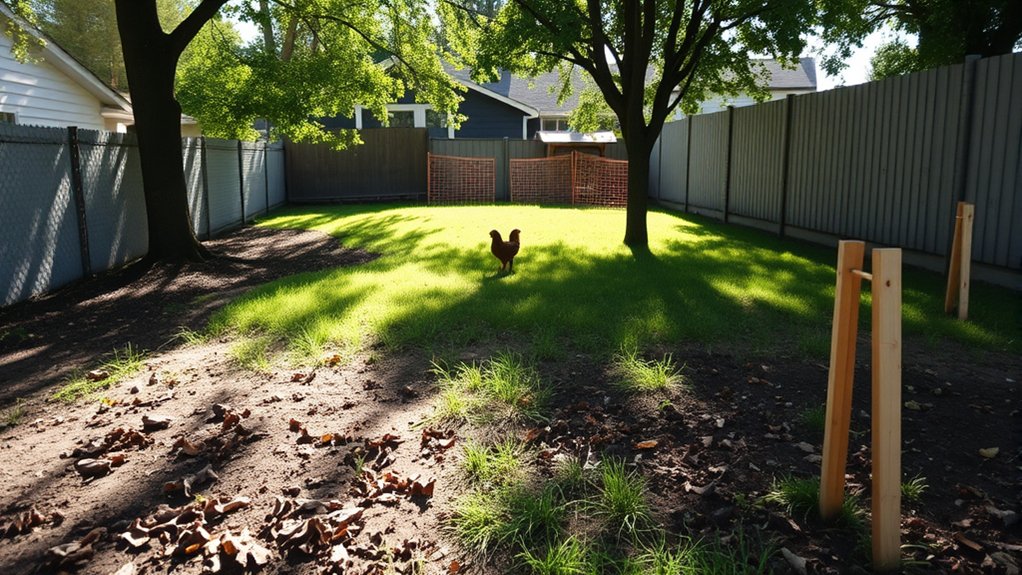
When you pick the best spot for your chicken coop, you set your flock up for health and happiness. Choose a location with good drainage to avoid muddy conditions, and make sure it gets plenty of sunlight but also some shade during hot days.
Take into account garden integration by placing the coop near your vegetable beds. Chickens can help with pest control while benefiting from natural foraging. Also, prioritize safety by selecting a site where you can easily install predator fencing to keep your chickens secure.
| Factor | What to Consider |
|---|---|
| Sunlight | 6-8 hours daily for warmth |
| Drainage | Avoid low spots or puddles |
| Proximity to Garden | Helps with pest control |
| Predator Fencing | Easy to install, secure fencing |
| Accessibility | Convenient for daily care |
A thoughtful location reduces stress for your chickens and simplifies your care routine.
Build or Buy a Safe Chicken Coop
Now that you’ve picked the perfect spot, it’s time to figure out whether you want to build or buy a chicken coop that’s safe and secure. You’ll want to make sure the coop has enough space for your flock, uses durable materials, and offers strong protection against predators. These things will help keep your chickens comfortable and safe every day.
Coop Size And Space
A well-sized chicken coop gives your birds enough room to move freely, roost comfortably, and stay healthy. When planning your coop size, think about space per bird to prevent overcrowding. Overcrowding can mess with feeding schedules and overall behavior.
Proper coop ventilation is key to avoiding moisture buildup and respiratory issues.
Keep in mind:
- Allocate at least 3-4 square feet per chicken inside the coop and 8-10 square feet in the outdoor run.
- Guarantee good airflow through vents without drafts to keep the air fresh.
- Design roosts and nesting boxes so the birds don’t crowd each other during feeding and resting times.
Materials For Durability
Although choosing the right materials might seem straightforward, selecting durable options guarantees your chicken coop withstands weather, predators, and daily wear. You want materials that support chicken feather care by minimizing drafts and moisture. Plus, they should simplify egg collection through easy access and cleaning.
Wood and metal are common choices, but each has pros and cons.
| Material | Benefits |
|---|---|
| Treated Wood | Insulates well, easy to work with |
| Galvanized Metal | Long-lasting, pest-resistant |
| Plastic Panels | Easy to clean, weatherproof |
Choose materials that fit your climate and maintenance routine. Durable materials assure your chickens stay comfortable and healthy. This makes daily tasks like egg collection and feather care smoother for you.
Predator Protection Methods
Selecting durable materials sets a strong foundation, but protecting your flock from predators takes equal priority. Whether you build or buy a coop, make certain it’s secure enough to keep foxes, raccoons, and hawks out. A well-protected coop helps minimize stress, reducing issues like feather pecking among your birds.
Here’s how to improve predator protection:
Use hardware cloth instead of chicken wire for all openings. It’s stronger and keeps small predators out.
Install secure locks and hinges to prevent clever animals from gaining entry.
Position the coop in a well-lit area. This encourages rooster noise to deter nighttime predators.
Taking these steps guarantees your chickens stay safe and healthy, giving you peace of mind as you enjoy raising them.
Set Up Feeding and Water Stations for Your Chickens
You’ll want to pick feeders that are easy to clean and help cut down on waste. Also, make sure your chickens always have fresh, clean water available so they stay healthy. It’s a good idea to put feeding and water stations in shaded, dry spots—this keeps your flock comfortable and their supplies fresh.
Choosing Appropriate Feeders
Three key factors will help you choose the right feeders for your chickens: size, material, and ease of cleaning. You’ll want feeders that accommodate your flock size to reduce competition and waste. Durable materials like metal or heavy-duty plastic stand up to pecking and weather. Easy-to-clean feeders minimize feeder maintenance, which helps prevent mold and bacteria buildup.
Consider these points when selecting feeders:
- Size: Match feeder capacity to the number of chickens for efficient feed supplementation.
- Material: Choose rust-resistant, sturdy feeders to last longer.
- Cleaning: Opt for designs with removable parts to simplify regular cleaning.
Picking the right feeders guarantees your chickens get consistent nutrition while keeping feed fresh and safe.
Ensuring Clean Water Supply
How often do you check your chickens’ water supply? Keeping water quality high is essential for their health and productivity. Dirty or stagnant water can harbor bacteria and parasites, so clean the water containers daily.
Use fresh, cool water to encourage proper hydration. Consider hydration tips like adding electrolytes during hot weather or illness to support your flock’s well-being. Make certain the waterers are easy to access and sturdy enough to prevent spills or contamination.
Regularly inspect the water stations for debris, algae, or buildup that could affect water taste and safety. By maintaining clean water and monitoring quality, you help ensure your chickens stay hydrated, healthy, and happy.
Clean water is just as important as good feed for your growing flock.
Optimal Placement of Stations
Maintaining clean water is only part of the equation. Where you place your feeding and watering stations can make a big difference in your chickens’ comfort and health. Position these stations in shaded, dry areas to prevent overheating and contamination.
Consider your garden landscaping to guarantee easy access without disrupting other plants. Keep the stations close enough to the coop for convenience but far enough to reduce crowding and mess.
To optimize placement, follow these tips:
- Place feeders and waterers on elevated platforms to avoid dirt and droppings.
- Ensure stations are spaced apart to minimize competition and stress.
- Blend stations with your chicken coop aesthetics for a tidy, attractive setup.
Thoughtful placement supports your chickens’ well-being and amplifies your backyard’s overall appeal.
Protect Your Flock From Predators
Although raising chickens can be rewarding, you’ll need to take steps to protect your flock from predators. Start by installing predator-proof fencing around your coop and run. Use sturdy materials like welded wire mesh with small openings to keep out raccoons, foxes, and other common threats. Bury the fencing at least 12 inches underground to prevent animals from digging under it.
Nighttime security is essential since many predators are most active after dark. Make sure your chickens have a secure, locked coop with solid doors and windows covered by strong wire. Consider adding motion-activated lights or alarms to deter intruders. Regularly inspect your fencing and coop for any damage or weak spots, fixing them immediately. By taking these precautions, you’ll create a safe environment where your flock can thrive without fear of predators.
Shield Your Chickens From Weather and Harsh Conditions
Since chickens are vulnerable to extreme weather, you’ll need to provide proper shelter and care to keep them comfortable and healthy. Weather protection is essential to shield your flock from harsh conditions like heavy rain, freezing temperatures, and intense heat. You want to create an environment where chickens can thrive no matter what the weather throws at them.
To effectively shield your chickens, focus on these key steps:
- Build a well-insulated coop with ventilation to prevent drafts but allow airflow.
- Provide dry bedding to keep them warm and avoid dampness that can lead to illness.
- Offer shaded outdoor space to protect from sun exposure and overheating.
Identify and Manage Common Chicken Health Issues
When you raise chickens, you’ll likely encounter common health issues that require quick attention to keep your flock thriving. Watch for signs like lethargy, loss of appetite, coughing, or abnormal droppings. Early detection helps you prevent outbreaks and minimize stress.
Stick to established medication protocols to treat illnesses safely and effectively, and always consult a vet before administering drugs. Following proper vaccination schedules is essential to protect your chickens from diseases such as Marek’s and Newcastle.
Keep detailed records of vaccinations and treatments to track your flock’s health over time. Maintain a clean coop, provide fresh water, and guarantee proper nutrition to reduce disease risks. By proactively managing health issues and adhering to vaccination schedules and medication protocols, you’ll help your chickens stay strong and productive throughout the year.
Collect and Store Fresh Eggs Properly
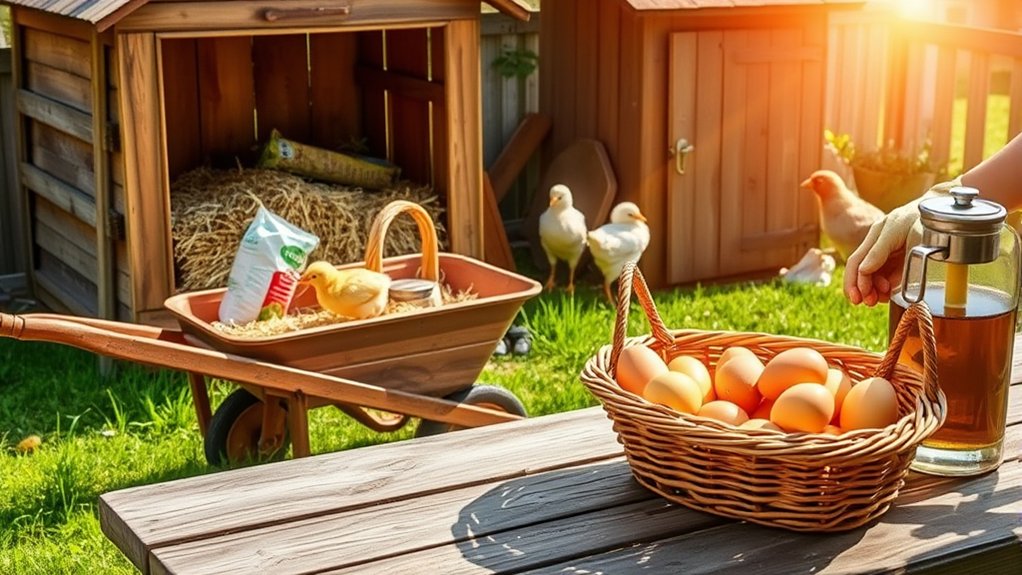
To make certain your eggs stay fresh and safe to eat, you need to collect them regularly and handle them carefully. Collect eggs at least once a day, preferably twice if your hens are especially productive. This prevents eggs from becoming dirty or cracked, which helps maintain quality during egg storage.
When handling fresh eggs, avoid washing them immediately; washing can remove the natural protective coating, reducing their shelf life.
For proper fresh egg handling, follow these tips:
Use a clean container lined with soft material to avoid cracks.
Store eggs with the pointed end down to keep the yolk centered.
Keep eggs in the refrigerator at a steady temperature around 40°F (4°C).
Manage Chicken Waste and Keep Your Coop Clean
Collecting fresh eggs regularly helps keep your coop tidy, but managing chicken waste takes your cleanliness efforts further. You’ll want to remove droppings daily to prevent odors and reduce the risk of disease. Use a sturdy scoop or shovel to clear out soiled bedding and waste efficiently.
To handle the waste sustainably, investigate composting techniques that transform manure into nutrient-rich compost for your garden. Proper composting not only reduces waste volume but also eliminates harmful pathogens. If composting isn’t an option, research local waste disposal methods to ensure you discard manure responsibly.
Regularly replace bedding materials like straw or wood shavings to maintain a dry, clean environment for your chickens. Keeping the coop well-ventilated also helps control moisture and odors. By staying consistent with waste management and cleanliness, you’ll create a healthier space for your flock and enjoy a more pleasant backyard experience.
Frequently Asked Questions
How Much Time Daily Is Needed to Care for Backyard Chickens?
You’ll need about 20 to 30 minutes daily to care for backyard chickens. Sticking to a consistent feeding schedule guarantees your chickens stay healthy and happy. You’ll fill their feeders and provide fresh water each day.
Coop cleaning takes a bit longer but can be done once or twice a week to keep their environment sanitary. Regular attention helps prevent diseases and keeps your flock thriving.
Can Chickens Be Raised in an Urban Apartment Setting?
You might think it’s impossible, but yes, you can raise chickens in an urban apartment setting! With a well-designed urban coop, you’ll provide your birds enough space, ventilation, and cleanliness to thrive indoors.
Apartment farming is gaining popularity because compact, smart setups let you enjoy fresh eggs without a backyard. Just make sure to check local regulations and manage noise and odor carefully to keep your neighbors happy.
What Are the Legal Restrictions on Keeping Chickens in Neighborhoods?
You’ll want to check your local zoning ordinances first, as many neighborhoods have specific rules about keeping chickens. Some areas limit the number you can have or prohibit roosters due to noise regulations.
Noise regulations often aim to prevent disturbances from crowing or clucking, especially early mornings. Make sure you understand these rules to avoid fines or complaints, and always get any necessary permits before setting up your coop.
How Do Chickens Interact With Other Pets Like Dogs or Cats?
You might think chickens and dogs can’t get along, but with proper introductions, they often coexist peacefully. Chickens and dogs need supervision at first, since some dogs have strong prey drives.
Chickens and cats usually tolerate each other, sometimes even forming friendly bonds. You’ll want to monitor interactions closely, train your dog to respect the chickens, and provide safe spaces so all your pets feel secure and comfortable together.
What Initial Costs Should I Expect When Starting With Chickens?
You should expect initial coop expenses like building materials or a pre-made coop, which can vary widely depending on size and quality. Feeding costs will also add up since chickens need a balanced diet with grains, supplements, and occasional treats.
Don’t forget essentials like bedding, feeders, waterers, and possibly vaccinations. Budgeting for these upfront will help you avoid surprises and keep your chickens healthy and happy from the start.
Conclusion
Raising backyard chickens might seem like a lot of eggs in one basket at first, but once you get the hang of it, you’ll love the fresh eggs and lively company. By choosing the right breeds, setting up a safe coop, and keeping their needs in check, you’re setting yourself up for success.
Stick with it, and you’ll soon enjoy the rewarding experience of happy, healthy chickens right in your own backyard. Getting started raising chickens is a great way to connect with nature and enjoy fresh, homegrown eggs every day.