How to Start Raising Chickens in 10 Essential Steps
Many people dream of raising their own chickens but feel overwhelmed by where to start. You’re not alone if you’ve struggled to figure out how to care for your flock or set up the perfect environment. Raising chickens can be rewarding, but getting it right from the beginning makes all the difference.
To start raising chickens, first pick a breed that fits your goals and climate. Build a secure, ventilated coop with enough space and predator-proof fencing.
Set up clean feeders and waterers, and collect eggs twice daily.
Establish a daily care routine to monitor health and maintain cleanliness. Safeguard your flock from predators and illness, manage waste regularly, and adjust the coop for seasonal changes. Keep these essentials in mind to confidently care for your chickens and eggs.
Key Takeaways
- Choose chicken breeds based on egg production, climate suitability, and your goals for eggs or companionship.
- Build a secure, well-ventilated coop with proper insulation, predator-proof fencing, nesting boxes, and easy cleaning access.
- Provide balanced feed and clean water daily. Use covered feeders and shaded water stations to prevent contamination and waste.
- Collect eggs twice daily. Store them pointed end down in a cool place, and maintain a clean, sanitary environment.
- Monitor chicken health daily. Watch for illness signs or predators, and handle chickens calmly to build trust and ensure safety.
Choose the Right Chicken Breed for Your Needs
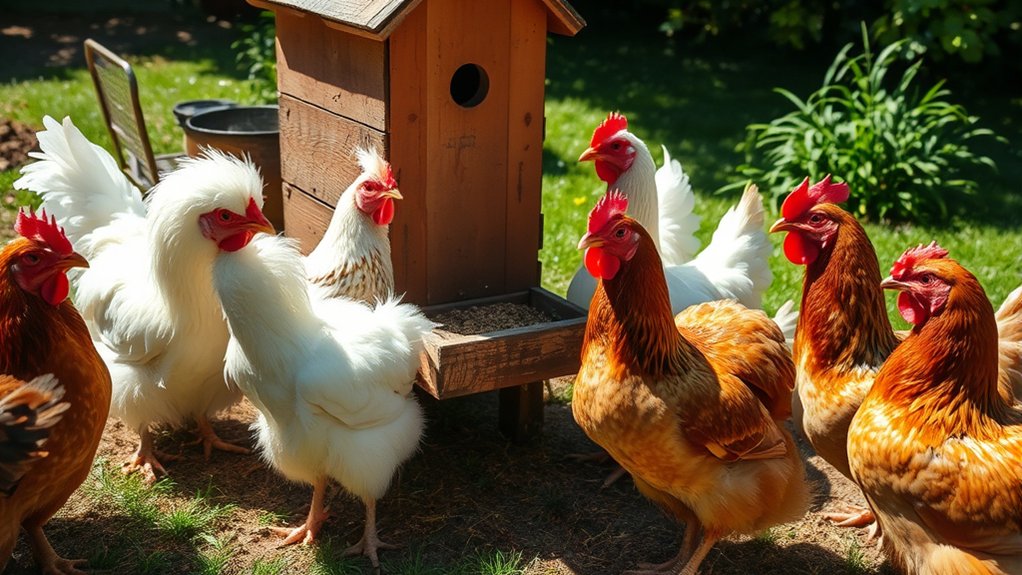
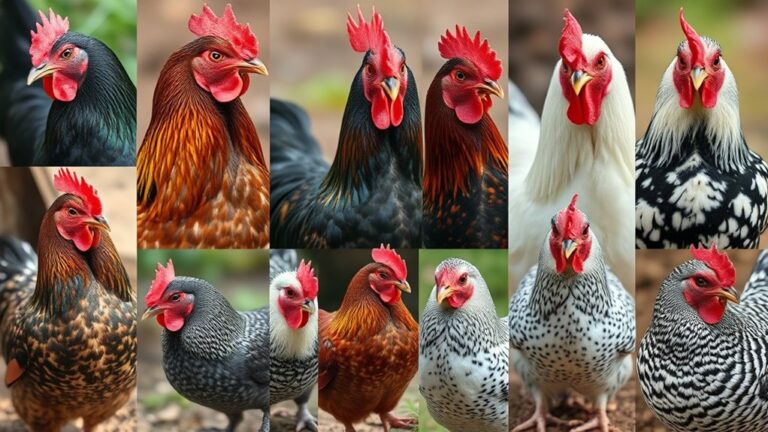
How do you pick the best chicken breed for your backyard? Start by considering the egg laying habits that suit your needs. Some breeds, like Leghorns, are prolific layers, giving you plenty of eggs almost daily. Others, such as Orpingtons, lay fewer eggs but are known for their friendly temperament.
Next, think about feather color variations. You might prefer breeds with vibrant plumage like Easter Eggers, which sport unique green or blue eggs and colorful feathers, adding charm to your flock. Also, certain breeds adapt better to your climate and space, so factor that in.
By focusing on egg production and feather color variations, you’ll select a breed that balances practicality and aesthetics. This way, you ensure your backyard chickens thrive and bring joy. Remember, the right breed aligns with your goals, whether that’s fresh eggs, pet companionship, or both.
Choose wisely, and you’ll enjoy raising chickens from day one.
Set Up a Safe and Comfortable Chicken Coop
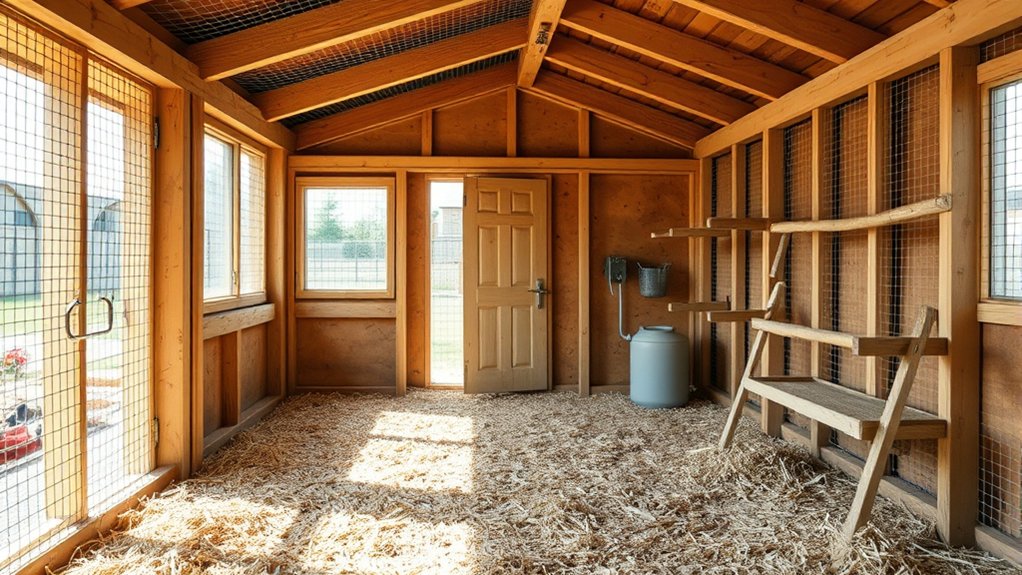
You’ll want to pick a spot for your coop that’s dry, well-drained, and safe from predators. It’s really important to find a location that keeps your chickens protected. Also, make sure the coop has good ventilation so the air stays fresh inside. You don’t want your flock feeling stuffy or overheated.
Next, secure fencing is a must. This will help keep out any unwanted visitors, like raccoons or foxes. Plus, give your chickens enough space to move around comfortably. When they have room to roam, they’re happier and healthier every day.
Coop Location Selection
Choosing the right spot for your chicken coop is essential to keep your birds safe and comfortable. First, pick a location with good drainage to avoid dampness, which can cause health issues.
Look for an area that gets morning sunlight but offers shade during the hottest part of the day to keep chickens comfortable. Integrate your coop near your garden to make feeding easier and use chicken droppings as natural fertilizer.
For predator management, avoid placing the coop near dense brush or woodpiles where animals can hide. Make sure it’s visible from your home so you can monitor your flock regularly.
Finally, choose a level, accessible spot to simplify daily care and cleaning. These steps help you create a secure, harmonious environment for your chickens.
Essential Coop Features
Although selecting the right location sets the foundation, equipping your chicken coop with essential features guarantees your flock stays safe, healthy, and comfortable. Start with sturdy, predator-proof walls and secure locks to protect your chickens.
Provide proper ventilation to prevent moisture buildup, which supports feather grooming and keeps your birds healthy. Include nesting boxes placed off the ground for easy egg collection techniques, making daily routines smoother.
Install perches for roosting, encouraging natural behaviors that aid in feather grooming. Guarantee the coop has easy access for cleaning and egg gathering to maintain hygiene and efficiency.
Set Up Proper Chicken Feeding and Watering Stations
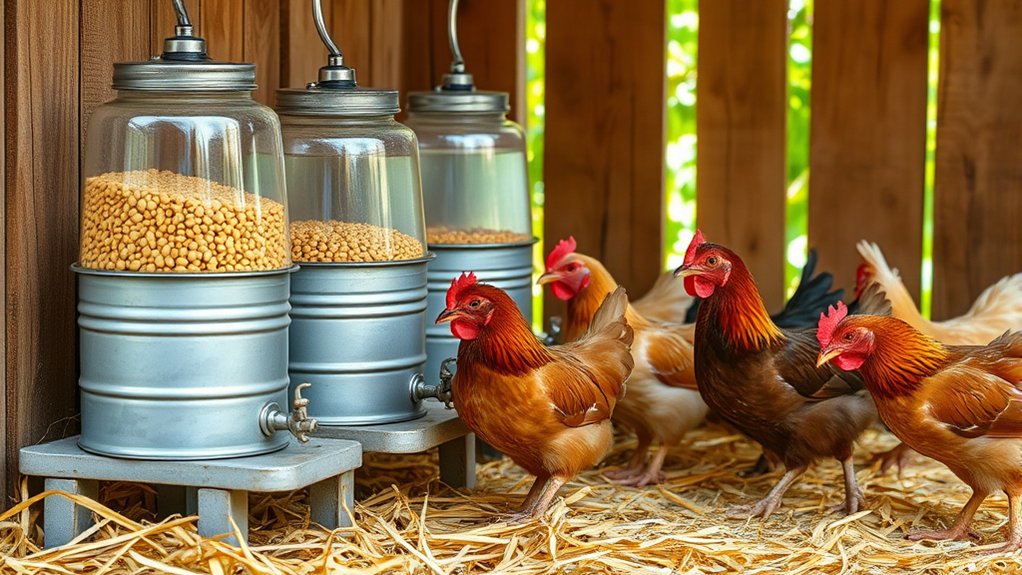
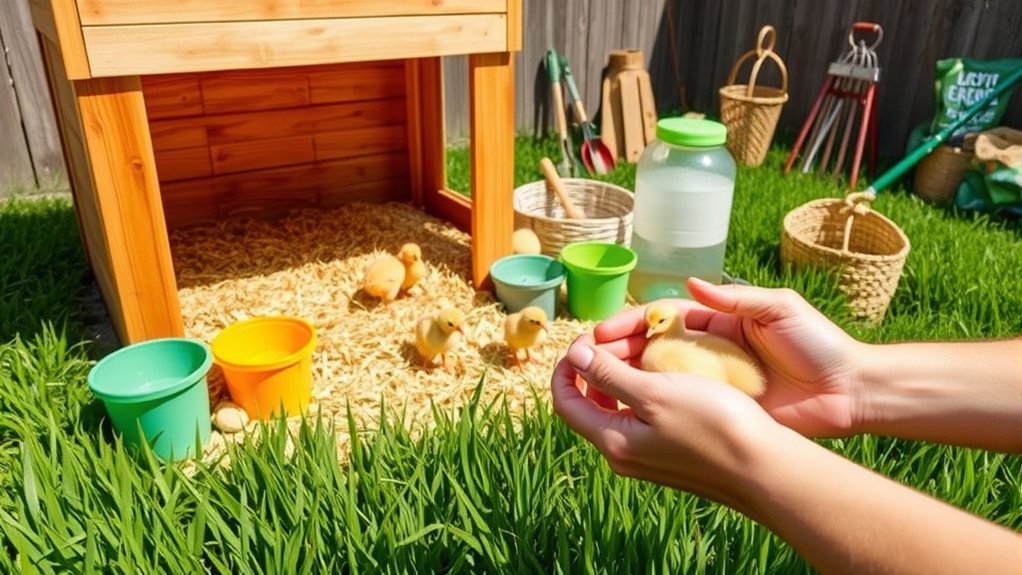
Now that your coop is ready, it’s time to pick out the right feeders and waterers for your chickens. You’ll want equipment that’s easy to clean and keeps their food and water fresh. After all, providing constant access to clean water is super important for their health and growth.
Choosing Feeding Equipment
When setting up your chicken coop, selecting the right feeding and watering equipment guarantees your flock stays healthy and well-nourished. Choose feeders that minimize waste and contamination, like gravity feeders or troughs with protective covers.
Consider the size of your flock to guarantee the equipment accommodates their needs without overcrowding. Align your feeding equipment with your feeding schedule, making it easy to refill and monitor.
Don’t forget to include containers for supplementary treats, which boost nutrition and keep your chickens engaged. Use durable, easy-to-clean materials to maintain hygiene and prevent mold or bacteria buildup.
Proper placement of feeders helps reduce pecking order stress and guarantees every chicken has access. Thoughtful choices in feeding equipment set a strong foundation for your flock’s health and happiness.
Ensuring Clean Water Access
How often do you check your chickens’ water supply to guarantee it’s clean and fresh? Proper hydration is essential for their health, so hydration monitoring should be a daily habit.
You need to set up watering stations that are easy to clean and refill, preventing contamination. Regular water quality testing ensures no harmful bacteria or chemicals affect your flock. Follow these steps to maintain clean water access:
- Choose durable, easy-to-clean waterers to reduce algae and debris buildup.
- Refill waterers with fresh water at least twice daily.
- Test water quality weekly using simple test kits to check pH and contaminants.
- Position watering stations in shaded, accessible areas to keep water cool and encourage drinking.
Staying consistent with these practices supports your chickens’ well-being and productivity.
Build a Daily Chicken Care Routine
Although raising chickens might seem simple, building a daily care routine guarantees your flock stays healthy and productive. Start by establishing consistent feeding schedules. Offer fresh feed twice a day to keep your chickens energized and prevent overeating.
A consistent daily care routine is key to keeping your chickens healthy and productive.
Check their water supply regularly, ensuring it’s clean and refilled. Next, inspect the coop and run for any signs of damage or gaps where predators might enter. While full predator prevention measures come later, your daily routine should include quick checks to spot potential vulnerabilities early.
Collect eggs daily to encourage hens to lay regularly and maintain cleanliness. Also, observe your chickens’ behavior and appearance for any signs of illness or stress. By sticking to this routine, you’ll catch issues early and foster a thriving environment.
Keeping it simple but consistent helps you manage your flock efficiently and enjoy the benefits of healthy, happy chickens.
Keep Your Chickens Safe From Predators and Illness
Regularly checking your coop and observing your chickens’ health sets the stage for protecting them from predators and illness. Effective predator prevention and illness management go hand in hand to keep your flock safe and thriving. To achieve this, focus on these essential steps:
- Secure the Coop: Use sturdy wire mesh and ensure all openings are covered to block predators like raccoons and foxes.
- Maintain Cleanliness: Regularly clean bedding and feeding areas to reduce disease risks and pests.
- Provide Safe Roosting: Elevate roosts and close the coop at night to protect chickens from nighttime predators.
- Monitor Nutrition: Offer balanced feed and clean water to boost your chickens’ immune systems, which helps with illness management.
How to Spot When Your Chickens Aren’t Feeling Well
You’ll want to keep an eye out for common illness symptoms like sneezing, lethargy, or changes in droppings. And if you notice your chickens acting differently—maybe they’re less active, avoiding food, or isolating themselves—that’s a sign something might be off. Catching these behavioral changes early can really help you take quick action to keep your flock healthy.
Common Illness Symptoms
When your chickens show changes in behavior or appearance, it’s often a sign they’re feeling unwell. Catching common illness symptoms early can prevent serious issues like mite infestations and egg binding.
Here are four key symptoms to watch for:
- Feather loss or excessive scratching. This often signals mite infestations, which cause discomfort and stress.
- Lethargy or reduced movement. Sick chickens may isolate themselves or rest more than usual.
- Swollen abdomen or straining. These signs point to egg binding, a serious condition needing prompt attention.
- Changes in droppings. Diarrhea or unusual color can indicate infections or digestive problems.
Behavioral Changes To Watch
Noticing changes in your chickens’ behavior can give you early clues about their health before physical symptoms appear. Pay close attention to their behavioral development and social interactions, as disruptions often signal trouble.
If a chicken suddenly isolates itself, stops engaging with the flock, or shows decreased activity, these can be red flags. Also, watch for changes in feeding habits or unusual vocalizations.
Healthy chickens usually have consistent routines and social patterns, so any deviation is worth investigating. By observing these behavioral shifts early, you can act quickly to address potential health issues, preventing them from worsening.
Staying attuned to your chickens’ normal behavior helps you spot illness before it becomes obvious, ensuring they stay healthy and productive.
How to Collect and Store Fresh Eggs
Although collecting eggs might seem straightforward, doing it properly guarantees they stay fresh and safe to eat. Using effective egg collection techniques assures you handle eggs gently to avoid cracks and contamination. Once collected, knowing the right egg storage methods helps maintain their quality.
Follow these simple steps:
- Collect eggs at least twice daily to prevent dirt buildup and breakage.
- Use a clean basket lined with a soft cloth when gathering eggs to cushion them.
- Avoid washing eggs immediately; instead, clean them just before use to preserve the natural protective coating.
- Store eggs with the pointed end down in a cool, consistent temperature, ideally in the refrigerator.
Manage Waste and Keep the Coop Clean
Keeping your eggs fresh starts with maintaining a clean environment in your coop. Proper waste management reduces odors and prevents disease. Regularly clean bedding and remove droppings to keep the coop sanitary.
Guarantee good coop ventilation to control humidity and ammonia buildup. This helps your chickens stay healthy.
Compost management plays a crucial role. You can turn waste into valuable fertilizer instead of letting it pile up.
Collect manure and soiled bedding, then compost it in a well-ventilated area away from the coop.
Here’s a simple routine for maintaining cleanliness:
| Task | Frequency | Key Tip |
|---|---|---|
| Clean bedding | Weekly | Use absorbent materials |
| Remove manure | 2-3 times/week | Add to compost pile |
| Check ventilation | Daily | Ensure airflow is clear |
Stick to this plan, and your coop will remain fresh and comfortable for your flock.
Handle Chickens Safely and Build Their Trust
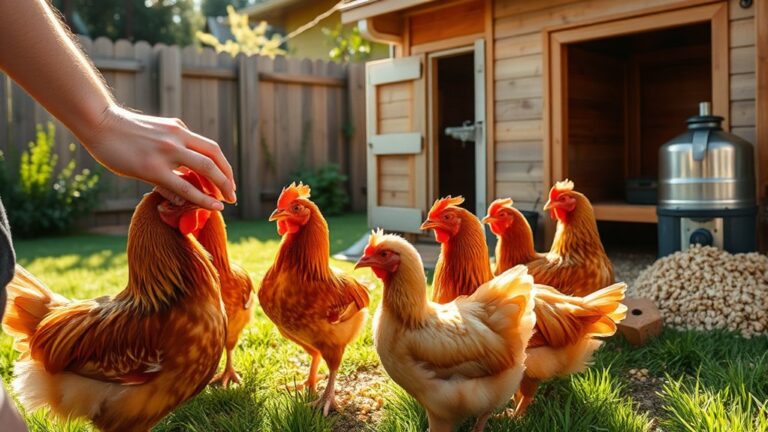
When you handle chickens gently and consistently, they’ll become more comfortable around you and less likely to stress. Building trust takes patience, but it makes caring for your flock easier and more rewarding. Follow these steps to ensure safe handling and strong bonds:
- Approach calmly and quietly to avoid startling them.
- Use slow movements when picking them up, supporting their body securely.
- Spend time near the coop daily, talking softly to get them used to your presence.
- Offer treats by hand to create positive associations with you.
Handling chickens regularly helps them recognize you as a safe friend rather than a threat. Avoid sudden actions and loud noises that can cause fear. By building trust, you’ll find your chickens more cooperative during health checks and easier to manage overall.
Prepare Your Coop for Seasonal Changes
As the seasons shift, you’ll need to adjust your coop to protect your chickens from changing weather conditions. Start by checking the coop insulation to verify it keeps your flock warm during colder months without trapping moisture, which can cause respiratory issues. Proper ventilation is key; fresh air prevents dampness but avoid drafts that chill your birds.
During the seasonal molt, chickens are more vulnerable, so a cozy, draft-free environment helps them focus on regrowing feathers. In warmer months, provide shade and increase airflow to keep the coop cool. Consider adding removable panels or windows to adapt the coop easily throughout the year.
Also, deep clean the coop regularly to prevent parasites and diseases, especially after molting when your chickens’ immune systems may weaken. By preparing your coop thoughtfully for each season, you create a safe and comfortable home that supports your chickens’ health and productivity year-round.
Frequently Asked Questions
How Much Space Do Chickens Need to Roam Outside the Coop?
You should provide at least 8 to 10 square feet per chicken for outside roaming to support their natural roosting behavior and allow them to stretch and forage comfortably. This space helps reduce stress and encourages healthy habits.
Make sure the area has proper predator protection, like secure fencing and covered runs, so your chickens can roam safely without risking attacks while they’re out of the coop.
Can Chickens Be Raised in an Urban Apartment Setting?
Yes, you can raise chickens in an urban apartment, even if you think space is tight. Indoor coops designed for small areas make it manageable.
You’ll just need to stick to consistent feeding routines and maintain cleanliness to keep your feathered friends healthy and happy. With proper ventilation and regular care, your chickens will thrive despite the limited space.
This way, you can enjoy fresh eggs right at home without a backyard.
What Are the Legal Regulations for Keeping Chickens in Residential Areas?
You’ll need to check local zoning laws and ordinances before keeping chickens in residential areas. Some places limit flock size or prohibit roosters due to noise.
Ensuring your coop design meets these regulations helps maintain chicken health by providing proper ventilation and space. Staying compliant protects your flock and neighborhood.
Don’t forget to register your chickens if required and follow any guidelines on waste disposal or coop placement to avoid legal issues.
How Do Chickens Impact Local Wildlife and the Environment?
You might be surprised how chickens impact your local environment. While they can cause wildlife disruption by disturbing native animals and insects, they also offer environmental benefits like natural pest control and soil enrichment.
What Are the Best Practices for Introducing New Chickens to an Existing Flock?
You should introduce new chickens slowly to prevent rooster behavior issues and feather pecking. Start by quarantining newcomers for at least two weeks to monitor health.
Then, let them see the existing flock through a barrier to get used to each other. Gradually allow supervised mingling, watching for aggression or bullying.
Providing plenty of space, perches, and distractions helps reduce stress and feather pecking, ensuring a smoother integration for everyone.
Conclusion
Starting your chicken-raising journey might seem intimidating, but with these 10 essential steps, you’re ready to create a happy, healthy flock. Imagine opening your coop each morning to the gentle cluck of content hens and fresh eggs waiting for you.
Isn’t that a rewarding way to start your day? By choosing the right breed, keeping their environment safe, and caring for them daily, you’ll enjoy the many benefits of raising chickens with confidence and joy.
Following these 10 essential steps will help you build a thriving flock and make raising chickens a truly fulfilling experience.