How Do You Raise Chickens in 5 Essential Steps?
If you’re thinking about raising chickens but feel overwhelmed by all the details, you’re not alone. Many people struggle to know where to start or how to keep their flock healthy and happy. Whether it’s choosing the right breeds or managing daily care, it can feel like a lot to handle at first.
To raise chickens successfully, start by choosing breeds that suit your goals and climate. Next, set up a secure, well-ventilated coop with enough space and nesting spots. Keep your flock healthy by inspecting regularly for pests and maintaining cleanliness.
Feed them fresh food twice daily and provide clean water. Finally, collect eggs daily and maintain a consistent care routine. Follow these steps, and you’ll be on your way to managing a happy, productive flock with ease.
Key Takeaways
- Choose chicken breeds suited to your goals, climate, and space. Think about whether you want eggs, meat, or both.
- Build a secure, well-ventilated coop with enough indoor and outdoor space. Include nesting boxes and roosting bars for comfort.
- Keep your chickens healthy by cleaning the coop regularly, checking for pests, and using safe treatments when needed.
- Give them fresh, balanced feed twice a day and clean water daily. Use spill-proof feeders and waterers to keep things tidy.
- Collect eggs every day, watch your flock’s health, clean the bedding, and stick to a consistent care routine.
Choose the Right Chicken Breeds
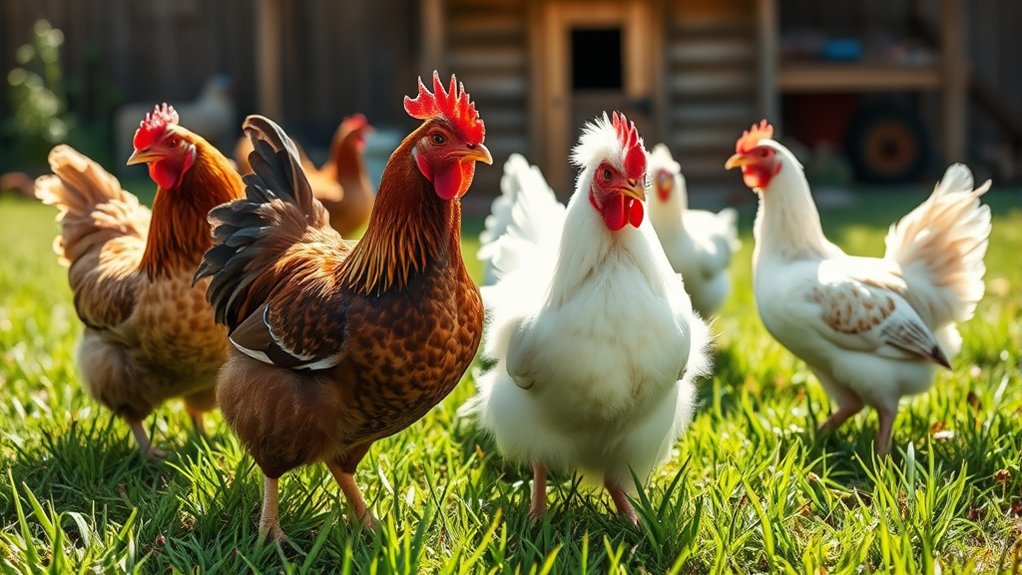
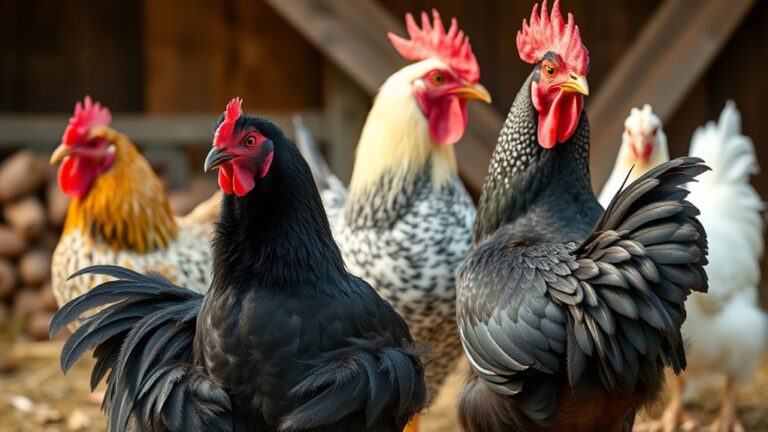
Before you start raising chickens, you need to choose the right breeds that fit your goals and environment. Successful chicken breeding begins with smart breed selection. Are you after eggs, meat, or dual-purpose birds? Different breeds excel in different areas. For example, Leghorns are prolific egg layers, while Cornish Crosses are favored for meat.
Consider your climate, too. Some breeds handle cold better, like Plymouth Rocks, while others thrive in warmer regions. You’ll also want to think about temperament, space, and noise levels, especially if you live in a suburban area.
Research each breed’s needs and characteristics thoroughly before deciding. This helps you avoid surprises and ensures the chickens you raise are well-suited to your lifestyle and goals. By focusing on intentional breed selection in your chicken breeding process, you set a solid foundation for a healthy, productive flock.
Set Up a Safe, Comfortable Coop
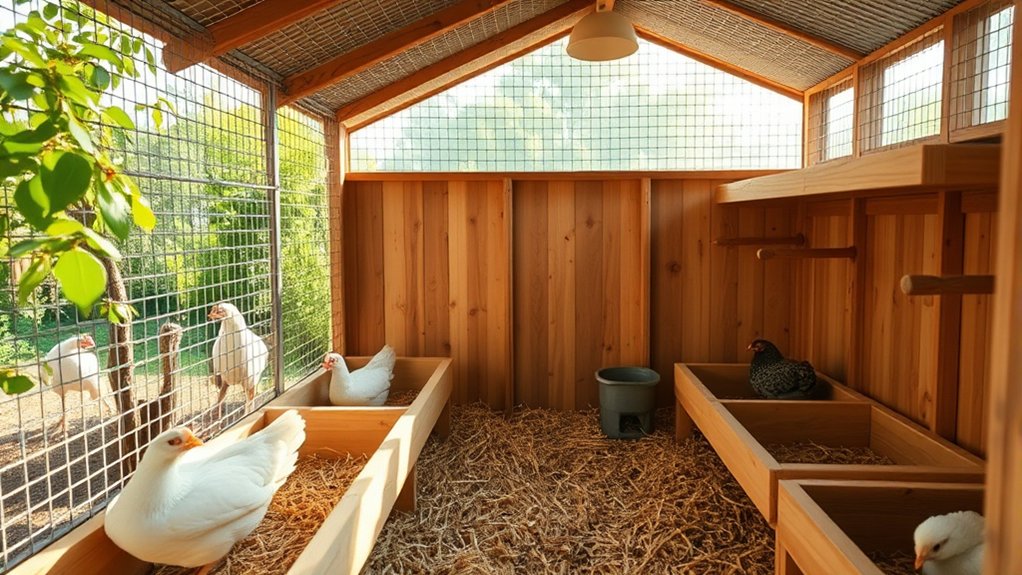
Although choosing the right breeds is essential, creating a safe, comfortable coop is what keeps your chickens healthy and happy every day. Start by selecting a well-ventilated design to guarantee proper coop ventilation. Fresh air reduces moisture and ammonia buildup, preventing respiratory issues.
Make certain the coop has enough space, about 3-4 square feet per chicken indoors and 8-10 square feet outside, to avoid overcrowding.
For predator protection, reinforce the coop with sturdy wire mesh around windows and runs. Bury fencing at least 12 inches underground to deter digging predators, and secure doors with reliable locks.
Lift the coop off the ground to reduce dampness and discourage pests. Provide cozy nesting boxes and roosting bars inside to mimic natural habits.
Maintain Chicken Health and Control Common Pests

A well-built coop lays the foundation, but keeping your chickens healthy requires ongoing attention to their well-being and protection from pests. You’ll want to focus on these essential steps:
- Predator prevention: Secure your coop with strong locks, hardware cloth, and buried fencing to keep predators like raccoons and foxes out. Check regularly for weak spots or holes.
- Bedding management: Use clean, dry bedding such as straw or wood shavings, and replace it frequently. Proper bedding reduces moisture and ammonia buildup, preventing respiratory issues and discouraging parasites.
- Pest control: Routinely inspect your flock for mites, lice, and other pests. Use safe treatments and maintain coop cleanliness to minimize infestations.
Feed Your Chickens and Keep Water Fresh
How often should you feed your chickens and change their water? You should provide fresh feed twice a day and replace water at least once daily to keep your flock healthy. Clean water prevents the spread of diseases, making treating chicken illnesses easier if they arise.
Always use feeders and waterers that minimize spillage and contamination to avoid attracting pests or predators. Preventing predator attacks involves securing feeding areas. Don’t leave food out overnight, as it can lure unwanted visitors.
Offering a balanced diet with grains, protein, and occasional treats boosts immunity and helps your chickens resist illnesses naturally. Regularly clean feeding and watering equipment to stop bacteria buildup.
If you notice signs of illness, adjust feed and water promptly and consult a vet. By carefully managing feeding and hydration, you maintain a safe environment that supports your chickens’ health and reduces risks from predators and disease.
Collect Eggs and Manage Your Flock’s Daily Routine
Once you establish a feeding schedule, collecting eggs daily becomes an essential part of managing your flock’s routine. Using effective egg collection techniques guarantees you gather fresh eggs promptly, preventing damage and discouraging hens from broodiness.
Combine this with daily flock monitoring to keep your chickens healthy and happy.
Here’s a simple approach to manage your daily routine:
- Check nesting boxes every morning, gently collecting eggs and inspecting for cleanliness.
- Observe your chickens’ behavior and appearance for signs of illness or stress.
- Clean the coop as needed, removing droppings and revitalizing bedding to maintain a sanitary environment.
Frequently Asked Questions
How Do Chickens Communicate With Each Other?
You’ll notice chickens communicate through clucks, calls, and body language to express feelings or warnings. Their feather color can signal health or mood, helping you understand their status.
They also establish a pecking order by pecking or posturing, which keeps their social structure clear. By paying attention to these cues, you can better interpret their social interactions and guarantee a harmonious flock environment.
Can Chickens Recognize Human Faces?
You’d think chickens have photographic memories rivaling the greatest minds because yes, they can recognize human faces! This skill helps them navigate their social hierarchy and remember who feeds them, linking faces to feeding habits.
When you interact consistently, they pick up on your cues, distinguishing you from strangers. So, if you’re part of their daily routine, they’ll definitely know you, making your bond stronger and their behavior more predictable.
What Is the Lifespan of a Backyard Chicken?
You can expect your backyard chicken to live around 5 to 10 years, depending on breed selection and care. Some heritage breeds live longer but may have lower egg production.
If you choose high-producing breeds like Leghorns, their peak egg-laying years might be shorter. Proper nutrition, shelter, and health care will extend their lifespan and keep egg production steady.
How Do Chickens Affect Garden Pest Control?
Chickens boost your garden’s natural pest control by eating insects, grubs, and larvae that damage plants. By foraging, they reduce harmful pests without chemicals, helping maintain a balanced garden ecosystem.
Their scratching also aerates soil, promoting healthier plant growth. You’ll notice fewer bugs and stronger plants, making chickens a valuable part of your garden ecosystem benefits.
Just manage their access to avoid over-foraging and protect delicate plants.
What Are Common Chicken Behaviors to Watch For?
Did you know that about 20% of chickens show broody behavior, where they sit on eggs to hatch them? When watching your flock, keep an eye out for feather pecking, which can signal stress or boredom.
You’ll also notice broody hens becoming protective and less active. By spotting these behaviors early, you can manage your chickens’ health and comfort better, ensuring a happy, productive flock.
Conclusion
Raising chickens can be rewarding and surprisingly simple when you follow these five essential steps. Did you know backyard chicken keeping has grown by over 20% in the last five years? That shows more people are uncovering the joy of fresh eggs and happy hens.
By choosing the right breeds, creating a secure coop, maintaining health, feeding properly, and managing daily care, you’ll enjoy a thriving flock and fresh eggs right at home. Give it a try and experience the benefits of raising chickens for yourself!