5 Essential Tips for Taking Care of a Chicken
If you’ve ever tried raising chickens, you know it’s not always as simple as it looks. Many people struggle with keeping their flock healthy and happy while managing all the daily tasks. You’re not alone—caring for chickens takes some know-how and a bit of effort, but it’s definitely rewarding.
To care for your chickens well, start by building a secure, well-ventilated coop with comfy roosts that protect from predators and harsh weather. Keep an eye on their health by checking regularly and maintaining cleanliness to prevent illness.
Feed them balanced feed with fresh water daily, adding treats carefully. Handle them gently to build trust and reduce stress. Collect eggs often and keep nests cozy for steady laying.
Stick with these basics, and you’ll find plenty more ways to keep your flock happy and healthy.
Key Takeaways
- Provide a secure, well-ventilated coop with enough roosting space. Make sure it’s protected from predators.
- Keep the coop clean and check on your chickens’ health regularly. This helps prevent illness and stops diseases from spreading.
- Feed them balanced commercial feed and always offer fresh water. You can give safe treats, but only in moderation.
- Handle your chickens gently and consistently. This builds trust and helps keep them calm.
- Collect eggs often and keep nest boxes clean. Also, make sure hens have good nutrition and a comfortable environment.
Setting Up a Safe and Comfortable Chicken Coop
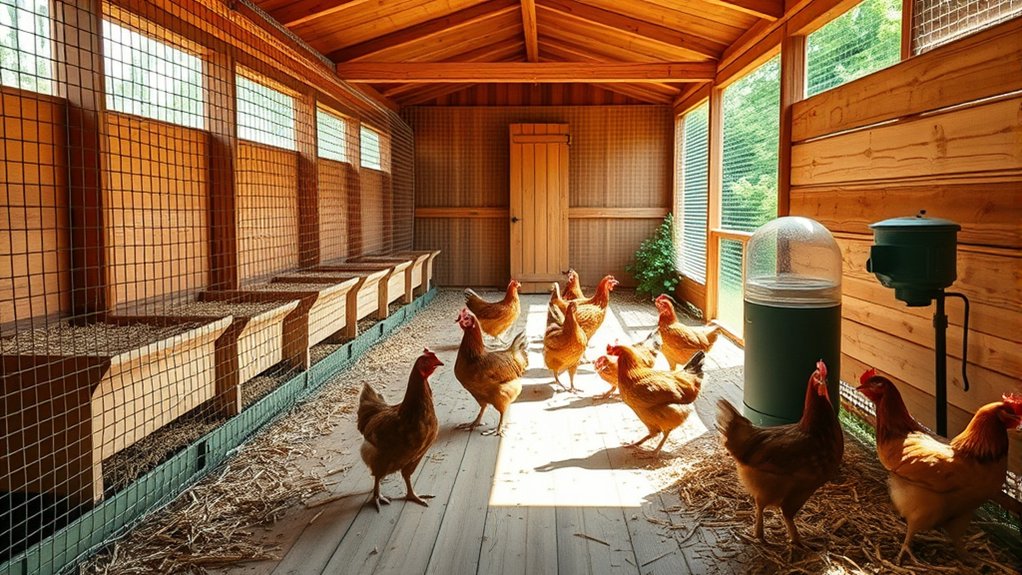
Before you bring your chickens home, you need to set up a safe and comfortable coop that protects them from predators and harsh weather. Start by choosing a sturdy structure with secure locks and no gaps where predators can enter.
Make sure the coop offers enough roosting space. Each chicken needs about 8 to 10 inches of roost to perch comfortably at night. Proper roosting space helps them rest well and stay healthy.
Coop ventilation is just as crucial. Good airflow prevents moisture buildup and reduces the risk of respiratory issues. Install vents near the roof to allow fresh air in while keeping drafts away from your chickens.
Avoid placing the coop in direct wind paths but ensure air circulates freely. With these basics in place, your chickens will enjoy a safe environment that supports their wellbeing every day.
Preventing Common Chicken Illnesses and Promoting Health
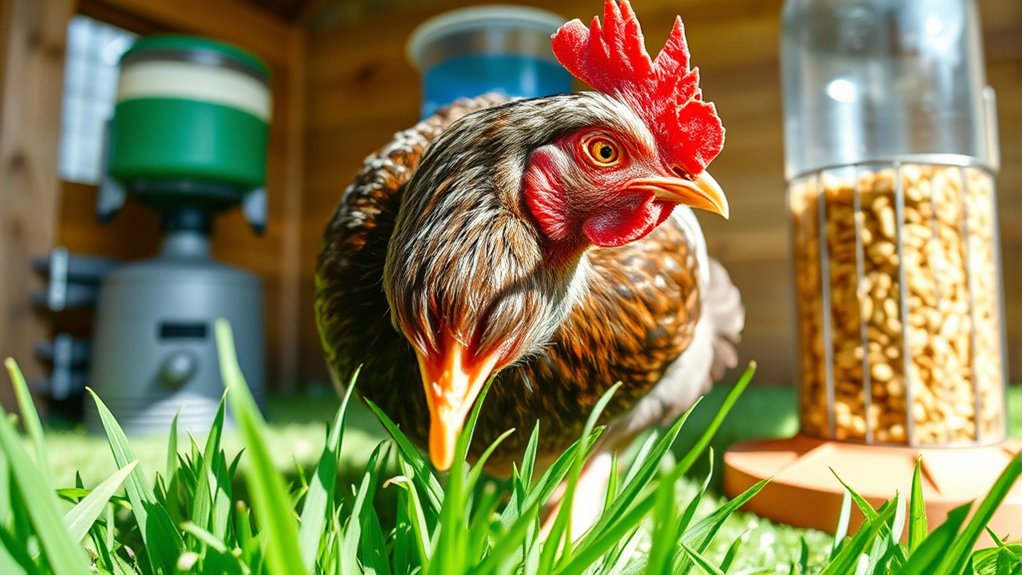
Though keeping a secure coop is essential, you also need to actively monitor your chickens for signs of illness and maintain a clean environment to prevent common diseases. Regularly check for symptoms like lethargy, loss of appetite, or unusual droppings.
Implement strict biosecurity measures, such as limiting visitors, disinfecting equipment, and quarantining new birds before introducing them to your flock. These steps reduce the risk of spreading pathogens.
Strict biosecurity, including visitor limits and quarantining new birds, is key to preventing disease spread.
Follow recommended vaccination protocols to protect your chickens against prevalent diseases like Marek’s disease and Newcastle disease. Consult a veterinarian to tailor a vaccination schedule suited to your flock’s needs.
Keep the coop dry and well-ventilated, and clean it frequently to minimize bacteria and parasites. By staying proactive with health monitoring, hygiene, and vaccinations, you’ll create a strong defense against illness and promote a thriving, healthy flock.
Feeding Your Chickens for Optimal Health
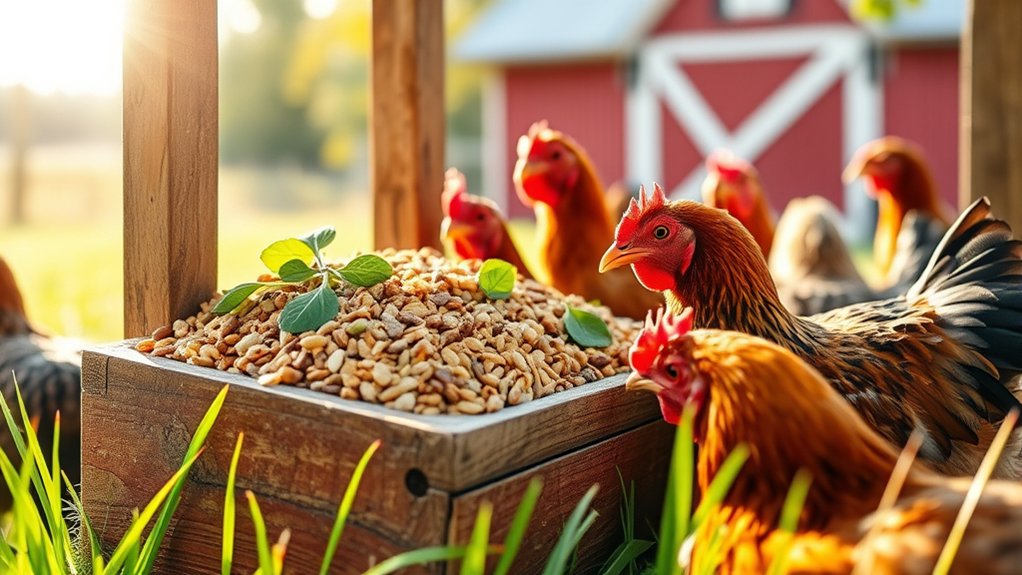
Maintaining your chickens’ health doesn’t stop at a clean coop and vaccinations; their diet plays a major role in keeping them strong and productive. You need to provide a feed that guarantees nutritional balance, supplying essential proteins, vitamins, and minerals.
A well-formulated commercial feed usually covers these needs, but you should adjust it based on your chickens’ age and purpose, such as laying or meat production.
Don’t forget to offer fresh water daily, as hydration supports digestion and overall health. Supplementary treats like kitchen scraps, grains, or garden greens can boost their diet, but keep these treats moderate to avoid nutritional imbalance.
Avoid feeding anything toxic or moldy. By managing their feeding carefully, you’ll help your chickens maintain energy, support egg production, and strengthen their immune systems, ensuring they thrive in your care.
Handling and Socializing Your Chickens
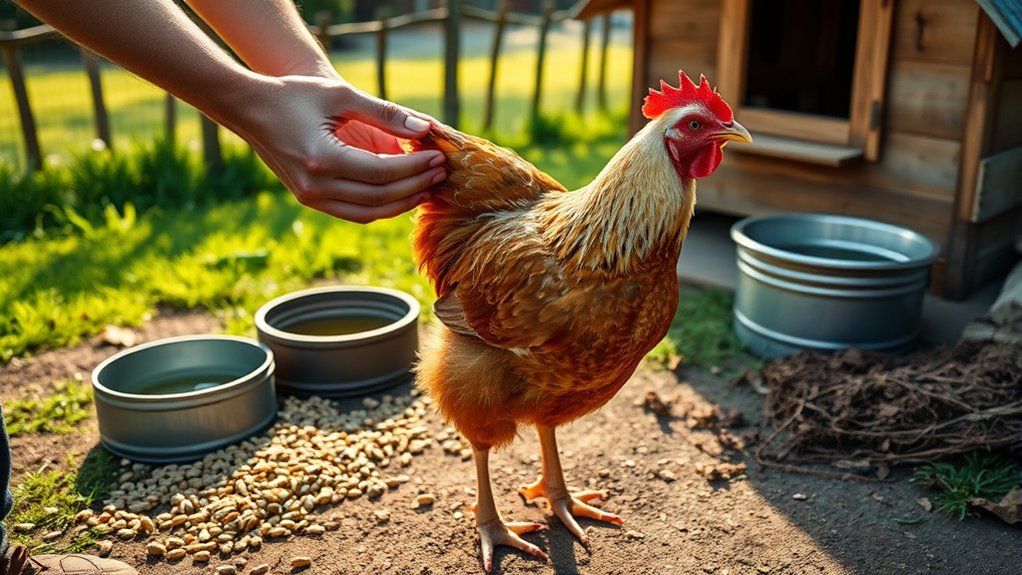
When you regularly handle and socialize your chickens, they become more comfortable around you and less stressed, which makes daily care easier. Start by gently holding them for short periods and speaking softly to build trust. This helps with chicken grooming tasks like inspecting feathers and trimming nails without causing anxiety. Socializing also allows you to spot health issues early.
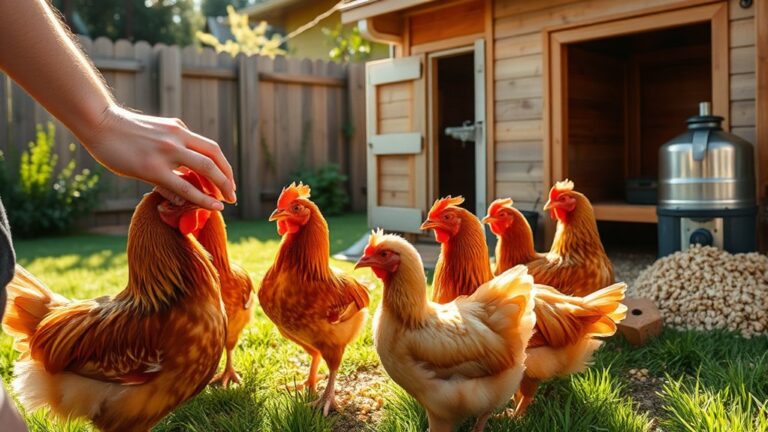
Spend time interacting daily and offer treats by hand to encourage positive associations. Remember, calm and consistent handling reduces fear, making predator protection measures more effective since calm chickens respond better during threats.
Avoid sudden movements and loud noises during interactions to maintain their trust. Gradually introduce new environments or other flock members to prevent stress. By investing time in handling and socializing, you create a bond that simplifies grooming and strengthens your chickens’ overall well-being, ensuring they stay healthy and safe from predators.
Managing Chicken Egg Laying and Collection
How can you guarantee a steady supply of fresh eggs while keeping your chickens comfortable? Managing chicken egg laying and collection effectively starts with establishing consistent egg collection routines. This not only assures you gather eggs before predators or pests find them but also encourages hens to lay in designated nest boxes.
To keep your hens happy and productive, focus on these key points:
- Egg collection routines: Collect eggs at least twice daily to prevent damage and discourage brooding behavior.
- Nest box maintenance: Keep nest boxes clean, dry, and well-bedded with straw or wood shavings to promote regular laying.
- Monitor hen health and environment: Secure hens have proper nutrition, lighting, and minimal stress for ideal egg production.
Frequently Asked Questions
How Do I Choose the Best Chicken Breed for My Climate?
You should pick a chicken breed that thrives in your climate by researching heat or cold tolerance. For hot areas, choose breeds like Leghorns that handle heat well and need good coop ventilation to stay comfortable.
In colder climates, hardy breeds like Orpingtons suit you better. Remember, your chicken diet must support their energy needs in different temperatures, so adjust feed accordingly to keep them healthy and thriving.
What Are Signs of Molting in Chickens?
You’ll notice feather shedding, less energy, and decreased egg production when your chicken is molting. You’ll see bare patches where feathers used to be, and your chicken might fluff up more to help with temperature regulation.
You’ll also spot dull, brittle feathers and increased preening. Knowing these signs helps you support your chicken through this natural process, ensuring she stays comfortable and healthy until her new feathers grow back strong.
Can Chickens Be Trained to Return to the Coop at Night?
Yes, you can train chickens to return to the coop at night by establishing consistent feeding routines. Chickens naturally follow social behaviors, so feeding them inside the coop at the same time daily encourages them to come back.
Use treats to reward them when they enter the coop, reinforcing the habit. Over time, they’ll associate the coop with food and safety, making it easier for you to gather them before dark.
How Do I Protect Chickens From Predators at Night?
To protect your chickens from predators at night, install predator-proof fencing around their coop and run. Use hardware cloth instead of chicken wire, since it’s tougher and harder to breach. Make sure the fencing extends underground to prevent digging.
Improve nighttime security by locking the coop securely and using automatic doors if possible. Motion-activated lights or alarms can also deter predators, giving your chickens a safer, more peaceful night.
What Is the Lifespan of a Typical Backyard Chicken?
Typically, your backyard chicken can live between 5 to 10 years. During this time, you’ll enjoy egg production peaking in the first few years, but with proper feather care and nutrition, they stay healthy and happy longer.
Keep their coop clean, provide balanced feed, and watch their feathers for signs of stress or illness. With consistent care, your clucky companion will thrive well beyond just a couple of seasons.
Conclusion
Taking care of chickens might seem like a lot of work, but once you get the hang of it, it’s a walk in the park. By setting up a safe coop, keeping your chickens healthy, feeding them right, and handling them gently, you’ll build a bond that’s as solid as a rock.
Remember, patience and consistency pay off. Your feathered friends will reward you with fresh eggs and endless joy when you take good care of chickens.