How Many Species of Chickens Are There?
If you’ve ever tried to choose chickens for your backyard flock, you know how overwhelming it can be to navigate the countless options out there. You’re not alone—many people struggle with understanding the differences between chicken types and breeds. It’s tough to figure out which ones will suit your needs, whether you want fresh eggs, meat, or just beautiful birds to admire.
You’re dealing with just one chicken species: Gallus gallus domesticus. Within this single species, thousands of chicken breeds exist, developed through selective breeding to highlight traits like egg production, meat quality, and feather patterns.
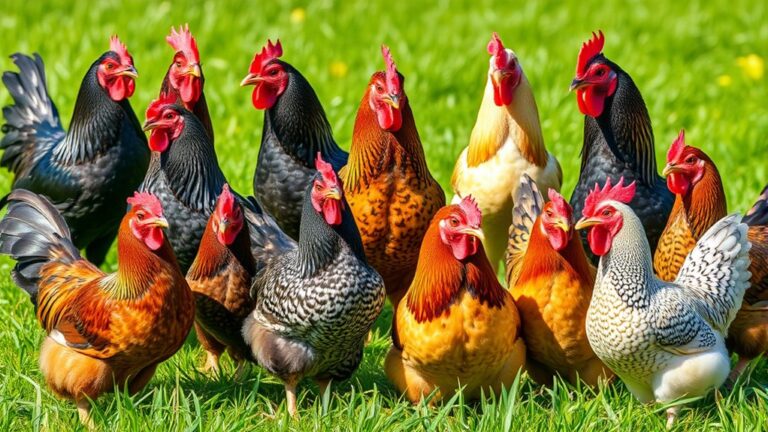
These breeds vary widely in size, temperament, and adaptability, shaped by regional climates and human needs.
Understanding this diversity and how breeds are categorized helps you pick the right chickens and appreciate their unique qualities. Keep exploring to uncover breed origins, purposes, and more.
Key Takeaways
- Chickens belong to a single species, Gallus gallus domesticus. They were domesticated from the red junglefowl.
- There are no multiple species of chickens. Instead, diversity exists at the breed level within the species.
- Over 500 recognized chicken breeds worldwide show variations created by selective breeding.
- Breeds differ in traits like egg production, meat quality, size, and feather coloration.
- Species-level genetic diversity supports survival, while breed diversity focuses on characteristics humans want.
Chicken Species vs. Breeds: What’s the Difference?
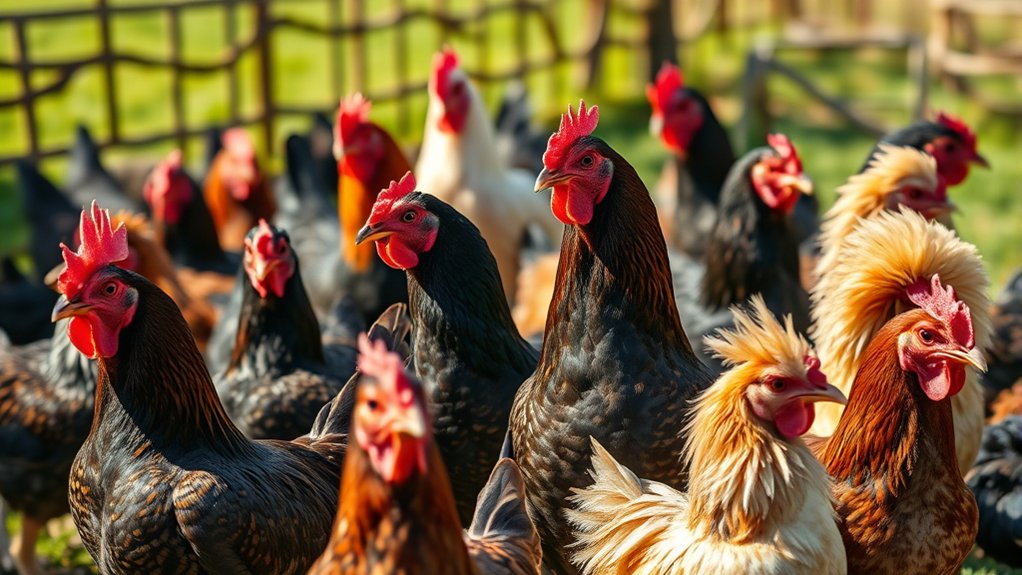
Although people often use the terms interchangeably, chicken species and breeds are quite different. When you think about species, you’re referring to large groups of chickens that share fundamental genetic traits and can interbreed naturally.
Breeds, on the other hand, are more specific categories within a species, shaped by human-driven breeding techniques. You’ll find that breeds focus on enhancing particular traits like egg production, feather color, or size.
Understanding genetic diversity is key here. Species maintain broad genetic diversity, which helps their survival and adaptability.
Breeding techniques often narrow this diversity to emphasize desired characteristics, sometimes reducing genetic variety in the process. So, when you’re talking about chicken breeds, you’re really discussing variations within a species created through selective breeding.
This distinction matters because it affects how chickens evolve and how breeders approach improving or preserving different types.
How Many Chicken Breeds Exist Worldwide?
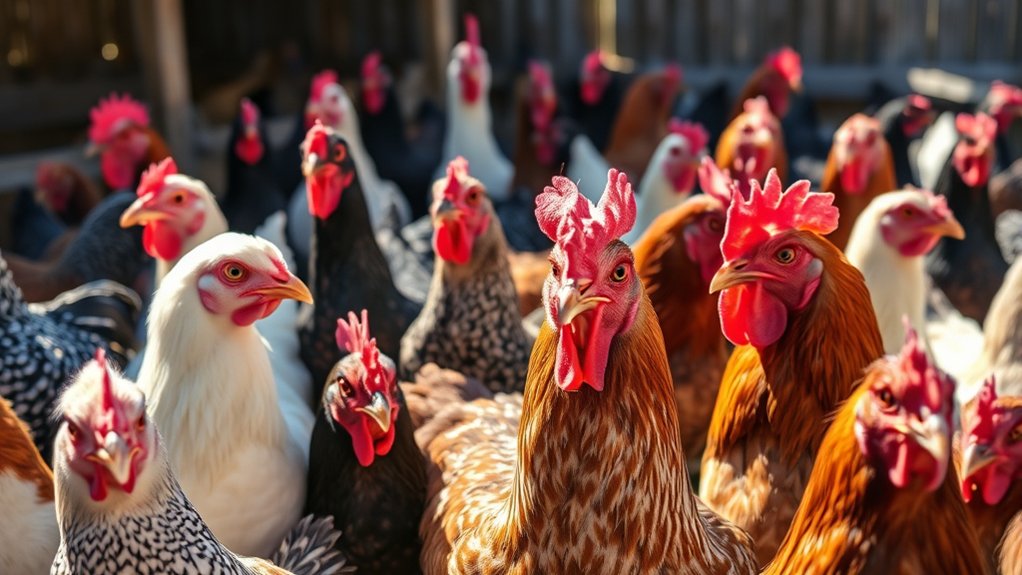
Now that you understand the difference between chicken species and breeds, you might wonder just how many breeds exist around the world. There are over 500 recognized chicken breeds globally, showcasing a remarkable range of genetic diversity. This diversity results from centuries of selective breeding techniques aimed at improving specific traits like egg production, meat quality, appearance, and behavior.
You’ll find breeds adapted to different climates and purposes, from hardy heritage breeds to highly specialized commercial lines. Breeders use controlled mating to preserve or boost desirable traits, maintaining genetic diversity while preventing inbreeding. This balance is vital for the health and resilience of chicken populations.
Where Did Different Chicken Breeds Originate?
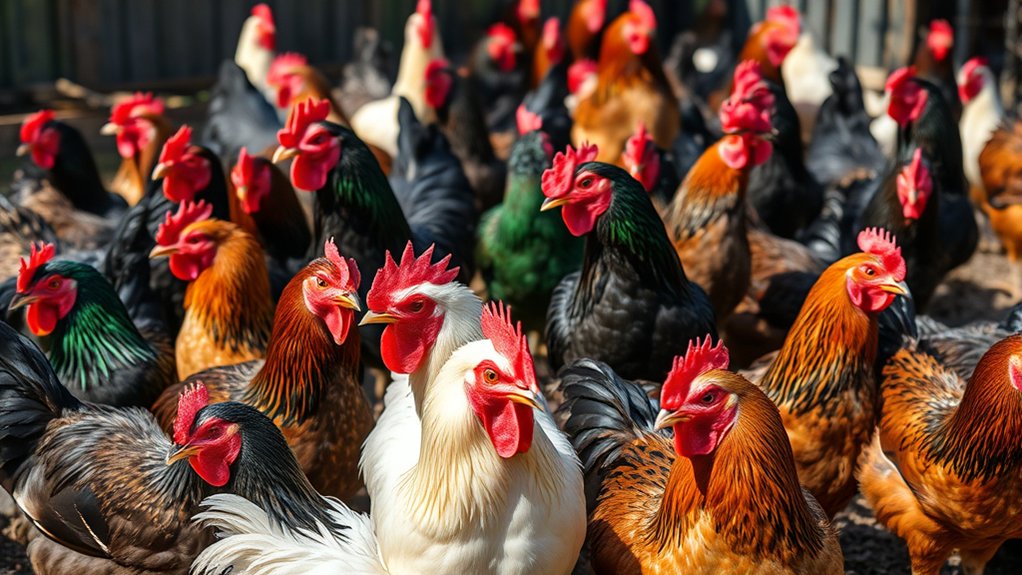
You’ll find that many chicken breeds come from specific regions all over the world. Each breed was shaped by local needs and climates, which makes their stories pretty interesting. When you understand where these breeds started, it’s easier to appreciate the history behind their unique traits. So, let’s take a look at the main places where chickens were first domesticated and how different breeds developed from these areas.
Regional Breed Origins
When you explore the origins of different chicken breeds, you’ll find they reflect the diverse environments and cultures where they were first developed. Each region’s climate, resources, and farming practices shaped unique breeds, contributing to the rich genetic diversity we see today.
This diversity is essential for adapting to changing environments and resisting diseases. By understanding where breeds like the Rhode Island Red, Leghorn, or Silkie originated, you appreciate how local conditions influenced their traits.
Conservation efforts focus on preserving these regional breeds to maintain this genetic variety. Without protecting these distinct lineages, we risk losing valuable characteristics that could be indispensable for future poultry farming. So, exploring regional breed origins helps you grasp the importance of safeguarding chicken biodiversity worldwide.
Historical Domestication Centers
Where did the first chickens come from, and how did they spread across the world? Chickens were first domesticated in Southeast Asia through ancient farming practices. People recognized their value beyond just food.
These early farmers selectively bred junglefowl, leading to diverse breeds adapted to local environments. As trade routes expanded, chickens traveled with humans. They gained cultural significance in many societies, from religious rituals to symbols of status.
You’ll find that different historical domestication centers, including China, India, and the Middle East, contributed unique breeds reflecting their distinct agricultural needs and cultural traditions. Understanding these centers helps you appreciate how varied chicken species evolved, shaped by human influence and geography. This made chickens an integral part of agriculture and culture worldwide.
How Chicken Breeds Are Grouped by Purpose
You’ll notice that chicken breeds are usually grouped by their main purpose—like egg-laying, meat production, or sometimes both. It’s helpful to understand these categories so you can pick the right breed for what you need. Let’s take a closer look at what makes each group special.
Egg-Laying Breeds
Although many chicken breeds serve multiple purposes, egg-laying breeds have been specifically developed to produce a steady supply of eggs. When you choose an egg-laying breed, you’re focusing on hens that consistently deliver high egg fertility and excellent shell quality.
These breeds, like Leghorns or Rhode Island Reds, are bred for their ability to lay large numbers of eggs with strong, durable shells that protect the contents and reduce breakage. You’ll notice that egg fertility rates are higher in these breeds, making them ideal if you want to hatch chicks.
Their shells tend to be thicker and less prone to cracking, ensuring better handling and storage. By selecting an egg-laying breed, you prioritize productivity and reliability in egg production for your flock.
Meat Production Breeds
How do you choose the best chickens for meat production? You focus on breeds specifically developed for rapid growth, high feed efficiency, and quality meat yield. These meat production breeds are the product of carefully managed breeding programs aimed at maximizing muscle development while maintaining health and robustness.
To guarantee sustainability, these programs also prioritize genetic diversity, preventing issues linked to inbreeding that can reduce productivity and resilience. By selecting breeds with strong genetic variation, breeders can improve disease resistance and adaptability.
When you pick meat production breeds, you’re choosing birds optimized for the purpose of meat, not egg-laying or other traits. This specialization helps farmers meet market demands efficiently while supporting long-term flock vitality through responsible genetic management.
Dual-Purpose Breeds
Meat production breeds excel at fast growth and muscle yield, but not every farmer needs birds specialized solely for meat. That’s where dual-purpose breeds come in. You get chickens that provide both decent meat and a steady supply of eggs.
These breeds balance traits through careful breeding techniques that maintain genetic diversity, ensuring healthy, resilient flocks. You’ll find dual-purpose breeds ideal if you want versatility without sacrificing quality.
They might not grow as rapidly as meat-only breeds or lay as prolifically as egg-focused ones, but they offer reliable performance in both areas. By choosing dual-purpose chickens, you support sustainable farming practices, as their genetic diversity helps prevent common health issues linked to inbreeding.
The Most Common Chicken Breeds and Their Traits
When you choose a chicken breed, it’s important to take into account traits like temperament, egg production, and hardiness. Common breeds such as the Rhode Island Red, Leghorn, and Plymouth Rock each offer distinct advantages. Rhode Island Reds are known for their robust nature and excellent egg-laying capabilities, while Leghorns excel in high egg production and adaptability. Plymouth Rocks are favored for their calm temperament and dual-purpose use.
Understanding genetic diversity within these breeds is vital. It helps maintain healthy populations and supports conservation efforts aimed at preserving rare or heritage breeds. By selecting from a variety of common breeds, you contribute to sustaining this diversity and reducing the risk of genetic bottlenecks.
When you pick a breed, consider your environment and goals. Whether you want steady egg layers, friendly pets, or hardy birds for your climate, this way you guarantee your flock thrives while supporting the broader effort to protect chicken biodiversity.
Unique Physical and Behavioral Traits of Chicken Breeds
You’ll notice chicken breeds really stand out with their unique feather patterns and colors that catch the eye. And it’s not just about looks—their behaviors can be just as distinctive. Some are friendly and calm, while others are bold and curious. On top of that, size and body shape vary widely, which affects how each breed moves and interacts. It’s pretty fascinating once you start paying attention!
Feather Patterns And Colors
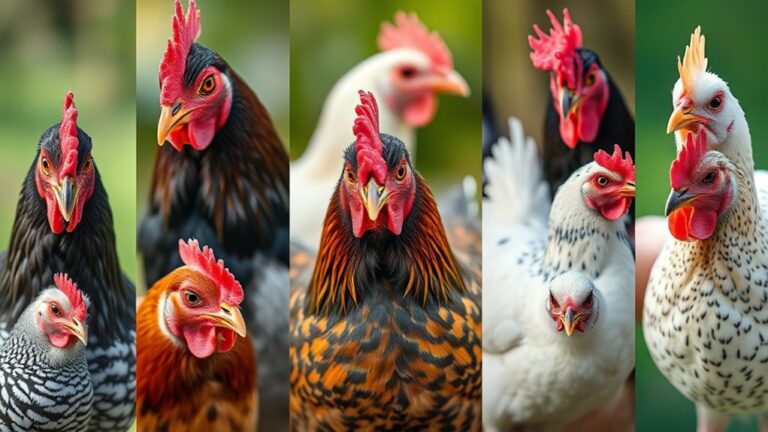
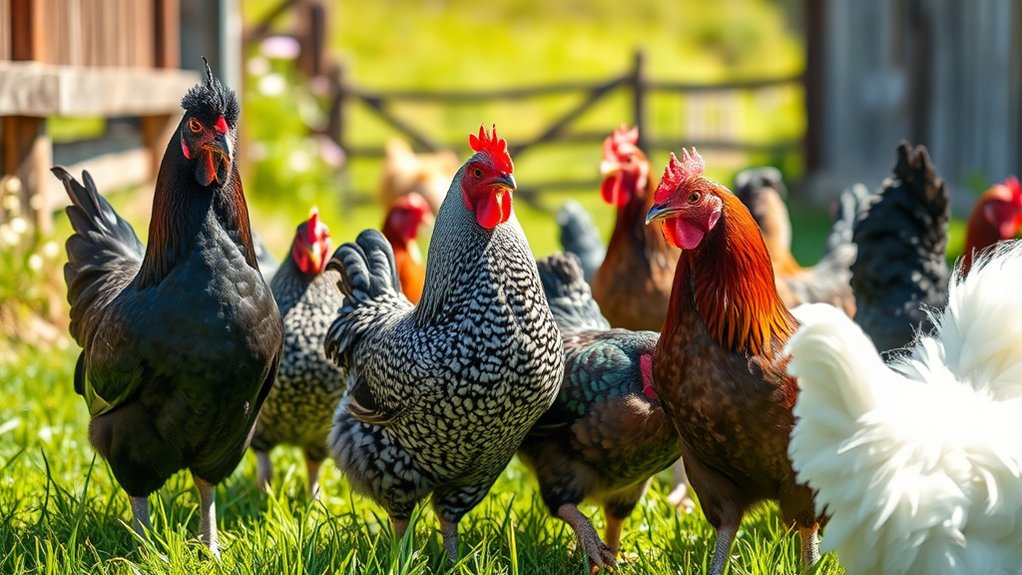
Although feather patterns and colors vary widely among chicken breeds, they play an essential role in identifying and appreciating each breed’s unique characteristics. When you observe feather coloration, you’ll notice everything from solid hues to complex mixtures, including speckles, stripes, and lacing.
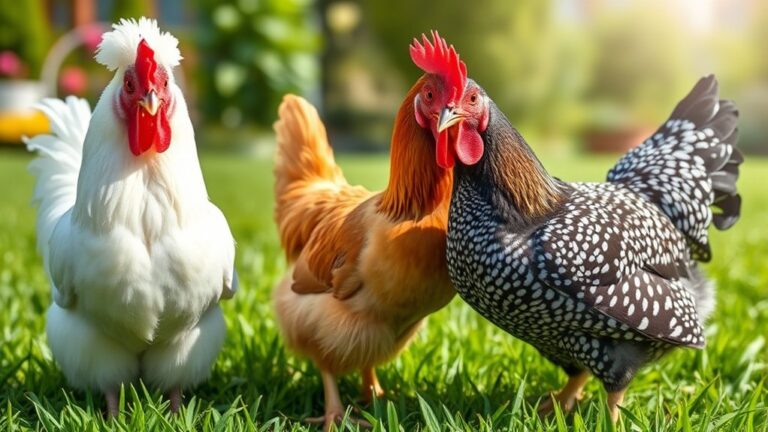
This pattern diversity helps you distinguish breeds at a glance and highlights their heritage and adaptation. For example, the Barred Plymouth Rock’s alternating dark and light bands contrast sharply with the silky sheen of the White Leghorn.
As you examine various breeds, you’ll see how feather patterns not only elevate beauty but also serve practical purposes like camouflage or mate attraction. Understanding feather coloration and pattern diversity deepens your appreciation of chicken breeds beyond just their shape or size.
Distinctive Behavioral Traits
Feather patterns offer a glimpse into a chicken’s identity, but their behavior often reveals even more about their breed. When you observe different breeds, you’ll notice unique behavioral adaptations shaped by their environments and purposes.
Some breeds are naturally docile, making them ideal for backyard flocks, while others display heightened alertness to predators. Understanding their social hierarchy is key; certain breeds establish pecking orders quickly, helping maintain peace, while others are more aggressive or independent.
You’ll also find breeds that excel in foraging, showing clever problem-solving skills to find food. By paying attention to these distinctive behavioral traits, you can better meet each breed’s needs and appreciate the diversity that goes beyond appearance alone.
Size And Body Shape
While behavioral traits reveal much about a chicken’s nature, their size and body shape provide clear clues about their breed and purpose. When you look closely, you’ll notice body size variations ranging from tiny bantams to large meat birds. These differences aren’t just about scale; they reflect each breed’s role, whether for egg-laying, meat production, or ornamental use.
Feather coloration also plays a key part in identifying breeds, with patterns and hues often linked to specific types. For instance, some breeds boast sleek, compact bodies with vibrant feathers, while others feature broader frames with more muted tones. By paying attention to these physical traits, you’ll better understand the diversity among chickens and appreciate how size and form combine with coloration to define each unique breed.
How Chicken Breeds Are Developed
When you examine how chicken breeds are developed, you’ll find that selective breeding plays a crucial role. You can guide the process by choosing birds with specific traits, enhancing genetic diversity to create unique breeds. Breeding techniques focus on combining desirable qualities, such as egg production, temperament, and appearance, while maintaining a healthy gene pool.
To develop a new chicken breed, you’ll:
Select parent birds with preferred traits
Crossbreed to introduce and mix genes
Evaluate offspring for desired characteristics
Repeat selective breeding over generations
Monitor genetic diversity to avoid inbreeding
Why Chicken Breed Diversity Matters for Farmers and Hobbyists
Because different chicken breeds offer unique advantages, maintaining breed diversity benefits both farmers and hobbyists. When you explore a variety of breeds, you’re supporting genetic diversity, which strengthens the overall health and resilience of chicken populations. This diversity helps protect against diseases and environmental changes, ensuring your flock stays robust over time.
Conservation efforts play a key role here. By preserving rare and heritage breeds, you help maintain valuable traits that might otherwise be lost.
For farmers, diverse breeds can mean better adaptability to local climates and production needs, whether for eggs, meat, or dual-purpose use. Hobbyists enjoy the rich variety of colors, sizes, and temperaments that different breeds bring, making chicken keeping more rewarding and educational.
How to Choose the Right Chicken Breed for Your Needs
Choosing the right chicken breed depends on what you want from your flock, whether that’s egg production, meat quality, temperament, or appearance. To make the best choice, consider your priorities carefully while supporting genetic diversity and breed conservation.
This approach not only benefits your flock but also helps protect rare breeds from disappearing.
Here’s what to focus on:
- Egg-laying capacity: Choose breeds known for consistent, high-quality eggs if you want steady production.
- Growth rate and meat quality: Select breeds that thrive in your environment and provide tender, flavorful meat.
- Temperament: Opt for calm, friendly breeds if you want pets or a backyard flock.
- Climate adaptability: Pick breeds suited to your local weather to ensure health and productivity.
- Conservation status: Consider rare or heritage breeds to contribute to breed conservation and genetic diversity.
Top Resources to Discover and Learn About Chicken Breeds
To investigate the wide variety of chicken breeds effectively, you’ll want to tap into reliable resources that offer detailed information and expert insights. Start with breed registries like the American Poultry Association or the Rare Breeds Survival Trust. These provide comprehensive breed standards and highlight conservation efforts to preserve genetic diversity.
Online databases and forums, such as Backyard Chickens or The Livestock Conservancy, let you connect with experienced breeders and enthusiasts who share practical knowledge. Books like “Storey’s Guide to Raising Chickens” offer well-rounded information on breed characteristics and history.
Furthermore, attending poultry shows or agricultural fairs gives you firsthand exposure to diverse breeds and a chance to discuss genetic diversity with experts. By using these trusted sources, you’ll not only learn about different chicken breeds but also support ongoing conservation efforts that ensure these valuable genetic lines endure for future generations.
Frequently Asked Questions
How Long Do Chickens Typically Live?
Chickens typically live around 5 to 10 years, depending on their breed and care. You’ll notice their mating habits influence lifespan since more active roosters might face more risks.
Chicken feather colors don’t directly affect how long they live, but certain breeds with unique feather patterns sometimes have different health traits. If you keep them well-fed and safe, your chickens can enjoy a longer, healthier life despite their natural behaviors.
What Do Chickens Eat for a Balanced Diet?
Imagine your chicken’s diet as a colorful palette, blending grains, greens, and protein. You’ll want to balance their feeding habits by offering a mix of grains like corn or wheat, fresh vegetables, and occasional insects or mealworms.
Meeting their nutritional requirements means providing calcium for strong eggshells and vitamins for energy. By feeding them this varied diet, you keep your chickens healthy, lively, and ready to roam with zest in the yard.
How Do Chickens Communicate With Each Other?
You’ll notice chickens communicate through various chicken vocalizations like clucks, squawks, and purrs, each signaling different emotions or warnings. They also use feather displays to express dominance, submission, or attract mates.
When a hen’s alarmed, her vocalizations get sharp and quick, while a rooster’s crow asserts territory. By paying attention to these sounds and visual cues, you’ll better understand how chickens interact within their flock.
What Are Common Health Issues in Chickens?
You’ll often see common health issues in chickens like respiratory infections, mites, and coccidiosis. Since chickens’ immune system isn’t as strong as mammals’, you need to focus on poultry disease prevention by keeping their living area clean and providing proper nutrition.
Vaccinations and regular health checks also help keep diseases at bay. Staying vigilant guarantees your flock stays healthy and productive, reducing the risk of outbreaks that can spread quickly.
How Much Space Do Chickens Need to Thrive?
You need to provide enough space for chickens to roam, forage, and rest comfortably. For their space requirements, give at least 2 to 3 square feet per chicken inside the coop and 8 to 10 square feet in the outdoor run.
This allows their feeding habits to develop naturally, letting them scratch and peck freely. When you meet these needs, your chickens will stay healthy, happy, and productive, thriving in their environment.
Conclusion
You might think there’s just one kind of chicken, but it’s a surprise to uncover how many breeds exist, each with its own story and purpose. Whether you’re farming or just starting out, you’ll find a breed that fits you perfectly.
It’s funny how something as simple as a chicken can connect us to history, nature, and community all at once. Choosing your breed isn’t just practical; it’s a small adventure waiting to happen.
Understanding how many species of chickens there are helps you appreciate the variety and uniqueness each breed brings to your flock.