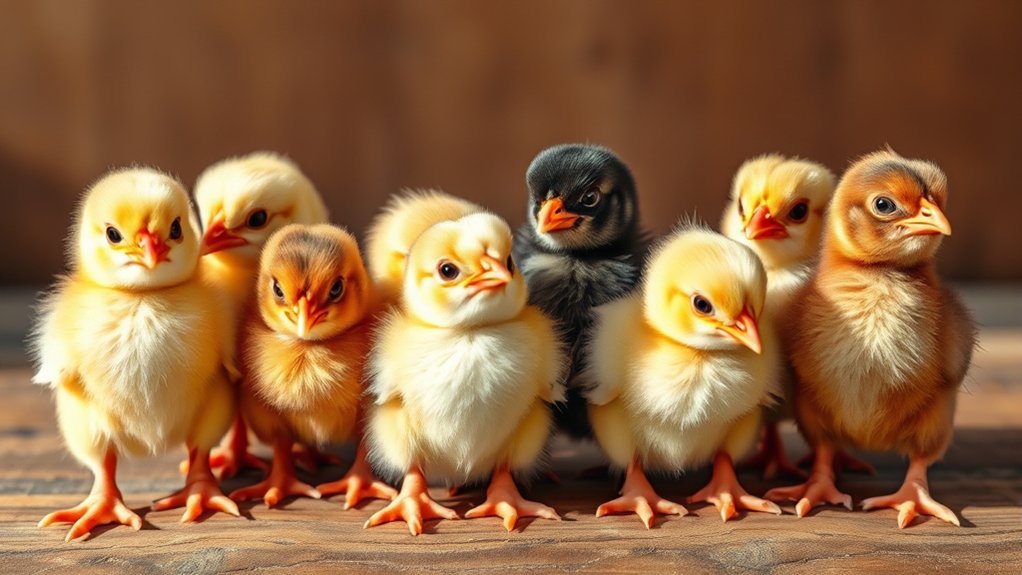
10 Baby Chick Pictures by Breed to Know
Trying to identify baby chick breeds can feel overwhelming, especially when so many look similar at first glance. You’re not alone—many people struggle with telling them apart and want to learn how to recognize their unique traits easily.
You’ll spot baby chick breeds by their unique colors, patterns, and feather textures, like the fluffy golden Buff Orpington or the reddish Rhodes Island Red with dark-tipped feathers. Look for speckled markings on Sussex or the black-and-white stripes of Plymouth Rock chicks.
Notice silky, fur-like feathers on Silkies or the velvety black Australorp. Each breed has distinct traits and temperaments that affect care. Keep exploring to uncover more detailed breed features and care tips.
Key Takeaways
- Baby chick breeds are identified by distinctive down colors, patterns, and feather textures like stripes, spots, or solid hues.
- Fluffy Buff Orpington chicks have soft, golden-yellow down and a friendly temperament. They require warm, clean brooding conditions.
- Silkie chicks feature fluffy, fur-like feathers, black skin, five toes, and a calm, gentle nature. They’re ideal for beginners.
- Rhode Island Red chicks show rich reddish-brown down with dark tips. They grow rapidly and have a calm, social disposition.
- Plymouth Rock chicks display black-and-white striped down, steady growth, and adaptability. They’re suited for both eggs and meat production.
Key Traits That Differentiate Baby Chick Breeds
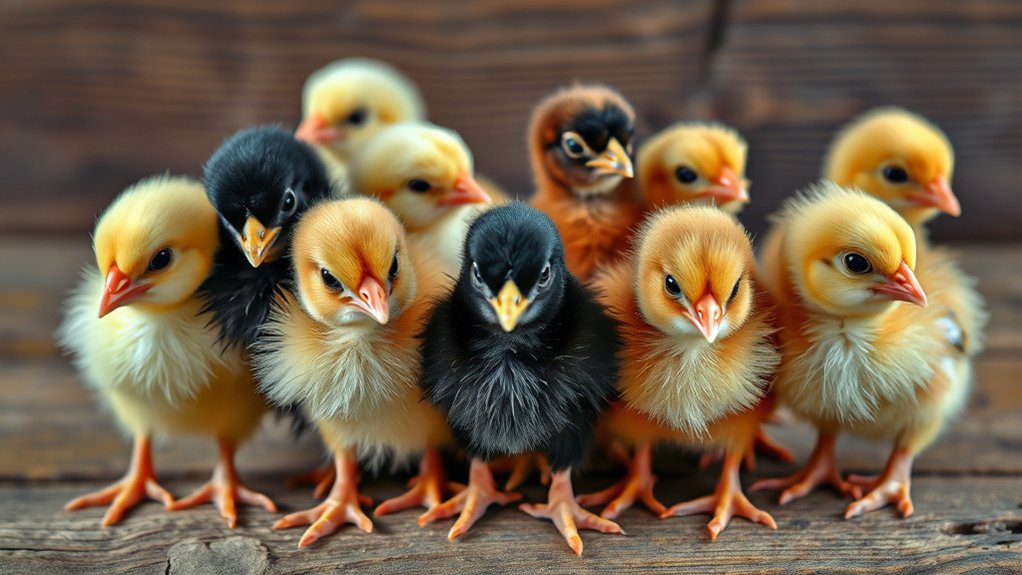
When you look closely at baby chicks, you’ll notice several key traits that help distinguish their breeds. Color patterns, feather texture, and size often vary markedly from one breed to another. For example, some chicks have distinct stripes or spots, while others show solid coloring.
Understanding these differences is essential, especially if you’re managing egg incubation and brooding techniques. Proper egg incubation ensures healthy development, but once hatched, brooding techniques must be adjusted according to the chick’s breed-specific needs. Some breeds require warmer temperatures or different humidity levels to thrive.
Moreover, behavioral traits, such as activity levels and vocalizations, can hint at their breed identity. By paying attention to these details, you’ll better care for your chicks and anticipate their growth patterns. This knowledge helps you provide the right environment, ensuring your chicks develop into strong, healthy adults.
Meet the Fluffy Buff Orpington Baby Chick
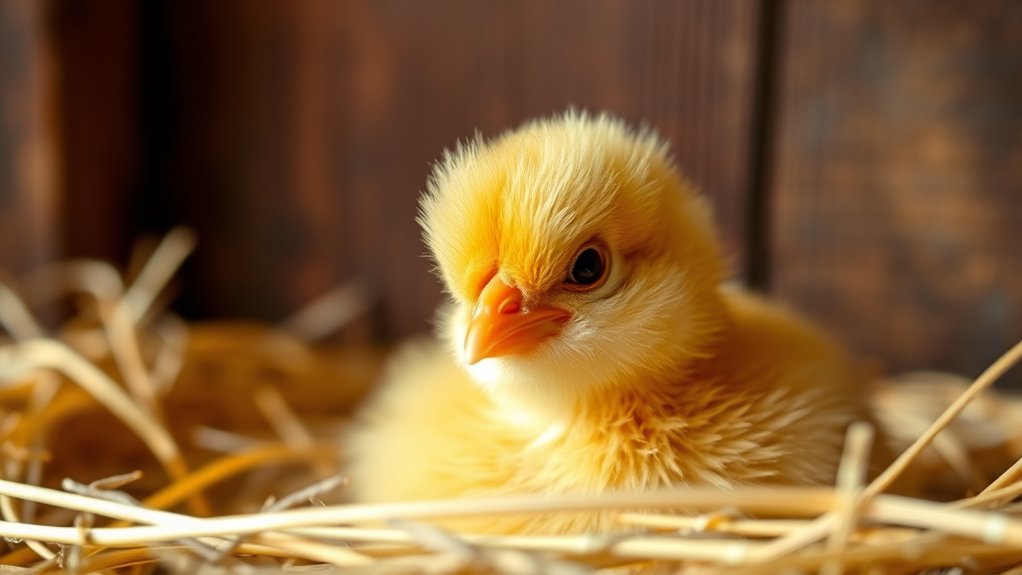
You’ll love the fluffy Buff Orpington baby chick’s soft golden feathers and gentle temperament. They’re known for being friendly and easy to handle, which makes them perfect for beginners.
To keep them healthy, you’ll want to follow some simple care tips that are tailored just for their needs. It’s really not complicated, and once you get the hang of it, taking care of them becomes second nature!
Appearance And Color Traits
The Fluffy Buff Orpington baby chick stands out with its soft, golden-yellow down that feels like a cozy cloud in your hand. You’ll notice its smooth feather patterns start developing early, showing a uniform buff color that’s classic to the breed.
These chicks grow into hens known for their creamy brown egg coloration, making them a favorite for both appearance and productivity. Their gentle hue and even feather patterns make them easy to identify compared to other breeds.
| Trait | Description | Importance |
|---|---|---|
| Down Color | Golden yellow | Breed recognition |
| Feather Patterns | Smooth, uniform buff | Visual appeal |
| Egg Coloration | Creamy brown | Egg identification |
This distinct combination helps you easily spot and appreciate the Buff Orpington.
Temperament And Behavior
Although baby chicks of many breeds can be timid, Fluffy Buff Orpingtons quickly show their friendly and curious nature. You’ll notice they’re keen to investigate their surroundings, making them a joy to interact with.
Their feeding habits are consistent and enthusiastic; they readily peck at food and enjoy a balanced diet that supports steady growth. This breed’s temperament makes them easy to handle, even for beginners.
As they mature, you’ll observe distinct molting patterns, with feathers gradually replaced to maintain their fluffy appearance. Understanding these behaviors helps you anticipate their needs and enjoy their company.
Care Requirements And Tips
Caring for Fluffy Buff Orpington baby chicks involves creating a warm, safe environment with consistent temperature and clean bedding. Start by mastering egg incubation, guaranteeing eggs stay at the right temperature and humidity for healthy hatching.
Once hatched, apply proper brooding techniques: provide a heat source like a brooder lamp, maintaining 95°F during the first week and lowering it gradually. Use clean, dry bedding and keep water and feed accessible.
Monitor chicks closely for signs of stress or illness, adjusting conditions as needed. You’ll want to space feeders and waterers to prevent crowding.
Why Rhode Island Red Baby Chicks Shine
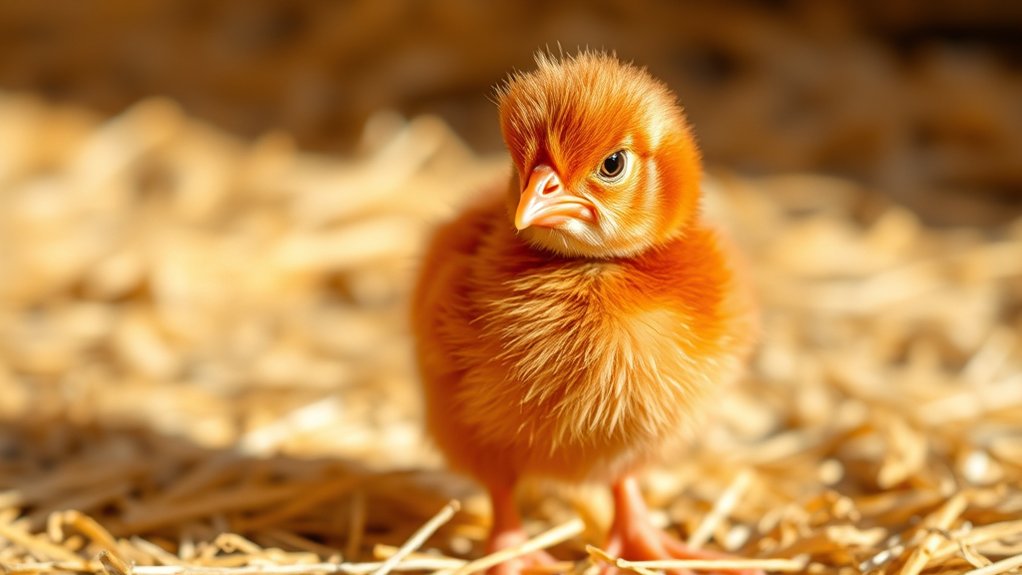
You’ll notice Rhode Island Red baby chicks really stand out with their rich, reddish feathers and sturdy little bodies. They tend to grow strong pretty quickly, which is great. And the best part? They handle different conditions really well.
On top of that, they have a friendly nature that makes them super easy to care for and enjoy. So, if you’re looking for chicks that shine in both looks and personality, these guys are definitely worth considering.
Distinctive Feather Coloration
When you spot a Rhode Island Red baby chick, its rich, reddish-brown feathers immediately catch your eye, setting it apart from other breeds. This distinctive feather coloration is all about the unique color pattern and feather pattern that define the breed. You’ll notice:
- A warm, deep red hue covering most of the chick’s body
- Slightly darker feather tips adding subtle contrast
- Soft, fluffy down with a consistent reddish tone
- Minimal spotting or variation, ensuring uniformity
- A natural sheen that makes the feathers appear vibrant
These features give Rhode Island Reds their signature look, making them easy to identify even at a young age. Their feather coloration not only stands out visually but also hints at their strong breed heritage.
Hardy Growth Traits
Because Rhode Island Red baby chicks grow quickly and stay strong, they’re a favorite for both new and experienced poultry keepers. You’ll notice their hardy growth traits make them resilient, thriving even in varied conditions.
To support this, pay close attention to their nutrition requirements. Balanced feed rich in protein and essential vitamins fuels rapid development and keeps their immune system robust.
Proper feather maintenance also plays a key role. Healthy feathers protect them from the elements and reduce stress, promoting overall vigor.
Friendly Temperament Traits
Although Rhode Island Red baby chicks are known for their hardiness, their friendly temperament truly sets them apart. When you carefully manage egg incubation and use proper brooding techniques, these chicks quickly become affectionate and social.
You’ll notice how their personalities shine through with:
- Calm and curious nature, making handling easy
- Quick bonding with humans, perfect for families
- Playful behavior that encourages interaction
- Adaptability to different environments
- Gentle pecking that shows interest, not aggression
Discover the Speckled Sussex Baby Chick
If you’re curious about a charming breed with a unique look, the Speckled Sussex baby chick offers just that. These chicks sport soft, downy feathers with a distinctive speckled pattern that sets them apart.
When you start with egg incubation, maintaining a steady temperature around 99.5°F and proper humidity is vital to guarantee healthy development. Once hatched, applying gentle brooding techniques is key. Provide consistent warmth, fresh water, and high-quality feed to support their growth.
Speckled Sussex chicks grow quickly and adapt well, making them a favorite among backyard chicken keepers. Their friendly nature means you’ll enjoy interacting with them as they mature. Plus, their attractive speckled plumage will brighten up your flock.
Meet the Plymouth Rock Baby Chick
You’ll quickly notice the Plymouth Rock baby chick’s distinctive black-and-white striped down feathers, making it easy to identify among other breeds. These chicks are hardy and friendly, perfect if you’re starting out with backyard poultry. From egg incubation to feeding schedules, caring for them is straightforward.
Here’s what to know about Plymouth Rock chicks:
- Egg incubation: They hatch in about 21 days, requiring consistent warmth and humidity.
- Feeding schedules: Offer starter feed 3-4 times daily, ensuring fresh water is always available.
- Temperament: Calm and gentle, they adapt well to handling.
- Growth rate: They grow steadily and develop robust adult feathers quickly.
- Purpose: Great layers and also valued for meat, making them versatile.
The Distinctive Silkie Baby Chick
You’ll notice the Silkie baby chick stands out right away because of its unique, fluffy feathers that feel more like soft fur. It’s pretty easy to spot, really. And on top of that, these little guys have a calm temperament, which means they make gentle and friendly companions for any flock. Oh, and don’t forget those distinctive features—like their black skin and extra toes—that make Silkies truly one of a kind.
Unique Feather Texture
When you spot a Silkie baby chick, its unique feather texture immediately sets it apart from other breeds. You’ll notice a soft, fluffy appearance unlike the smooth feathers of typical chicks. This distinctive look comes from:
- A silky, fur-like texture that feels almost like down
- Feather sheen that gives a subtle, glossy glow
- Complex texture patterns creating a puffy, cloud-like effect
- Absence of the usual feather barbicels, making feathers look more like hair
- A slightly wispy, delicate structure that adds to its charm
These features make Silkies irresistibly touchable and visually striking. When you hold one, you’ll appreciate how its unique feather texture adds to its enchanting personality without even needing to see its calm temperament yet.
Calm Temperament Traits
Although Silkie baby chicks enchant with their unique feathers, their calm temperament truly defines their charm. When you handle them, you’ll notice how gentle and patient they are, making them ideal for first-time chicken keepers or families with kids.
Their serenity complements their consistent egg laying habits, as they rarely get stressed, which helps maintain steady production. You’ll also find that, despite feather pattern variations among Silkies, their mellow nature stays the same.
This calm demeanor makes them less prone to aggressive behaviors often seen in other breeds. So, if you want a baby chick that’s as easygoing as it is beautiful, Silkies fit the bill perfectly, blending peacefulness with reliable egg laying and diverse feather patterns.
Distinctive Appearance Features
One of the most striking features of Silkie baby chicks is their fluffy, fur-like feathers that set them apart from other breeds. When you observe them, you’ll notice their unique look that demands attention.
To care for Silkies properly during egg incubation and beyond, you need to understand their distinctive traits:
- Soft, downy plumage resembling silk or fur
- Dark blue to black skin and bones
- Five toes on each foot, unlike most chicks with four
- Small, rounded bodies with a gentle, compact shape
- A calm, friendly demeanor that pairs well with proper poultry nutrition
Recognizing these features helps you provide the right environment and diet, ensuring your Silkie chicks thrive from hatching through adulthood.
Spotting the Black Australorp Baby Chick
If you want to identify a Black Australorp baby chick, focus on its sleek black down feathers and bright, curious eyes. These chicks typically have a soft, almost velvety appearance.
During egg incubation, maintaining steady warmth and humidity is vital to guarantee healthy development. Once hatched, applying proper brooding techniques will help your Black Australorp thrive.
Provide a warm, draft-free environment with consistent temperature control and clean water. Their calm and friendly nature makes them easy to handle, and their glossy black plumage will become more pronounced as they grow.
Watching for their distinctive shiny black feathers and alert behavior will help you confirm their breed early on. Remember, these chicks are hardy and adapt well if you keep their brooding area clean and comfortable.
How Leghorn Baby Chicks Stand Out
While Black Australorp chicks impress with their sleek black feathers and calm nature, Leghorn baby chicks catch your eye with their lively energy and distinct markings. From the moment you begin egg incubation, you’ll notice their rapid development and vibrant personality. To keep them healthy, you’ll want to apply proper brooding techniques, ensuring warmth and comfort.
Leghorn chicks dazzle with lively energy and rapid growth, thriving under proper brooding care.
Leghorn baby chicks stand out because:
- They sport bright yellow down with bold brown or black stripes.
- Their active, curious behavior keeps you engaged.
- They tend to grow quickly, benefiting from precise egg incubation timing.
- Their slender legs hint at their excellent egg-laying future.
- They respond well to consistent brooding techniques, thriving in well-regulated environments.
When you raise Leghorn chicks, you’re rewarded with energetic, striking little birds that promise prolific egg production.
The Charming Cochin Baby Chick
Three key traits make Cochin baby chicks truly charming: their fluffy appearance, gentle temperament, and steady growth. When you raise these chicks, you’ll notice their soft, downy feathers that make them look like little balls of cotton. Their calm nature makes them perfect if you’re new to chick care or want a peaceful flock addition.
To support their steady growth, focus on proper chick nutrition. Provide a balanced starter feed rich in protein to fuel their development.
Brooding tips are essential for Cochins since they thrive in warm, draft-free environments. Keep the brooder temperature around 95°F during the first week, then reduce it gradually. Guarantee they have clean water and a safe space to investigate.
Their fluffy feathers can get damp easily, so maintain dry bedding to prevent illness. By following these guidelines, you’ll enjoy healthy, happy Cochin chicks that grow into beautiful, gentle adult birds.
Identifying the Andalusian Baby Chick
One of the easiest ways to spot an Andalusian baby chick is by its unique slate-gray down mixed with lighter shades. When you’re raising Andalusians, pay close attention during egg incubation and brood care to guarantee their health and growth.
These chicks have several distinctive traits you can look out for:
- Soft, gray feathers with a bluish tint
- Small, dark eyes that stand out against their pale down
- Slender legs with a slight pinkish hue
- Alert and active behavior even in early days
- A gentle peeping sound that’s quieter than other breeds
During egg incubation, maintaining the right temperature and humidity helps preserve the chick’s signature coloring. Once hatched, proper brood care like clean bedding and balanced nutrition will keep your Andalusian chick thriving.
Recognizing these features early lets you provide the best environment for your unique baby chick.
Frequently Asked Questions
How Do I Care for Baby Chicks in Their First Week?
You’ll want to set up brooding equipment like a heat lamp to keep chicks warm around 95°F, lowering it each week. Stick to a consistent feeding schedule, offering chick starter feed and fresh water at all times.
Keep their bedding clean and dry to prevent illness. Check on them regularly to make certain they’re active and comfortable. Proper care in this first week sets a strong foundation for healthy growth.
What Is the Best Temperature for Brooding Baby Chicks?
The best temperature for brooding baby chicks is around 95°F (35°C) during their first week. You’ll need to modify temperature regulation carefully as they grow, lowering it by 5°F each week.
Use brooding techniques like heat lamps or brooders to keep this steady. Watch your chicks closely. If they huddle under the heat source, it’s too cold; if they spread out, it’s too hot.
Proper temperature regulation ensures healthy, happy chicks.
How Often Should Baby Chicks Be Fed and Watered?
Think of feeding schedules and watering frequency as the heartbeat of your chicks’ growth. They keep life flowing steadily. You should feed baby chicks small amounts of food throughout the day, about every 2-3 hours during their first week, gradually spacing it out as they grow.
Water needs to be fresh and available at all times. So, check and refill their water frequently to keep them hydrated and thriving.
Can Baby Chicks Be Raised Indoors Safely?
Yes, you can safely raise baby chicks indoors if you guarantee proper indoor ventilation to keep fresh air circulating and prevent respiratory issues.
You’ll also want to provide predator protection, even indoors, by securing windows and doors to keep pets or pests away. Make sure their brooder is clean, warm, and dry.
With the right setup, your chicks will thrive safely inside your home.
When Do Baby Chicks Start to Grow Feathers?
Feather development begins around one to two weeks old, like a soft blanket slowly unfolding on your chick. You’ll notice tiny pin feathers poking through their down, marking key growth milestones.
Conclusion
As you delve into each baby chick breed, picture a vibrant garden where every flower represents unique traits and colors. Just like these chicks, each bloom brings its own charm and story to the patch.
By knowing their differences, you’re not just raising chicks. You’re nurturing a living tapestry of life and potential. Welcome this colorful journey and watch how these little feathers grow into symbols of beauty, strength, and diversity in your flock of baby chicks.