
10 Breeds of Chickens With Pictures
Choosing the right chickens for your backyard flock can feel overwhelming. With so many breeds to pick from, it’s tough to know which ones will fit your goals, space, and climate. You’re not alone—many people struggle with finding the perfect mix of chickens that lay well, look great, and are easy to care for.
If you want a versatile flock, consider Rhode Island Reds, Plymouth Rocks, or Orpingtons for eggs and meat. Sussex and Leghorns offer reliable egg-laying with different temperaments and space needs.
Silkies charm with fluffy feathers, while Wyandottes add striking patterns. Australorps lay lots of eggs, and Easter Eggers bring colorful shells.
Each breed has unique care tips and qualities that suit different homes and climates. Delve into further to find the perfect chickens for your setup.
Key Takeaways
- Rhode Island Reds are versatile, hardy chickens known for large brown eggs and robust meat. They adapt well to many climates.
- Plymouth Rocks feature striking barred plumage. They tolerate cold and heat, and are reliable brown egg layers with calm temperaments.
- Orpingtons are gentle, friendly, and easy to handle, making them ideal for families and backyard gardens.
- Leghorns are prolific white egg layers. They need ample space, well-ventilated coops, and secure housing because of their active nature.
- Silkies have unique fluffy feathers that require regular grooming and gentle care to keep them healthy and clean.
How To Choose The Right Chicken Breed For You
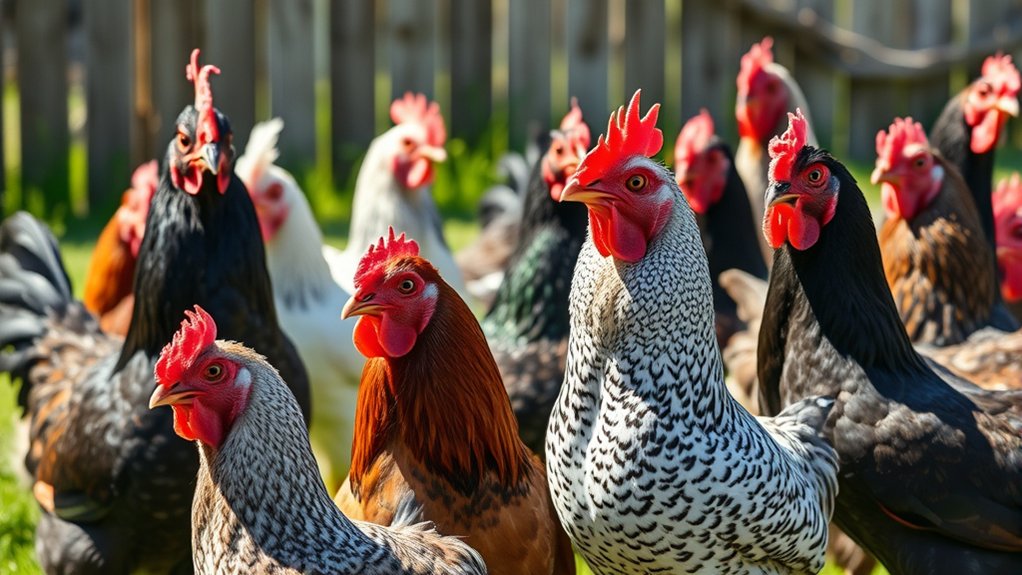
When choosing the right chicken breed for you, consider your primary goals, whether it’s egg production, meat quality, or ornamental value. Identifying what matters most helps you narrow your options quickly. You’ll also want to keep an eye on market poultry trends, especially if you plan to sell eggs or meat.
Popular breeds aligned with current demand often offer better returns. Be prepared for breeding challenges too. Some breeds require more care, specific conditions, or have lower fertility rates.
If you’re new to raising chickens, selecting a hardy, easy-to-manage breed can save you time and headaches. Furthermore, think about your local climate and available space, as these affect breed performance.
Rhode Island Reds: Classic Chickens For Eggs And Meat

A Rhode Island Red stands out as a versatile and reliable breed that suits both egg production and meat quality. If you want chickens that deliver well-rounded benefits, this breed is a solid choice. Their feeding habits are straightforward. They thrive on a balanced diet of grains, greens, and protein supplements, keeping them healthy and productive.
You’ll appreciate their hardiness in various climates, which makes predator protection a priority. Sturdy coops and secure fencing are essential to keep these valuable birds safe.
Here’s why Rhode Island Reds work well for you:
- They lay large, brown eggs consistently, providing excellent egg yields.
- Their meat quality is robust, ideal if you want dual-purpose birds.
- They adapt easily to different environments and feeding routines.
- Their active nature helps with natural pest control around your yard.
Choosing Rhode Island Reds means getting classic chickens that deliver on eggs and meat efficiently.
Sussex Chickens: Friendly Layers For Your Backyard
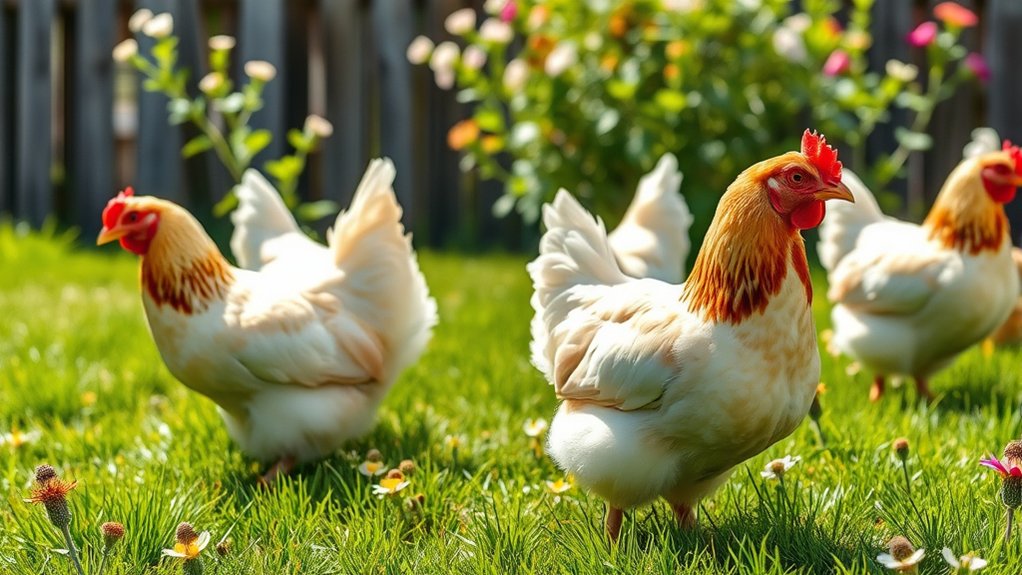
If you’re looking for a calm and friendly chicken to add to your flock, Sussex chickens are a great choice. They’ve got a gentle temperament that makes them easy to handle, and they’re pretty reliable when it comes to laying eggs. So, let’s take a closer look at how to care for these backyard favorites to keep them happy and productive.
Temperament and Behavior
How do Sussex chickens behave around people and other animals? You’ll find them calm, friendly, and curious, making them great backyard companions. They adapt well to your presence and coexist peacefully with other pets.
To get the best from their temperament, consider these points:
- Sussex chickens are social and enjoy interaction, so spend time with them daily.
- Their foraging nature means they benefit from a varied chicken diet, which keeps them healthy and active.
- They stay alert but rarely panic, helping you manage predator protection effectively.
- These chickens rarely show aggression, even during breeding season, making them ideal for mixed flocks.
Egg Production and Care
Wondering what makes Sussex chickens stand out as reliable egg layers? Their consistent egg production is partly due to their balanced feeding habits. You’ll want to provide a nutritious diet rich in protein and calcium to keep them healthy and laying regularly.
Sussex chickens typically lay large, light brown eggs, and they maintain good production even in cooler months. Pay attention to their molting patterns; during this natural phase, their egg production slows or stops as they shed old feathers and grow new ones.
Adjusting their diet with extra nutrients can help them recover faster. By understanding their feeding habits and molting cycles, you’ll ensure your Sussex hens stay productive and healthy, making them perfect for your backyard flock.
Plymouth Rocks: Hardy And Beautiful Backyard Chickens
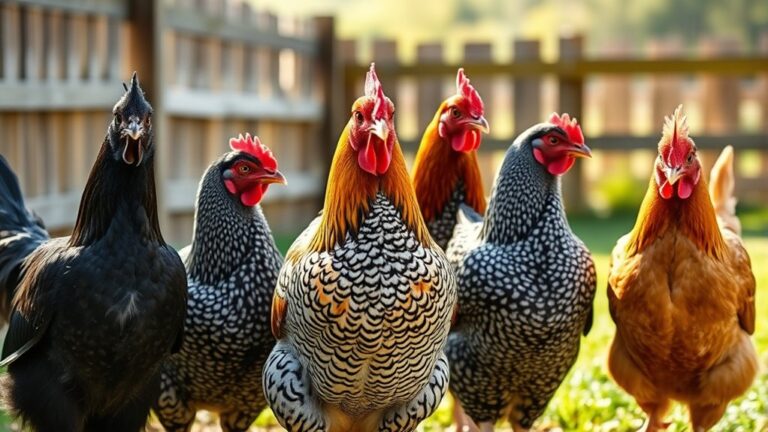
Although Plymouth Rocks have been around since the 19th century, they remain one of the most popular choices for backyard chicken keepers. You’ll appreciate their hardy nature and beautiful barred plumage, which makes them stand out.
When raising Plymouth Rocks, focus on feeding nutrition and coop design to keep them healthy and productive. Proper nutrition supports their energy and egg production, while a well-ventilated, secure coop protects them from weather and predators.
Here are four reasons why Plymouth Rocks are ideal for your backyard:
- They tolerate cold and heat well, adapting easily to different climates.
- Their calm temperament makes them great for families.
- They’re reliable layers, producing brown eggs consistently.
- Their robust health reduces veterinary needs.
Leghorn Chickens: Top Egg Producers You Can Trust
If you’re looking for chickens that excel at laying eggs, Leghorns should be at the top of your list. These birds are known for their prolific egg production, often laying white eggs consistently throughout the year. To keep them healthy and productive, focus on balanced chicken nutrition. High-protein feed and access to calcium are essential to support their egg-laying stamina.
Leghorns are active and hardy, so your coop design should provide ample space for movement and good ventilation to prevent respiratory issues. They prefer well-lit, secure coops with nesting boxes placed in quiet areas to encourage regular laying. Because Leghorns are flighty, ensure your run has a secure roof to keep them safe from predators. With proper care in nutrition and housing, Leghorn chickens will reward you with a steady supply of eggs you can trust.
Orpingtons: Gentle Giants Perfect For Families
If you’re looking for a calm, friendly chicken that fits right into a family setting, Orpingtons are a great choice. You’ll love their gentle nature and easygoing temperament—they’re just perfect around kids. And the best part? Taking care of Orpingtons is pretty straightforward, so you won’t have to stress about complicated maintenance.
Calm Temperament Traits
When you’re looking for a family-friendly chicken breed, Orpingtons stand out for their calm and gentle nature. Their relaxed demeanor makes them easy to handle, especially around children. You’ll notice their soft chickens’ vocalizations are less noisy compared to other breeds, which keeps your yard peaceful. Plus, Orpingtons come in beautiful feather color variations, including buff, black, and blue, adding charm to your flock.
Here’s what you can expect from their temperament:
- Patient and tolerant, great for beginners.
- Friendly and social, they enjoy human interaction.
- Calm during feeding and daily care routines.
- Rarely aggressive, making them safe for mixed flocks.
With Orpingtons, you get a serene bird that’s perfect for a harmonious family setting.
Ideal Family Environment
Because Orpingtons are so gentle and patient, they fit seamlessly into family environments where children and pets are present. You’ll find they’re naturally calm, making interactions safe and enjoyable for everyone.
When planning your chicken coop design, consider placing it near your backyard garden to improve backyard garden integration. This not only creates a pleasant environment for your Orpingtons but also allows you and your family to observe and engage with them easily.
Their friendly nature encourages kids to participate in feeding and daily routines, fostering responsibility and connection with nature. With thoughtful chicken coop design that prioritizes safety and accessibility, your Orpingtons become a beloved part of your home, blending perfectly with family life and your outdoor space.
Care and Maintenance
Creating a safe and engaging environment for your Orpingtons goes hand in hand with providing proper care and maintenance to keep them healthy and happy. These gentle giants thrive when you focus on their daily needs through consistent feeding routines and thoughtful coop design.
- Establish regular feeding routines with balanced poultry feed and fresh water to support their growth and egg production.
- Design a spacious, well-ventilated coop that protects against predators and harsh weather.
- Clean the coop frequently to prevent disease and maintain hygiene.
- Monitor your Orpingtons’ health daily, checking for signs of illness or stress to address issues promptly.
Silkie Chickens: Fluffy Pets With Unique Charm
A Silkie chicken stands out with its soft, fluffy feathers that feel more like fur than typical plumage. If you’re thinking about adding Silkies to your flock, you’ll want to pay special attention to feather care. Their unique feathers don’t repel water well, so keeping them dry and clean is essential. Regular grooming helps prevent matting and keeps their fluff looking its best.
When grooming your Silkie, gently brush their feathers using a soft-bristled brush, removing dirt and debris carefully. Check their feet and under their wings for any trapped dirt or mites. Bathing them occasionally with mild shampoo can also help, but make sure they’re thoroughly dried afterward to avoid chills. With proper feather care and grooming tips in mind, you’ll enjoy how these charming, docile birds brighten up your backyard with their unique appearance and friendly personality.
Wyandotte Chickens: Stylish And Reliable Egg Layers
While Wyandotte chickens are admired for their striking plumage, they’re just as valued for their dependable egg-laying abilities. You’ll notice their unique feather coloration, ranging from silver-laced to gold-laced, which adds style to your flock.
Beyond looks, Wyandottes are hardy and adapt well to various climates, making them reliable layers year-round.
To get the best from your Wyandottes, consider these key points:
- Provide a breed specific diet rich in protein to support steady egg production.
- Maintain clean, dry housing to keep their feathers pristine and prevent illness.
- Guarantee they have access to fresh water daily to boost overall health.
- Regularly check their feather coloration as it can indicate health and nutrition status.
Australorp Chickens: Australian Breed With High Egg Counts
You’ll really appreciate the Australorp chicken for its Australian roots and impressive egg-laying abilities. This breed doesn’t just lay eggs—it consistently produces a high number, which is why so many poultry keepers love them.
And there’s more to like. With sleek black feathers and a sturdy build, the Australorp has a distinctive look that’s easy to spot. It’s a great all-around chicken, both in appearance and performance.
Origin and History
Where did the Australorp chicken come from, and why is it famous for its egg production? You’ll find its roots in Australia, developed in the early 20th century by crossing Orpingtons with local breeds. This historical breed introduction aimed to create a hardy bird with excellent laying abilities. The Australorp’s distinctive chicken feather patterns, a glossy black with a greenish sheen, make it stand out.
Here’s what you should know about its origin and history:
- Developed in Australia from Orpingtons and local breeds.
- Selected for both resilience and high egg production.
- Recognized internationally for its unique feather patterns.
- Became a symbol of successful breed development in poultry farming.
Understanding this helps you appreciate why the Australorp remains popular today.
Egg Production Rate
The Australorp’s reputation for resilience and unique feather patterns goes hand in hand with its exceptional egg-laying ability. If you want a breed that consistently delivers, Australorps lay up to 250-300 eggs annually.
You’ll notice their eggs boast a light brown eggshell color, adding a warm touch to your collection. Their nesting habits are calm and dependable. They prefer quiet, comfortable nest boxes, which helps maintain steady production.
You don’t need to worry about frequent disturbances, as Australorps adapt well to various environments. This breed’s consistent laying rhythm makes them ideal for both beginners and seasoned keepers looking for reliable egg output.
Physical Characteristics
Although Australorps are best known for their egg production, their physical traits make them just as impressive. When you see an Australorp, you’ll notice their sleek feather patterns, which shine with a beautiful black-green iridescence. Understanding their physical characteristics helps you appreciate their unique appeal.
Here are four key traits to look for:
- Feather patterns: Dense, glossy, and smooth, giving them a striking, polished appearance.
- Comb types: Usually single combs that are medium-sized and bright red, contrasting beautifully with their dark feathers.
- Body shape: They have a rounded, compact build that shows strength and resilience.
- Legs and feet: Clean, slate-blue legs that support their steady, calm demeanor.
Knowing these helps you spot a true Australorp at a glance.
Easter Egger Chickens: Colorful Eggs And Friendly Temperament
If you want chickens that brighten your yard with both personality and colorful eggs, Easter Egger chickens are a fantastic choice. These birds often sport colorful feathers in varying patterns, adding visual interest to your flock. Their plumage can range from soft pastels to vibrant hues, making them a lively addition to any backyard.
Beyond their looks, Easter Eggers are known for their friendly interactions. They’re curious, gentle, and often enjoy being around people, making them great for families or first-time chicken keepers. These hens lay eggs in a range of colors from blue and green to pinkish tones, giving you a daily surprise at the nest box.
If you want a breed that combines unique egg colors with a pleasant temperament, Easter Egger chickens won’t disappoint. Their colorful feathers and sociable nature make them both charming pets and productive layers. You’ll enjoy watching them roam and collecting their beautiful eggs.
Frequently Asked Questions
How Do I Care for Baby Chicks?
You’ll care for baby chicks by keeping their brooder warm and clean. Follow feeding schedules closely, offering chick starter feed and fresh water multiple times a day.
Place their nest box in a quiet, draft-free spot for comfort and safety. Make sure they have enough space to move around and avoid overcrowding.
Regularly check their health and adjust heat lamps as they grow to keep them cozy and thriving.
What Do Chickens Eat for Optimal Health?
You should feed your chickens a balanced diet of quality grains, protein, and greens for ideal health. Including nutritional supplements like calcium and vitamins helps strengthen their eggshells and immunity.
Always store feed properly in airtight containers to keep it fresh and prevent mold or pests. Fresh water is essential too.
How Do I Prevent Common Chicken Diseases?
You should approach disease prevention like a fortress guarding its treasures. Strong biosecurity measures are your first line of defense. Keep your coop clean, limit visitors, and quarantine new birds to stop germs from sneaking in.
Regularly check chickens for signs of illness and provide fresh water and balanced feed. By staying vigilant and maintaining a sanitary environment, you’ll protect your flock from common chicken diseases effectively.
What Is the Best Coop Design for Chickens?
The best coop design for you maximizes egg production by providing ample nesting boxes and good ventilation. Make sure it’s spacious enough to prevent overcrowding, which can stress chickens and dull feather coloration.
Include roosting bars and secure, predator-proof doors. Natural light and easy cleaning access keep your flock healthy and vibrant.
How Often Should I Clean a Chicken Coop?
You’ll want to clean your chicken coop at least once a week, just as feathers naturally fall and dust settles. This regular cleaning helps with feather maintenance by preventing buildup that can cause infections.
Dust control is key too. It keeps your chickens healthy and their environment fresh. Spot clean daily to remove droppings, and do a deep clean weekly to keep everything hygienic, ensuring your flock stays happy and cozy.
Conclusion
Choosing the right chicken breed is like planting a vibrant garden. Each one brings its own color and charm to your backyard.
Whether you want hardy layers, fluffy friends, or colorful eggs, these breeds offer a feathered rainbow of possibilities. So, roll up your sleeves, welcome the clucks and the feathers, and let your coop become a lively canvas.
With the perfect flock, you’ll paint daily joy and fresh eggs into your life. Choosing from these 10 breeds of chickens ensures your backyard is full of personality and productivity.