How to Identify Chicken Breeds Step by Step
Trying to identify chicken breeds can feel overwhelming, especially if you’re new to raising chickens or just want to know more about your flock. You’re not alone—many people struggle with recognizing different breeds because of the variety in size, colors, and features.
The good news is, with a little guidance, you can start spotting the unique traits that set each breed apart.
To identify chicken breeds step by step, start by examining their size and body shape to see if they fit breed standards. Check feather patterns, colors, and textures for unique traits. Look at comb types and leg colors, plus tail shape and feathering.
Notice head and facial features like wattles and beak shape. Observe behavior too, since it can hint at breed. If you want to sharpen your skills, there’s plenty more detail to investigate.
Key Takeaways
- Observe physical traits like size, body shape, feather patterns, and leg color to match breed standards.
- Examine comb type, size, and facial features such as beak shape, wattles, and eye color for breed clues.
- Note behavioral characteristics like docility or aggression that correspond with specific breeds.
- Differentiate purebreds by consistent traits, while mixed breeds show blended or variable features.
- Use breed guidebooks, apps, and expert forums to compare traits and confirm breed identification.
Using Size and Body Shape to Identify Chicken Breeds
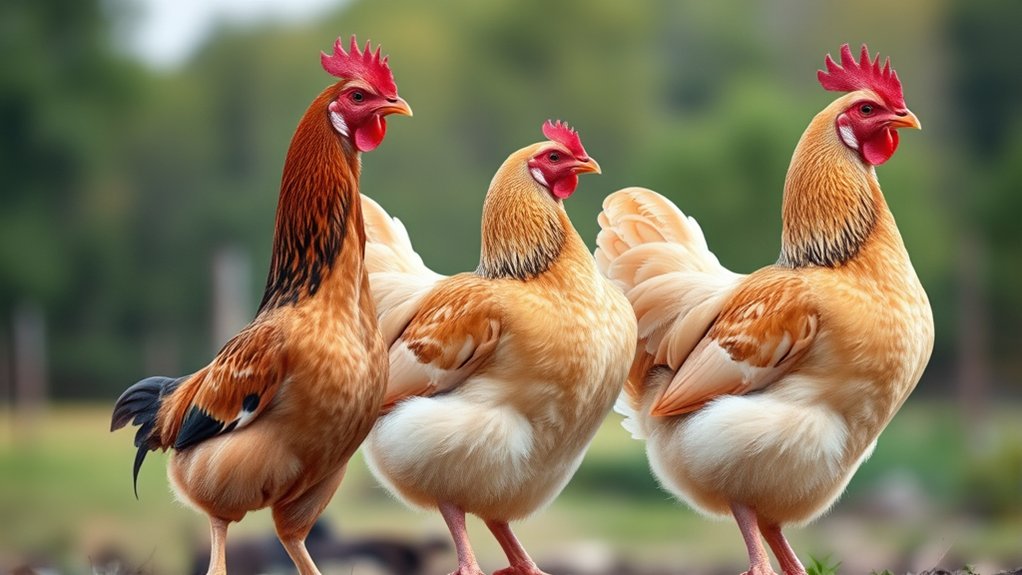
Although feathers and colors often catch your eye first, size and body shape provide essential clues to identifying chicken breeds. When you observe a chicken, note whether it’s compact and heavy or tall and slender.
Size and body shape reveal key insights when identifying chicken breeds beyond just feathers and colors
Larger breeds like Brahmas require more space due to their size, directly impacting their housing requirements. Smaller breeds, such as Bantams, fit comfortably in cozier environments.
Recognizing a breed’s body shape also hints at its nutritional needs. Heavier birds often need richer diets to support muscle mass and overall health, while lighter breeds thrive on less dense feed.
By understanding these physical traits, you can better tailor your chicken care routine. Paying attention to size and shape guarantees you meet each breed’s specific needs, promoting their well-being and productivity.
Feather Patterns and Colors That Define Chicken Breeds
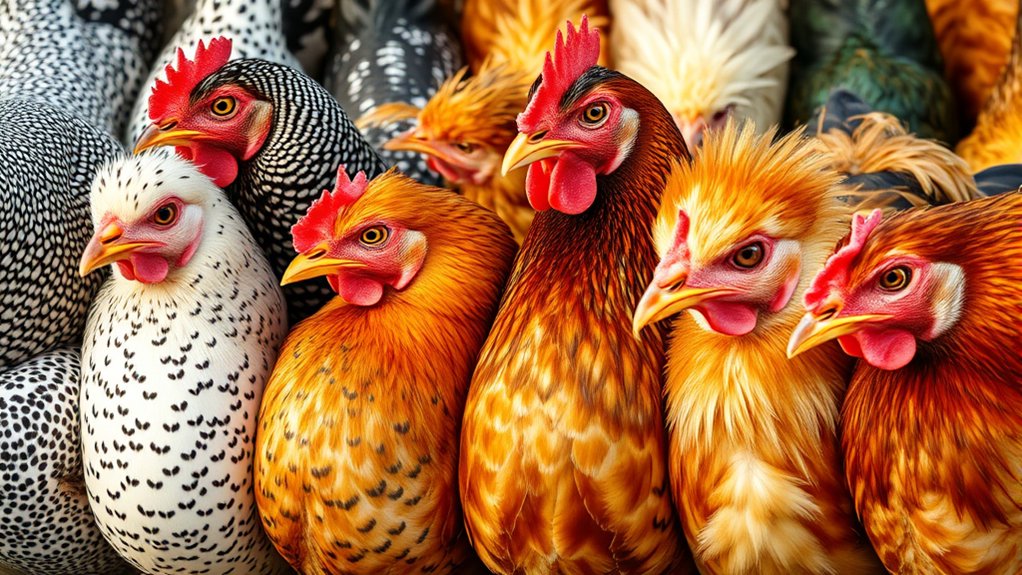
When you look closely at a chicken’s feathers, you’ll find distinctive patterns and colors that reveal its breed. These feather patterns range from solid colors to intricate lacing, mottling, or barring. Recognizing these markings helps you pinpoint the breed more accurately.
Color mutations play a big role, as many breeds come in various color variations that can sometimes confuse beginners. Still, understanding common mutations lets you narrow down your options quickly.
Feather texture also matters. Some breeds have soft, fluffy plumage, while others sport sleek, shiny feathers or even frizzled ones that curl outward. This texture difference is a useful clue when you’re trying to identify a breed beyond just color.
Pay attention to how feathers feel and look under different lighting, as this can highlight subtle traits unique to certain breeds. By focusing on both feather patterns and texture, you’ll sharpen your breed identification skills considerably.
Different Comb Types to Identify Chicken Breeds
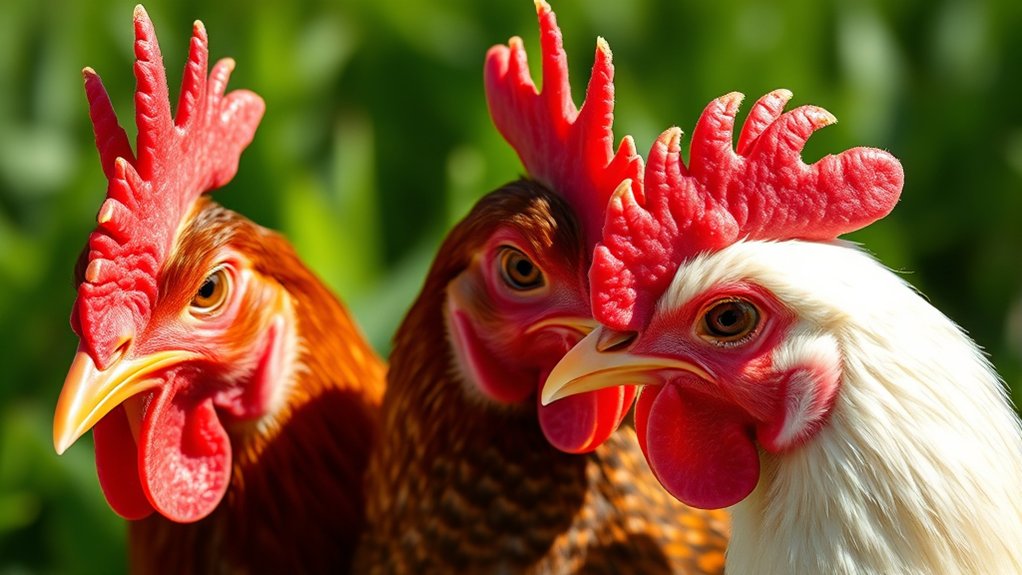
Since a chicken’s comb comes in various shapes and sizes, it provides a clear clue to its breed. When you observe a chicken, pay close attention to the comb pattern, whether it’s single, rose, pea, or walnut. Each pattern is unique and often linked to specific breeds.
For example, the single comb is common in Leghorns, while the rose comb is typical of Wyandottes.
Comb size also matters. Some breeds have large, prominent combs, while others sport smaller or flatter ones. Larger combs can indicate a bird’s maturity or sex but also help you narrow down the breed.
Leg Color and Feather Types That Reveal Chicken Breeds
While combs offer valuable clues, leg color and feather types provide additional key details to help you identify chicken breeds. Pay close attention to leg color, which can range from yellow to slate, white, or even greenish tones. This trait often narrows down your possibilities quickly.
Moreover, notice whether the breed has leg feathering. Some chickens like Cochins have heavily feathered legs, while others have clean legs. This feature is a strong breed identifier.
Feather types also play a role; for example, silkies have soft, fluffy feathers that resemble fur, whereas others have smooth, sleek feathers. The wingspan can also hint at the breed’s purpose. Larger wingspans typically belong to breeds bred for flight or ornamental display.
Tail Shape and Feathering in Chicken Breed Identification
You’ll notice that tail shapes vary a lot between chicken breeds — some tails are upright and full, while others are short and curved. It’s pretty interesting to see those differences, right?
Also, pay close attention to the feathering patterns and types. They can give you important clues about which breed you’re looking at. Once you get the hang of these details, spotting the differences becomes way easier.
Tail Shape Variations
Although tail shape might seem like a small detail, it plays a crucial role in identifying chicken breeds. When you observe a chicken’s tail, focus on the tail feather arrangement and tail length.
Some breeds have long, upright tail feathers that fan out gracefully, while others sport shorter, more compact tails. For example, the Yokohama breed features exceptionally long tail feathers, making it stand out. In contrast, the Plymouth Rock has a shorter, rounded tail.
The angle at which the tail feathers sit also varies; some tails curve sharply upward, while others remain more horizontal or droop slightly. Paying attention to these subtle differences helps you distinguish breeds quickly and accurately, giving you an edge in identification without relying on broader feather patterns.
Feathering Patterns and Types
How exactly do feathering patterns and types help you identify chicken breeds? Feathering patterns, such as barred, laced, or mottled, give you clear visual clues about a breed’s identity. Different breeds display unique feather arrangements and colors, making it easier for you to distinguish one from another.
Feather types also matter. They range from smooth and sleek to fluffy or even frizzled. For example, a breed with soft, downy feathers will feel and look very different from one with stiff, glossy feathers.
Paying close attention to these feathering patterns and feather types allows you to accurately spot breed differences without guessing. So, by studying both what the feathers look like and how they feel, you gain a reliable way to identify chicken breeds step by step.
How Egg Color Helps Identify Chicken Breeds
You can learn a lot about chicken breeds just by looking at the color of their eggs. Some chickens lay white eggs, while others produce eggs in shades of brown, blue, or even green. It’s pretty interesting how these colors vary depending on the breed.
Common Egg Colors
What can your chicken’s egg color tell you about its breed? Egg colors vary widely and can offer clues to your chicken’s identity. Common egg colors include white, brown, blue, and green, each linked to specific breeds or genetic traits.
Color mutations play a big role here, as they affect the pigments deposited on the eggshell. For example, the blue eggs of Ameraucanas stem from a unique pigment mutation.
While color gives hints, it’s not the only factor; hatchling markings can also help confirm breed identification. By paying attention to these visible traits, you can narrow down your chicken’s breed efficiently.
Keep in mind, though, that some breeds may lay eggs in a range of shades, so combine egg color with other breed characteristics for accuracy.
Breed-Specific Egg Shades
Why do some chickens lay eggs in specific shades while others don’t? It all comes down to breed genetics. Different chicken breeds produce eggs with distinct color variations, from pure white to deep brown, blue, or green.
These colors can help you identify the breed without seeing the bird itself. For example, Ameraucanas lay blue eggs, while Marans are known for rich, dark brown eggs. Besides color, pay attention to eggshell textures. Some breeds’ eggs feel smooth and glossy, while others have a slightly rough or matte surface.
How Chicken Behavior and Temperament Help Identify Breeds
Although physical traits are the most obvious way to identify chicken breeds, their behavior and temperament offer valuable clues that can help you distinguish one breed from another. For example, some breeds have specific nesting habits. You might notice how they prefer secluded spots or particular types of nests. Observing these patterns can guide you in breed identification.
Furthermore, chicken diet preferences can vary. Certain breeds are more adventurous foragers, while others stick to feed more closely. These differences in feeding behavior reflect their temperament and adaptability.
When you pay attention to how chickens interact with their environment and each other, you’ll spot unique behavioral traits like docility, aggression, or curiosity. These temperaments often correlate with breed standards, making behavior a practical identification tool alongside physical characteristics.
Comparing Mixed Breeds to Purebred Identification Standards
You’ll notice purebred chickens have very specific traits that follow breed standards closely. But mixed breeds? They often show a blend of characteristics that don’t fit neatly into one category. Understanding these differences really helps you identify your chickens more accurately.
Characteristics of Purebreds
When you compare mixed breeds to purebreds, you’ll notice distinct traits that set purebred chickens apart. Purebreds exhibit consistent feather texture and uniform beak shape, which helps you identify their breed standards easily. Here are four key characteristics to look for:
- Feather Texture: Purebreds have a specific feather texture, whether silky, smooth, or fluffy, that remains consistent across individuals.
- Beak Shape: Each breed has a defined beak shape, either curved or straight, aiding in identification.
- Color Patterns: Purebreds display stable, recognized color patterns without unexpected variations.
- Body Proportions: The size and shape of the body follow breed standards, showing symmetry and balance.
Traits in Mixed Breeds
Purebred chickens show clear, consistent traits, which makes identifying their breed straightforward. Mixed breeds, however, present a different challenge. Because they inherit traits from multiple breeds, their appearance varies widely.
You’ll notice hybrid traits that blend characteristics, making it tough to match them to purebred standards. This genetic diversity means you can’t rely on a single feature for identification. Instead, you’ll need to look at a combination of traits, like feather patterns, comb shape, and body size.
Keep in mind that mixed breeds may also have unpredictable behaviors and physical attributes. By understanding genetic diversity and hybrid traits, you’ll better appreciate the unique qualities of mixed breeds, even if they don’t fit neatly into purebred categories.
Head and Facial Features to Differentiate Chicken Breeds
Although chicken breeds can look similar at a glance, their head and facial features provide clear clues to tell them apart. When identifying breeds, focus on details like beak shape and eye coloration, which vary distinctly among types.
Here are four key features to examine:
1. Beak Shape
Notice if the beak is curved, straight, or stout. For example, some game breeds have sharper, more pointed beaks.
2. Eye Coloration
Look for differences in eye color, ranging from bright orange to deep mahogany. This often relates to breed lineage.
3. Comb Type and Size
Combs come in various forms like single, rose, or pea. Their size and shape help narrow down the breed.
4. Facial Wattles and Earlobes
The color and size of wattles and earlobes, such as red or white, are distinctive markers in many breeds.
Tools and Resources to Help You Identify Chicken Breeds
Carefully observing head and facial features gives you a strong starting point, but having the right tools and resources can make identifying chicken breeds much easier. Start with a reliable breed guidebook or app, which provides detailed descriptions and photos to compare traits like plumage and comb type.
Online forums and chicken enthusiast groups are also valuable. They let you ask questions and share pictures for quick feedback. Remember, understanding diet influences and housing requirements helps you narrow down breeds suited for your environment, improving accuracy.
Breed-specific care often aligns with particular feeding habits and shelter needs, so these factors are clues in identification. Don’t overlook visiting local farms or hatcheries where you can see and handle different breeds firsthand. Combining visual tools with practical knowledge about diet and housing will sharpen your ability to identify chicken breeds confidently and correctly.
Frequently Asked Questions
How Do I Care for Different Chicken Breeds?
You’ll care for different chicken breeds by adjusting their environment based on their egg laying habits and feather colors. Some breeds need more space or specific shelter to protect their vibrant feathers.
Pay attention to diet, as high egg-laying breeds require extra protein. Regularly check their feathers for parasites and guarantee clean bedding. Tailor water and feed access to keep them healthy, and always provide a comfortable coop that suits each breed’s needs.
What Are the Best Diets for Various Chicken Breeds?
You should tailor feeding schedules based on your chicken’s breed, size, and activity level. Larger breeds need more protein and energy, while smaller breeds thrive on balanced, moderate diets.
Incorporate nutritional supplements like calcium for layers and vitamins for overall health. Make sure to provide fresh water daily and adjust feed amounts seasonally.
How Long Do Different Chicken Breeds Typically Live?
Different chicken breeds typically live between 5 to 10 years, but some can reach 12 years or more depending on their breed characteristics. Breeds known for egg production, like Leghorns, often have shorter lifespans due to their high output.
On the other hand, hardy breeds like Orpingtons tend to live longer. You’ll want to take into account these breed traits when choosing chickens, as their lifespan aligns closely with their productivity and overall health.
Which Chicken Breeds Are Best for Backyard Farming?
You’ll think every backyard needs a dozen Rhode Island Reds because their egg production is nothing short of legendary. They lay like there’s no tomorrow! Plus, their rich, rust-colored feather coloration adds warmth to any coop.
Or try Leghorns if you want nonstop eggs and striking white feathers. If you crave beauty and utility, Easter Eggers offer colorful eggs and vibrant plumage. You’ll have eggs and eye candy all year long!
How Do I Prevent Diseases in My Chickens?
To prevent diseases in your chickens, you need to practice strict biosecurity measures. Keep their living area clean and dry, and regularly disinfect feeders and waterers.
Limit visitors and avoid introducing new birds without quarantine. Wash your hands and change clothes before handling your flock.
Providing balanced nutrition and clean water also boosts their immune system. Staying vigilant and following these disease prevention steps will help keep your chickens healthy and thriving.
Conclusion
Now that you’ve peeled back the layers of chicken breed identification, you hold the key to a colorful world of feathers, shapes, and traits. By paying close attention to size, combs, colors, and behavior, you’ll soon spot the unique signature of each breed.
Like a detective solving a feathered mystery, your sharp eye and newfound knowledge will make identifying chickens feel as natural as a sunrise. Keep exploring, and watch your flock come alive with stories about each breed you recognize!