How to Tell Rooster vs Hen vs Chicken Simply
If you’ve ever tried to tell a rooster from a hen or just identify chickens in your backyard, you’re not alone. Many people struggle with this because the differences can be subtle if you don’t know what to look for.
Whether you’re a new chicken owner or just curious, understanding these distinctions can make your experience much more enjoyable.
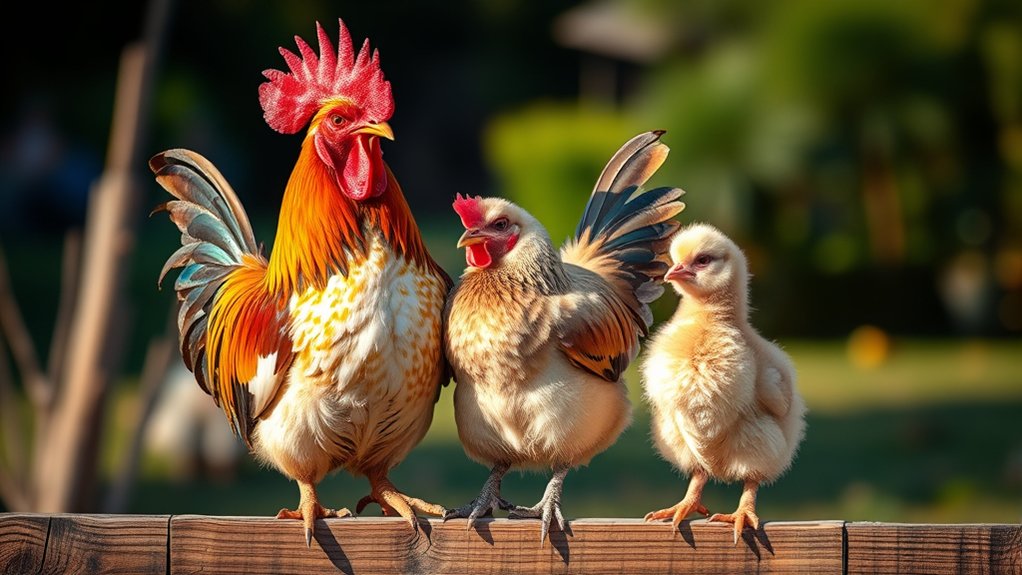
You can tell roosters, hens, and chickens apart by looking at size, feathers, combs, and behavior. Roosters are larger with bright, pointed feathers, big combs, and loud crowing. Hens are smaller, have softer, muted feathers, smaller combs, and make gentle clucking sounds.
Chicks are young and still growing into either. Watch their behavior too—roosters are protective and assertive, while hens focus on nesting and care.
Keep observing, and you’ll spot the subtle differences easily.
Key Takeaways
- Chickens include hens, roosters, and chicks, each with distinct roles and physical traits.
- Roosters have larger combs, vibrant feathers, longer tail feathers, and crow loudly.
- Hens are smaller, with muted colors, shorter tails, and softer clucking sounds.
- Roosters display dominant, protective behaviors; hens focus on nesting and caring for chicks.
- Identify chickens by combining size, feather color, comb size, vocalization, and behavior.
Chicken Basics: Definitions and Types

Although you might use the term “chicken” loosely, it actually refers to a broad category of domesticated birds that includes roosters, hens, and chicks. When you understand these definitions, distinguishing between them becomes easier.
The term chicken covers roosters, hens, and chicks—knowing this helps you tell them apart easily.
Hens are female chickens primarily known for egg production. They have specific breeding behaviors that involve nesting, incubating eggs, and caring for chicks.
Roosters, on the other hand, are male chickens with distinct roles in breeding behaviors, such as protecting the flock and mating with hens. Chicks are young chickens, not yet mature, and they develop into either hens or roosters over time.
Each type has unique traits and roles within the chicken community. Knowing these basics helps you appreciate how these birds function individually and as a group, especially regarding egg production and breeding behaviors, which are essential for maintaining healthy flocks.
This foundational knowledge sets the stage for spotting roosters and hens more easily.
Quick Guide to Spotting Roosters and Hens
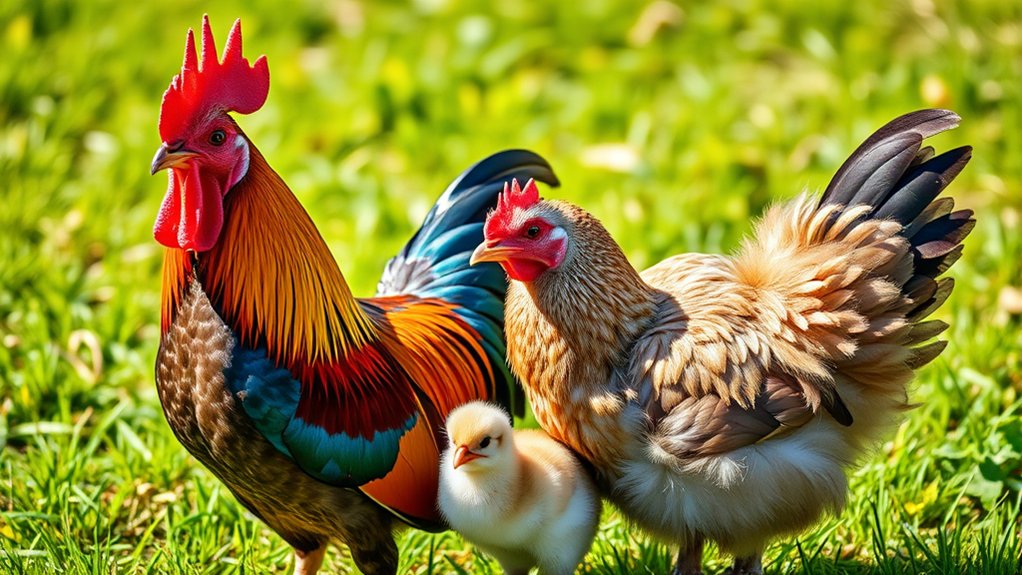
You can quickly spot roosters and hens by checking out their physical features and typical behaviors. Roosters usually have larger combs and brighter feathers. On the other hand, hens tend to be smaller and quieter. Just keep an eye out for these visual and behavioral cues, and you’ll be able to tell them apart with ease.
Physical Differences Overview
When you look closely at chickens, you’ll notice clear physical traits that help distinguish roosters from hens. One key difference is the feather sheen. Roosters often have shinier, more iridescent feathers that catch the light, while hens’ feathers tend to be duller.
Another obvious feature is the comb size. Roosters typically sport larger, more prominent combs compared to the smaller, less conspicuous combs on hens. These physical markers are reliable and easy to spot whether you’re new to poultry or just need a quick refresher.
Behavioral Traits Comparison
Physical traits like feather sheen and comb size give you a clear starting point, but behavior often provides even more telling clues. When you observe chickens, their actions reveal whether they’re roosters or hens.
Roosters tend to be more assertive and vocal, especially during their mating rituals. Feather color can also hint at behavior; roosters often display brighter, more vivid colors to attract mates.
Here’s what you should watch for:
- Loud crowing, especially at dawn, signals a rooster.
- Mating rituals, like wing flapping and dancing, are typical rooster behaviors.
- Hens usually cluck softly and gather chicks.
- Roosters protect the flock and may show aggression.
- Hens focus on nesting and foraging rather than dominating.
These behavioral traits help you quickly distinguish roosters from hens beyond just looks.
Visual Identification Tips
Although behavior offers valuable clues, spotting roosters and hens visually is often faster and just as reliable. You’ll notice roosters usually have larger, more vibrant combs and wattles, thanks to genetics influence that emphasizes these traits for attracting mates.
Their tail feathers are longer and more curved, while hens tend to have shorter, rounder tails. Pay attention to body size as well. Roosters generally appear bulkier.
Feeding habits can also affect appearance; well-fed birds show shinier, healthier feathers. When you observe a group, look for these visual markers to quickly distinguish roosters from hens.
How to Identify Roosters by Size and Shape
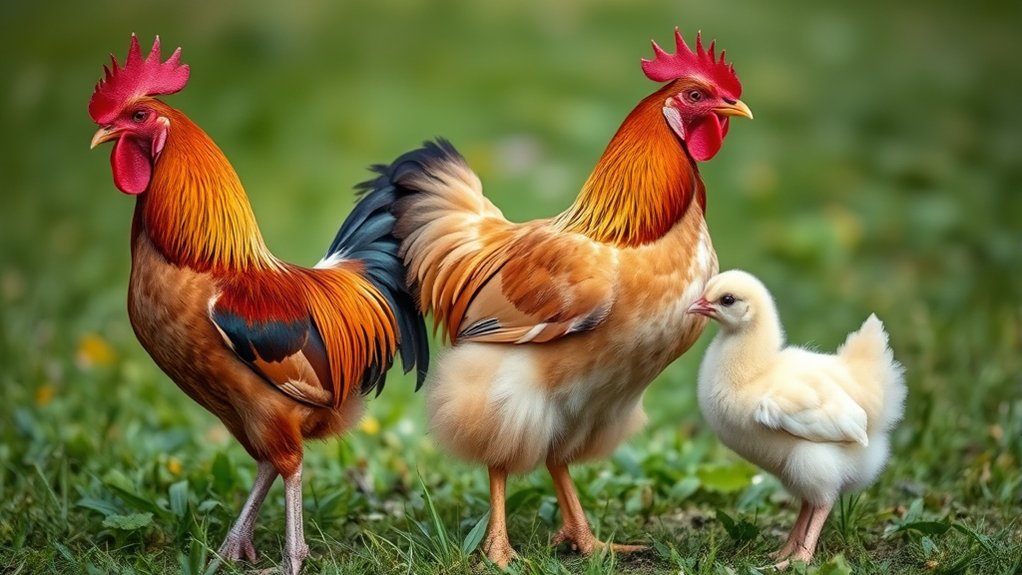
You’ll notice roosters are generally larger than hens, with a more robust body. They tend to have a taller stance and a broader chest. These size and shape clues make it easier to tell them apart at a glance. Just keep an eye out for those features, and you’ll spot the difference in no time.
Comparing Body Size
When comparing roosters to hens, size and shape provide clear clues you can use. Roosters generally have larger, more robust bodies than hens, which makes spotting them easier at a glance. Their feather patterns often appear more vibrant and pronounced, especially around the neck and tail. Comb shapes also differ, with roosters sporting bigger, more prominent combs compared to hens.
Look for these key size differences:
- Roosters stand taller and broader.
- Their legs are thicker and stronger.
- Hens have more rounded, compact bodies.
- Roosters’ feather patterns are bolder and more colorful.
- Larger, spikier comb shapes are typical in roosters.
Distinctive Shape Features
Since roosters have distinct shape features, you can often identify them just by observing their silhouette and posture. Roosters tend to stand taller and more upright than hens, with broader shoulders and a more pronounced chest.
Pay close attention to their comb shapes; roosters usually have larger, more vibrant combs that stand erect, while hens’ combs are smaller and less prominent.
Feather patterns also help. Roosters often display more iridescent, colorful feathers with pointed hackle and saddle feathers, giving them a sleek, angular look. Their tails are typically longer and curve dramatically.
Feather and Color Differences Between Roosters and Hens
Although both roosters and hens share similar feather structures, their colors and patterns often reveal key differences that help you tell them apart. When you observe feather patterns and color variations, roosters usually boast more vibrant and striking hues compared to hens. These differences aren’t just for show; they play a role in attracting mates and establishing dominance.
Roosters display vibrant, striking feathers that attract mates and assert dominance, unlike the more muted hens.
Here’s what to look for:
- Roosters often have iridescent, shiny feathers on their necks and tails.
- Hens tend to have more muted, camouflaged colors for better nesting protection.
- Roosters’ feather patterns include pointed hackle and saddle feathers.
- Hens have rounded feathers that are softer in appearance.
- You might notice roosters display bold color contrasts, while hens show uniform tones.
Physical Features That Help You Tell a Hen
Because hens have unique physical traits, you can quickly identify them by focusing on specific features. Their feather patterns tend to be more subdued and uniform compared to roosters, lacking the flashy colors and elongated tail feathers. When it comes to comb shapes, hens usually have smaller, less pronounced combs that sit neatly on top of their heads. These differences help you distinguish hens at a glance.
Here’s a simple table to highlight key physical features of hens:
| Feature | Description |
|---|---|
| Feather Patterns | Smooth, consistent, muted colors |
| Comb Shapes | Small, rounded or single comb |
| Tail Feathers | Short, less ornate |
| Body Size | Smaller, more compact |
| Wattles | Smaller and less vibrant |
How Roosters and Hens Behave Differently
If you watch them closely, you’ll see that roosters and hens behave pretty differently. Roosters are usually louder and more protective. On the other hand, hens tend to hang out more, socializing within the flock. Knowing these little differences makes it easier to tell them apart, not just by how they look.
Vocal Differences
How can you tell a rooster from a hen just by listening? Vocal communication plays a key role. Roosters are known for their loud, distinctive crowing, which serves as a territorial call and alert signal.
Hens, on the other hand, use softer clucking sounds, especially when communicating with chicks or signaling contentment. Mating calls are another clear vocal difference. Roosters produce specific calls to attract hens, while hens respond with gentle clucks.
Here’s how the vocal differences break down:
- Roosters crow loudly at dawn and throughout the day
- Hens cluck softly when nesting or feeding
- Rooster mating calls are sharp and repetitive
- Hens emit gentle, rhythmic clucks as responses
- Roosters’ calls often serve as warnings or territorial claims
Listening closely helps you identify who’s who.
Social Behavior
Although roosters and hens share the same environment, their social behaviors differ considerably. When you observe them, you’ll notice roosters often display more vibrant feather patterns to assert dominance within the social hierarchy. They actively patrol and establish their position, using their striking plumage to communicate strength.
Hens, on the other hand, tend to interact more cooperatively, focusing on maintaining harmony in the group. They recognize their place in the social hierarchy but don’t challenge it as aggressively. You’ll see hens clustering together, often sharing nesting duties and foraging calmly.
Understanding these behaviors helps you distinguish roosters from hens beyond just appearance, as their social roles and interactions reveal clear differences rooted in survival and flock organization.
Protective Instincts
The way roosters and hens interact socially naturally extends into how they protect their flock. When you observe them, you’ll notice roosters act as vigilant guardians, alerting hens to danger with loud calls and ready to defend aggressively.
Hens, on the other hand, show protective instincts through broodiness behavior, focusing on egg incubation and shielding their chicks closely. Here’s what differentiates their protective roles:
- Roosters patrol the area, watching for predators
- Hens exhibit broodiness, sitting tightly on eggs
- Roosters use crowing and physical displays to scare threats
- Hens keep chicks warm and hidden after hatching
- Roosters lead hens to food and safe spots
Understanding these behaviors helps you recognize how each contributes to flock safety.
Recognizing Rooster Crows and Hen Clucks
Why do roosters crow so loudly while hens stick to softer clucks? Rooster crowing is a loud, sharp call used to establish territory and communicate dominance. When you hear a rooster crow, it’s often at dawn or during moments of excitement, signaling alertness or warning others.
In contrast, hen clucking is gentler and varied. You’ll notice hens clucking quietly to communicate with their chicks or express contentment. This softer sound helps maintain calm within the flock.
As you observe, the distinct difference in their vocalizations becomes clear: roosters crow to assert presence and protect, while hens cluck to nurture and coordinate. Recognizing these sounds helps you identify whether you’re hearing a rooster or a hen without seeing them.
How Age Changes Rooster and Hen Appearance
As roosters and hens grow older, you’ll notice distinct changes in their appearance that reflect their age and maturity. These changes help you identify their stage of life and differentiate them more easily. For instance, the feather color often becomes richer and more defined with age, especially in roosters.
Roosters and hens show clear physical changes as they age, revealing their maturity and life stage.
The comb shape also evolves, growing larger and more pronounced as they mature. Here are key changes to watch for:
- Feather color deepens and becomes more vibrant in mature birds.
- Roosters develop longer, more pointed saddle and hackle feathers.
- Hen feathers smooth out and may lighten slightly with age.
- Comb shape grows larger and more textured in roosters; hens’ combs stay smaller but may become more defined.
- Older birds may show slight wear or fading in feathers, indicating age.
Common Mistakes When Identifying Roosters and Hens
Although it might seem straightforward, you can easily confuse roosters and hens if you overlook subtle details. One common mistake is relying solely on size. Some hens can be larger than smaller roosters, especially if the chicken diet is inconsistent or lacks proper protein.
Another error is assuming all roosters have loud crows or bright combs. Younger roosters or breeds with less pronounced features can mislead you.
Additionally, poor coop maintenance might cause hens to look unkempt or stressed, making them resemble roosters with rougher feathers. Ignoring behavior cues can also trip you up. Some hens display dominance, which can be mistaken for rooster traits.
Avoid these pitfalls by observing multiple characteristics at once rather than focusing on one. Remember, identifying roosters and hens accurately helps you manage your flock better and maintain a balanced chicken diet and coop environment.
Top Tips for Spotting Roosters and Hens in Your Backyard
When you want to quickly tell roosters and hens apart in your backyard, focus on a combination of physical traits and behaviors. Roosters often have larger combs and wattles, while hens tend to be smaller and less flashy. You can also watch their egg laying habits. Only hens lay eggs, so noticing who visits the nesting boxes helps a lot.
Observing their calls is another clue. Roosters crow, hens cluck. Coop arrangement tips come into play, too. Design separate perches or nesting areas to easily monitor each bird’s behavior. Here are some top tips:
- Look for size differences: roosters are generally bigger.
- Check feather patterns; roosters have longer tail and neck feathers.
- Notice vocalizations: roosters crow, hens cluck.
- Observe egg laying habits by tracking visits to nesting boxes.
- Use coop arrangement tips to separate sleeping and laying areas for clearer observation.
With these strategies, you’ll confidently spot roosters and hens in no time.
Frequently Asked Questions
What Is the Nutritional Difference Between Rooster and Hen Meat?
You’ll find rooster meat is usually tougher and leaner because their feeding habits and breeding behaviors make them more active and muscular. Hen meat tends to be tenderer and fattier since hens focus more on egg production than constant activity.
These differences affect protein and fat content, with rooster meat often having slightly higher protein but less fat. So, your choice depends on whether you want leaner or more tender meat based on those factors.
Can Roosters and Hens Live Together Peacefully Year-Round?
Yes, roosters and hens can live together peacefully year-round if you manage their environment well. You’ll need to handle rooster crowing by providing enough space and distractions to reduce stress.
Pay attention to hen behavior, as hens might get aggressive or stressed if overcrowded or if the rooster is overly dominant. Keeping a balanced ratio of hens to roosters and ensuring plenty of food and shelter helps maintain harmony in your flock.
How Do Roosters and Hens Affect Egg Production Rates?
Rooster behavior can actually boost egg production rates by keeping hens more active and less stressed. When a rooster is around, you’ll notice hens’ vocalizations become more frequent, signaling a healthy, alert flock.
These vocal cues often encourage hens to lay more consistently. However, too much rooster dominance might stress hens, lowering production. So, you’ll want a balanced ratio to benefit from rooster presence without overwhelming the hens.
Are There Specific Breeds Better for Distinguishing Roosters From Hens?
You’ll find that some breed differences make spotting roosters from hens as clear as daybreak. For example, in Silkies, their fluffy feathers blur outlines, but their behavioral traits, like roosters crowing, shine through.
Leghorns show striking comb and wattle contrasts, making distinctions easier. If you want a breed that practically announces its identity, focus on those with bold color patterns and distinct behaviors. They’ll help you tell them apart without second-guessing.
What Are the Legal Restrictions on Keeping Roosters in Urban Areas?
You’ll find that urban noise regulations often limit or prohibit keeping roosters because their crowing can disturb neighbors early in the morning. Zoning restrictions typically dictate whether you can keep any poultry, including roosters, on your property.
Before you bring a rooster home, check your city or town’s specific rules to avoid fines or complaints. If roosters aren’t allowed, hens might be your best bet for urban backyard flocks.
Conclusion
Now that you know how to spot roosters, hens, and chickens, you’ll never mix them up again. No need for a crystal ball! Just look for size, feather patterns, and listen for their unique calls.
Remember, age changes their looks, so keep an eye out as they grow. With these simple tips, you’ll confidently tell your backyard birds apart and impress your friends with your poultry know-how every time.
Knowing how to tell rooster vs hen vs chicken is easier than you think!