10 Stunning Pictures of Different Breeds of Chickens
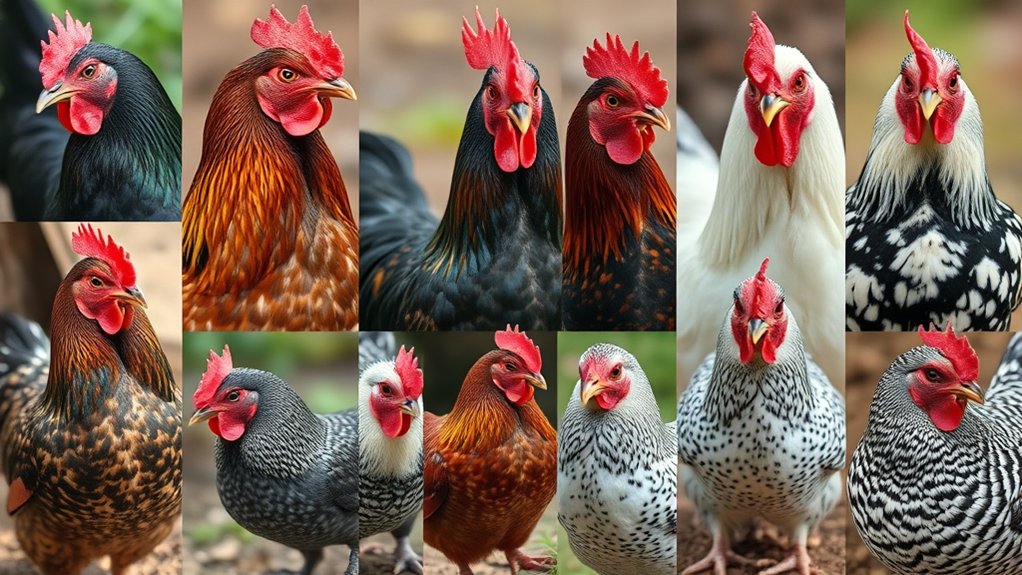
Finding the perfect chicken breed can feel overwhelming, especially with so many stunning options out there. You’re not alone—many people struggle to choose breeds that match their space, climate, and style preferences. That’s why we’ve gathered 10 stunning pictures of different breeds of chickens to inspire and guide you.
You’ll love exploring stunning pictures of diverse chicken breeds, from silky-soft Silkies with fluffy crests to striking Polish birds sporting pom-pom feathers. See the intricate laced patterns on Wyandottes and the fluffy insulation of Cochinchinas.
Check out hardy Rhode Island Reds and productive Leghorns, plus charming Bantams with vibrant colors. Each breed has unique features and care needs, offering beauty and versatility. Keep going to uncover what makes these chickens truly remarkable.
Key Takeaways
- Silkie and Polish chickens stand out with their unique, fluffy crests resembling pom-poms. They create visually striking appearances.
- Wyandotte chickens showcase intricate, symmetrical laced feather patterns in Silver, Golden, and Blue varieties.
- Cochin chickens feature fluffy, soft feathers in colors like black, white, and shimmering blue. This gives them a distinct visual appeal.
- Sussex and Rhode Island Red breeds combine hardy resilience with attractive plumage. They are suitable for diverse climates.
- Bantam chickens offer vibrant feather colors and compact size. They’re ideal for limited space and decorative flocks.
Meet the Colorful Silkie Chicken Breed
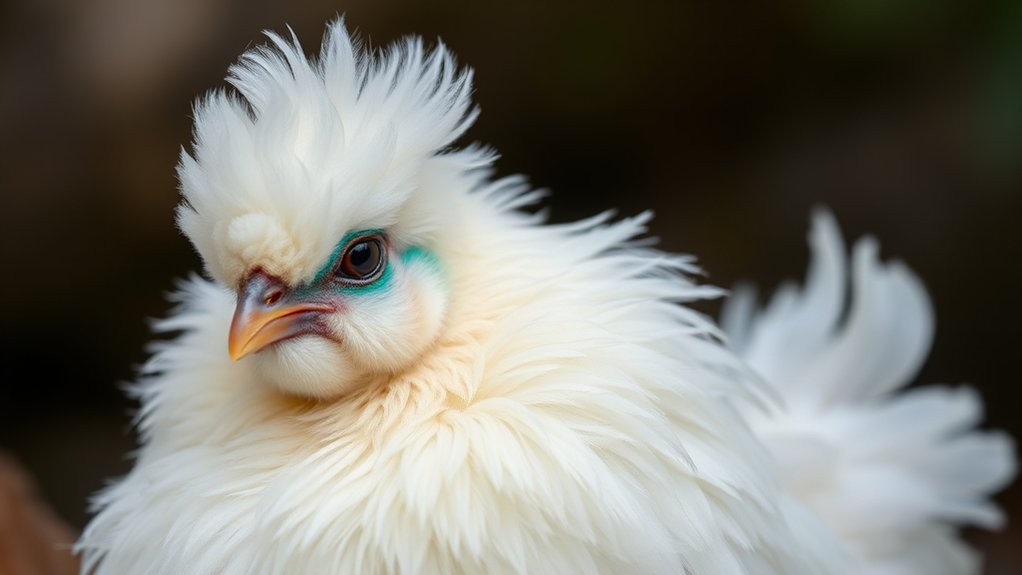
Although you might be familiar with common chicken breeds, the Silkie stands out with its unique, fluffy feathers that feel more like silk than typical plumage. This distinctive texture comes from their feather structure, making them look almost like living clouds.
Silkies captivate with their cloud-like, silky feathers that redefine what chicken plumage can be.
When you meet a Silkie, you’ll quickly notice their calm and friendly Silkie temperament. They’re incredibly gentle and sociable, perfect if you want a pet chicken that’s easy to handle.
Silkies history dates back centuries, originating in Asia, where they were prized for their unusual appearance and soft feathers. They’ve been admired worldwide for their charm and docile nature.
If you’re seeking a chicken that’s both visually striking and a joy to interact with, Silkies are an excellent choice. Their unique look combined with their sweet disposition makes them stand out in any flock, offering both beauty and companionship.
Discover the Striking Patterns of Barred Plymouth Rock Chickens
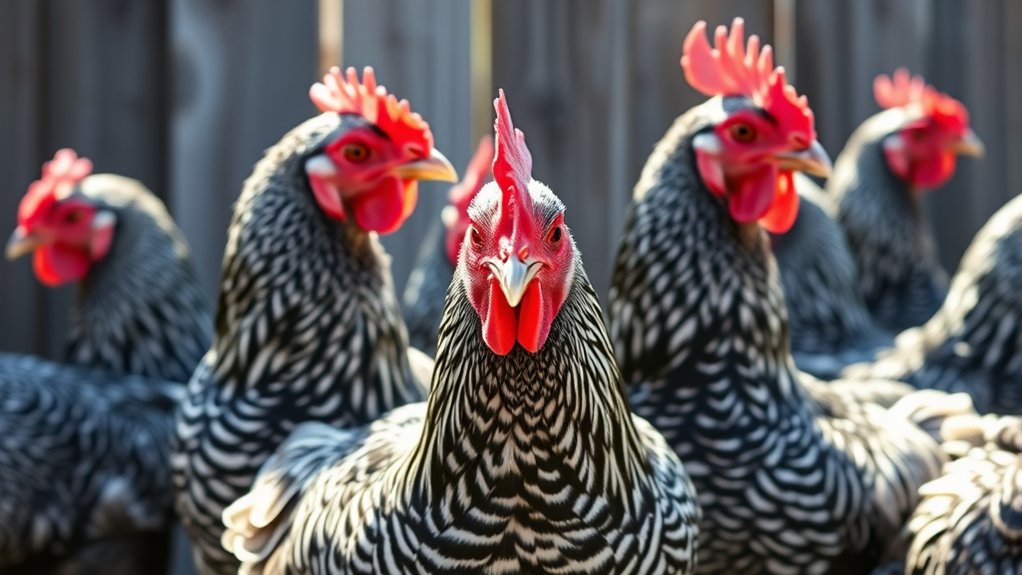
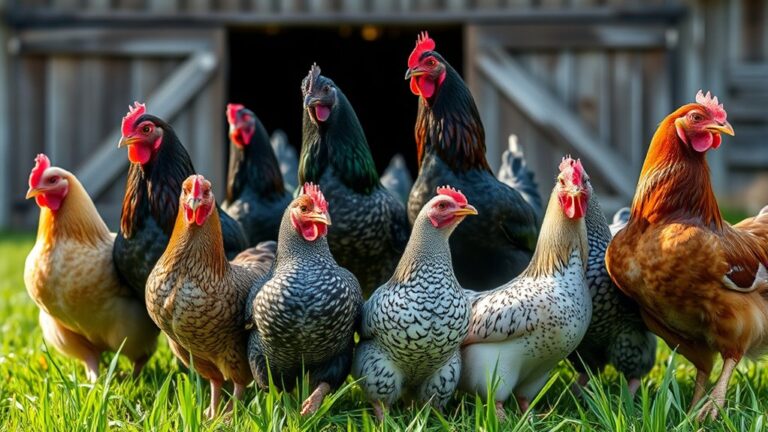
What makes Barred Plymouth Rock chickens so eye-catching? It’s their unique barred patterns that instantly grab your attention. These chickens display alternating black and white stripes across their feathers, creating a bold, classic look that stands out in any flock.
When you observe their feather coloration, you’ll notice the crisp contrast between the dark and light bands, giving them a striking, clean appearance. This distinctive feather pattern isn’t just beautiful; it also helps you easily identify the breed.
As you delve into their feather coloration up close, you’ll see how consistent and symmetrical the barring is, highlighting the breed’s genetic stability. Whether you’re a backyard chicken keeper or a poultry enthusiast, you’ll appreciate how Barred Plymouth Rock chickens combine practical hardiness with stunning visual appeal.
Why Rhode Island Red Chickens Excel in Backyards
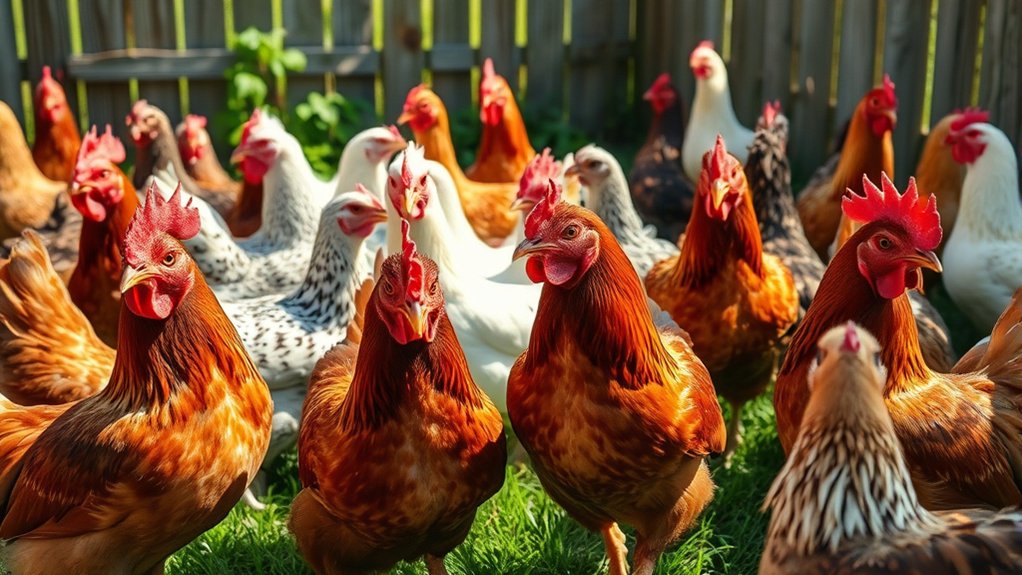
You’ll really appreciate Rhode Island Reds because they’re tough birds that handle all kinds of weather without any trouble. Plus, they keep laying eggs steadily all year round, which is a big bonus. On top of that, they’re known for being friendly and calm, so they’re great companions to have roaming around your backyard. Let’s take a closer look at what makes this breed such a standout choice for home flocks.
Hardiness in Various Climates
Because Rhode Island Red chickens adapt well to both hot summers and cold winters, they make an excellent choice for backyard flocks in various climates. Their climate adaptation and seasonal resilience mean you won’t need to worry about extreme weather affecting their health or productivity.
Whether you face sweltering heat or biting cold, these hardy birds will thrive and stay active.
Here’s a quick look at their hardiness:
| Climate Type | Adaptation Feature | Benefit to You |
|---|---|---|
| Hot Summers | Heat tolerance | Keeps chickens active |
| Cold Winters | Dense feathering | Maintains body warmth |
| Variable | Robust immune system | Reduces illness risk |
You’ll appreciate how Rhode Island Reds handle changing conditions, making them a smart backyard investment.
Consistent Egg Production
How can you rely on your flock to supply fresh eggs all year round? Rhode Island Red chickens excel because they maintain consistent egg production, even in less-than-ideal conditions. Their hardiness combined with proper poultry nutrition ensures they stay healthy and productive.
Feeding them a balanced diet rich in protein and essential vitamins supports strong egg development. Moreover, managing egg incubation carefully helps maintain a steady supply of chicks, allowing you to expand or replace your flock without losing productivity.
These chickens naturally lay large brown eggs almost daily, making them ideal for backyard keepers who want reliable egg output. By focusing on nutrition and understanding egg incubation cycles, you’ll enjoy fresh eggs on your table throughout the seasons. Rhode Island Reds truly shine when it comes to dependable egg production.
Friendly Temperament Traits
Rhode Island Red chickens don’t just impress with their egg-laying abilities. They’re also known for their friendly and approachable nature. When you raise these birds, you’ll notice their calm demeanor helps them fit seamlessly into your backyard flock.
They use clear chicken vocalizations to communicate, making interactions more predictable and enjoyable. Their understanding of social hierarchy means they rarely cause stress within the group, keeping peace among your chickens. You’ll appreciate how these traits make daily care easier and more rewarding.
- Easily social with humans and other chickens
- Clear vocalizations signal moods and needs
- Respectful of social hierarchy, reducing conflicts
- Calm temperament, ideal for families
- Adaptable to different environments and routines
With Rhode Island Reds, you get a friendly, low-maintenance flock member.
Check Out the Fluffy Feathers of Cochinchina Chickens
You’ll notice Cochinchina chickens really stand out because of their unique fluffy feathers that feel super soft to the touch. Plus, their plumage comes in a variety of colors, which makes each bird look pretty striking. So, let’s take a closer look at what makes their feather texture and color so special.
Unique Feather Texture
Although many chicken breeds have smooth feathers, Cochinchina chickens stand out with their exceptionally fluffy plumage. You’ll notice their unique feather texture adds a softness that’s rare among chickens. This texture variety not only makes them visually appealing but also affects how their feathers reflect light, enhancing their feather sheen.
When you observe their feathers closely, you can appreciate how different textures serve various purposes and beauty.
- Fluffy feathers provide extra insulation against cold weather.
- Soft down feathers create a plush appearance.
- Coarser feathers offer protection and durability.
- Feather sheen varies with light angles, adding depth.
- Texture influences the bird’s overall tactile sensation.
You’ll find that understanding these textures deepens your appreciation for chicken breeds like Cochinchina.
Color Variations
When you examine chicken breeds, color variations immediately catch your eye, especially in Cochinchina chickens with their fluffy feathers. These birds showcase a wide range of feather coloration, from rich blacks to soft whites and shimmering blues.
The pigment variations in their feathers create stunning contrasts that highlight their unique fluffiness. You’ll notice how pigment distribution isn’t uniform; some feathers have gradients or speckles, adding depth to their appearance.
These variations result from genetics influencing melanin and other pigments, making each Cochinchina chicken distinct. Observing these colors helps you appreciate how nature combines texture and hue, turning simple feathers into a vibrant display.
The diversity in feather coloration truly sets Cochinchina chickens apart from other breeds you might encounter.
See the Unique Crests of Polish Chickens
If you’ve ever seen a Polish chicken up close, you know their crests aren’t just feathers. They’re a showstopper. These distinctive Polish chicken crests form a fluffy, pom-pom-like crown that instantly sets them apart. When you care for these birds, crest feather maintenance becomes essential to keep their unique look intact and prevent vision obstruction.
Here’s what you should know about their crests:
- The feathers grow densely around the head, creating a bold, rounded shape.
- Regular grooming helps avoid matting and keeps the crest clean.
- You might need to trim feathers occasionally for better eyesight.
- Wet or muddy conditions can damage the crest, so shelter is important.
- Healthy diet and environment influence feather quality and shine.
Meet the Hardy and Beautiful Sussex Chicken
Since you’re looking for a hardy and beautiful breed, the Sussex chicken stands out with its calm temperament and striking plumage. This breed’s versatility has made it a favorite for backyard flocks and small farms alike.
The Sussex chicken combines calm temperament with stunning plumage, perfect for versatile backyard and small farm flocks.
You’ll appreciate its resilience, as it handles cold weather well and requires minimal fuss. Despite its strengths, Sussex chickens have faced breeding challenges, especially in maintaining their traditional colors and traits without losing toughness.
Their historical significance is rich. They originated in England and played a crucial role in poultry farming for centuries, prized for both meat and egg production. When you raise Sussex chickens, you’re connecting with a breed that has adapted through generations while retaining its charm.
Whether you want a friendly pet or a reliable layer, Sussex chickens offer a balanced mix of beauty and durability that makes them a standout choice.
Why Orpingtons Are Popular Dual-Purpose Birds
Although many chicken breeds serve specific purposes, Orpingtons have earned their popularity by excelling in both meat and egg production. You’ll find Orpingtons are not only great for providing quality meat but also lay a respectable number of eggs, making them truly dual-purpose birds.
They’re also popular among enthusiasts for their calm temperament and striking appearance.
Here’s why you might consider Orpingtons:
- Orpingtons as show birds attract attention with their fluffy plumage and gentle nature.
- Their large size makes Orpingtons ideal for meat production.
- They’re hardy, adapting well to various climates.
- They’re good layers, providing steady egg production without sacrificing meat quality.
- Their calm demeanor makes them easy to handle for both beginners and experienced keepers.
Because of these qualities, Orpingtons offer you the best of both worlds, combining beautiful show potential with practical meat and egg benefits.
Admire the Laced Feather Patterns of Wyandotte Chickens
What makes Wyandotte chickens stand out is their stunning laced feather patterns, which catch the eye of both casual observers and serious poultry breeders. When you look closely, you’ll notice the intricate laced patterning on each feather, where a contrasting edge beautifully outlines the feather’s center.
Wyandotte chickens captivate with their exquisite laced feathers, enchanting both casual fans and dedicated breeders alike.
This unique feather coloration creates a striking visual effect that’s both elegant and distinctive. As you admire these birds, you’ll find that the laced patterning isn’t just random; it follows a consistent, symmetrical design that *beautifies* their overall appearance.
Whether they’re the Silver, Golden, or Blue variety, Wyandottes showcase this pattern with precision, making them a favorite among enthusiasts who appreciate detailed feather coloration. If you want a breed that combines beauty with a calm temperament, Wyandottes with their laced feather patterns will surely impress you.
Their remarkable look makes them a living work of art in your flock.
Why Leghorn Chickens Stand Out in Egg Production
When you’re looking for a breed that excels in egg production, Leghorn chickens quickly come to mind. You’ll appreciate their ability to lay large quantities of white eggs consistently, making them a top choice for anyone focused on egg cellent nutrition. Their efficiency supports backyard sustainability by providing a steady supply of fresh eggs with minimal feed.
Here’s why Leghorns stand out:
- High egg production rate, often 280+ eggs per year
- Low feed-to-egg conversion ratio, saving you money
- Hardy and adaptable to various climates
- Active foragers, reducing feed costs naturally
- Lightweight build, requiring less maintenance
Meet Bantam Chicken Breeds: Small Size, Big Personality
You’ll love getting to know bantam chickens—they pack big personality into a small frame. They’re perfect if you have limited space because they thrive in cozy living areas designed just for their size. Caring for bantams is pretty simple once you get to know their unique traits and needs.
Unique Bantam Breed Traits
Although bantam chickens are small in size, they pack a big personality that makes them a favorite among backyard poultry enthusiasts. Understanding their unique traits starts with appreciating their bantam breed history, which dates back centuries and highlights their role as miniature versions of larger fowl.
When you care for these tiny birds, miniature chicken care becomes essential to keep them healthy and happy.
Here are five unique bantam breed traits you’ll notice:
- Compact size with full-sized chicken features
- Vibrant feather colors and patterns
- Friendly and curious temperament
- High adaptability to various climates
- Lower feed requirements than standard breeds
Knowing these traits helps you enjoy and properly care for bantams while celebrating their charming uniqueness.
Ideal Bantam Living Spaces
Since bantam chickens are smaller and more delicate than standard breeds, providing the right living space is essential to their health and happiness. You’ll want to focus on a coop design that offers cozy, secure shelter without overcrowding. Bantams need lower perches and smaller nesting boxes tailored to their size.
Their feeding habits require feeders and waterers scaled down to prevent waste and encourage easy access. Make sure the coop has good ventilation to avoid respiratory issues but remains draft-free to keep them warm. A secure outdoor run with safe footing offers room to forage, which suits their natural habits.
Caring For Bantam Chickens
Creating the right living space sets the foundation for caring for bantam chickens effectively. To keep your bantams healthy and happy, focus on proper bantam coop design and balanced bantam chicken nutrition.
Make certain their coop provides safety, ventilation, and enough room for movement. Feed them a diet rich in protein, grains, and fresh greens to support their energetic nature. Don’t forget daily fresh water and regular health checks.
Here’s what to keep in mind:
- Design a secure, well-ventilated bantam coop with easy access.
- Provide a balanced bantam chicken nutrition plan with quality feed.
- Keep fresh water available at all times.
- Clean the coop regularly to prevent disease.
- Monitor their behavior and health for early issue detection.
This approach ensures your bantams thrive and show their big personality!
Frequently Asked Questions
How Do I Care for Chickens During Winter Months?
You’ll want to focus on winter coop insulation to keep your chickens warm and dry during cold months. Make sure their coop is draft-free but well-ventilated to prevent moisture buildup.
Pay attention to feather maintenance by checking for damaged or missing feathers, as healthy feathers help retain heat. Provide extra bedding like straw, and offer them plenty of high-energy food and fresh water to keep them healthy and comfortable throughout winter.
What Are Common Health Issues in Backyard Chickens?
Common health issues in backyard chickens can sneak up like shadows at dusk. You’ll want to watch for mites, respiratory infections, and egg-binding.
Regular chicken grooming keeps their feathers clean and helps spot problems early. Also, maintaining proper nutrition and hygiene supports egg production tips you’ll find invaluable.
Keep their coop dry and well-ventilated to prevent illnesses. By staying vigilant, you’ll keep your flock vibrant and productive.
How Much Space Do Different Chicken Breeds Need?
You should provide about 2-4 square feet per chicken inside the coop and 8-10 square feet in the run, but space needs vary by breed. Larger breeds like Brahmas need more room, while bantams require less.
Feeding habits matter too. Some breeds are messier eaters and need extra space to reduce competition. Also, consider breed compatibility. Keeping aggressive breeds separate prevents stress and overcrowding, ensuring healthier chickens overall.
What Do Chickens Typically Eat for Optimal Health?
Back in the day of knights and castles, you’d know that a balanced chicken diet is key for ideal nutrition. You’ll want to feed your chickens a mix of grains, protein sources like mealworms or soybean meal, and plenty of fresh greens.
Don’t forget calcium from crushed oyster shells for strong eggshells. Providing clean water and occasional kitchen scraps rounds out the diet, keeping your chickens healthy and thriving every day.
How Can I Tell a Hen From a Rooster?
You can tell a hen from a rooster by focusing on gender identification traits like feather coloration and physical features. Roosters usually have brighter, more vibrant feathers and longer tail feathers, while hens have duller, more uniform coloring.
Roosters also have larger combs and wattles. Listen for crowing too. Roosters crow, hens don’t. Observing these signs helps you quickly identify the chicken’s gender.
Conclusion
You’ve just glimpsed a vibrant world where chickens aren’t just farm animals; they’re feathered works of art. From the silky fluff of Silkies to the bold stripes of Plymouth Rocks, each breed brings its own splash of personality to your backyard.
You’ll feel like you’re hosting a chicken fashion show with these stunning birds. So, why settle for ordinary when you can welcome these colorful, charming breeds into your life? Your coop will never be the same with these different breeds of chickens!