List of 5 Popular Chicken Breeds to Know
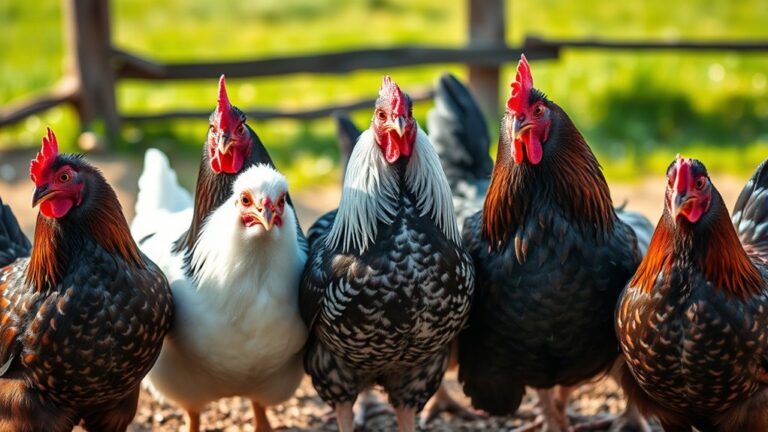
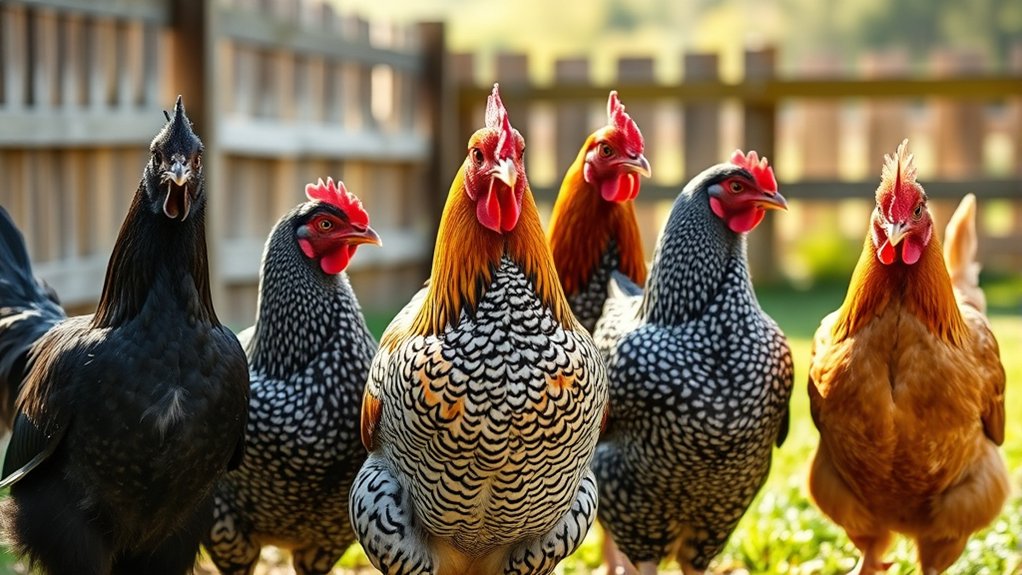
Finding the perfect chicken breed for your flock can be overwhelming. You want birds that lay well, taste great, and maybe even make good pets. If you’ve struggled to choose, you’re not alone—many people feel the same way when starting out.
If you want reliable chickens, start with Leghorns for steady white eggs and Rhode Island Reds if you prefer brown.
Try Cornish Cross for quick meat or Jersey Giants for larger cuts.
For friendly pets, Orpingtons are calm and adaptable, while Silkies charm with their fluffy feathers.
These breeds cover eggs, meat, companionship, and style, setting you up for success.
Keep going, and you’ll uncover tips to match your goals perfectly.
Key Takeaways
- Leghorn chickens are popular for their exceptional white egg production and hardy nature. They’re a great choice if you want consistent egg layers.
- Rhode Island Reds are reliable brown egg layers known for disease resistance and hardiness. They’re tough birds that do well in many environments.
- Cornish Cross chickens are favored for rapid growth and high meat yield. That makes them a top pick for meat production.
- Orpingtons are calm, friendly pets adaptable to various climates and family environments. They’re perfect if you want a gentle backyard companion.
- Polish chickens are admired for their unique crests and striking feather patterns in shows. They really stand out with their distinctive looks.
How to Choose the Right Chicken Breeds for You
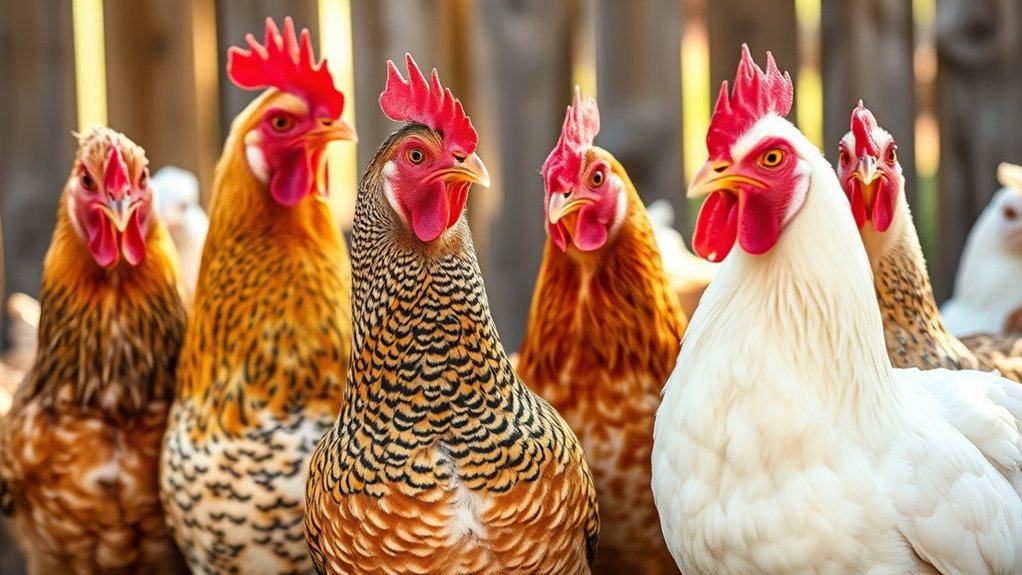
Choosing the right chicken breeds starts with understanding your goals, whether you want eggs, meat, or pets. You should first consider chicken breeding strategies that align with these goals to guarantee success.
For example, if egg production is your priority, focus on breeds known for consistent laying. If meat is your focus, select breeds that grow quickly and have good body mass.
You’ll also want to evaluate the nutritional needs for chickens based on the breed you choose. Different breeds may require specific diets to thrive and produce well, so tailoring their feed is essential.
Don’t forget to assess your local climate and space, as some breeds handle cold or heat better and need varying amounts of room.
Top Egg-Laying Chicken Breeds for Fresh Backyard Eggs
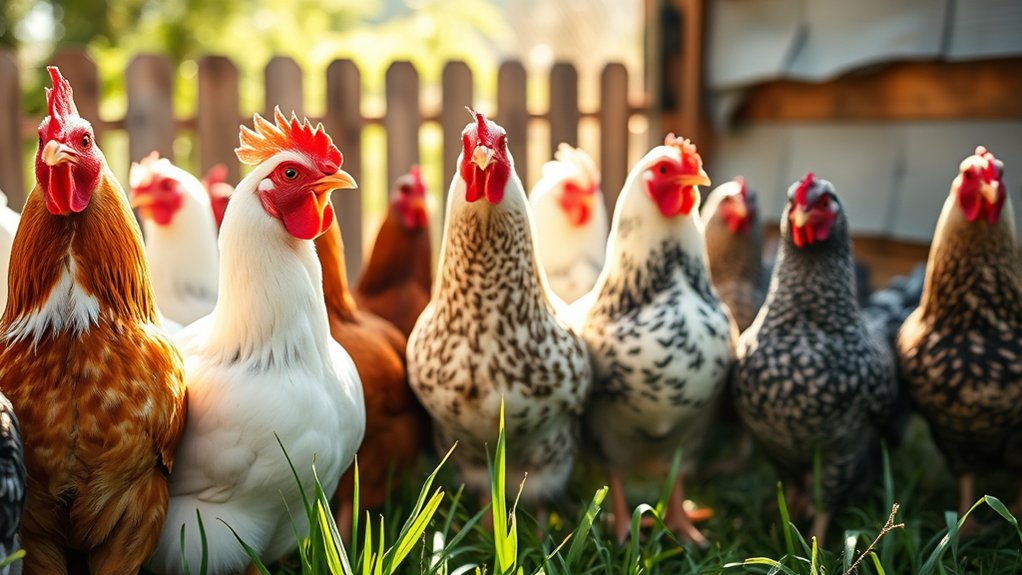
If your goal is to collect fresh eggs regularly, focusing on top egg-laying chicken breeds will help you get the most from your backyard flock. These breeds excel in egg production techniques that guarantee a steady supply of high-quality eggs. Plus, the nutritional benefits of backyard eggs, richer in vitamins and omega-3s compared to store-bought, make them worth the effort.
Here are four popular egg-laying breeds to contemplate:
- Leghorn: Known for exceptional white egg production and hardiness.
- Rhode Island Red: Reliable layers with brown eggs and good disease resistance.
- Sussex: Friendly birds that lay large, light brown eggs consistently.
- Australorp: Calm and prolific layers, producing around 250 eggs yearly.
Choosing any of these breeds will boost your egg yield and improve your enjoyment of fresh, nutritious backyard eggs.
Best Meat Chicken Breeds for Your Backyard
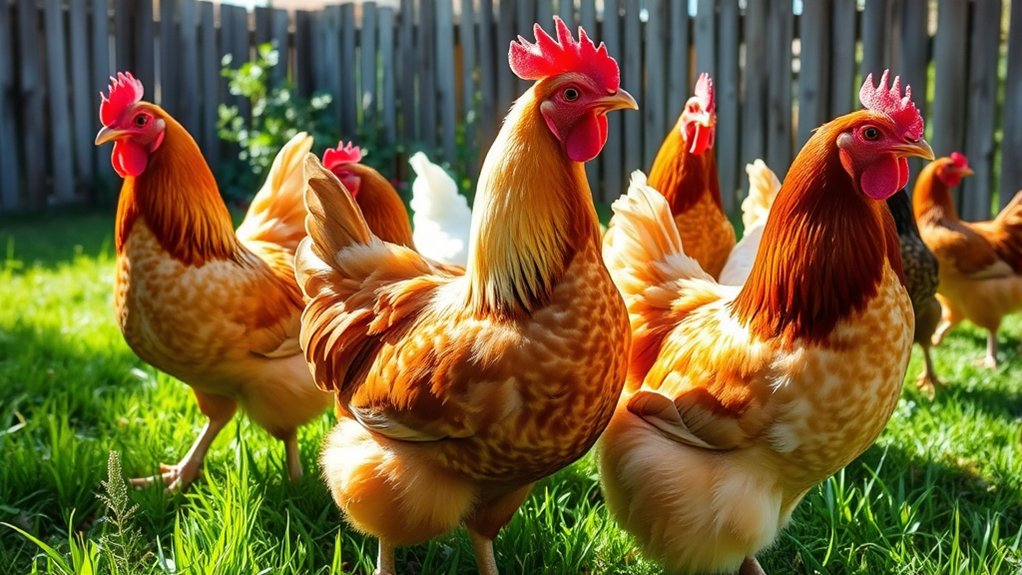
Four popular meat chicken breeds stand out for backyard flocks, offering excellent growth rates and flavorful meat. You’ll find the Cornish Cross, Jersey Giant, Freedom Ranger, and Delaware among the top choices. Each breed has unique feeding habits that influence their growth and meat quality.
For example, Cornish Crosses require a high-protein diet to reach market weight quickly, while Freedom Rangers thrive on more varied, pasture-based feeding. Understanding breeding techniques is essential, too. Selecting breeds with strong genetics guarantees healthier, faster-growing birds suited for your backyard setup.
You can improve your flock by choosing breeders who focus on disease resistance and efficient feed conversion. By managing feeding habits carefully and using proper breeding techniques, you’ll enjoy tender, juicy chicken right from your backyard. These breeds balance ease of care with excellent meat production, making them ideal for both beginners and seasoned poultry keepers.
Friendly and Hardy Chicken Breeds for Pets
While meat breeds shine in backyard flocks for their growth and flavor, pet chickens offer a different kind of reward with their friendly nature and hardiness. When choosing pet chickens, you’ll want breeds that handle breeding challenges well and adapt easily to varied dietary needs.
These chickens are social, curious, and resilient, making them wonderful companions.
Consider these breeds for a pet-friendly flock:
- Orpingtons: Known for their calm demeanor and adaptability to different climates.
- Silkies: Small, fluffy, and affectionate, perfect for gentle handling.
- Plymouth Rocks: Hardy and friendly, they cope well with minor breeding challenges.
- Sussex: Curious and hardy, they thrive on diverse diets and are great with families.
Beautiful Show Chicken Breeds to Impress Your Neighbors
Though raising chickens for meat or companionship brings many rewards, focusing on show breeds lets you add a touch of elegance and spectacle to your flock. Beautiful show chicken breeds enchant with their diverse color variations and intricate feather patterns that make them stand out in any neighborhood.
Breeds like the Polish, with its stunning crest and unique feather patterns, or the Silkie, known for its fluffy plumage and striking colors, are sure to impress. You’ll also appreciate the Barnevelder’s rich, lustrous color variations and the Sebright’s delicate, laced feather patterns.
These breeds require attention to grooming and care to keep their feathers in top condition, but the effort pays off when your chickens become local stars. If you want your flock to be a conversation starter, choosing show breeds with vivid colors and striking feather patterns is the way to go. They bring beauty and charm that everyone will admire.
Frequently Asked Questions
How Do I Care for Baby Chicks From Different Breeds?
You should provide baby chicks from different breeds with proper feeding requirements, offering starter feed rich in protein to support growth. Keep their brooder warm and clean, adjusting heat as they grow.
Pay close attention to feather care by ensuring they stay dry and free from dust or debris. Regularly check their environment for safety and comfort, so your chicks stay healthy and develop strong feathers.
What Are the Common Health Issues in Chicken Breeds?
You’ll face epic battles with mites and lice that seem determined to devour every feather, threatening your chicken’s vibrant feather coloration. Respiratory infections often attack like sneaky ninjas, risking egg production and overall health.
Coccidiosis can strike hard, especially in young chicks, causing severe distress. You’ve got to stay vigilant, keep their environment clean, and monitor them closely to protect your flock from these common health challenges.
How Much Space Do Various Chicken Breeds Need?
You’ll want to give each chicken about 2 to 4 square feet inside the coop and 8 to 10 square feet in the run, depending on the breed size. Make sure your chicken coop ventilation is excellent to keep air fresh and reduce respiratory issues.
Also, consider the dietary needs of breeds. Larger breeds may require more space to move comfortably and access food and water easily, helping them stay healthy and stress-free.
Can Different Chicken Breeds Live Together Peacefully?
Sure, social serenity starts with smart selections! You can mix breeds, but mixed breed compatibility matters. Some chickens have breed specific social behaviors that influence how well they coexist.
For example, docile breeds generally get along, but aggressive or territorial ones might cause chaos. You’ll want to watch their interactions closely and provide enough space to keep peace.
What Is the Average Lifespan of Popular Chicken Breeds?
You can expect popular chicken breeds to live around 5 to 8 years on average. Their lifespan often depends on factors like egg production rates and feather color variations, which relate to breed genetics and health.
High egg producers sometimes have shorter lifespans due to their energy demands. By providing proper care, you can help your chickens thrive longer, enjoying vibrant feathers and steady egg-laying throughout their lives.
Conclusion
Choosing the right chicken breed means balancing your needs, whether you want endless fresh eggs, tender meat, friendly pets, or stunning show birds. You might crave the practicality of a reliable layer but also want a beautiful breed to brighten your yard.
Remember, backyard chickens can be both hardworking and charming companions. So mix utility with personality, and you’ll find the perfect flock that’s as productive as it is delightful. Knowing popular chicken breeds helps you make the best choice for your flock.