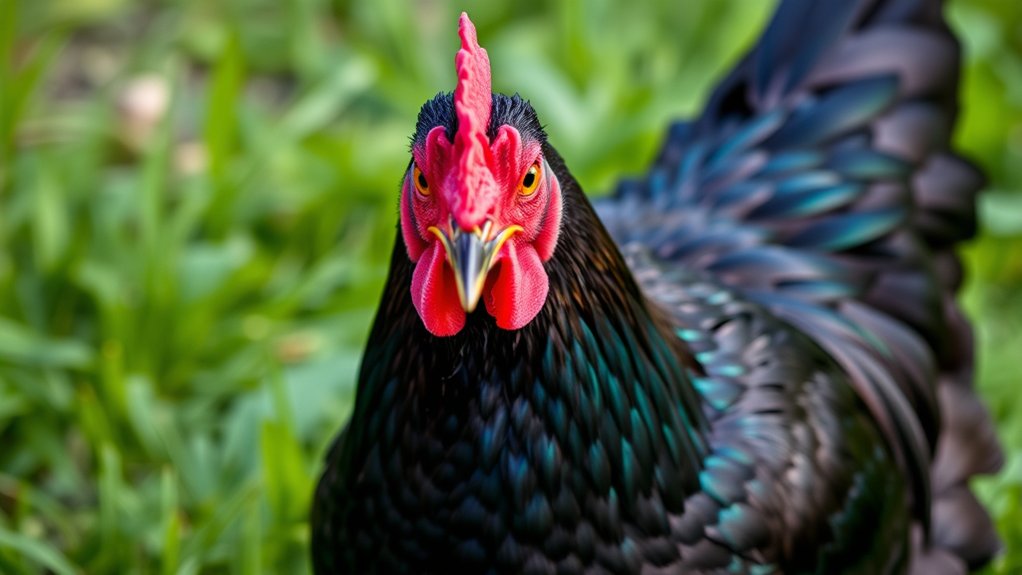
What Type of Chicken Is This?
Trying to figure out what type of chicken you have can be surprisingly tricky. You’re not alone—many people struggle with identifying their chickens because there are so many breeds with similar features. Whether you’re a newbie or just want to learn more, understanding the key traits of your chicken can make all the difference.
To identify your chicken’s breed, start by checking its size, body shape, and feather pattern. Notice the comb type and wattles, as these offer key clues. Egg color can also hint at breed, while behaviors like foraging style add insight.
Remember, relying on just one trait like feather color can mislead you. Taking clear photos from multiple angles helps, too. If you investigate breed charts and origins further, you’ll uncover even more ways to spot your chicken’s true type.
Key Takeaways
- Observe size and body shape to distinguish compact breeds from taller, upright ones for initial breed narrowing.
- Examine feather color and patterns, noting unique markings and seasonal changes for breed-specific identification.
- Identify comb type and wattle size, as these traits vary widely and help differentiate breeds.
- Consider egg color and texture, since blue or chocolate-brown eggs indicate specific breed origins.
- Use multiple clear photos from different angles, focusing on feet, wattles, and tail for accurate visual comparison.
Identifying Chicken Breeds by Size and Shape
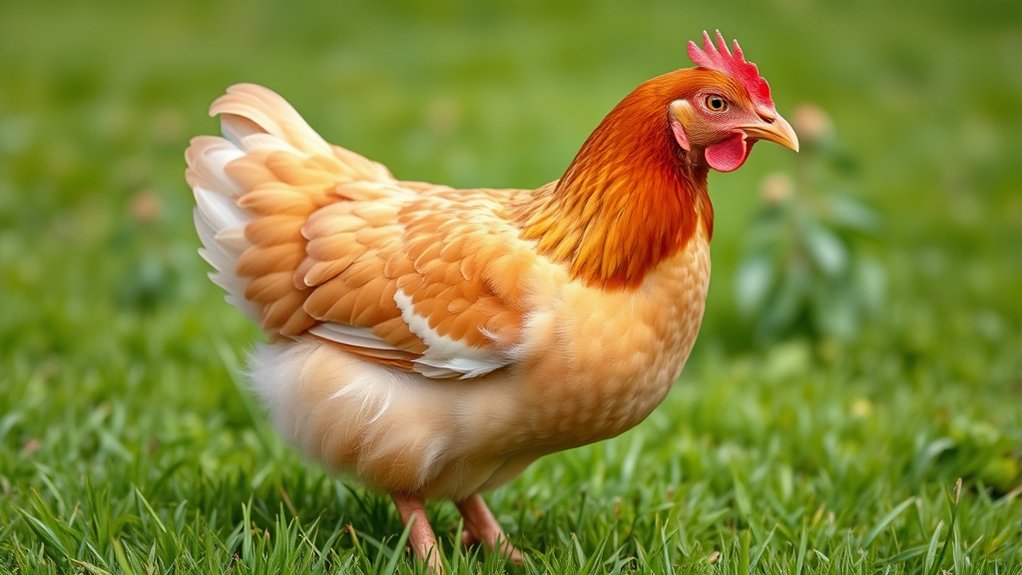
How can you quickly tell one chicken breed from another? Start by focusing on size and shape, which are key identifiers. You’ll notice some breeds have a compact, rounded body, while others display a taller, more upright stance.
Begin identifying chicken breeds by observing their size and body shape—compact versus upright forms stand out clearly.
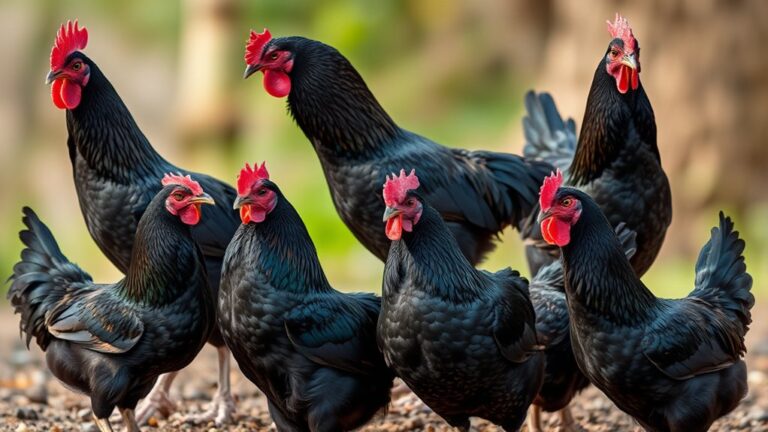
Pay attention to their feather sheen too; certain breeds have a glossy, almost metallic shine, while others appear more matte. This subtle difference helps you narrow down the options.
Leg color also plays a crucial role. Some chickens sport pale yellow legs, others have slate-gray or even greenish hues. These color variations often correspond with specific breeds and can guide you in identification.
When you combine size, shape, feather sheen, and leg color, you create a clearer picture of what breed you’re looking at. By training your eye to catch these details, you’ll confidently distinguish breeds without needing to rely solely on feather color or patterns.
Spotting Chicken Breeds by Feather Color and Patterns
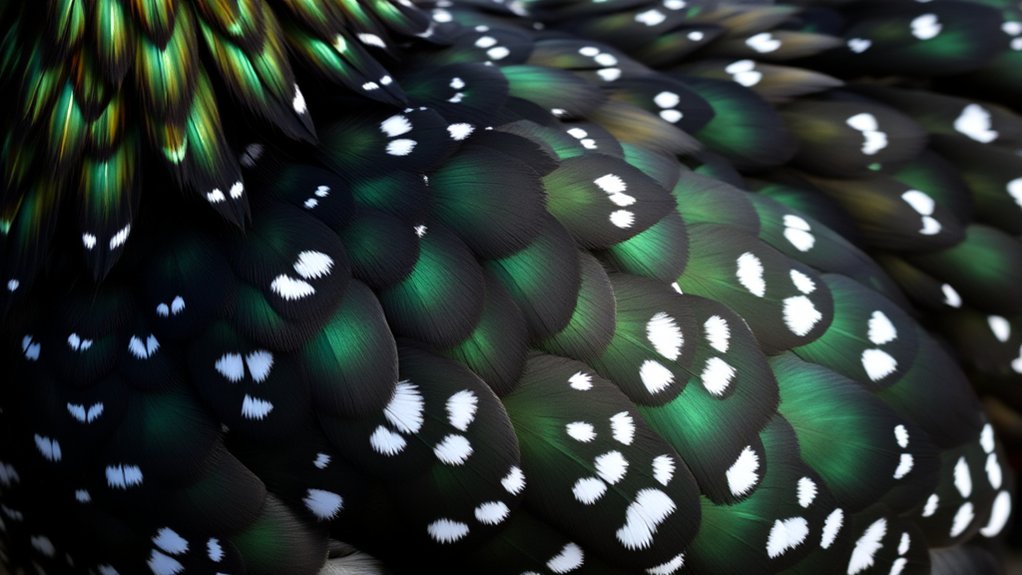
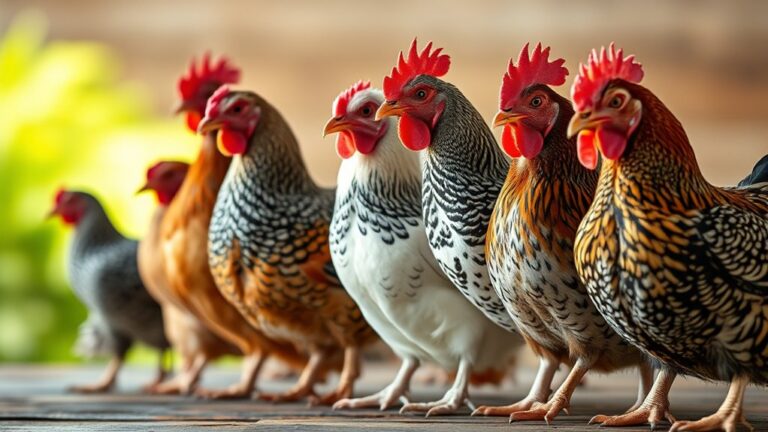
Although size and shape give you a solid starting point, feather color and patterns often provide the most striking clues to a chicken’s breed. You’ll notice that feather pattern evolution has shaped distinct markings, like the barred stripes of Barred Plymouth Rocks or the laced feathers of Silver Laced Wyandottes.
These patterns aren’t random; they’ve developed over generations to help you pinpoint breeds quickly. You should also pay attention to breed specific feather shedding, which can vary widely.
Some chickens shed feathers seasonally in unique ways, revealing their breed’s typical coloration phases. For example, certain breeds show more dramatic color changes during molting, helping you identify them even when feathers look sparse.
Recognizing Chicken Breeds by Comb Types and Wattles
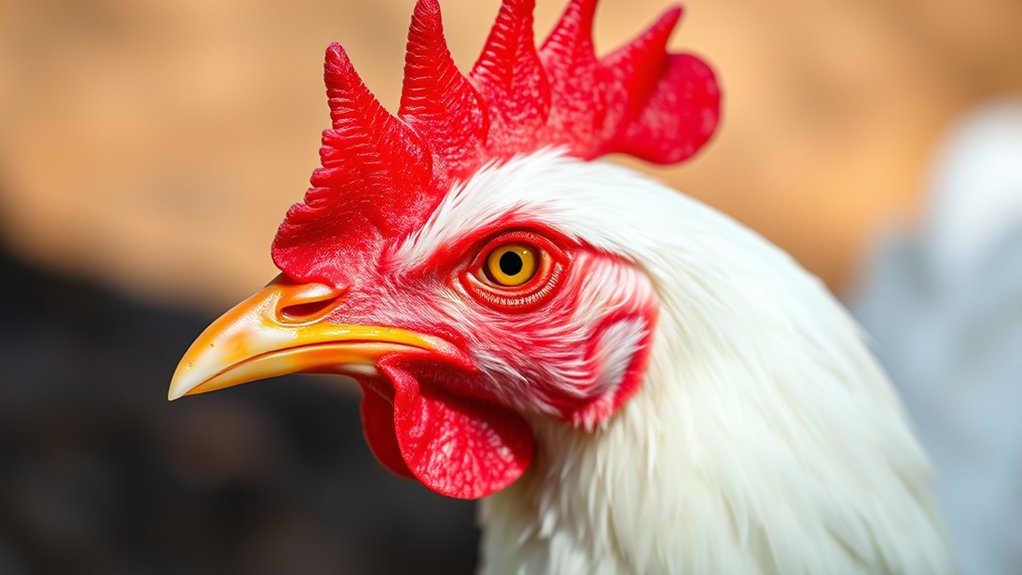
You can tell a lot about a chicken’s breed just by looking at its comb shape and wattles. Different types of combs—like single, rose, or pea—often give you hints about specific breeds. Wattles are helpful too; they carry clues that make it easier to spot breed traits at a glance. So, next time you see a chicken, take a closer look at these features—they say more than you might think!
Comb Shapes Explained
Since combs and wattles vary widely among chicken breeds, recognizing their shapes can help you identify the type of chicken you’re looking at. For example, single combs, common in many breeds, have a straight row of upright points, while pea combs appear more rounded and compact.
Rose combs are flat and broad with a textured surface. When you observe a chicken’s comb, also consider its feather sheen and beak shape. A glossy feather sheen often indicates a healthy bird, and the beak’s size and curve can hint at its breed lineage.
Wattles and Breed Traits
When you examine a chicken’s wattles alongside its comb, you gain vital clues about its breed. Wattles come in various shapes and sizes, often complementing the comb type unique to each breed. For example, breeds like the Leghorn have large, bright red wattles paired with single combs, while breeds like the Silkie show smaller, less pronounced wattles.
Observing these traits helps you accurately identify your chickens. Proper chicken nutrition supports the vibrant color and health of wattles, signaling a well-cared-for bird. Furthermore, coop design influences wattles’ condition; adequate ventilation and protection prevent injury or frostbite, which can affect wattles and combs.
Distinguishing Chicken Breeds by Egg Color
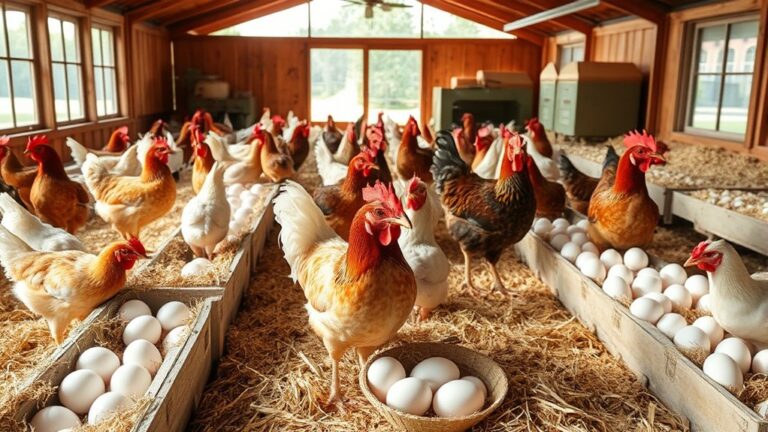
How can you identify a chicken breed just by looking at its eggs? Egg color offers useful clues. For example, Araucanas lay distinctive blue eggs, while Marans produce rich chocolate-brown ones. Paying attention to eggshell texture also helps. Some breeds lay eggs with a smooth, glossy surface, while others have a rougher feel. This subtle detail can narrow down your options.
Additionally, broodiness tendencies often correlate with egg color. Breeds known for blue or green eggs, like Easter Eggers, may show higher broodiness, meaning they’re more likely to sit on and hatch their eggs. In contrast, breeds laying white or pale eggs often exhibit less broodiness.
Recognizing Chicken Breeds by Behavior
You can learn a lot about a chicken’s breed just by watching how it acts. Each breed has its own unique habits that help you figure out what it is, beyond just how it looks. So, let’s take a look at some common behaviors that can help you recognize different breeds.
Behavioral Traits Overview
Why do some chickens act so differently from others? It comes down to their unique behavioral traits. When you observe feeding behaviors, you’ll notice some breeds are more aggressive or social at the feeder, while others prefer to peck around calmly.
These differences can help you identify the breed or at least narrow it down. Nesting habits also vary widely; some chickens are meticulous about choosing and preparing their nests, while others are less particular, often laying eggs anywhere they find comfortable.
Paying attention to these behaviors gives you insight into their breed characteristics without relying on appearance alone. By focusing on how they eat and where they nest, you get a clearer picture of their natural tendencies and breed identity.
Identifying Breed Habits
Where do you start when trying to identify a chicken breed beyond looks? Focus on their habits. Different breeds have unique behaviors. Some are more active foragers, while others prefer to stay close to the coop.
Observing how they interact with their environment can tell you a lot. For example, hardy breeds often require less coop maintenance because they’re more adaptable. Delicate breeds may need extra care.
Pay attention to their eating patterns too. Certain breeds have distinct preferences that affect chicken nutrition needs. Noticing these subtle differences helps you manage your flock better and guarantees each breed thrives.
Popular Backyard Chicken Breeds to Know
Curious about which chicken breeds thrive in backyard flocks? You’ll find popular breeds like the Rhode Island Red, known for hardiness and steady egg production, and the friendly Orpington, which adapts well to various chicken coop designs.
The Plymouth Rock is another excellent choice, offering both meat and eggs, while the Leghorn stands out for prolific egg-laying.
When raising these breeds, pay attention to feed and nutrition tips to keep your flock healthy and productive. Balanced feed with adequate protein and calcium supports egg quality and growth.
Also, tailor your chicken coop design to provide sufficient space, ventilation, and protection from predators, ensuring your birds feel secure.
Rare and Exotic Chicken Breeds to Know
You’ll find that rare and exotic chicken breeds really stand out because of their unique physical traits and fascinating origins. Knowing a bit about their history makes it easier to appreciate why they look and behave so differently from the common breeds. So, let’s dive in and discover some of these extraordinary chickens you might not have seen before.
Unique Physical Characteristics
How can you tell a chicken breed apart just by looking? Pay close attention to unique physical characteristics like feather sheen and beak shape.
Some rare breeds boast an iridescent feather sheen that glistens under sunlight, hinting at their exotic origins. Others feature matte or fluffy feathers that feel distinct to the touch.
Beak shape also varies markedly; while most chickens have a standard curved beak, some breeds display unusually long, short, or even slightly hooked beaks adapted for their environment or feeding habits.
You’ll notice that these traits aren’t just aesthetic. They can help you quickly identify a breed without needing to rely on size or color alone. Spotting these subtle differences sharpens your ability to recognize rare and exotic chickens in any flock.
Origins and History
Where did these rare and exotic chicken breeds come from, and what makes their history so fascinating? Many trace back to isolated regions where unique climates and ecosystems shaped their development.
You’ll find that their origins often influence their specific chicken diet and housing requirements. For example, breeds from colder areas need richer diets and sturdier housing to thrive, while tropical breeds prefer lighter feed and open, ventilated coops.
Understanding their history helps you meet their needs better, ensuring their health and productivity. By learning about where these chickens originated, you can appreciate why they behave differently and require tailored care.
This knowledge lets you provide the right environment and nutrition, making your experience with rare breeds both rewarding and successful.
Using Chicken Breed Charts to Identify Your Birds
Although identifying chicken breeds by sight can be tricky, using chicken breed charts makes the process much easier. These charts organize breeds by key traits like feather color, comb type, and body shape, helping you quickly narrow down possibilities.
When you observe your bird, pay attention to details such as feather grooming habits. Some breeds preen more meticulously, which affects feather appearance. Also, listen to chicken vocalizations because certain breeds have distinctive calls that breed charts sometimes note.
Common Mistakes When Identifying Chicken Breeds
Using breed charts can definitely simplify identifying chickens, but it’s easy to slip up if you rely too heavily on a single trait or overlook subtle differences. For example, focusing solely on feather color might mislead you, especially since variations can occur due to changes in chicken diet or seasonal molting.
During breeding season, some chickens display altered plumage or behavior that can confuse identification. Another mistake is ignoring size and body shape, which are essential for distinguishing similar breeds. It’s also common to misidentify mixed breeds or hybrids, which don’t fit neatly into breed charts.
Don’t forget that environmental factors, like diet quality, can affect feather sheen and condition, which might skew your judgment. To avoid errors, always consider multiple characteristics: comb shape, leg color, feather pattern, and behavior, especially during breeding season when traits might temporarily shift. Being patient and thorough helps you make a more accurate identification every time.
Photographing Chickens to Help Identify Breeds
How can clear photographs improve your ability to identify chicken breeds? When you snap sharp, detailed pictures, you capture the unique traits that distinguish one breed from another. This visual record helps you compare features like feather patterns, comb shapes, and body size more accurately.
In urban farming, where space and resources are limited, knowing your breed guarantees you provide the right care and optimize poultry nutrition.
To get the best photos for identification, focus on:
- Capturing multiple angles (side, front, and back)
- Photographing in natural light to show true colors
- Highlighting specific features like feet, wattles, and tail
- Avoiding blurry or obstructed shots
Frequently Asked Questions
How Do I Care for Different Chicken Breeds?
You care for different chicken breeds by understanding their unique needs based on color varieties and feather patterns. Some breeds with dense feathers need extra warmth, while lighter-feathered ones tolerate heat better.
Provide suitable shelter, balanced feed, and regular health checks. Pay attention to their behavior and environment preferences, adjusting care accordingly.
This approach guarantees each breed thrives, no matter the color variety or feather pattern you’re working with.
What Do Chickens Eat for Optimal Health?
Did you know chickens need about 16-18% protein daily for ideal health? To meet chicken dietary requirements, feed them a balanced mix of grains, proteins, and greens.
You’ll want to include commercial feed formulated for their age and purpose, plus occasional treats like vegetables and insects. This guarantees excellent chicken nutrition, supporting strong bones, good egg production, and overall vitality.
Always provide fresh water and avoid harmful foods like chocolate or raw beans.
How Long Do Chickens Typically Live?
Chickens typically live around 5 to 10 years, but their lifespan depends on factors like egg production and breeding considerations.
If you’re raising hens primarily for eggs, their peak production years are usually within the first 2 to 3 years. After that, egg-laying slows down, and breeders often decide whether to keep them longer for breeding or replace them.
Taking good care of their health can help you extend their lifespan and productivity.
Are Certain Chicken Breeds Better for Meat Production?
You’ll find some chicken breeds shine brighter in terms of meat production. Certain breeds excel in production efficiency, growing faster and yielding more tender meat, which makes your efforts more rewarding.
Understanding breed differences helps you pick the right bird for your needs, ensuring you get the best return on your investment. Choosing wisely means you’re not just raising chickens, you’re optimizing your whole process for success.
What Vaccinations Do Chickens Need?
You’ll need to vaccinate your chickens against common diseases like Marek’s disease, Newcastle disease, and infectious bronchitis to keep them healthy. Since egg laying habits affect their overall health, proper vaccination helps maintain productivity.
When considering breeding, vaccinations reduce the risk of passing diseases to offspring. Make certain to follow a vet’s schedule tailored to your flock’s environment and breed to ensure they thrive and lay eggs consistently.
Conclusion
Now that you’ve examined the colorful world of chicken breeds, you’re ready to spot your feathered friends with confidence. Remember, identifying chickens is like piecing together a puzzle. Size, color, comb, and behavior all fit together to reveal who’s who.
Don’t rush; take your time and enjoy the process. Soon, you’ll be calling out their names like a true poultry pro, turning your coop into a vibrant gallery of unique characters. With a little practice, knowing what type of chicken is this will become second nature.