Sick Chicken Symptoms to Spot Fast
If you raise chickens, you know how worrying it can be when one of your birds isn’t acting right. Many people struggle with spotting sick chickens early enough to help them recover. You’re not alone—knowing the signs to watch for can make all the difference in keeping your flock healthy.
You can spot a sick chicken fast by watching for sudden changes in behavior, appetite, breathing, droppings, and egg laying. A hen that stands apart, puffs up, droops her wings, or seems weak may be unwell. Sick Chicken Symptoms.
Watch for open-mouth breathing, coughing, sneezing, pale combs, watery or bloody droppings, and less eating or drinking. If symptoms last more than a day, isolate her and call a vet, because the next signs can tell you even more.
Key Takeaways
- Watch for isolation, puffed feathers, drooping wings, hunched posture, and unusual weakness or slow reactions.
- Check appetite and thirst closely; sick chickens often eat less, drink more, or lose weight quickly.
- Look for breathing trouble like wheezing, gasping, open-mouth breathing, coughing, or nasal discharge.
- Inspect droppings and eggs for sudden changes, including watery, bloody, green droppings, or thin and misshapen shells.
- Seek veterinary help fast if symptoms last over 24 hours, or if the bird won’t eat, drink, or breathe normally.
Common Sick Chicken Symptoms
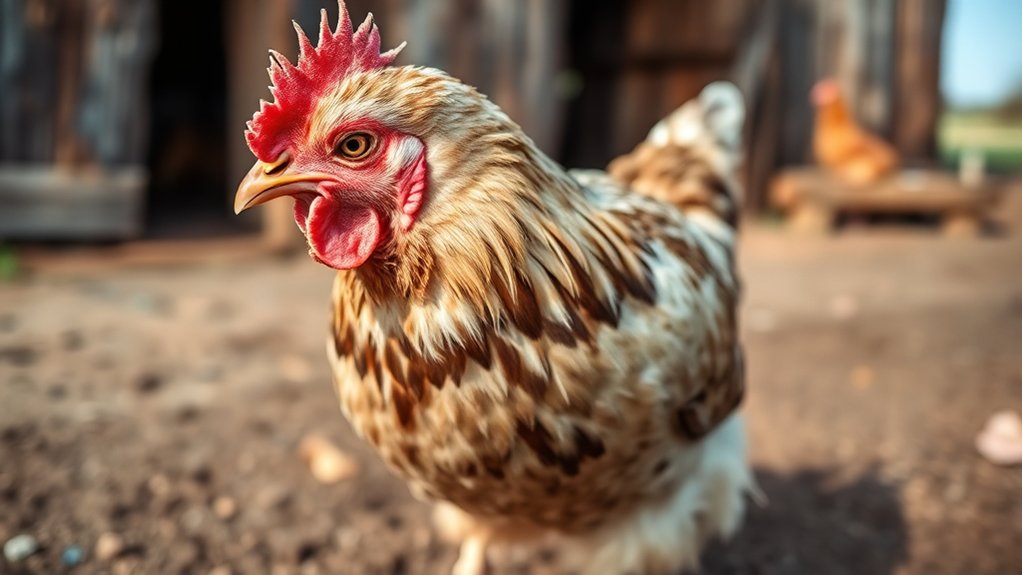
When you know what to look for, sick chicken symptoms can be easier to spot early. You’ll often notice changes in chicken behavior first: a bird may stand apart from the flock, puff up its feathers, or move less than usual.
You might see drooping wings, a hunched posture, or a bird that seems weak and slow to react. Watch for dirty vent feathers, swollen eyes, sneezing, coughing, or unusual breathing sounds, since these signs often point to trouble.
You may also spot pale combs or wattles, limping, or a bird that looks unsteady. These clues don’t confirm one cause, but they tell you something’s wrong and you should act fast.
Careful daily checks support illness prevention by helping you notice problems before they spread through the coop. If you stay alert and compare each bird’s normal habits, you’ll catch issues sooner and protect the rest of your flock.
Sick Chicken Symptoms in Appetite and Thirst

You might notice your chicken isn’t eating as much as usual. A loss of appetite can be an early warning sign that something’s not right. At the same time, you may see her drinking more water than normal. Increased thirst can often point to stress or an underlying disease. When these changes happen together, it’s a good idea to keep a close eye on her and look out for any other symptoms.
Loss Of Appetite
A sick chicken often loses interest in feed before other symptoms become obvious, and that drop in appetite can be an early warning sign that something is wrong. You may notice the bird pecking less, ignoring treats, or standing apart while the flock eats.
Watch for quick weight loss, smaller droppings, and reduced energy. Loss of appetite can point to pain, infection, stress, or crop trouble, so act early. Check the bird’s body condition, offer fresh feed, and keep the coop calm.
Look for dehydration signs if the chicken isn’t eating.
Skips morning feed
Eats slowly
Rejects favorite treats
Looks thin
Separates from flock
Increased Thirst
Is your chicken drinking far more than usual? Increased thirst can signal illness, heat stress, or digestive trouble. You should watch for dehydration signs like a dry comb, sunken eyes, and weak droppings.
If your bird also shows increased urination, note it right away because it can point to kidney issues or excess salt intake.
| What you see | What it may mean | What you should do |
|---|---|---|
| Drinking nonstop | Heat or illness | Offer cool water |
| Dry comb | Dehydration signs | Check feed and water |
| Wet bedding | Increased urination | Observe droppings closely |
| Lethargy | Serious concern | Call a vet |
Keep fresh water available, shade the coop, and monitor your chicken’s behavior closely each day.
Droopy Behavior and Low-Energy Signs
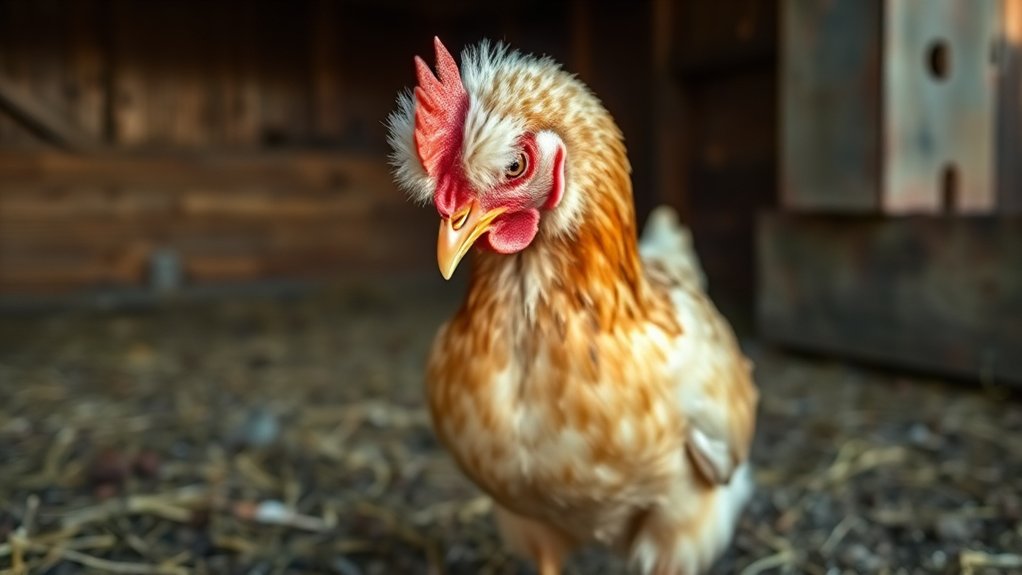
When a chicken starts acting droopy and low-energy, it often looks less alert than usual, stands around with its feathers fluffed, or moves more slowly than the rest of the flock. You may notice chicken lethargy when she lags behind, skips scratching, or ignores treats she’d normally chase. Droopy wings can also signal that she’s feeling off and needs attention.
Watch for long naps in odd spots. Notice if she isolates herself from others. Check whether she eats and drinks less. Compare her posture with healthy flockmates. Track how quickly she responds when you approach.
A tired bird can recover with quiet rest, steady warmth, and easy access to feed and water, but you should keep watching closely. If the low energy lasts more than a day, or she gets worse, contact a poultry vet. Early action helps you catch problems before they spread.
Respiratory Symptoms That Need Immediate Care
Breathing trouble in a chicken can turn serious fast, so act right away if you notice open-mouth breathing, wheezing, gurgling, gasping, or a stretched-out neck. You may also see head shaking, nasal discharge, or swollen eyes, which often point to respiratory infections.
Isolate the bird in a warm, quiet place and cut stress immediately. Check that the coop has fresh air without drafts, and remove dusty bedding or moldy feed.
Don’t delay if the bird’s comb looks blue, it can’t perch, or breathing gets worse. Contact a poultry vet for diagnosis and treatment options, since different germs need different care.
You can support recovery with clean water, easy-to-reach feed, and prescribed medicines only. Quick action gives you the best chance to limit spread and help the bird recover.
Abnormal Droppings and What They Mean
Droppings can tell you a lot about a chicken’s health, so pay close attention to any sudden change in color, texture, or frequency. Healthy manure is usually firm, brown, and topped with a white cap.
Chicken droppings can reveal a lot about health, so watch for sudden changes in color, texture, or frequency.
If you notice abnormal droppings, check the color right away because it can point to stress, diet changes, parasites, or infection. Watery, foamy, bloody, green, or very pale droppings all deserve attention.
You should isolate the bird, offer clean water, and review feed, treats, and recent changes in the coop. Watch for more than one day of symptoms since lasting diarrhea can dehydrate your flock quickly. Contact a poultry vet if the problem keeps going or you see blood.
- Brown with white cap: normal
- Green: possible liver issue or not eating
- White or chalky: kidney concern
- Bloody: urgent care needed
- Watery: dehydration risk
Feather, Skin, and Posture Changes
Feathers, skin, and posture often reveal sickness before anything else does, so watch for a bird that’s puffed up, limp, hunched, or unusually still. You may also notice dull plumage, uneven grooming, or feather loss around the neck, vent, or wings.
Check the skin closely for redness, scabs, mites, or skin lesions, because irritation and injury can signal infection, parasites, or pecking stress. A healthy chicken stands balanced and alert; a sick one may droop its wings, tuck its head, or sit apart from the flock.
If your bird seems tender when you handle it, moves slowly, or resists stretching, don’t ignore it. Separate the chicken, inspect its body under good light, and note any changes over a few hours. Quick action helps you catch trouble early and decide whether you need supportive care or veterinary help.
Sneezing, Coughing, and Other Respiratory Clues
Sneezing, coughing, wheezing, or noisy breathing can be early signs that something’s wrong with your chicken’s respiratory system. You might also notice a runny nose, wet eyes, open-mouth breathing, or a tail bob with each breath. These clues often point to respiratory infections, but environmental factors like dust, ammonia, mold, or poor ventilation can irritate your flock too.
Check your coop fast and watch how each bird breathes at rest and after moving. Listen for clicking, gasping, or rattling sounds. Look for mucus around the nostrils. Notice if your chicken isolates itself or moves less.
Inspect bedding, feeders, and waterers for dust buildup. Improve airflow and remove wet litter right away.
If symptoms spread or worsen, separate the bird and contact a poultry vet. Quick action can keep a mild issue from turning serious.
Egg-Laying Changes That Signal Illness
When your hen’s egg output drops, it could be a sign that something’s wrong. You might also notice the shells getting thinner, rougher, or even misshapen. These changes often mean your hen is dealing with illness or stress, so it’s definitely something you shouldn’t ignore.
Reduced Egg Output
If your hens suddenly lay fewer eggs, or stop laying altogether, it can be an early sign that something is wrong. You should watch egg production closely, because illness often disrupts it before other symptoms show up. Stress, parasites, poor feed, pain, and hormonal changes can all lower output.
Check whether your flock is eating, drinking, and acting normally, then compare each hen’s usual laying pattern.
- Track daily egg counts
- Note sudden laying drops
- Watch for lethargy
- Check appetite and water intake
- Isolate any hen that seems off
When you see a clear decline, don’t wait. Quick action helps you catch sickness early and protect the rest of your flock.
Shell Quality Changes
Eggshells can change before other signs of illness show up, so pay attention if you notice thin, soft, rough, misshapen, or unusually fragile shells. These changes often point to stress, poor nutrition, or infection, and they can tell you your hen isn’t feeling right.
Check shell thickness each day, because a sudden drop can mean she’s struggling to absorb calcium or fighting a disease. Also watch shell color, since pale, blotchy, or uneven coloring may signal a problem.
If the shell looks weak, cracked, or oddly textured, isolate the bird, offer fresh water, and review feed quality. Call a poultry vet if the issue continues, because early care can protect your flock and prevent worse illness from spreading.
When to Call a Vet for a Sick Chicken
Although many sick chicken symptoms are mild and pass quickly, you should call a vet right away if your bird has trouble breathing, won’t eat or drink, collapses, has severe diarrhea, or shows a sudden, dramatic drop in egg production. Don’t wait for a “good day” if symptoms worsen fast or last more than 24 hours.
Call a vet right away if symptoms worsen fast or last more than 24 hours.
Early advice can protect the rest of your flock and help you avoid bigger losses. Good preventive care also matters, including clean housing, parasite control, and on-time chicken vaccinations when your vet recommends them.
Ask for help sooner if you notice:
- labored breathing or open-mouth breathing
- refusal to drink or eat
- repeated falling, weakness, or collapse
- bloody or watery droppings
- a sharp drop in laying
Trust your gut. If your chicken seems off and isn’t improving, call your vet. Quick action often gives you the best chance to save her and protect your flock.
How to Isolate and Care for a Sick Chicken
Once you’ve called the vet or decided a chicken needs close monitoring, move her to a separate space right away. Use isolation methods that keep her warm, quiet, and away from flockmates, but still let you watch her easily.
A crate, dog pen, or small pen works well if you line it with clean bedding and keep food and water within reach. Check her often, and clean droppings before they build up. Offer fresh water, electrolytes if advised, and her normal feed or soft treats she’ll actually eat.
If she’s weak, place dishes low and nearby. Handle her gently, wash your hands after contact, and disinfect tools between birds. Limit stress by reducing noise and bright light.
These care techniques help her conserve energy while you monitor appetite, droppings, breathing, and posture. If her condition worsens, contact your vet again quickly.
Frequently Asked Questions
How Can I Tell if a Chick Is Sick or Just Cold?
You can tell a chick’s sick if it stays sleepy, fluffed up, won’t eat, or acts off, while a cold chick usually perks up after warming.
Watch for behavioral changes like weakness, diarrhea, or trouble standing. Try temperature checks by warming the chick gently and seeing whether it improves within 15 to 30 minutes.
If it still looks unwell, isolate it and contact a vet or poultry expert quickly.
Can Stress Cause Symptoms Similar to Illness in Chickens?
Yes, stress can mimic illness in chickens like a smoke alarm blaring without a fire. You may see stress triggers such as changes in flock mates, noise, or handling.
Watch for behavioral signs like hiding, reduced eating, or feather picking. Environmental factors like heat, drafts, and overcrowding often play a part.
With calm routines and stress management, you can help your birds recover fast and tell stress from sickness more easily.
How Long Should a Chicken Stay Quarantined?
You should quarantine a chicken for at least 30 days, and longer if symptoms linger. During quarantine, watch its chicken health closely, keep separate tools, and clean hands and shoes after contact.
If you’re dealing with a contagious illness, your vet may suggest extending the quarantine duration until the bird fully recovers and tests clear. Don’t reintroduce it early, or you could put your whole flock at risk.
What Supplies Should I Keep Ready for a Sick Chicken?
You should keep a “warm lantern” kit ready: first aid basics, essential supplies, clean towels, gloves, a separate crate, heating pad, electrolytes, syringes, saline, gauze, tweezers, poultry-safe antiseptic, and a notebook.
Add fresh water, easy-feed mash, and a thermometer. You’ll want a scale too, so you can track weight. Stock these now, and you won’t scramble when a hen looks dull, limps, or stops eating suddenly.
Can Sick Chickens Recover Without Medication?
Yes, some sick chickens can recover without medication if you catch the problem early and give strong supportive care. You should isolate her, offer clean water, warmth, and easy-to-eat food, and use natural remedies only when they’re appropriate.
Good preventive care, like clean bedding, balanced feed, and stress reduction, can help her bounce back. If she stops eating, breathing worsens, or symptoms persist, you’ll need a vet.
Conclusion
Spotting sick chicken symptoms fast can make all the difference. If you notice a hen eating less, acting droopy, or breathing oddly, act right away.
One important fact: flock health issues can spread quickly, and a single sick bird may put the rest at risk within hours. Trust your eyes, isolate any bird that seems off, and call a vet when symptoms don’t improve.
Quick action helps protect your chickens and your flock’s future. Remember, recognizing sick chicken symptoms fast is key to keeping your flock healthy and thriving.