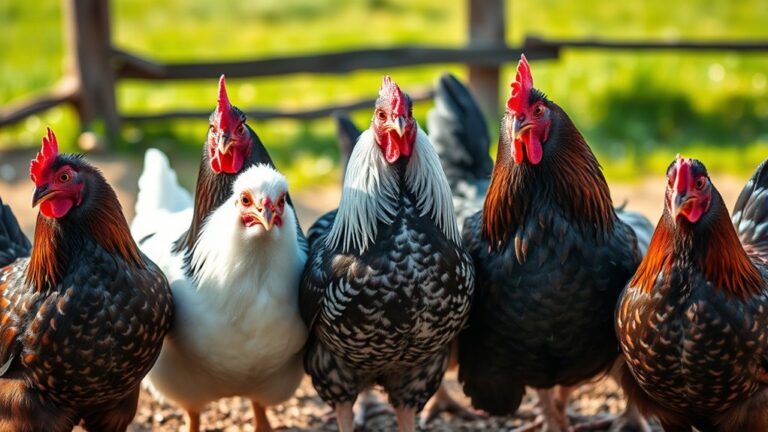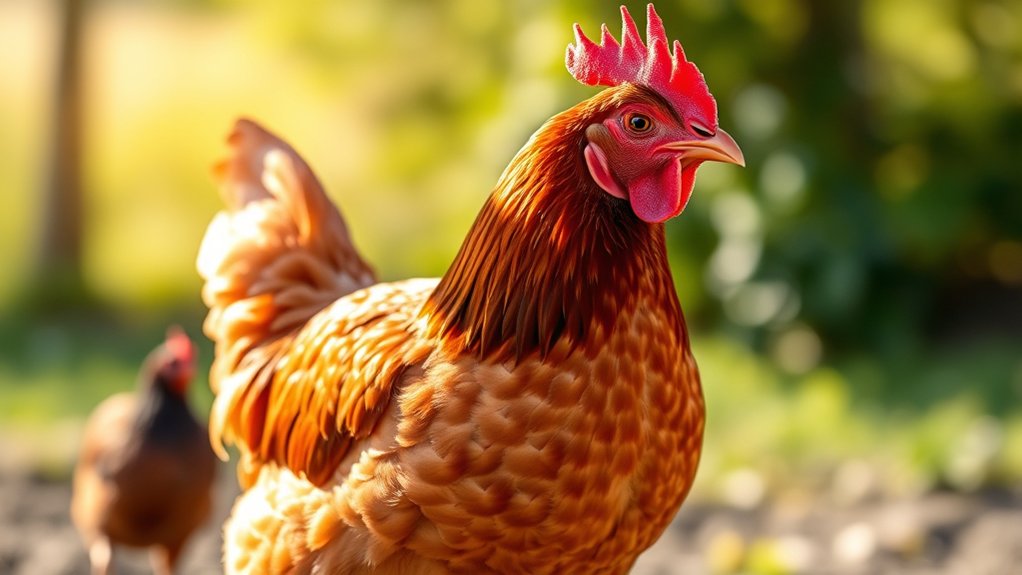
What Is a Hen and Is It Female?
If you’ve ever tried to understand chicken breeds or start backyard farming, you’re not alone. Many people struggle with knowing the difference between hens and other chickens, which can make caring for them confusing. Getting clear on what a hen is can help you make better choices for your flock or farming needs.
A hen is always an adult female chicken, the one mature enough to lay eggs and care for chicks. You won’t find a male hen. Males are called roosters or cockerels, with very different looks and behaviors.
Hens start laying eggs around five to six months old, showing they’re ready to reproduce. They have softer feather colors and smaller combs than roosters.
If you want to uncover how hens nurture chicks and support farming, keep exploring.
Key Takeaways
- A hen is an adult female chicken capable of laying eggs. They typically mature at five to six months old.
- The term “male hen” is incorrect. Males are called roosters or cockerels and have distinct roles.
- Hens develop larger combs and wattles as signs of maturity and reproductive readiness.
- Hens show specific behaviors like nesting, nurturing chicks, and foraging. These reflect their female role.
- Recognizing hens as always female clarifies poultry terminology and reduces gender confusion.
What Is a Hen?
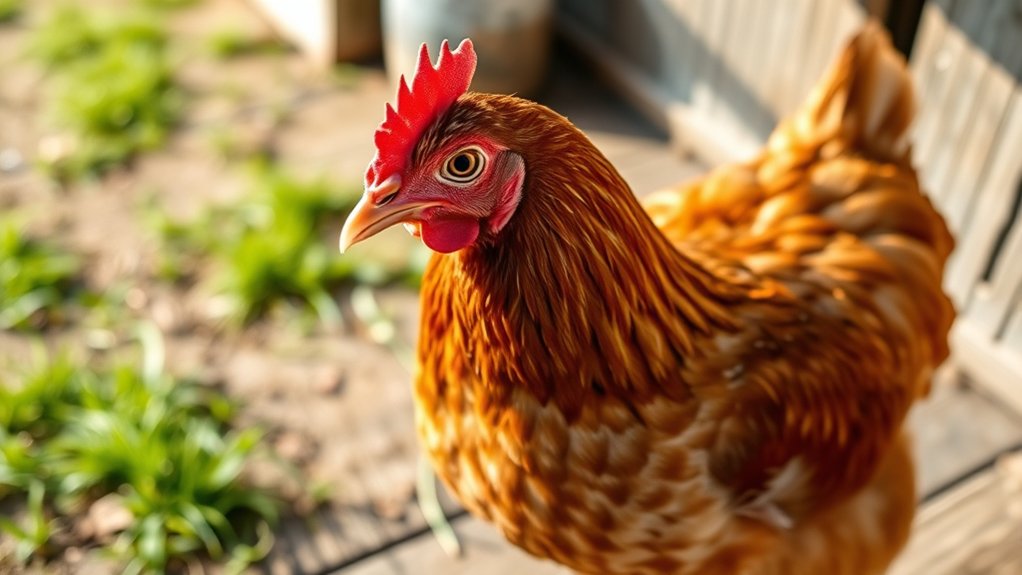
What exactly is a hen? You might picture a common farm bird, but a hen is specifically an adult female chicken. When you think about a hen, consider how she spends her day searching for food.
Her diet mainly includes grains, seeds, insects, and green plants, which provide the nutrients she needs to stay healthy and lay eggs.
If you’ve ever wondered whether hens migrate like some birds, the answer is no. Hens don’t participate in hen migration. They tend to stay close to their home area, especially when raised domestically.
In the wild, their movement is limited to finding food and shelter rather than long-distance travel. So, understanding what a hen is involves recognizing her role as a female chicken, her specific diet, and the fact that she doesn’t take part in migratory patterns like many other bird species.
When Does a Chicken Become a Hen?
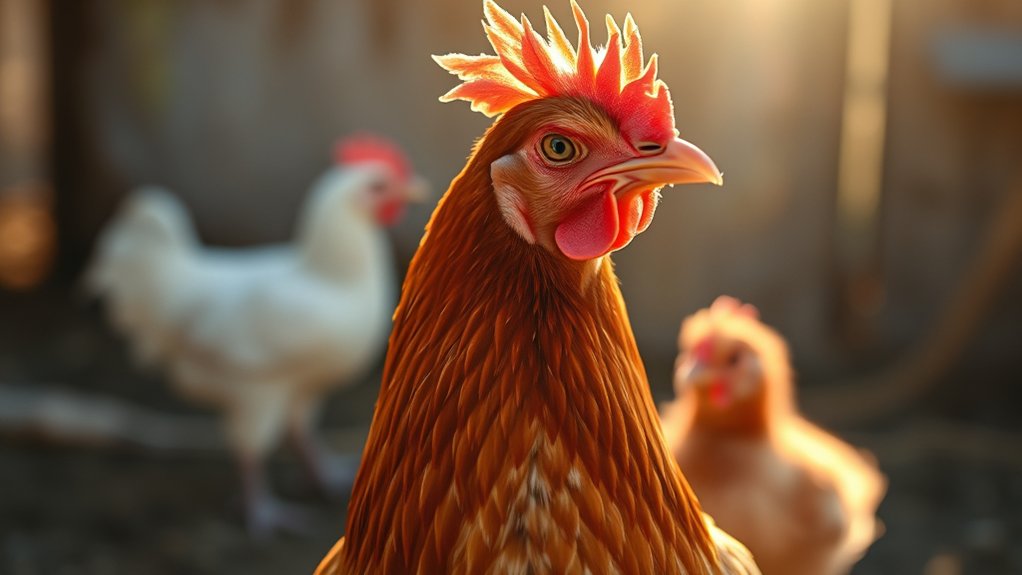
Although chickens start life as chicks, they become hens once they reach sexual maturity, which usually happens around five to six months of age. At this stage, you’ll notice physical and behavioral changes marking their evolution. Understanding when a chicken becomes a hen helps you appreciate its role beyond just an animal.
Chickens mature into hens around five to six months, marked by key physical and behavioral changes.
You’ll see these signs as a chicken matures into a hen:
- Development of a larger comb and wattles.
- Start of egg-laying, signaling reproductive readiness.
- More pronounced maternal behaviors like nesting.
This transformation carries hen symbolism in many cultures, representing fertility, nurturing, and protection. The cultural significance of hens often ties to their role as providers and caretakers, making their maturity an important milestone. When you observe a chicken becoming a hen, you’re witnessing a natural change that connects biology with tradition and meaning.
Why Is a Hen Always Female?
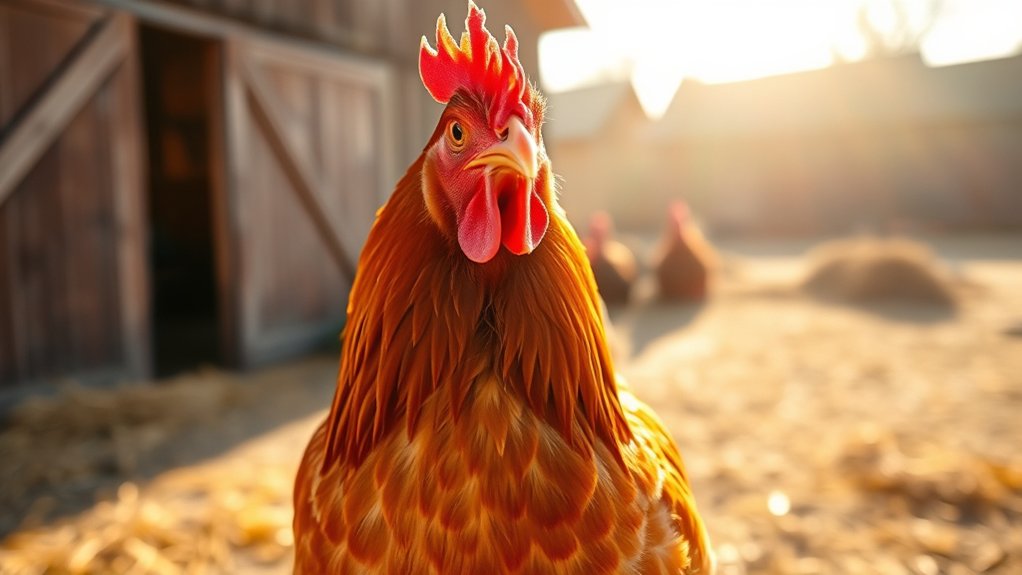
As a chicken matures into a hen, you might wonder why the term “hen” always refers to a female bird. The answer lies in biology: hens are female chickens capable of laying eggs, while males have different names. This distinction is clear and has shaped hen symbolism throughout cultures.
Hens often represent fertility, nurturing, and home in various societies, reinforcing their female identity.
Here’s a quick look at the cultural significance and biological facts:
| Aspect | Definition | Symbolism |
|---|---|---|
| Hen | Female chicken | Fertility, nurturing |
| Rooster | Male chicken | Protection, vigilance |
| Cultural Significance | Female role highlighted | Emblem of motherhood, care |
How Are Hens Different From Roosters and Cockerels?
When you compare hens with roosters and cockerels, you’ll notice clear differences in their appearance, behavior, and roles within a flock. Hens have distinct hen anatomy designed primarily for egg-laying, while roosters and cockerels are built for protection and mating displays. You’ll also find their diets slightly differ, with hens needing balanced hen diet nutrients to support egg production.
Here’s how these differences stand out:
- Appearance: Hens usually have smaller combs and wattles compared to roosters, whose bright feathers and larger anatomy help them attract mates.
- Behavior: Roosters crow and are more aggressive, while hens focus on nesting and caring for chicks.
- Roles: Hens lay eggs and incubate them. Roosters and cockerels guard the flock and establish order.
Understanding these differences helps you appreciate each bird’s unique contribution to the flock’s dynamics.
What Physical Traits Identify a Hen?
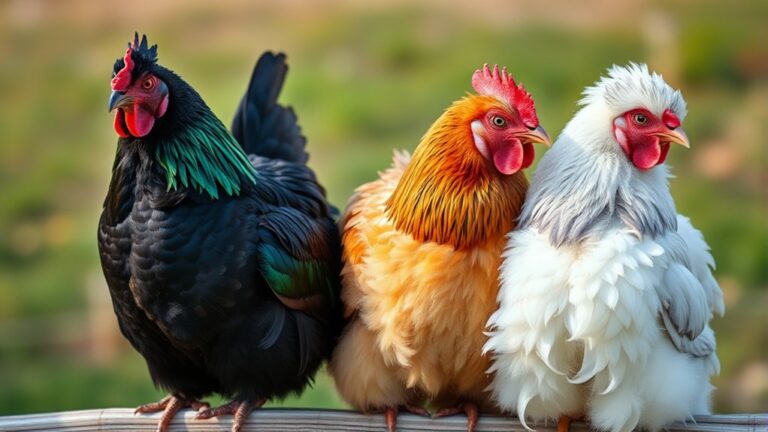
If you want to quickly spot a hen, focus on a few key physical traits that set her apart from other chickens. Hens usually have more subdued color variations compared to roosters, with softer, earthier tones that help them blend into their surroundings. Their feather patterns are often less flashy, lacking the iridescent sheen and bold markings you’d see on males.
Look closely at their tail feathers. They tend to be shorter and more rounded, unlike the long, pointed sickle feathers of roosters.
Another trait is the comb and wattles; hens have smaller, less pronounced versions of these features. While roosters boast larger, brighter combs and wattles, hens’ are more modest in size and color.
Observing these physical characteristics, especially color variations and feather patterns, will help you identify a hen quickly and accurately.
How Do Hens Behave Compared to Male Chickens?
Although hens and roosters share many behaviors, hens tend to be more nurturing and less aggressive than their male counterparts. When observing behavioral differences, you’ll notice hens focus more on caring for chicks and maintaining harmony within the flock. Roosters, on the other hand, often exhibit dominant and protective behaviors to assert their position in the social hierarchy.
Here’s what you’ll see in hens compared to male chickens:
- Hens usually stay closer to the ground, foraging and brooding, showing patience and attentiveness.
- They maintain social bonds by clucking softly, helping reduce tension within the flock.
- Roosters display louder crowing and more frequent aggressive posturing to defend territory and mates.
Understanding these behavioral differences helps you appreciate how hens contribute to a balanced social hierarchy, emphasizing cooperation and nurturing rather than dominance and aggression.
What Roles Do Hens Play in Egg Production?
You’ll want to get how hens lay eggs and why they’re such a big deal in poultry farming. Basically, their egg production depends on things like breed, diet, and environment. So, let’s take a closer look at how these factors shape the important role hens have in giving us eggs.
Hen Egg-Laying Process
How exactly do hens contribute to egg production? You’ll see that hens play a vital role in creating and nurturing eggs. Their body undergoes a precise process to produce eggs consistently. Here’s what happens:
The hen’s reproductive system forms the egg, starting with the yolk, followed by layers of albumen, membranes, and finally the shell, often influenced by hen coloration.
After laying, some hens naturally begin egg incubation by sitting on their clutch to keep eggs warm for embryo development.
Hens regulate the timing of laying eggs daily, usually in the morning, ensuring a steady supply.
Understanding this process helps you appreciate how hens aren’t just egg producers. They’re active participants in nurturing new life.
Importance in Poultry Farming
Why are hens essential in poultry farming? You rely on hens because they are the primary egg producers, making them crucial for both commercial and small-scale operations. Their ability to lay eggs consistently supports food supply and income.
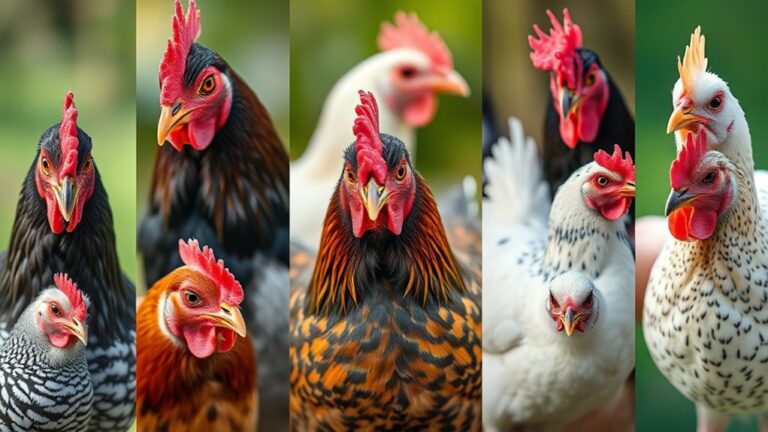
You’ll notice hens come in various feather colors and beak shapes, which often indicate different breeds suited for specific farming needs. These physical traits can help you identify hens that are hardy or high-yield layers.
Factors Influencing Egg Production
When exactly do hens lay the most eggs? Several factors influence their egg production, and understanding them helps you manage your flock better. Key roles hens play include:
Hen nutrition: Providing balanced feed rich in protein, calcium, and vitamins directly impacts how frequently hens lay eggs.
Hen social hierarchy: Dominant hens often get better access to food and nesting spots, which can improve their laying rates compared to lower-ranking birds.
Environmental conditions: Light exposure and stress levels affect hormonal cycles, influencing egg production.
How Do Hens Care for Their Chicks?
When you watch a hen with her chicks, you’ll notice she’s always nesting carefully and keeping them safe from harm. She’s not just sitting there—she’s actively protecting them. And that’s not all. She also guides her little ones to find food and shows them how to eat. These behaviors are really important because they help the chicks grow up strong and stay safe. Let’s take a closer look at how all this works.
Nesting and Protection
How does a hen guarantee her chicks stay safe and warm? She relies on instinctive clutch behavior and careful nesting habits. When you observe a hen, you’ll notice she selects a secure, secluded spot to lay her eggs, creating a cozy nest.
Once the eggs hatch, she keeps the chicks close, using her body to shield them from cold and predators.
You’ll see her constantly adjusting her position to cover all chicks evenly. She remains alert to potential threats nearby and encourages chicks to stay within the nest for warmth and security.
Feeding and Guidance
Although chicks are born with some instincts, a hen actively teaches them what to eat and where to find food. You’ll notice her guiding them with specific feeding behavior, clucking to signal edible items. She guarantees chicks respect the social hierarchy, letting stronger chicks feed first while gently managing competition.
Here’s a quick look at how hens care for their chicks:
| Feeding Behavior | Social Hierarchy Role |
|---|---|
| Clucking to signal food | Stronger chicks feed first |
| Leading to food sources | Weaker chicks get protection |
| Encouraging pecking | Maintaining order during meals |
| Teaching water drinking | Preventing food hoarding |
You’ll see this nurturing helps chicks grow safely and learn survival skills effectively.
Are Male Hens Real or Just a Myth?
Wondering whether male hens exist or if they’re just a myth? The idea of “male hens” often sparks gender confusion, but here’s the truth: hens are, by definition, female birds. The concept of a male hen is more of a mythical bird than biological reality. People sometimes use this term mistakenly when referring to roosters or cockerels.
The idea of male hens is a myth—hens are always female, while males are roosters or cockerels.
To clear things up, consider these points:
- Hens are female chickens, while roosters are the males.
- The term “male hen” isn’t scientifically accurate and can cause confusion.
- Mythical birds like a “male hen” often emerge from misunderstanding poultry terminology.
How Understanding Hens Helps Poultry Farming
You’ll find that knowing a hen’s role in farming really helps you optimize egg production and care. Female hens bring some great benefits, like steady egg-laying and even natural pest control.
When you manage their health well, it’s easier to keep your flock productive and thriving. So, paying attention to their needs makes a big difference in the long run.
Hen Roles In Farming
When you understand the specific roles hens play in farming, you can manage your poultry more effectively. Recognizing hen feather patterns helps you identify breeds suited for different farming needs. Tuning into hen vocalizations gives clues about their health and behavior.
In farming, hens contribute beyond egg-laying by:
- Controlling pests through their natural foraging habits
- Providing natural fertilizer with their droppings to enrich soil
- Acting as indicators of environmental changes via changes in their vocalizations
Benefits Of Female Hens
Because female hens play a central role in egg production, understanding their behavior and needs can considerably boost your farm’s productivity. Paying attention to hen ornamentation and feather coloration helps you assess their health and breeding potential quickly.
These visual cues guide you in selecting the best layers and maintaining flock quality.
| Benefit | Description | Impact on Farming |
|---|---|---|
| Egg Production | Female hens lay eggs regularly | Increases food supply and income |
| Behavior Monitoring | Ornamentation signals maturity | Helps time breeding cycles |
| Health Indicator | Feather coloration reflects health | Allows early problem detection |
| Flock Selection | Visual traits aid selection | Improves genetic quality |
Managing Hen Health
Noticing changes in a hen’s feather color or behavior can give you early signs of health issues before they worsen. To keep your hens healthy, pay attention to their hen diet and overall coop management. A balanced diet rich in protein, vitamins, and minerals supports strong immune systems.
Effective coop management reduces stress and exposure to pathogens. Here are key tips for managing hen health:
- Provide fresh water and a varied hen diet daily to prevent nutritional deficiencies.
- Keep the coop clean, dry, and well-ventilated to minimize disease risks.
- Monitor hens regularly for symptoms like lethargy, feather loss, or unusual droppings.
Frequently Asked Questions
Can Hens Recognize Individual Humans?
Yes, hens can recognize individual humans. Thanks to their keen observation skills tied to hen social behavior, they remember people who interact with them regularly.
Their nesting habits encourage strong bonds, so they often respond differently to familiar handlers versus strangers. When you spend time caring for hens, they quickly learn to identify you, which helps build trust and makes your interactions smoother and more rewarding.
What Do Hens Eat for Optimal Health?
Imagine you’re raising hens like Sarah, who improved her flock’s egg quality by adjusting their hen diet. For essential poultry nutrition, you’ll want to provide a balanced mix of grains, protein (like soybean meal), and greens.
Vitamins and minerals are vital, too, especially calcium for strong eggshells. You can also supplement with insects or kitchen scraps. By tailoring their diet, you guarantee healthy hens that produce consistently quality eggs.
How Long Do Hens Typically Live?
Hens typically live around 5 to 10 years, depending on their breed and care. You’ll notice their egg production peaks in the first couple of years and gradually declines as they age.
Paying attention to hen behaviors, like reduced activity or changes in feeding, helps you spot when they’re aging. With good nutrition and a safe environment, you can extend their lifespan and keep them healthier for longer.
Do Hens Have Specific Vocalizations for Danger?
When danger strikes, hens don’t just cluck. They sound alarms that ripple like thunder across the coop. You’ll notice their vocalizations change sharply, signaling threats to everyone around.
Unlike the rooster’s loud crowing, hens use specific calls to protect their egg laying behavior and warn others. By tuning into these subtle sounds, you’ll better understand the differences between rooster and hen communication, helping you keep your flock safe and sound.
Can Hens Be Trained Like Other Pets?
Yes, you can train hens like other pets by using consistent routines and positive reinforcement. Their social behavior makes them responsive to gentle handling and rewards.
When you engage in hen grooming, you build trust, helping them feel comfortable around you. By understanding their social cues and providing regular interaction, you’ll find hens can learn simple commands and even come when called, making them surprisingly trainable companions.
Conclusion
You might think a hen is just any chicken, but it’s always female, coincidentally the very same ones laying those eggs you enjoy daily. When you spot a hen, you’re also seeing a dedicated mother and an essential part of farming life.
So, next time you crack an egg or watch chicks hatch, remember it’s the hen’s unique role making it all happen, proving nature’s little coincidences are pretty amazing. That’s what makes understanding what a hen is so interesting.