5 Factors Affecting the Cost of Chicks at Tractor Supply
Finding the perfect chicks at Tractor Supply without breaking the bank can be tricky. You’re not alone if you’ve struggled to understand why prices vary so much. Many people want healthy, happy chicks but get overwhelmed by the costs and factors that affect them.
Let’s break down what really influences the cost of chicks so you can make the best choice for your flock and budget.
You’ll pay more for rare breeds like Silkies and less for popular ones such as Rhode Island Reds. Younger chicks cost less upfront but need extra care, while older vaccinated chicks are pricier but easier to raise.
Prices spike in spring due to higher demand and drop in off-seasons. Quality feeding and proper care also add to costs, as healthier chicks need better investment.
Availability shifts prices too—scarcity drives prices up. Keep going to uncover how each factor plays a role.
Key Takeaways
- Breed rarity and hatchery quality influence chick prices. Rare breeds and reputable hatcheries usually command higher costs.
- Chick age affects price too. Older vaccinated chicks cost more but need less care and have better survival rates.
- Seasonal demand spikes in spring and early summer raise prices. This happens because more buyers are interested and supply is limited.
- Feeding, care, and vaccination protocols add to raising costs. That’s why healthier, resilient birds come at a higher price.
- Availability fluctuations, including supply shortages and shipment limits, also impact chick pricing at Tractor Supply.
Which Chick Breeds Cost More and Why
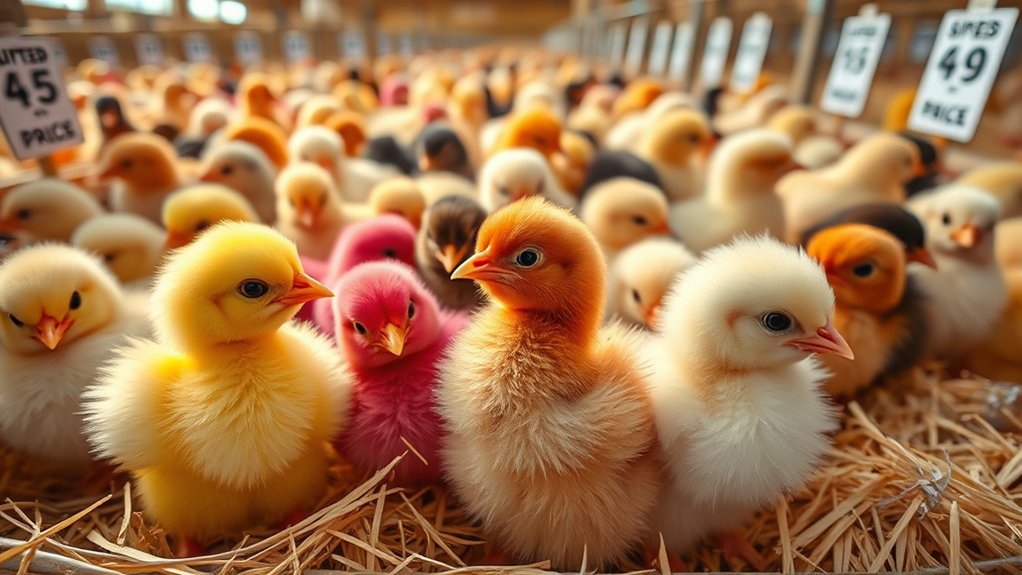
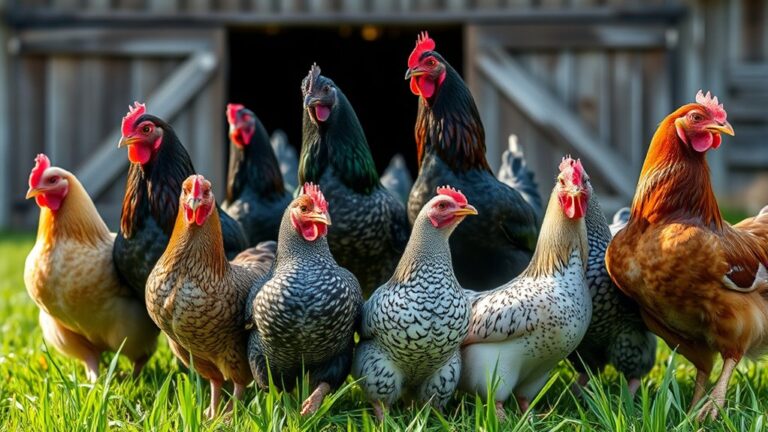
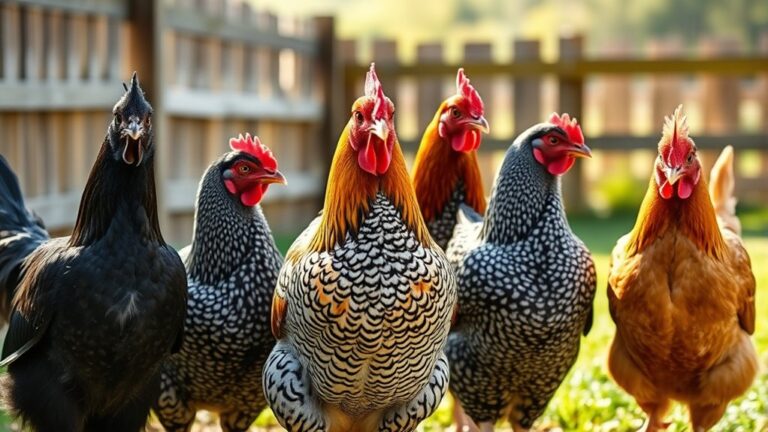
Although many chick breeds come at an affordable price, some cost more due to their rarity, growth rate, and purpose. When you choose a popular breed like Rhode Island Reds or Leghorns, you’ll often find them priced reasonably because they’re widely available and in high demand.
However, rare or specialty breeds, such as Silkies or Ameraucanas, usually come with a higher price tag. Their limited availability means hatcheries must invest more in breeding and maintaining these unique lines.
Hatchery quality also plays a vital role in pricing. If you buy chicks from a reputable hatchery known for healthy, well-cared-for birds, you’re likely paying a bit extra for that assurance.
High-quality hatcheries ensure better survival rates and stronger chicks, which justifies the cost. So, when you compare prices, consider both breed popularity and hatchery quality to understand why some chicks cost more than others.
How Chick Age Impacts Price
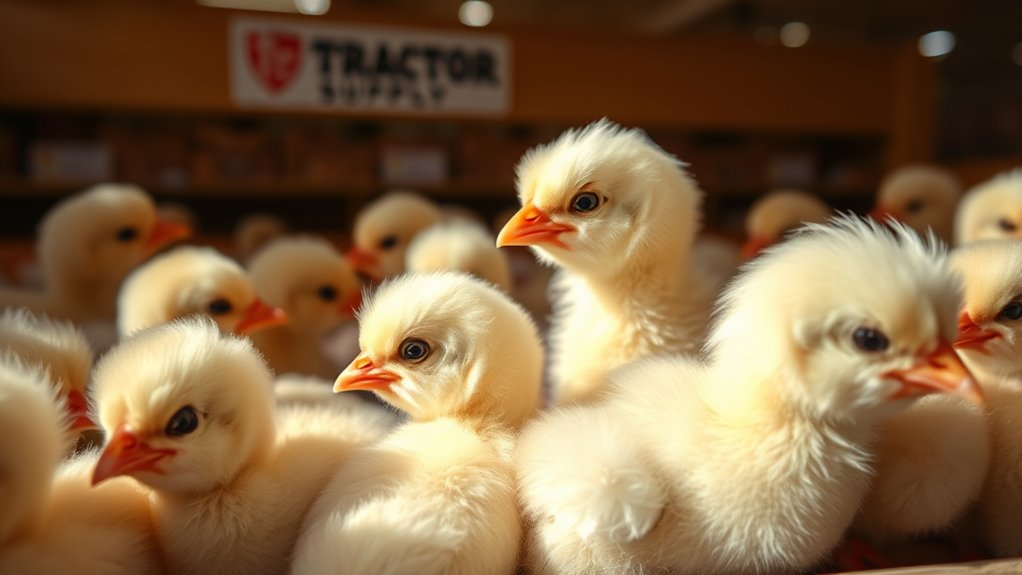
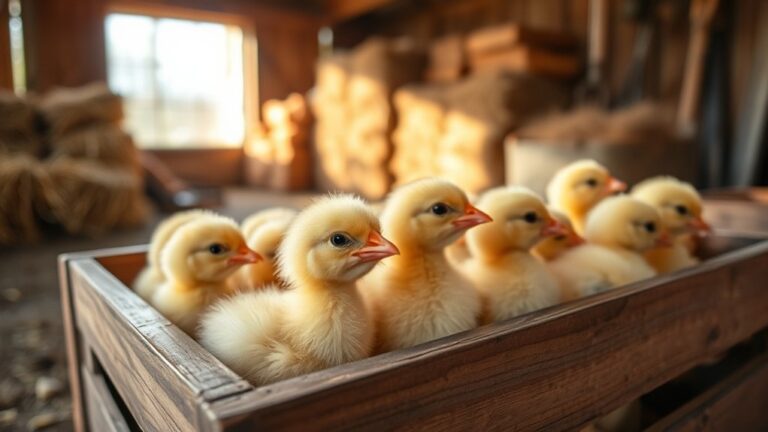
Besides breed and hatchery quality, the age of chicks also plays a big role in their price. When you buy younger chicks, they generally cost less upfront, but you need to invest more in care, which affects overall expense. Here’s how chick age impacts price:
- Brooder temperature control: Younger chicks require precise brooder temperatures to stay healthy, raising your energy costs and care complexity, which indirectly influences price.
- Vaccination costs: Older chicks often come vaccinated, meaning you pay more initially but save on future medical expenses.
- Survival and growth rates: Older chicks have a higher survival rate and are closer to maturity, so sellers price them higher due to lower risk and quicker returns.
Knowing these factors helps you decide whether to invest in younger, less expensive chicks with more care needs or pay upfront for older, vaccinated chicks. This way, you can balance cost and convenience effectively.
How Seasonal Demand Drives Chick Prices
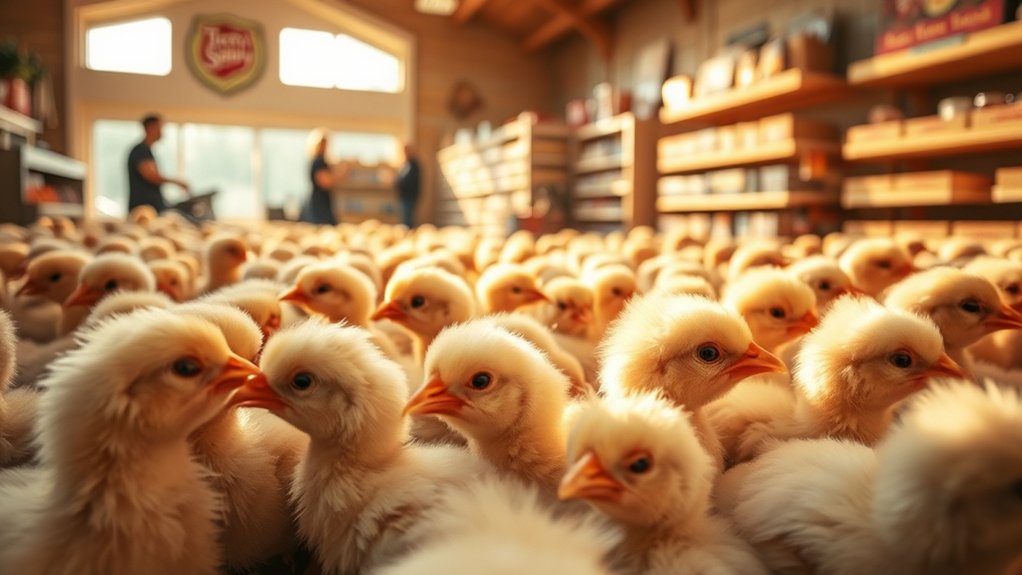
When do chick prices tend to rise, and why? You’ll notice prices climb during spring and early summer when demand peaks. This period aligns with warmer weather, ideal for raising chicks, making more people enthusiastic to buy. Market fluctuations during these months reflect this surge, pushing prices higher as supply struggles to keep pace.
Supplier dynamics also play a key role. When demand spikes, suppliers may face challenges in sourcing enough chicks or increasing production quickly. This scarcity drives prices up further. Conversely, in off-peak seasons like late fall and winter, demand drops, allowing prices to fall since suppliers have excess stock.
Understanding how seasonal demand interacts with market fluctuations and supplier dynamics helps you predict when chick prices will be higher or lower. By timing your purchase around these cycles, you can save money and secure the chicks you want without overpaying during peak seasons.
How Feeding and Care Affect Chick Prices
Because feeding and care directly impact chick health and growth, they play a major role in determining chick prices. When you buy chicks, you’re not just paying for the bird itself but also the costs involved in raising healthy, vigorous animals. Here’s how feeding and care affect prices:
Feeding and care shape chick prices by covering the costs of raising healthy, vigorous birds.
- Brooding equipment costs: Proper brooding equipment ensures chicks stay warm and safe, reducing mortality rates. These initial investments raise the overall cost of raising chicks.
- Nutrition and feed quality: High-quality feed supports rapid growth and strong immunity. Using premium feed increases expenses, which you’ll see reflected in chick prices.
- Vaccination protocols: Following strict vaccination protocols prevents disease outbreaks. The cost of vaccines and administration adds to the chick’s price but safeguards your investment.
In short, better feeding and care increase chick prices but guarantee healthier, more resilient birds that thrive once you bring them home.
How Chick Availability Affects Prices
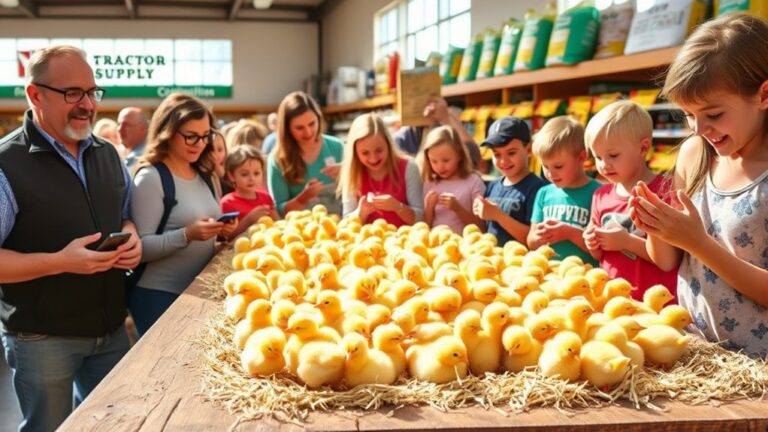
How does chick availability influence their price? When chicks are in high demand but limited supply, prices tend to rise. You’ll notice that during peak seasons or shortages, Tractor Supply adjusts costs to reflect scarcity.
Limited availability can also affect chick health, as overcrowding in brooder boxes may increase stress and illness risk. When you buy chicks, their health is vital, so stores avoid overcrowding by limiting the number of chicks per shipment.
This careful management sometimes reduces supply, pushing prices higher. Conversely, when there’s an abundance of chicks, prices typically drop, making it easier for you to find affordable options.
Understanding this balance helps you anticipate price changes and plan your purchases. So, keep an eye on chick availability if you want the best deal without compromising chick health or overcrowding in the brooder box.
Availability directly impacts cost and the well-being of your future flock.
Frequently Asked Questions
What Is the Return Policy for Chicks Purchased at Tractor Supply?
Tractor Supply’s return policy for chicks usually doesn’t allow returns once you’ve taken them home since they’re live animals. However, if there’s a health issue at purchase, you should notify them immediately.
Before buying, make sure you have a proper brooder setup and understand the feed requirements to keep your chicks healthy. Always check with your local store for specific return details; they might offer exchanges or credits in certain cases.
Are There Any Health Guarantees With Tractor Supply Chicks?
Yes, Tractor Supply provides health certifications with their chicks to guarantee you get healthy birds. They take disease prevention seriously by sourcing from reputable hatcheries and following strict health protocols.
When you buy chicks, you’ll receive documentation confirming their health status, which helps protect your flock. If you notice any health issues shortly after purchase, their customer service can guide you on returns or refunds based on their policies.
How Do I Transport Chicks Safely From the Store to Home?
To transport chicks safely from the store to home, keep them in a well-ventilated container that’s secure but allows proper airflow. Avoid overcrowding to prevent stress and overheating.
Once home, immediately provide a brooding area with the right temperature, around 95°F (35°C) for the first week, so they stay warm and comfortable. Handle them gently and try to minimize travel time to reduce stress and ensure they stay healthy.
Can I Pre-Order Chicks Online From Tractor Supply?
You might think you can just jump online and pre-order chicks from Tractor Supply, but it’s not that simple. They don’t offer direct online ordering for chicks.
Instead, you’ll need to rely on availability checks on their website or call your local store to see if they have chicks in stock. This way, you can plan your visit and secure your little flock before they’re gone.
What Vaccinations Do Tractor Supply Chicks Receive Before Sale?
Tractor Supply chicks usually receive essential chick vaccinations to protect them from common diseases like Marek’s disease and coccidiosis. You’ll find that their health protocols guarantee chicks are vaccinated before sale, promoting stronger immune systems and healthier flocks.
These vaccinations help reduce early-life illnesses, so when you bring home your chicks, you’re starting with a solid foundation for their growth and well-being.
Conclusion
You might think all chicks cost the same, but knowing these factors helps you get the best value. Chick breed, age, demand, care, and availability all influence prices at Tractor Supply.
By understanding this, you won’t overpay or settle for less healthy chicks. So, next time you shop, you’ll make smarter choices that fit your budget and farming goals.
A little knowledge goes a long way in chick buying at Tractor Supply!