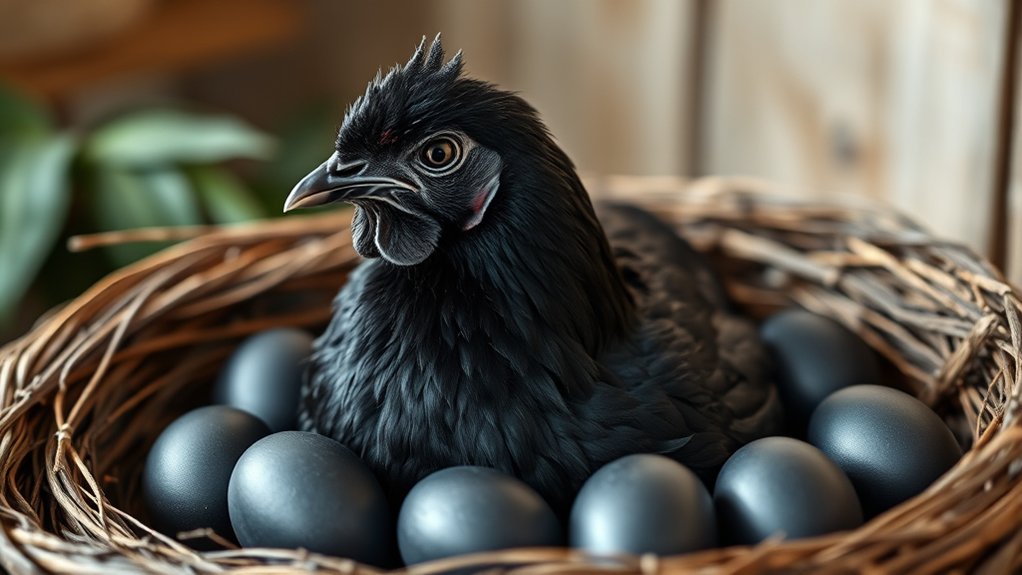
What Are Black Chickens That Lay Black Eggs?
If you’ve ever wanted to add something unique to your backyard flock but struggled to find chickens that lay truly unusual eggs, you’re not alone. Many people crave those rare breeds that offer something different in both appearance and egg color. Black chickens that lay black eggs are one such fascinating option that can make your coop stand out.
If you’re curious about black chickens that lay black eggs, know it’s a rare trait found in breeds like Olive Eggers and Marans, not just all black-feathered birds. These eggs boast deep, rich colors due to unique genetics affecting pigment deposition.
They’re visually striking, have a mild taste, and often pack extra nutrients. Caring for these birds needs attention to diet and housing to keep them healthy. Keep exploring to uncover their unique qualities and care tips.
Key Takeaways
- Few black chicken breeds, like Ayam Cemani and Olive Eggers, lay dark or near-black eggs, but most black-feathered breeds do not produce black eggs.
- Eggshell color comes from genetic pigment deposition, involving protoporphyrin, biliverdin, and sometimes melanin for darker shades.
- Black chicken eggs typically have thick, rich-colored shells ranging from dark brown to black, with medium to large sizes.
- These eggs have a mild, familiar flavor and might have higher nutrients like protein, omega-3s, and antioxidants.
- Proper care, a balanced diet, and safe housing are essential for healthy black chickens and consistent dark egg production.
Which Black Chicken Breeds Lay Black Eggs?
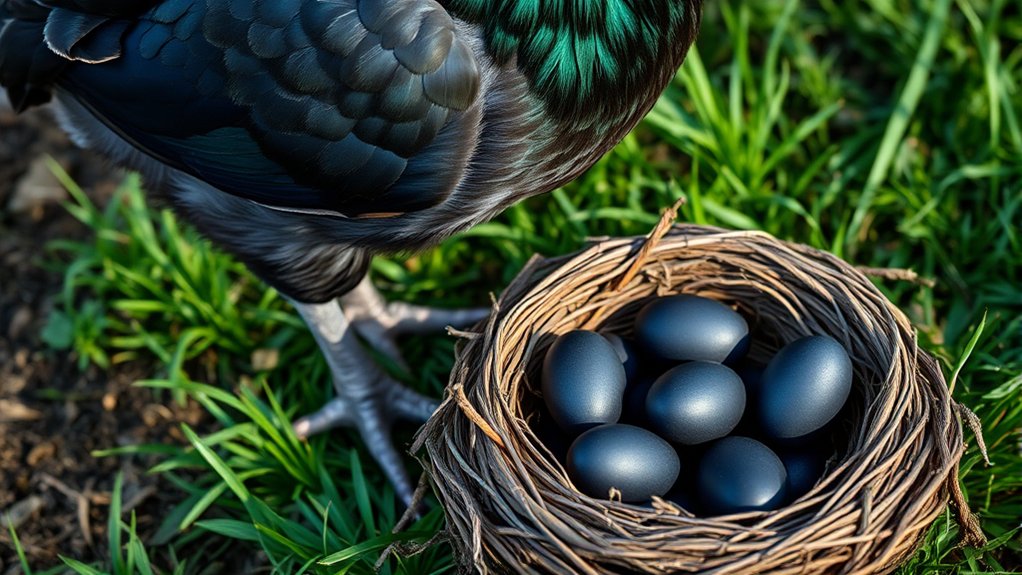
Although many black chicken breeds exist, only a few actually lay black eggs. When you investigate black chickens, it’s essential to understand that color genetics play a critical role in egg coloration.
Not all black-feathered birds will produce dark eggs, as the pigments influencing feather color differ from those affecting eggshells. For instance, the Ayam Cemani, known for its striking all-black appearance, doesn’t lay black eggs but rather cream or light-colored ones.
On the other hand, the Olive Egger, a hybrid breed influenced by black chickens, can lay eggs with a very dark olive hue, bordering on black. You’ll find that breeds like the Marans, while not completely black, produce some of the darkest brown eggs, nearing black in egg coloration.
Why Do Some Chickens Lay Black or Very Dark Eggs?
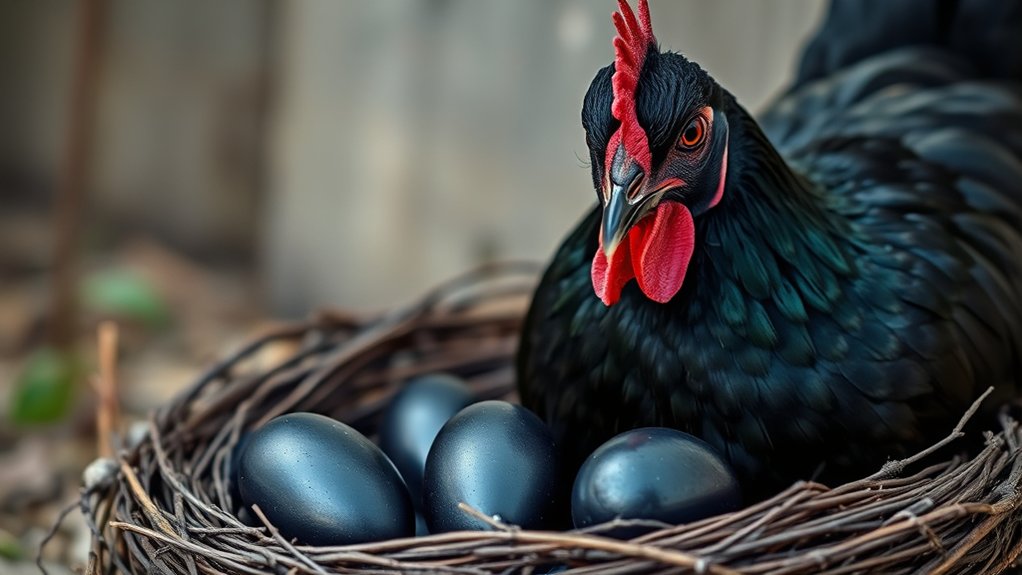
If you’re curious about why some chickens lay black or very dark eggs, the answer lies in the pigments deposited on the eggshell during its formation. These pigments result from specific genetic variations that influence how the hen’s body produces and deposits color onto the eggshell.
Most chicken eggs get their colors from pigments like protoporphyrin and biliverdin, but in breeds laying very dark eggs, an extra pigment called melanin adds deeper, almost black hues.
Egg colors mainly come from protoporphyrin and biliverdin, with melanin adding deep, nearly black shades in some breeds.
You’ll find that these genetic variations are rare and often breed-specific, meaning only certain black chicken breeds have the genes necessary to produce this unique eggshell pigmentation. The hens’ genetics control the amount and type of pigment laid down as the egg forms in the oviduct, resulting in eggs that can range from deep chocolate tones to nearly black.
Understanding these genetic and pigmentation factors explains why black or very dark eggs are uncommon and special.
How Do Black Chicken Eggs Differ in Appearance?
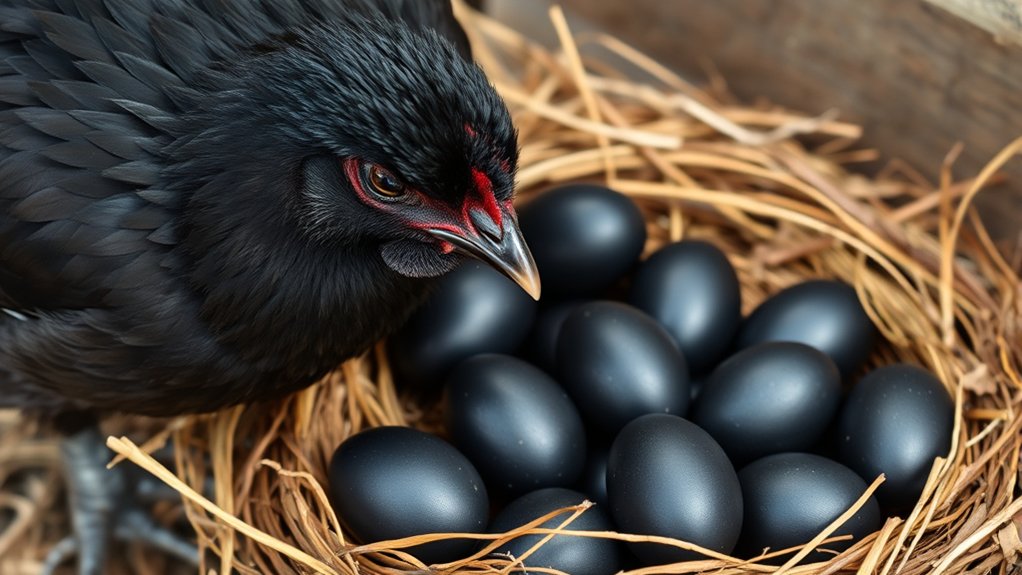
When you examine black chicken eggs closely, you’ll notice their shells have a rich, deep color that sets them apart from typical eggs. Unlike the usual white or brown eggs, black chicken eggs often show striking color variation, ranging from dark chocolate browns to almost black shades. This unique pigmentation comes from the breed’s genetics and can sometimes include subtle speckles or mottling, adding to their distinct appearance.
As for egg size, black chickens generally lay medium to large eggs, comparable to those of more common breeds. So, you won’t need to worry about smaller eggs if you’re switching to black-egg-laying chickens. The combination of dark, bold colors and a reliable egg size makes these eggs visually intriguing and a standout in any basket. You’ll find their appearance both unusual and appealing, a true departure from the ordinary eggs you’re used to seeing.
Are Black Chicken Eggs Different in Taste?
You might be wondering if black chicken eggs taste any different from regular ones. Well, let’s take a closer look at their flavor, texture, and even nutritional content to see how they might affect your experience. Knowing these little details can really help you decide if they’re something you’d want to try.
Flavor Profile Comparison
Although black chicken eggs might catch your eye with their unique color, their flavor often surprises people by being quite similar to regular eggs. The color symbolism and folklore significance surrounding these eggs often lead to assumptions about taste, but the reality is simpler.
When you crack one open, you’ll notice:
- A mild, familiar flavor that’s slightly richer than standard eggs.
- A subtle earthiness that might remind you of organic or free-range eggs.
- A creamy yolk that *amplifies* dishes without overpowering them.
If you’re expecting a dramatic difference because of their striking appearance, you’ll find the flavor pleasantly understated. The real appeal lies in their rarity and the cultural stories they carry, not in a unique taste profile.
Texture and Consistency
The mild flavor of black chicken eggs pairs well with their distinct texture and consistency, which many find just as appealing. Thanks to the unique eggshell pigmentation, these eggs often have a slightly thicker shell, giving you a firmer feel when handling them.
This pigmentation doesn’t affect the inside, but the shell’s robustness can influence how you crack and cook the eggs. Moreover, chicken behavior plays a role; black chicken breeds typically lead calm lives, which results in eggs with a smooth, well-structured yolk and white.
When you cook them, the texture tends to be creamier and less watery than conventional eggs. So, if you’re curious about variety, black chicken eggs offer a delightful and subtly different experience in both texture and consistency.
Nutritional Impact on Taste
How much does nutrition shape the taste of black chicken eggs? While the colorful feathers of these birds enchant you, it’s the nutrition that truly influences egg flavor. The unique egg color doesn’t drastically change the taste, but what you feed these chickens does.
You’ll notice flavor differences based on:
- Diet variety – fresh greens, grains, or insects boost richness.
- Environment – free-range chickens produce eggs with more depth.
- Health – well-nourished hens lay eggs with balanced taste and texture.
What Nutritional Benefits Do Black Chicken Eggs Offer?
When you choose black chicken eggs, you’re tapping into a unique source of nutrition that often surpasses conventional eggs in several key areas. These eggs display a fascinating color variation in their shells, ranging from deep black to dark shades of green or blue. This isn’t just visually striking but also hints at their rich mineral content. You’ll notice their eggshell strength is typically greater, offering better protection and longer shelf life, which helps preserve the nutrients inside.
Nutritionally, black chicken eggs tend to have higher levels of protein, omega-3 fatty acids, and essential vitamins like B12 and riboflavin compared to standard eggs. This makes them an excellent choice if you’re aiming to boost your diet with nutrient-dense foods. Plus, their antioxidant content is often elevated due to the pigmentation, supporting your overall health. By adding black chicken eggs to your meals, you’re not only enjoying something unique but also nourishing your body more effectively.
Common Myths and Facts About Black Chickens and Their Eggs
You might be surprised by the stories and beliefs surrounding black chickens and their eggs. Many myths persist about these birds with their rare color and unique eggs. Let’s explore some myth busting:
- Black eggs are poisonous: False. Black eggs, like those from Ayam Cemani chickens, are safe to eat and nutritious.
- Black chickens are aggressive: Not true. Their color doesn’t influence behavior; they can be as docile as other breeds.
- All black chickens lay black eggs: Nope. Only specific breeds lay dark eggs, while others with black feathers lay regular-colored eggs.
Caring for Black Chickens That Lay Black Eggs
To keep your black chickens healthy and productive, you’ll want to provide them with proper housing and a clean environment. It’s really important to make sure their living space is comfortable and safe.
Also, don’t forget about their diet. Giving them balanced nutrition supports not just egg laying but their overall well-being too. When you pay attention to these basics, your flock will thrive and keep laying those unique black eggs you love.
Housing and Environment
Although black chickens that lay black eggs are hardy, they still need a well-ventilated, secure coop to thrive. Proper housing supports their feeding habits by providing a calm environment where they can eat without stress. To guarantee comfort and safety, focus on:
- Ventilation: Install windows or vents to keep fresh air circulating and reduce moisture buildup.
- Predator Protection: Use sturdy wire mesh and secure locks to keep foxes, raccoons, and other predators out.
- Space: Provide enough room, about 4 square feet per bird inside the coop and 10 square feet in the run, to encourage natural behaviors.
Nutrition and Health
How can you guarantee your black chickens that lay black eggs stay healthy and productive? Focus on balanced nutrition rich in proteins, vitamins, and minerals to support their unique genetic traits. These chickens often carry genetic mutations influencing both their dark feathers and the rare egg coloration.
Providing a diet with calcium and phosphorus helps maintain strong eggshells and overall health. Regular access to fresh water and clean living conditions prevents disease, ensuring consistent egg production.
Supplements like omega-3s can boost immunity and significance, enhancing the benefits of their natural genetic makeup. Monitoring their health closely allows you to spot issues early, keeping your flock thriving.
Proper nutrition and care directly impact egg coloration and the well-being of these fascinating birds.
Where to Buy Black Chicken Breeds That Lay Black Eggs
If you’re interested in adding black chickens that lay black eggs to your flock, you’ll find several reliable sources to purchase them from. These unique birds carry historical significance and cultural symbolism, making them a fascinating addition.
Here’s where you can find them:
- Specialty Hatcheries: Many hatcheries focus on rare breeds like Ayam Cemani, known for their striking black feathers and eggs. They work to preserve the historical significance of these birds.
- Local Poultry Shows and Fairs: These events often feature breeders showcasing culturally symbolic black chicken breeds. It’s a great chance to choose healthy, well-cared-for birds.
- Online Poultry Marketplaces: Websites dedicated to poultry sales let you compare breeds, read reviews, and connect with breeders who specialize in black egg-laying chickens.
Using Black Chicken Eggs in Your Cooking
You’ll find that black chicken eggs bring some unique nutritional benefits that can really boost your meals. Plus, when you cook with them, their rich flavor and striking color add a special touch to your dishes. So, let’s take a closer look at how to make the most of these eggs in your kitchen.
Nutritional Benefits Explained
Although black chicken eggs might look unusual, they pack a powerful nutritional punch that can improve your meals. The unique egg coloration results from specific poultry genetics, influencing the shell and often the yolk’s richness.
When you include these eggs in your diet, you get higher antioxidant levels, which help protect your cells. They also offer increased protein content, supporting muscle repair and growth. Plus, they’re richer in vitamins like B12 and D, essential for energy and bone health.
These benefits mean you’re not just adding a striking color to your plate but boosting your nutrition too. Understanding how poultry genetics affect egg coloration helps you appreciate the distinct qualities of black chicken eggs beyond their appearance. Incorporate them confidently to enjoy both flavor and health perks.
Culinary Uses And Tips
The unique nutritional qualities of black chicken eggs also influence how they perform in the kitchen. Thanks to their distinct egg coloration, these eggs often have richer yolks, which improve flavor and texture in your dishes.
When you cook with black chicken eggs, you’ll notice their firmer whites hold up well in frying and poaching, making them ideal for those methods. Poultry genetics play a role here, as the breed’s traits affect egg size and shell thickness, so you might need to adjust cooking times slightly.
Try using these eggs in baking to add a subtle depth or as a striking visual element in salads and breakfast plates. Experimenting with black chicken eggs can raise your recipes both in taste and presentation.
Why Black Chickens and Their Eggs Are Special for Backyard Flocks
When you add black chickens to your backyard flock, you’re inviting a unique blend of beauty and practicality. Their colorful feathers offer a striking contrast against your garden, making your flock stand out visually. But it’s not just about looks. These birds bring fascinating egg color genetics that result in eggs ranging from deep olive to nearly black shades, adding variety to your egg basket.
Adding black chickens enhances your flock with stunning feathers and uniquely colored eggs from deep olive to nearly black.
Here’s why they’re special for your backyard:
- Visual Appeal: Their iridescent black feathers shimmer with hints of green and blue, enhancing your flock’s charm.
- Egg Variety: Thanks to complex egg color genetics, you get eggs that are not only unique but also conversation starters.
- Hardiness: These chickens adapt well to different climates and often have calm temperaments, making them easy to care for.
Frequently Asked Questions
How Long Do Black Chickens That Lay Black Eggs Typically Live?
You can expect black chickens that lay black eggs to live around 5 to 8 years on average. Their lifespan can vary depending on factors like breed, care, and environment.
The color variation in their feathers and the unique egg color genetics don’t directly affect how long they live. But healthier birds with good genetics generally thrive longer.
Make sure you provide proper nutrition and a safe habitat to maximize their lifespan.
What Are Common Health Issues for Black Chickens?
You’d think their striking black color pigmentation would make them invincible, but black chickens aren’t superheroes. They’re prone to common issues like mites, respiratory infections, and egg binding.
Despite their impressive genetic diversity, they still face typical poultry health challenges. Keeping their environment clean and monitoring for symptoms helps you catch problems early.
Don’t let their dark feathers fool you; these birds need just as much care as any other chicken breed.
Do Black Chickens Require Special Housing or Coop Conditions?
You don’t need to provide black chickens with special housing requirements beyond what any chicken needs. Focus on a coop design that guarantees good ventilation, protection from predators, and dry, clean bedding.
Make certain the space is roomy enough to prevent overcrowding and has nesting boxes for egg-laying. Proper coop design helps keep your chickens healthy and comfortable, regardless of their color or egg type.
How Often Do Black Chickens Lay Black Eggs?
You might be surprised to learn that black chickens don’t lay black eggs daily. Most black chicken breeds lay eggs every 24 to 26 hours, but egg color genetics play a big role in the shade and frequency.
Some black chicken breeds, like the Ayam Cemani, lay dark-tinted eggs, but not pure black ones. So, while you can expect regular laying, the egg color varies, adding a unique twist to your flock’s routine.
Can Black Chickens That Lay Black Eggs Be Mixed With Other Breeds?
Yes, you can combine black chickens that lay black eggs with other breeds. Doing so can enhance genetic diversity, which fortifies your flock’s health and resilience.
However, you should consider breeding compatibility to avoid issues like aggression or size mismatches. Keep an eye on their behavior and breeding patterns to guarantee harmony.
Mixing breeds can be rewarding if you manage their environment and genetics thoughtfully.
Conclusion
So, you want black chickens that lay black eggs? Because regular eggs are just too mainstream, right? These mysterious birds add a gothic flair to your coop and a dash of intrigue to your breakfast plate.
Sure, their eggs might not taste like a five-star meal, but hey, they’re perfect for impressing your friends or confusing your neighbors. Welcome the dark side of poultry because why settle for ordinary when you can have ebony eggs?
If you’re looking for something unique, black chickens that lay black eggs are definitely worth considering.