How to Raise Chickens for Eggs in 10 Essential Steps
If you’re dreaming of fresh eggs from your backyard but feel overwhelmed about where to start, you’re not alone. Many people struggle with raising chickens for eggs because it seems complicated and time-consuming. The good news? With a few simple steps, you can enjoy a steady supply of fresh, homegrown eggs without the hassle.
To raise chickens for eggs, start by picking hardy, productive breeds like Rhode Island Reds. Build a secure, well-ventilated coop with predator protection and cozy nest boxes. Feed your hens balanced layer feed and fresh water daily.
Use 14-16 hours of light to encourage laying, and collect eggs twice a day, storing them pointed end down. Keep the coop clean, watch for health issues, and expand your flock gradually.
Follow these essentials, and you’ll be set for a thriving backyard egg supply.
Key Takeaways
- Select hardy, high-producing breeds like Rhode Island Reds or Leghorns to ensure consistent egg laying and ease of management.
- Build a secure, well-ventilated coop with predator-proof fencing and cozy nesting boxes positioned 18-24 inches off the ground.
- Provide a balanced diet rich in protein and calcium, fresh water, and regulate 14-16 hours of daily light to support egg production.
- Collect eggs twice daily using clean containers. Avoid washing them immediately, and store eggs refrigerated with the pointed end down to maintain freshness.
- Expand the flock gradually with proper quarantine. Maintain cleanliness, pest control, and perform daily health checks to prevent disease and stress.
Why Raise Chickens for Fresh Eggs?
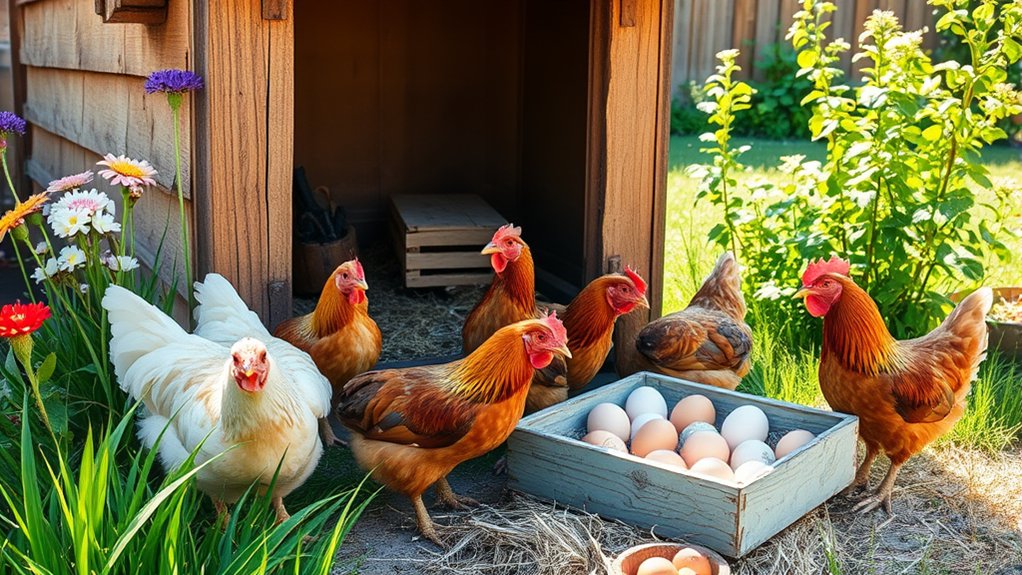
Why choose to raise chickens for fresh eggs? When you get into urban gardening, raising chickens becomes a rewarding way to enjoy truly fresh eggs right from your backyard. You get to control what your hens eat, ensuring better poultry health and tastier eggs.
Plus, fresh eggs have a richer flavor and higher nutritional value compared to store-bought ones. Raising chickens also reduces food waste since hens happily snack on your kitchen scraps.
You’ll find that caring for chickens fits well within an urban garden setup, providing natural fertilizer for your plants and promoting sustainability. Keeping your chickens healthy is straightforward with proper bedding, balanced feed, and clean water, which means you’ll avoid common poultry health issues.
Choose the Best Chicken Breeds for Egg-Laying
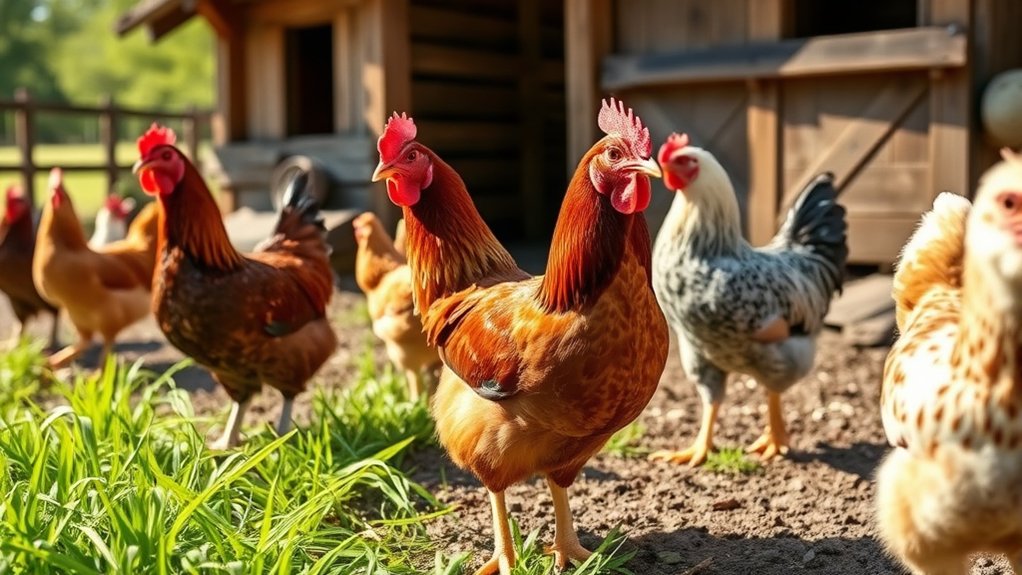
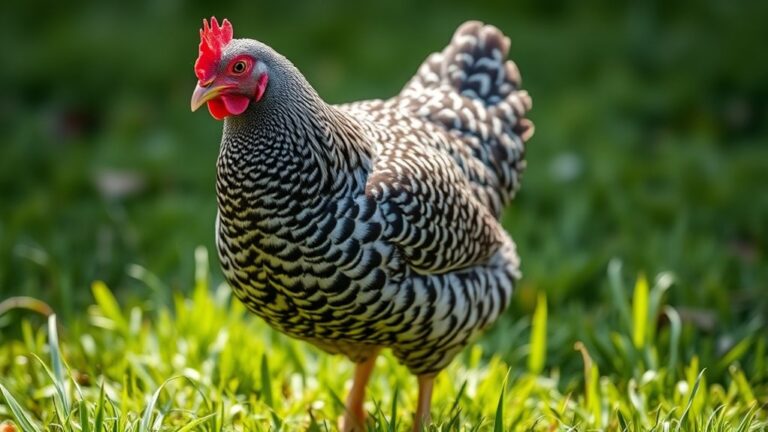
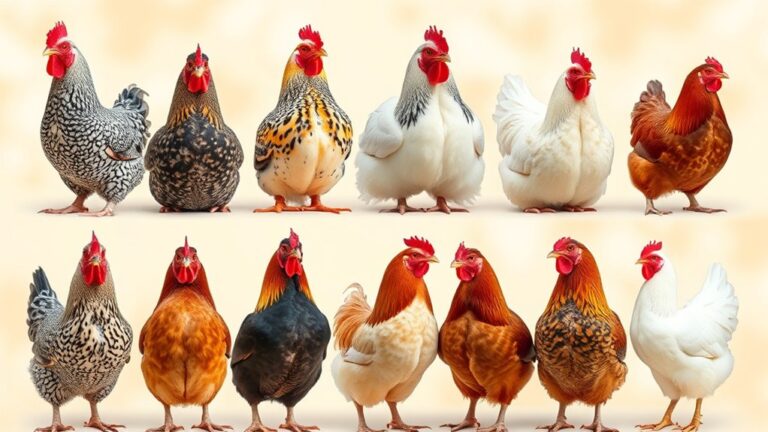
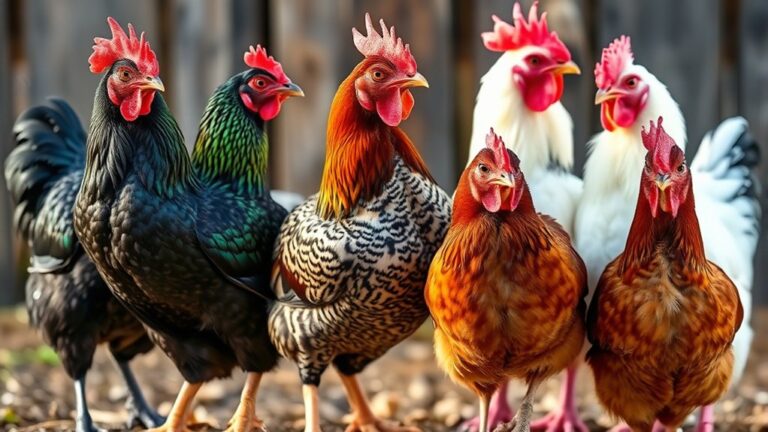
When selecting chickens for egg production, you’ll want to focus on breeds known for their consistent laying and hardiness. Popular choices include Rhode Island Reds and Leghorns, both reliable layers with friendly breed temperaments that make them easy to manage.
If you prefer a variety of egg colors, consider Ameraucanas or Easter Eggers, which lay blue or green eggs, adding a unique touch to your collection. White Leghorns are top producers of white eggs, while Sussex hens provide large brown eggs with calm, docile personalities.
Your choice should match not only how many eggs you want but also how well the breed’s temperament fits your lifestyle. Some breeds are more social and gentle, ideal if you have children or want pets, while others are more independent.
Set Up a Safe Chicken Coop for Egg-Laying Hens
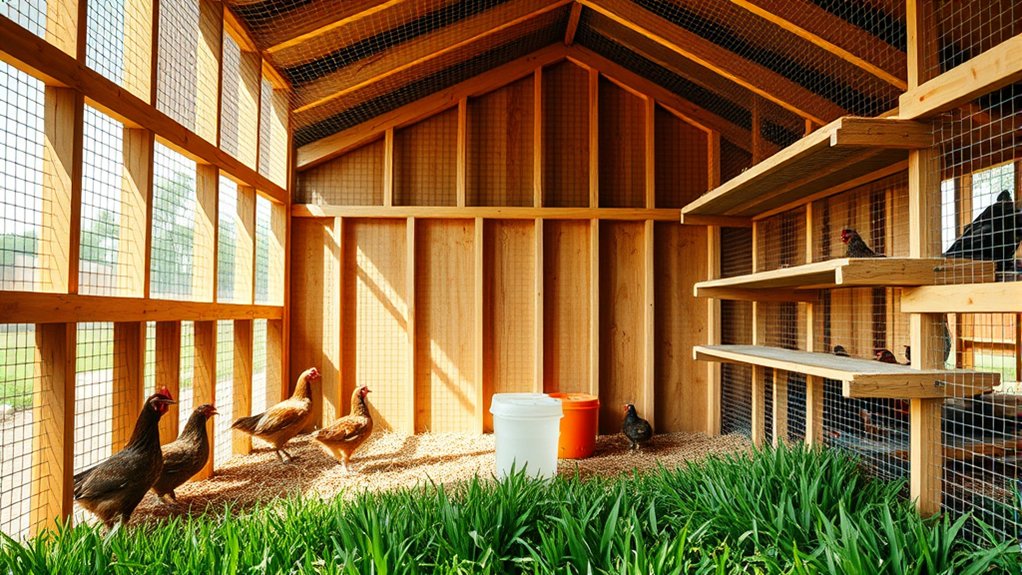
Before your hens start laying, you need to create a secure and comfortable coop that protects them from predators and harsh weather. Focus on solid predator protection by using sturdy materials like hardware cloth instead of chicken wire. Also, bury fencing at least a foot underground to prevent digging.
Make sure all doors and windows have secure locks to keep raccoons and foxes out.
Nest box placement is critical for easy egg collection and hen comfort. Position the nest boxes in a quiet, dim corner of the coop, about 18-24 inches off the ground. Provide one box for every 3-4 hens.
Make the boxes cozy with clean bedding like straw or wood shavings to encourage laying.
Good ventilation without drafts will keep your hens healthy, so include adjustable vents. By carefully setting up your coop with predator protection and well-placed nest boxes, you create a safe environment where your hens will happily lay quality eggs.
Feed Your Hens Right for Healthy Eggs
Once your hens have a safe and comfortable place to lay, their diet plays a key role in producing healthy eggs. You’ll want to provide a balanced feed rich in protein, calcium, and essential vitamins. Layer pellets or crumbles are designed to meet these needs and support strong shells. Supplement their diet with kitchen scraps and garden greens, but avoid anything toxic.
Effective compost management helps here. Using chicken manure compost not only enriches your garden but can also recycle nutrients back into your hens’ feed garden. Just be sure to manage compost carefully to avoid attracting predators. Predator prevention is vital; secure feed storage and coop design keep food safe and prevent wild animals from disturbing your hens or their food.
Create a Simple Daily Care Routine for Your Chickens
Start your day by feeding your hens a balanced meal to keep them healthy and productive. Then, in the evening, take a moment to check the coop and make sure it’s clean and secure before the chickens settle in. Following this simple routine every day helps your flock stay happy and laying consistently. It’s easy to keep things running smoothly with just a little daily attention!
Morning Feeding Schedule
How often should you feed your chickens in the morning to keep them healthy and productive? Establishing consistent morning routines is key. You’ll want to feed your chickens once every morning, ideally soon after they wake up.
This helps regulate their digestion and encourages egg production. Begin by providing fresh water and a balanced layer feed, ensuring they get the necessary nutrients. Incorporate treats like grains or kitchen scraps sparingly to avoid disrupting their diet.
Stick to a regular feeding schedule, feeding at the same time each day to reduce stress and support their natural rhythms. By maintaining this simple morning feeding schedule, you create a steady foundation for your chickens’ health and egg-laying efficiency.
Evening Coop Check
Although your chickens spend most of the day outside, performing an evening coop check guarantees they return safely and stay healthy overnight. When you close up the coop, make certain all doors and windows are secure to aid nighttime predator prevention.
Check for any signs of damage or gaps where raccoons, foxes, or other predators could enter. While inside, verify the coop ventilation. Good airflow prevents moisture buildup and respiratory issues.
Use coop ventilation tips like installing adjustable vents or simple windows that you can open or close depending on the weather. Finally, confirm your chickens are settled comfortably on their roosts. This simple routine helps protect them, promotes their wellbeing, and guarantees a fresh start for the next day’s egg gathering.
Manage Common Chicken Behaviors and Problems
When you raise chickens, you’ll quickly notice they have unique behaviors that can sometimes cause challenges. Understanding and managing these behaviors helps keep your flock healthy and happy. For example, feather pecking can stress your birds and lead to injuries, so it’s important to provide enough space and distractions like pecking toys.
Raising chickens means managing unique behaviors to keep your flock healthy and stress-free.
Predator threats also demand your attention. Secure housing and regular coop checks are essential to protect your chickens.
Here are five common behaviors and problems you might face:
- Feather pecking: Reduce crowding and offer protein-rich feed to minimize aggression.
- Predator threats: Use sturdy fencing and lock the coop at night.
- Broodiness: Gently discourage hens from sitting too long by removing nesting material.
- Egg-eating: Collect eggs frequently and provide calcium supplements.
- Dust bathing: Offer a dry, sandy area to prevent parasites naturally.
Use Lighting to Boost Egg Production Naturally
To keep your hens laying consistently, you’ll want to provide about 14 to 16 hours of light each day. Natural light is best because it helps maintain their health and boosts egg production.
Just make sure the light is bright enough without being too harsh. That way, your chickens stay comfortable and productive.
Optimal Light Duration
Because hens rely on daylight to regulate their laying cycles, providing the right amount of light each day can naturally boost egg production. You want to aim for about 14 to 16 hours of light daily, combining sunlight exposure with artificial lighting when needed.
Here’s how you can optimize light duration:
Use natural sunlight as much as possible during the day. Supplement with soft artificial lighting in the early morning or late evening.
Avoid sudden changes in light duration to prevent stress. Maintain consistent light schedules even on cloudy days.
Dim lights gradually at night to mimic natural sunset.
Natural Light Benefits
Maintaining the right light duration sets the stage for your hens to lay consistently, but the quality of that light plays an equally crucial role. Sunlight exposure provides a natural spectrum that artificial lights often can’t replicate, helping regulate your hens’ internal clocks and hormone cycles. This natural rhythm encourages steady egg production.
Keep in mind, seasonal variation affects how much sunlight your chickens receive, so their laying patterns may shift with changing daylight hours. To make the most of natural light benefits, position your coop where it gets ample sunlight throughout the day.
This not only boosts egg production but also supports your hens’ overall health. Using natural light smartly helps you raise healthier, more productive chickens with less reliance on artificial lighting.
Light Intensity Tips
Although natural light provides essential benefits, controlling light intensity inside your coop can further boost your hens’ egg production. Using effective lighting techniques helps simulate longer daylight hours, encouraging consistent laying. Choose bulb types that emit soft, warm light to avoid stressing your chickens.
Here are some tips to optimize light intensity:
- Use LED bulbs for energy efficiency and adjustable brightness.
- Position lights about 12-18 inches above roosting areas.
- Maintain 14-16 hours of light daily during shorter days.
- Dim lights gradually in the evening to mimic natural sunset.
- Avoid sudden light changes to reduce hen stress.
Keep Your Egg-Laying Chickens Healthy and Disease-Free
How can you guarantee your egg-laying chickens stay healthy and free from disease? Start with proper incubation techniques to ensure strong, disease-resistant chicks.
Once hatched, practice regular hen health monitoring by checking for signs like lethargy, abnormal droppings, or feather loss. Keep their living area clean, dry, and well-ventilated to prevent infections.
Feed a balanced diet and provide clean water daily to support their immune system.
Here’s a quick guide to help you maintain chicken health:
| Aspect | Action | Benefit |
|---|---|---|
| Incubation | Use sanitized incubators | Prevents early disease |
| Health Monitoring | Check birds daily | Early detection of illness |
| Environment | Clean coop weekly | Limits bacterial growth |
Collect and Store Fresh Eggs the Right Way
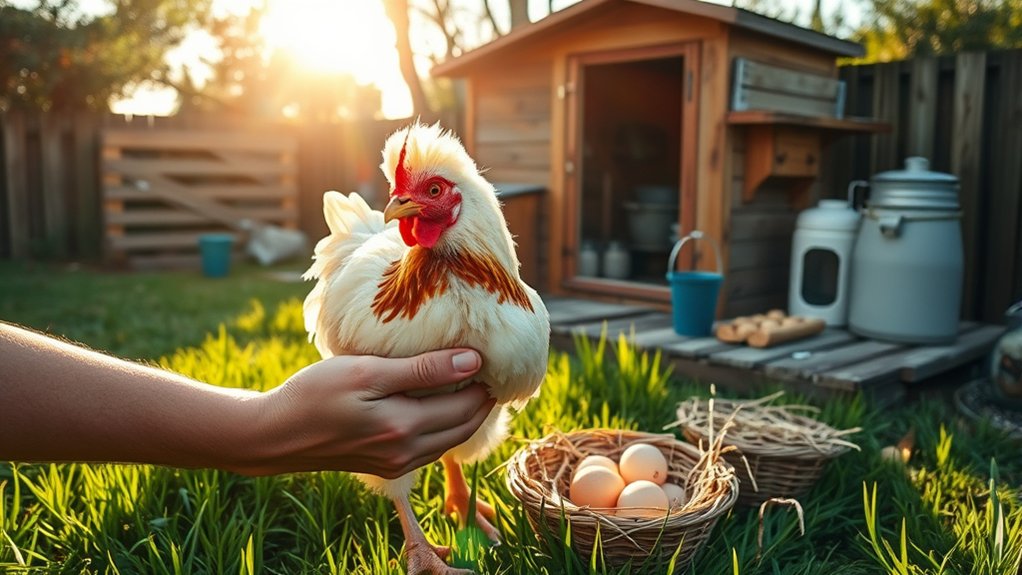
Once your hens start laying, you’ll want to collect eggs regularly to keep them fresh and prevent damage. Timely egg collection helps avoid cracked shells and reduces the risk of dirt buildup or predators disturbing the nest.
To master egg collection and storage techniques, follow these tips:
- Collect eggs at least twice a day, ideally morning and late afternoon.
- Use a clean, soft container to prevent cracking during transport.
- Avoid washing eggs immediately; washing removes the protective bloom.
- Store eggs in a cool, consistent temperature, ideally in the refrigerator.
- Place eggs with the pointed end down to preserve freshness longer.
Expand or Improve Your Backyard Flock Safely
When you’re ready to grow your flock, you’ll want to do so carefully to maintain a healthy, productive group of chickens. Start by assessing your current coop space and expanding it if necessary to avoid overcrowding.
Integrate urban gardening principles by planting herbs and flowers around the coop; they naturally support organic pest control, keeping mites and flies at bay. Introduce new chickens slowly and quarantine them for two weeks to prevent disease spread.
Maintain a clean environment and provide balanced nutrition to support your flock’s health.
| Step | Tip |
|---|---|
| Space Expansion | Add 4 sq ft per chicken |
| New Birds | Quarantine for 14 days |
| Pest Control | Use herbs like lavender & mint |
| Nutrition | Provide organic feed & fresh water |
Frequently Asked Questions
How Do I Start Incubating Chicken Eggs at Home?
To start incubating chicken eggs at home, first collect fresh eggs daily, avoiding any that are cracked or dirty. Keep them at room temperature before incubation.
Set your incubator and maintain a steady incubation temperature around 99.5°F (37.5°C). Turn the eggs gently at least three times a day to prevent the embryo from sticking to the shell.
Monitor humidity levels and prepare for hatching around day 21 for best results.
What Are the Best Practices for Chicken Breeding?
Imagine Sarah, who doubled her flock’s hatch rate by focusing on chicken nutrition and timely egg collection. To breed chickens successfully, you need to provide balanced feed rich in proteins and calcium to support healthy hens and roosters.
Collect eggs frequently to prevent damage and contamination. Also, select strong, disease-free birds for breeding. Maintaining clean housing and monitoring mating behaviors will help you raise healthy chicks and increase your flock’s productivity.
How Can I Make My Chicken Coop Predator-Proof?
To make your chicken coop predator-proof, start with strong predator-proofing methods like using hardware cloth instead of chicken wire, securing all openings, and burying fencing at least 12 inches underground to stop digging predators.
Follow coop security tips such as installing sturdy locks, reinforcing doors, and adding motion-activated lights. Regularly inspect your coop for weak spots and fix them promptly.
These steps will help keep your chickens safe from common threats.
What Are Natural Remedies for Chicken Parasites?
When it comes to parasite control, natural remedies are your best friend, acting like a shield for your chickens. You can use diatomaceous earth sprinkled in their coop and dust baths to kill mites and lice.
Garlic and apple cider vinegar added to their water help repel internal parasites. Neem oil also works wonders to naturally control external parasites.
These remedies keep your flock healthy without harsh chemicals, making parasite control safe and effective.
How Do I Train Chickens to Be Friendly and Social?
You can train chickens to be friendly by spending time with them daily and speaking softly. Understand rooster behavior to manage their dominance without stress.
Gently handle them often, and consider feather trimming to reduce aggressive pecking and make handling easier. Offering treats during interaction helps build trust.
Patience and consistency will encourage your chickens to be social and comfortable around you.
Conclusion
Raising chickens for fresh eggs fosters fun, flavor, and fulfillment. By choosing charming breeds, creating comfy coops, and caring consistently, you’ll cultivate a clutch of contented chickens.
Feeding, lighting, and health habits help harvest hearty, healthy hens and happy hens lay heaps of eggs! Collect carefully and store smartly to savor your splendid spoils.
Stick with these steps, and you’ll see steady success in your sustainable, satisfying, and scrumptious egg-raising adventure. Raising chickens for eggs truly brings joy and plenty of fresh eggs to your table!