What Chicken Lays Black Eggs?
If you’ve ever wanted to add a unique touch to your backyard flock or simply crave something different from the usual white or brown eggs, you’re not alone. Many people struggle to find chickens that lay truly black eggs, which can feel like a rare and mysterious treasure.
Luckily, there are some fascinating breeds that deliver on this desire while fitting well into a backyard setup.
If you want black eggs, look for breeds like Ayam Cemani and Kadaknath, both famous for their striking black feathers and dark eggshells. These chickens come from East and Southeast Asia and get their unique egg color from special genetics producing dark pigments.
Black eggs have similar nutrition to regular ones and are safe to eat. They adapt well to backyards with proper care.
Keep exploring to find out how to raise and spot genuine black-egg layers.
Key Takeaways
- Ayam Cemani and Kadaknath are primary chicken breeds known for laying black or very dark eggshells.
- Black eggshell color results from specific genetic pigments deposited late in shell formation.
- Marans, Cream Legbar, Sumatra, and Dutch Bantam also lay dark-colored eggs suitable for backyard raising.
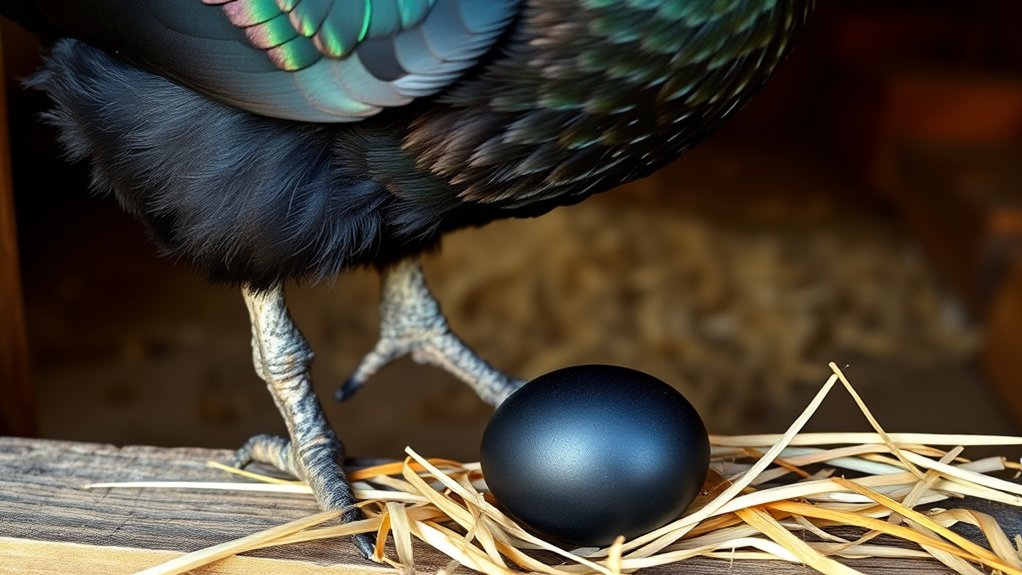
- Genuine black-egg layers show glossy black feathers and dark greenish-black or slate gray eggshells.
- These breeds originate from East and Southeast Asia, where selective breeding enhanced their unique egg colors.
Which Chicken Breeds Lay Black Eggs?
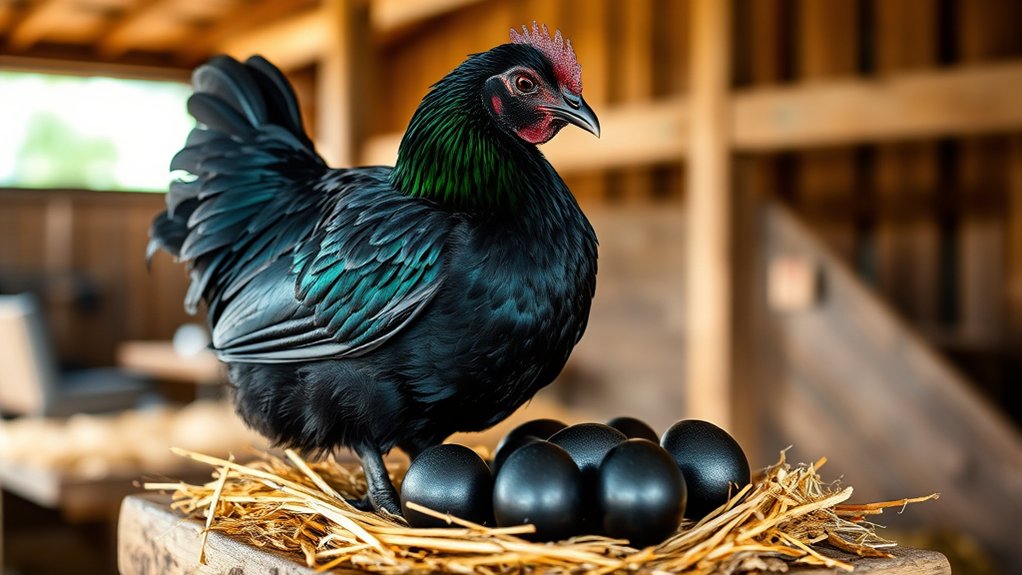
Although most chickens lay white or brown eggs, a few unique breeds produce black eggs that might surprise you. These black eggs come from chickens with a rare genetic mutation affecting their egg color. This mutation causes the eggshells to have a dark, almost black hue, unlike the typical shades you’re used to seeing.
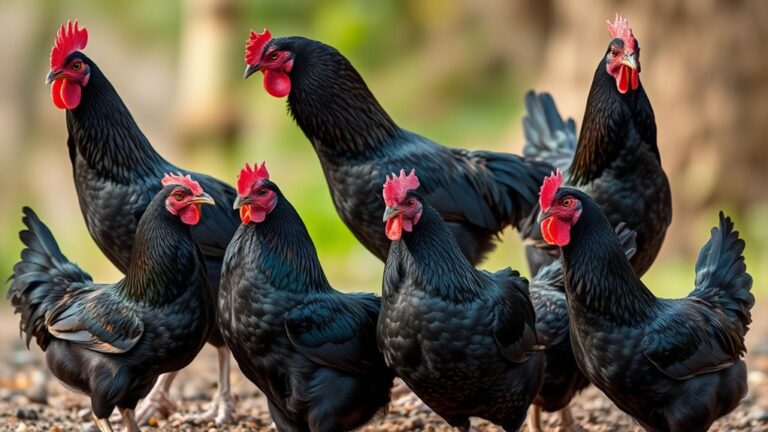
One standout breed is the Ayam Cemani, famous for its all-black appearance and distinct black eggs. Another breed, the Kadaknath, also lays dark eggs thanks to the same genetic mutation influencing pigment deposition. These chickens don’t just have striking looks; their eggshell color reflects a fascinating biological trait you won’t find in common breeds.
If you’ve ever wondered about eggs that look different from the norm, understanding the role of genetic mutation in egg color can give you insight into why these rare black-egg-laying chickens exist. It’s a unique feature that sets these breeds apart in the poultry world.
Where Do Black-Egg-Laying Chickens Come From?
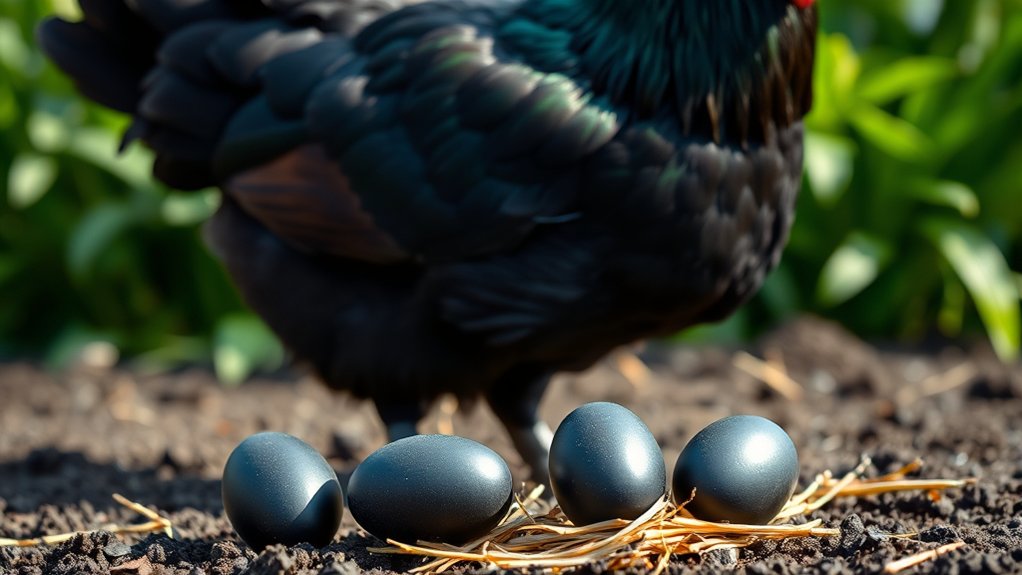
When you explore the origins of black-egg-laying chickens, you’ll find they come from specific regions known for unique poultry breeds. Many of these chickens trace back to East and Southeast Asia, where farmers selectively bred birds exhibiting unusual eggshell pigmentation.
This distinct trait results from genetic mutations that affect how pigments deposit on the eggshell as it forms. These mutations have been preserved and improved over generations, giving rise to breeds that consistently lay dark-colored eggs.
You’ll notice that these chickens aren’t widespread globally but tend to thrive in areas with a long history of poultry diversity and careful breeding practices. Understanding where these chickens come from helps you appreciate the blend of natural genetic variations and human influence that created such distinct eggshell pigmentation.
Why Do Some Chickens Lay Black Eggs?
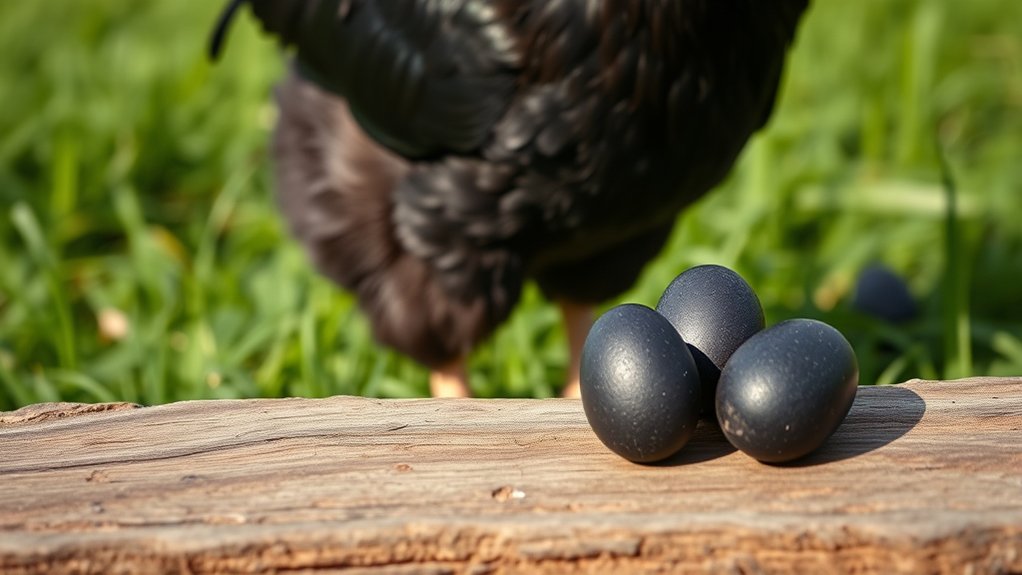
Since the unique black color of some chicken eggs comes from specific pigments, you might wonder what causes these pigments to appear. It all boils down to eggshell pigmentation and chicken genetics. Certain breeds carry genes that trigger the production of dark pigments during eggshell formation.
These pigments deposit a layer over the shell, creating the black or very dark appearance.
Here’s why some chickens lay black eggs:
- They have genetic traits that produce protoporphyrin and other pigments in higher concentrations.
- Their eggshell glands deposit these pigments late in the egg formation process, influencing the shell color.
- Selective breeding amplifies these genetic traits, making black egg-laying more consistent.
Understanding chicken genetics helps you see why only specific breeds, like the Ayam Cemani, lay these striking eggs. So, the black eggs you find aren’t a random occurrence. They’re a fascinating result of nature and science working together.
How Are Black Eggs Different Nutritionally?
If you’re curious about the nutritional value of black eggs, you’ll find they aren’t drastically different from regular chicken eggs. The primary difference lies in the egg shell pigmentation, which is controlled by genetics and doesn’t substantially affect the egg’s nutrients.
When you make a nutritional comparison, black eggs typically offer similar amounts of protein, fats, vitamins, and minerals as white or brown eggs. The pigments in the shell, such as protoporphyrin or biliverdin, don’t alter the yolk or egg white composition.
So, you’re fundamentally getting the same nutritional benefits regardless of the shell color. However, some black eggs, like those from the Ayam Cemani breed, are prized for their unique appearance rather than improved nutrition.
In short, the color you see on the shell doesn’t mean you’re missing out on any key nutrients or gaining extra ones. The difference is mostly cosmetic.
Are Black Eggs Safe and Healthy to Eat?
You might be wondering if black eggs are safe and healthy to eat. Well, they do offer some unique nutritional benefits. But, it’s also important to be aware of any safety precautions before adding them to your diet. So, let’s take a closer look at what makes black eggs a good choice for you.
Nutritional Value Overview
Wondering whether black eggs are safe and healthy to eat? These unique eggs have a nutritional profile similar to regular eggs, providing a solid source of protein, vitamins, and minerals. When you prepare black eggs, using proper cooking techniques like boiling or frying guarantees you retain their nutrients without adding unnecessary fats.
Also, mindful egg storage is crucial. Keeping them refrigerated extends freshness and prevents bacterial growth.
Consider these key points about black eggs’ nutritional value:
- High-quality protein supports muscle repair and growth.
- Rich in essential vitamins such as B12 and riboflavin.
- Contains minerals like iron and selenium indispensable for bodily functions.
Potential Health Benefits
Black eggs don’t just match regular eggs in nutrition, they may offer unique health benefits worth considering. Rich in antioxidants and certain minerals, these eggs can support your immune system and promote better skin health.
When you delve into various cooking techniques, like boiling or steaming, you preserve these nutrients effectively. Incorporating black eggs into your meals can diversify your culinary uses, adding both flavor and nutritional value.
Whether you’re making salads, soups, or traditional dishes, these eggs can enhance your diet in subtle but meaningful ways. By choosing black eggs, you’re not only trying something different but also potentially boosting your nutrient intake in a simple, delicious manner.
Safety Precautions
How safe are eggs with dark shells for your health? You’ll be glad to know that black eggs, like other eggs, are generally safe to eat if handled properly. Their unique eggshell composition doesn’t affect safety but may influence shell thickness.
However, poultry health plays a vital role in egg safety, so it’s important to source eggs from healthy chickens.
Keep these safety tips in mind:
- Always wash black eggs before cooking to remove any contaminants.
- Store eggs at the proper temperature to prevent bacterial growth.
- Avoid consuming raw or undercooked eggs to reduce foodborne illness risk.
How to Identify Genuine Black-Egg-Laying Chickens
You’ll want to start by checking the chicken’s physical traits, like its skin and feather color. This can help you spot genuine black-egg layers more easily. Then, take a look at the eggshell color to make sure it’s truly black or dark green. By following these steps, you’ll be able to identify authentic black-egg-laying chickens with confidence.
Physical Characteristics Overview
Although it might seem tricky at first, identifying genuine black-egg-laying chickens becomes easier once you know what physical traits to look for. These chickens often have distinctive feather patterns and comb shapes that set them apart.
Pay close attention to these features to spot the real ones.
Look for:
- Unique feather patterns, often glossy black with greenish or purplish sheens
- Comb shapes that are usually single and upright, but can vary slightly depending on the breed
- Strong, sturdy legs often with darker pigmentation
Eggshell Color Verification
After recognizing the physical traits of black-egg-laying chickens, the next step is to confirm the eggshell color to verify authenticity. You’ll want to closely examine the eggs for the unique eggshell pigmentation that sets these chickens apart.
Genuine black-egg layers produce eggs with a distinctive dark tint, often deep greenish-black or slate gray. This color comes from specific pigments deposited during shell formation.
To be absolutely sure, you can look into genetic markers linked to this pigmentation. These markers help identify chickens genetically predisposed to laying black eggs.
If you have access to genetic testing, it offers a reliable way to confirm authenticity beyond visual inspection. By combining eggshell pigmentation observation with knowledge of genetic markers, you guarantee you’re identifying true black-egg-laying chickens accurately and confidently.
Best Conditions for Black-Egg-Laying Chickens
When you provide the right environment, black-egg-laying chickens thrive and produce consistently. These birds often sport colorful feathers that reflect their vibrant health, and their unique diets play a vital role in egg quality. To support their well-being and maximize egg production, focus on these key conditions:
- Balanced Nutrition: Offer a unique diet rich in calcium and protein to maintain shell strength and vibrant feather colors.
- Comfortable Housing: Guarantee clean, well-ventilated coops with plenty of space to reduce stress and encourage natural behaviors.
- Consistent Lighting: Provide 14-16 hours of light daily to stimulate laying cycles and keep your chickens active.
Can You Raise Black-Egg-Laying Chickens in Your Backyard?
If you’re considering adding black-egg-laying chickens to your backyard flock, you’ll find that they adapt well to small spaces and urban settings. Their colorful feathers brighten any backyard coop, making them as attractive as they are practical. These chickens thrive in well-ventilated backyard coops, and their calm nature makes them ideal for beginner keepers.
Here’s a quick overview to help you decide:
| Breed | Space Needs | Feather Colors |
|---|---|---|
| Ayam Cemani | Small to Medium | Black with iridescence |
| Marans | Medium | Various, often dark |
| Cream Legbar | Small | Blue, cream, and gold |
| Sumatra | Medium | Black with green sheen |
| Dutch Bantam | Small | Varied, colorful |
You can successfully raise these breeds in your backyard coops, enjoying fresh black eggs and a vibrant flock.
How to Care for Black-Egg-Laying Chicken Breeds
Caring for black-egg-laying chicken breeds requires attention to their specific needs to keep them healthy and productive. You’ll want to focus on proper nutrition, comfortable living space, and regular health checks. Black-egg layers benefit from dietary supplements that boost their calcium intake, supporting strong eggshells and overall vitality.
To guarantee their well-being, pay close attention to:
Coop design: Provide good ventilation, ample space, and safe nesting areas to reduce stress and encourage laying.
Balanced diet: Include supplements like oyster shell or crushed eggshells for calcium, plus vitamins to support immune health.
Clean environment: Regularly clean the coop to prevent disease and parasites.
Where to Buy Black-Egg-Laying Chickens or Their Eggs
If you’re looking to get black-egg-laying chickens, a great place to start is trusted hatcheries that specialize in these unique breeds. They usually have healthy birds ready for you.
You can also find their eggs from several reliable online sources. Just make sure to pick sellers who have good reviews—this way, you can feel confident about the quality and health of the birds or eggs you’re buying.
Trusted Hatcheries For Purchase
Where can you find reliable sources to buy chickens that lay black eggs? Trusted hatcheries specialize in poultry genetics, ensuring you get birds with authentic eggshell pigmentation traits. These hatcheries offer quality stock, often backed by breeding programs focused on preserving unique breeds like the Ayam Cemani.
Consider these hatcheries for your purchase:
Murray McMurray Hatchery: Known for rare breeds and transparent genetics.
Cackle Hatchery: Offers detailed breed info and health guarantees.
My Pet Chicken: Specializes in backyard poultry with strong breeder support.
Online Sources For Eggs
After identifying trusted hatcheries for purchasing black-egg-laying chickens, you might want to browse online platforms that sell these unique birds or their eggs. Websites like Meyer Hatchery, Cackle Hatchery, and local agricultural marketplaces often list breeds known for black egg production, such as the Ayam Cemani.
When buying online, check seller reviews to guarantee poultry health standards are met, preventing disease and ensuring strong egg production. Many sellers provide detailed care guides, helping you maintain your flock’s well-being.
Also, consider forums and social media groups where enthusiasts share insights on sourcing and raising black-egg layers. By choosing reputable online sources, you guarantee you get healthy birds or eggs, setting the stage for successful poultry keeping and consistent black egg production.
Frequently Asked Questions
What Do Black Eggs Taste Like Compared to Regular Eggs?
You’ll find that egg color doesn’t really affect the taste. Black eggs, like regular eggs, have a similar flavor profile, mild and slightly savory.
When you do a taste comparison, the difference is mostly in the shell’s appearance, not the flavor. So, if you’re curious about black eggs, you can expect them to taste just like any other eggs you’re used to eating.
How Long Do Black Eggs Last When Stored?
Think of black eggshell pigmentation as a mysterious cloak that doesn’t change how long the egg stays fresh. You can store these eggs just like regular ones, about 3 to 5 weeks in the fridge.
Don’t fall for black egg myths claiming they last forever or spoil instantly. Their shelf life depends on proper storage, not color. So, keep them cool and use them within that window for the best taste and safety.
Can Black Eggs Be Used in Baking and Cooking the Same Way?
Yes, you can use black eggs in baking and cooking just like regular eggs. The color variation mostly affects the shell, not the inside, so it won’t change your recipes’ texture or taste.
Nutritional differences are minimal, meaning your dishes will turn out just fine. Don’t worry about substituting them; black eggs perform well in any recipe that calls for eggs, giving you the same reliable results.
Do Black-Egg-Laying Chickens Require Special Feed?
You don’t need to feed black-egg-laying chickens specialty poultry diets that are out of this world! Though black egg pigmentation is unique, their nutritional needs are pretty standard.
Just provide balanced feed rich in protein, calcium, and essential vitamins to keep them healthy and productive. Avoid drastic diet changes, and you’ll have no trouble maintaining those gorgeous black eggs without any complicated or special feeding routines.
Are Black Eggs More Expensive Than Regular Eggs?
Yes, black eggs are usually more expensive than regular eggs because their eggshell pigmentation is unique and rare. The chicken breed characteristics that produce these dark eggs aren’t as common, making the supply limited.
You’ll find that specialty breeds with distinct pigmentation often cost more due to breeding costs and demand. So, when you buy black eggs, you’re paying for their rarity and the special traits of the chickens that lay them.
Conclusion
If you’re curious about black eggs, consider the Ayam Cemani chicken, famous for its striking appearance and unique dark eggs. Raising these chickens can be rewarding, especially if you enjoy something rare and visually stunning.
Like Sarah, who started a backyard flock, you’ll find black eggs not only fascinating but also nutritious and safe to eat. With proper care and conditions, you can enjoy these mysterious eggs right at home.
Give it a try and discover the charm of the Ayam Cemani chicken that lays black eggs.