Brooder Temperature Guide for Warm Chicks
If you’ve ever raised chicks, you know how tricky it can be to keep their brooder temperature just right. Many people struggle with finding the perfect balance between too hot and too cold, which can leave those little fluff balls uncomfortable or even unhealthy. You’re not alone—getting the temperature right is one of the most common challenges for new and experienced chick keepers alike.
Keep your brooder at 95°F for newly hatched chicks, then drop it by 5°F each week: 90°F in week 2, 85°F in week 3, and 80°F in week 4.
Watch their behavior, too. Cold chicks huddle and chirp loudly, while hot chicks spread out and pant. Use a thermometer at chick level, and adjust heat, bedding, and space as they grow.
Once they’re fully feathered, you can ease off warmth and see what changes next.
Key Takeaways
- Start newly hatched chicks at 95°F in the brooder during week one.
- Lower brooder temperature by 5°F each week: 90°F week two, 85°F week three, 80°F week four.
- Use chick behavior to judge comfort. Crowding means they’re too cold, while panting and spreading out means they’re too hot.
- Place a thermometer at chick level and check for hot spots, cold corners, and draft-free conditions.
- Stop supplemental heat when chicks are fully feathered and comfortable at 65-75°F room temperature.
What Temperature Do Chicks Need?
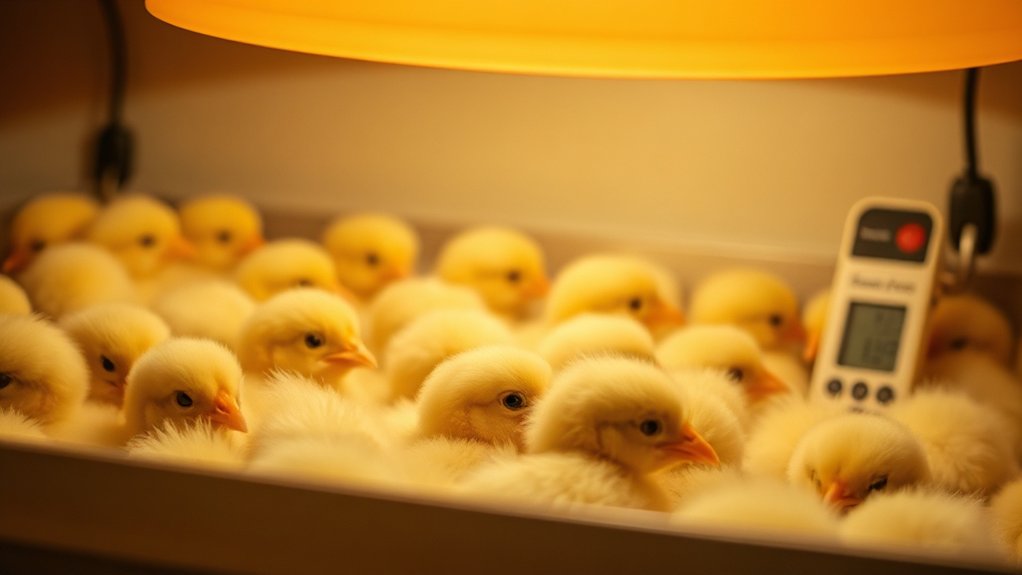
Newly hatched chicks need a warm brooder to stay healthy, and the right temperature starts at 95°F during their first week. You should aim for steady chick temperature so they can eat, drink, and rest without stress.
If the brooder feels too cool, chicks may crowd together, chirp loudly, and avoid moving. If it’s too hot, they’ll spread out, pant, and stay away from the heat source.
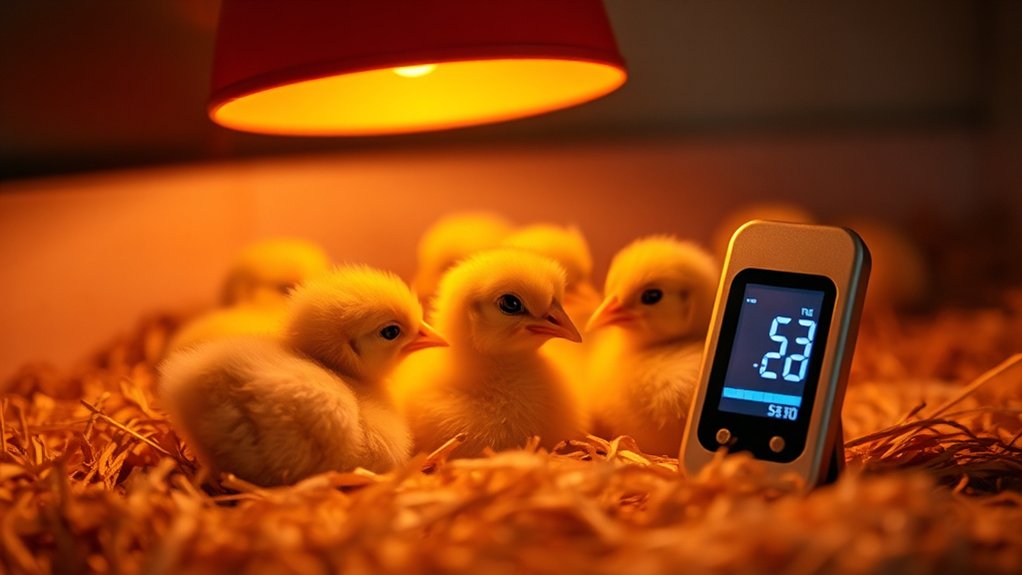
Your goal is ideal warmth: warm enough for comfort, but not so hot that they overheat. A reliable thermometer helps you check the brooder instead of guessing. Place it at chick level, not near the heat lamp, so you get a true reading.
Aim for ideal warmth: comfortable, never overheated. Use a reliable thermometer at chick level for an accurate reading.
Watch your chicks closely, because their behavior tells you whether the temperature feels right. When they look calm, active, and evenly spread out, you’ve likely created the proper environment for healthy growth.
Brooder Temperature by Week
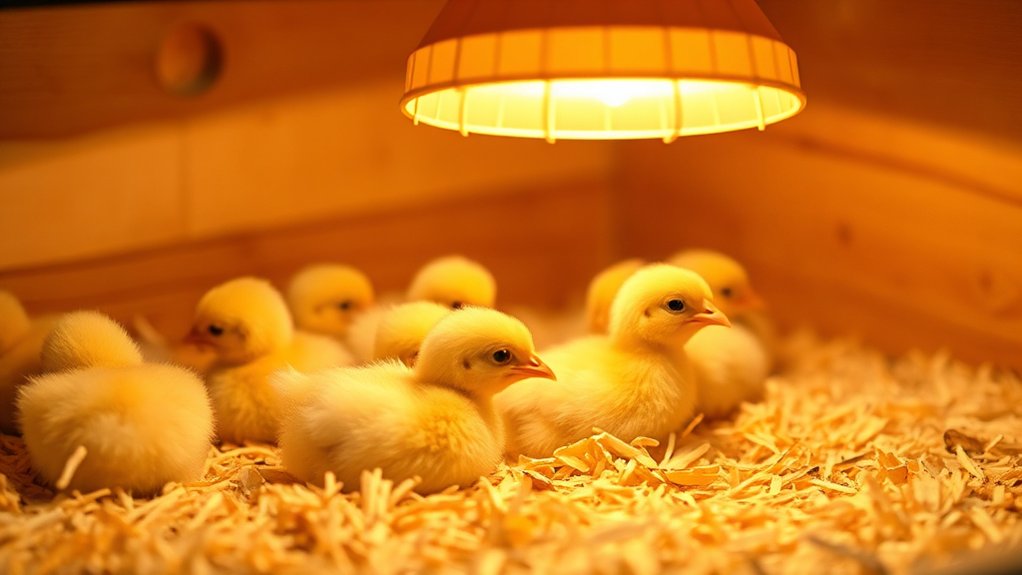
As your chicks grow, their heat needs change, so you’ll lower the brooder temperature a little each week. Start around 95°F in week one, then drop it by about 5°F weekly until they feather out.
By week two, aim for 90°F; week three, 85°F; week four, 80°F; and so on. Watch their behavior closely: if they huddle, they’re cold; if they crowd the edges, they’re too warm.
Your brooder design affects heat distribution, so keep the space draft-free and wide enough for chicks to move away from the warmest spot. A steady, even temperature helps them rest, eat, and grow without stress.
Don’t rush the drop if the chicks still seem chilly, and don’t keep extra heat longer than they need it. Use their comfort, feathering, and activity as your guide.
Choose the Right Heat Source

Choose a heat source that keeps your chicks warm without overheating them or creating a fire risk. You’ve got several heat source types to evaluate: heat lamps, radiant heat plates, and brooder panels.
Heat lamps warm the whole brooder fast, but they run hot, use more energy, and need secure placement. Radiant heat plates sit low, mimic a hen’s body warmth, and often offer better energy efficiency.
Brooder panels spread heat more evenly and reduce direct glare, which can make setup simpler. Pick equipment sized for your brooder and flock, then mount or place it exactly as directed.
Use a stable guard, keep bedding clear of the unit, and check cords and plugs before each use. If you want a safer, steadier option, choose a plate or panel.
If you need quick heat in a small space, a lamp can work, but you’ll need to monitor it closely.
Read Chick Behavior for Comfort
Watch your chicks closely, because their behavior tells you whether the brooder feels right. Content chicks spread out evenly, peep softly, and move around with ease.
If you see chick clustering under the heat, they’re likely too cold; if they stay far from it, they’re probably too warm. Look for relaxed wing stretching, steady eating, and quick return to sleep after activity.
Restless pacing, loud distress calls, or drooping bodies signal discomfort.
| Behavior | Meaning |
|---|---|
| Even spacing | Comfortable |
| Chick clustering | Too cold |
| Far from heat | Too warm |
| Wing stretching | Adjusting comfort |
| Loud peeping | Distress |
You can respond by adjusting warmth in small steps and watching again. Give them time to settle before deciding whether the brooder needs another change. Consistent observation helps you keep your chicks calm, active, and growing well.
How to Use a Thermometer
A simple thermometer takes the guesswork out of brooder care, so you can check the temperature where the chicks actually live. Place it at chick height, not on the floor or near the lamp, because readings change with location. Choose from common thermometer types like digital probes, dial models, or infrared guns, but always verify temperature accuracy before you trust the number.
- Set the thermometer in the brooder zone your chicks use most.
- Wait for the reading to stabilize, or follow the tool’s instructions.
- Check several spots, since one area can run warmer than another.
- Compare the reading with your target range and adjust only after you confirm it.
You’ll make better decisions when you measure consistently. Clean the sensor if dust builds up, and replace weak batteries so the display stays reliable. Small habits like these help you read the brooder correctly every time.
Keep Brooder Temperature Steady
You need to keep the brooder heat consistent so your chicks stay comfortable and healthy. It’s important to check the temperature often to make sure it doesn’t drift too high or too low. Even small swings can stress the chicks pretty quickly, so steady heat really matters every day.
Monitor Heat Consistency
Keeping brooder temperature steady is just as important as setting it correctly in the first place. You should check the brooder at chick level, because the reading there tells you what they feel. Watch for even heat distribution across the space, and use humidity control to keep the air comfortable and consistent.
- Place thermometers in more than one spot.
- Note where chicks gather, rest, or avoid.
- Adjust lamp height or panel position slightly when needed.
- Recheck conditions after any change.
When you monitor closely, you spot uneven warmth before it stresses your chicks. Consistent heat helps them eat, sleep, and grow without wasting energy on staying warm. Keep your checks simple, regular, and focused on what the chicks are showing you.
Prevent Temperature Swings
Sudden temperature swings can stress chicks fast, so keep the brooder as stable as possible from day to night. You should place the brooder in a draft-free room, away from windows, doors, and direct sun.
Use a reliable thermostat and check it often, especially after room temperature changes. If you add or remove bedding, waterers, or heat sources, do it gradually so chicks don’t face sudden shifts.
Good humidity control also helps the brooder feel consistent and prevents overly dry air from amplifying chill. Follow simple ventilation tips: keep fresh air moving without creating drafts, and don’t seal the space too tightly.
When the environment stays steady, your chicks eat, rest, and grow with less stress every day.
Adjust for Bedding and Space
You’ll want to think about how deep the bedding is, since thicker litter holds heat and can make the brooder feel warmer right where the chicks are. Also, it’s important to match the size of the brooder to the heat source because if the area is too large, the warmth gets spread out more thinly. When you find the right balance between bedding depth and space, the temperature stays more even and comfortable for your chicks.
Bedding Depth Effects
If you use deep bedding, the chicks may feel warmer at the same coop temperature because the litter insulates the floor and traps heat. So, you may need to adjust the brooder setup rather than the heat source alone.
Choose bedding types and materials that stay dry, such as pine shavings or chopped straw. Each affects bedding temperature differently.
- Check bedding moisture daily.
- Stir the litter to release trapped heat.
- Replace wet spots fast for bedding cleanliness.
- Use bedding maintenance to preserve bedding benefits.
Shallower bedding cools faster, while deeper layers hold warmth longer underfoot. Watch the chicks, not just the thermometer, and tweak depth if they crowd the warm zone or avoid it.
Space To Heat Ratio
Bedding isn’t the only thing that changes how warm chicks feel; the amount of floor space they have matters too. If you crowd them, they’ll huddle tightly and trap heat, but they can also overheat fast.
Give them enough room to spread out, then watch how they use the brooder. A larger area usually softens heat distribution, so you may need a stronger lamp or closer placement.
With deep bedding, heat can stay lower near the floor, so adjust the setup and check chick behavior often. Good space management helps you balance warmth without creating cold corners or hot spots.
If chicks avoid the lamp, pant, or pile away from it, tweak the ratio until they move comfortably and evenly.
Fix Overheating, Chilling, and Drafts
Watch for three common temperature problems in the brooder: overheating, chilling, and drafts. You can fix them fast with smart overheating solutions and chilling prevention. Check chick comfort by watching how they cluster, pant, or avoid the heat.
Use temperature adjustments to keep the warm zone steady, and improve heat distribution with a wider lamp angle or better brooder design. Good heat retention helps, but it shouldn’t trap too much warmth.
- Move the heat source higher if chicks pant or spread out.
- Lower it slightly if they huddle tightly and peep nonstop.
- Block drafts around openings, but keep airflow gentle.
- Place a thermometer at chick level and test several spots.
Strong draft control keeps cold air from sweeping across the floor. When you balance heat retention with fresh air, your chicks settle, eat, and rest better.
Lower Heat as Feathers Grow
As your chicks start growing in feathers, lower the brooder heat a little at a time so they stay comfortable without getting too warm. Watch their feather development closely, because more plumage means they can handle less supplemental warmth.
Make each heat adjustment in small steps, then observe how they act for the next few hours. If they spread out and rest calmly, your setting is likely right. If they huddle, peep loudly, or avoid certain spots, the brooder may still feel too cool.
Move the heat source gradually, rather than making one big change, so you don’t shock them with a sudden shift. Keep bedding dry and the brooder well ventilated, since damp air can make chicks feel colder than they are.
A steady routine helps you balance comfort and growth while supporting healthy feathering.
Know When Chicks Need No Heat
You can stop using heat once your chicks are fully feathered and don’t need extra warmth anymore. If the room temperature stays in a safe range—usually around 65 to 75°F—they should be comfortable without a heat lamp. Just keep an eye on how they act. If they huddle together, shiver, or seem restless, it means they still need some warmth.
Feather Coverage Signs
Fully feathered chicks usually don’t need extra heat, since their plumage helps them hold body temperature on their own. Watch for even feather development across the body, especially on the wings, back, and breast. Patchy fluff means they still need warmth.
As chick maturity increases, you’ll notice feathers lying flat and covering most bare skin.
- Wings look fully covered.
- Back and tail show smooth feathers.
- Chest fluff has mostly disappeared.
- Birds move confidently without huddling.
When you see these feather coverage signs, you can start reducing heat support. Keep checking your chicks daily, since slower growers may need a little extra time. If they stay active, balanced, and comfortable, their feathering is doing its job and they’re ready for less brooder heat.
Room Temperature Range
A comfortable room temperature can tell you when chicks no longer need brooder heat. If your brooder room stays around 70–75°F, you can often reduce warmth sooner, especially with solid brooder insulation and stable ambient humidity.
Keep the space draft-free and monitor temperatures at chick level, not ceiling level. A mild room lets chicks hold body heat with less help, but you still need consistency.
| Room Temp | Heat Need | What You Do |
|---|---|---|
| 65°F | High | Use full brooder heat |
| 70°F | Moderate | Lower heat gradually |
| 75°F | Low | Check comfort closely |
| 80°F | Minimal | Watch for overheating |
When the room stays warm day and night, you’re closer to removing heat completely.
Behavior Without Heat
When chicks no longer need heat, their behavior usually tells you before the thermometer does. You’ll notice they spread out, stay active, and rest without huddling. Watch for chick comfort in their posture: no peeping for warmth, no piling, and no frantic seeking under the lamp.
Their social interaction also changes; they’ll investigate, scratch, and peck together instead of clustering tightly.
- They sleep evenly across the brooder.
- They move away from heat confidently.
- They drink and eat normally.
- They keep steady, calm behavior day and night.
If you see these signs for several days, you can reduce heat and then remove it. Keep observing, because a cool draft or sudden chill can still change their needs.
Frequently Asked Questions
How Often Should I Clean a Chick Brooder?
You should clean your chick brooder every day, and you’ll need a deeper scrub at least once a week. Stick to a simple cleaning schedule so droppings, wet bedding, and spilled feed don’t build up.
Good brooder maintenance means removing soiled spots daily, replacing bedding often, and washing feeders and waterers regularly. If you notice smell, dampness, or mold, clean it right away to keep chicks healthy and comfortable.
What Bedding Is Safest for Young Chicks?
The safest bedding for young chicks is clean, dry pine shavings. You should avoid slippery paper, cedar, and dusty materials because they can cause safety concerns.
If you use bedding materials like straw or hemp, keep them dry and change them often. You’ll help chicks stay warm, comfortable, and healthy by choosing absorbent, low-dust bedding and checking it daily for wet spots, mold, or buildup around feeders and waterers.
Can Chicks Share a Brooder With Older Birds?
No, you shouldn’t let chicks share a brooder with older birds right away. A brooder is a fragile bridge, and age differences can turn it shaky fast. Older birds may peck, crowd, or spread germs, so brooder compatibility is low until chicks grow stronger.
You’ll protect them better by keeping them separate, then introducing them slowly once they’re bigger, feathered, and able to hold their own safely.
How Many Chicks Fit in One Brooder?
You can fit about 6 to 10 chicks in a standard 2-by-4-foot brooder, but your brooder size matters more than a fixed number. Watch chick behavior closely: if they crowd, peck, or can’t rest comfortably, you’ve got too many.
Give each chick enough space to move, eat, and sleep, and you’ll keep them calmer and healthier. As they grow, you’ll need to expand their space quickly.
When Should Chicks Start Eating Treats?
You can start offering tiny treats once your chicks are about 2 weeks old, but keep them minimal. Think of treats as sprinkles on a meal, not the cake itself.
Choose safe treat types like chopped greens, oats, or mealworms, and limit feeding frequency to once or twice a week. You’ll still want chick starter to make up most of their diet so they grow strong and steady.
Conclusion
By watching your chicks and adjusting their brooder heat week by week, you’ll keep them safe, cozy, and growing strong. Trust their behavior, check your thermometer, and make small changes before problems start.
A well-run brooder can feel like a tiny chick paradise where comfort rules and stress disappears. As feathers fill in, lower the temperature gradually until they’re ready to go without heat.
With a little care, you’ll raise happy, thriving chicks. Following this brooder temperature guide for warm chicks ensures they stay comfortable and healthy every step of the way.