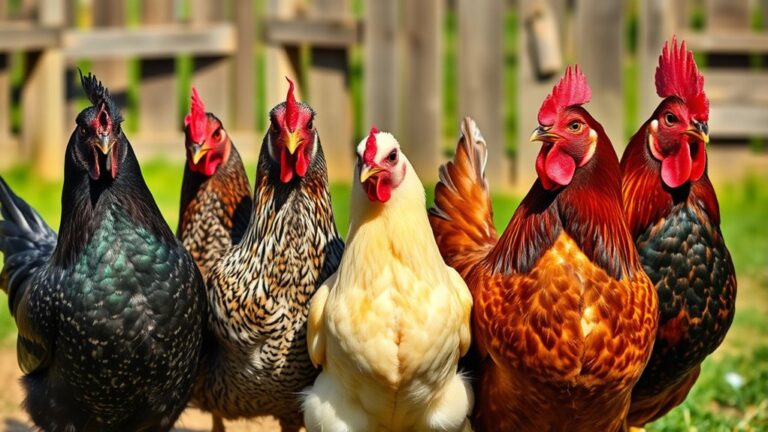
How to Raise Silkie Chickens
If you’ve ever tried raising Silkie chickens, you know it’s not always easy to get them thriving the way you want. You’re not alone—many people struggle with keeping these unique birds healthy and happy because they have some special care needs.
Luckily, with the right tips and tools, raising Silkies can become a rewarding and enjoyable experience.
To raise Silkie chickens, you should choose healthy birds from reputable breeders, then give them a dry, secure coop with low perches, good ventilation, and strong predator protection.
Feed chicks a balanced starter crumble, provide fresh water, and switch to grower feed as they mature.
Keep their feathers clean and dry, watch daily for illness or stress, and handle them gently.
With steady care, you’ll keep your Silkies happy, healthy, and easy to manage, and much more.
Key Takeaways
- Choose healthy Silkie chicks or birds from reputable breeders, checking for bright eyes, clean skin, full plumage, and calm temperaments.
- Feed chicks 18 to 20% protein starter crumble with fresh water. Then switch to grower or all-flock feed as they mature.
- Build a dry, secure coop with good ventilation, low perches, and predator-proof hardware cloth fencing.
- Keep Silkies warm and dry with absorbent bedding, draft control, and safe heating during cold weather.
- Check birds daily for illness, stress, parasites, or bullying, and separate any sick or weak chickens quickly.
Choose the Right Silkie Chickens
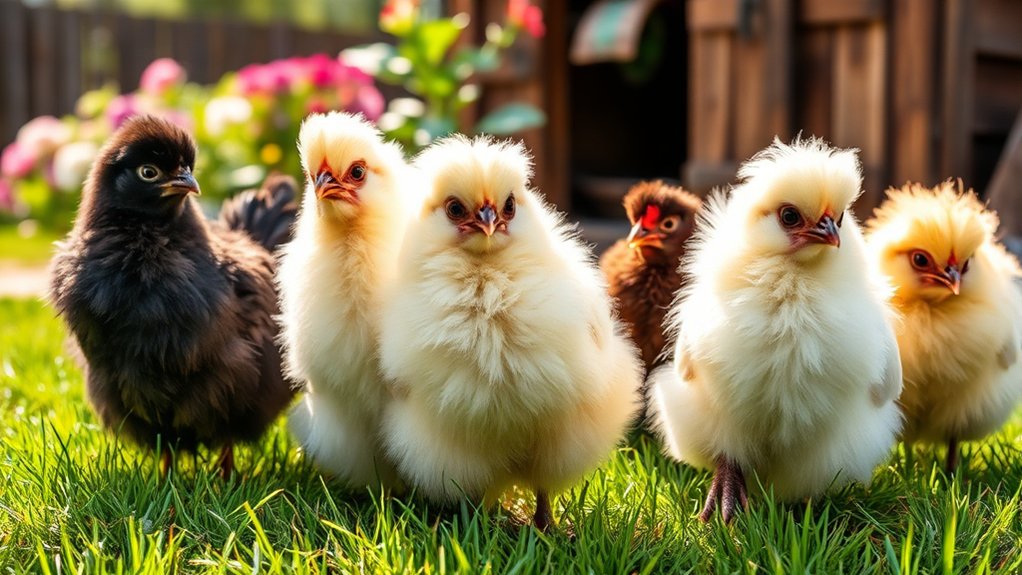
Start by choosing healthy Silkie chickens from a reputable breeder or hatchery, since strong birds are more likely to thrive in your flock. Next, compare Silkie breeds and look for birds with bright eyes, clean skin, and full plumage.
You’ll find many color variations, so pick the shade you prefer, but focus on sound structure first. Check temperament traits by watching how each bird reacts to handling; calm, alert birds usually adapt well to your care.
Ask about egg production, because some hens lay more steadily than others, and your goals should guide selection. Review care requirements for the age and condition of each bird, including feeding history and socialization.
Finally, discuss health considerations with the seller, and avoid birds that seem weak, wheezy, or underweight. When you choose carefully, you give yourself a better chance of raising a lively, friendly flock that fits your needs.
Set Up a Safe Silkie Coop

Once you’ve chosen healthy Silkies, give them a coop that keeps them dry, secure, and comfortable. Pick coop materials that resist moisture, such as sealed wood, metal roofing, and hardware cloth, so predators can’t slip in.
Add a solid floor or deep dry bedding to protect their feathered feet from mud and drafts. Include low perches or platforms since Silkies can’t hop high easily, and make sure ramps have gentle slopes and traction. Provide nest boxes that sit close to the ground, with clean, snug lining for easy egg laying.
You should also plan for chicken safety by locking doors at night and covering openings with sturdy mesh. Good ventilation matters, but avoid direct wind on roosting birds. Keep the coop roomy enough for movement without crowding, and position it in a shaded, well-drained spot.
When you build with these details in mind, you’ll create a calm, secure home where your Silkies can thrive year-round.
Feed Silkie Chickens for Healthy Growth

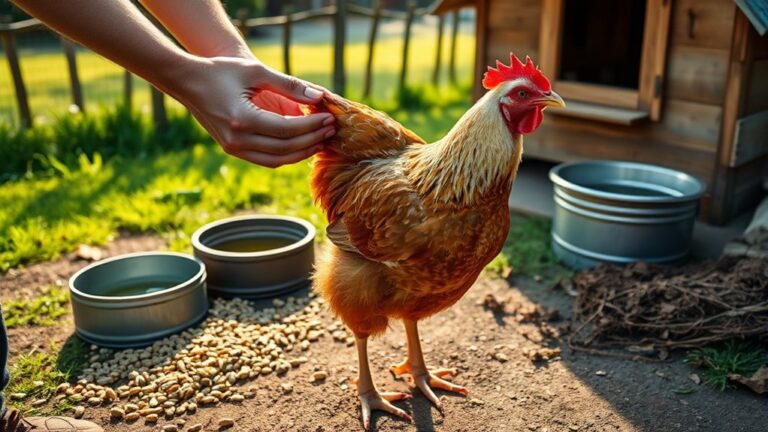
Feed Silkies a balanced starter feed with about 18 to 20% protein during their first weeks so they can grow strong bones, feathers, and muscles. You should keep fresh feed available each day and follow a steady feeding schedule, so your chicks eat enough without wasting food.
Choose a quality crumble made for chicks, since it gives balanced nutrition and supports steady growth. Offer clean water beside the feeder at all times, and replace it often so it stays fresh.
Choose a quality chick crumble and keep fresh water nearby for steady, healthy growth.
As your Silkies mature, switch them to a grower ration, then an all-flock feed when they’re older. You can give small amounts of healthy treats, but keep them limited so they don’t crowd out proper feed.
If you notice a chick eating less or lagging behind, check for bullying at the feeder and make sure every bird has space to eat. Good feeding habits help your Silkies develop into healthy, active birds.
Keep Silkies Warm and Dry
To keep your Silkies healthy, you’ll want to use dry coop bedding that stays clean and soaks up moisture really well. It’s super important to keep things dry.
You should also watch out for drafts because these chickens thrive in a warm, sheltered spot. So, make sure their coop is cozy and protected.
Check on their coop often to keep everything comfy, dry, and just right for your Silkies. They’ll thank you for it!
Dry Coop Bedding
Silkies need dry, fluffy bedding to stay warm and healthy since their soft feathers soak up moisture fast. You should choose absorbent bedding materials like pine shavings, chopped straw, or hemp, then fluff them daily.
Wet spots quickly chill your birds and invite odor, so scrape them out often to protect coop hygiene. Add fresh bedding whenever the floor looks matted or damp.
| Bedding material | Best use |
|---|---|
| Pine shavings | Absorb moisture well |
| Straw | Add loft |
| Hemp | Stay cleaner longer |
| Sand | Easy to rake |
| Paper litter | Good for brooder floors |
Keep a deep, dry layer under roosts and nesting boxes. If you smell ammonia, replace the bedding right away.
Draft-Free Warmth
Once the bedding is dry and fluffed, focus on keeping the coop warm without letting cold air blow directly across your birds. You can seal gaps around doors, windows, and vents with safe insulation techniques, but keep enough airflow to prevent moisture buildup.
Add weatherstripping, straw bales, or rigid board insulation to block drafts from the sides and floor. If temperatures drop hard, choose safe heating options like radiant panels rather than lamps, and mount them securely away from bedding and roosts.
Check the coop at bird level: if you feel a breeze, your Silkies do too. Keep roosts low, feed well, and refresh water often so they stay comfortable, dry, and healthy through cold snaps.
Care for Silkie Feathers
You’ll want to handle Silkie feathers gently because their soft plumage mats and breaks more easily than most breeds’. It’s a good idea to check them often for dirt, debris, and tangles. When you spot any, just lightly clean or separate the feathers as needed.
To keep their feathers in great shape, make sure their living area stays dry. Also, try to limit rough handling. And don’t forget—a balanced diet goes a long way in protecting feather quality.
Feather Maintenance Basics
Because Silkie feathers are soft and more hairlike than typical chicken plumage, they need gentler care to stay clean and healthy. You should learn their feather types so you can handle them without breakage, and keep simple grooming tools on hand for routine upkeep. Check your birds regularly and remove dirt before it mats.
Use a soft brush only when feathers need light smoothing. Trim only dirty or damaged ends, and do it carefully. Separate clumps with your fingers instead of pulling. Keep handling calm so the feathers stay neat.
After each check, let your Silkie move freely and avoid rough contact. Consistent, gentle attention helps the feathers look tidy and stay easy to manage.
Protecting Feather Quality
Protecting Silkie feather quality starts with keeping their plumage dry, clean, and free from damage. You should house them in a draft-free coop with excellent ventilation and solid humidity control, because damp air mats feathers and invites mildew.
Replace wet bedding quickly, and give them a dry dust-bath area to help with feather cleanliness. When you handle them, support the body and avoid grabbing the crest or tail feathers.
Trim sharp coop edges, low perches, and rough fencing that can snag delicate plumes. If feathers get soiled, spot-clean with lukewarm water and dry them thoroughly with a towel or gentle airflow.
Check often for parasites, burrs, and broken feathers so you can act fast and keep their soft, showy coat in top condition.
Protect Silkie Chickens From Predators
Silkie chickens need extra protection from predators because their small size, fluffy feathers, and calm nature make them easy targets. You can reduce risk by combining predator deterrents with strong fencing options and secure, roofed safe enclosures. Use hardware cloth, not chicken wire, and bury the bottom edge to stop digging.
Add nighttime security by locking birds in before dusk and checking latches often. Install motion lights and noise distractions near the coop. Choose natural camouflage for the run, like shrubs that break sightlines.
Watch for alert behaviors, such as crowding, alarm calls, or freezing. Keep protective breeds nearby, since geese or dogs can discourage intruders. When you let Silkies free-range, supervise them closely and limit access at dawn and dusk, when hunters are most active.
Watch for Common Silkie Health Problems
Even with strong predator protection, you’ll still need to watch Silkie chickens closely for health problems. Look for silkie diseases that show up as dull eyes, nasal discharge, wheezing, swelling, or a drop in egg laying.
Check your birds daily for common symptoms like limping, diarrhea, feather loss, mites, and lethargy, because Silkies can hide illness well. Strong preventative care includes clean bedding, dry runs, fresh water, and balanced feed to reduce nutritional deficiencies.
Check Silkie chickens daily for limping, diarrhea, feather loss, mites, and lethargy, since they hide illness well.
You should also mind environmental factors such as heat, dampness, and poor ventilation, which can trigger respiratory trouble and skin issues. Good stress management matters too; overcrowding, bullying, and sudden changes can weaken immunity.
Watch flock dynamics and separate birds that act withdrawn or get picked on. Schedule regular veterinary check ups, especially if symptoms linger or spread, so you can treat problems early and keep your flock healthy.
Care for Silkie Chicks
Young silkie chicks need steady warmth, clean bedding, and frequent checks to stay healthy in their first weeks. You should keep them in a draft-free brooder with soft, dry litter and fresh water within easy reach.
Offer starter feed in shallow dishes so they can peck without strain. Handle them gently each day to build trust and support silkie temperament training. Early socialization techniques matter, so let them hear calm voices, see movement, and investigate safely.
Check temperature daily and adjust heat gradually. Remove wet bedding and spilled feed right away. Watch for pasty vent, weakness, or huddling. Introduce new chicks slowly to avoid stress.
Keep the brooder quiet at night and avoid sudden changes in routine. As they grow, give them more space and simple perches. Consistent care helps your chicks stay active, confident, and ready for the flock.
Support Brooding and Egg Laying
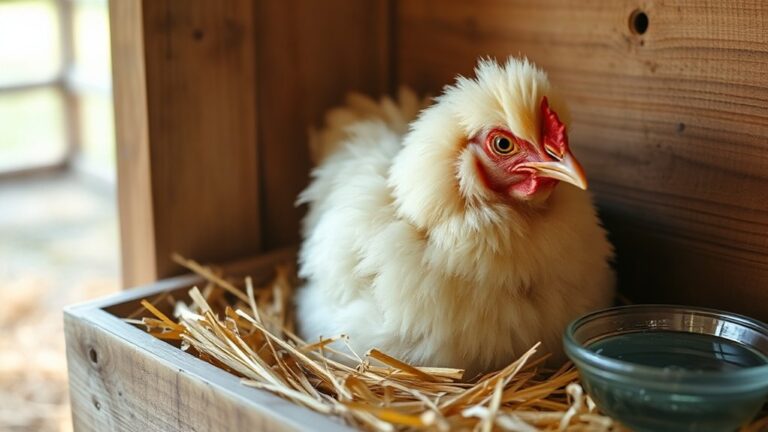
To support brooding and egg laying, give hens a quiet, protected nest area with soft bedding, steady feed, and clean water nearby. You should keep the nesting box low, dim, and draft free so your Silkie feels secure and stays settled on eggs.
Monitor brooding temperature carefully; a warm, stable space helps her remain comfortable without overheating. If she leaves the nest briefly, let her stretch, drink, and return on her own.
Offer a balanced layer feed with calcium so she can maintain strong shells and steady energy. Track egg laying frequency so you know what’s normal for your flock and can spot sudden changes early.
Handle eggs gently, collect them often if you’re not hatching them, and keep the area clean. When you provide calm conditions and consistent support, your Silkie can brood more reliably and lay with less stress.
Build a Healthy Daily Care Routine
You’ll keep your Silkie chickens healthy by starting each morning with fresh water and feed. Then, take a quick walk around the coop to check that everything looks good.
In the evening, take a moment to watch for any signs of injury, illness, or stress. Make sure they’re settled safely for the night before you call it a day.
This simple routine really helps you catch problems early and keeps your flock thriving. It’s easy to do and makes a big difference!
Morning Care Tasks
Start each morning by checking your Silkie chickens for signs of trouble and making sure their basic needs are met. Keep your morning routines simple, consistent, and calm so your flock stays comfortable and easy to manage. Follow steady feeding schedules, refresh water, and remove anything that could spoil their start to the day.
- Look for puffy eyes, limping, or dirty feathers.
- Confirm feeders are clean and filled.
- Refill fresh, cool water.
- Open the coop and let them out safely.
As you move through each task, watch how they act and eat. A healthy Silkie should seem alert, balanced, and willing to investigate. If you notice anything unusual, note it right away so you can respond quickly and keep your birds thriving.
Evening Health Checks
As the day winds down, give your Silkie chickens a quick evening check before they settle in for the night. Watch each bird for bright eyes, clean feathers, steady breathing, and normal posture.
Make your nightly observations as you count heads, confirm everyone’s eating and drinking, and look for any limping, swelling, or pasty vents. Notice behavioral signs like puffing up, hiding, chirping less, or acting restless since these can point to stress or illness.
Check the coop for drafts, fresh water, secure latches, and enough bedding for a dry roost. If you spot anything unusual, separate the bird and act fast.
A brief, consistent routine helps you catch problems early and keeps your flock calm, comfortable, and healthy.
Frequently Asked Questions
How Long Do Silkie Chickens Typically Live?
Silkie chickens typically live 7 to 9 years, though you can help some reach 10 years or more with good care. Their Silkie lifespan depends on genetics, diet, shelter, and predator protection.
You’ll boost Silkie health by feeding balanced food, keeping water clean, and checking for parasites or injuries. If you give them a dry coop, space to roam, and regular attention, they can stay happy and healthy for years.
Can Silkies Get Along With Other Chicken Breeds?
Yes, silkies can get along with other chicken breeds if you introduce them carefully and watch their behavioral traits. You’ll see the best social dynamics when you give every bird enough space, food, and roosting spots.
Silkies stay gentle and often fit in well with calmer breeds, but you should avoid aggressive flockmates. Introduce new chickens gradually, and you’ll reduce stress, pecking, and bullying in your coop.
Do Silkie Chickens Make Good Pets for Children?
Yes, silkies can make wonderful pets for children. You’ll often find their friendly temperament charming and gentle, which helps kids feel comfortable handling them.
Their fluffy look is so soft it’s like holding a living cloud. Still, you should teach child responsibility, since they need daily care, clean housing, and supervision.
If you guide your child well, a silkie can become a sweet, low-stress companion for your family.
How Often Do Silkies Molt Their Feathers?
Silkies usually molt once a year, often in late summer or fall, though young birds can shed more irregularly as they grow. You’ll notice molting signs like dull feathers, patchy bare spots, and slower egg laying.
During this time, focus on feather care by offering extra protein, clean bedding, and gentle handling. You can help your Silkie stay comfortable, regrow feathers faster, and keep looking healthy through each molt.
What Colors of Silkies Are Available?
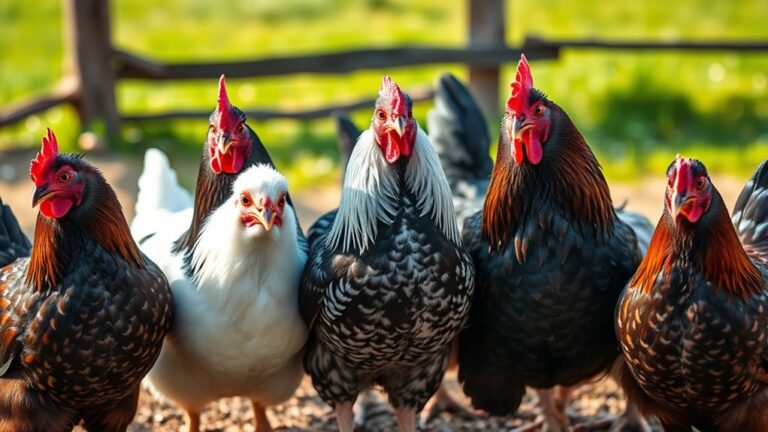
Silkies come in several beautiful Silkie colors, including black, white, blue, buff, partridge, and splash. You’ll also find color variations like gray, lavender, and paint, depending on the breeder and region.
Some birds show rich solid tones, while others mix shades or carry subtle markings. Because breeders don’t standardize every variety, availability can change.
If you’re choosing one, you’ll want to ask local hatcheries what colors they’ve got right now.
Conclusion
Raising Silkies is like tending a tiny, feathery kingdom: when you guard the gate with a safe coop, offer good feed, and keep the weather at bay, your flock thrives. If you ignore the little signs, the kingdom weakens; if you notice them early, it grows strong.
So keep watching, feeding, warming, and caring every day. You’ll earn healthy birds, soft eggs, and cheerful clucks. Steady care turns fragility into flourishing, which is the key to raising Silkie chickens successfully.