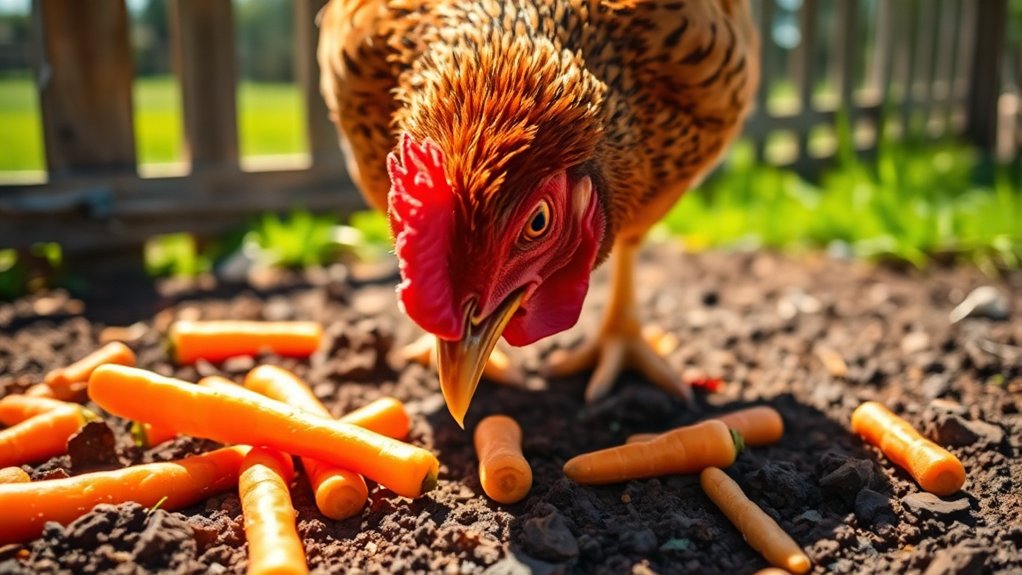
Can Chickens Eat Carrots?
If you’re a backyard chicken keeper, you’ve probably wondered what treats are safe and healthy for your flock. You’re not alone—many people struggle with feeding their chickens the right foods that support their health without causing harm. Can Chickens Eat Carrots.
Finding tasty, nutritious options that your chickens will actually enjoy can feel like a challenge.
Yes, you can safely feed chickens carrots. They’re a healthy treat with beta-carotene, fiber, and vitamins that support vision, immunity, and digestion.
Serve them raw or cooked, but always wash and chop them into small, bite-sized pieces.
Keep portions small so treats stay under 10% of their diet. Chicks can eat finely grated carrots too.
If you want to feed carrots the right way, there’s a bit more to know.
Key Takeaways
- Yes, chickens can safely eat carrots, and they are not known to be toxic.
- Serve carrots chopped, grated, or cooked into small pieces to prevent choking.
- Carrots provide beta-carotene, fiber, vitamins, and moisture that support chicken health.
- Offer carrots only as an occasional treat, making up less than 10% of the daily diet.
- Avoid spoiled, salted, or seasoned carrots, and remove leftovers promptly.
Can Chickens Eat Carrots Safely?
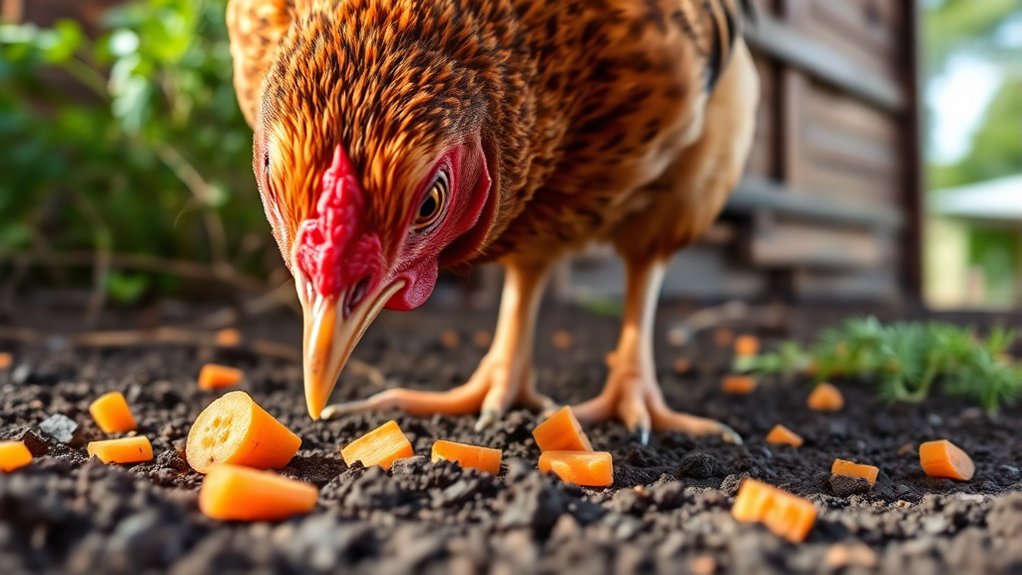
Yes, chickens can eat carrots safely, and they make a healthy treat when fed in moderation. You don’t need to worry about carrot toxicity, since carrots aren’t known to harm healthy chickens when you offer them properly.
Chickens can eat carrots safely, making them a healthy treat when fed in moderation.
Their chicken digestion can handle carrots without trouble, especially when you prepare them in small, manageable pieces. You can serve raw, cooked, grated, or chopped carrots, but you should still keep portions reasonable so treats don’t replace balanced feed.
If you notice a chicken struggling with a new food, stop and watch for changes in droppings, appetite, or behavior. Fresh, clean carrots are the best choice, and you should avoid anything spoiled or heavily seasoned.
While carrots are safe, you still want to introduce any new treat gradually. That way, your flock stays comfortable, and you can see how each bird responds before you feed more.
What Carrots Offer Chickens
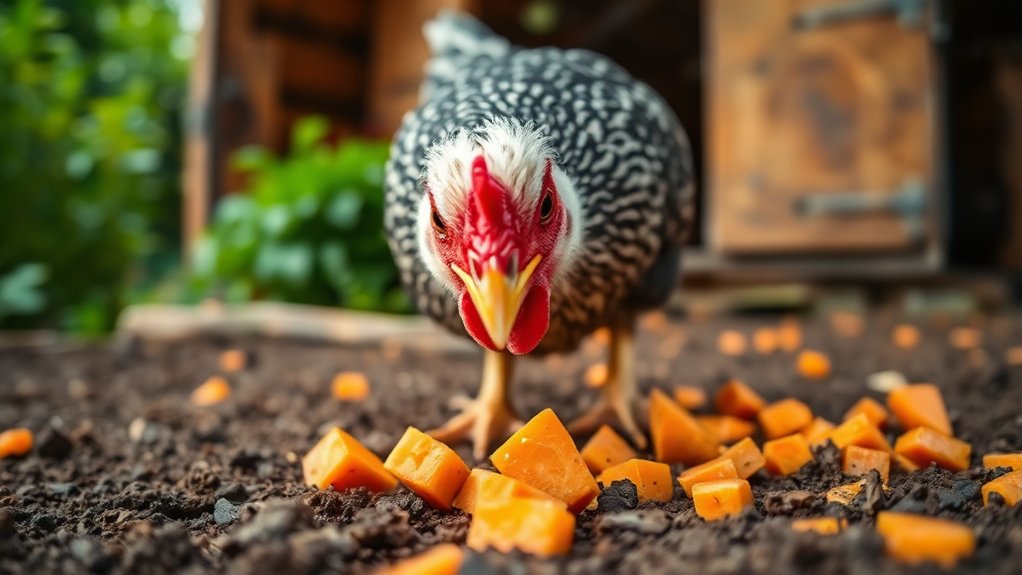
Carrots give your chickens some really helpful nutrients like beta-carotene, fiber, and vitamins that support their overall health. Plus, they add moisture, which can help keep your chickens hydrated on warm days. Just remember to keep the portions small and serve carrots as a treat, not as their main feed.
Carrot Nutrients
Carrot crunch offers more than a snack for your flock: these roots supply water, fiber, beta-carotene, and a range of vitamins and minerals that can support overall chicken health. When you offer different carrot varieties, you give your birds a mix of textures and nutrient profiles that can fit easily into a balanced diet.
Beta-carotene converts to vitamin A, which supports vision, skin, and immune function, while small amounts of potassium, vitamin K, and folate add extra value. The fiber can also help steady digestion and improve nutrient absorption from the rest of their feed. You can serve carrots raw, shredded, or lightly cooked, but keep portions modest so carrots stay a treat, not a replacement for complete feed.
Hydration Benefits
Because carrots are mostly water, they can give your chickens a small hydration boost, especially during hot weather when birds lose moisture faster. You can think of them as one of several helpful hydration sources, not a replacement for fresh water.
The moisture in carrots also supports digestion, which helps your flock use feed more efficiently and may aid nutrient absorption.
| Benefit | What it means |
|---|---|
| Moisture | Adds extra water to the diet |
| Crisp texture | Encourages pecking and interest |
| Digestive support | Helps chickens process food |
When you offer carrots, you add variety without making hydration complicated. Keep fresh water available, and let carrots simply complement your birds’ daily needs.
Safe Serving Size
When you feed carrots to chickens, keep portions modest: a few small shreds, thin slices, or bite-sized pieces per bird is plenty as an occasional treat. You’ll give them carrot benefits without crowding out their regular feed. Keep serving frequency low, since treats should stay under 10% of their daily diet.
- Offer raw or lightly cooked carrots.
- Chop them small to prevent waste.
- Mix pieces into scratch or greens.
- Remove leftovers so they don’t spoil.
This amount supports variety, mild hydration, and a little extra fiber while keeping balance in their ration. If you notice loose droppings or reduced appetite, cut back. With sensible portions, carrots stay a safe, tasty bonus for your flock.
Raw Vs. Cooked Carrots for Chickens
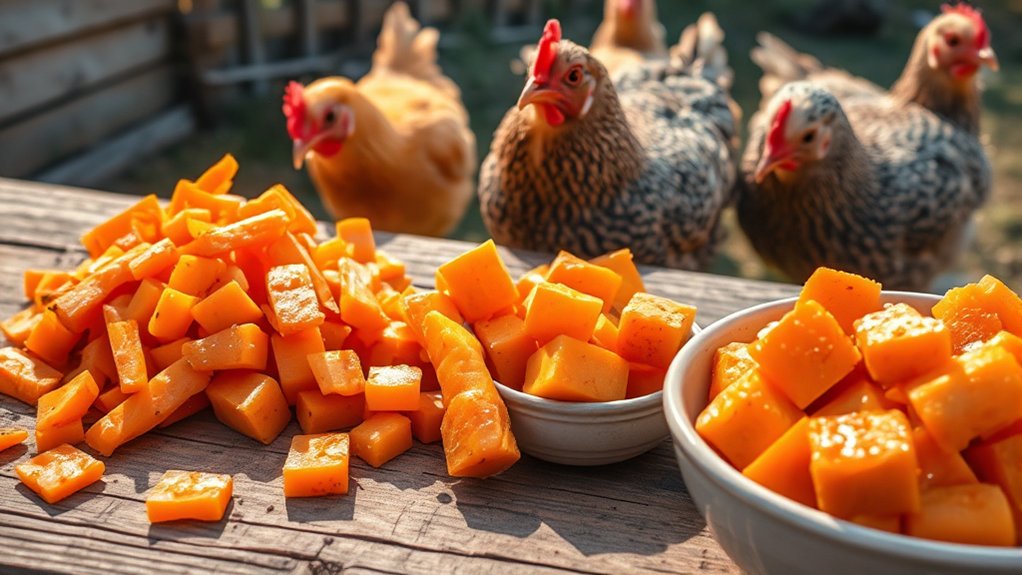
When you feed chickens raw carrots, they get a crunchy treat that keeps them busy. Plus, the crunchiness is pretty fun for them to peck at. Now, cooked carrots are a bit different—they turn soft, making them easier for you to chop up and simpler for the chickens to eat. So, really, you can go with either raw or cooked carrots depending on what your flock prefers and what works best for your routine. It’s all about what fits your style and keeps your chickens happy!
Raw Carrot Crunch
Raw carrots give your chickens a satisfying crunch and can be a simple, healthy treat when served in moderation. You’ll notice how the carrot’s texture encourages pecking, which can add interest to their snack time. Since chickens have different preferences, some may plunge in right away while others hesitate.
Offer small pieces or shreds so they can nibble safely and avoid waste.
- Rinse carrots well
- Cut them into bite-sized bits
- Scatter a few pieces
- Remove leftovers after feeding
This crunchy option fits well into a varied diet, and you can use it as an occasional treat rather than a daily staple. Keep portions modest, and watch how your flock responds.
Cooked Carrot Softness
Cooked carrots are softer, which can make them easier for your chickens to peck, especially if you’ve got younger birds or hens that seem unsure about tougher textures. When you change carrot texture with simple cooking methods, you can reduce the chance of waste and help timid birds eat more confidently.
| Option | Benefit |
|---|---|
| Raw carrots | Crunchy, but harder to nibble |
| Cooked carrots | Softer, easier to chew |
If you steam, boil, or roast them without seasoning, you’ll keep the treat safe and appealing. Just let them cool first, then chop them into small pieces so your flock can eat without struggling. That little adjustment can turn a frustrating snack into a calm, happy feeding moment.
How to Prepare Carrots for Chickens
Start by washing the carrots well to remove dirt and debris, then cut them into small, bite-sized pieces or shred them so your chickens can eat them safely. Good carrot preparation helps you offer a snack that’s easier to peck, chew, and enjoy. You can serve carrots raw, but you should always make them manageable for the flock.
Pay attention to chicken preferences, because some birds love crisp shreds while others prefer softer chunks.
- Rinse each carrot thoroughly.
- Trim off tough ends or damaged spots.
- Slice, dice, or grate into small pieces.
- Mix carrots with other safe treats if needed.
Keep the texture simple and fresh, and place the carrots in a clean feeder or scatter them on the ground. That way, your chickens can forage naturally and you can reduce waste while making treat time more appealing.
How Much Carrot Can Chickens Eat?
Carrots should be treated as a snack, not a staple, so give your chickens only a small portion at a time. You can offer a few bite-sized pieces to each bird, especially if you’re feeding them alongside their regular ration.
Keep carrot consumption modest because too much can crowd out the feed they need for proper nutrition. A good rule is to make carrots an occasional treat rather than a daily habit.
Keep carrot treats occasional, not routine, so they don’t crowd out your chickens’ balanced feed.
If you notice loose droppings or a bird leaving its normal feed untouched, cut back right away. Your goal is dietary balance, not filling them up with extras.
Chickens thrive when treats stay limited and their main diet stays complete. As with any treat, moderation helps you support health without creating problems.
Keep portions small, observe how your flock responds, and adjust as needed for individual birds.
Best Ways to Feed Chickens Carrots
You can feed chickens carrots either raw or cooked—both work great as a healthy treat. Just shred or chop them into small pieces so your flock can easily peck and eat them. Doing this also helps cut down on waste and makes the carrots safer for your chickens to enjoy.
Raw Or Cooked Carrots
Raw or cooked carrots can both make a healthy treat for chickens, but the best option depends on how you prepare them. You can offer raw carrots for a crunchy snack or cook them lightly to soften the texture. Choose plain carrots without salt, butter, or seasoning, and rotate carrot varieties to keep treats interesting.
Watch feeding frequency so carrots stay an occasional supplement, not a replacement for balanced feed.
- Raw carrots keep more crunch.
- Cooked carrots can be easier to eat.
- Plain preparation keeps them safe.
- Small servings help prevent waste.
You should always give carrots as a treat and focus on a complete diet first. If your flock enjoys them, carrots can add variety, color, and a little extra nutrition.
Shredded Carrot Portions
Shredded carrots are one of the easiest ways to serve this treat to chickens, especially if you want a quick, manageable portion. You can sprinkle the shredded texture over their feed or offer it in a shallow dish so they peck comfortably.
Because the pieces are small, your flock can eat them easily, and you won’t have to worry about large chunks causing waste. You should start with a little and watch chicken preferences, since some birds love the sweet crunch more than others.
Keep portions modest so carrots stay a treat, not a meal. If you mix them with greens or grains, you’ll add variety and encourage foraging. Always use fresh carrots, and remove leftovers before they spoil.
Can Chicks Eat Carrots Too?
Yes, chicks can eat carrots too, as long as they’re prepared safely for their age. You should keep pieces tiny, soft, and easy to peck so you support chick health without risking choking. Carrots work best as an occasional treat, not a main feed, because chicks still need a balanced starter diet for steady growth.
Use these feeding tips to keep things simple: grate carrots finely for young chicks. Lightly steam them if they feel too firm. Offer only a small amount at first. Remove leftovers before they spoil.
You’ll notice chicks often peck at bright orange shreds with curiosity, but you shouldn’t let treats crowd out their regular feed. If you want to add variety, carrots can fit nicely into a safe, age-appropriate menu. Just stay watchful, keep portions small, and let their starter crumble do most of the nutritional work.
Can Chickens Eat Carrot Tops and Peels?
Yes, chickens can eat carrot tops and peels, but you’ll want to offer them in moderation and make sure they’re clean. These parts can add variety, fiber, and extra nutrients to your flock’s diet, especially when you’re using fresh, pesticide-free produce.
Carrot tops are safe for most chickens, and peels usually work fine too if you’ve washed away dirt and debris. You can chop them into small pieces to make pecking easier and reduce waste.
Still, you should watch for signs of carrot allergies, such as itching, swelling, or unusual droppings, though these reactions are rare. You also don’t need to worry about carrot toxicity, because carrots themselves aren’t toxic to chickens. Just treat tops and peels as a supplement, not a main food source, so your birds keep eating their balanced feed.
Carrot Feeding Mistakes to Avoid
One common mistake is offering too many carrots at once, since they should only be a treat and not replace a balanced feed. You also shouldn’t skip carrot preparation tips, because whole chunks can be hard for small birds to handle. Grate, dice, or lightly cook carrots so your flock can peck them easily.
Keep carrot feeding frequency modest; a few times a week is plenty for most chickens.
- Don’t serve carrots as the main ration.
- Don’t give oversized pieces that invite waste.
- Don’t add salt, sugar, or seasoning.
- Don’t overdo treats when hens already get extras.
You’ll help your chickens enjoy carrots safely when you keep portions small and preparation simple. Consistency matters more than quantity, and a steady routine keeps treats from crowding out essential nutrition.
What to Watch for After Feeding Carrots
After you feed carrots, watch your flock for a normal response: curious pecking, steady eating, and regular droppings. You should see no change in energy or posture if the treat suits them.
Check for loose droppings, reduced appetite, or a swollen crop, since those signs can point to a chicken digestion issue rather than the carrots themselves. If you notice choking, repeated head shaking, or crop discomfort, stop the treat and offer water.
Check for loose droppings, reduced appetite, or a swollen crop—signs of digestion trouble, not the carrots themselves.
Carrots rarely cause carrot toxicity, but any sudden trouble after a new food deserves attention. Keep portions small, especially with whole or large chunks, and introduce carrots slowly so you can spot problems early.
If one bird seems off while the others act normal, isolate that hen and monitor her closely. Call a poultry vet if symptoms last more than a day or worsen.
Frequently Asked Questions
Can Chickens Eat Carrot Seeds?
Yes, chickens can eat carrot seeds in small amounts, but you should treat them as a minor treat, not a staple. You’ll want to contemplate chicken nutrition and seed safety before offering any seeds, especially if they’re seasoned or treated.
Plain, untreated carrot seeds aren’t likely to harm your flock, but too many can upset digestion. Always provide balanced feed, fresh water, and clean, safe treats.
Do Carrots Change Egg Color?
No, carrots usually don’t change your eggs’ color. You’ll notice egg pigmentation factors mostly come from your hen’s breed, diet, and health, not from orange veggies.
Carrot nutrient benefits can still help your flock, though, by adding vitamins and beta-carotene. About 1 in 4 backyard keepers say they’ve noticed richer yolks after improving feed, but shell color stays the same.
Keep carrots as a healthy treat, not a color changer.
Can Chickens Eat Frozen Carrots?
Yes, you can feed chickens frozen carrots, but thaw or chop them first so they’re easier to eat. Frozen carrot benefits include a cool treat on hot days and extra vitamins, while supporting chicken digestive health when offered in moderation.
Don’t give large hard chunks, since they can be difficult to peck and swallow. Mix them with regular feed or other veggies for a balanced, safe snack.
Are Carrot Juice Leftovers Safe for Chickens?
Yes, you can offer carrot juice leftovers to chickens in small amounts. You’ll want to strain out seeds, avoid added sugar, and keep portions modest.
Carrot nutrition still matters here, but juice benefits drop after most fiber gets removed. You can mix the leftovers with feed, serve them fresh, and watch for messy droppings.
If they ignore it, don’t force it. Clean scraps stay safest.
Can Carrots Stain Chicken Feathers?
Yes, carrots can stain your chicken’s feathers, especially if you feed messy, juicy pieces or shredded bits. The orange pigment and carrot nutrition won’t harm your bird, but they can leave temporary color on light feathers.
You can help with good feather care by offering smaller pieces, feeding in a clean dish, and wiping your chicken if needed. Any staining usually washes or sheds off naturally over time.
Conclusion
Yes, you can safely feed chickens carrots, and they’ll usually love the crunch. Carrots add vitamins, fiber, and a fun treat to their diet, but they shouldn’t replace their regular feed.
In fact, one study found that nearly 90% of a carrot is water, which helps explain why they’re such a revitalizing snack. Just keep portions small, chop them well, and watch your flock enjoy a healthy, colorful bite.
Overall, carrots make a great occasional treat, so feel confident including carrots when you wonder, can chickens eat carrots?