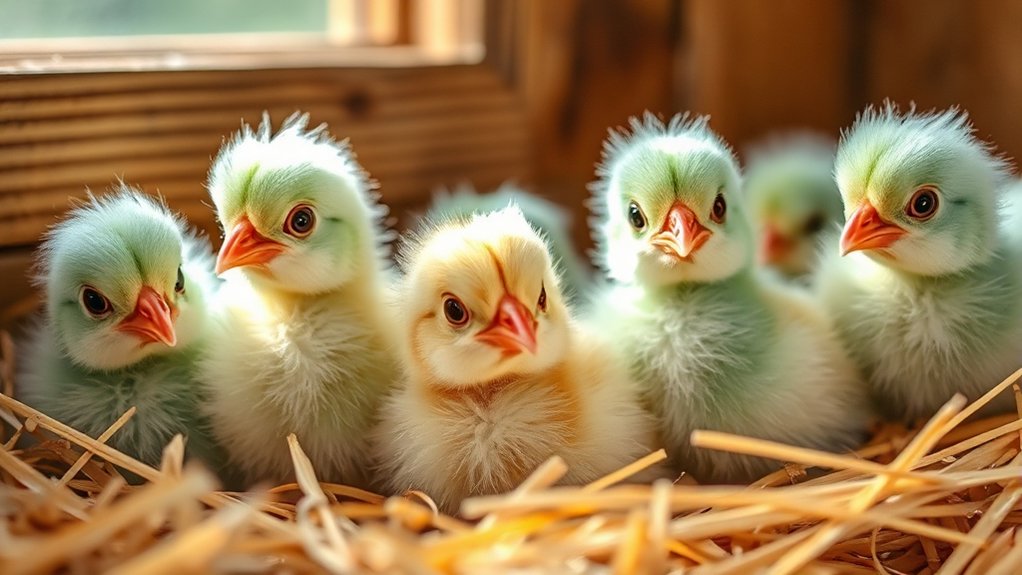
Easter Egger Chickens: How to Raise Them
If you’ve ever tried raising Easter Egger chickens, you know it can be tricky to get started the right way. Many people struggle with choosing healthy chicks and creating the perfect environment for them to thrive. You’re not alone—raising these colorful egg layers takes a bit of know-how and patience.
To raise Easter Egger chickens, choose lively chicks with bright eyes, clean vents, and strong legs. Then brood them in a secure, dry coop with good airflow and predator-proof wire.
Feed a chick starter with 20% to 24% protein, give fresh water daily, and provide grit and calcium as they age. Handle them gently early on, watch for illness, and expect blue, green, or pinkish eggs as they mature.
There’s plenty more to learn about keeping them thriving.
Key Takeaways
- Choose healthy, active chicks with bright eyes, clean vents, and strong legs for the best start.
- Provide a secure, predator-proof coop with good ventilation, dry bedding, roosts, and nest boxes.
- Feed chick starter crumble with 20%–24% protein, plus fresh water, then adjust feed as they mature.
- Handle chicks gently and often early on to build calm, friendly birds that trust people.
- Watch for illness, manage molting with extra protein, and keep the flock comfortable year-round.
What Are Easter Egger Chickens?
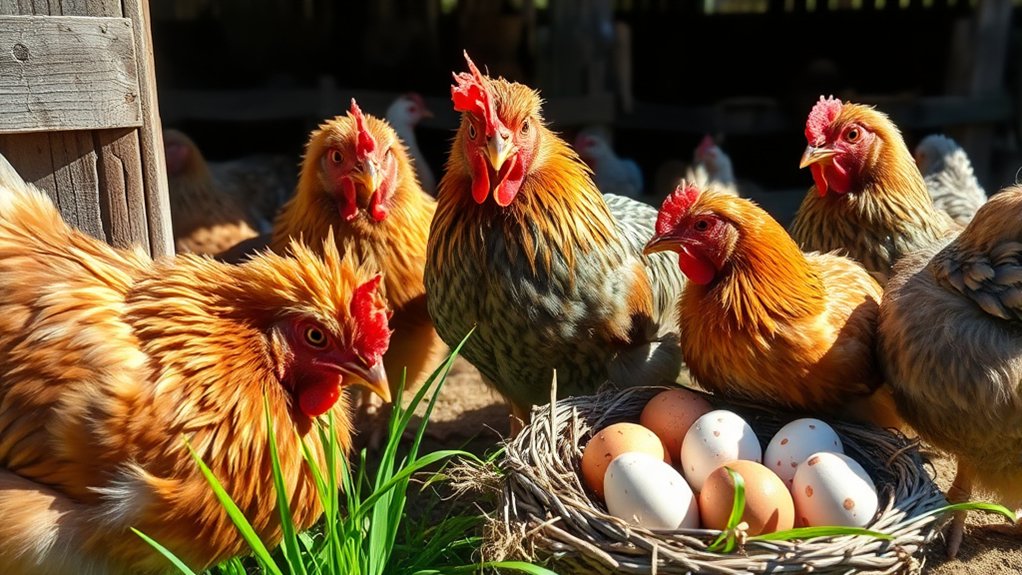
Easter Egger chickens are mixed-breed birds known for their colorful eggs, friendly personalities, and wide range of appearances. You won’t find a single standard look or breed club definition because they usually come from crossing birds that carry the blue-egg gene.
That mix creates many color variations in feathers, combs, and body size, so each bird can look a little different. When you raise them, you get a hardy, adaptable chicken that often suits backyard flocks well. Good breeding techniques can help preserve desirable traits, such as calm behavior and strong egg production, but the results still vary from bird to bird.
You should think of Easter Eggers as practical, fun birds rather than a fixed breed. Their charm comes from surprise, since you never know exactly what shade of egg or plumage you’ll get until they grow up.
Choose Healthy Easter Egger Chicks
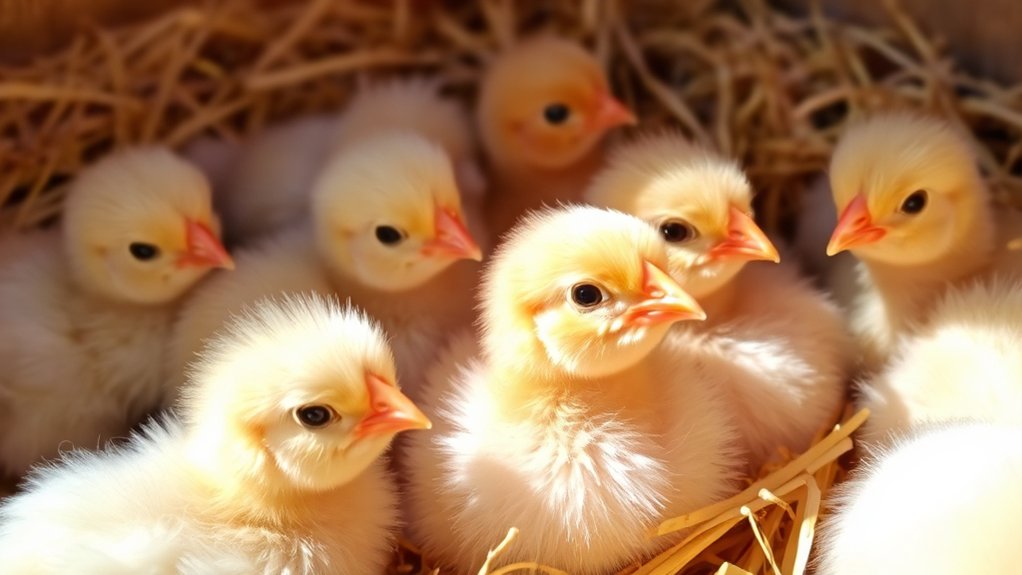
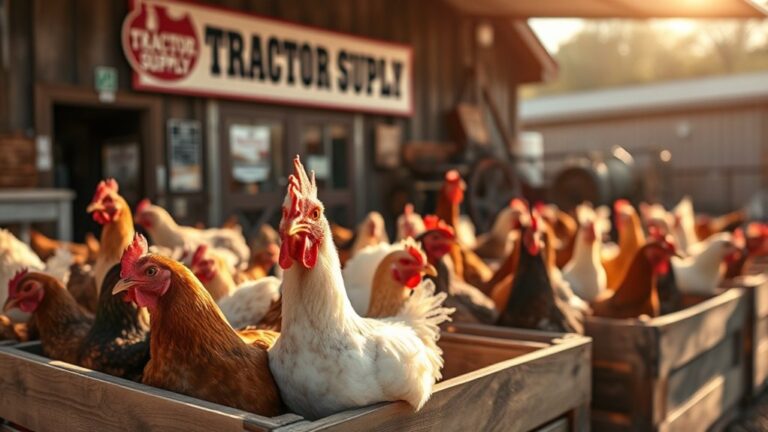
When you’re picking out Easter Egger chicks, look for bright eyes and alert movements—these are signs of healthy, lively birds. Make sure their vents are clean too, so you know they’re in good shape.
Also, check that their legs are strong and that their feathers are even. It helps to see traits that match what you expect for the breed. Starting off with a healthy, typical chick means you’re more likely to have a strong, thriving flock down the road.
Inspect Chick Vitality
Before you bring home Easter Egger chicks, take a close look at their health. Watch chick behavior closely: healthy chicks move around, peep steadily, and respond quickly when you approach. Their energy levels should seem alert, not sluggish or weak.
Check that they stand upright, balance well, and keep up with the flock without stumbling. Look for bright eyes, clean vents, and smooth, fluffed-down feathers. Avoid chicks that sit apart, droop their wings, or breathe noisily.
A lively chick eats and drinks with interest, then investigates its surroundings. You want a bird that looks curious and strong, because that usually signals a good start. Trust your observations, and choose the chicks that seem active, engaged, and ready to thrive in your care.
Check Breed Traits
Look for the breed hallmarks that make Easter Egger chicks easy to spot and worth raising. You should expect fuzzy legs, pea combs, and mixed plumage patterns that hint at their unique Easter Egger characteristics.
Because their breed history comes from mixed heritage, no two chicks look exactly alike, but healthy birds still show alert eyes, steady footing, and balanced bodies. Check that each chick matches the seller’s description and doesn’t seem weak, deformed, or excessively small.
You’ll also want to notice early feathering differences, since some chicks mature faster than others. Pick chicks with bright, active behavior and even posture, not ones that huddle apart.
When you choose birds that fit the breed’s typical traits, you improve your odds of raising hardy, productive flock members.
Build a Safe Coop for Easter Eggers
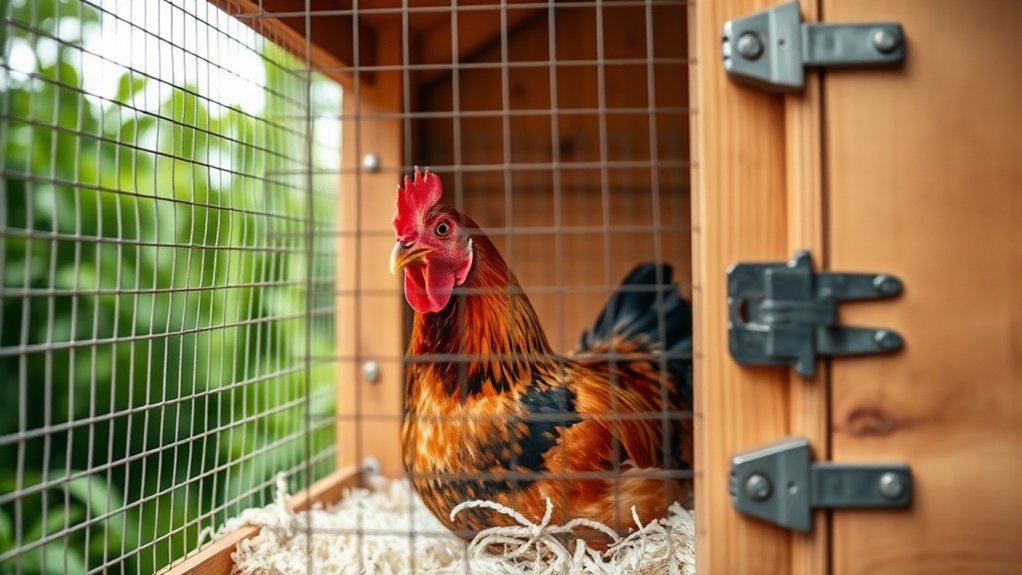
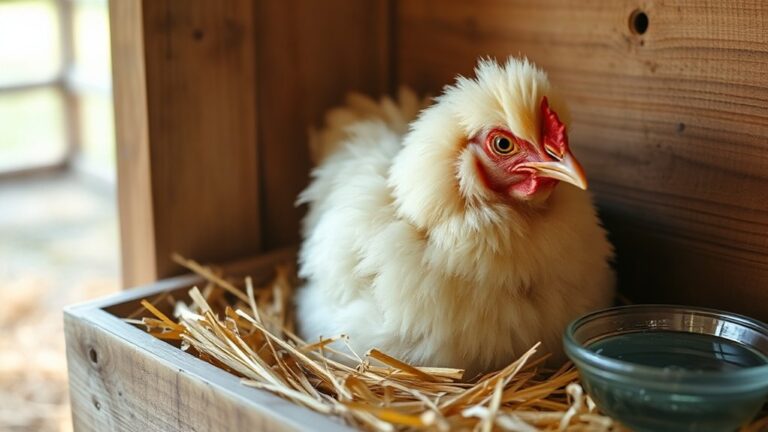
To keep your Easter Eggers healthy and calm, build a coop that protects them from predators, weather, and stress. Choose sturdy coop materials like treated lumber, hardware cloth, and moisture-resistant roofing so the structure lasts and stays secure.
Add predator protection to every opening, including vents, windows, and the run. Raccoons, foxes, and hawks can exploit weak spots if you’re not careful. Raise the coop slightly off the ground to block dampness and discourage burrowing pests.
Inside, provide enough roost space and nest boxes so each bird can rest without crowding. Keep the floor dry with easy-clean bedding and good drainage around the coop. Install latches that lock firmly since simple hooks won’t stop clever animals.
Use shaded areas and plenty of airflow to reduce heat stress. When you design a safe, comfortable coop, your Easter Eggers will settle in quickly and thrive.
Feed Easter Egger Chickens for Strong Growth
To help your Easter Egger chicks grow strong, start them off with a balanced chick starter feed. You want to make sure this feed has plenty of protein—it’s key for healthy muscle and feather development. And don’t forget, fresh water should always be available so they can stay hydrated and thrive.
Balanced Chick Starter
For the first several weeks, a balanced chick starter gives your Easter Egger chicks the protein, vitamins, and minerals they need for steady growth and healthy development. You should choose a crumble labeled for chicks so you can support balanced nutrition without guessing.
This feed helps you guide chick development from the start and keeps their diet simple. Offer fresh feed daily and keep water nearby so they eat and drink easily.
| Benefit | Why it matters |
|---|---|
| Complete nutrients | Supports overall growth |
| Easy texture | Helps chicks eat comfortably |
| Consistent formula | Reduces diet gaps |
Watch their appetite and body condition, and refresh feed often. If you keep the starter clean and accessible, your chicks can build a strong foundation for the weeks ahead.
Protein For Growth
Protein is the building block that helps your Easter Egger chicks grow strong muscles, feathers, and healthy body tissue. During the early growth stages, you should give a chick starter feed with 20% to 24% protein so they can develop steadily.
Choose quality protein sources like soybean meal, fish meal, or black soldier fly larvae, and make sure the feed stays fresh. You can also offer small amounts of cooked egg or plain, unsalted cottage cheese as a treat, but keep treats limited so they don’t replace a complete ration.
As your chicks mature, you can slowly lower protein to match their needs. When you feed the right amount, you support healthy feathering, sturdy frames, and consistent growth without overloading their diet.
Fresh Water Access
Fresh, clean water is essential for Easter Egger chicks because it supports digestion, nutrient absorption, and healthy growth. You should provide shallow, easy-to-reach waterers so chicks can drink without strain or risk of drowning.
Check water quality every day and refill containers with fresh water often, especially in warm weather or dusty coops. If you notice bedding, droppings, or algae in the water, clean it immediately to keep your flock healthy.
The importance of hydration becomes clear when chicks stay active, eat well, and grow steadily. Without enough water, they can weaken quickly and stop thriving.
Place water near their feed, and make sure every chick can access it at all times. Clean, constant water helps you raise stronger Easter Eggers with fewer setbacks.
Keep Water, Grit, and Calcium Ready
Offer grit and calcium nearby too:
- Choose appropriate grit types for your flock’s age and feed style.
- Understand grit benefits: it helps birds grind food and use nutrients well.
- Provide calcium sources like oyster shell or crushed eggshells in a separate dish.
- Use calcium supplements only when your birds need extra support.
Keep grit dry and replace it when it gets dirty. If you feed whole grains, free-ranging birds, or kitchen scraps, these basics matter even more.
Socialize Easter Egger Chicks Early
Start handling your Easter Egger chicks early so they grow up calm, curious, and easy to manage. Keep your chick handling sessions short at first, then build them into a daily routine. Scoop each chick gently, support its body, and speak in a soft, steady voice.
Let them hear you, see you, and feel safe in your hands. When you offer a few minutes of close contact every day, you teach them that people bring comfort, not stress.
Let them hear you, see you, and feel safe in your hands.
You can also encourage positive interactions by sitting near the brooder and letting the chicks approach you on their own. Offer a little scratch grain from your palm, but don’t force contact.
Move slowly, and reward relaxed behavior with calm attention. If you stay consistent, your Easter Eggers will become easier to catch, inspect, and move later on. Early socializing makes them friendlier birds and helps you build trust that lasts into adulthood.
Spot Common Easter Egger Health Problems
Watch your Easter Egger chicks closely, because early signs of trouble often show up in small changes in behavior, droppings, or appetite. During daily health monitoring, look for droopy posture, dirty vents, sneezing, limping, or a hunched stance. These common ailments can escalate fast if you ignore them.
- Check droppings for watery, bloody, or unusually green waste.
- Watch breathing; clicking, gasping, or tail bobbing means you should act.
- Feel the crop in the morning; a hard, full crop can signal trouble.
- Inspect feet, eyes, and skin for swelling, discharge, or mites.
Keep bedding dry, water fresh, and feed clean so you reduce stress and disease pressure. Isolate any chick that seems weak, and call a poultry-savvy vet if symptoms persist. Quick action helps you protect the whole flock and keeps your Easter Eggers thriving.
Expect and Collect Colorful Eggs
Once your flock is healthy, you can enjoy one of the best parts of keeping Easter Eggers: the eggs. You’ll never know exactly what shade each hen will lay, and that surprise keeps you checking the nest boxes.
Their egg color variations range from blue and green to pinkish cream, so every collection feels a little different. Use this quick guide:
| Hen age | Common egg color | Notes |
|---|---|---|
| Young layer | Light blue | Often starts pale |
| Mature hen | Green or teal | Can deepen over time |
| Mixed flock | Cream or pink tint | Depends on genetics |
Watch egg production frequency too, because most hens lay regularly but not every day. Collect eggs once or twice daily to keep shells clean and reduce breakage.
Store them promptly, and label especially unusual colors if you want to track each hen’s pattern. With Easter Eggers, the basket is always interesting.
Help Easter Eggers Through Molting and Seasons
When your Easter Eggers start molting, it’s a good idea to give them extra protein, fresh water, and a calm, stress-free coop. This helps them rebuild their feathers faster. You’ll also want to check for parasites and try to avoid handling them too much during this sensitive time.
As the seasons change, be sure to adjust things like shade, ventilation, bedding, and warmth. Doing this will keep your chickens comfortable no matter the time of year.
Molting Care Tips
Molting can leave your Easter Eggers looking ragged, but it’s a normal reset that needs a little extra support. During the molting process, you can help them stay comfortable and rebuild strength while feather regrowth happens.
- Offer a protein-rich feed so new feathers form faster.
- Keep fresh water available every day.
- Check for bald patches, irritation, or parasites.
- Handle them gently and let them rest more.
You’ll also want to reduce stress by keeping routines steady and avoiding unnecessary flock changes. A calm coop helps birds recover energy and finish molting with less strain. If you notice weak appetite or severe feather loss, watch closely and consider a vet visit.
With steady care, your Easter Eggers will return to full plumage looking healthy and vibrant.
Seasonal Adjustments
As the seasons shift, your Easter Eggers need small adjustments to stay healthy and productive year-round. During heat, add shade, fresh water, and extra ventilation; in cold weather, block drafts, dry bedding, and protect combs from frostbite. Good temperature management helps birds keep eating and laying steadily.
When molting hits, boost protein with quality feed, mealworms, or sunflower seeds so feathers grow back faster. Watch for stress when daylight changes, and keep routines consistent to support comfort. Your seasonal care should also include checking coop humidity, trimming muddy areas, and offering grit and calcium.
If you notice slower laying, don’t panic; molting and weather shifts usually cause it. With steady attention, your flock’ll handle every season well.
Keep Easter Egger Chickens Happy Long-Term
To keep Easter Egger chickens happy for the long term, focus on the basics that support steady health and calm behavior every day. Give them clean water, balanced feed, and enough space so they don’t feel crowded or stressed. Watch flock dynamics closely, because pecking order issues can build fast and lower overall comfort. Add environmental enrichment to keep their minds busy and reduce boredom.
- Offer varied roosts, dust baths, and shaded areas.
- Rotate foraging spots so they can scratch and investigate.
- Check feathers, feet, and droppings for early health changes.
- Introduce new birds slowly to protect harmony.
You should also keep their coop dry, draft-free, and well ventilated. Handle them regularly so they stay tame, but respect their routines. When you stay consistent, your Easter Eggers will reward you with better behavior, stronger laying, and a more relaxed flock year-round.
Frequently Asked Questions
Do Easter Eggers Lay Blue Eggs Every Day?
No, they don’t lay blue eggs every day. You’ll usually see egg color variations, and a hen may lay blue, green, olive, or brown eggs depending on her genetics.
Egg production frequency also varies, so she won’t produce an egg daily year-round. Most Easter Eggers lay several eggs a week, but heat, age, health, and daylight can change that.
Watch your flock’s pattern, and you’ll know what’s normal.
Can Easter Eggers Live With Dogs Safely?
Yes, Easter Eggers can live with dogs safely if you manage introductions carefully. You should watch chicken behavior closely and never leave them alone until you trust the dog completely.
Good dog training matters most: teach sit, leave it, and to be gentle around birds. Keep your coop secure, give chickens escape space, and supervise every meeting. If your dog chases, barks, or stalks, you’ll need more training before mixing them.
How Cold Can Easter Egger Chickens Tolerate?
Easter Egger chickens can usually handle cold weather well, often down to around 20°F or lower if you keep them dry, sheltered, and draft-free. You should rely on their feather insulation, which helps them stay warm, but you still need to prevent frostbite by protecting combs and feet.
Make sure they’ve got fresh water, extra feed, and a coop with good ventilation, not direct drafts, for the safest winter care.
Are Easter Eggers Good for First-Time Chicken Keepers?
Yes, Easter Eggers can be a great choice for first-time chicken keepers. You’ll usually enjoy their friendly temperament, and they often show strong backyard adaptability.
You can keep them in mixed flocks, and they’ll handle different climates pretty well. They’re generally hardy, curious, and easy to love.
Just make sure you provide secure housing, fresh water, quality feed, and daily care so they stay healthy and happy.
How Long Do Easter Egger Chickens Usually Live?
Easter Egger chickens usually live about 5 to 8 years, though you can sometimes help them reach 10 or more with great care. Lifespan factors include genetics, diet, predator protection, and stress levels.
Health considerations matter too, so you’ll want to watch for parasites, respiratory illness, and egg-laying problems. If you keep them clean, fed well, and safe, you’ll give your flock the best chance at a longer, healthier life.
Conclusion
Raising Easter Egger chickens is a lot like tending a surprise garden: you do the basics well, and the rewards keep changing in delightful ways. In my first flock, one shy pullet started laying olive eggs, and suddenly every morning felt brighter.
Keep their coop safe, their feed balanced, and their water clean, and they’ll thrive. With a little care through seasons and molting, you’ll enjoy healthy birds and colorful eggs for years.
By paying attention to these simple needs, raising Easter Egger chickens becomes a joyful and rewarding experience.