Can Chickens Eat Lettuce?
If you raise chickens, you’ve probably wondered what treats are safe to share with your flock. You’re not alone—many chicken owners struggle with finding healthy snacks that won’t upset their birds’ nutrition.
Lettuce is a popular option, but is it really a good choice for your chickens?
Yes, you can feed chickens lettuce as an occasional treat. Romaine, leaf, and butter lettuce are the best choices because they’re fresh, hydrating, and easy for your flock to peck at. Can Chickens Eat Lettuce.
Serve it washed, chopped, and in small amounts so it doesn’t replace their balanced feed. Avoid wilted, moldy, or heavily dressed lettuce, and skip iceberg when you can.
If you want to know how much is safe, there’s more to take into account.
Key Takeaways
- Yes, chickens can eat lettuce as an occasional, hydrating treat.
- Romaine, leaf, and butter lettuce are better choices than iceberg lettuce.
- Feed lettuce fresh, washed, and in small amounts alongside balanced chicken feed.
- Too much lettuce can reduce feed intake and cause watery droppings.
- Other safe greens include kale, collard greens, spinach, parsley, and beet greens.
Can Chickens Eat Lettuce?

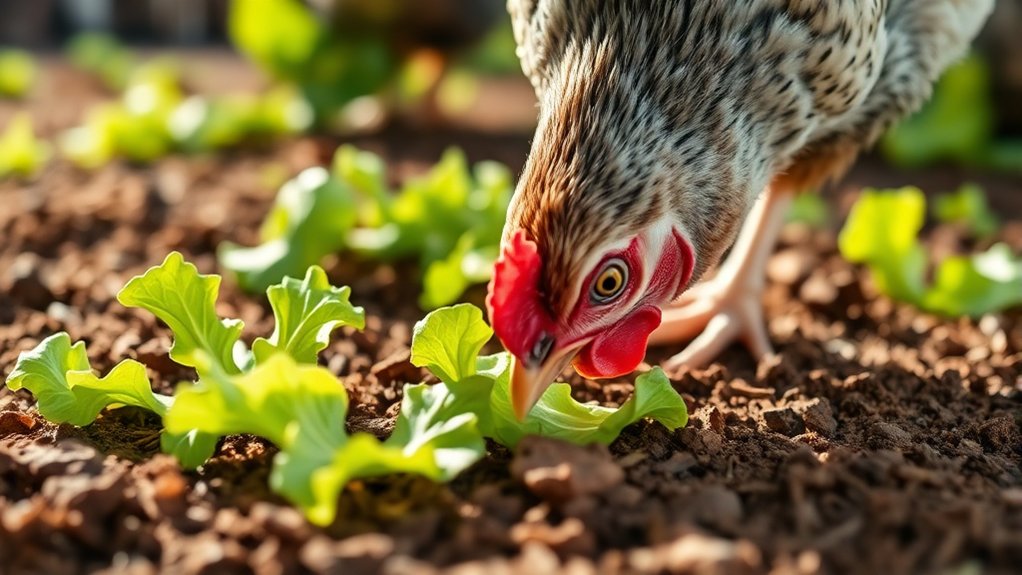
Yes, chickens can eat lettuce, and most will enjoy it as a cool, hydrating treat. You can offer it as a fresh snack, but you should notice your flock’s preferences because some birds love crunchy leaves while others ignore them.
Romaine, leaf, and butter lettuce usually work well, and they add variety to your birds’ routine. The main benefits include extra moisture and a light, easy-to-peck texture, which can help keep your chickens entertained on hot days.
You can tear the leaves into smaller pieces and scatter them in the run or mix them with other greens. That way, you encourage natural foraging and reduce waste. Use lettuce as a supplement, not a staple, so your flock still gets balanced feed.
Is Lettuce Safe for Chickens?

Lettuce is generally safe for chickens to eat when you serve it fresh and in moderation. You can offer it as a light treat that adds moisture and variety to the flock’s diet.
The lettuce benefits include extra hydration and a little fiber, which can support normal chicken digestion without overloading their system. Because lettuce is low in calories and nutrients, it shouldn’t replace a balanced feed, but it can complement it nicely.
You should always wash the leaves well to remove dirt, pesticides, or other residue before feeding. Then chop or tear the leaves into manageable pieces so your birds can peck them easily.
If you feed too much at once, you might see loose droppings or reduced interest in their regular feed. Keep servings occasional, and you’ll help your chickens enjoy lettuce safely while maintaining a healthy, steady diet.
Best Lettuce Types for Chickens

When you’re choosing lettuce for chickens, Romaine and leaf lettuce are usually the best picks because they’re crisp, easy to eat, and hold more moisture than iceberg. You can also mix in other lettuce varieties to keep treats interesting and match chicken preferences.
| Lettuce type | Why it works |
|---|---|
| Romaine | Crunchy, sturdy, and simple to peck |
| Green leaf | Soft, tender, and easy to tear |
| Red leaf | Mild flavor with extra variety |
| Butterhead | Loose leaves that chickens can nibble |
You should offer these options chopped or torn into bite-size pieces so your flock can handle them quickly. Fresh, clean leaves work best, and you can rotate types to see what your birds like most.
Since chicken preferences vary, start with small portions and notice which leaves disappear first. That way, you’ll learn what your flock enjoys without wasting food or overdoing treats.
Can Chickens Eat Romaine Lettuce?
Romaine lettuce is a safe, chicken-friendly treat, and it’s one of the best lettuce choices you can offer. You can serve it fresh, crisp, and washed, and your flock will usually peck at it with enthusiasm.
Romaine benefits include its high water content, which helps add hydration, plus a satisfying crunch that many birds enjoy. It also gives you a simple way to add variety to their diet without relying on processed treats.
Chicken preferences vary, though, so some birds may devour romaine right away while others ignore it at first. You can tear the leaves into smaller pieces to make feeding easier and reduce waste.
Since romaine is mild and low in calories, it fits well as an occasional supplement to regular feed. Offer it as a fresh snack, and watch how your chickens respond.
How Much Lettuce Can Chickens Eat?
Because lettuce should only be a treat, you’ll want to keep portions modest and offer it in addition to a balanced feed, not as a replacement. A few leaves per chicken is usually enough, and you can adjust based on flock size, age, and the lettuce variety you choose.
Use feeding frequency to guide how often you share it: a small serving once or twice a week works well for most flocks. If you give too much, your birds may fill up on low-calorie greens and eat less of their regular ration.
- Keep treats under 10% of daily intake
- Offer smaller portions to young birds
- Match serving size to flock size
- Limit lettuce on repeat days
How to Feed Lettuce to Chickens
First, make sure to wash the lettuce really well. Then, chop it up into small, easy-to-eat pieces before giving it to your chickens. You can mix little bits of lettuce into their regular feed to make it more interesting for them. Or, if you prefer, just offer it as a simple treat. Just remember to keep the portions small so they enjoy it without filling up too much on lettuce.
Wash And Chop
Start by rinsing the lettuce well under cool water to remove dirt, pesticides, and any grit that could upset your chickens’ digestion. Good lettuce preparation helps you serve a cleaner, safer treat that supports your flock’s nutritional benefits without extra hassle.
After washing, shake off excess water and chop the leaves into small, manageable pieces so your chickens can peck and swallow them easily. Smaller pieces also reduce waste and keep feeding simple.
- Use fresh, crisp leaves
- Remove wilted or slimy parts
- Chop stems into small sections
- Serve in a clean dish
Keep the portions modest and offer lettuce as an occasional snack, not a main meal. That way, you give your birds a tasty, easy-to-eat treat that fits well into a balanced diet.
Mix With Feed
Once your lettuce is clean and chopped, you can mix a small amount into your chickens’ regular feed to make it easier to serve and eat. This method helps you introduce leafy greens without changing the meal too much.
Start with a light handful, then watch how your flock responds. Because lettuce has lots of water, too much can dilute nutrition and affect chicken digestion if you overdo it.
You can also combine it with other feed alternatives, like chopped herbs or kitchen-safe greens, to add variety. Keep the mixture fresh and remove leftovers before they spoil.
Offer As Treat
You can also offer lettuce as a simple treat on its own, especially when you want to give your flock a little variety. Wash it first, then tear it into manageable pieces so your chickens can peck at it easily. Keep portion control in mind, because lettuce should stay a snack, not a meal.
Choose fresh leaves, not wilted ones. Serve plain lettuce, without dressing or salt. Limit treat frequency to a few times a week. Remove leftovers before they spoil.
You can hang a whole leaf for enrichment or scatter pieces on clean ground to encourage natural foraging. If you notice loose droppings, cut back a bit and offer less next time. Balance matters, so pair treats with a complete feed and fresh water every day.
Why Lettuce Should Be an Occasional Treat
You should think of lettuce as more of an occasional snack rather than a staple for your chickens. It doesn’t really give them all the nutrients they need to stay healthy. Plus, if they eat too much lettuce, it can add extra water to their diet, which means there’s less room for the balanced feed they actually need. So, keep their main diet focused on quality feed, and use lettuce just as a little bonus treat now and then.
Nutritional Limits
Even though lettuce can be a rejuvenating snack, it shouldn’t make up much of your chicken’s diet because it offers very few calories, protein, or essential nutrients. You should treat it as a light supplement, not a staple, so your flock still gets balanced feed with better nutritional value. Keep the feeding frequency low and use lettuce only as an occasional reward during treat time.
- Minimal protein support
- Limited vitamins and minerals
- Little long-term energy
- Best mixed with regular feed
When you rely on lettuce too often, you crowd out foods that truly support growth, egg production, and overall health. Offer small amounts, watch your birds’ interest, and let their main ration do the real work.
Water Overload
Lettuce’s high water content can be invigorating, but too much of it can dilute your chicken’s appetite and leave less room for nutrient-dense feed. When you offer it too often, you may notice loose droppings and less interest in regular meals.
Excess moisture can also affect water retention, especially if lettuce replaces steadier sources of hydration. Use it as a small, occasional treat, not a daily staple.
| Signal | What You Notice | Action |
|---|---|---|
| Soft droppings | Extra moisture | Cut back lettuce |
| Picky eating | Feed replacement | Reduce portions |
| Thirsty birds | Dehydration risks | Check fresh water |
Keep portions tiny, and let your flock stay curious without getting overloaded.
Balanced Feed Priority
A healthy flock does best when lettuce stays in its place as a treat, not a substitute for balanced feed. You should keep your chickens on a complete ration that delivers balanced nutrition because lettuce offers mostly water and little else.
If you rely on leafy snacks too often, you’ll dilute their intake of protein, vitamins, and minerals. Use lettuce to add feed variety, but serve it sparingly alongside their main diet.
Offer small amounts after pellets or crumbles. Mix lettuce with other safe greens for variety. Watch for poor growth or thin eggshells. Save treats for training and enrichment.
Lettuce Risks Chickens Should Avoid
While lettuce can be a healthy treat, you still need to watch for a few risks before feeding it to chickens. You should choose clean lettuce varieties and rinse them well, because dirt, pesticides, or compost residue can expose your flock to harmful contaminants.
Choose clean lettuce and rinse it well to avoid dirt, pesticides, or harmful compost residue.
Avoid wilted, slimy, or moldy leaves, since spoiled greens can upset digestion and attract pests. You also need to keep feeding frequency modest; too much lettuce can crowd out the balanced feed chickens rely on for protein, calcium, and energy.
Skip heavily dressed salads, and don’t offer lettuce with salty, sugary, or oily toppings. Iceberg lettuce gives little nutrition, so it shouldn’t replace more nutrient-rich greens.
If you use garden lettuce, make sure it hasn’t been treated with chemicals unsafe for poultry. Fresh, plain lettuce works best as an occasional treat, not a staple.
Signs Your Chicken Ate Too Much Lettuce
If you’ve given your chicken too much lettuce, the first thing you might notice is watery droppings. It’s a pretty common sign and usually the easiest to spot.
You might also see her eating less of her regular feed than usual, which can be a bit worrying. Along with that, she may start acting sluggish or just seem more tired than normal.
Keep an eye out for these signs so you can tweak her diet quickly and keep her feeling her best.
Watery Droppings
Watery droppings are one of the clearest signs your chicken may have eaten too much lettuce. When you notice loose, splashy manure, your bird’s digestion may be reacting to lettuce’s high water content. A small amount is fine, but too much can upset your flock’s hydration balance and make droppings look runnier than usual.
Watch for these clues:
- Droppings with extra liquid
- Greenish, soft manure
- Wet bedding under roosts
- Frequent messy vent feathers
You can usually correct this by cutting back lettuce and offering a more balanced feed. Keep clean water available and monitor your chicken for a day or two. If the droppings stay watery or your bird acts sick, contact a veterinarian for advice.
Reduced Feed Intake
When your chicken fills up on lettuce, you may notice it eats less of its regular feed afterward. That drop in intake can signal a reduced appetite from eating too much watery greens.
You should watch how much feed remains in the hopper and compare it with your chicken’s usual feeding habits. If your bird skips its pellets for a meal or two but still pecks normally at treats, lettuce may be the reason.
Offer less lettuce next time and make sure fresh feed stays available. You can also balance the diet with a small amount of grain or layer feed so your chicken doesn’t replace nutrition with leafy snacks.
If reduced eating continues for more than a day, review the full diet and adjust portions.
Lethargy Signs
A chicken that’s had too much lettuce may also seem sluggish or less interested in normal activity. You might notice it standing still, moving slowly, or skipping play and foraging. These lethargy signs can point to poor digestion, mild dehydration, or other lethargy causes after overeating watery greens.
Watch for droopy posture, less vocalizing, and slower responses when you approach. If your bird seems tired but still eats, offer fresh water and hold back lettuce for a day.
- Sleeping more than usual
- Weak scratching or pecking
- Hanging back from the flock
- Slow, dull eye contact
Simple lethargy remedies include balancing the diet, limiting treats, and checking for other illness if the behavior lasts.
Other Safe Greens Chickens Can Eat
Besides lettuce, you can give chickens a variety of other safe greens to help round out their diet. Rotate tender, chopped options so they stay interested and get more nutrients.
| Green | Benefit | Tip |
|---|---|---|
| kale | kale benefits and vitamins | serve finely chopped |
| spinach | spinach alternatives in small amounts | mix with other greens |
| collard greens | fiber and calcium | tear into bite-size pieces |
| parsley | parsley options for variety | offer sparingly |
You can also add swiss chard, beet greens, arugula choices, dandelion greens, mustard greens, and an endive variety. These greens give you flexibility, but you should still keep portions moderate and avoid soggy leftovers.
Fresh, clean greens help you support healthy digestion, active foraging, and stronger overall nutrition. If you grow a garden, you can snip a few leaves and offer them as a treat after their regular feed.
Frequently Asked Questions
Can Baby Chicks Eat Lettuce?
Yes, you can give baby chicks lettuce in tiny amounts, but it shouldn’t replace their chick nutrition. You’ll want to offer only soft, finely chopped lettuce and choose safe vegetables like tender greens or cucumber.
Avoid large pieces, tough leaves, and anything wilted or seasoned. Too much lettuce can fill them up without enough nutrients. Stick to a balanced starter feed, and treat lettuce as an occasional snack only.
Should Lettuce Be Washed Before Feeding?
Yes, you should wash lettuce before feeding it to your chicks or chickens. You’ll remove dirt, pesticides, and bacteria, which helps protect their health benefits from this snack.
Offer it in small, bite-sized pieces so they can peck safely. Good feeding tips include drying it well and serving it fresh, since soggy greens spoil fast.
Clean lettuce gives your flock a safer, healthier treat they’ll enjoy.
Can Chickens Eat Wilted Lettuce?
Yes, you can feed chickens wilted lettuce, but it’s no golden feast. You’ll want to offer it only if it’s still fresh enough and free from mold, slime, or rot.
Your flock’s chicken preferences may vary, so some birds may gobble it up while others turn away. Toss it in as a treat, not a staple, and remove leftovers quickly so you don’t invite pests or spoilage.
Is Iceberg Lettuce Nutritious for Chickens?
No, you shouldn’t rely on iceberg lettuce for chickens’ nutrition. It’s mostly water, so it offers few nutritional benefits compared with other greens.
You can still offer it as an occasional treat, but don’t count on it to support health or growth. Try better lettuce alternatives like romaine, kale, spinach, or chopped herbs.
Those choices give your birds more vitamins, minerals, and overall value in their diet.
Can Chickens Eat Lettuce Seeds?
Yes, you can feed chickens lettuce seeds in small amounts. They’re generally safe, but you should still watch for seed safety and keep portions modest.
Lettuce benefits are limited in seed form, so don’t rely on them as a major feed. You’ll do best by offering seeds as an occasional treat, not a staple.
As the saying goes, a little goes a long way when you’re keeping your flock healthy.
Conclusion
So, can chickens eat lettuce? Yes, they can, and romaine along with other safe types can be a crunchy, hydrating treat. But keep it occasional since lettuce is low in nutrients and too much can upset your flock’s digestion.
Here’s a fun fact: lettuce is about 95% water, so it helps with hydration but not nutrition. Offer it in small amounts, watch for loose droppings, and balance it with healthier greens.
In conclusion, chickens can eat lettuce, but it’s best used as an occasional snack rather than a staple in their diet.