Can Chickens Eat Tomatoes?
If you’re a chicken owner, you’ve probably wondered what kinds of treats are safe and healthy for your flock. You’re not alone—many people struggle with figuring out which foods are good for their chickens without risking their health. Can Chickens Eat Tomatoes.
One common question is whether chickens can eat tomatoes.
Yes, you can feed chickens ripe tomatoes in moderation as an occasional treat. You should offer only the fleshy ripe fruit, and leave out the stems, leaves, and any green parts, since those can be toxic.
Wash the tomatoes well, remove spoiled spots, and cut them into small pieces to reduce mess. Too much tomato can upset digestion, so watch for loose droppings or lethargy.
If you keep going, you’ll learn the safest ways to serve them.
Key Takeaways
- Yes, chickens can eat ripe tomatoes in moderation as an occasional treat.
- Ripe tomato flesh is safe; just wash it well and cut it into small pieces.
- Avoid green tomatoes, tomato leaves, and stems because they contain toxic compounds.
- Remove moldy or spoiled parts before feeding tomatoes to chickens.
- Watch for loose droppings or weakness, and stop feeding tomatoes if symptoms appear.
Are Tomatoes Safe for Chickens?
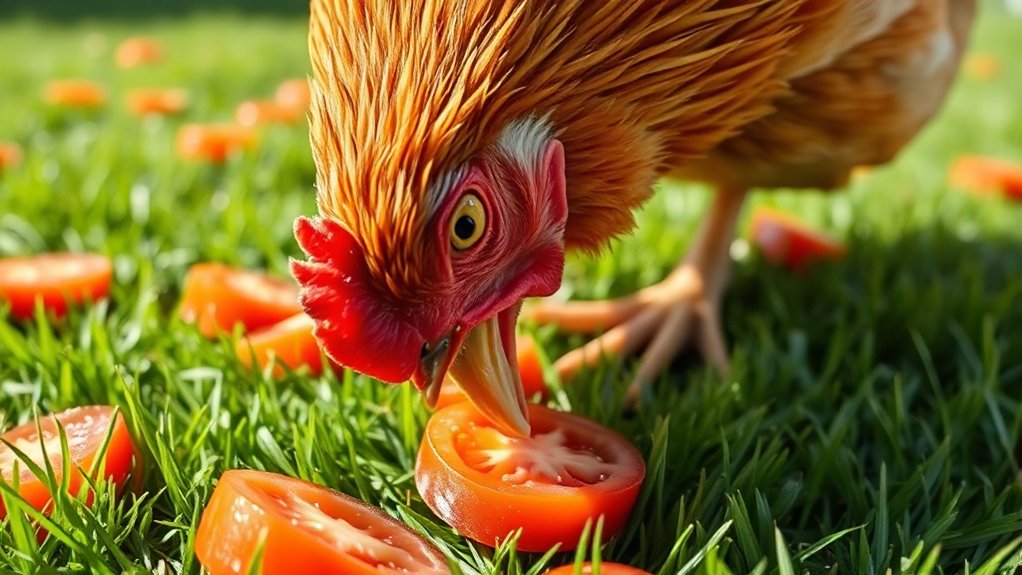
Yes, tomatoes are generally safe for chickens to eat when you serve them ripe and in moderation. You can treat them as a tasty supplement, not a staple, because your flock still needs balanced chicken nutrition from their regular feed.
Tomatoes offer benefits like moisture, vitamin C, and antioxidants, which can add variety to your birds’ diet and encourage natural foraging behavior. You should keep portions small so tomatoes don’t crowd out more complete foods.
If you notice loose droppings or a bird acting off after eating tomatoes, cut back and watch for patterns. Fresh, clean produce works best, and you’ll want to remove anything spoiled.
Which Tomato Parts Can Chickens Eat?
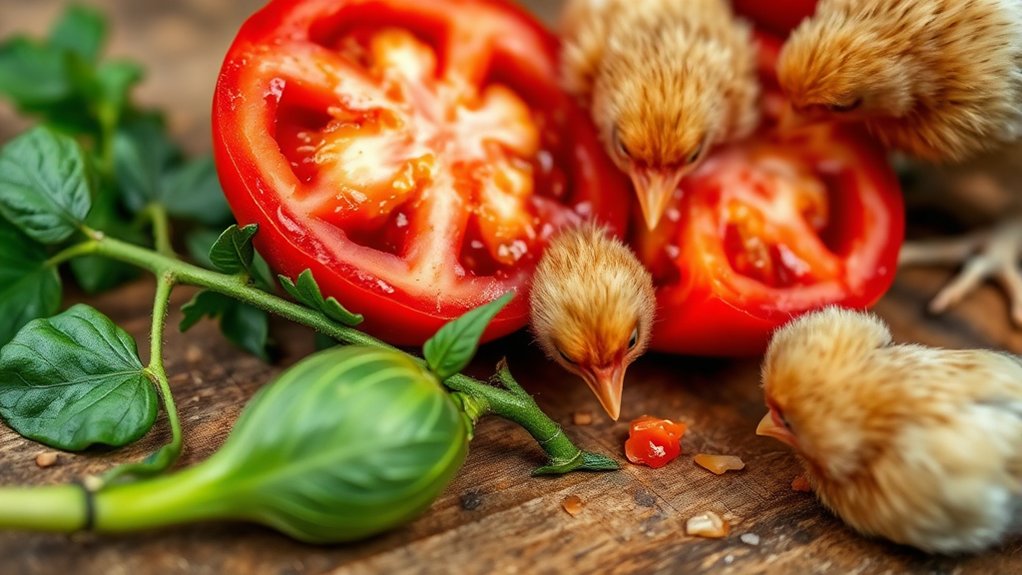
When you offer tomatoes to chickens, focus on the ripe fruit first, since that’s the safest and most useful part. You can feed your flock the fleshy red, yellow, or orange sections from many tomato varieties, and you can chop them into bite-sized pieces for easier pecking. The skin is fine too, so you don’t need to peel it off. Seeds also come with the fruit and usually don’t cause trouble in normal servings. If you’re serving fresh tomatoes, remove any moldy spots and wash off dirt before you share them.
You can also use tomatoes as a treat in salads, mixed with other safe foods, or as a summer snack when the birds seem less interested in feed. Watch chicken preferences, because some birds love juicy slices while others only peck a little. Offer small amounts first, then adjust the portion based on what your chickens actually enjoy.
Why Are Green Tomatoes and Leaves Unsafe?

Green tomatoes and tomato leaves aren’t safe for chickens because they contain higher levels of solanine and related compounds. These can upset a bird’s digestive system and, in larger amounts, cause poisoning.
You should treat both as a green tomato toxicity concern and watch for leaf ingestion risks if your flock pecks at garden plants. These parts can irritate the mouth, stomach, and intestines, so your chickens may act off after nibbling them.
| Part | Risk | What you see |
|---|---|---|
| Green tomato | Toxic compounds | Drooling, diarrhea |
| Leaves | Leaf ingestion risks | Vomiting, weakness |
| Stems | Irritation | Reduced appetite |
If you grow tomatoes near your coop, fence them off or pick fallen plant matter quickly. You’ll protect your birds by keeping unripe fruit and foliage out of reach.
How Much Tomato Can Chickens Eat?
You can give tomatoes to your chickens, but only as a small, occasional treat—not something they eat every day. Just offer a few bite-sized pieces at a time. Also, treats like tomatoes shouldn’t take the place of their regular feed.
For younger chicks, you’ll want to be even more careful and give them smaller portions since their needs are different from adult chickens. So, always keep the size of the serving appropriate for their age.
Safe Serving Size
Although tomatoes can be a healthy treat, they should only make up a small part of a chicken’s diet. You should use safe portioning by offering a few small pieces at a time, not a full tomato. A handful of chopped tomato shared among several hens is usually enough for one feeding.
Keep feeding frequency low so tomatoes stay a supplement, not a staple, in your flock’s menu. You can mix the pieces with other vegetables or scatter them lightly to encourage natural foraging. Always remove any leftover tomato before it spoils, and keep servings simple and fresh.
If you’re unsure, start with less and watch how your chickens handle it. Small amounts help you treat them without crowding out balanced feed.
Occasional Treat Limits
Tomatoes should stay an occasional treat, not a daily menu item, because too much can upset a chicken’s diet and digestion. You should keep treat frequency low and offer tomato only a few times a week at most.
Small amounts work best: a few bite-sized pieces per bird is enough to add variety without crowding out balanced feed. Use portion control so tomatoes make up only a tiny share of what your flock eats.
If you notice loose droppings or picky eating after offering tomatoes, cut back and wait longer before serving them again. Think of tomatoes as a garnish, not a staple, and you’ll help your chickens enjoy them safely while keeping their main diet on track.
Age-Based Portions
Chicks need only tiny, soft pieces of tomato, while juveniles can handle a little more once they’re fully eating balanced feed. For adults, a few bite-sized pieces per bird is usually enough.
You should always adjust the amount by chicken age and dietary needs, since younger birds need more starter feed and less treat food. Offer tomatoes sparingly so they don’t crowd out balanced nutrition.
Remove seeds, stems, and any green parts, then chop the flesh into small pieces to reduce choking risk. If you notice loose droppings or reduced feed intake, cut back right away.
Treats should stay a small part of the diet, and tomatoes work best as an occasional supplement, not a main food source for your flock.
How to Safely Feed Tomatoes to Chickens
To feed tomatoes safely, offer only ripe fruit and remove all stems, leaves, and green parts first, since those contain solanine and tomatine that can upset your chickens. Wash the tomatoes well, then cut them into bite-sized pieces so your flock can peck them easily and you can prevent waste.
You should serve tomatoes as a treat, not a meal replacement, because balanced feed still needs to drive chicken nutrition. Tomato benefits include moisture, vitamin C, potassium, and antioxidants, but you’ll get those perks only when you keep portions small.
Place the pieces in a clean dish or scatter them on dry ground to reduce mud and spoilage. Watch your birds while they eat, and remove any leftovers after a short time. If you notice loose droppings or reluctance to eat, stop offering tomatoes and review your feeding routine.
Can Chickens Eat Cherry Tomatoes?
Yes, chickens can eat cherry tomatoes, and they usually enjoy the sweet, bite-sized fruit. You can offer them as a tasty treat, but keep portions small so you don’t crowd out their regular feed. Cherry tomatoes provide hydration, vitamins, and a little variety, so the cherry benefits are real when you serve them in moderation.
Chickens can enjoy cherry tomatoes as a sweet, hydrating treat, but moderation matters.
You should wash them first, then cut larger ones in half for smaller birds or chicks. This helps you control choking risk and makes pecking easier.
Watch your feeding frequency carefully. A few cherry tomatoes once or twice a week is plenty for most flocks. If you give too many, your chickens may fill up on treats instead of balanced nutrition.
You can mix them with other safe fruits or scatter them in the run for enrichment. As with any treat, moderation keeps your flock healthy, active, and enthusiastic to peck.
Can Chickens Eat Tomato Seeds and Skins?
You can usually let chickens eat tomato seeds and skins in small amounts. Just keep an eye out for any digestive upset, though. The seeds aren’t really a big safety concern once the tomato is ripe.
As for the skins, they can be a bit tough for some birds to handle. So, to keep things simple, wash the tomato well, remove any green parts, and offer it as an occasional treat.
Seed Safety Concerns
Tomato seeds and skins are generally safe for chickens to eat in small amounts, so there’s no need to pick them out if you’re offering ripe tomatoes as an occasional treat. You don’t need to worry about seed toxicity in ripe fruit, because the seeds contain only trace compounds that aren’t a practical issue for healthy birds.
Different tomato varieties can vary slightly in flavor and size, but their seeds still pose little risk when you feed them in moderation. Stick with fully ripe tomatoes and avoid overfeeding, since treats should stay a small part of your flock’s diet.
If you notice any odd reactions after a new food, pause the treat and watch your chickens closely before offering tomatoes again.
Skin Digestion Issues
While ripe tomato skins and seeds are usually safe for chickens, some birds may have trouble digesting tougher pieces, especially if they’re fed a lot at once. You may notice loose droppings or reduced interest in feed if your flock struggles with the fibrous skin.
A chicken’s crop and gizzard can handle many plant materials, but individual birds vary in how well their digestive enzymes break them down. If a hen has sensitive digestion, the skins can pass through partly intact. That doesn’t usually cause harm, yet it can reduce nutrient use.
Tomato skins also offer little benefit for skin health compared with the fruit itself, so they’re not essential. Watch your birds after feeding and note any discomfort or unusual droppings.
Serving Preparation Tips
To make tomato seeds and skins easier for chickens to handle, serve only ripe tomatoes and cut them into small, bite-sized pieces. You can remove stems, leaves, and any green or damaged parts before offering them.
Choose soft tomato varieties with thinner skins when possible, since they’re easier to peck and digest. If you want to reduce mess, try different serving methods, like mixing chopped tomato with feed or placing it in a shallow dish.
Don’t overdo it; tomatoes should stay a treat, not a staple. Watch how your flock reacts, especially if you introduce new tomato varieties. Some chickens gobble them up fast, while others pick around the skins.
Always provide clean water nearby so your birds can swallow comfortably and stay hydrated.
What Are the Signs of Tomato Overfeeding?
If your chickens get too many tomatoes, you may notice loose droppings, reduced interest in their regular feed, or mild digestive upset. These Tomato toxicity signs usually show up as stomach irritation rather than a true emergency, but you should still pay attention.
Overfeeding symptoms can include watery manure, softer comb color, gassiness, and a flock that seems less enthusiastic to eat their normal ration. You might also see brief lethargy or extra pecking at water if their crop feels unsettled.
Watch for repeated vomiting-like motions, trouble perching, or unusual restlessness, since those signs suggest your birds didn’t tolerate the extra fruit well. Check how much they’ve eaten, then stop offering tomatoes for a while and monitor them closely.
If the symptoms linger, worsen, or affect several birds, contact a poultry veterinarian for advice.
What Can Chickens Eat Instead of Tomatoes?
Instead of tomatoes, you can offer your chickens a mix of safe fruits, vegetables, and grains that give them variety without the same acid or nightshade concerns. You’ll keep them interested while supporting balanced nutrition with simple, wholesome treats.
Offer chickens safe fruits, vegetables, and grains for variety without tomato’s acid or nightshade concerns.
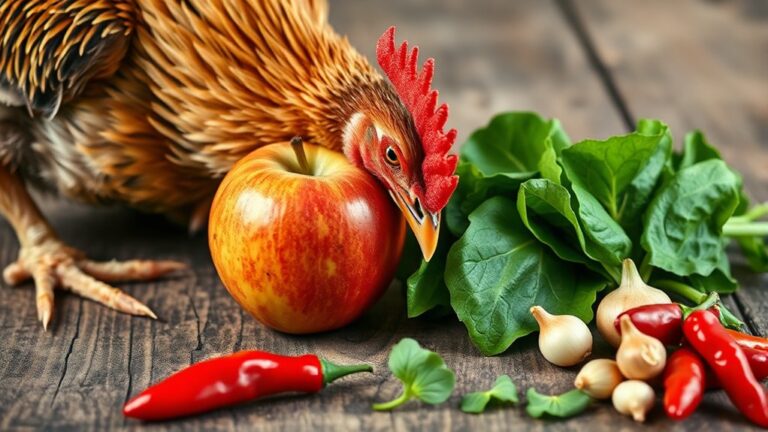
Good vegetable alternatives include leafy greens, chopped cucumbers, and cooked squash. For fruit options, try small amounts of berries, melon, or apples without seeds. You can also add grains and protein-rich extras to round out their diet.
- Leafy greens like kale or romaine
- Cucumber slices for a cool snack
- Cooked pumpkin or squash
- Berries or melon in moderation
- Oats, corn, or plain cooked rice
Offer treats in small portions so their main feed still does most of the work. Rotate choices to keep pecking time fun, and you’ll help your flock stay active, satisfied, and well-fed without relying on tomatoes.
How to Grow Tomatoes Safely Around Chickens?
You can definitely grow tomatoes safely around your chickens, but the key is to protect the ripening fruit before it becomes a tempting snack. One way to do this is by using sturdy cages or fencing around your tomato plants. Raised beds work well too, as they make it harder for your birds to get in.
Protect Ripening Fruit
To keep ripening tomatoes safe around chickens, focus on simple barriers and timely harvesting. You can protect fruit with daily checks so birds don’t peck soft skins. Pick tomatoes as soon as they blush, then finish ripening indoors for better fruit protection and pest deterrence.
Try these quick habits: harvest early and often. Remove cracked or fallen tomatoes. Place ripe fruit in baskets off the ground. Give chickens a separate foraging area. Inspect plants each evening for hidden clusters.
You’ll reduce losses when you stay consistent and don’t let ripe tomatoes linger. If you want more security, tie vines up so fruit stays visible and easy to grab. Quick action keeps your crop healthier and your flock uninterested.
Use Chicken Barriers
Chicken-proof barriers make tomato growing much easier when birds roam nearby. You can keep chickens out with sturdy chicken fencing around the bed or a smaller enclosure around each plant. Choose mesh that blocks entry but still lets sunlight and airflow through.
In your garden design, place barriers before planting so you don’t damage roots later. You can also use stakes and netting to protect low branches and ripe fruit. Keep gates latched, and check for gaps where curious birds might squeeze in.
If your hens free-range, give them a separate scratching area with treats and dust baths. That way, you reduce temptation and keep tomatoes safe until harvest.
Frequently Asked Questions
Can Chickens Eat Cooked Tomatoes?
Yes, you can feed chickens cooked tomatoes in moderation, and they often enjoy them. Cooked tomato benefits include a softer texture and easier chewing, which can help if you’re serving older birds.
Still, watch for chicken digestion concerns since too much tomato, seasoning, or oil can upset their stomachs. You should offer plain, cooled tomatoes only, and make them a small treat, not a daily staple in their diet.
Do Tomatoes Change Egg Taste?
No, tomatoes usually won’t change your eggs’ taste. You might wonder if every bite your hens take leaves a mark, but in most cases, it doesn’t.
A balanced diet can affect egg flavor a little, yet tomatoes rarely cause a noticeable difference. If you feed them lots of tomatoes, watch for dietary effects, but fresh eggs should still taste like fresh eggs. Enjoy them without worrying.
Can Baby Chicks Eat Tomatoes?
Yes, you can offer baby chicks tiny amounts of ripe tomato as an occasional treat, but it shouldn’t replace a balanced starter feed. You’ll want to focus on baby chick nutrition first since they need protein, vitamins, and minerals for steady growth.
Stick to safe vegetable options like finely chopped peas, lettuce, or cucumber, and avoid green tomato leaves, stems, and unripe fruit because they can upset your chicks.
Are Sun-Dried Tomatoes Safe for Chickens?
Yes, you can offer sun-dried tomatoes to chickens, but only sparingly. They’re basically little flavor bombs. You’ll want to choose plain, unsalted pieces because too much salt can cause trouble.
Their nutritional value includes vitamins and antioxidants, and the sun-dried benefits can add variety to your flock’s diet. Still, you shouldn’t make them a staple. Treat them like a tiny, tasty bonus, not a daily feast.
Can Chickens Eat Tomato Sauce?
Yes, you can give chickens a little tomato sauce, but only if it’s plain, unsalted, and free of garlic or onions. Tomato sauce benefits include some vitamins, yet your flock’s chicken dietary needs still come first.
Offer it only as an occasional treat, not a staple. Too much sauce can upset digestion or add excess salt, so you’ll want to keep portions small and simple.
Conclusion
So, can chickens eat tomatoes? Yes, but you’ve got to serve them like a careful host, not a careless one. Ripe tomatoes can be a bright, juicy treat, while green tomatoes, leaves, and stems are best left on the vine, where they belong.
Keep portions small, watch for overfeeding, and offer variety so your flock stays balanced and happy. When you handle tomatoes wisely, you’re giving your chickens a treat that shines without causing trouble.
In conclusion, chickens can eat tomatoes safely when served properly, making tomatoes a tasty addition to their diet.