What Chickens Not Eat?
If you’ve ever raised chickens, you know how tricky it can be to figure out exactly what they should and shouldn’t eat. You’re not alone—many people struggle with keeping their flock healthy while avoiding harmful foods.
Understanding what chickens not eat is crucial to preventing digestive issues and keeping your birds happy and safe.
You shouldn’t feed chickens moldy, spoiled, salty, sugary, or heavily seasoned foods, because these can upset digestion and cause illness.
Avoid chocolate, avocado, onions, raw or undercooked beans, garlic greens, green potatoes, tomato vines, citrus peels, and avocado skins or pits.
Keep them away from bleach, ammonia, pesticides, rodent bait, and toxic plants like foxglove, yew, and oleander.
If you keep going, you’ll learn what’s safe and what warning signs to watch for.
Key Takeaways
- Chickens should not eat moldy feed, spoiled leftovers, or rotten produce.
- Avoid chocolate, avocado, onions, garlic greens, raw or undercooked beans, and green potatoes.
- Do not feed heavily seasoned, salty, sugary, or citrus-heavy scraps.
- Keep chickens away from toxic plants like foxglove, yew, oleander, and nightshade species.
- Never allow access to bleach, ammonia, detergents, paint, antifreeze, pesticides, or rodent bait.
What Chickens Should Not Eat

When you’re feeding chickens, it’s just as important to know what to avoid as what to offer. You protect your flock by watching their chicken behavior and shaping healthy feeding habits. Don’t give them moldy feed, spoiled leftovers, or kitchen scraps that sit too long in the heat.
Skip raw or undercooked beans, salty snacks, sugary treats, and heavily seasoned foods, since these can upset digestion and reduce nutrition. You should also limit treats that replace a balanced ration, because chickens need steady access to proper feed, clean water, and grit.
If you notice birds refusing feed, pecking less, or acting sluggish, review what you’ve provided. Good feeding habits start with simple choices: fresh feed, safe treats, and moderation. When you stay consistent, your chickens stay active, productive, and less likely to develop problems from poor diet.
Toxic Foods for Chickens

You definitely want to watch out for toxic foods like chocolate, avocado, onions, and moldy scraps because these can make your chickens really sick. It’s not just those — lots of common household items like caffeine, alcohol, and spoiled food can also be dangerous for your flock. So, when you’re ever unsure about what to feed them, it’s best to stick with safe options like grains, leafy greens, and approved chicken feed instead.
Toxic Foods List
Some foods that seem harmless to people can seriously poison chickens, so it’s important to keep a strict line between safe treats and dangerous scraps. You should avoid avocado, chocolate, raw beans, moldy bread, and green or sprouted potatoes. These items can upset digestion, damage organs, or trigger severe illness.
Watch your chicken behavior closely after any accidental nibble, because sudden lethargy, drooping wings, or refusal to eat can signal trouble. Always balance treats with their nutritional needs, since too many risky leftovers can crowd out the feed they rely on.
Skip salty, sugary, or spoiled table scraps too, and keep your flock’s diet simple, fresh, and species-appropriate. When in doubt, leave it out and offer clean water, quality feed, and safe greens instead.
Common Household Toxins
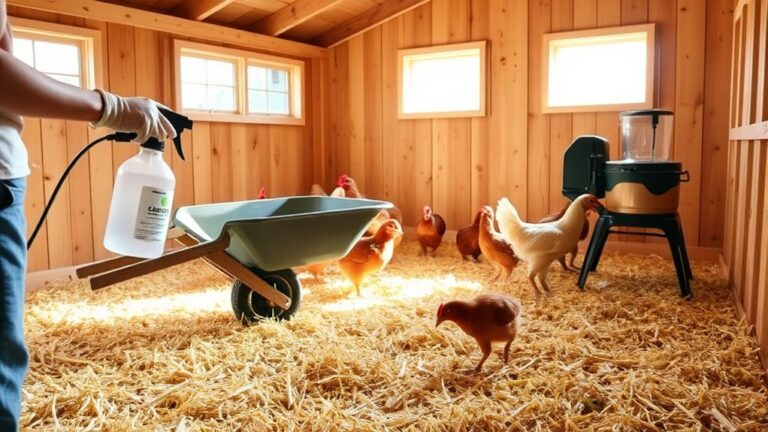
Everyday kitchen items can be just as dangerous as the obvious toxic foods, so it helps to know which common household toxins belong nowhere near your flock. You should keep chickens away from bleach, ammonia, detergents, paint, antifreeze, and rodent bait, because even small exposures can damage chicken health fast.
Store cleaning products in sealed cabinets, and never let runoff, fumes, or spilled liquids reach coops, feeders, or waterers. You also need to watch for treated wood, pesticides, and aerosol sprays around nesting areas, since these household hazards can irritate breathing, skin, and digestion.
If you suspect contact, remove the source immediately, move the bird to fresh air, and call a veterinarian. Quick action limits harm and protects the rest of your flock.
Safe Feeding Alternatives
When you pull risky foods out of the coop, safe substitutes become easy to spot. Chickens do best with a balanced layer feed, clean water, and small amounts of bird-safe treats like leafy greens, peas, oats, and cooked plain grains.
You can round out their diet with healthy grains such as cracked corn or barley and offer vegetable scraps from your kitchen. Just skip moldy or salty pieces.
Add protein sources like mealworms or scrambled egg when hens need extra support during molt or laying. Rotate natural herbs including basil or parsley for variety.
Feed safe legumes only when cooked, and sprinkle beneficial seeds like sunflower or sesame sparingly. These nutritious treats keep your flock active, satisfied, and well nourished without inviting toxic foods into their diet.
Kitchen Scraps Chickens Should Avoid

Even though chickens can turn many kitchen leftovers into useful nutrition, you shouldn’t assume all scraps are safe to toss in the coop. You need to watch your kitchen waste closely and match it to your flock’s feeding habits.
Skip moldy bread, spoiled produce, citrus peels, and anything heavily seasoned, because these scraps can encourage poor appetite and sloppy eating routines. Avoid avocado skins and pits, raw dried beans, and uncooked potato peels, since they’re not suitable for hens.
You should also keep onions, garlic, and large amounts of salty leftovers out of reach, especially if you’re trying to keep your birds steady and balanced. When you sort leftovers before feeding, you protect your flock from unnecessary risks and reduce waste at the same time.
Offer only fresh, plain scraps in small amounts, and always remove anything questionable before it reaches the coop today.
Foods That Upset Chicken Digestion
Some foods don’t just waste feed; they can upset your chickens’ digestion and leave them uncomfortable. You may notice loose droppings, reduced appetite, or an upset stomach after you offer rich, salty, greasy, or heavily seasoned scraps.
To protect chicken digestion, keep treats small and simple. Make sure they don’t replace a balanced ration that meets nutritional needs.
Good feed safety means checking that leftovers aren’t spoiled, moldy, or overly wet, because poor-quality food can trigger digestive issues fast. Even when your flock shows strong food preferences, don’t let those habits override dietary balance.
Instead, use treats sparingly and watch how each bird responds. Protecting gastrointestinal health starts with steady access to clean water, quality feed, and careful portion control.
When you notice repeated discomfort, cut back the offending food and return to basics. Your chickens will recover best when you prioritize consistency over novelty every day.
Dangerous Plants Chickens Should Avoid
Not every green plant is safe for chickens, so you’ll want to keep them away from toxic leaves, seeds, and flowers that can cause illness or worse. Protecting chicken health means learning which ornamentals and wild plants carry plant toxicity risks before your flock pecks around the yard.
Foxglove can disrupt heart function. Yew contains compounds that can be fatal. Oleander may trigger rapid collapse. Nightshade species can cause weakness and tremors. Rhubarb leaves may damage organs.
You should inspect fencing, gardens, and compost piles regularly because curious hens investigate anything new. Remove invasive weeds quickly, and don’t let trimmings sit within reach. If you suspect a chicken ate a dangerous plant, isolate her and call a veterinarian right away. Quick action can limit harm and keep the rest of your flock safe.
Fruits and Vegetables Chickens Should Not Eat
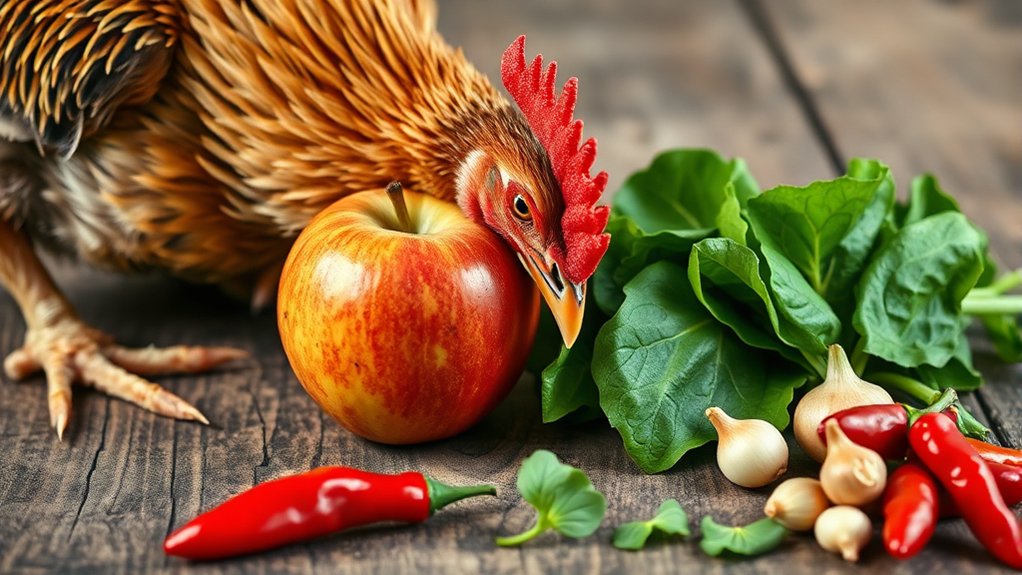
You should keep chickens away from certain fruits and vegetables because some seeds, pits, and peels can be toxic. For example, apple seeds and avocado pits are a no-go.
Also, avoid feeding them harmful parts like green potato skin or onion scraps—they’re not good for your birds. And one more thing: never offer moldy produce, since it can make your flock sick. It’s always better to be safe when it comes to their diet!
Toxic Fruit Seeds
Even healthy-looking fruits can pose a hidden risk to chickens when they contain toxic seeds or pits. You should skip any toxic fruit that hides dangerous fruit seeds, because your flock may peck at them and get sick.
Cherry, peach, apricot, plum, apple, and pear seeds can release harmful compounds when crushed. Remove pits and cores before offering fruit, or choose safer treats instead.
- Check fruit carefully before feeding
- Cut away pits and seeds
- Toss spoiled or damaged fruit
- Offer small, fresh portions only
- Watch for unusual droppings or lethargy
If you’re unsure, leave it out. A cautious choice protects your birds and keeps treat time safe.
Harmful Vegetable Parts
Some fruits and vegetables have parts that chickens shouldn’t eat, even when the rest of the food looks safe. You should remove onion skins, garlic greens, rhubarb leaves, and potato sprouts before offering anything to your flock. These harmful vegetable parts can upset your birds and don’t belong in a healthy chicken diet.
You’ll also want to trim away tomato vines and green potatoes, since those parts aren’t safe treats. Feed only the edible portions, and wash produce well so you can spot damaged areas.
When you prepare scraps carefully, you help your chickens enjoy variety without unnecessary risk. Smart choices like these keep feeding simple, protect your birds, and make your chicken diet safer every day.
Moldy Produce Risks
Moldy fruits and vegetables should never go to chickens, since mold can carry toxins that make birds sick. You might think a small bad spot is harmless, but your flock can still react badly.
Toss any produce that smells off, feels slimy, or shows fuzzy growth. Watch for contamination in moldy bread, spoiled grains, rotting berries, soft tomatoes, and wilted greens.
If you feed dirty scraps, you risk poor appetite, diarrhea, and liver damage. Clean feeders often, store feed in dry bins, and remove leftovers before mold starts.
When you’re unsure, throw it out. Your chickens need fresh, safe foods, not leftovers that can poison them.
Foods Chickens Should Avoid in Small Amounts
While many everyday foods are safe for chickens in moderation, you should still limit a few items that can cause trouble if they show up too often. Treat salty snacks, sugary cereals, and greasy leftovers as occasional treats, not staples, because they can throw off nutritional balance.
Many everyday foods are safe in moderation, but salty, sugary, and greasy treats should stay occasional.
You should also keep onion, garlic, avocado skin and pit, and raw beans to a minimum, since these foods may irritate or burden your flock’s system. Cooked rice, pasta, and bread are fine in tiny bites, but they add little value and can crowd out better feed.
Use portion control every time you hand out extras, and make sure treats never exceed a small share of the diet. If you want healthy hens, focus on layer feed, fresh water, and simple garden scraps.
A little restraint helps you protect energy, egg quality, and overall flock health without making feeding complicated.
Signs a Chicken Ate Something Bad
If your chicken has eaten something harmful, you’ll often notice changes within hours, sometimes sooner. Watch for behavioral changes such as hiding, puffed feathers, or a sudden drop in alertness. You may see lethargic movement, shaky balance, or reluctance to walk to the feeder.
Check for unusual droppings, including watery, foamy, or discolored waste. Listen for vocalization changes; a hen that’s usually chatty may go quiet, or a calm bird may sound distressed. Also notice shifts in feeding habits, since a sick chicken often eats and drinks less.
Dull eyes or drooping posture, reduced interest in treats, uneven breathing or weakness, stress indicators like wing droop or isolation, and trouble perching or standing are important signs to watch.
These signs can affect general health quickly, especially if your coop environment adds heat, crowding, or poor ventilation.
What to Do If Chickens Eat Toxic Foods
Act quickly and remove the toxic food so your chickens can’t keep eating it. Then isolate the affected birds so you can watch them closely and reduce stress.
Call a veterinarian or poultry expert right away if you suspect poison, mold, chemicals, or a large amount of something harmful. Tell them what your chickens ate, how much, and when.
Keep clean water available, but don’t force-feed, induce vomiting, or give home remedies unless a professional instructs you. Check for drooling, vomiting, weakness, seizures, or trouble breathing, and note any changes.
If you still have the packaging or plant sample, bring it with you for emergency care. Move healthy flockmates away from the source, too.
Good chicken health depends on fast action, calm handling, and expert guidance when toxic foods are involved. Keep the coop quiet while you monitor droppings, posture, and appetite.
Safe Treats and Prevention Tips
Safe treats can keep your chickens healthy and happy when you offer them in moderation. You can boost flock health by choosing foods that support digestion, energy, and curiosity. Watch chicken behavior closely; enthusiastic pecking, dropped feed, or sluggishness can signal imbalance, so adjust quickly.
Offer chopped leafy greens for vitamins. Give plain oats for a quick snack. Share berries in small amounts. Provide mealworms as a protein boost. Keep fresh water available at all times.
Treat moderation matters because too many extras can reduce appetite for balanced feed and lead to waste. You should also store feed securely, clean up spills, and remove unfamiliar plants from the run. If you introduce a new treat, start small and observe how your birds respond.
Consistent routines, smart choices, and careful oversight help you prevent problems while still rewarding your flock.
Frequently Asked Questions
Can Chickens Eat Bread Every Day?
No, you shouldn’t feed chickens bread every day. It can fit as an occasional treat, but it doesn’t belong in a balanced chicken diet.
Bread offers few benefits for birds and can crowd out healthier foods like grains, greens, and protein. If you give bread, keep portions small and infrequent.
Make sure your flock still gets complete feed, fresh water, and variety for strong health.
How Much Salt Is Too Much for Chickens?
A pinch too much can feel like a mountain for your chickens. You should keep salt very low, because salt toxicity can start when sodium levels rise from salty treats, processed foods, or spilled feed.
You’ll want to avoid feeding them anything heavily salted and provide fresh water at all times. If you notice thirst, weakness, or droppings changes, cut the salt immediately and contact a vet.
Are Eggs Safe for Chickens to Eat?
Yes, eggs are safe for chickens to eat, and you can offer them cooked, scrambled, or hard-boiled. They provide good egg nutrition with protein and healthy fats.
Watch your flock’s chicken behavior, though, because some birds may start pecking their own eggs if you leave shells or raw egg around. Serve eggs plain, in moderation, and keep them fresh so you don’t encourage bad habits or spoilage.
Can Chickens Eat Cooked Rice Safely?
Yes, you can feed chickens cooked rice safely, but keep it plain and moderate. A warm bowl of rice looks comforting, yet your flock still needs balanced chicken diet staples like feed, greens, and protein. Think of rice as a treat, not a meal.
When you offer safe grains, serve them unseasoned, cooled, and fresh. Too much rice can crowd out nutrients, so give it sparingly and keep water nearby.
Do Chickens Need Grit to Digest Treats?
Yes, you do need to offer grit when you feed treats, especially hard or fibrous ones. Chickens don’t have teeth, so grit helps grind food in their gizzard and supports digestive health.
You can choose grit types like insoluble granite for regular feed and oyster shell only if you also want calcium. If your birds free-range on dirt or gravel, they may already get enough grit naturally.
Conclusion
You want your chickens healthy, lively, and laying well, so keep the dangerous stuff out of their reach. While scraps like grains and greens can help your flock thrive, toxic foods, spoiled leftovers, and risky plants can turn a happy coop into a trouble spot fast.
Stay alert, offer safe treats, and you’ll protect their curious beaks from harm. A little prevention now saves you from a sick bird later. Remember, knowing what chickens not eat is key to keeping them safe and productive.