Chicken Lice: Spot and Treat Them
Dealing with chicken lice can be a frustrating challenge for any backyard flock owner. If you’ve noticed your birds scratching more than usual or found patchy feathers, you’re not alone. Many people struggle with keeping these pesky parasites under control, but the good news is there are effective ways to spot and treat chicken lice before they take over.
You can spot chicken lice by parting feathers with a bright light and checking the vent, under the wings, neck, and tail base. Look for tiny, flat, straw-colored bugs, white eggs on feather shafts, and signs like scratching, ragged feathers, bald patches, or pale combs.
Treat infested birds with poultry-safe products, clean the coop thoroughly, and replace bedding. Keep the coop dry and inspect often, because a few simple steps can make a big difference.
Key Takeaways
- Chicken lice are tiny, flat, tan insects found around the vent, under wings, neck, and feather shafts.
- Common signs include scratching, restless behavior, ragged feathers, bald patches, pale combs, and reduced appetite.
- Inspect chickens with bright light, part feathers carefully, and check feather bases, skin folds, and nesting areas.
- Treat birds with poultry-safe products, isolate affected hens, and thoroughly clean and replace coop bedding.
- Prevent reinfestation with regular inspections, dry well-ventilated housing, frequent bedding changes, and careful monitoring after new bird introductions.
What Chicken Lice Look Like

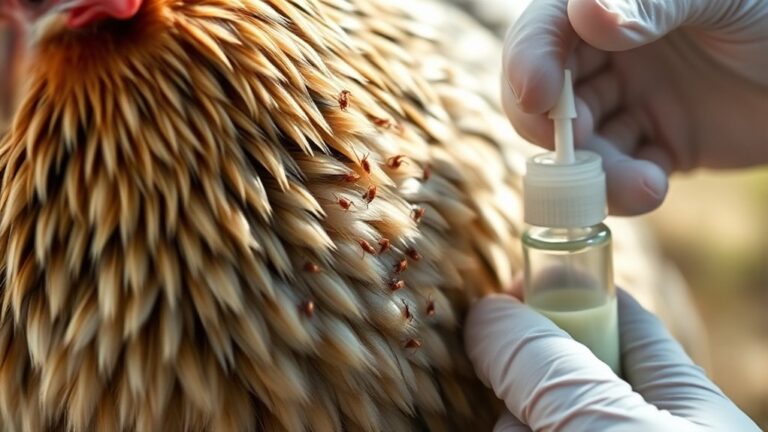
Chicken lice are tiny, fast-moving insects that you may notice crawling through your bird’s feathers, especially around the vent, under the wings, or near the neck. You’ll usually see them as flat, straw-colored or tan specks with six legs and a narrow, elongated body.
They move quickly through feather shafts and skin debris, but they don’t jump or fly, which helps you separate them from mites and other pests. With good lice identification techniques, you can inspect feathers close to the skin and spot the adults or pale nymphs before the infestation spreads.
Their size and color can make them hard to notice against dusty plumage, so a bright light and parting the feathers help. Knowing what they look like matters because chicken health implications can grow serious when lice multiply, irritating skin and weakening birds over time.
Common Signs of Chicken Lice

What should you watch for first? You may notice your hens scratching more than usual, acting restless, or crowding away from the flock. Chicken behavior often changes fast when lice irritate the skin.
Feathers can look dull, broken, or ragged, and egg laying may dip as birds spend energy coping with discomfort. Watch for these common signs:
- Constant preening and pecking at feathers
- Uneasy, twitchy movements and poor rest
- Bald patches, especially around the vent, neck, or under wings
- Pale combs, stress, and reduced appetite
These clues can appear before a heavy infestation spreads through the coop. Because the lice lifecycle moves quickly, missing the early warning signs lets the problem build.
If your flock seems off, trust your instincts and act promptly. Early recognition helps you protect comfort, feather quality, and overall health before lice become a bigger burden for you and your birds.
How to Inspect Chickens for Lice

Once you’ve spotted restless scratching, ragged feathers, or pale combs, the next step is to check your birds closely for lice. Handle one chicken at a time and keep it calm while you part the feathers with your fingers.
Good inspection techniques start with a bright light and a careful feather examination around the vent, neck, and under the wings. Look for tiny tan or gray insects moving fast, plus white eggs stuck near feather shafts.
For better lice identification, compare what you see with photos from trusted poultry sources. During chicken grooming, run your hands over the body to feel for rough, irritated skin or extra debris.
Make this part of regular health monitoring so you can catch problems early. Watch for behavioral changes like preening, wing shaking, and reduced egg laying, since these often show that the flock needs attention and treatment now.
Where Chicken Lice Hide on Birds
You’ll usually find chicken lice hanging out at the bases of feathers and along the shafts. That’s because they like to stay close to the skin where it’s warm and safe. Make sure to check the vent area and other skin folds too, since these spots give lice extra warmth and protection. When you know where they like to hide, it’s easier to spot infestations quickly and treat them more effectively.
Feather Bases And Shafts
Lice often cluster around the feather bases and along the shafts, where the warmth, shelter, and easy access to skin make these spots ideal hiding places. When you part the feathers, check for tiny moving specks, pale eggs, and broken quills that can weaken feather health.
Good grooming habits help you spot problems early and limit spread. You may notice restless scratching. You might see dull, ragged feathers. You can find debris near shaft bases. You may feel alarm, but quick checks help.
Inspect each bird in bright light, especially after dust baths or molting, when lice stand out more clearly. If you catch them early, you protect comfort, plumage, and flock confidence.
Vent And Skin Folds
The vent and nearby skin folds give lice a warm, sheltered place to gather, especially where feathers thin and skin stays hidden. You should part feathers gently and check for tiny tan insects, eggs, and dark specks. Good ventilation helps reduce damp buildup, while steady skin hygiene keeps this area less inviting.
| Check Area | What You’ll See | Why It Matters |
|---|---|---|
| Vent | Lice or eggs | High-risk hiding spot |
| Lower belly | Moving specks | Infestation often spreads |
| Thigh folds | Clinging nits | Protected from grooming |
| Tail base | Irritated skin | Scratching can signal trouble |
| Surrounding skin | Flaking or redness | Confirms irritation |
If you spot lice, treat the bird promptly and clean the coop thoroughly.
Chicken Lice vs. Mites and Fleas
Although chicken lice, mites, and fleas all irritate your flock, they don’t behave the same way or require identical treatment. You’ll usually spot lice clinging to feathers and feather shafts, where they crawl and feed on skin debris.
Mites are sneakier; they often hide in cracks, roosts, and at night. Fleas may jump from birds or bedding. Knowing the lice life cycle helps you understand why eggs, nymphs, and adults can keep showing up if you miss even a few. Don’t let treatment misconceptions fool you into assuming one product solves every parasite problem.
Mites hide in cracks at night, fleas leap from bedding, and lice keep returning if you miss a stage.
- Lice stay on the bird.
- Mites often attack after dark.
- Fleas can spread fast and leave you frustrated.
- Each pest needs a different response.
When you compare the signs carefully, you can protect your birds sooner and feel less helpless.
How to Treat Chicken Lice Safely
When you treat chicken lice, make sure to pick a product that’s safe for poultry and follow the label instructions exactly to keep your flock protected. It’s important to handle each bird gently and carefully during the process.
After that, give the coop a good, thorough cleaning to get rid of lice and their eggs. Wash all the bedding, scrub the roosts and nesting boxes, and then replace everything with fresh, dry materials. This way, you’ll help keep those pesky lice away for good.
Safe Treatment Methods
To treat chicken lice safely, start by isolating the affected bird and cleaning the coop thoroughly. Lice spread quickly through bedding, dust, and shared perches.
Then you can apply a poultry-safe dust or spray, following the label exactly to protect your hens. If you prefer gentler support, some keepers use herbal remedies and carefully diluted essential oils. You should test small amounts first and avoid anything harsh.
Watch your bird closely for stress, feather loss, or repeated scratching, and repeat treatment only as directed.
- You’ll feel relief seeing lice numbers drop.
- Your hen will seem calmer.
- You’ll reduce the chance of reinfestation.
- You’ll protect the rest of your flock.
Coop Cleaning Steps
Start by removing all bedding, droppings, and loose debris from the coop, then scrub roosts, nesting boxes, walls, and floors with hot water and a coop-safe cleaner. Rinse thoroughly and let every surface dry before you add fresh bedding.
Check cracks, corners, and perch ends, since lice hide there and lay eggs in tight spaces. Vacuum or scrape out stubborn buildup, then dispose of waste far from the flock. Repeat this deep clean after treatment and adjust your cleaning frequency if the infestation returns.
Good coop maintenance also means washing feeders, waterers, and nearby tools, so eggs and mites don’t spread back in. Keep the area dry, well-ventilated, and clutter-free to make reinfestation less likely.
How to Clean the Coop After Lice
After you treat the birds, clean the coop thoroughly so any remaining lice and eggs don’t reinfest the flock. Strip out bedding, droppings, dust, and cobwebs, then bag everything and remove it far from the run.
Scrub roosts, nest boxes, walls, and cracks with hot, soapy water, because lice hide in seams and crevices. Let every surface dry completely before you replace anything.
For strong coop sanitation and practical pest control, follow this routine:
- Wear gloves and a mask so you don’t breathe dust and dander.
- Use a stiff brush to dislodge debris from corners and hardware.
- Wash feeders, waterers, and tools until they’re spotless.
- Inspect the coop again after drying, and repeat cleaning if you spot any pests.
Fresh bedding, good airflow, and a tidy floor help you break the cycle and protect your flock from another miserable outbreak.
Natural Chicken Lice Treatments
If you prefer a gentler approach, natural treatments can help reduce chicken lice while you’re cleaning and monitoring the flock. You can dust roosts with diatomaceous earth, then apply it lightly around vent feathers, avoiding eyes and nostrils. Many keepers also use herbal remedies and natural sprays made with neem oil or an apple cider vinegar solution. These won’t replace thorough cleanup, but they can ease irritation and discourage pests.
| Treatment | Use | Note |
|---|---|---|
| Diatomaceous earth | Dust coop cracks | Keep it dry |
| Neem oil | Mix into sprays | Test on a small area |
| Garlic powder | Add to feed | Use sparingly |
You can also try a few drops of essential oils in a diluted spray, but never apply them neat. Some people mix garlic powder into feed or mist with vinegar solution after washing the coop. Watch your birds closely and stop any product that seems to irritate their skin or breathing.
How to Prevent Chicken Lice From Returning
Once you’ve treated the flock, keeping chicken lice away means staying consistent with cleanup and routine checks. Use preventative measures every week so pests don’t get a foothold. Focus on flock management, environmental hygiene, and coop maintenance to break the cycle.
Stay consistent with cleanup and weekly checks to keep chicken lice from gaining a foothold.
- Do regular inspections under wings, around vents, and in nesting boxes.
- Refresh bedding often, scrub roosts, and remove spilled feed.
- Add natural repellents where suitable, and consider dietary adjustments that support strong birds.
- Reduce crowding, practice rotation practices, guarantee proper ventilation, and build stress reduction into your routine.
You’ll lower the chances of reinfestation when you keep the coop dry, tidy, and well aired. Stay alert after weather changes, new bird introductions, or any sign of scratching. Consistency matters more than one deep clean, and small habits can save you from another frustrating outbreak later.
How Chicken Lice Affect Eggs and Health
When chicken lice infest your flock, you might notice a drop in egg production. That’s because stressed hens tend to focus on coping rather than laying eggs. Plus, you’ll probably see feather loss and constant irritation, which can leave your birds feeling restless and weaker. If the infestation goes on for too long, your chickens could face nutrient deficiencies since the lice are draining their health and overall condition.
Egg Production Decline
Chicken lice can quietly pull down egg production by stressing hens, weakening their bodies, and disrupting normal laying patterns. You may notice fewer eggs, smaller eggs, or dull shells as the flock battles production stress.
Lice suck blood and irritate birds, so energy that should support laying gets diverted to survival. That strain can also hurt egg quality and leave hens looking worn down.
- You collect fewer eggs each morning.
- Your eggs may turn thin-shelled or misshapen.
- Your hens can lose condition and lay less reliably.
- You face extra costs and worry if the infestation grows.
Act quickly, because the longer lice stay, the harder it gets to restore steady laying and healthy output.
Feather Loss And Stress
Feather loss is another common sign that lice are wearing your flock down, and it often goes hand in hand with stress. You may notice bald patches, broken feathers, and constant scratching as birds try to relieve irritation.
Stress can make your hens restless, less active, and more likely to peck at one another.
| Sign | What You’ll See |
|---|---|
| Bare spots | Skin showing through feathers |
| Scratching | Frequent preening and pecking |
| Tension | Restless, skittish behavior |
| Recovery | Better comfort after treatment |
Use feather regrowth strategies like clean bedding and gentle handling. Also, add stress reduction techniques by keeping the coop calm, dry, and uncrowded.
When you act quickly, your flock can recover faster and stay healthier overall.
Nutrient Deficiency Risks
Even if the lice never make your hens look severely ill, they can still drain nutrients and leave them run down. You may notice weaker eggs and slower recovery because parasites steal blood, irritate skin, and disrupt nutrient absorption.
When your flock can’t use feed well, egg quality drops and the birds’ immune response suffers.
Watch for these warning signs:
- Pale combs and tired hens
- Thin-shelled or fewer eggs
- Poor weight gain despite feeding
- More scratching, scabs, and infections
Act quickly, because ongoing infestation can push hens into deficiency and make every molt, lay cycle, and cold snap harder. Clean coops, treat birds, and support them with balanced feed and fresh water.
Frequently Asked Questions
Can Chicken Lice Survive on Humans?
No, chicken lice can’t survive on you for long. You may feel them crawl, but they need birds to live and reproduce.
If you handle infested hens, wash up and change clothes to protect your chicken health and avoid spreading pests.
Good pest control means treating your flock, coop, and bedding quickly. Keep monitoring birds for itching, feather loss, and eggs on shafts. Call a vet if problems continue.
How Long Do Chicken Lice Live off the Bird?
Chicken lice usually survive off the bird for only a few days, sometimes up to a week in warm, moist conditions. You’ll break their lice lifecycle fastest by removing them from feathers and coop surfaces.
Good lice prevention means you clean bedding, treat birds, and inspect regularly. Since they can’t feed well away from a host, they weaken quickly and die before they can infest new birds.
Do Chicken Lice Spread Between Coops Quickly?
Yes, chicken lice can spread between coops quickly if you move birds, bedding, tools, or clothing without cleaning them. You’ll lower risk by using strict lice transmission control and strong coop hygiene practices.
Inspect birds often, isolate any infested chickens, and clean or replace litter, roosts, and nest boxes. Because lice crawl fast, acting early helps you stop an outbreak before it reaches your other coops.
Can Chicks Get Chicken Lice From Hens?
Yes, you can think of lice as tiny hitchhikers, and chicks can catch them from hens. If you house them together, the parasites may crawl onto the chicks and quickly affect chickens’ health.
You’ll want strong pest management: check feathers, clean bedding, and separate heavily infested birds. Early action helps protect growing chicks since they’re more sensitive and can weaken fast if lice keep feeding on them.
Are Chicken Lice Visible in Daylight?
Yes, you can often see chicken lice in daylight, especially when you part feathers and inspect the skin closely. For lice identification, focus on the vent, neck, and underwings, where they hide and move quickly.
Daylight visibility helps, but tiny eggs and pale lice can still blend in. If you spot scratching, dull feathers, or clusters, check again with a flashlight for better detail and a quicker diagnosis.
Conclusion
When you spot chicken lice, you’re really seeing tiny thieves at work in your flock’s little kingdom. If you act fast, clean hard, and keep watch, you can drive them out before they ruin the peace.
Think of your coop as a garden: pull the weeds early, and your hens stay strong, calm, and productive. Stay alert, inspect often, and you’ll keep your birds safe from pests that sneak in like shadows.
Remember, spotting chicken lice early is key to keeping your flock healthy and happy.