Can Chickens Eat Mealworms?
If you’re a chicken owner, you’ve probably wondered what the best treats are to keep your flock happy and healthy.
Finding a nutritious snack that supports growth and egg production can be tricky, and you’re not alone in wanting to give your birds something special without compromising their diet.
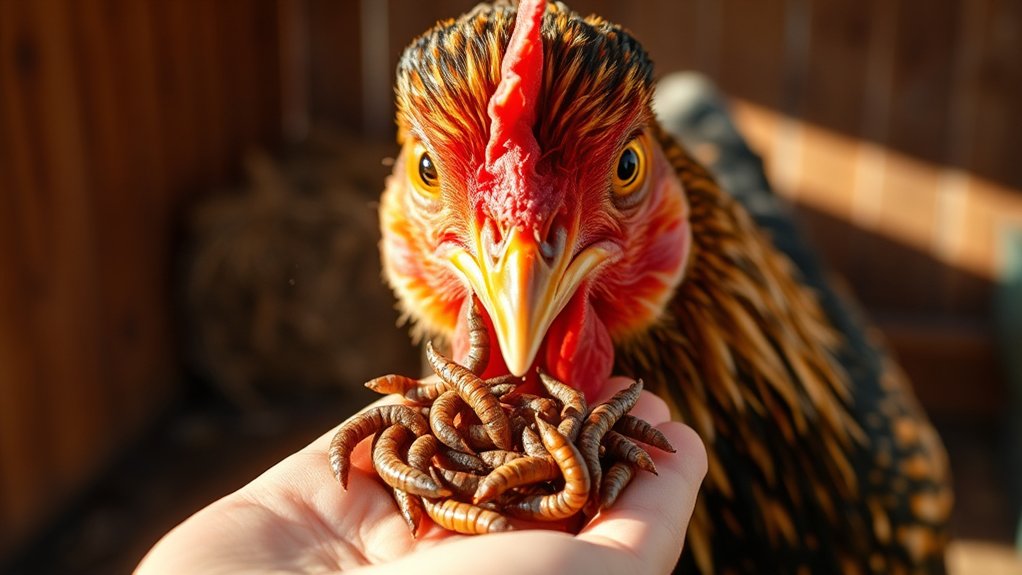
Yes, chickens can eat mealworms safely in moderation, and you can use them as a protein-rich treat that supports growth, egg production, and healthy feathers. Can Chickens Eat Mealworms.
Give fewer to chicks and pullets, and keep treats to about 10% of the daily diet so regular feed stays the priority.
You can offer live or dried mealworms by hand, in a dish, or scattered for foraging, and there’s more to know about feeding them well.
Key Takeaways
- Yes, chickens can safely eat mealworms in moderation as a protein-rich treat.
- Mealworms support growth, egg production, feather regrowth, and healthy foraging behavior.
- Give fewer mealworms to chicks and pullets, and limit adults to small amounts once or twice weekly.
- Use live or dried mealworms as a supplement, not a replacement for regular feed.
- Overfeeding can cause diet imbalance and digestive issues, so choose clean, fresh mealworms and monitor your birds.
Can Chickens Eat Mealworms Safely?
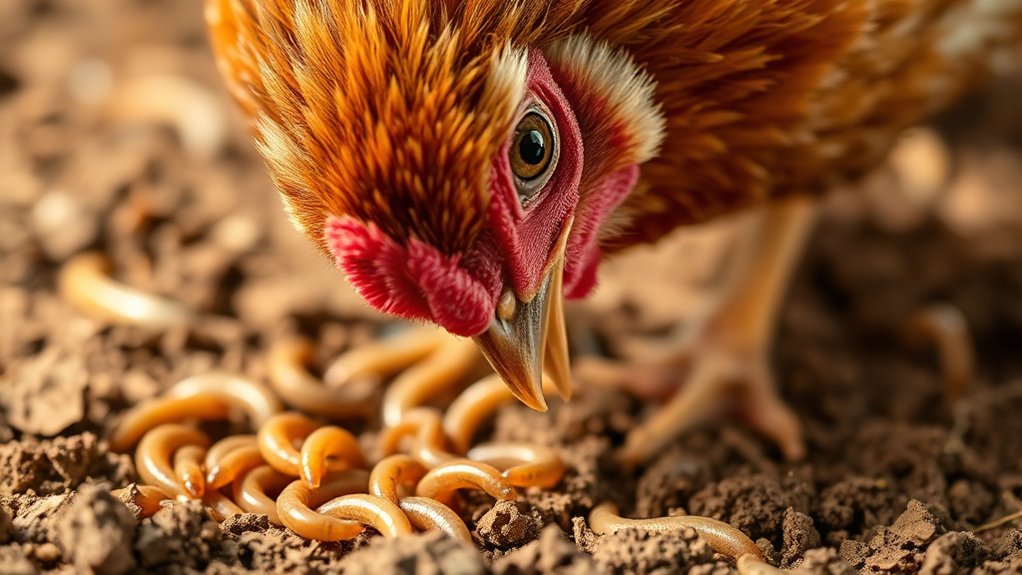
Yes, chickens can eat mealworms safely when you feed them in moderation. You can offer them as a protein-rich treat that supports growth, egg production, and overall vigor. Mealworms also provide important nutritional benefits, including healthy fats, amino acids, and micronutrients that help round out your flock’s diet.
Because chickens enjoy scratching and pecking for insects, mealworms can encourage natural foraging behavior and reduce boredom.
You should still keep feeding frequency sensible and treat mealworms as a supplement, not a staple. If you rely on them too often, you may crowd out the balanced feed your birds need.
Choose plain, unsalted mealworms, and avoid flavored or seasoned varieties. You can scatter them on the ground, mix them into scratch, or hand-feed them for training.
As long as you use them sparingly, mealworms are a safe, useful addition to your chickens’ routine.
How Many Mealworms Can Chickens Eat?

A practical rule is to keep mealworms to about 10% of your chickens’ daily diet, with the exact amount depending on their size, age, and overall feed intake. For most hens, that means a small handful per bird, not a full meal. You’ll get the best mealworm benefits when you treat them as a supplement, not a staple. Keep the feeding frequency consistent so your flock doesn’t overdo it or ignore their regular feed.
Keep mealworms to about 10% of your chickens’ diet, as a supplement—not a staple.
- Offer fewer mealworms to chicks and pullets.
- Give adults modest portions once or twice weekly.
- Adjust amounts if you use other treats that day.
- Watch body condition and reduce extras if needed.
If you free-range, you may need less because your birds already find additional snacks. Always balance treats with complete layer feed, fresh water, and steady nutrition. That way, you support health without crowding out essential nutrients.
Why Chickens Love Mealworms
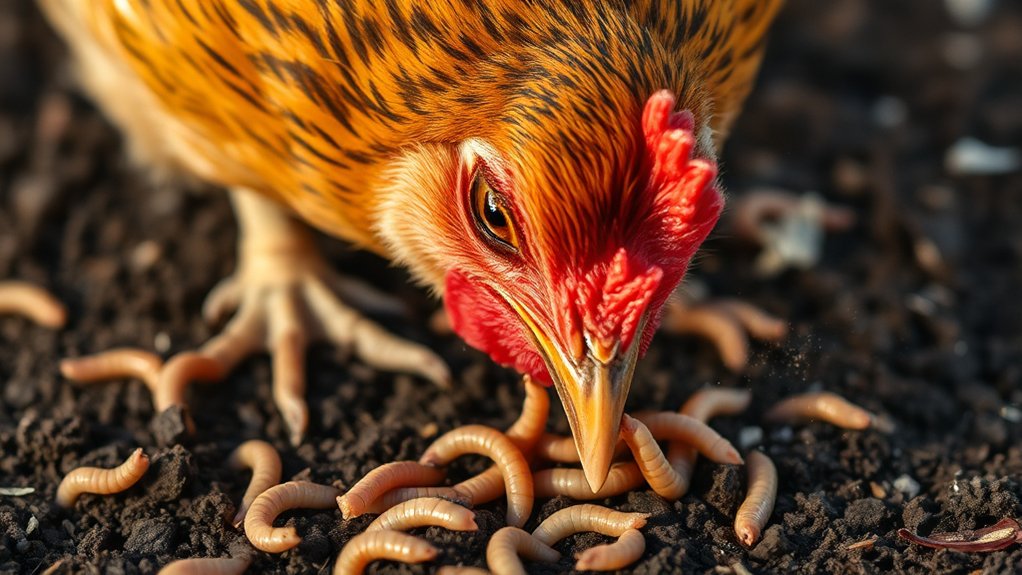
Chickens love mealworms because they’re rich, protein-packed, and easy to peck up, which makes them an appealing treat right away. You’ll often see your flock rush toward the sound of a container opening because chicken behavior is driven by curiosity, quick reward, and the chance to forage.
Mealworms tap into those instincts perfectly. Their small size lets chickens grab them fast, and their strong taste keeps birds interested. You also get clear nutritional benefits: mealworms provide protein that supports growth, feather condition, and daily energy.
When you offer them in moderation, you can use mealworms as a handy training treat or a way to encourage shy birds to come closer. That excitement isn’t just about flavor; it’s about satisfying natural pecking and scratching habits.
For many chickens, mealworms feel like a jackpot, so they stay one of the most popular treats in the coop.
Should You Feed Live or Dried Mealworms?
When you’re choosing between live and dried mealworms, the best option depends on your goals, your birds, and how much handling you want to do. Live mealworms can spark curiosity and foraging, so you may like the live mealworms benefits if you want a more engaging treat.
Dried mealworms give you convenience because you can store them easily and scoop out a quick portion without fuss.
- Choose live ones if you want extra excitement.
- Pick dried ones if you want less mess.
- Use either option as a treat, not a main feed.
- Keep portions small so your flock stays balanced.
You can also mix both types. That lets you offer variety while keeping feeding simple. If you want a hands-on experience, go live. If you want speed and easy storage, go dried.
When Should You Feed Chickens Mealworms?
You can feed chickens mealworms at key times like growth stages, cold weather, and molting. For example, young birds may need the extra protein to support healthy development. Older hens often benefit when their energy needs rise.
During molting, mealworms can really help your flock rebuild feathers and stay strong. It’s a great way to give them a little boost when they need it most.
Growth Stages
Mealworms can fit into your flock’s diet at several growth stages, but the amount and purpose change as chickens mature. You can use them to match developmental needs without overdoing treats.
- Chicks: Offer tiny amounts once they’re eating starter feed well.
- Pullets: Use mealworms to encourage tameness and reward calm behavior.
- Layers: Give a modest handful so you support growth stages and keep treats balanced.
- Older hens: Use mealworms as an easy, high-value snack when you want to supplement their routine.
You’ll get the best results when mealworms stay a small part of the diet. Focus on feed first, then treat them as a useful add-on that fits each bird’s age and needs.
Seasonal Energy Needs
As seasons shift, your chickens’ energy demands can change fast, and mealworms can help fill short-term gaps without replacing their main feed. You can offer them during cold snaps, wet weather, or sudden heat, when your flock burns extra calories or eats less.
In spring and fall, seasonal changes often affect foraging, so a small mealworm treat can steady intake and keep birds active. Use mealworms as a supplement, not a staple, and pair them with balanced feed and fresh water.
If your hens range less because of mud, snow, or short days, extra protein and fat from mealworms can briefly boost their energy sources. Feed sparingly, observe appetite, and adjust portions so treats stay under control.
Molting Support
When your hens start molting, mealworms can help support the extra protein they need to grow new feathers. During this stressful phase, you can offer them as one of the best protein sources to help maintain condition and encourage faster regrowth. The molting benefits are clear when you feed them in moderation alongside a balanced layer ration.
- Sprinkle a small handful after checking their crop and appetite.
- Offer mealworms a few times a week, not as a full diet.
- Pair them with fresh water so digestion stays smooth.
- Watch for brighter feathers and steadier energy as they recover.
You’ll give your flock a useful boost without overdoing treats.
Can Baby Chicks Eat Mealworms?
Yes, baby chicks can eat mealworms, but only in small amounts and as an occasional treat. You should focus on starter feed first because it supports balanced baby chick nutrition with the right protein, vitamins, and minerals. Mealworms add benefits, especially extra protein and a tasty reward that helps you handle chicks more easily.
If you offer them, choose dried or chopped mealworms and give just a few pieces at a time. You can scatter them on the ground or mix them into a small handful of feed to encourage natural foraging. Always make sure your chicks have clean water nearby since treats shouldn’t replace their regular diet.
Wait until your chicks are active and eating starter feed well before introducing treats. Keep mealworms limited so you don’t crowd out the nutrition they need for steady growth, healthy feathers, and strong development during these early weeks.
What Happens If Chickens Eat Too Many Mealworms?
If your chickens eat too many mealworms, you might start to see some digestive issues. They could have loose droppings, feel bloated, or even lose interest in their regular feed. Plus, if they’re eating a lot of mealworms, it can take the place of their normal diet, which isn’t great for their overall nutrition. So, it’s best to think of mealworms as a tasty snack rather than their main meal to keep them healthy and happy.
Digestive Upset Signs
Too many mealworms can upset a chicken’s digestive system fast, leading to loose droppings, a reduced appetite, bloating, or a messy vent. You may also notice your birds acting sluggish or hovering near water more than usual. Watch for these signs closely because quick attention supports digestive health and keeps their routine comfortable.
- Soft or watery droppings
- Less interest in feed
- Swollen belly or gassy posture
- Dirty feathers around the vent
If you spot several of these at once, cut back treats and restore dietary balance. Offer fresh water and normal feed so their gut can settle. Small changes help you catch trouble early and keep your flock feeling better.
Imbalanced Diet Risks
When mealworms crowd out the rest of the diet, chickens can miss out on the protein, vitamins, minerals, and fiber they need from balanced feed and foraging. If you overfeed them, you can upset dietary balance and turn a healthy treat into a problem.
Too many mealworms may fill them up before they eat enough layer feed, which can lead to nutrient deficiencies, slower growth, weaker shells, and reduced egg production. High-fat snacks can also encourage selective eating, so your flock starts ignoring the foods that keep them thriving.
Keep mealworms to a small portion, offer them as a reward, and make sure fresh water and complete feed stay available every day. That way, you support steady health without overdoing it.
How to Feed Mealworms to Chickens
To feed mealworms to your chickens, start by offering them as a treat rather than a full feed replacement. Keep portions small so you don’t crowd out their balanced ration. Use simple feeding techniques like scattering a few on the ground or placing them in a shallow dish. Store leftover mealworms in a cool, dry spot to protect freshness and make mealworm storage easy to manage.
- Hand-feed a few worms to tame shy birds.
- Mix dried mealworms with scratch for extra interest.
- Use live mealworms in a secure feeder so they don’t escape.
- Offer them after regular feed, not before.
You can also sprinkle mealworms into a treat ball or puzzle feeder to encourage natural foraging. Watch how your flock responds, adjust the amount, and keep treats limited so your chickens stay healthy, energetic, and enthusiastic for mealtime.
Should Chickens Get Mealworms During Molting?
Yes, you can definitely give your chickens mealworms during molting. They need extra protein to grow new feathers, and mealworms are a great way to provide that. Just remember to keep the portions modest so the mealworms don’t crowd out their regular feed. A small treat amount works best while you focus on keeping their overall diet balanced for healthy molting.
Molting Protein Needs
During molt, chickens need extra protein to support new feather growth, so mealworms can be a helpful treat if you offer them in moderation. You’ll notice their appetite and energy shift through the molting phases. Extra protein helps them rebuild feathers faster and stay comfortable.
Along with mealworms, you can support them with other protein sources like layer feed, cooked eggs, or fish meal.
- Watch for bare patches and dull feathers.
- Give protein-rich treats after the flock settles.
- Keep fresh water available every day.
- Offer variety so your birds stay interested.
This approach helps you meet their seasonal needs without overcomplicating care. It keeps your chickens healthier while they regrow a full, glossy coat.
Safe Mealworm Portions
Yes, chickens can eat mealworms while molting, but you should keep portions small so they don’t crowd out their regular feed. A few treats a day can help since mealworm benefits include extra protein and energy when feathers regrow. Use mealworm sources you trust, and choose clean, dry worms.
| Portion | Guideline |
|---|---|
| Small flock | 1–2 tablespoons |
| Medium flock | 2–4 tablespoons |
| Large flock | 4–6 tablespoons |
| Frequency | 2–3 times weekly |
| Balance | Keep feed first |
You’ll support recovery without overdoing it. If your hens already eat a complete layer ration, mealworms should stay a supplement, not a staple. Watch body condition, adjust portions, and always provide fresh water.
How to Choose Quality Mealworms for Chickens
When you’re choosing mealworms for chickens, look for a clean, pest-free product with a fresh smell and uniform size. Check the label for mealworm sourcing so you know where they came from and how they were processed.
Good quality indicators include a dry texture, intact bodies, and no mold, clumps, or off odors. You should also avoid bags with excess dust because that can signal poor handling or age.
Look for dry, intact mealworms with no mold, clumps, or off odors.
If you buy live mealworms, choose active ones that move well and don’t show discoloration.
- Inspect packaging for tears, moisture, and insects.
- Compare size consistency, since uniform worms are easier to feed.
- Review ingredients and choose plain mealworms without additives.
- Store them in a cool, dry place to preserve freshness.
When you pick carefully, you protect your flock and give them a safe, protein-rich treat.
Frequently Asked Questions
Can Mealworms Replace a Chicken’s Regular Feed?
No, you shouldn’t use mealworms to replace your chickens’ regular feed. Mealworms have good nutritional value, but they’re best as a treat or supplement, not a full diet.
You need to follow feeding guidelines and offer a balanced layer or starter feed so your flock gets enough protein, vitamins, minerals, and energy. If you rely on mealworms alone, you’ll leave your birds undernourished and unbalanced.
Are Mealworms a Good Source of Protein for Laying Hens?
Yes, you’re looking at a tiny protein powerhouse for laying hens. Mealworms pack solid mealworm nutrition and real protein benefits, so they can help support egg production and feather health.
They’re not magic beans, but they’re close enough to make your hens act like they’ve hit the buffet jackpot. Still, you should feed them as a treat, not a full feed replacement, and keep portions sensible.
Do Mealworms Attract Pests to the Chicken Coop?
Yes, mealworms can attract pests if you leave them out or spill them in the coop. You should store them in sealed containers and feed only what your chickens can finish quickly.
Good pest control depends on coop cleanliness, so remove leftovers, droppings, and damp bedding often. If you keep the coop tidy and manage treats carefully, you won’t give mice, ants, or flies much reason to stick around.
Can Chickens With Health Issues Eat Mealworms?
Yes, you can give chickens with health issues mealworms, but you should be careful. They offer health benefits like protein and energy, yet they can worsen digestive issues if you overfeed them or if your birds are already weak.
You should start with tiny amounts, watch how they react, and ask your vet if they’ve got ongoing illness. Fresh water and a balanced feed still matter most.
How Should Mealworms Be Stored for Freshness?
You should keep mealworms like a sealed treasure chest: cool, dry, and dark. Store them in an airtight container with a little ventilation, away from sunlight and moisture.
Refrigerate live mealworms if you need to slow them down, and check them often. Good storing techniques help extend mealworm shelf life, prevent mold, and keep them fresh for your chickens.
Don’t mix in damp feed or crumbs.
Conclusion
So, yes, you can feed chickens mealworms safely as a treat, and they’ll usually gobble them up fast. In fact, mealworms can contain around 50% protein, which makes them a handy boost during molting, laying, or any time your flock needs extra nutrition.
Just keep portions small and balanced, since too many mealworms can throw off their diet. When you feed them wisely, you’ll give your chickens a tasty snack they’ll love. Remember, including mealworms in their diet occasionally is a great way to keep your chickens happy and healthy.